Transcript
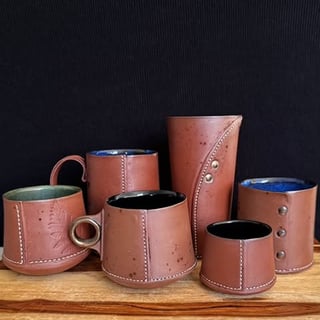
Speaker: If you love pottery and want to take your skills to the next level, you're in the right place. Find your own pottery style right here on Shaping Your Pottery with Nick Torres. Let's get started. What is up, Shaping Nation? This is Nick Torres here. And in this episode of Shaping Your Pottery, I got to interview Kate Schrader. Kate makes some really incredible pottery that she takes everyday objects and miniaturizes them, kind of making it look like it's on a shelf.
Speaker: In this episode, you will learn how Kate makes her pottery, the power of changing your voice over and over until you find it, and the power of just keep on making pottery and making pottery until you find something that clicks. Kate, welcome to Shaping Your Pottery. And share with me what is something you believe potters should be doing in order to have success in pottery? I think the first and foremost rule is to just get your work out there. Just make sure that
Speaker: You're not sitting in your studio and making, you know, effectively in the dark. So whether that means that you're going to your local craft fair or farmer's market or anything like that, or you're really working to push it online, you just have to actually show it to start to kind of gain a name for yourself and success.
Speaker: That is some excellent advice. So before becoming a full -time artist, you spent several years in the nonprofit sector, but one that stood out for me is that you created a small ceramics program for Walk in Love International. Can you tell me the story behind this? Yeah, so this is actually an NGO that a friend of mine from undergrad started. She originally wanted, well, so she originally started
Speaker: volunteering for orphanages throughout Africa and so that was kind of one of the goals is to start an orphanage and then she realized that in most areas the the biggest problem is is people have to give their children up for adoption even though they don't want to they'd like to keep their families together they simply just can't afford it so
Speaker: Walk -in -Love International, the whole, I don't know exactly their mission statement word for word, but it is keeping families together. So what they do is they provide either daycare for kids while mothers are at work or the fees to go to school, because school has a cost in Tanzania.
Speaker: it ends up being a program where they also provide a job for the mothers. And so it is a very matriarchal focused society and NGO. Um, and so along with the mothers having the opportunity to leave, to go make money, you can also sponsor a child. So, um,
Speaker: I went and started the ceramics program so that you could, or the women there could, we learned how to harvest our own clay, process our own clay. We built a small kiln and they sort of learned it from the ground up of how to make the work. So something else that Walk and Love has established is a coffee shop kind of on like a tourist route
Speaker: so that tourists can go there like on their way to Safari. And so now the work that all of the women make is there and able to purchase. And this is the thing that supports their families. Very, very awesome. So can you tell me what is something from this time that kind of holds a special place in your heart? Even though I had kind of learned all of the aspects of ceramics, you know, how to harvest clay and things like that,
Speaker: I had never truly done it from start to finish like that. And then also doing it with such an important purpose I thought was really interesting. It was also really wonderful because it became the main language that we had in common. I learned a few words in Swahili enough to kind of keep the program going.
Speaker: be able to communicate with my students, but not very much. And my, I had a translator, but she couldn't be there every day, but we were able to just effectively communicate with the clay itself. So that was something that was really lovely. Also, you know, just women supporting women is always really good. And
Speaker: being involved in anything that can kind of help keep families together, I think is really important, especially in a society where that's all that they want. Sometimes they just don't have the opportunity to do so. I love that. That's really amazing. So can you tell me the story when you finally decided to become a full time artist? Well, so that was in 2018. And I had worked
Speaker: like you mentioned, in non -profits. And then everything with Walk in Love was volunteer, so I raised the money to go down there for that. And then when I came back, it kind of all happened together where I came back from Africa and I left my full -time job teaching with non -profits.
Speaker: I was also working adjunct teaching at the collegiate level. And so I picked up more classes and was doing that, but already kind of on that, that became more of the gig salary of, you know, the, the adjunct positions are never a super stable style position. You know, you get a, however many classes you get in a semester and sometimes they can be canceled.
Speaker: the day before classes start. Sometimes it ends up being based on how many students you have. So I finally ended up getting in 2017, I started teaching what was referred to at the school I was at, which was a full -time, part -time permanent position. So in adjunct, full -time for any university is nine credit hours. So I taught nine credit hours for this university.
Speaker: which was my full time, but it's technically part time because they keep it just below where they would have to like give you benefits and everything. Um, and so that's the part time. But then the permanent position was because I was teaching art appreciation, which is just a general humanities credit. And so every major needed a general humanities credit. So the position wasn't going anywhere.
Speaker: So I finally kind of had that stable position, and then the longer I did it, the more I just realized my heart wasn't in teaching anymore. And my own business had kind of started taking off in different ways. At that time, I was still just doing local and regional craft and fine art shows, but I really wanted to
Speaker: start focusing a little bit more on like getting my work online and building that because craft shows and art shows are exhausting. And so I started to kind of get a little taste of what it felt like to sell online. It's like, oh my God, I can do this from my couch. This is way better than slinging pots and whatever the weather may be. So, um,
Speaker: 2018 it was actually the end of 2017 I kind of had been talking to my boss to say like I don't know if I can come back for another semester about blah and then she kind of dangled a few carrots that I really couldn't resist one is to start teaching the classes is hybrid so I only had to go to work one day a week
Speaker: And then the rest I could do from home. So that seemed really good. You know, there there was a lot of things that I was like, OK, I'll do it again. And then by that January, I mean, we were less than two weeks in to the semester when I gave my notice that I was like, I'm not coming back. Like my heart isn't in this. That's not fair to me or the students. And so.
Speaker: As of the very end of April of 2018, I turned in my grades and I have been full time ever since. Can you describe to me what you were feeling when you sent in your resignation letter? Nervous. Going full time is so scary.
Speaker: I didn't have the backbone, you know, I had already left the stable job that had the health insurance and the retirement plan, what have you. But I didn't have the guaranteed income at that point. And especially with when you're doing like mostly craft shows, like truly the weather can impact your finances.
Speaker: At this point, though, my husband had been working. He had just started. He was working on starting a position at the USPS as a letter carrier. So he was transitioning into that as I was transitioning out. So then I was able to get on his health insurance. So that was a little less nerve wracking. And we at least knew that we would have his stable income. But I had kind of been
Speaker: with all of my gigs before sort of the breadwinner and then it was transitioning to him being the breadwinner and we've we've always sort of ebbed and flowed and gone back and forth you know it's it's a partnership with us so it was um fine but he was he was the really the one that that said like you're not happy teaching anymore and i really think that it's time that you left and i can kind of take the mantle for a little while so yeah
Speaker: I love that. Shaping Nation, if you're listening, it's important to if you're not enjoying something, you might have to take a plunge and do something that you're uncomfortable with and maybe start going full time and maybe start making pottery more. Just as long as you're doing something that is happy for you. Over the years, how has your pottery evolved into what you make today? I am the type of artist that really shifts my body of work fairly often.
Speaker: When I was in the process of leaving to go full time, I still made a body of work that probably nobody who knows my name now would recognize as my work. It was porcelain based that I did
Speaker: concave dots all over and then put gold luster in the dots so that the gold luster would reflect around the concave aspect and looked like they were like actual like kind of jewels coming off of the side. And now I make like sort of semi functional work that has tiny plants all over it. So that
Speaker: started to evolve because I also have a jewelry line that I'd really started making that and bringing it to the craft shows more because that's so much easier than doing pots at craft shows. Pots have the trifecta, they're big, they're heavy, they're fragile. And I got my jewelry set up, which was still ceramic jewelry, but I could set that booth up in like 30 minutes and then I could be out in 15 minutes, you know, which was
Speaker: very different from the life of three -hour setup and two -hour teardown. But that felt very factory to me.
Speaker: I felt at that time like my work was either the line of production pots or the line of jewelry was all the same thing that I was just making over and over and over again. And so I switched my body of work at that time to my succulent series that started in 2018. And that is actually kind of the series that started to really kick off a following on Instagram for me.
Speaker: my work before I'd been posting it and I'd had about 2000 followers and it was kind of that way for years. And then I did this dramatic switch and was just like, Hey, I'm going to sell everything that I have for like a discounted rate. I don't want to make this work anymore. And this is my new stuff. Um, and so I started doing that and then it ended up
Speaker: going over really well and my Instagram following started to really like tick up quickly, something that I hadn't seen before. Um, and that was when that was in February of 2018. So shortly before I quit and people had kept asking like, how can I get this work? I was like, well, I don't know. Like I've got these shows coming up months down the line, but I had never done the online
Speaker: Like here's my update. It's scheduled for this time before. So I didn't quite know what to expect. Um, and then I, I tried that and it was actually when I was still teaching and I was at the podium, like getting class ready cause I didn't understand that I probably shouldn't have the update scheduled for like right when my class was starting, which was at noon. I remember, um, because I was starting to take a role and then my phone just started to like,
Speaker: bling bling bling like with sales and I was like I don't I don't know what's happening like this is very strange um and so just as I was taking roll my phone would sit on the podium for my clock and I I had to actually tell my students like I need a minute something is happening let's start class like five minutes late today and you know of course the students were fine with that and I just like
Speaker: watched as I got online sales, which I just really never had before. So that was the moment that I knew that I could probably start to transition out of craft shows and focus more on utilizing Instagram as a marketing tool and then working on building up my online shop. And I've
Speaker: Throughout the years, for the most part, I have kept the small plants as a part of the bodies of work. So that's the sort of through line. But it's really gone from work that looks like landscapes to work that is like fully an interior scene with painted furniture all over the pieces and then the shelves filled with
Speaker: pots, books, plants, so on and so forth. And then now into this new body of work, which is still a variety of my past work, but it's focusing instead of painting all of the furniture onto the side with underglaze. Now I'm doing more of like mural scapes. So like something that you might actually see behind a shelf in real life to kind of like put the scale into focus a bit.
Speaker: So you mentioned that your work is always kind of changing. How do you how do you get better at the work that you are changing? Because obviously you're starting something new. So how do you get better at that over time?
Speaker: Think that at this point the challenge for me is not knowing what I'm doing And as soon as I start to get super good at something I'm really bored with it, and I don't want to do it anymore Like I do have my production line and that that now has transitioned to my stable income and so was that that's my Minnie Malm burner production line and I
Speaker: I work and touch them at some point in the process, but now my assistant really does a lot of the work for me and same with my husband. So my husband is now, we've sort of switched roles a little bit again, so now my husband has left USPS and he works with me in the studio while he's also working on getting his MBA.
Speaker: his job now is like he rolls out slabs for me constantly because I've pretty much transitioned to everything is slab built. Um, so he's rolling out the slabs and sometimes I make templates for everything and it's just like, okay, cut out X amount of this template next amount of that template. And then my assistant takes his, um, cut out shapes and she's the one that forms them into the mounds. And sometimes I, you know, depending on,
Speaker: time and things like that, I'll take over and I'll make some too. Like this, this month, she kind of just did like she formed the cones of them, and then I did the rest of the assembly. So every month, it's a little bit different. But that is an example because I had made over 1000 of those. By the time I was like, I, I feel like I will go
Speaker: off the deep end if I make more of these. I love them, they're my income, but I really thrive as an artist by being challenged and making something totally new that I've never made before. And so that is one of the biggest reasons that my work changes is because I want to be uncomfortable and not know exactly what I'm doing.
Speaker: I love that. Shaping Nation, if you're listening, if you can get uncomfortable, that's where you are going to make progress with your pottery and you're going to start making something that you actually like to make and you get a lot better by getting uncomfortable. Can you walk me through how you kind of make your work that you that you focus on more? Um, so, you know, I've got, it's a pretty diversified line of work for that as well.
Speaker: I have the mugs which are sort of a staple and at this point I've now transitioned to using I have a cricket cutter and then I make stencils out of a vinyl so I
Speaker: I either do like cylindrical shapes which is a very easy rectangular stencil or like I might have like a tapered sort of mug shape and so with that I found a free program online that's just I don't even remember what it's called but it's like cones you know like make your own
Speaker: cone templates, you know, and so I can I can first fiddle with like a piece of paper and decide like okay I want this cone to be like X amount of inches on the bottom and Y amount of inches on the top and then it'll be about this tall and I just program those numbers into this website and then it'll pop up the template for me and then I can stick that over into my Cricut cutter and cut it out out of this really thick sort of mylar
Speaker: and use it as a template. I work with leather hard slabs. So none of the work that I do will be made out of a soft slab. And that's one of the reasons, one of the common questions I get is like, how are your angles so perfect? It's because my clay is rigid. Like when I'm working with it, I'm putting two pieces of clay that are like they don't bend when I pick them up anymore.
Speaker: When I'm doing cone shapes, they're slightly soft, but anything like my houses or like putting the shelves on stuff or anything like that, it is a very rigid hard slab. And I make all of the bases of the work. So with my mug that it would just be a pretty standard mug shape and then it'll have a shelf on there.
Speaker: And then I'll move on. I don't have any of the tiny things that I have on my work, on the work at bisque stage. Then I'll go into several weeks of making tiny things. So a lot of that is actually done on my couch because it's so little. I can just have like a teeny tiny bag of clay and I can make tiny little plants just like sitting there when we're like watching TV at the night, at the end of the night. And then I'll bisque fire all of that stuff.
Speaker: and use underglaze to put the color on the plants. And then I will start with my murals or drawings or imagery onto the mugs themselves. And once I glaze the mug, then I just, I have not glazed fired it. I've just dipped it in the glaze. I use Elmer's glue and I glue all of those tiny things that I have made.
Speaker: onto the piece and then I put them in the kiln and the kiln is what fuses all of that little stuff together with the glaze like you know once the glaze liquefies in the kiln and then it it cools back down again
Speaker: it sticks to whatever it's touching. So normally we're taught to avoid that, you know, wipe the bottoms of everything. Like don't let it touch the walls. Don't let it touch themselves in a glaze firing. But I really use that process to my advantage. And so that's how all of that tiny stuff gets stuck on there.
Speaker: How did you figure out the Elmer's glue before firing? Because trying to get stuff that was so small loaded in the kiln, it would fall off. And so then I was starting to like, I would be assembling things bent over in the kiln. And I'm like, this is a pain. And so I did a couple of tests where I just saw like,
Speaker: Does Elmer's glue fully burn off without any residue? And it did. So now it does not hold it on. I mean, like if you, here's a little thing, if you're like poking on it, it'll pop right off, but it's enough for me to even like put it on my wear cart, roll my cart back to the kiln and load it. And that's, that's all I need it for. You just gave me some amazing ideas with that. Thank you so much.
Speaker: I know your your pottery is always kind of evolving and changing, but over the last 20 years, what is something that has helped you with kind of discovering your voice a little bit to make something totally new? One of the things that I would do in grad school is I would just make something, even if it wasn't something I knew I would be showing or anything like that, because
Speaker: a lot of those little things that I would just sit there like, I got a weird idea. I'm going to try it. And I would try that weird idea. And it might not lead, the full idea might not lead to something, but one tiny little aspect of it would. And so I'd say even in grad school, my work was completely different looking than it looks now. It's, I mean, I was a sculpture major, so I was working with
Speaker: metal casting and woodwork and mixed media and it was figurative and highly conceptual but it still had a lot of nature as a inspiration to it and so there's some of that part of it that even though there's no like so one of the things that I would use would be pea gravel in my work in undergrad through grad school and
Speaker: Now I don't use actual pea gravel, but I make my own out of clay. So it's still just like this whole collection of teeny tiny little rocks that are like in the work. I'd say finding your voice is just about continuing to make things over and over again, even if you hate them until you find something that clicks with you. And once that starts to click, then you build upon that. And then sometimes you can
Speaker: change your voice. You know, my my voice has continued to evolve over the years, but it still is my voice. Yeah, I definitely agree shaping nation. If you're listening right now, your voice is not stuck. Your voice will continue to evolve and get better and get better. It can change. It doesn't have to stay the same for 10 years. So when you found your voice, what would one new opportunity started coming your way?
Speaker: I think every iteration of my voice has come with different opportunities. So my out of school, I'd say my first voice was really in community engagement and nonprofits. And that's sort of what led me to do walk in love, or that's what led me to teach a few different style classes.
Speaker: Um, and your voice can, you know, it can be a part of your, your artwork, but it can also just be a part of yourself and, you know, how you present yourself professionally. You know, so I applied to so many jobs out of grad school and I only got, so I, I grew up in Missouri, just outside in Kansas city, Missouri. And then I went to school just outside of Kansas city.
Speaker: And then when I went to grad school, I went all the way to Alaska because I was like, I got to get out of here. I got to experience something totally different, totally new. And Alaska absolutely did that. It's like another planet practically, you know. I applied to jobs all over the lower 48 because I was like,
Speaker: Now that I've moved 4 ,000 miles away, I can easily, you know, stay away. Why go back? And not that I don't like it here, my family's here and things, but I just really enjoyed finding new culture and experiencing something completely different than I'd ever experienced before. And I applied to 42 jobs in 37 states, and the one dang job I got was right back in Kansas City. It was
Speaker: unplanned. It was the last one I applied for. And I was like, well, I'll do this job for a little while, then I'll move away again, you know, and here I am, and it's coming up on 11 years later, and I'm still here. But that is the last time I applied for jobs. I have not throughout the rest of my career, had to apply for anything because of
Speaker: the voice that I was establishing was leaving opportunities my way. So the job I got was actually an adjunct position, but then that was with that I applied to a local studio for teaching ceramics. So I guess I did apply for that one more job, but it was in that same, you know, beginning of that year. But then because of that in my interview, I guess the executive director found out about a lot of other parts of
Speaker: my voice, if you will, of having experience working with people with disabilities and working and teaching people from different cultural backgrounds and so on and so forth. And so then she offered me the full -time position. And from that I got offered
Speaker: other teaching positions kind of within that same vein. And then with my last adjunct position, that was just someone, you know, had left that position and an old mentor asked me to come teach it. And so that was the initial voice that I had was really community and education based. And then I did what I like to call my year of no.
Speaker: where I turned down a lot of opportunities so that I could really focus on my own work. And that is how I have actually been able to grow my business into what it is. It's because I say no to a lot of stuff. And before I would exclusively say yes. So I'm not entirely sure that I don't even remember what the original question was, but that's my answer.
Speaker: I think that was a wonderful answer for new opportunities that came your way. I also love the fact that you mentioned the no part and how that is integral part of your evolving your work. So as we're coming to a close here, what is one thing you want to hammer home with my audience today? Just making is the number one most important thing that I can say is
Speaker: A lot of the times when we're in a career that can be more unstable like the arts and we never know you know we might have an amazing month but then the next month we don't. But it can be really tempting to pick up something that seems stable and reliable and then the next thing you know that's taken over and you're not
Speaker: making anymore and that's when we start to lose it. And so throughout my career, throughout my life, the only time I've ever taken off from art making is right out of grad school and I just needed to to not for a minute. But my work at the end of grad school was really about like traumatic experiences that I've had in my life. So it was kind of like it was almost like a
Speaker: letting go of that. And then when I started my work again, it was a completely different body of work and the whole point of it was to bring joy. Um, and so that was an 11 month period that I took off and for me personally, um, I, I even felt it like in my mental health, I was just like, this is not good for me to not be making. And so I think that there's a lot of validity in that of,
Speaker: For makers and artists, it's not just that we're sitting there doing a thing because we enjoy it. I think that for a lot of us, it's more. It is making his life and breath. And it is the way to our own happiness and also a way for us to build a name and a voice and success in this field.
Speaker: I absolutely love it. Kate, it was so great chatting with you today. Where can my audience go and check out your work? So you can find me on Instagram. That's Kate dot Schrader dot ceramics and Schrader spelled a little funny. It's S C H R O E D E R. Uh, but it is, um, one of those silly German words that throws you off. And then my website is the same. So that one is, there's no periods in between everything. It's just www dot Kate Schrader ceramics .com.
Speaker: Um, pretty much if you type in Ktrader ceramics into Google, you'll find me in a lot of ways. So, yeah.
Speaker: Thanks for listening to this episode of Shaping Your Pottery with Nick Torres. If you want to start discovering your own unique voice, you must first start with the right questions. That's why I put together a free 15 question booklet for you to start discovering your own unique pottery voice. All you have to do is go to shapingyourpottery .com forward slash questions to get this free booklet.