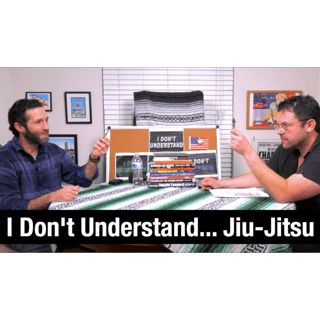
Transcript
Speaker: Hi. Hey, so apparently my grandfather was murdered last night. ah Are we sitting Shiva? And in his blood, he scrawled out, find Evan Mintz. Right. And he left this cryptex. Uh-huh. And this is why I've really brought you here. The Priory of Scion is closing in. And you're the only one who knows the answer, Evan.
Speaker: According to my dead grandfather, he was murdered. Will you please help us out of this jam? I'll i'll try. It came with a riddle that you need to solve. Okay. When will Sam understand?
Speaker: When will Sam understand? Oh hurry up Evan, the Priory of Scion's closing in. We're in trouble Evan. There we go. You got it? Okay. and this numot What's the message from my murdered grandfather? Okay. It says, Hi Evan, if you're reading this, Sam is smiling at you.
Speaker: We'll be right back. Very cordial conversation. i was i was impressed by the questions. Do you wanna do the thing where you're like, every week I have people who know more than I do explain things that I don't understand. And today that man.
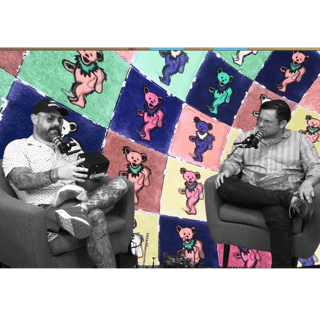
Speaker: Every week I have people, not even true, every like four months. Every ah so often i have people on to help me understand. My name is Sam Fickman, welcome to the show. With me, Evan Mintz from the Houston Chronicle. Thanks for having me. Let me let me talk about vulnerabilities and I gotta get back to work.
Speaker: We are still vulnerable to attack. Politicians, really good politicians are kind of like surfers. They'll see the wave and they'll make it seem like they'll take credit for doing all the work. They're just like riding a wave going on. yeah ah And so like that's that makes it hard to get assess politicians accurately and makes it hard to get politicians who actually care about the impacts they're having in terms of policy. And it makes it hard to talk to voters and everyone else about what's going on. They'll be like, well, like I like this politician because when they were elected and then I got this job and I got a house and things were going well for me. It's like, that's good. And I know the politician was telling you that they were the reason why all this stuff was happening. But like that's not actually why all of this happened. I don't know. And people give like way too much credit, I think, on politicians for making stuff happen in the world. Yeah.
Speaker: And a lot of it is just like on yourself or on private sector or on communities or on global trends. So it's really hard to figure out. I want people to care about having good folks in office who are honest and earnest and are willing to put local concerns ahead of national partisan concerns. But the reality is that the political incentives that a lot of politicians have today are for the opposite. Ernest? What do you think you're doing? In office?
Speaker: Geez, imagine that.
Speaker: he went to jail. I'm in jail!
Speaker: I do think Ernest could be president, even with being in jail. Well, that nobody cares about jail, and I do think Ernest... I mean, Ernest was in the army. I'd vote for Ernest. I am voting for Ernest. You know, i would hey, we could do a lot worse. What year was that he joined the army? 1998. Oh, that is not a good year, Ernest. There were a couple of major events around the corner that would send him overseas. Imagine you're at Gitmo, and you hear, hey, Vern.
Speaker: He'd be like, I mean, it was bad already, but now it's now it's stupid. He ran that camp. Did you see how horrible he was at running that camp? Really, i'm I'm really good at this I really am. He was scared stupid.
Speaker: You know what? Ernest's face kind of scared me. He's one of those guys where like, is he real? Is he clay? And it turned out he was a real man named Jim Varney. Here's a clip. whatever you say mr nagg Hey, you're doing really good. Hey, damn hey with the clip of Jim Barney is going to play. He played Slinky Dog in Toy Story. Hey, I'm ready this time.
Speaker: No. Slinky Dog. Yeah, we're just talking. No, it's a good part. No, not not now, Slinky. I got some bad news. Bad news? Folks get very ah frustrated when like they see the like the one party they've got to stick with, and like they don't see very directly how their little segment of it leads to like larger outcomes. Is the two-party system the problem, or is people the problem? I mean,
Speaker: a little bit of column A, a little bit of column b The problem is that we have gerrymandered districts. They are drawn to benefit one specific party or another. So the election of consequence, the election that really matters, isn't the general election. It's the party primary. Who goes and votes in party primaries? Not a lot of people. And it's people who really, really care about politics. You know, if you're a lawmaker and you have to act, ah You know, your incentive isn't necessarily to have the best law, the best policy. Your incentive is for ah people to like you and think you did a good job. And that's the politicians? That's the politicians. They're supposed to be likable? Oh, I know, right?
Speaker: the Democrat side, that my value they they serve more of my values. So I go there. But then I find that the Democratic politicians do things that are so cringy and alienating that it turns people off for dumb reasons. yes Like people go like, that was cringy when she did that with hot sauce. I'm a Republican now. Look, I don't think dancing with Ellen is cool, but I do think I can overlook the cringiness. Right. People can't.
Speaker: That's not how most people interact with the world around them, you know? People ah don't spend a lot of their time looking at like, deep policy issues. They get the sense of people, of individuals. You know, we we evolved from a bunch of like pack animals living in our tribes. How do I know how the world works? Like, well, like this person told me and like I trust them because we all live together. And so like, that's how I understand the world. i understand the narrative. And then in, you know, the Renaissance, a bunch of people thought like, hey, how about we start writing stuff down?
Speaker: We'll measure it. And then we'll see if the things that we thought were true are actually true. And we'll keep on testing it over and over and over again. Is that when writing started? The Renaissance? I mean, I think that's when we started doing scientific, I guess into the Enlightenment. Is that when the quills started? yeah like Leonardo da Vinci like dropping things.
Speaker: It's like, okay, how fast did that go? was like, okay, let's drop another thing. Was he the first guy who started to think about stuff? You betcha, boot. Was that Leonardo or was that Galileo? It was... Galileo.
Speaker: was galile galileo Galileo Galilei, I think. That's a pretty big target, Mr. Peabody. And these are pretty big bullets I am putting into this gun. I think um there's a very interesting theory that I'm spreading that William Shakespeare was actually fat. Really? Yeah. And that that all the depictions of Shakespeare are lies. I see him right now as like Dom DeLuise. Yes, you should. And it is true. He was actually a portly man. They only portrayed him with that little angled thing, but he was actually a kind of fat guy. I mean, I hate to break it to everyone, but this is probably what Shakespeare looked like and acted like and carried himself like. I mean, Rick and Morty, Romeo and Juliet, it's all just names.
Speaker: Of course he was fat. He sat around writing all the time. Why would Shakespeare have been some skinny guy? He didn't have a lot of food. He was living in what, like, you know, 1600s England? They had food. They had food. Oh, blimey.
Speaker: But look, this guy, as a writer, he probably was sitting around writing Romeo and Juliet or something. He's not getting up that much. Yeah, I guess so. He had to walk everywhere. I guess he would have to walk to one of those like old-ass libraries where they have chains on the books so he could like research, like, what's the legal age for these two to be getting married? And he didn't, I guess, read it. up Right, my dad. Build the Ike die? Yeah. That's your catchphrase. Gotta do it. What does it mean? Well, ah do you want to die?
Speaker: No. Neither do i We have so much in common. But I am worried that if a hurricane strikes the port of Galveston and the port of Houston, it will cause a massive storm surge that will rise ah waters by 25 feet. and all of the shipping containers, all of the chemical storage, all of the refineries and plants and pipelines ah will be caught up in this massive storm surge and they will be knocked over and chemicals will spill into the water and we'll have something like the Exxon Valdez, except three times as big, and in the middle of a place where six million people live, we have to make sure that we've built a protective barrier
Speaker: to stop this from happening. And in fact, that's kind of what Galveston did after the 1900s from they built the big sea wall. And so I'm saying, okay, now we need to keep going further. That's so insanely impressive. Look at that. oh shit.
Speaker: I'd like to see a movie about that, like a gritty 1800s. There will be blood about they made the sea wall. And thank to you to these men. Thanks. How did they know how to do all this in the 1900s or whatever?
Speaker: in Galveston, there's i don't know. And so after Katrina happened, they basically like guilted the government into like signing them a big check to say, OK, now that people have actually died and we've actually like lost this major city, can we build the stuff? And then there was all these debates like, this is this the right way? Is this the optimal design? was like, whatever, just build it. And then so they built it. And then a few years later, Hurricane Isaac happened. and And it was a lot like Hurricane Katrina, except that you never heard of it because they finished the infrastructure and it protected the city.
Speaker: And so I'm saying that like Houston and the whole Houston region needs to be serious about making the investments so that you don't have to have a Hurricane Katrina yeah before you start building the stuff. People don't want to spend money on anything. Except for arming people better. i mean, that's it's a funny thing. People love to spend money on some stuff. They love it to spend more um money on cops and firefighters. whether they put Put more guns on this guy and get him a better bulletproof vest. His bulletproof vest is fine. He's not getting shot every day.
Speaker: You don't need to upgrade them all the time. They don't need be... Why are these guys walking around in militarized gear all the time? I think it's it's a real concern. I think they need to be braver. I think they need to learn jujitsu. Jujitsu is an anti-lethal art of combat.
Speaker: mean, a lot of what we need to be spending, i think, more of our our police dollars on is actually solving crimes, is making sure that we're putting the resources into ah solving homicides. Because a large number of crimes are committed by a small number of people.
Speaker: And so if someone ah murdered someone once, ah they might do it again. going through looking glass here, people. White is black and black is white. Or some commit some other crimes. And so if you get these small number of folks off the street, like that helps a lot. And then you go and you look at, okay, what about the non-lethal shootings? Because if someone shot someone else, they were trying to kill them and they just like weren't good enough at it. Nobody's going to tell me that kid did the shooting job he did from that damn bookstore.
Speaker: okay, we gotta to get those people off the street. And then once you get through those, it can say like, they're probably gonna have a real good impact on on driving down violent crimes. I believe the boys got a couple.
Speaker: But the boys told us they didn't get any. And also once you have this sense of certainty around getting caught, ah that does a much better job of reducing ah criminality than say the severity of a sentence.
Speaker: Five bullets, one blank, no one's guilty. Like, it is that certainty that people know that if you try to get away with something, you won't be able to get away with it. That's what gets them to not do it in the first place. Not the lingering threat that at some point you might get the death penalty. Yeah.
Speaker: Come to think of it there, right? Dallas, you know, the city up there where they didn't spend a whole bunch of money on cop hours. Their cop hours actually went down. They didn't divert their am mass transit dollars. They built the DART system and their crime rate went down by more than Houston's.
Speaker: So they spent less money and got better outcomes. Like, why? And the answer is, that's a really good question. Like, we don't really know. It's really hard to understand why crime rates go up and down. We haven't spent a whole lot of money doing a lot of, like, the rigorous research on the causal effects of different policies. And everything else going on in the world is so massive, it can, like, total... just a national trend can override whatever it is that you're doing in your own city. So all this is like really tough to figure out. Yeah, Dallas.
Speaker: um you yeah I'm from Houston. i'm kind I'm kind of like, fuck Dallas. Am I valid or should I? like I mean, I... No, I'm not there with you. You're there with me? It's boring. And also, you talk about crime went down in Dallas. I can think about a crime that happened in Dallas.
Speaker: I can think about one November 1963.
Speaker: Well, there's probably some crimes that went on. Jack Ruby was... can think of some crimes that happened Dallas. Yeah, I'm thinking of 22nd, 1963.
Speaker: Delaney Street, what's it called? Oh, uh... Dealey Plaza. Dealey Plaza. You know what down there? Anyway, cut Oliver Stone talking about it. It's murder. It's insane.
Speaker: And believe when you go to Dealey Plaza, It's like a western town. It's like a john that John Wayne theatrics I talk about, where you feel like you're walking into a cowboy town, and this is a perfect ambush area. It's like there's sort of an inevitability about that plaza. That plaza was made for for an ambush.
Speaker: That's a great director. It's a good movie. One of the best movies ever. That's one of those great movies I learned about from like watching Animaniacs or The Critic. Back and to the left. Back and to the left.
Speaker: And I'll be like, I don't know what back into the left means or why they're saying it like 20 times in a row. yeah But like, but one day I will. One day I'll know why this is funny. I have the DVDs. I can bring them for you.
Speaker: I think I have the DVDs. I had to get them. i had Of the course you had to get them. They put this in this thing. Back and to the left. And so as we spend more and more money on like constables in Harris County, like they just kind of do neighborhood patrols. It would be a whole lot smarter to say, we're gonna spend a whole lot more money on HPD and the sheriff's department to help them solve murders. And like on the forensics labs, they can speed up testing on guns and DNA. But like, there's not a lot of like political- They never wanna give the money to the nerds. They don't wanna give the money to the nerds. They wanna give the money to the tough guys, cause it's cooler. Well, and if you live in the Harris County region, you probably interact with your constable whole lot more. He's British. He spins a little thing. He's like, hello, Sam. He's like, stay down trouble. I'm like, yes. But I'm not. But that's what it's like. Most people, their crime problems they face, like someone stole your Amazon package. Someone was on the streets and I don't think they should have been there. And that's what the constables do. They do with those things.
Speaker: um you're not going to see like the HPD homicide detective doing the work to solve like a murder in some part of town like you never really went to and maybe like you're not like lingeringly aware of the murder that happened.
Speaker: yeah But that is like really where to put a lot of like the smart dollars if you're really focused on like building public safety. What is the Houston Chronicles official opinion on who Jack the Ripper was?
Speaker: Oh, um, didn't exist. It was multiple people who killed multiple women, and just the narrative was strung out of that. Whoa. And with that, I've solved my greatest mystery. I've been hunting that motherfucker down for years, so I shouldn't have been bothering. There's bunch people, and they're probably dead now. Eh, it's all good. Evan Vince, thank you so much, dude. I so really appreciate you coming here. Thank you so much, Evan. There's a few more things before we wrap up. The Wayback Machine's all warmed up, Mr. Peabody. So are we, Sherman. Things to come with Evan Mintz. Welcome to Things to Come. Where we take a look at the future, and I ask you, what do think going happen in the future? Okay. Specific years, though, in the future. Oh, okay. Okay, so what are we in right now? 2025. What do you think it's going to be like in, like, two years from around, 2027? 2027? Yeah, two years from now.
Speaker: Slightly hotter. All right, slightly hotter. I think the Texans will still not be good. Um, I'm sorry. I'm sorry, Ryan. Okay, okay, so let's jump a little further. Let's let's go 400 years in the future. Let's just go take the time machine to the year 2475, specifically that one. What's tend be going on in the year 2475? I think that the fallen San Jacinto monument will become a tourist attraction for people hoping to see, like, the ruins of old Houston after, like, light levels of seawater rise from climate change. Houston might be more interesting at the ruins.
Speaker: No, no, wait, that's not that. I saw like Bane. Houston will be found a lot more interesting at the ruins. That's even farther than that. okay i Specifically, yeah like almost about the year 3218. This part in the Time Machine Guy Pierce movie is so cool.
Speaker: I love this. But the problem with this movie is he goes this cool future where it's fun with this beautiful woman and then he goes to the boring future. He skips to the boring future. Like, yeah, this is just as fun. wanna hang out here.
Speaker: but back to the beauti- That woman was beautiful. On the bike, and the moon's falling apart. Stay there. That's the fun movie. Don't go to boring future. The year 3218. Uh-huh. Things to come with Evan Mintz, the year 3218. What's gonna be happening in Houston? Oh, there. In the year 3218. Finally finished freeway construction, am I right? There's no question from ah eyewitnesses that Lyndon Johnson had an overriding interest in the case right away and was very much on top of it and wanted to know where Dallas was in the investigation. What are some of the stories you've covered, articles you've written that are the ones you're most proud of? What are some of the ones you've covered that you're the most proud of? matt's all That's an interesting question because the things that like sometimes I'm the most proud of and the things that get the awards or the things that have the most impact are like very different things. But I guess one of the things that that I really ah enjoy ah having written the most was the thing I didn't write for the Chronicle. I wrote for Texas Monthly. And it was talking about why ah Austin is a bad place to live and everyone who is there should move to Houston instead. Yeah. And it was provocative, but it was sort of fun and I felt like that it pierced some of the narratives going on around Austin. and kind of
Speaker: Austin has this reputation of being such this great, hip, cool, fun place to live and maybe that was true or is true if you were young. But as you get older, it's like, okay, like, what are the things I can do in a city? Are the restaurants good? Are there professional sports? Are there, like, good arts? Can i afford to own a home there? or is it just the Indeed.com building staring at you with all your resumes like a haunting monolith? You know, they got the Indeed.com building. It's huge. It's humongous and you get you walk down on six street and there it is. You know like I have so many resumes in that building I don't know if they're looking at them. Austin used to be cooler and I find i' I've kind of gotten into this. I mean maybe I'm a rebel.
Speaker: I am brave. I'm a bit fuck Austin right now. I'm yeah i'm pro Houston but and we can we don't have a key we can edit this out. good yeah we but We probably don't want to say fuck a city but maybe I'll beep it.
Speaker: So it's come to this. You gotta, you're saying filter through it, but how do you when it's all so terrifying? It's the hand I've been dealt and I have to play it as it lays.
Speaker: I mean, I'd say find the things that you care about. It's time for me to Step up to the plate! What's your job? What's your family? Where do you live? And what things are specifically gonna happen here that's gonna make your life better? Like for me, one of the the issues I care about the most is I want a better bike lane from my house down to the bayou. It is a small issue. This is not like a huge thing for everyone, but I go on a lot of family bike rides and like we can't go that way because I got little kids and like that is not safe. But it could be.
Speaker: It could be a whole lot better. you know We already spent $100 million dollars building these really nice ah Bayou hiking bike trails. People like to use them. But it's like we built this freeway system with no on ramps. How do I get over there? Oh, we've got to drive over there and park. Well, that doesn't work. Like, OK, well, you can ride your bike there. like down like this four lane road. No thanks. Why does Mayor Whitmire not want safe streets? He prioritizes speed.
Speaker: He doesn't and he worries that building narrower lanes, building bike infrastructure is going to slow down traffic for commuters and it's going to hurt the local economy and that a lot of this c pro road safety stuff is really just like a giveaway to bike folks to make life better for them and not everyone else. It's just like this tough guy shit, like, get a car, get off the bike. I think that he's got a lot of nostalgia. Oh my god. Hope you understand, I wasn't there 50 years because I didn't represent the public interest. You hope I understand, buddy. I got a whole hat for about how I don't understand nothing.
Speaker: Evan, I never know how to end these things. So it's going to fizzle out just like this. I don't know anything about wine, but I found that there was a a tree on this. And it reminded me of your love of gardening. So I present you this and also so us um a hat. It's cool to admit you don't understand. That's what Socrates said.
Speaker: I'm Sam-Certiz. That's what Sam said. Socrates probably would have had a podcast. It probably would have been very visual. Oh my God, he would have had a podcast. He'd been annoying. I'm annoying. Hey, well, no, I'm brave. Eh, it's all good. Evan Vince, thank you so much, dude. I so really appreciate you coming here. If there's anything else you want to say or... Please subscribe um to your local newspaper. The Houston Chronicle. Tell us what's going on with the Houston Chronicle. You should subscribe to the Houston Chronicle. You can get it in print seven days a week or on Sundays. And also, digital subscription is absolutely worthwhile if you want to know what is going on in your city, where you live. Might as well end with dash 30 dash. What is that? oh um
Speaker: Is that y'all? Is that you? We don't do that anymore. What was that? Well, it was... um What I heard it was, was like a Western Union thing that like in their weird like telegraph code, like 30 meant like end. And so, and you were like sending in like a publication, like something that you wrote, you would show that like this is the end of it by putting in the 30. Started in the West and that carries over all the way to probably like the ninety s You're saying they don't know it anymore. No, it's all digital. let See, this is the thing. These men want to be the cowboys still. That's why they kept that 30 thing. Because see guys these guys, was masculine. and
Speaker: You didn't want to be the tough guy. That's why where I wear the bow Johnny Cash, that's why wear the black. I wear the bow tie because like newspaper editors, like you'd be out there like with the with the printing press. And so like you wouldn't want to wear a necktie. So to get caught in the printing press, like you die. It's the same reason why like scientists they always wear the bow ties. did That happened? Did y'all, you have people in your line of work who been murdered by the tie? Yeah, that's the story that I heard, is like, newspaper men and and engineers and scientists and folks are like out there, like, you're like, it's not a blue collar job, but like, you're out there with machines. And so it's like, you don't want your tie to get caught in the machine. So like, if you're a scientist or a newspaper guy, like, you'd wear the bow tie instead. There's a place called tomorrow, place of joy.
Speaker: Not of sorrow, can't you see? It's a place for and... Thank you. man That's quite enough.
Speaker: Will there be anything else? Uh, no. No, think I'll have better luck in a few hundred years. Live long and prosper. No matter how much it costs, perpetrators must be on the winning side and never subject to prosecution for anything by anyone.
Speaker: That's a coup d'etat.