Transcript
Speaker: When I was on my like break from art, I still was always finding little ways to make things. Sometimes I think, yeah, it would have been great to just go straight into some sort of residency. For starting out my business, I was wanting to make things that were simple. Having made that work in college, it's kind of like kicked around in the back of my head.
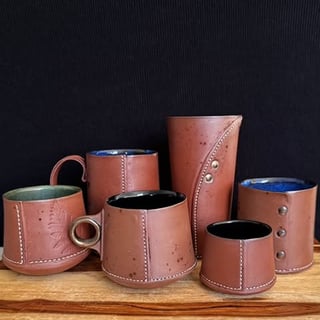
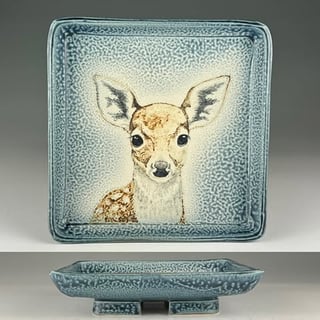
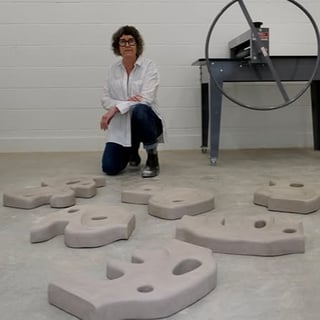
Speaker: What is up shaping nation this is Nick Torres and on this episode of Shaping Your Pottery I gotta interview Maya Rumsey. Maya makes some really incredible figurative and also illustrative pottery. In this episode you will learn how Maya creates her illustrative pottery and her figurative work.
Speaker: You'll also learn about how taking a break has helped Maya really develop her own unique voice with her pottery. You'll learn about taking inspiration from your interests. And finally, you'll also learn about how to market yourself and your pottery to be able to sell it. And there's so much more in this episode. I hope you guys enjoy it and I'll see you guys in there.
Speaker: If you love pottery and want to take your skills to the next level, you're in the right place. Find your own pottery style right here on Shaping Your Pottery with Nick Torres. Let's get started. Maya, welcome to Shaping Your Pottery and share with me what is something you love besides making pottery.
Speaker: I love a lot of things. I always kind of say that I've got like hobbies for my hobbies. I've got so many hobbies. But I like to, like this time of year, garden. I take care of house plans. I play the guitar. I have since I was a kid. And I also like doing yoga and I'm into meditation and
Speaker: Lately more tarot and stuff like that. So there's always something else going on. I've got kids too. So they're getting a little older, which is good. I actually, you're asking about this question. And I remember being asked this question when my kids were like, and I was on a.
Speaker: thing for Etsy. They were interviewing me and they were like, what do you do besides pottery? And I was like, I don't think I know. I was like, I'm just taking care of two babies. And then I tried to do some pottery. And then I was like, oh my gosh, I do nothing. And but then my life has come back to normal now that they're older. Love it. I love it. So tell me the story how you got started with pottery.
Speaker: So, I went to college at Bowling Green State University in Ohio. I grew up in Toledo. And I actually was a glass major. There was a glass blowing major. I had gotten into glass blowing when I was in high school and then.
Speaker: Like, went to a regular college for a year and then switched to art school and I was focused on glass. But then I went, I started doing pottery classes and I kind of got sucked more and more into the pottery world. I still like majored in glass and did my.
Speaker: senior thesis in glass, but I feel like by the time I was done with college, I knew that I wanted to go more into ceramics. I kind of explored glass all that I could and I knew when I got out it was so expensive to do glass and there were a lot of barriers, but I even worked in glass during college at Corning
Speaker: Museum of Glass and I just really fell in love with the clay and you can squish it and you can't do that with glass and you can't like just touch it and and work with it like clay and I liked how clay can be very more utilitarian like you can make things that you can use a lot easier than glass and so I just fell more and more in love with that and I
Speaker: went through senior studio in glass, ceramics, and sculpture, but I knew by the end I wanted to do ceramics after college. I love that. So after getting your BFA in glass and ceramics, you did some wandering around. Can you tell me about this? I was like so burnt out on art after the end of art school. Like I was the kind of student that I was like living in the art building all the time, like just
Speaker: too much art, like so much art in art school. And by the time I was done, I was like sick of it. I wanted to just not go into a museum or think about art or anything for a while. So I did some long term meditation things I did. I worked at the Omega Institute, which is where I met my husband and
Speaker: That's in upstate New York, so lived there. I lived in New York City for a year actually before that. I kind of like bounced around. So I was in New York City, I did these meditation things, went to the Omegans too, and then from there we decided to go to Costa Rica where I became a yoga teacher. And we lived there for a year. We were going to just go do this one month thing for a yoga teacher program and we stayed for a year.
Speaker: We were with my sister -in -law who now my sister -in -law, they stayed for like three years. It was like the kind of place that like sucked people in. And so we were in Costa Rica and just traveled and stuff a lot for a while and then went and moved to Denver where we lived for about seven years. So sort of between college and Denver just meandered around quite a bit. So what brought you back into pottery?
Speaker: So then when we moved to Denver, I feel like I had kind of gotten out of my system, the like doing other things, the yoga and stuff. I became a yoga teacher and when I got to Denver, I was full -time yoga teaching. But I feel like when I was on my like break from art, I still was always finding little ways to make things. And I was like thinking about pottery a lot and thinking about making things. But because I was,
Speaker: like moving so frequently, I couldn't really like make anything more substantial. It was usually like drawing or sewing curtains or making clothes or, you know, little things like that I could do easily. And then when we got to Denver, I knew I wanted to like find a studio space to rent and get back into it. So I found a place in Denver, the Arvada Ceramics Art
Speaker: art skills just outside of Denver and joined there so that I could like start to get my hands back into the clay and that was like 2010. So I graduated in 2008 and then 2010 got back back into clay. I love that. Shaping Nation, if you want to take a break from making art or pottery, you can go do that and you can come back to it later. It doesn't have to be a constant process. I love that so much.
Speaker: And I think like some of that stuff informs me now. I mean, I got more interested in other things. I mean, sometimes I think, yeah, it would've been great to just go straight into some sort of residency and maybe my pottery would be, it would definitely be different. I'm glad I, I kind of, I needed a little break. So I was really glad that I gave it to myself. I love that. So let's talk about your pottery. In one sentence, can you tell me what you make?
Speaker: One sentence. I make pottery. I make pottery that is fun and enjoyable to use if it's useful. I don't know, it's a little harder now that I'm doing more sculptural work because I used to always say like,
Speaker: I like to make things that are like really useful and functional and made people like happy using them in their everyday life. And I think that still holds true even with sculptural things, having things that bring you joy in your everyday life. This is not okay. I make pottery that brings joy into people's everyday lives. Perfect. I love it. So tell me a story how you started making the pottery that you make today.
Speaker: Yeah, it's definitely been a journey since 2010 when I got back into it and I started my Etsy business in like 2013 or 2012, sometime around then. I took a couple of years to like get used to making again and sort of.
Speaker: finding my what I wanted to make and put out there in the world and in 2013 to like 2016, 17, 18 something like that for quite a while I was making really simple work that was like really line based like
Speaker: Pull things out like I was doing things that were like really simple and I'd say more like production pottery I was creating a lot of just mugs and bowls and plates and dish sets and things like that and it was
Speaker: I would say a bit intentional to start off like that. And also it was just, I never usually have like a real grand plan is just kind of go with what feels right in the moment. But for starting out my business, I was.
Speaker: wanting to make things that were simple so that I could just make a lot of work and develop my skills. I knew I wasn't completely there to like sell a hundred dollar mug yet. I was selling like twenty dollar mugs so then I wanted to make a twenty five dollar mug not
Speaker: make a $100 mug and sell it for $25. Does that make sense? I was trying to make things that were simpler, didn't take as long to make so that made more sense to charge a lower price and slowly raise it. I was just making a ton of pottery, developing my skills, and growing my audience. First, it was Etsy for a long time and then over onto Instagram.
Speaker: Because I had made like, I had drawn my little birds, you know, my little birds that I draw on my pottery. Like before I even started my business, but I was finding I was taking so long to draw out all these like drawings of trees and birds and things that like, they would have had to be so much more expensive than I was able to sell them for. And so I put that to the side and then later came back to them and I've been able to slowly reintroduce, like at first it was slow.
Speaker: to introduce like more intricate designs that were more expensive and switching eventually from doing it all made to order, which is what I was doing on Etsy. I was doing like showing like lots of simple work that people could order and then I would make it. And now it's mostly just like I make it and then I sell it so I can make whatever I want. And then more recently bringing in
Speaker: sculptural work to into that. So I love that shaping nation. The best thing that you can do is to make simple work when you're starting out to get the practice and get the reps in and then make your way to the more complicated stuff that you actually want to make. I love that so much. Yeah, it is getting the reps and it's like you just make I mean, I joke they have to make like 1000 handles before you like one of your handles. But it's so true. It's like probably close to that. They're like
Speaker: just keep doing it over and over and over and over and over again. I definitely agree, especially with the handles. Like I couldn't make handles for anything. I literally had to have my friend make my handles. I literally just sat down for like a month one day and just busted out a bunch of handles and my handles got so much better. I love that. If you're only making like five at a time, how could you expect to get any better? Yeah, definitely for sure.
Speaker: So something from your website that I found interesting is you said, my hope is that these pieces will be fun and functional and bring a little happiness into your everyday activities. Can you tell me how this impacts the way you make your body? I think I love the fact that I make things and then sell them. And then they're like living in other people's houses in their everyday lives. Like I.
Speaker: know that I experienced that with other people's pottery, like the Samira's work, you know her work, Samira? I don't think I've heard of her.
Speaker: She used to be seedling clay works. She's really great and she would be great to talk to. But I know that when I use other people's things that like, it all has a different kind of a feeling and an energy to it. And I pick different pieces depending on how I'm feeling. And I just love the idea that my work is out in other people's houses where I'm not there and they see it and they feel it and they're using it.
Speaker: And I hope that it brings them joy to use it. Like I find the joy in using other people's work. Definitely agree. So something earlier that you said is that during your break from making art and pottery, it impacted the way you make your pottery today. Can you explain that to me a little bit further? Yeah, I mean, I think that I bring in some elements of maybe
Speaker: things I've learned through like meditation or yoga or other things like that that I was doing a lot when I was on my break from pottery. So those things can always be like coming back up because I have other interests than just pottery. I mean, it's great to look at pottery to be inspired, but to find inspiration from your travels or from
Speaker: other interests is great to be able to like bring into your work. Like right now I'm bringing in a lot of, especially in the ideas that are kicking around like the Tarot has been really inspirational to me lately. And that's just something that's make its way into my work now. And I just think it's great to look at and get inspiration from all sorts of other things. So, you know, when you sometimes when you're taking a break, you think you're like, like, it's not going to
Speaker: mean anything for your work, like, oh, I'm just quitting or whatever. But even though you don't know that those things are going to come up and you're not like trying to make those things happen, it's like those when you go back to making work, those things will kind of percolate and come through your work. So it's not like you've just abandoned the creative process by taking a break. Definitely. I love that so much. So earlier you mentioned
Speaker: That you don't just make functional pottery, but you also make some figurative work. Can you tell me why you started making figurative work? So I, I'm going to look up her name real quick.
Speaker: because I always forget it. Roxanne, I always remember her first name. So I started making little buddies, my little buddy things, like these little guys, a few years ago, because I just wanted to make, first of all, I wanted to make like little people to put into planters and stuff. That was my first idea. I wanted like little buddies to like sit on my like shelf and hang out with me, whatever.
Speaker: And so I started doing that a few years ago and I really enjoyed doing it. And then I went to Inseka this past year and Roxanne Swenzel, I don't know if I'm pronouncing that right. She was the, were you there this year? She did the keynote speech at the end of Inseka. I, she does figurative work, big, beautiful figures.
Speaker: I think I cried during like her whole speech. It was like so moving and amazing. And I had never seen her work before and I was just like, oh, it's so good. Every, the way she spoke about it was so lovely. And I left there being like, I'm totally making some figures again. Cause I was just so inspired by her work. And I had made some, oh wait, I don't have it cause it's broken, but, and the other pieces are at a show.
Speaker: I made some these tall figures in college that like didn't have the top of their heads they were like meant to look like kind of like a vessel but a figure so I had made those in college and I had one that I had wood fired that I always had in my space and then I broke it a few years ago and I was really it was the only thing that I've made that I was really bummed that I broke
Speaker: And I, then after coming back from Nsika, sort of the combination of having made that work in college, it's kind of like kicked around in the back of my head, these old buddies, and then the Roxanne speech that, keynote speech she gave, it all kind of combined in my head to just go like, I need, I really want to make some figurative work. And so I made these tall lady vessels.
Speaker: And then from there, I was like, Oh, I want to make more. I want to get more into it. And I started reading about it and watching, um, workshop things about figurative work. And the more I figures, the more I want to make figures. It's like becoming very exciting to me in a way that's like sparking my creative juices lately. So, um, I mean, that's how it came about.
Speaker: And now I, it'll probably just keep going. I, you know, until who knows when you never know what's going to happen. But I feel like I've always got to have, even before this, I would oftentimes have like some other random little thing that I'd like tinker around with on the side in my studio to keep things interesting. Cause I mostly make my money through making, you know, mugs and planters and functional work. So like a couple summers ago, I got fixated on making a hinge.
Speaker: for no reason. I was really into making a little door on a box and I got completely fixated on it and spent months trying to make. I made a whole bunch of little boxes with little hinge doors on them. The only reason I did that I think was just to have something to be excited about and get into.
Speaker: But then eventually I was like, I'm done with these hinges. They're hard as hell. And like, people be like, oh, you could sell so many of those. They're so cute. I made one like really cute, like incense box with a little door hinge. I was like, do you know how long it took me to make this thing? And I still don't know how I did it. I can't sell these for $1 ,000. Like, no way. But so I feel like I like to have like,
Speaker: different more creative things going on in my studio because it can get a little like repetitive in whatever and I don't want to like lose that like joy of creating and you know you go into ebbs and flows of that for sure but um yeah for right now I don't know I'm just like super jazz and the figurative work it's like so fun and it's a nice balance for making functional work I feel like in my studio
Speaker: Definitely shaping nation you don't have to be stuck doing the same thing over and over again And it's also important to have these other things on the side to help keep creativity flowing And then also I'm very jealous of your hands that you make because I can never get my hands to look very good Oh, yeah, man. I am loving I love hands right now I've got a couple of I like that I put a couple back here This is one of my like pieces that I kept of the hand with the mug on it
Speaker: It's just so fun. The thing that I love about figurative work is when you're working on like right now I've got like this head that I'm just you know beginning that's going to be going on to a
Speaker: lady and you're like pushing it and manipulating it and it's like well that's not a head that's not a head and then all of a sudden it's like oh that's a head or like with the hands like that's not that's weird like i was making these little hands and i was like that looks like an 8 p .m like this isn't a hand and then all of a sudden you like put one little thing on there and it's like oh that's it it's like the the life spark or something that's like all of a sudden it looks like a real
Speaker: person. And I love that feeling. I definitely agree. With the characters I make, I literally, I love the feeling of like seeing the progress up until it's finally made. I love that feeling. It's so cool. It's like, so it's like the epitome of creating something. Yes, I love it so much. So can you explain to me how you make your illustrations onto your pottery and onto your figurative work?
Speaker: Mm hmm. So I draw on my work when it's bisque fired. And like, well, I've got a lady right here. So this one doesn't have wax on it, but I will draw out the design, like in pencil, just to get an idea of where it is. Like on the sculpture work, it's really tricky, because first you got to like kind of figure out where your lines are and everything. Like how the horizontal
Speaker: goes if it's these or whatever. But I'll draw it out with pencil, and then I'll lay down the color, like I guess with this. I'll lay down the color, which is my amico velvet underglaze is the color that I use. And then outline it with the black. And then I wax it if I'm doing a wax like on these ones. And then I dunk it into glaze.
Speaker: after it's dry. So it's got, you know, a lot of work goes into it for sure. I've started using my air pen for my lines. Very fun. I don't know if you've ever used one of those. I do a lot of line work, so my hand was starting to get really messed up from it. And I found that at Encica, and I'm so hooked on it. My hands feel so much better. So yeah, I don't know if you have any specific questions about the decoration now that that's kind of
Speaker: how I do that. I loved it. That was a very good, quick explanation. But it also brings me into my kind of my next question. So what is a tool or tool that you use to help you out in the studio? I know you briefly said the air pen. Yeah, the air pen is amazing. I mean, seriously, I was getting really worried about my hands. You know, they're like, it's very important.
Speaker: your hands when you're a potter. And I feel like when you have those little twinges, um, so the air puns amazing cause it's air powered. So you don't have to squeeze it. Love, love that. That's my newest one. I really love, I'm just looking, just looking around. I really love these. They're like all dirty right now, but these CM tools, they're new.
Speaker: sculpture tools. They're nice because they're silicone and they're a little bit squishy but they and they have softer ones or firm ones and these are the firm ones so they don't give a lot and I love them. They come in like all different shapes and they're really, those are like my favorite sculpting tools right now. Yeah I'm gonna go with that. My gift and grip, one of my favorite things. Love me my gift and grip.
Speaker: I'm definitely going to have to look into that air pen, at least like down the line when I start doing more actual glaze work. I love that. Sounds like so much easier. If you're doing a lot of line work or like a lot of dots, you know, when people use the, like the squeeze bottles for dots. Yeah. Even just doing that for a second. Like my son was like, no, don't do it. It's amazing. Cause you can just fill it with whatever underglaze, glaze, slip.
Speaker: I love that. So let's talk about the business side of pottery. Can you tell me about the moment when you started to go full time with your pottery? Yeah. So when I was in Denver and this before I had kids, when I started my business, I was a full time yoga instructor at the time. So I was teaching like, I forget 13 or so classes a week all over Denver and in yoga.
Speaker: And then I was starting my business and I started on Etsy and I was just doing it on Etsy. I was selling a little bit in at like shows and stuff around Denver too, but not a ton. And slowly like that started to take off. Like it was, I was definitely like.
Speaker: in it, I was really, really wanted to make ceramics my full -time business. Like I, I was very dedicated to it and I spent a lot of time like researching how to sell online and how to sell on Etsy specifically. Cause that's what I was doing at the time. So I was like spending all my spare time researching it and working on that and like working the Etsy angles and everything back in the day, it was like all about treasuries. I don't know.
Speaker: Anybody listening remembers that as like a whole different world on Etsy then. And so as I was like working the Etsy angle and really like putting a lot into that, I slowly was growing that business. And as I grew the business, I was able to, the nice thing with yoga, I was like able to slowly take down classes. So for a while I was teaching, you know, then 10 classes a week and then eight classes a week. And I was just kind of.
Speaker: able to get rid of classes as my business in pottery was getting more sustainable. I knew every month I was able to bring in money from it. By the time I had my first kid who she was born in 2014, I think I was down to one yoga class a week. I love that. What would you say was your biggest obstacle when you went full -time?
Speaker: that the fact that I had a baby, that was the biggest obstacle. I mean, it's a lot of work, obviously. It's not like a regular job. You can't rely on other people. You're just relying on yourself. If you don't do the work, the work doesn't get done and you have to really learn that the hard way. But I was always kind of okay with that. And I think,
Speaker: You know, riding the waves and just learning how to market yourself. I mean, that's something you just got to get over. If you want to do this, uh, full time online, like selling online, if you want to sell through galleries or shows or things you don't necessarily have to, I always say you don't have to be on Instagram or whatever. If you don't want to, there's other ways to sell your work. You just have to put that work. You would spend marketing yourself in to.
Speaker: either paying for gallery space or going to shows. But so if you're doing it online, like you just have to get used to marketing yourself. I mean, that was, that's always like a big hurdle for everybody. It was a hurdle for me, of course, you just gotta like be okay with putting yourself out there and talking about your work and showing your work. But, but really the biggest hurdle in the early days was the fact that I was
Speaker: a full time mom also. So I was, had a baby at home. I didn't have any family around. I didn't have any childcare at first for the first year. So I like exclusively worked when she was sleeping and that was really hard. And then finally got her into some, like a couple of days a week of childcare and was able to like make a lot more work.
Speaker: So now you mentioned that we have to be able to market ourselves. What is your best advice so that we can market ourselves better? Let's say find a way that
Speaker: you enjoy doing it, other ways you're gonna hate it and you're never gonna freaking do it. It's like you, some people, the advice of look at what other people are doing and replicate it, great advice, but not always perfect for you. I definitely recommend like looking at what it looks like other people are doing that seems to be successful.
Speaker: And find things of, but like the next step is find things that you see other people that are doing that are successful that you also want to do. Because sometimes people see things that other people are doing that are successful and they're like, I have to do this because everybody's doing it and and then they get bummed out because they don't want to do it. That's fine. Don't do it because you're going to hate it and it's going to show and nobody's going to want to look at what you're doing if you hate the process of doing it, you know?
Speaker: So find the part of it that you like. Like if you like making videos, great. I like making silly dumb videos. It's fun to me. So I do it. If you don't like that, don't do it. If you like making process videos, if you like just taking photographs, there are ways like that you can find that you enjoy doing. And then if you are enjoying doing it, it'll show through and people will be more gravitated to that.
Speaker: and be consistent enough without, you know, driving yourself insane. Yeah, I think that's one little piece of advice. So now, when you are releasing your pottery, can you give me the steps you take so that you're able to sell out your pottery?
Speaker: Well, I think that I've gotten to that point where I've grown my audience already. So it's like things that I've done a long time ago, you know, I've grown my audience. I've also been selling this way for a while. The first like year or so that I was selling like that, like in batches where I put it out and say it's all up for sale. They wouldn't sell out as quickly or completely. And.
Speaker: So it's taken time to sort of show my audience that it's there. This is how I'm selling it. And so that's just taken years for sure. And then as far as like logistical things that I do, I try to, I mean, I'm generally just posting whatever I want to post. I don't have like a big plan. I just have an idea and I make a silly video or I have, I'm working on something. So I make a video that day.
Speaker: But when I'm getting like a week before my update happens or maybe a week and a half or even two weeks, you don't want to like go too early, I think, or people just get kind of like, they forget about it. But like up to two weeks before I start kind of planting the seeds in people's head, like my update's going to be happening in two weeks. It's going to be on this day at this time. I maybe post that once or twice.
Speaker: Like, 2 weeks before and then a week before every day I'll try to post something, whether it's in my stories or on.
Speaker: my feed in a reel or whatever, where even if it's just in the caption, like, by the way, my thing is going to happen. Because if you don't happen to see the video or see that post that day, you're not going to know that it's happening. So it feels ridiculous to keep repeating yourself sometimes. But I know for me, I'm not going to like see every single post that somebody is making. I'm not going to read through every single post that somebody is making.
Speaker: But if you make like 10 posts that happen to have that somewhere in it, if I'm a follower of yours and I really like your work, I'm more likely to see it if it's been repeated over and over again, if that makes sense. And so I try to, you know, just, you know, it just feels so, a lot of people don't like doing it, like they're repeating yourself, but people aren't going to read it every time. And if they do, they're like, great, I already know this and they'll skim through it.
Speaker: Like, yes, your thing is happening. And then I always say, like, go to my website if you want to know more about how I work, because on my website, I've got an FAQ page so you can, like, know exactly how it works.
Speaker: So that's where I have it all kind of lined out and you know what to expect. And then I always send out a, an email to my email people like a few days before. And I always send out an email that's scheduled to go out when the update actually happens. Cause I find a lot of people open their emails up like right away, which is something that I didn't really realize until I started getting more into email marketing.
Speaker: And a lot of people appreciate having it just show up in their emails. I loved it. That was some great advice right there. I love that. Shaping Nation, build the hype around your pottery to get it sold. I love that so much. So let's talk about discovering your voice. You contribute your growth as an artist to community and go in and seek it. Can you tell me more about this?
Speaker: Yeah, I work alone in my basement. So it's super important to me to find community outside of my basement because there's none down here. Sometimes I wish I was in a communal studio for that like creative energy that can happen in those spaces, but I prefer not paying rent since I don't have to. And I like being able to be home, especially with kids and everything. It's nice to be able to just like,
Speaker: duck down into my studio and whatever. But so since I'm at home alone all the time, I have found it extremely important to find community of other artists and people making things and both like ad and Zika and on Instagram. I love that community of potters that you can find. And but then also locally, I moved here to Coeur d 'Alene in 2018.
Speaker: And I joined the board at a local nonprofit arts organization here called Emerge as a way of like just finding the weird artist people in my area. You know, it's like a great way to do that. And so I really recommend if you're like struggling to find people in your community, if there's anything like a small, especially like those little ones, these little nonprofit arts organizations that they always need volunteers, they always need
Speaker: you know, help, even if you can't give money, you can give your time or you're, you know, just showing up at the events and things. I really recommend volunteering at those kinds of spaces because that's a great way to find other people that are, you know, doing creative things in your community.
Speaker: And it's been a really big help for me for sure locally as to finding other like -minded people here. And then at Inseka, it's been hugely inspirational to me. I mean, I feel like every time I go to Inseka, I come home with like, I don't plan to, I've never planned to. And it was after this Inseka that I was like, wow,
Speaker: Every time I go to Nsika, like there's a big shift in my work and I don't plan it to happen. It just kind of happens. I can see it. And I think it's just being around all of those people that have similar things going on. And you're able to kind of leave your life behind for a few days and just think about your work.
Speaker: get inspired by other people's work and just have nerdy clay conversations just all day. It's been so great. The first enseka that I went to from college had been 10 years I had gone to enseka in college and then went in 2018. And that was the year that I decided to bring birds back into my work and like start doing more intricate work because I was like
Speaker: Just doing my more simple work than still and I was like, I think I'm ready and it was going to and and talking to other people and like. Getting inspired by what other people are doing and I was like, yes, I can do this and.
Speaker: that gave me the inspiration and the kind of push that I needed to push my work forward. And then I feel like I similarly the next year and I just, I feel like there will always be like a little thing that sparks me and drives me forward at those, which is interesting. I mean, I think it comes from being around all the people and seeing all the great art
Speaker: Definitely reshaping nation. The best thing you can do for your pottery is to get around other creative people. That's really going to push your pottery forward. I love that so much. So what advice would you give to someone that is trying to discover their own unique voice with their pottery?
Speaker: I think that you just got to make a ton of work, tons of work. At first, you know, you might be like, oh my gosh, this looks so much like X, Y, and Z or whatever it is. I think that it's very easy to be hypercritical of your own work and, you know, worry about it in that way. Like, oh, I hope people don't, you know, like, and the more work you make though, the more I think it's very hard to just
Speaker: rip other people off, first of all, and you kind of can't help but sort of slowly or in big leaps. But usually I feel like it's like this slow evolution that happens where you start to shift into your own creative voice over time. It's it's not usually just like, like, I had an idea. And then, you know, everyone's I'm sure people have that. But I feel like more often it's like,
Speaker: But you don't always see this, maybe it's not shown on Instagram or whatever, but this slow development of your voice happens when you make a ton of work. Look at all sorts of other people's things, look at other ideas outside of pottery, but then just make a lot. A lot, a lot, a lot of work. Definitely agree. So as we're coming to a close here, what is one thing you want to hammer home with my audience today?
Speaker: You know, don't worry so much. People are so worried all the time. They're worried about their work, worried about what other people think about their work. You know, that's what I always just want to tell people. It's okay. Just make work. Love it. Excellent parting words, Vice. Maya, it was a really great chime today. Where can my audience go and learn more about you? Melissa Mipattery is my Instagram and I'm on TikTok.
Speaker: but same stuff there basically. And yeah, my website's the same list of my pottery .com. Hey, thanks for listening to this episode of shaping your pottery with Nick Torres. If you want to discover how close you are to actually discovering your own unique voice with your pottery, I put together a free
Speaker: 4 question quiz, it's very short, it takes 30 seconds for you to take. If you want to know how close you are to finding your own unique voice go to shapingyourpodtery .com forward slash quiz or you can simply go to shapingyourpodtery .com and it will be right there at the top. I hope you guys enjoyed this episode and I'll see you guys next time.