Become a Creator today!Start creating today - Share your story with the world!
Start for free
00:00:00
00:00:01
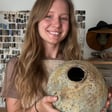
#282 From Traditional Pottery to Futuristic Sculptures w/Pj Anderson image

#282 From Traditional Pottery to Futuristic Sculptures w/Pj Anderson

Shaping Your Pottery with Nic Torres
Avatar
44 Plays2 years ago

Have you ever held a piece of pottery and marveled at the skill and creativity required to transform a lump of clay into an object of beauty? Imagine that same object, weaponized, and the story it could tell. That's the fascinating path we travel with our guest, PJ Anderson, in today's episode. From her art school days, PJ shares how she cultivated her craft, learning important techniques like glaze and slip chemistry and the invaluable role her network of potter friends played in shaping her as an artist.

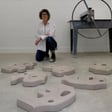
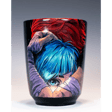
Ever seen a six-and-a-half-foot, four-hundred-pound mech armor robot sculpture? PJ talks about her journey in creating this massive piece, a symbol of her skill, precision, and boundless creativity. But PJ's work is not just about size and scale; it's about weaving narratives into the everyday, inspired by her studies in anthropology. She shares how she has weaponized everyday objects, transforming them into powerful cultural statements.

As we round off our conversation, PJ addresses the significant topic of accessibility in the medium of pottery. She critiques the elitism often associated with art school education and shares her personal struggle to overcome art school-instilled biases in her ongoing journey to democratize the art of pottery. From her story, you'll gain a fresh perspective on pottery, an inspiration to continue creating, and the encouragement to make loud, meaningful statements with your creativity. You can learn more about Pj by checking out her instagram @pjandersonceramics

Top 3 Value Bombs:

1. The podcast episode emphasizes the importance of continuous creation in the art world. PJ Anderson urges aspiring artists to push beyond their self-doubts and fears and to continue producing their art. By expressing their creativity and making 'louder' statements through their art, they can push boundaries and express their unique artistic voices.

2. Anderson also explores the concept of 'weaponization' in her art, transforming everyday objects into symbols of expression and critique. This unique perspective demonstrates how artists can infuse deeper meaning and social commentary into their work, elevating it beyond its aesthetic value.

3. The episode also tackles the elitism in art education, highlighting how biases can be unconsciously instilled in artists during their education. Anderson discusses her personal journey to overcome these biases, emphasizing the importance of making art more accessible and inclusive for everyone, regardless of their educational background.

and there is so much more 

Resources:

Take this Free Quiz to see how close you are to finding your pottery voice click here to take the quiz shapingyourpottery.com/quiz 

The Questions we ask will determine how our pottery will look like that's why I created a Free 15 questions to help you discover your voice template go grab it here www.shapingyourpottery.com/questions
Recommended
Transcript

Overthinking and Audiobooks

00:00:00
Speaker
I'm probably my own biggest obstacle to finding my voice. I question myself a lot. I overthink things. That is a thing that I do. I will start something and I kind of have to, when I'm in the studio I have this thing that I do where I listen to audiobooks because I can't be left alone with my thoughts to overthink what I am doing.

Introduction to PJ Anderson

00:00:23
Speaker
What is up, Shape Nation? This is Nick Torres here. And on this episode of Shaping Your Pottery, I got to interview PJ Anderson. PJ makes some really incredible mecca sculptures and traditional themed pottery. In this episode, you will learn how PJ makes her mecca awesome sculptures. You'll also learn about how her time at art school really helped her with growing as an artist.
00:00:47
Speaker
You'll also learn about her times when she was traveling in Africa and learning pottery in Africa. And there's so much more in this episode and I hope you guys enjoy it because I know I did. I'll see you guys in there.

PJ's Pottery Journey

00:01:00
Speaker
PJ, welcome to Shaping Your Pottery, and share with me what is something potters should be doing if they want to see how close you are to actually discovering your own unique voice with your pottery. I put together a free, old question quiz, it's very short, and take 30 seconds for you to take. If you want to know how close you are to finding your own unique voice, go to shapingyourpottery.com for the last quiz.
00:01:25
Speaker
So tell me the story of how you got started in pottery.com and it'll be right there at the top. I hope you guys enjoyed this episode and I'll see you guys next time. We had to take a 3D in order to graduate. Gulpture was at 8am and ceramics was at 11.30. So that decided for me. 11.30 for the win. And then I really, really liked it. I ended up changing and doing a double major because of how much I really liked ceramics. So yeah, it was literally because the other class was too early in the morning.
00:01:55
Speaker
I absolutely love it. So you contribute growth as an artist to art school. Can you tell me more about you attending art school?

Impact of Art School

00:02:04
Speaker
Sure. Some of the best friends I've ever made are my pottery friends, my art school friends. Some of the most influential teachers I've ever had have been art school teachers. Being able to be in that environment where you can take risks in a different way because you don't have to try and, you know,
00:02:22
Speaker
make a living off of it while you're in school, there's a much less expectation that you have to sell stuff while you're in school. You're perfectly fine just learning. When you are finished school suddenly, like, well, what are you going to do with your six foot pot that you just made,

Representation in Art Education

00:02:40
Speaker
right? Like there's like these risks that you can take in art school that you can't really take anywhere else. Not without a lot of preparation anyways.
00:02:48
Speaker
So how did this time at art school transform your own pottery and your own sculptures?
00:02:55
Speaker
Well, we would have to start with Grace Nickel, who was my hand-building professor at the time. And Grace Nickel, we were doing a coiling project. Our very first project we did was a coiling project. And she had told me that one of my pieces reminded her of Magdalene Addendum. And I was, oh, OK. So there's a black potter out there who's super famous, amazingly well-known.

Applying Art School Lessons

00:03:21
Speaker
So this is clearly the place where black potters can hang out. This is the place we can be.
00:03:25
Speaker
Because up until that point in any of my classes, drawing or painting or anything, no one had ever mentioned a black artist to me before. So this was like this transformative moment. So what is something you learned from your time at art school that you still use today? So many things.
00:03:44
Speaker
I still use a lot of my glaze chemistry, my slip chemistry. I do a lot of math. I have a way of looking at things I try to consider a lot, which is something that they really try to hit home with you when you're a student is like you want all the parts to be considered.
00:04:05
Speaker
That is also one of the major flaws, because I still do have horrible, horribleobias of things like canvas marks on pots. That was instilled in school. Has no basis in reality, but for some reason, I cannot have a canvas mark on a pot.
00:04:21
Speaker
What else is something that I use all the time? Pretty much my network, I think, is probably the best one. My network of other potters and friends who are potters who can take a look at my work and go over it with me and tell me if I am absolutely doing something ridiculous.
00:04:40
Speaker
if it's a good ridiculous or a bad ridiculous, because that's a good distinction to make. Also, if I'm on the right track, if they have suggestions, like just working in a vacuum is really hard to do.

Elitism in Pottery

00:04:52
Speaker
But having that network of people who understand your craft and understand some of the things that you're working towards and can give you really good feedback, honest feedback is amazing. Probably the most important thing. I absolutely agree.
00:05:06
Speaker
absolutely reshaping nation the more you can surround yourself with other creatives and other potters the more your pottery is going to grow I love that so much so
00:05:16
Speaker
You mentioned not being able to have a canvas on to your own pottery. Can you tell me more about that? Sure. This was one of the things that some of my undergrad teachers had mentioned, that it makes a piece

Cultural Influences in Pottery

00:05:27
Speaker
look unconsidered, unfinished, like you just didn't bother to clean it or to smooth it out. And as I've been continuing with ceramics, I've tried to try to think about the accessibility of the media of like the medium and how
00:05:43
Speaker
We separate people who went to art school versus people who worked in community centers and how there's this huge gulf between what is acceptable pottery and unacceptable pottery, what is good pottery and bad pottery.
00:05:59
Speaker
And I think it's terrible. I don't like that. This gulf exists. You can make amazing pots and never have set foot on an art school. And there's a lot of things that they've instilled into my brain from academia that are really, really elitist.
00:06:15
Speaker
And one of those things is canvas marks. There are a lot of situations where showing the material that you used while making actually can benefit a piece. It can be an amazing, an amazing addition. But because of this thing in my head, I cannot accept it.
00:06:34
Speaker
I am working really hard on that. There's a few of them. And it's really about whether we want to be able to have people outside of art school be able to really connect with the media and having these absolutes like no canvas marks that really just make sure that they can't participate in the same kind of way. So my canvas mark thing that I'm trying to work on, there's a pop, there's a couple of them, but that one, that one's a hard one.
00:07:03
Speaker
That was my hardest one. Absolutely, Griege. Shaping Nation, you don't have to be discouraged if you didn't go to art school and you're only doing pottery in a community studio. You can still make beautiful and wonderful art. You don't need art school for that. I love that so much. Let's talk about your pottery. In one sentence, can you tell me what you make? I make vessel inspired forms that are informed by the traditional cultures from which I come.

Study of Cultural Pottery Techniques

00:07:33
Speaker
Perfect one sentence. I love that. So tell me the story, how you started making the pottery and the sculptures that you make today. Well, the pottery is fairly simple. I really wanted to learn a lot more about indigenous ceramics. My mother is and I am Métis people. That's a mix between European and indigenous. We're recognized ethnicity in Canada and we have our very own. Well, I'm a member of the Métis nation and my father is from the Caribbean, Jamaica.
00:07:59
Speaker
So both of these peoples have a really strong tradition with ceramics. And I really wanted to find out more about the ceramics of the people I come from. I mean, everybody else in my class was learning about the ceramics from where they came from, like English, German, Spanish, like we learned all about that.
00:08:18
Speaker
But nobody wanted to talk about African ceramics or North American ceramics or South American ceramics or, you know, South Indian ceramics. They were very specific about the kinds of things that they would talk about. So in order for me to learn more about the works of the people that I came from, I actually had to do a minor in anthropology.
00:08:40
Speaker
I had to go and take like the history of the New World people or prehistory of the New World or art of sub-Saharan Africa in order to be able to look at the work that they were making and try and be informed by that, which led to me actually being a research assistant for an archaeologist who is studying Zulu pottery in South Africa. So he brought me over there and I got my first chance to work with traditional practitioners.
00:09:08
Speaker
So they were teaching me the same way they would teach like a daughter-in-law or a member of the family. And I felt that there was this really strong connection that I was missing from school, like this intergenerational passing of knowledge that was happening. And we don't do that the same way in academia. And I found that this was probably the most important form of learning that I could get.

Transition to Sculpture and Innovation

00:09:34
Speaker
So that's what I really clung to is this idea that this was unbroken traditional knowledge being passed down and I was a part of it. So now I could go back home to the center of Canada and make work with African diaspora children and be able to say, look, this is how your ancestors made pottery. Like this right here, this is a way. And now you know, and you can teach your children and keep it going.
00:10:00
Speaker
I wanted really strongly to do the same thing for indigenous pottery, but we don't have any traditional indigenous practitioners left here, just sort of didn't make it through colonization. So I ended up getting grants and going and studying in New Mexico or in southern Texas like El Paso and being able to do the thing where you work with the traditional practitioners from the beginning to the end, the harvesting of the clay, the grinding of the clay, doing the whole thing.
00:10:26
Speaker
And yeah, that is my whole shtick, as it were.
00:10:33
Speaker
So now tell me the story about how you started making the sculptures that you made. The sculptures. When I was in, well, I guess always, I've always sort of tossed around the idea of making some sort of figurative sculpture or some kind of weird weaponized parts. I really, really liked these ideas of weaponization and I kind of always tossed around figurative. But when I got into graduate school, my professor, Grace Nicole, again, was amazing and I love her to pieces.
00:11:02
Speaker
She kept reminding me that I already knew how to make a really great coil pot. She was like, you already know how to do that. So what else are you going to do?
00:11:11
Speaker
And that, that threw me, that threw me. I was like, oh damn, what else do I know how to do? That was my thing. I've spent like 10 years getting good at this one thing. Do I know how to do anything else? And that is pretty much the story of how I ended up doing all of these like giant mech armor robots and like figurative sculptures is because I was really trying to find something
00:11:35
Speaker
that I could do with coiling and that I could do with these traditional techniques that I've been spending so much time on and use it to do something that was a little different, something that was outside the concept of vessel, something that was outside the concept of what we think of as a vessel. So that is when I started really hitting hard the sculpture. Like I've had sculptural things before, but it wasn't until grad school where I really felt the freedom to like make

Art and Social Commentary

00:12:00
Speaker
a six and a half foot 400 pound mech armor robot, for example.
00:12:04
Speaker
I wasn't going to do that in my basement. It wasn't going to happen. Yeah, I love the mech armor robots are so cool. And there's the details amazing. And we're going to talk a little bit more about that later. But for now, you are inspired by a lot of things. But the two that I find most interesting are you are inspired by traditional cultural practices. And Dr. Who, how have these things impact the way you make your own pottery?
00:12:27
Speaker
Well, the Doctor Who, the science fiction and fantasy. I usually just toss Doctor Who in because Doctor Who is kind of popular, but also obscure at the same time. Like there's a big history behind it. So I'm just like, yeah, all of that science fiction fantasy weirdness that Doctor Who is, I'm all about it.
00:12:46
Speaker
But it's not just Doctor Who. It's also like Star Trek, Star Wars, books, novels, stories, comics, magazines, all of these things which play with concepts of future and how societies work. All that is totally my wheelhouse. And then I mix that with ways of making that are very much inspired by traditional peoples.
00:13:09
Speaker
One of my favorite things about doing my thesis for my graduate school was that I was using traditional pottery techniques that are ancient in order to have a conversation about the way we respond to digital technology and how we exist in digital spaces. So I thought that was like a really fun messed up kind of dichotomy there. I'm using old stuff to talk about the future and it was kind of cool.
00:13:38
Speaker
i love that so much that is so cool so something i found interesting is that you have a wide themes with your sculptures such as making mecca suits to more traditional sculptures and everything in between can you tell me more about this sure it was really really
00:13:56
Speaker
wrapped up in this concept of weaponizations for a while. Ways that we weaponize everyday things against whoever it is that we would expect to use it. So I was making some weaponized pots that were like water vessels that were so elaborately weaponized with blades and knives coming off of them that it made them non-functional, absolutely unusable.

Technical Challenges of Large Sculptures

00:14:17
Speaker
So it was like about protecting something to the point when it's no longer able to exist.
00:14:22
Speaker
in a real way. Then I was moving on to some of these claw form weaponizations. I was moving into weaponized weaponizations using things like guns, revolvers, not just knives. And then I started thinking more recently about cultural weaponizations, things that we weaponize against each other. Things like the red hat. There's really nothing wrong with a red hat. But if I'm walking by myself at night and I see somebody
00:14:50
Speaker
or a bunch of somebody's walking around with a red hat, I'm gonna get nervous. Or a black hoodie.
00:14:56
Speaker
everywhere I go. Like if you have like a 13 year old boy wearing a hoodie with a hood up, that is a symbol to somebody that this is a dangerous person and they now have every right to destroy that person. So these are all social things that we've just sort of accepted when the actual item themselves is in no way threatening. Like there's nothing threatening about a hoodie.
00:15:20
Speaker
But somehow that is the symbol for all the things that we're afraid of in society. There's nothing scary about a hat.
00:15:27
Speaker
But somehow that red hat has made it all the things that are scary. So it's wrapped it all up in a neat little package. So those are some of the sculptural ideas that I've been working through for, well, up until grad school. I moved on to more traditional weaponizations, like, you know, mech armor robot weapons. But for that time, that was really, really where my thought process was going. I love that. That was a great explanation of that.
00:15:55
Speaker
Now, can you give me a simplified explanation of how you were able to sculpt your giant mechanical robot sculptures? Very carefully. Very, very carefully. When I was at the university, we were in between gas kilns. So our old gas kilns were out. Our new ones had not been in there yet. So suddenly, I have to figure out how to make my giant mech armor robots.
00:16:19
Speaker
in pieces and then be able to fit them together afterwards. So I started with making the shoes, then I made the legs to the hips and fired those and then I would build the waist part on top of the hips and shoes and then I built the chest and shoulders and then I built arms and then I built a head.
00:16:40
Speaker
And each one of these pieces had to fit together after it was fired. Even though it was fired, it changed its size. It was actually some pretty impressive math work on my part. I still can't believe I pulled it off because it was a gong show, a gong show. The whole time, I'm like, you know what would be really amazing? If I could just slide a giant sculpture into my gas kiln and be done, that would have been amazing and super simple.

Overcoming Self-Doubt

00:17:08
Speaker
But no, I was in between kilns. So, piecemeal, I made it in pieces. It took months. So when you are making the sculpt, each body part individually, do you make like holes for the next body part so like it fits in? Or like how does that work? Pretty much, yeah. So each piece has a register or a flange, I guess, inside that the next piece will sit on.
00:17:30
Speaker
Yeah, yeah, it's pretty precise and you want to make sure that the shrinkage of the piece, you have to make it ever so slightly larger so that the shrinkage will allow it to still fit on those registers or phalanges depending on.
00:17:46
Speaker
what you learned. Yeah, so it was an adventure. I learned many things about myself, stress, anxiety, coming up with ridiculous ideas. I learned that I'm a person who comes up with ridiculous things and then somehow does it. Yeah, yeah, I learned that. I learned that.
00:18:07
Speaker
absolutely love it. Shaping Nation, if you have a ridiculous idea, maybe it's just out of this world, go and do that idea because you're going to find so much out by yourself and about your own pottery. I love that. So let's talk about discovering your voice. Can you tell me about the moment when you knew you were heading the right direction with your pottery?
00:18:26
Speaker
I don't know that I have. I know that I've been making things. I know that the last couple of years, people outside of my city have noticed that I've been doing it, so that's good. But I'm never really 100% sure if the things that I'm making are entirely what I want, entirely what I wanna say. I feel like there's so many different things that I wanna talk about, and each series of work is like one part of a conversation.
00:18:54
Speaker
So I never really know if what I've done is the entirety of my voice or just a part of it. Yes, I don't know. I don't know. I don't know. It's not a great answer, but here we are. What would you say was your biggest obstacle when it came to helping you get closer to finding your voice?
00:19:14
Speaker
probably me. I'm probably my own biggest obstacle to finding my voice. I question myself a lot. I overthink things. That is a thing that I do. I will start something and I kind of have to, when I'm in the studio, I have this thing that I do where I listen to audiobooks
00:19:34
Speaker
because I can't be left alone with my thoughts to overthink what I am doing. So I have to distract myself by listening to like the entirety of the Wheel of Time series or something like that, because I can't spend eight hours a day just going, I don't know, maybe this is a stupid idea. Man, I don't know. Maybe you should just keep going. I don't know. Throw it out.
00:19:53
Speaker
So like I really need to kind of stop myself from being overly critical at the wrong time because like something that's unfinished, you can't tell if it's terrible, if it's unfinished. You can't tell until it's done. So you really have to push through all that second guessing, all of that like, oh, I'm terrible at life or whatever it is that you're thinking about and get to the point where it's actually done.

Persistence and Unique Voice

00:20:18
Speaker
And then you can make a judgment call about it's,
00:20:21
Speaker
beauty or if it was successful or if it's doing what you wanted it to do. So it's a really big investment to make a whole thing from beginning to end, especially if it's burnished. Oh, God, it's burnished. Oh, it's the worst. And then you actually finish the pot and you're like, well, that was terrible. Smash. You can't tell until you get to the end. Yeah. So that's I am my own worst. I am my own worst obstacle.
00:20:50
Speaker
I definitely agree. Shaping Nation, we are our own worst obstacles. If we get out of our own head and pursue the things that we are trying to pursue, but also make sure to give critical advice to ourselves, then we're going to go a lot further. I love that.
00:21:04
Speaker
So outside of art school, you also contribute your growth as an artist to working with traditional practitioners. Can you tell me more about this? Sure. I mentioned a little bit earlier that I found that there was a really strong connection between peoples. So when I was in South Africa, I spent four months the first time I was there and five months the second time, I think.
00:21:26
Speaker
and I got to visit different groups within the Zulu area of South Africa. So I got to work with a lot of traditional potters and I didn't speak Zulu, still don't. The clicking is hard and they don't really speak all that much English.
00:21:43
Speaker
So the only thing that we had in common or our conversational topics was clay. Like that was it. So if they're processing clay, I understand where they're going because I understand processing clay. If they are, you know, making a pot and they're doing certain things, then I understand why they're doing certain things because I would also do those things when making a pot.
00:22:05
Speaker
So there's like this universalness that comes with making pottery like around the world. Anywhere you go and you find a pottery person, that's your person. Like they're just your person.
00:22:17
Speaker
And it's beyond language, it's beyond culture, it's beyond everything. Pottery people are pottery people, and that connection is instant. And I really liked that I could get that connection. Even though, like, I'm not Zulu. I have nothing to do with the Zulu people. I probably, I'm not really sure. Or even in the American Southwest, because, you know, my people are from Manitoba, in Canada. We're not from the American Southwest, but pottery people are pottery people.
00:22:47
Speaker
Right? Like we all have our very own language that's just making.
00:22:51
Speaker
So yeah, I really, really like that connection and I really, really like that I can teach somebody something that was taught to me in the same way so they can take that information as well and they can continue that cycle. So these stories aren't going to be lost now because I know that I know it and I know that I teach it all the time. So those people are also going to continue with those particular skills. Absolutely love it. I definitely agree.
00:23:21
Speaker
What advice would you give to someone that is looking to discover their own unique voice with their pottery? Well, don't let things stop you. We didn't really have any indigenous pottery, anything where I was from. We didn't have a heck of a lot of African pottery stuff either until way, way later. And I really wanted to know, and I really needed to find a way to find that information out for myself.
00:23:48
Speaker
So I literally had to go to a different department. I literally traveled around the world. I went and got grants. I got, you know, I did all of this research so that I can find out the things that I wanted to know. Even though the traditional avenues of academia didn't have what I wanted, I was able to circumvent like sneaky around and get that information and get those skills that I wanted.
00:24:12
Speaker
So it's not always going to be a clear, you know, step one, step two, step three, step four, because there's probably going to be a lot of roadblocks in the like along the way. And you need to find a way to get around them to do the thing that you want to do. And that's probably the hardest and most
00:24:31
Speaker
The scariest, because once you leave the path, the path that, you know, most artists do, everything's a mystery. It's all up in the air. You have no idea what's going to happen, but you're getting the thing that you wanted, the thing that you needed to know, the thing that you wanted to try, the things that you wanted to discover. So sometimes leaving the path is the only way to stay on the path. Ooh, look at me being weird and philosophical.

Conclusion and Encouragement

00:25:00
Speaker
That is quotable right there, I love that. So as we are coming to a close here today, what is one thing you wanna hammer home with my audience today? Don't stop making stuff. Don't stop making things. That's pretty much it. When you get undecided or you feel unsure about yourself, go in the studio, make something else. When you feel like everything's stressful and everything's hard and no one's listening to you, make louder. Not talk louder, make louder. There it is, right there. I'm so quotable today. Absolutely, I agree.
00:25:46
Speaker
Hey, thanks for listening to this episode of Shaping Your Pottery with Nick Torres. If you want to discover how close you are to actually discovering your own unique voice with your pottery, I put together a free
00:26:00
Speaker
four question quiz it's very short it take 30 seconds for you to take if you want to know how close you are to finding your own unique voice go to shapingyourpodtery.com forward slash quiz or you can simply go to shapingyourpodtery.com and it will be right there at the top. I hope you guys enjoyed this episode and I'll see you guys next time.