Transcript
Speaker: Hey, real quick before we get started, if you would like to find your own theme for your pottery so your voice really stands out and you're not getting bored with making the same thing over and over again, I put together 53 themes for you guys and it's completely free. All you have to do to get it is just go to shapingyourpottery .com forward slash 53 themes. That's shapingyourpottery .com forward slash 53 themes. I'll see you guys in there.
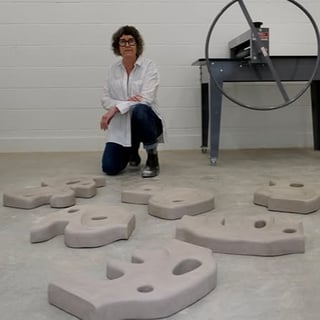
Speaker: What is up Shaping Nation, this is Nick Torres here. And on this episode of Shaping Your Pottery, I gotta interview Colton Lunt. Colton makes some really incredible coil built and wheel thrown combined sculptures and they're just absolutely incredible. In this episode, you'll learn how Colton makes his sculptures. You'll also learn about how Colton uses his instincts to really drive his pottery voice.
Speaker: You'll also learn about always being curious about the pottery, about your pottery and so much more. Hope you guys enjoy this episode and see you guys in there. If you love pottery and want to take your skills to the next level, you're in the right place. Find your own pottery style right here on Shaping Your Pottery with Nick Torres. Let's get started.
Speaker: Colton, welcome to Shaping Your Pottery. And share with me what is something you love besides making pottery? That's a big question. My mind initially goes to nature, the outdoors, my home where I grew up in southern Utah, the red rocks, geology, the flora and fauna, and the area. Just being able to go outside, explore, be free, stretch my legs, get some sun.
Speaker: Just kind of escaping society and going on a hike, exploring a new canyon, mountain top. That, that is definitely something I really enjoy. I like science. I read and, and research, do, do a bit of research in everything from macro to micro.
Speaker: biology and physics and stuff like that. And it's mostly just for fun. I don't get too deep, but I like to stay informed of like discoveries and you know, in science and biology, space, computers, kind of nerdy, but I enjoy it. But you know, I also just like riding my bike. I try to ride my bike everywhere.
Speaker: And that's all I can think of for now. Friends, of course. I mean, I could really just go on. I could just keep going on about things I like outside of pottery. But yeah, I think I've kind of summed that question up as best as I could. Absolutely love it. So tell me a story how you got started in ceramics.
Speaker: So, well, I guess just out of natural curiosity, I wanted to try something new. My high school ceramics teacher, Mr. Evenson, looked at me. And then my first year of college, Shane Christensen, was another formative influence in my life. And they just created awesome environments that
Speaker: And you want to keep coming back. It was music. They played their, their attitude, their demeanor in clouds. And I just kept me coming back and it's just pottery is, is kind of this every step of the way presents you with a puzzle. So a little something to figure out.
Speaker: whether it's how to hold your rib or how to throw just a little bit taller or how to correct a mistake. And I just really fell in love with figuring out these puzzles, trying to solve all these little mind games, if you will. It was just a really good way to exercise the brain. And it was really good for me. I got hooked and I couldn't, you know, I couldn't set it down. I was definitely still, still addicted to it. So yeah. Love it. I absolutely love it.
Speaker: So tell me the story about when you did a residency at Belger Crane yard studio. Yeah. Well, that was actually a very formal, like it.
Speaker: It really advanced my career as an artist. I learned a lot from the community there. People there were amazing with students and community members renting studios. They were awesome. And it totally changed my aesthetic and what I do. And for that, I'm super grateful and can't say enough about
Speaker: the advancement in my career, but spiritually, personally, emotionally, it was one of the darkest times of my whole life, if not the worst. Not a lot of people say this because there's such a big, powerful name in ceramics, but I know a lot of people feel the same way. Everyone's just afraid to say that it's a shitty organization and they
Speaker: They're coldhearted bastards that run it. I'm sorry. I need to be honest. No one else dares to say this stuff. Cause like you, you, you burn bridges with those people on very, very well could throw you under the bus. And, you know, while you're there, they're always dangling the possible, the possibility of your, your resident artist show at the end of the year. You know, if you don't behave, not going to give you the show.
Speaker: But being a resident there definitely felt or it definitely was indentured servitude. It was not anything less. And I don't want to be negative. You know, I think this should be a, you know, a positive experience for sure. For us, we'll listen to her bite.
Speaker: I also have to be honest, you know, because I don't, I don't think that I haven't heard anyone publicly admit these things, but I guess I'm all I'm so I'm speaking for them. I'm speaking for all the other people that, you know, have gone through it and have had a hard time because I know there are others, but yeah, it was tough. It actually.
Speaker: There's, there's some trauma there regarding the, you know, dealing with certain members of the staff that just rattled me to my core. Never been treated like that before. But like I said, the community there was awesome and I, I, I benefited a lot as an artist and, and hey, what better material could I ask for to make art about and trauma, you know?
Speaker: Perfect. That's like fuel. Yeah. So what is, how did the community really help you with evolving your pottery? So there's a lot of people there doing foggy, interesting, contemporary techniques that I'd never seen firsthand. I'd always seen in a magazine or a blog, but.
Speaker: Here there are people like, you know, throwing, you know, odd things into their clay, staining the clay and just using different techniques that I'd never personally been exposed to. And then just the, the students there were just so lovely, full of life and just really inquisitive, really nice. So yeah, there were like people renting studios and students as well that were just really great.
Speaker: So what advice would you give to someone trying to get into a residency for themselves? Make sure that you have a lot of money saved up and or have like some other income going to be coming in as you as you were there and talk to current resident artists and past resident artists. I would maybe say you might get a more honest answer from the past resident artists because the current resident artists
Speaker: are really kind of under pressure to put on a nice face and pretend everything is dandy, you know, in order to keep the peace in their environment. But the past resident artists might be more inclined to give you a real, a real kind of account of their experience. So just reach out, see who's been there and contact them through Instagram, email, whatever.
Speaker: and ask them about their experience. But yeah, there's not many residencies and ceramics that really kind of support you, get underneath you and lift you up. They're all pretty expensive in terms of, you know, cost of living and kind of making ends meet while you're there. So I think maybe, maybe have some savings beforehand or, you know, a side job, if you can manage that.
Speaker: It's tough. Ceramics is tough, you know. You haven't figured that out already. So let's talk about your pottery. In one sentence, can you tell me what you make? Yeah, I make sculptural vessels inspired by biology and geology. So tell me a story how you started making the sculptures that you make today.
Speaker: It has been a evolutionary process where I'm just led by instincts. Just, I think the first experience with clay, it's just picking it up in my hands, squishing it through my fingers and, and getting this like.
Speaker: stress relieving effect, very tactile. And, you know, just kind of could just lose yourself in this, this role is very meditative wheel throwing process. I just kept, kept going, following my instincts, doing something that felt good and my forms got better. They got more abstract.
Speaker: And in, during the undergrad at Northern Arizona University, I just kind of got, you know, I would say directed or, or, or encouraged to make certain forms or, you know, I've got positive feedback about certain things I was doing. And so I just kind of stuck to those. I was basically about positive feedback.
Speaker: It's been, so it's, it's been this evolution in that. Started with these wheel thrown round basic pots. They slowly got larger. They got more complex asymmetries getting involved. And it's really just something that grew out of experimenting with clay. There's always something new you can do every time you throw clay down onto the wheel. And I embraced flaws, maybe.
Speaker: accidentally swiping the side with a rib in a way that creates a nice line. And then I'll try to replicate that. So there's a lot of mistakes that I then try to mimic or replicate that then I bring into my aesthetic language. But slowly and surely it's just been a one step after another. Things are getting more asymmetrical and then I fully moved on to coil building and then mixing wheel and coil.
Speaker: And it's just been a kind of a quest for understanding the entirety of the medium, wanting to know everything it can do, just being fascinated at its capabilities and way of that can mimic other materials. And, and so it's really just been a, a quest in curiosity, I would say.
Speaker: I love that shaping nation. It's important to, if you mess up with your pottery to maybe take those mistakes and try to apply it into your pottery, see where that takes you. And also always be curious on what you are making because see where that can take you. So now you mentioned, now you mentioned that you follow your instincts. Can you give me an example of when this paid off for you?
Speaker: So, well, every day, really, well, I guess it's a double -edged sword. It can, it can, it can Harvey you, but it can, it can help. And I think mostly it's going to help. And it's just all, it's, it's really more about a feeling as opposed to a plan. So the things that I make.
Speaker: are very much instinctual as opposed to planned out. I often begin not even knowing what I'm doing. I just have this instinctual feeling or urge to coil build, or I have an urge to distort clay in some sort of way that I thought of last night or I saw somebody else do.
Speaker: And I just need to investigate it. I need to understand how to do it. I need to throw my own take in there. So I'm just kind of writing on this feeling or this urge to just interact with clay instinctually. And then surely I'm always amazed at what comes out of that. So can you give me a simplified explanation on the process of how you make your sculpture? Yeah.
Speaker: So like nature, you know, there's a lot of spontaneity. There's a lot of, I don't know, just different elements interacting with one another to create a mountain, you know, or a, a valley when water or constantly carving away. And I.
Speaker: kind of feel that as an artist, as I'm instinctually making, I'm kind of doing the same thing. I'm sort of discovering the form over time and letting it unfold. It's almost more of a collaboration between me and Clay, not really like I've planned everything out and made every decision. I'm sort of there as a catalyst to sort of let things happen.
Speaker: And I am sometimes just, I feel like an observer of the piece developing. No, essentially I'll put clay down and start coa building. And sometimes it starts in just one center area, or sometimes I'll have three parts that I'll build up from and then connect.
Speaker: And I just kind of see where it goes. I just coil build and I guess my technique and how I coil build just allows me to change the form almost like an interpretive dance. It's like, I feel this way because of the sound, the music that I'm hearing. So I'm going to move my body.
Speaker: in, you know, a specific way according to the music. And the way I make is similar. I'll just move the walls and bend them and shape them according to how I feel and let it unravel, let it unfold. And, and yeah, like I said, I'm always surprised at what, what happens in the end. What advice would you give to someone that wants to start coil building their own sculptures?
Speaker: Just go for it. Be brave. And I think the most, the biggest revelation I ever had is it's as simple as just squishing clay where you want it to go. Honestly, it's not technical coil building. You can create technically look looking think technical looking objects.
Speaker: but the process is never technical. If you just stop before it collapses, let it set up and keep going, you can make any form you can think of. Don't, you know, don't not try a form because you don't think you have the skills. Just go for any form that you can think of right now. And just realize that it's as simple as squishing the clay where you want it to go. You move your hands, the clay is going to listen.
Speaker: And it's going to stay exactly where you put it. So, so just squish it where you want it to go. It's as simple and silly as that. And I, that's my advice just because I thought that I had to like learn all these other techniques. Like I'm a classically trained potter and I had to like walk before I ran.
Speaker: You know, but you can just, I think kick the gate open and just start running right from square one if you really want to. And I've seen it happen. I've seen beginning beginners just start making amazing things because they, they weren't limiting themselves at all. So, so just throw out those self -imposed restrictions and make exactly what you want to make. Clay is awesome. It lets you do anything and you don't have to be advanced. So you kind of froze that last bit of it.
Speaker: Oh, sorry. Yeah. Clay is awesome. It lets you do anything and you don't have to be advanced. Perfect. I love it. Shaping Nation. If you want to start coil building, go start coil building and go make whatever design, sculpture, whatever you want. Just start doing it. Just do it because that's how you start getting better at it. I love that so much. So let's talk about discovering your voice.
Speaker: Can you tell me about the moment when you knew you were heading in the right direction with your pottery? Yeah, I think it was getting some encouragement from my professors who are my professors at Northern Arizona University who are assholes. And I say this endearingly, they're really great people, but they'll give it to you in a critique. If you deserve it, you know, they're not going to sugarcoat anything. They're brutally honest.
Speaker: And so, you know, when I got a green light from them, it was super encouraging and, and, and, and made me go as far as I have gone today. Made me stick with it. So yeah, it was just encouragement from professors goes a very long way. Love that. So what, besides from the encouragement from your professors, what do you think helped you the most with discovering your voice?
Speaker: I guess it would just be listening to intuition, you know?
Speaker: Having fun is what it really takes. The genuine fascination with clay and actually wanting to understand its nature and its character at the very core and all of the things that it can do and what it's capable of, all the little nuances about how clay operates and responds to your touch are really amazing. It's a super complex material.
Speaker: But at the same time, it's super simple. You can understand it very quick if you just squish it through your fingers. But it can take 10 years to really understand the complexity of stoneware to porcelain to earthenware and how it responds and under fire and under touch and pressure and everything. So this comes from genuine curiosity and wanting to
Speaker: solve all these little puzzles in form and surface. I love that. Shaper Nation, you got to get curious about the pottery you're making because the more curious you get, the better your pottery is going to end up in the end. I love that so much. So what is something you are doing to evolve your voice even further?
Speaker: It's, it's what has put me on this path of evolution. It is, it is something I'm doing is kind of setting goals for myself or playing a game. And the game is.
Speaker: Okay. I've never stacked two pieces together on the wheel. I want to know how to do that. I want to uncover that mystery. Spend some time doing it. Okay. I get it. Great. Now what? I want to stack pieces and distort them. Okay. I understand that. Now I want to stack pieces, distort them and coil build.
Speaker: And so what it becomes is these are all just stepping stones. They're all different rings on a ladder. You're just climbing higher and higher. You could always add to your library of knowledge and understanding and ceramics. So I'm just trying to soak that in. And there's just, there's, there's just no limit to what you can learn.
Speaker: And so I'm always just trying to figure out what, what's that? The next thing, what do I not know? What, what's the limit of my comfort zone? And, and then I'm going to put my toe outside of that and then step outside of it, you know, and then expand that. And it's just my circle of knowledge just kind of keeps expanding and expanding and expanding. The more I get, the more I kind of dance around that border of where I'm comfortable, you know?
Speaker: That is really, really powerful. I love that so much. So as we're coming to a close today, what is one thing you want to hammer home with my audience today? Well, you know, I am just a humble guy. I'm not, I don't claim to be some brilliant genius of an artist. I think it's important to understand that all of your idols out there who appear to be brilliant artists, they're all people.
Speaker: struggling in their own way. They get bored. There's times in their life that it's boring, stupid, silly, beautiful, everything in between. So I just would like to say to everybody to be kind to yourself. Don't give yourself a hard time for being tired or procrastinating. Just follow your intuition and do what you love.
Speaker: And it helps to be a little bit stubborn, you know, and to not, uh, give up on anything. You gotta, you gotta definitely take the hits and keep moving forward. But just follow your intuition, do what you love and don't talk bad to yourself. That is an excellent parting word to advise. Colin, it was so great chatting with you today. Where can my artist go and learn more about you?
Speaker: Where can you go to learn more about me? Yes. Gosh, I don't know. I would say Instagram's probably the best place. You can, you can kind of see how my work's evolved from, from wheel thrown, atmospheric wooden soda firework to where it's at now, which is like mid range and low range electric.
Speaker: kill them fired work, you know, so it's gone in this fun kind of evolutionary path. And you can kind of see that as you scroll down and I kind of get a kick out of that because being inspired by biology, I liked that idea of evolution. So, and where, what is your Instagram handle? Just my first and last name, exactly how it is. Colton Lunt.
Speaker: We hope you enjoyed this episode of Shaping Your Pottery with Nick Torres. Do you have questions about pottery that you'd like Nick to answer? Send them to us on Instagram at Nick Torres underscore pottery. We'll see you next time.