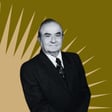
Is America Unfinished or Just Getting Started? Alexandra Natapoff on 250 Years of Justice and Injustice in the United States

“As long as democracy is a collective endeavour of all the people who belong to it, in some sense it can never be finished — because we are constantly bequeathing to the next generation the opportunity and the freedom to have these conversations over and over again.” — Alexandra Natapoff
It’s less than six weeks until America’s 250th birthday. The official America 250 store is selling T-shirts while Harvard Law School is doing something slightly less commercial. 62 HLS professors have written 1,000-word essays, assembled into a single volume to be published on July 4. Entitled America Unfinished: Two Hundred and Fifty Years of Law and Governance, it’s co-edited by Alexandra Natapoff, a Harvard Law professor who spent years as a federal public defender in Baltimore. The title, of course, is borrowed from the Gettysburg Address, where Lincoln charged the living with completing “the unfinished work” of those who died in the Civil War.
So is America unfinished or is it just getting started? For Natapoff and other Harvard Law School professors like this year’s Pulitzer Prize-winning Jill Lepore, the answer is suitably complex. Yes and no and maybe. Everything all at once. The essays focus on 250 years of both justice and injustice in America. Perhaps the only thing all authors agree on is the central role of capitalism in the history of the United States. Follow the money, Natapoff suggests. Those dollars will transport the reader to the heart of the American story.
That said, America Unfinished will certainly cost you less than a three-year Harvard Law degree. And if you wait six months, the book will be available at no cost online. So follow the money. It will take you to some unexpectedly free places.
Five Takeaways
• The Gettysburg Address as the Title’s Source: The book does not merely allude to Lincoln’s famous speech — it reproduces it at the front, so readers can go back to the original. In the Address, Lincoln charged the living with completing “the unfinished work” of those who died at Gettysburg — the work of building a government of the people, by the people, and for the people. Natapoff and Charles chose this frame because it captures both the challenge and the hope: democracy is unfinished in the sense that it demands active work from every generation. It is not a gift that has been fully delivered. It is a task being handed on.
• America and Democracy Are Not the Same Thing: Andrew’s challenge — you use the words interchangeably — earns a concession. Natapoff’s work in criminal justice has led her to argue repeatedly that the American criminal system fails many tests of democracy: it is exclusive, inegalitarian, overly coercive, inconsistent with democratic principles. So ‘America’ and ‘democracy’ are not synonyms in the book. Many of the 62 essays disagree about the state of various pieces of governance. The book’s inquiry is whether it is fair to call any particular piece of American legal governance a democracy — which both editors consider a compliment, and not a certainty.
• A Federal Public Defender in Baltimore: The Biography Behind the Scholarship: Before she became a law professor, Natapoff was a federal public defender in Baltimore’s federal courts. Her job was to be adverse to the federal government all day every day, defending some of the most vulnerable and dispossessed people in the city against the massive resources and power of the federal apparatus. Those years shaped everything: her subsequent twenty years of scholarship on criminal courts, plea bargaining, misdemeanors, and race and inequality; her book Punishment Without Crime; and her contribution to America Unfinished. In her read