Influence of Questions in Pottery Making
00:00:00
Speaker
Real quick before we get started, did you know that the questions that we asked are going to determine what our pottery is going to look like and it's going to determine what our voice is going to look like? That's why I created 15 questions that you can use right now to start discovering your own unique voice. Go to shapingyourpottery.com forward slash questions to get this free booklet.
00:00:23
Speaker
If you love pottery and want to take your skills to the next level, you're in the right place. Find your own pottery style right here on Shaping Your Pottery with Nick Torres. Let's get started.
Introducing Natalia Arbeles and Her Philosophy
00:00:35
Speaker
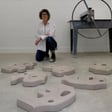
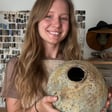
What is up, Shaping Nation? This is Nick Torres here. In this episode of Shaping Your Pottery, I have Natalia Arbeles. Natalia makes some really incredible Colombian sculptures that are absolutely incredible. She makes some ranges from like a couple of feet tall to like
00:00:52
Speaker
super big, taller than her, taller than me. Natalia, welcome to Shaping Your Pottery and share with me what is something you believe potters should be doing to have success in pottery. I believe having fun in the studio, experimenting in the studio and playing is a big part of maintaining a good practice while not everything is fun. I believe in making sure you do have fun moments and play.
00:01:22
Speaker
I'll have moments of like where I'm working really hard for a specific show or deadline, but in between those moments, I leave space open for like playing around, just having fun, being silly. And especially in my work, I think a lot of people don't realize their
00:01:42
Speaker
there is a bit of a heavy topic of talking about colonization and conquest and things like that. But then in the middle you have silly moments of these little figures making weird faces and there's cuteness and a playfulness and it helps me deal with kind of the vulnerable issues and influences that I'm working with, especially also bringing in family stories. So I think the
00:02:12
Speaker
The fun and the playfulness helped me keep going. I absolutely should feel this right now. You have to make time to play and just mess around with the pottery.
Artaxis Fellowship and Watershed Residency
00:02:22
Speaker
This is going to allow you to have a little bit of fresh breath air when you do it this way. So Natalia, can you tell me the story of how you were awarded the inaugural Artaxis fellowship and how you use this to fund your residency at Watershed? Yeah, that was the very first
00:02:41
Speaker
fellowship that they did. So I was really kind of, you know, an honor and grateful to be part of the process. And I remember exactly where I was. I was installing a show when I lived in Ohio and Brian just called me from Art Access and asked, you know, asked some questions and was like, do you want this? And I was like, so excited. And I think in my career, there's only been
00:03:07
Speaker
that's like the second most exciting thing that's ever happened to me. I would say like the first one was getting into grad school, being really excited and kind of life changing. And then that was the second of like getting that news and just being overwhelmed with happiness.
Experimentation with Local Clay
00:03:24
Speaker
And so that residency, they were paired with Watershed and it provided a two week residency to work with this group
00:03:35
Speaker
called The Romantic Robots. And I remember my friend, Jenny, who was my recommender, was trying to push me to go for more figurative workshops, because you pick which one you want. But in my letter, I wrote Romantic Robots because they were very, they were much more sculptural, textural, and about fun and play. So I chose that group because I really wanted to
00:04:04
Speaker
you know, play experiment with other artists and collaborate. So I went with that group and the fellowship sponsored me, provided travel and everything that was needed. It was my very first residency that I went to. So I think that that residency kind of since then I've gone to so many but
00:04:29
Speaker
kind of opened my eyes to how important it is to move
Networking and Artistic Growth
00:04:33
Speaker
through different spaces and be open to coming into a new space with not many tools, not many expectations, but just with the idea of I'm going to let the people in the environment kind of dictate how the work's going to go. And from there, I moved to Brown and terracotta clays. I was pretty much using
00:04:58
Speaker
porcelain and white bodies of clay. And Watershed has this really beautiful clay body that you can actually rake off of the hill. I forgot what it's called.
00:05:11
Speaker
that time allowed me to experiment with processing the clay from the land and allowed me to come into using brown and red clays, which I exclusively use now. Yeah, so it was a time for experimenting. And then that really kind of allowed me to look at every space that I moved through in that way of like, I want to come in with very little tools and kind of use what they have there.
00:05:38
Speaker
I love it. So outside of switching your clay from like stoneware like white clay and porcelain to brown and terracotta clay, what else did you learn that kind of helped you push your pottery further? Okay, so what else did I learn to push my pottery further was I think during that time I
00:06:01
Speaker
sometimes I work too hard or I'm too narrow-minded in the work. And because I was around so many other artists, I think it was important to recognize that that time wasn't just for work. It was with connecting with the other artists and experimenting and allowing myself to have those down times and have conversations and that those casual conversations that were rigid and structured
00:06:30
Speaker
also granted openness for ideas and process talk. So the networking and the conversations and the the casualness of those spaces are just important as making as well when you're around artists of that caliber or that are you know ahead of you at the same level as you and behind you as well or like just you know right behind.
00:06:58
Speaker
Definitely. Shaping Nation, if you listen right now, how can you go out and just be around other artists, other potters? Doing this will allow you to really stretch your pottery even further and allow you to grow your voice even more. So can you tell me, what is something you learned from your time at Watershed that you still use today into your sculptures?
Impact of Watershed Experience
00:07:20
Speaker
Yeah, definitely that clay that I was using. And I've gone to Watershed since that first
00:07:28
Speaker
residency of mine, I've gone back with the Color Network, which is an organization that I help co-organize and we came back as a group of artists and the whole group was fully funded. So it was like a completely different change of like that residency to this one, but definitely of how to navigate space and use what is around you. Like I was saying before, and I use that to the state of like,
00:07:59
Speaker
working within the parameters of what you have available and working through their kilns and saving because I have in my studio I'm limited with what I can fire. I will use residencies and you know I'll save work for when I get to travel and know that I have spaces like that to make specific work. So I'll take advantage of like
00:08:28
Speaker
going to residencies like Watershed or Amoka and no, save a specific body of work for those spaces because I'm limited of what I could do in my home studio to, but yeah, I'm really grateful for, because I think it was such a huge, and it is such a huge impact in my work now using that brown clay. So forever, we'll be grateful for them letting me experiment with getting clay like that.
Historical Influences on Natalia's Work
00:08:55
Speaker
So let's talk about your sculptures. Tell me the story how you started making sculptures. I was an art major, started off as a painting major in undergrad and slowly switched to sculpture in undergrad and I was a a sculpture
00:09:16
Speaker
major switched because I was interested in like the physicality of making sculpture as opposed to sitting down. When painting, I just like the involvement in it. And I really was interested in process, all types of process, you know, I wanted to learn everything. And I think that that's what really grabbed me for sculpture, you know, I learned how to how to weld, how to cast
00:09:43
Speaker
different metals. And then eventually, when I went to grad school, I chose a grad school that had as many different mediums, you know, whether it was glass fibers and ceramic, and I just kind of ended up in the ceramic department because that too snatched me up. But I was really interested in that all the processes that I could learn. And then once in grad school, you know, I kept going, I learned
00:10:10
Speaker
glass casting, I learned robotics and kinetic sculptures, and even went into 3D modeling and printing. And I was so interested in all these different processes. So I think that that's what really grabbed me. But I would say it started somewhere probably in high school because I took classes back when I was in
00:10:35
Speaker
in high school, and I actually came out in my yearbook, and I think that it's hilarious. There's a picture of me making some form, and the quote is, ceramics is okay, but I wouldn't want to do this as a living. I want to go to school for fashion design, and I think it's hilarious because life kind of just guides you in these different directions that you wouldn't expect as a young person.
00:11:01
Speaker
I definitely agree. I love that. That's a really, that's a really cool thing that you added there. So you are inspired by pre-Columbian and Columbian ancestral histories and family stories. How does this come back into your work? Yeah, I'm definitely interested by historical objects of pre-Columbian ceramics and art, especially from the Andes. My family
00:11:28
Speaker
is from the mountains and I look at a lot of Colombian and Peruvian art. So I will bring in a lot of historical objects that I'm looking at, whether I'm interacting with them physically or through museums or through images and books, the internet. So I'll use, I'll start with like an object or a couple objects that come together
00:11:58
Speaker
where I kind of reimagine new objects that are heavily influenced off of the history or the function of what those objects were for. And then I'll combine those with my own family's narratives of whether it's my own personal narrative of things that I've gone through or my family's narratives like my family's immigration stories or stories of
00:12:25
Speaker
you know, deaths and births combined with this historical objects. And I think it's a way to talk about a layered identity of coming from these pre-Columbian people, Spanish people, and then Mestizo people, like the combination of that, and then like all the ancestors in between that to present day, like the more
00:12:53
Speaker
Connected stories that I have of like that were from my grandparents or my parents So I like to layer them together to create these new stories that talk about all that all those kind of histories together so Yeah, and and that that could be a very vulnerable place to talk about some of those stories of like, you know I have one piece where it's my father coming over to America on a boat or my mother coming over on a plane or
00:13:21
Speaker
And that's where the fun kind of helps me confront these really deep or emotional stories. But yeah, I start through there looking at objects. I love a lot of the gold objects from Colombia and the ceramic objects from Peru. In Colombia, we don't have a whole lot of ceramics like Peru does because
00:13:49
Speaker
We were rich in gold, but I think a lot of the ceramics was destroyed, but Peru had a lot more things that were preserved. So I kind of go over to them to look at the beautiful ceramics that was left over. I really love that. So not a lot of people know this about me, but I am Cuban on my mom's side. And so my grandpa came from Cuba, and he had to escape on a ship.
00:14:17
Speaker
for like he like hide in the refrigerator for like eight hours and he came into America. And I thought your story with your parents was like really amazing. I thought that was really cool. So can you walk me through how you think about designing your sculptures? Yeah, it's a combination of sketching or if I visited an idea
00:14:39
Speaker
I just go at it because I understand the logistics of how a piece is going to build up. So it's a combination of sketches and letting the intuition of how clay moves or how a piece is working out aesthetically kind of keep going. But yeah, so I'll start with those historical objects and sometimes I'll sketch them out.
00:15:08
Speaker
sometimes the combination of different objects together to make new objects and I will kind of design something referencing the bottom will be kind of the land of Columbia and that will be a representation of like a head or a body. That's like my
00:15:31
Speaker
that people know my work for is like the Mestizo series that comes with like that where there's like a head on the bottom or a figure. And then from there you have a horse that's on top of that. And then all these little figures that are on top of that horse kind of fighting and having this, this scene, battle scene. I'll think about how I want to kind of tell a story, what story I'm telling. So it'll come together like that.
00:16:00
Speaker
or sometimes I'll repeat a story that I've already told and just add new elements or figure out that story in a different way. So I do video work as well. While some people might not consider that ceramics, I'm still talking about the history of ceramics and the
00:16:21
Speaker
influence of ceramics in those videos so I have this one story that I keep working with in my body of work that's called El Dorado and I've done it where I've created a ceramic scene of El Dorado and you know from that I will it starts with like a historical object and then you know I look into that historical object where did it come from who were the people that were creating it and researching that and then
Recreating Rituals and Personal Narratives
00:16:50
Speaker
From there, it could be such a rich story or it kind of falls flat because so much information was lost through colonization. But in El Dorado, that story comes from the Muisca people, where it was a Muisca chief, Zippo, would adorn himself in gold from head to toe and throw gold objects into the Lake of Huatavita in Colombia. And it was like as an offering or a ritual
00:17:20
Speaker
So from there, I looked into the story, and I started creating the story. So it starts with the object, but then you could bring in a story, and that's how I did that. And then sometimes it's even a step further. It's like the object and the historical story that comes with that, and then bringing in my own family stories. So it comes like that, and it's a combination of the researching, sketching out, and changing objects. And then sometimes it's
00:17:50
Speaker
recreating that story and I've had all that research and but just changing the context or changing the the medium and going in even deeper so I was making objects about El Dorado and then I started recreating the the ritual and I created a whole costume and made ceramic masks but you know painted them
00:18:16
Speaker
in gold and started making ceramic objects to represent the gold objects. And I went to the lake, I live on a lake, and I started recreating the ritual of throwing these things into the lake. So it was like I had the tangible ceramic objects, and then now I had the experience of like
00:18:39
Speaker
recreating that that ritual so out and then making video from that making photographs from that so I'll come back and revisit stories and ideas through like whether it's like I'm researching sketching in different ways. I love that shaping nation. How can you add stories from your life from your family stories or your culture into your pottery and how can you like really make it your own twist on things when you do it that way?
00:19:08
Speaker
Yeah, I think I'll go ahead. No, you go ahead. Yeah, I think in this day and age, it's it's you know, I get that question a lot from students who come from a mixed heritage identity of what are what am I allowed to use? What can I use? And what shouldn't I use? And what is considered appropriation? And is that bad or not? And, you know, I talk to students about
00:19:38
Speaker
that and I feel like there's always a way to gather stories and influences and use it in your work as long as you're not being exploitive. I think that we could be influenced by the world all around us and even within our own lineage. It's the way that you use things. It's the way that you acknowledge where they come from and recognize the people who
00:20:04
Speaker
who brought these ideas first and who is influencing you. So I first talk about that and then I also tell students about, you know, as a mother myself and my son is
00:20:19
Speaker
you know, half Colombian, half American, but he's white presenting. You know, I passed down my last name to him because I want that heritage to still be there as much as I can is like maybe if he decides to have children himself, like that kind of little by little goes away. But as someone that is proud of our heritage and wants to pass down stories and culture, I would, you know,
00:20:47
Speaker
I would hope that the next generation, the next lineage holds on to a little bit and celebrates it and is allowed to use that and feels because they're white passing that they can't use it. I hope they don't feel that. And I think that of ancestors as well, people really want to, whether it's like religion or culture, different parts of the family,
00:21:15
Speaker
people really want to pass that down and they hope that it'll still get acknowledged past we're here or not. So I always tell students that like, you know, use what you want to use and what you're thinking about, just think about how you can use that. So then from there, where to gather ideas, I think it's
00:21:38
Speaker
it could be from anywhere.
Balancing Identity and Heritage in Pottery
00:21:41
Speaker
It's so many rich things to gather, whether the place that you live in directly or the places that you came from or where your family came from, where everyone is such a mix of different places. So that could be a start or just the simpleness of what you're interested in, whether it's like,
00:22:08
Speaker
top culture, that could be an identity. I think of that as my American identity when I reference cartoons and comic books. I'm like, that's my American identity because that's how I see it. I grew up in America. Even the clay community, I did one body of work about
00:22:27
Speaker
women ceramicists of color where it was visiting different collections in museums and making work about these women and being influenced by the women. So I see that as almost an identity as well. That subculture of being in the ceramic world and that all of these women that came before me is almost kind of like a heritage, something that was, you know, passed down to me. So I think identity could be
00:22:54
Speaker
or influences could be all around us and we could make claim to them of like that they influence us and they're important to us. It's just remembered to acknowledge and reference. That was some excellent advice on adding your culture. That was really amazing. So you make some really giant sculptures. What is the biggest sculpture you've ever made?
00:23:20
Speaker
The biggest sculpture was 72 inches. It just came down from grounds for sculpture, and it's going to be coming out to Mad Museum in a couple months. But I made two large pillars that are 72 inches tall each. And that was the largest that I've made, but it's actually made in components because my kiln is only 26 inches tall on the inside. So I have to look
00:23:51
Speaker
for ways to get that height, but to construct it afterwards. So I look for ways to bring these pieces together to get that height when I'm working in my home studio. But then when I move through residencies, I'm able to get a little bit bigger. So then I made another sculpture that was about 54 inches tall, about that wide.
00:24:19
Speaker
Well, it wasn't as tall, but it was it had volume to it. And that was like the largest I could go with their kiln. So the largest kiln they had at a mocha was a car kiln. So I'll usually when I'm in a space and I have the facilities to make larger pieces, I'll do that. And, you know, that's like the first thing I go in there when I make I'm like, OK, how big can I get? What's the biggest thing I could get? And then do that and then
00:24:46
Speaker
while in my home studio. It's various sizes. I go from four or five inches tall to 72 inches tall. That is really incredible. That is insane. So let's talk about finding your voice. What would you say was your biggest struggle with finding your voice?
Finding a Unique Voice Post-Education
00:25:10
Speaker
I think I always had my voice, but I had a hard time recognizing that.
00:25:15
Speaker
And that was the hardest part. It was probably after I left grad school that I recognized and realized my voice. Sometimes it's really hard within academia of making more personal and vulnerable stories because you're constantly having critiques and being people
00:25:41
Speaker
looking at you and being critical. So I think once I moved out of those spaces, I was able to acknowledge my voice. The voice was always there. I just didn't know how to acknowledge that. And that's when I started right after grad school, making stories about my family's immigration stories, bringing in more of the personal narrative and
00:26:07
Speaker
I think that just so many factors were in place then too. It was like 2016 and you know, all the, what was happening with the elections and the president then just made me push it even more of like the stories that I was telling had value and they were important to tell. And I had to value them myself to make other people value them. So.
00:26:34
Speaker
But it took me a long time to find my voice. I was more of an intuitive maker all through school of like, I didn't really know what I was talking about or making, but I think subconsciously I knew exactly, but it took me being removed from those spaces or removed from that work to figure it out. And then from there I moved into being more intentional with the
00:27:00
Speaker
the research and bringing in the family narratives and I could pinpoint like this work is going to be about this instead of letting the work tell me what it was going to be out about. So now I say I work in a combination of that of like being very intentional about what the work is going to be about, but also allowing as I'm making for stories and to shift and kind of be flexible. But yeah, it took me a long time. I had to really
00:27:30
Speaker
hard time just speaking about my work in undergrad. I did a lot of hypnotherapy just to be able to get in front of people and talk. And then in grad school, it was a little bit better but harder. And then I think once I left those spaces, I definitely found my voice and was able to speak in front of other people and like almost like demand like value.
00:27:57
Speaker
Love it. That's really great advice. So as we're coming to a close here, what advice would you give to someone trying to find their own unique voice?
Combining Influences for a Unique Pottery Voice
00:28:05
Speaker
Like I was saying before with the thinking about everything that's around you could be, you know, really unique. I think combining different things because it's really hard to make anything new nowadays. Everything's been almost done or
00:28:25
Speaker
every process has been done. So I find combining different stories together, combining different processes is successful for being unique and stories as well. So yeah, looking for everything around you that could influence you. There's so much of
00:28:47
Speaker
where you come from, where you're standing in the world to what you're using in front of you and how that affects you. Like there's the material itself even has a rich history of where it comes from and or how it's processed and how it's being mined and how it's affecting the environment or the people that are mining it. So there's so many different ways you can look for influences or to
00:29:17
Speaker
to talk about. But I think I think it could start things that really matter to you would be a great place to start things that really kind of drive your passion because it'll just grow from there. Absolutely agree. Natalia, it was really great chatting with you today. Where can my audience go and learn more about you?
00:29:38
Speaker
Yeah, you could go to my website. It's NataliaArbelize.com. You can find me on Instagram at Natalia underscore Arbelize underscore. I have a lot more on Instagram than my website. But yeah, you could find those places. And I always want to plug in the color network. The color network.org is a great place that
00:30:01
Speaker
It's like my other passion and love in ceramics of helping other artists navigate the ceramic field. So yeah, and their Instagram as well is, yeah, just at Color Network. It was really great chatting with Natalia Arbelies. I learned a lot about culture and adding your own stories into your pottery, into your sculptures.
00:30:26
Speaker
My favorite part was when she was talking about how she incorporates her pre-Columbian and Colombian ancestral histories into her pottery. I thought that was a really amazing way to add your culture and add different ancestral parts into your pottery.
00:30:45
Speaker
I learned a lot from this episode and I hope you learned a lot from this episode. I'll see you guys next time.
00:31:01
Speaker
Then come support me on my Patreon, where I will give you bonus content on about how to make pottery, how to find your voice, and a bunch of other things just around pottery. Come support me on my Patreon, just go to shapingyourpottery.com forward slash Patreon to come support the podcast. I would really appreciate it. I'll see you guys next time.