Creating with Joy
00:00:00
Speaker
It's so important that you enjoy what you're creating, and I think not thinking too much about how other people are going to read it, but as long as it's something that you enjoy, there are going to be other people out there who enjoy it as well.
00:00:16
Speaker
What is up, shaping nation?
Interview with Emma Mayer: Illustrative Pottery
00:00:17
Speaker
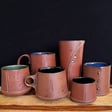
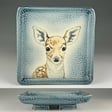
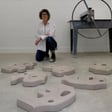
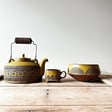
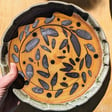
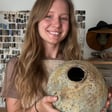
This is Nick Torres here, and today I had the great pleasure of interviewing Emma Mayer. Emma makes some really incredible illustrative pottery that never looks the same as the last one she made. In this episode, you will learn how Emma makes her illustrative pottery. You'll also learn the story of how she started teaching pottery in a non-profit pottery studio.
00:00:39
Speaker
And finally, you'll also learn Emma's best advice, some advice on learning to find your own unique voice and the dangers of social media as well.
Podcast Introduction: Shaping Your Pottery
00:00:49
Speaker
And there's so much more in this episode. I hope you guys enjoy it. I'll see you guys in there. If you love pottery and want to take your skills to the next level, you're in the right place. Find your own pottery style right here on Shaping Your Pottery with Nick Torres. Let's get started.
00:01:07
Speaker
Welcome to Shaping Your Pottery and share with me what is something you love besides making pottery.
Emma's Hobbies and Introversion
00:01:12
Speaker
Hello, that's actually a really good question. So honestly, pottery occupies like the majority of my life, like my job, kind of what I do as a hobby. But when I'm not doing pottery, I do enjoy kind of going to the gym and honestly spending most of my time alone. I was like an introvert. I also love drawing and painting kind of as more of like an artistic hobby that isn't really a part of my business.
00:01:39
Speaker
I love that so much. So we're gonna talk a little bit about drawing and painting in a little bit, but for now, tell me a story of how you got started making pottery.
From Illustration to Pottery
00:01:50
Speaker
So my pottery journey is actually one that I love to share with people who are kind of starting off with it. So I kind of started off, I did my BFA like right after high school. For those who don't know it's my Bachelor of Fine Art and I was like fresh out of high school and I actually went thinking I was going to be an illustrator.
00:02:09
Speaker
so i kind of went and i did my first year kind of as an illustrator and i realized really quickly i didn't want to be an illustrator and so then i started kind of bouncing around and i actually ended up taking pottery as an elective so it was just kind of like a one-off class
00:02:27
Speaker
But it's funny because I hated it. I actually despised it the first class I took and then I didn't do it for six months and I did oil painting. And then I decided to kind of give it a second shot and then I did the rest of my bachelor's focused in ceramics. And so that's how I kind of got into it. So what made you continue pursuing ceramics?
Ceramics: Art and Functionality
00:02:51
Speaker
I think my initial dislike for ceramics didn't really have to do with ceramics on its own, but when you first start
00:03:03
Speaker
it's really really hard to kind of actually make anything that you like what you're visualizing and i wasn't used to that someone coming in from illustration and having complete control on the outcome of my work going into ceramics and not being able to like execute what i wanted is kind of what found it so frustrating but i realized that what made me want to continue doing it was it kind of had all the elements
00:03:27
Speaker
of fine art that I enjoyed. So I had sculpture in it, it was functional. So I really liked that it had like a purpose. I liked that I could illustrate on it. It had kind of all these different components from different mediums that I enjoyed kind of brought into one. Awesome, absolutely love it. So now also are a pottery teacher.
Teaching Pottery: Luck and Timing
00:03:50
Speaker
Can you tell me how you became a pottery teacher at a nonprofit pottery studio?
00:03:55
Speaker
Yes, I can. So that's my actual like, I work 38 hours a week at this nonprofit. And so I not only work as an instructor, but I also work as the senior technician of the space as well. And so it was kind of just sheer luck almost that I started working there because I essentially like finished university, I was lost, I was like, 2021.
00:04:21
Speaker
And I was like, I don't know what I want to do. And so I actually ended up moving out of the main city that I was living in. And I moved to kind of the outskirts to where my mom lived. And so I was staying with her for a couple of months. And it was just a coincidence that the studio that I applied for was kind of in that area. And that's how I kind of started. I applied, I got accepted, and that's kind of how I started working there as an instructor and a technician. What were the feelings you were feeling when you got accepted to be the teacher and the technician at that studio?
Teaching Journey and Studio Management
00:04:51
Speaker
so i was really excited it was actually an interesting path so the non-profit that i started working at it was very small when i first started and it was not the best managed we've like had a complete kind of change of like our arts director and stuff and now we're quite big but when i started i was only there maybe two days a week and i was actually working in a restaurant at the same time and it was only after about a year of being there
00:05:19
Speaker
I actually started working there full time running the pottery studio. So it's interesting. It wasn't quite like an immediate like, wow, this is the dream job. It was actually quite kind of like a up down kind of journey for me working there. I love that. So tell me, how has teaching pottery helped you with your own pottery?
Teaching and Skill Improvement
00:05:39
Speaker
So I think that teaching has probably been one of the best things for my own practice. I teach kind of a variety of classes, I teach kids, I teach teens, I teach adults, I teach like beginner wheel throwing, beginner hand building, intermediate wheel, and it's interesting because it does kind of cause you to kind of reflect on your own skills. I think it kind of
00:06:02
Speaker
helps me get outside my comfort zone. I think there's a lot of things that when you start just working on your own pottery, you kind of start going, I think it's just naturally start going down this really specific direction and instructing kind of helps me kind of keep experimenting with new things that I maybe wouldn't necessarily be doing in my own practice. So you mentioned it allowed you to reflect on your own skills. Can you tell me more about that?
Craftsmanship in Ceramics
00:06:27
Speaker
Yeah, so I think in ceramics, one of the things that really drew me towards it is ceramics is kind of towing the line. Like for a long time, it was viewed as a craft. It wasn't actually seen as like a fine art kind of medium. And so I think even now it's great. It's being recognized as being part of kind of the fine art community, but it's still deeply, deeply kind of seated in craftsmanship. And I think that's something that potters we admire in other potters,
00:06:55
Speaker
like making functional wear like mugs, bowls. The way I kind of say it's kind of a no bullshit medium. And I think teaching others, it really makes me kind of double check my own craftsmanship in my work. Like what am I teaching others is what I'm teaching like, right, especially when it comes to talking about like design or how the work's coming out. Absolutely great shaping nation. If you could get out and teach your own
Advice for Aspiring Pottery Teachers
00:07:19
Speaker
Your skills are going to grow because you're going to reflect on what you actually have to teach and that's going to make you teach better and also grow your pottery as well. I love that so much. So now what advice would you give to someone that wants to start teaching pottery and maybe in their own studio or somebody else's studio. What advice would you give them to help get them started. Yeah. So when I kind of started I started
00:07:43
Speaker
teaching like I think it's better to kind of start teaching kids and teens and while you're kind of growing your I think it's one thing to be able to make pottery like yourself is like
00:07:56
Speaker
your own practice and I think it's another thing being able to teach it. I think just because you're good at making ceramics doesn't necessarily mean you're good at teaching it and I think it's really good to kind of practice it. So starting off slow with like kids, teens, group of friends and then kind of growing and teaching larger and larger groups while you're kind of getting comfortable teaching it because sometimes something that you like honestly as a pottery when you're doing something sometimes you're not even thinking about how you're doing it.
00:08:23
Speaker
like how you're gonna do and how you're gonna explain it to someone else. So I think starting off small and then kind of getting bigger is the way to kind of do it. Some excellent advice right
Evolving Pottery Style
00:08:32
Speaker
there. Let's talk about your pottery. Tell me a story about how you started making your illustrative pottery that you make today. Yeah, so for me, I kind of
00:08:42
Speaker
For those who have been following me since the beginning, my practice has actually changed quite a lot. So I have like some feelings of happiness about that. And I also have like some feelings of wishing that I kind of waited longer before going out on social media. I started posting my work kind of like right from the beginning, which I think has its kind of pros and cons with it.
00:09:09
Speaker
So you mentioned that your practice has changed quite a bit. What were you making before you were making what you make today?
00:09:15
Speaker
It was always kind of illustrated, but it was definitely a little bit different. I've always been kind of touching on having whimsical illustrations. Illustrations have always been a really big part of my work, but the style of illustration, if you look at some of my work, my really early work, and I don't really have any photos of my really early work, but it's illustrated, but it's definitely the style of it has kind of grown organically and changed over the years.
00:09:42
Speaker
I love that. Shaping Nation, your pottery will change even if it's kind of the same style. Your style will change into something that is more truly what you actually want to make. I love that. Totally. So you are inspired by childhood books.
Inspiration from Childhood Literature
00:09:58
Speaker
What is it about childhood books that inspires you?
00:10:02
Speaker
yeah so growing up my childhood so if you notice in people who are listening to this that i do have a slight accent and it is not american a lot of people always assume that when i'm talking it's from jersey or new york but it's actually south african so growing up my mom immigrated here from south africa and then my dad's actually from maricius which is like off the coast of east africa but he learned english in south africa so growing up i think i had a slightly different kind of upbringing than
00:10:32
Speaker
people who maybe had parents that were Canadian, parents that weren't immigrants. And so growing up, I was not allowed to watch TV. I had quite strict regulation around that. But one of the things that was a really prominent kind of memory was my childhood books that were read to me. And I think the books that were read to me were maybe more European. They were brought over by my grandmother. She used to visit from South Africa and there were books by Eden Blighten and Roald Dahl.
00:11:00
Speaker
And those kind of books and those played a really huge role in inspiring me as a child. And as I kind of grew up, it kind of turned into what inspired my practice. I absolutely love that. Such a great story. So something I found interesting from your website is you said, I focus on making work that makes me smile and hopefully makes others smile as well. Can you tell me more about this?
Pottery as Joy and Therapy
00:11:25
Speaker
yeah so a lot of people will ask me like what is the inspiration like behind your work like what's the purpose and i think that's something we're always kind of trying to find
00:11:36
Speaker
in our practice, in our own art practices. And for me, I struggle with a lot of mental health issues. It's something that I'm not really ashamed about, but it's not something that I talk about a lot with people, but creating work kind of helps myself with my own kind of mental struggles as someone who has OCD and anxiety.
00:11:56
Speaker
And so when I'm working and illustrating and creating work, it's something that makes me smile. And so one of the things that I really want my work to do is I wanted to kind of be an everyday object that brings just a little bit of joy to the person that has it. And I think that's a really beautiful thing. So two things here real quick.
00:12:15
Speaker
What is it that makes you smile like when you are like what the stuff that you make what makes you smile and then how do you deal with the mental health aspect part of that part of your life.
Illustrating on Pottery
00:12:27
Speaker
Yeah so I think what makes me smile is the process of illustrating. It's kind of having this ability to illustrate whatever I want. One of the things that I do in my practice is I never repeat any of the illustrations that I do and that's something that I really like and it makes each piece kind of special and also continues to bring constant joy. I think if I was creating
00:12:54
Speaker
the same illustration over and over and over again, kind of like a production style. I don't think it would bring me the same joy that each individual illustration does. And it kind of speaks to my inner child. When it comes to kind of dealing with my mental health, I find that
00:13:12
Speaker
being able to focus while creating work and creating something that brings me joy gives my mind kind of something to focus on.
Spontaneity in Design
00:13:20
Speaker
So if I'm like in my everyday life, I feel like I kind of operate where I have this like constant level of anxiousness or this constant level of thoughts that I anxiousness or this constant level of thoughts that I can't quite get out of my head. And so whenever I kind of start, I can't quite get this point.
00:13:48
Speaker
love that shaping nation Potter is more than just a hobby you can use it to help you with your own mental health and other things in your own life That's so what's so great about pottery. I love that so much So now can you walk me through how you create your illustrations onto your pottery?
00:14:05
Speaker
yeah so the way i kind of illustrate my work is most people online they can like actually see the process when i'm kind of showing work to people in person they always have lots of questions a lot of people seem to think that i use acrylic paint on the surface of my work but i absolutely do not do that no shame to potters that do but i actually use underglazes to kind of do my illustrations so underglazes are like special ceramic paints that are actually
00:14:35
Speaker
fired onto the work with a layer of clear glaze glass kind of on top of it. So usually what I do is I first I fire my pieces they go through the first firing which is the bisque firing and they become kind of half baked and then I use a pencil to sketch in my idea that I want to do and then on top of the pencil I'll go over under glazes and I'll illustrate the actual narrative and then I will glaze the piece and it will go through the second firing.
00:15:06
Speaker
So now, earlier you mentioned that no two piece of illustration is the same. You're always making something new. What does that process look like of you creating a new illustration before actually putting onto a piece?
00:15:19
Speaker
You know it's funny you ask that but I actually don't plan out any of my illustrations before I sketch them on the piece. So a lot of potters and a lot of artists I think really take the time to kind of like sketch out their pieces on like procreate or paper and once in a while I will use procreate just to kind of
00:15:42
Speaker
sketch out like the character itself so if I'm doing like a duck or a cow or a mouse is a really popular character of mine I will kind of do them in various poses but when I'm actually creating the full illustration on the piece I literally just think it out while I'm like holding the piece and penciling it in. So why why do you do it that way instead of drawing it out beforehand?
00:16:07
Speaker
I think because when I've drawn it out beforehand I feel like I have executed the idea and done it and I don't know if this is just the way my brain works but I have tried in the past to draw out the whole scene and pick the colors on procreate and once I've done that I feel like
00:16:32
Speaker
a little bit of the joy has already kind of passed for me. I feel like I have executed it, even though I haven't, I feel like I have executed that idea. And it's the same reason that I struggle to do pre-orders and customs and things for people
Time Management and Creative Freedom
00:16:51
Speaker
as well. Because for me, it's like I really enjoy being able to just come up with what I want to illustrate, like at the moment I'm doing it on the piece.
00:17:01
Speaker
absolutely love that. Shaping Nation, you don't have to have a plan for your pottery. You can just kind of let the work start forming by itself. You don't need to always have a plan. I love that. So now you mentioned that you struggle with taking pre-orders and doing customs. How do you, what is your process of saying no to these people that are always asking you with customs and pre-orders?
00:17:27
Speaker
I'm usually pretty good about it. I don't have as many people asking me online because I have it kind of listed everywhere that I don't do customs and pre-orders. I used to. In person, it's kind of a little bit harder at events and stuff to kind of explain to people why, but usually I go over a couple different reasons. The reason number one being that I work full time as a pottery technician and instructor. So I actually create my own work kind of around it. So I would say I'm definitely working
00:17:57
Speaker
I would say, yeah, I don't even actually want to think about how much I'm working working a week. But I'm kind of creating stuff around work. So sometimes, like when ceramic pretty unpredictable, sometimes it's not even to do with me, if the kiln malfunctions, I get sick.
00:18:15
Speaker
then it can kind of put delays on work and I don't have the time to kind of if something doesn't work out to like remake a custom so that's usually the primary reason I tell people I say the stress is too much if something doesn't work I don't have the time to kind of sit there and remake it the second thing is is I
00:18:35
Speaker
tend with my anxiety and stuff. I tend to try to avoid doing additional commitments that I don't necessarily need to do. So like in my own practice, I'm doing fine selling my work at market, selling it online, the own work that I've kind of created. I don't have this like need to create customs or pre-orders.
00:18:56
Speaker
Pre-orders specifically, I stopped doing a while ago because like I said, making 15 mugs with little mice eating grilled cheese on them, it really strips the joy from it and really puts the pressure of it having to come out 100%. Absolutely love that. Shaping Nation, you don't have to do pre-orders, you don't have to do customs. If you can learn to say no, that frees up time to do other stuff that you actually want to focus on with your pottery, I love that.
00:19:27
Speaker
So let's talk about discovering your voice. You contribute your growth as an artist to getting your BFA and surrounding yourself with other potters and creative people.
Artistic Development and Education
00:19:36
Speaker
Can you tell me more about this?
00:19:38
Speaker
Yeah, so there's definitely a lot of kind of controversy around getting a BFA and being an artist and everyone kind of has their opinion. I don't think you need a BFA to be a potter. I think traditionally potters, it was something you apprenticed for. You would go underneath a potter and you'd apprentice to be one. So I think it's just kind of the shift from becoming kind of a craft to being a fine art
00:20:06
Speaker
that now has kind of joined the BFA debate. For me personally, there's no way I would have been who I am today as an artist without my BFA. And I don't even think it's because of necessarily kind of having that certificate, but it's more because I was put in an environment where I had to
00:20:29
Speaker
learn and improve at a certain rate. And also I was surrounded by potters at different experience levels. So for me being into pottery and being beside someone who's been doing it for 15 years, that was huge to kind of my development and growth. So I don't, I do attribute it to my professors in university, but I actually attribute my learning and my practice more to my peers and other artists that I went to university with.
00:20:57
Speaker
I absolutely love that. Shaping Nation, the more you surround yourself with other potters and other creatives, the better your potter is going to be and the more and easier it is to actually find your own unique voice. I love that. So, can you tell me about the moment when you knew you were heading in the right direction with your pottery?
Finding Artistic Direction
00:21:13
Speaker
Yeah, so I think it's really common when you start off doing pottery. You don't know who you are and you don't know what you want to make and you will be flip-flopping and it's really normal. I think it's really hard kind of finding your voice and especially finding something and experimenting without
00:21:34
Speaker
kind of taking away from other artists and I think that's something that everyone kind of goes through you're trying to find yourself and you're trying to like learn new things and apply it to your own work but then kind of being careful that you're not stepping on other people's toes and I think for me
00:21:53
Speaker
it was probably the certain collect you know it's probably where if you go really far back on my instagram feed kind of the most the oldest post is kind of where i really started to feel like aha this is kind of the direction i'm going in and it definitely took me years like it didn't happen during my bfa it probably happened a year or
00:22:16
Speaker
So after my BFA, where I kind of was like, this is something I can see myself doing long term for my practice. Love that. I love that so much. So what would you say was your biggest obstacle when it came to discovering your own voice?
00:22:32
Speaker
So I think social media, funnily enough, might have been my biggest obstacle.
Social Media and Originality
00:22:39
Speaker
It's so hard to find out what you want to do when you're so surrounded by other potters because you feel like everyone else has figured it out on what their practice wants to be. And it's so hard to come up with
00:22:57
Speaker
an individual voice kind of this is who I am without it looking a lot like what someone else is doing and I think this is something when potters are trying to find out who they are it's really hard to kind of find like where am I like what is something that is the direction I want my practice to go in long term but it's not too similar to someone else's because you know that saying
00:23:22
Speaker
everything's already been done and that's something that people- and it's not too similar. It's really hard to be kind of original and find your own work when you're literally being shown hundreds of other potters who are doing a hundred different kind of things and you're like well you feel like everything's already been done, which I think is a hard one.
00:23:45
Speaker
What did you do to help you with start being your own original Potter?
Experimentation in Style Development
00:23:53
Speaker
So I definitely experimented. Like I knew from the beginning I wanted to do illustrations. That was never kind of a thing in question for me. For me, it was more kind of like what kind of illustrations do I want to do and how do I kind of want to like execute it on the work. And a lot of that was just kind of organic development. Even if you look back to like my work from like develop years ago, you can see the similarities and I can ship has kind of gotten better.
00:24:26
Speaker
over the years. Now, what advice would you give to someone that is looking to discover their own unique voice with their pottery?
Social Media Advice for Potters
00:24:33
Speaker
Well, a couple things I would say, again, my biggest regret in my own practice is jumping the gun on social media. I wish that I had waited until I had found kind of who I wanted to be as a potter.
00:24:50
Speaker
before launching into Instagram and launching into TikTok because I don't necessarily align with the work that I did in my kind of earlier time. So for people that are kind of getting into it, I would say take some community classes and give yourself the time and space to experiment, like change directions.
00:25:10
Speaker
don't kind of make yourself a social media account and then be like I better stick on this trajectory in a certain direction because that's what people expect of me. And I think just kind of staying in classes and a smaller community until you really decide that like this is what the direction you want to go in and then kind of branching and sharing it with like the rest of the world.
00:25:35
Speaker
some excellent advice with the shaping nation. You are never stuck with what you are currently making. And it's better to wait a little bit before you start sharing it sometimes until you've found something you truly love and truly love making. I love that advice. So now Emma, it was really great chatting with you today. And as we're coming to a close here, what is one thing you want to hammer home with my audience today?
Enjoying Creation and Embracing Change
00:25:56
Speaker
i think the one thing i kind of want to hammer home is well two things the first thing is is it's so important that you enjoy what you're creating and i think not thinking too much about how other people are going to read it but as long as it's something that you enjoy there are going to be other people out there who enjoy it as well not changing what you want to make to target because you think other people will enjoy it more
00:26:24
Speaker
And the second thing is, is that it's okay to kind of grow and change. You don't have to commit to being a certain brand, or this is what defines your practice, and you can change. It's okay. Some excellent parting words advice. Emma, you're so great champs today. Where can my arms go and learn more about you?
Connecting on Social Media
00:26:46
Speaker
So I'm kind of, like I said, I'm on social media. I also, if you're a local to Vancouver, BC area, I do a lot of in-person markets, but I would recommend kind of my most active on TikTok and Instagram. So you can check me out there at mayor.ceramics and I'll have a little, little mushroom as my profile and always feel free to like go through my work, DM me questions. Like I said, I am an instructor.
00:27:13
Speaker
and a technician, so always feel free to kind of privately reach out if you have any kind of questions about your own practice. I'd love to answer them.
Conclusion and Pottery Voice Quiz
00:27:22
Speaker
Hey, thanks for listening to this episode of Shaping Your Pottery with Nick Torres. If you want to discover how close you are to actually discovering your own unique voice with your pottery, I put together a free four question quiz. It's very short. It takes 30 seconds for you to take. If you want to know how close you are to finding your own unique voice, go to shapingyourpottery.com forward slash quiz, or you could simply go to shapingyourpottery.com and it'll be right there at the top.
00:27:51
Speaker
I hope you guys enjoyed this episode and I'll see you guys next time.