Transcript
Speaker: If you are a woman who is working a full time job, trying to take care of a family, trying to take care of her own health, it's like sometimes gets to a point of, oh, Jesus, this too much. where Where is my breaking point? Because it's become so normal. There's a reason why women in particular have the the cases of autoimmune disorders have risen dramatically over the last 10, 15 years. So between lupus, Hashimoto's, Graves' disease, even rheumatoid arthritis, all of these issues,
Speaker: have just skyrocketed. Because again, when we're looking at stress, if you don't have that mental break, your body is going to say, yeah no, I'm done. I'm out. I'm teaching people how to feel their feelings. So have you ever heard you have to feel it to heal it? A lot of us don't know how to feel. I didn't. For years, I thought I knew how to feel. I didn't.
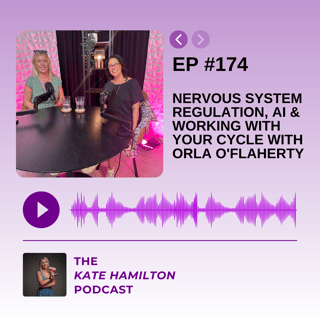
Speaker: Hello, everyone, and welcome back to another episode of the Kate Hamilton Health Podcast. In today's episode, I chat with Orla O'Flaherty. Orla is a Galway-based herbalist, naturopath, if I'm saying that right, somatic therapist and female health specialist with a deeply holistic body-led approach to healing.
Speaker: With multidisciplinary training across herbal medicine, clinical nutrition, somatics and massage therapy, she supports women in understanding the root causes of their symptoms rather than simply managing them.
Speaker: Her work blends evidence informed natural medicine with nervous system regulation, lifestyle interventions and somatic practices, helping women reconnect with their bodies, balance their hormones and build long term health. from the inside out. Through herbs, nourishment, somatic awareness and personalised protocols, she empowers women to feel safe in their bodies again, regulate their hormonal cycles, reduce stress and cultivate resilience.
Speaker: Orla Brunner, Bridges the gap between modern science and traditional wisdom, offering compassionate, personalised support for everything from cycle health to stress, gut issues, burnout and emotional wellbeing. And that is exactly what we talk about in this conversation. I enjoyed it so much. She is an absolutely wonderful soul. Her work is just incredible. Her knowledge is unmatched. And this is going to be such a valuable conversation for you to listen to in relation to everything female health from cycle, stress, gut, burnout, emotional well-being. We cover it all. I hope you enjoy it just as much as I did.
Speaker: Orla, welcome to the podcast. Thank you for having me. I am so excited to sit down, chat, connect. It's going be great. Very excited to be here and looking forward to talking and all things women's health and wellness and everything. Yeah, no me too. Tell me, what is your mission if you were to put that into a few sentences with the work that you do?
Speaker: That's a really good question that no one has ever asked me before. Now I'm putting you on the spot. No, but I love it. ah My mission is to help women in particular. So I work with women. My mission is to help women to become more accepting of themselves, to know how their bodies work.
Speaker: And to feel completely comfortable with who they are, be it with giving themselves permission to rest or giving themselves permission to push themselves forward. But overall is to help women just be who they are and accept who they are in all facets of it. I love it.
Speaker: That's kind of my mission as well with this podcast. So this is perfect. Yes. and What's the story behind your mission and like what's led you to where you are today and what you do?
Speaker: So I'm a herbalist and naturopath and somatic therapist, and i have been working with holistic medicine for years. I remember when I was was very unwell as a teenager, I was misdiagnosed with clinical depression, whereas in actuality I had a thyroid dysfunction. And I started off with home going to a homeopath when I was 15. My mother brought me to a homeopath because things were really bad and just getting worse. And then I was also having horrific gynecological problems from when I started my period. So I started my period at 10.
Speaker: um That's a complete red red flag from the get go that there's something up if your periods are starting at 10 and they're starting off really heavy, really painful, like debilitating. So it was all interlinked. And when I started with homeopathy and natural medicine and I saw how it was helping me, I remember being maybe 16 saying, this is it. I'm going to be a homeopath when I'm older. And funnily enough, my sister, because when she saw how well the homeopathy was working for me,
Speaker: She went on to study homeopathy and then the ah what's the what's the term? Comparison syndrome kicked in. I was like, oh, I can't be a homeopath because she's one. So it's like I'm going to become a herbalist instead. So I started studying herbal medicine when I was 22.
Speaker: t two ah naturopathy, herbal medicine, nutritional therapy. And when I was a teenager, I was put on the pill to stop the progression of endosymptoms. And I decided that I wanted to come off the pill. And with my training in college,
Speaker: I was very lucky that I had the tools to know where to begin to start with an anti-inflammatory protocol. And when I did that, came off the pill and I saw my life just change completely health wise. When I became qualified then as a kid, and I have to work with women.
Speaker: It's not a matter of should I or should I not? It's I have to be able to help women guide themselves through a process of of getting to a place of overall wellness.
Speaker: And it's so complicated, isn't it, that we can have different issues going on and genuinely like not even know where to start. Yeah. Yeah. And that's thing as well. Something that we forget is that our bodies are completely um interlinked. Everything it works synergistically. So we have our digestive system. We have our nervous system. We have our reproductive system. We have our thyroid health system.
Speaker: in allopathic medicine and love allopathic medicine. We work fantastically together, but they're cordoned off into different sections instead of looking at everything as a whole. yeah And for me in particular, in the last six years of my practice, I've been really honing in on nervous system regulation and stress because 90% of my clients clients, when they come to me,
Speaker: Their main issue is chronic stress. They're either gone into burnout, overwhelmed, they're in it and their hormones go all over the place. So then it's not just looking at the hormonal function of the body. We have to look at what's going on underneath.
Speaker: When we're looking at stress, it is hormones too, because we're looking at cortisol, adrenaline, noradrenaline. These are all hormones and they're all interlinked, especially when we're looking at the nervous system response and the thyroid function.
Speaker: and then the reproductive function. They're all running off the same axis. Yeah. There's so much want to unpack here. Sorry. There's so much want to unpack here. Go deep in. No, what you say about chronic stress, like i I'm a firm believer that chronic stress is the cause of everything that goes wrong. Like, it it like well, sorry, most things that go wrong and in the body. Like when I think, even when you talk about like the nervous system there, and I think about like how chronic stress actually caused now, I'm sure there were other factors there, but it did cause an anxiety disorder in me in my early 20s, in my late teens, early twenty s that took a long time to kind of work through and, you know, with different medications, different therapies, different figure like figuring out. And it's only really now as I progress with my own health and my own education around health and my own practice as a health coach and a nutrition coach that I i really am starting to understand, but like reflecting back and understanding what was going on, because it can be very hard when you're in it, can't can't it? Like I think about chronic stress. I remember at the time having my first panic attack and literally not realizing that I was stressed. i was like, I don't know why this has happened. I'm not stressed.
Speaker: I was so stressed and I didn't know i was stressed. Even right now, I don't think I'm stressed, but I probably am stressed. It's an interesting one, isn't it? Like i like i don't know. But that's the thing. And again, this is what I see nearly every day in clinic. It's one of my main questions is, what are your stress levels like? Oh, I'm not stressed. I'm fine.
Speaker: OK, what's work like? Work's a little off. you know, while my bosses irritate me. I have this one co-worker. OK, what's home life like? It's fine. We get up, we do x Y and Z, you get the kids out to school. I get to work, get home, get the dinner done and put the kids to bed. And then I'll go to bed after watching a TV show. I'm like, OK, where's your joy?
Speaker: What's the relationship like with your partner? If you have a partner, what feels off? What feels like you're just chugging along? And then on top of that, we have to look at physical stress.
Speaker: and So that's our daily life stress. Then we're looking at physical stress as in what's our nutrition like? What's our sleep like? What's our hydration like? Hydration people forget so much about. Like we say, we have to drink two liters of water a day or two liters of liquid a day. People forget to drink water because they're so busy with work or something else to get up from the desk or for a lot of people in factories, especially in Gaul, where I'm from, there's that a lot of them factories there so that people are in clean rooms, they can't drink.
Speaker: All these things are putting physical stress in our body. And then we're looking at relational stress. So the stress of romantic partnership, but also familial relationships and platonic relationships that go through different things.
Speaker: All these different areas are contributing to our stress. But in our heads, there's this connotation that stress is only for people who are CEOs high level jobs. Whereas in reality, if you are a woman who is working a full time job, trying to take care of a family, trying to take care of her own health, it's like...
Speaker: Sometimes gets to a point of, oh, Jesus, this too much. where Where is my breaking point? yeah Because it's become so normal. Like this is people's new normal. And the breaking point, I suppose, is different for everyone. It could be in my case, like panic attacks, anxiety. It could be gut issues, stuff like IBS, like other chronic diseases, I presume, that can develop because of it. 100%. There's a reason why Women in particular have the the cases of autoimmune disorders have risen dramatically over the last 10, 15 years. So between lupus, Hashimoto's, Graves' disease, even rheumatoid arthritis, the all of these issues have just skyrocketed.
Speaker: Because again, when we're looking at stress, if you don't have that mental break, your body is going to say, yeah, no, I'm done. I'm out. And that's when we start seeing issues. So like you said, the likes of gut health, the likes of with our hormones like PMS, PMDD, that premenstrual rage that I like to call stress.
Speaker: We go we'll get to a place of irritation, and but then sometimes we actually get pushed beyond our limits and then it's just put down to, oh, she's due her period. It's just hormonal, leave her off. Whereas in reality, it's that the way our body is responding to cortisol in our luteal phase is that we're not as resilient to stress as we are in our follicular phase. Again, if that is down to hormones.
Speaker: But when we're looking at our new deal phase, we have to look at the fact that, OK, the same things keep coming up and the same things keep triggering us right before a period every single month. That's a sign that there's something going on that we actually need to change and fix. Yeah.
Speaker: So, yeah, we that we might like obviously the hormones, especially, you know, as then if we talk about not even just with with our cycles, as we get closer to perimenopause and we're dealing with a lot of other things there. with with joy so yeah I know like we just finished one stage or into more joy. But and that although there's a certain amount of, you know, I suppose genetics involved, a certain amount of what's like what has to happen with your hormones and that there will probably be like, you know, if there will be ah uncomfortable, difficult times.
Speaker: in both both phases, whether we're, you know, like pre menopause or, you know, perimenopause or whatever. But how we manage our stress and our lifestyle can play a huge part in helping those yeah symptoms. Can it also play a huge part in preventing them? So I'm 39. So I'm at the stage that, you know, just noticing little changes in my hormones, but I'm OK at the minute. ever I still feel like myself. Everything's fine. You know, I notice I'm a little bit more PMS-y than I used to be five years ago. yeah But Can we do things in our 30s and early 40s we're not in perimenopause yet to prevent things being too difficult through perimenopause? Mm hmm.
Speaker: I suppose that's my first question. Yeah, no, we can. With the somatic experiencing and somatic therapy, the reason I got into that is to help women get back in touch with their bodies, to be able to read their bodies and to be able to read their emotions.
Speaker: So one of the main areas that I work with with somatic experiencing is learning what your yes is and learning what your no is. There are so many times when we override a no,
Speaker: And we'll just we' say yes to everything just for the sake of being like, yeah, OK, I'll get it done. I'll get it done. I'll get it done. i don't want to let anybody down. And then we're we're pushing ourselves far beyond our capacity.
Speaker: So if we can learn how to say no yeah and feel guilty for saying no. And literally just going in me inward and checking what our bandwidth is like, do I have space right now to add another thing in or do I need to take space?
Speaker: So that's on one level where learning where you have capacity to go forward. or no, I need to take a step back for myself. So that's on ah on an emotional, mental level. And then on a physical level, it's looking at, OK, how can I nourish my body? How can I support my body through this? Because especially with perimenopause and menopause, we are becoming a bit more depleted.
Speaker: If you have any gut issues, so like IBS, IBD, these are rife. Any sort of gut problems, we're not going to be absorbing our nutrients as best as we can. Therefore, we're going to end up being more deficient.
Speaker: then add on top of that any sort of stress, the likes our B vitamins and our magnesium are going to be depleted. So we can look at ways of supporting ourselves in all areas, but doing it in a gentle way. So checking out, right, where can I say no today and take half an hour for myself to go and yeah go for a walk? And then where can I support myself if I can't?
Speaker: meal prep for three, four days. What's the one meal that I can focus on today that is going to be really nourishing? And then are there supplements that I need to take right now to help? I like to call it like super soak the cells when you're really deficient. You know those super soaker guns. Sometimes we need to supplement. So getting a good quality supplement that can cover the areas where we would tend to be a bit more deficient in the likes of our bees and and our magnesium.
Speaker: they The two main ones that really support us. Yeah. And i think when we like are trying to like because I obviously work with women building good nutrition and lifestyle habits and it can feel like a chore. It can feel like an extra thing, can't it? And it's very hard. And I think taking that step back like i that, I always say that slowing down part needs to come first, and doesn't it? Like with Even, you know, if you you find your life is really busy and it is stressful due to work, due to kids, due to parents, due to whatever, you know, if it's negative stress, but it can also be positive stress as well that, you know, that you're climbing the ladder, you're building a business. Like even if I take myself, for example, that, you know, over the past five years, I have double jobbed, I've job shared, I've left teaching, I've started working in a gym while building an online business on the side. I've grown the business. It's been stressful. It's been exciting. It's been a roller coaster. It has been stressful. It has been a grind, a really, really fulfilling one. And like it was so worth it. If I look back at everything I did, I don't know if I'd have the energy to do it again. Yeah.
Speaker: You know, it it took a lot from me and i am a lot more self-aware than I was in my 20s, obviously. So I never pushed myself to the point of burnout. I don't think how and because I'd love to talk to you about burnout before we kind of really, really get into nutrition. But What I found in the past few months is I finally have just exhaled a little bit. I'm like, I've built what I've wanted, what I wanted to build and any further growth, like career growth will come at a pace that feels right for me. I don't need to force it anymore. You know, we're surviving now. but You know, we're at you're kind of at that survival level. But my nervous system is still catching up. I'll still be like, mm hmm.
Speaker: but And I don't know how to not do anything, you know, in the in the evening time. If I if I I'm so used to working in the evening times that now if I have nothing to do, I'm like I'm forgetting something and I'm kind of going through my list and I find myself even just searching my social media like I'm like,
Speaker: I don't know how to stop Yeah, it's it's that not being able to come down. So I like to call that the um the on call firefighter syndrome. So it's when you are go, go, go.
Speaker: yeah And that's it. And so many women are when you're go go, go, go, go are for a lot of people or a lot of families where they are the primary caretaker for somebody who's very unwell, be it ah physical illness or mental, emotional illness, illness. And you're constantly on call.
Speaker: and you're waiting for that phone to ring for something, it's your nervous system is stuck in a state or state of fight or flight. Yeah. um So with our nervous system so response, we have fight flight freezing phone.
Speaker: Now the fight flight response, that's our stress response. yeah That's where noradrenaline kicks in and noradrenaline is our action hormone. And then we go into adrenaline. Then our fawn and freeze mode are more of a trauma response.
Speaker: So we can be in high stress environments for only... a finite length of time because we cannot keep going.
Speaker: The more we keep pushing through that stress, we do go into burnout. Our body goes into a state of a trauma response because it's too much. So with trauma, we're looking at something that is either too much, too soon, too quick, too fast, or too much for too long.
Speaker: So we can keep pushing ourselves over and over and over. And again, these can be with exciting things. But we have to look at our capacity. So then when we reach the point where, like yourself, like, yes, I've got there, where we're coasting, we're good.
Speaker: And then you go to sit down. Your nervous system is so used to being in fight flight, as in go action mode, that now it's like, oh if I sit down, what am I meant to do?
Speaker: Because I've been in this place of action, action, action for so long. And you kind of forget who you are in it as well, because you've grown so much in it in a situation like that, that you're like, I don't even know what I like anymore. Yeah.
Speaker: Yeah. But ah ah on top of that, you also have to realise that when you started growing the business and doing like double job and all around, you were a different person. Like your kids were at a different stage of life, whereas now your kids are getting a little bit older. Yeah, you are coming into a different stage of life.
Speaker: You're also 39, same as myself. I'll be 39 next week. So like we're in this phase of perimenopause where things are changing and it's like, oh, who am I now? Is this person here after completing all of these amazing things?
Speaker: And it's learning. It's not an easy thing, but it's learning to be able to take that moment for yourself to sit back and be. Oh, who am I? Who is Kate?
Speaker: What does Kate want right now? How do you know if you're in burnout? It's different for everyone, but the most common ones that we're looking at is the real exhaustion, waking between 3 and 4 a.m. Brain fog is your your massive one, poor concentration. sounds like perimenopause. Yeah, I know. And this is the thing. This is the thing. They're they're so similar. they're so similar yeah but And the reason why we're looking at that 3 to 4 a.m. wake up is our cortisol. If our cortisol is too high, our cortisol is the hormone that wakes us.
Speaker: If that's already high, it's going to wake us out of our slumber around three or four when it starts to rise in the morning. So for a lot of people, when they're in burnout, it's that their cortisol has been too high for so long. Yeah.
Speaker: When we get to that stage, it can be long recovery. But even at the stage where where I'm at now that I'm like, I'm not I haven't burned myself out, but it's like I notice and a lot of I think a lot of women listening will really relate to that in in whatever circumstances in life that not being able to just stop and and just do nothing. Even on holidays this year, we went for two weeks to Italy and it was beautiful. And after a week, I was like,
Speaker: I need to go do something now. Yeah. and like yeah yeah that It's just, you know, that I was a bit like of i'm done doing nothing now. I'm kind of I'm over it. And then I like and i to talk to myself. OK, be grateful. You're here in Italy for two weeks. Maybe just make the most of it. You won't be away till next summer, you know, and but it it can be hard. So like what would be your tips for is this a nervous system regulation thing that needs to happen?
Speaker: It is. What I've come to realize lie over the last six years is that we do need to learn how to regulate again. And we need to learn to read our bodies, what our bandwidth is, what our capacity is.
Speaker: And then with that is one, giving ourselves the permission to rest, two, giving ourselves the permission to speak our truth in a kind way and with compassion, if we can lead from the heart compassion.
Speaker: with in any area that's bothering us. And three, with understanding that if we've been go, go, go for so long, it's not going to be simple to just stop. Yeah. and What we tend to see a lot with people who are go, go, go and then they stop is that they'll get a cold or a flu because they've been running on adrenaline. And then once that adrenaline starts to come down the immune system, which has been compromised over the last, say, two, three, four, five, six years, whatever, that's when they start seeing that immune response. And then it's just realizing that, OK, I don't have to keep going, but I can also learn to regulate by finding someone who is somatic therapist, by finding ways of releasing energy, releasing excess pent up energy and also
Speaker: just to like really go into the emotional side of things. For women in particular, there's so much guilt and shame that comes with not being on and not doing something. um So it's learning to accept, OK, I'm going to take a few days for myself.
Speaker: I'm not going to feel guilty for it. And I'm not going to shame myself for it. Or another thing that I do, and I know a lot of other women do it, like I will schedule in. I'm like, I need to get yoga done because I have to stretch and I need to meditate and I need to. So I actually put it in my schedule and then I'm like, Kate, stop. Sometimes it's OK to just sit down and watch bit of Netflix. Yeah. And then sometimes you want to do yoga because you are feeling stiff and sore. Like yes maybe just learn to go with the flow. And that's what i that's my vibe I'm in now. I'm like, I'm learning. to go with the flow and not having to force anything, which is hard. Talk to me a bit about somatic therapy, though. Is that is there something that would help with? with
Speaker: Oh, yes. like what what What is it and what what what do you do with clients? So when we're looking at somatic therapy, so somatic soma is the body. So we're looking at our body. we carry our emotions within our body. We carry our traumas within our body.
Speaker: So when we're looking at somatic experiencing is what I work with. So I'm a trauma informed somatic experiencing therapist. I'm teaching people how to feel their feelings. So have you ever heard you have to feel it to heal it?
Speaker: A lot of us don't know how to feel. I didn't for years. I thought I knew how to feel. I didn't. I was just analyzing continuously. So I would realize, OK, I'm angry about this situation right now.
Speaker: And then I'll go into why am I angry about this? Where's the anger coming from? Oh, it's an unmet need or somebody isn't hearing me. But I go through the analytical side of it. It's only then when I started studying somatics was like, OK, what is anger?
Speaker: Where am I feeling anger? So when we go into labeling and an emotion, which we have to do to try to understand it as as adults, we can say, right, I'm angry, I'm sad, I'm frustrated, I'm happy.
Speaker: But that's all up here. That's all logical base. So it's like, OK, I'm angry. An emotion only lasts for 90 seconds within the body. And then we go up here and that's when we start analyzing.
Speaker: So if we can learn how to feel the emotion when it first comes. So for me, I'll give my example. When I get angry, I feel this red hot heat in my stomach and comes into my chest and it rises and then it comes up into my throat.
Speaker: Nine times out of ten, it gets stuck in my throat because I find it really, really difficult to vocalize things. That's my own childhood shit. But learning to actually just sit with, OK, this sensation that's here within my body, I'm going to breathe into it if I need to breathe into it. I want to move if I need to move. going help disperse it. I'm going to get a pillow and I'm going to punch the pillow if I need to do that.
Speaker: It's learning how to feel the sensations of an emotion within the body as it comes up. So it doesn't get so we don't get up into our heads and start analyzing it and then it gets stuck in the body.
Speaker: Or push it down with food or alcohol. Exactly. Whatever Exactly. Because we all we all have our our vices. We all have our coping mechanisms. Oh, I had ah an intense thing happen with a family member recently and
Speaker: 100% I went into that freeze form mode. My amygdala, so we have our amygdala and our prefrontal cortex. Our prefrontal cortex is our logical brain.
Speaker: Our amygdala is our baby brain. So this is where we're working from a place of our childhood nervous system pathways. so our nervous system was built within the first seven years of our life. Yeah. And subconscious mind, or subconscious mind. Yes. And anything that when we get triggered, we tend to go back to the the baby brain, the amygdala.
Speaker: So I thought, no, I'm in my prefrontal cortex. I'm fine. And then a friend of mine I was on the phone with him and he was like, are you sure you're there? Are you sure you're not in your amygdala? i was like, oh, shit, I am.
Speaker: Because I was going straight for my old coping mechanisms and he was and fair play to him. He gave me permission to actually use the old coping mechanisms. He said to me, use your old coping mechanisms, give yourself today and then tomorrow you can change that. So it's having the awareness around what your coping mechanisms are, not shaming yourself for those coping mechanisms. It's huge.
Speaker: Because what happens is that when we start shaming ourselves for overeating or reaching for whatever it is, we go into what's known as a shame spiral.
Speaker: And what happens with a shame spiral is that you get stuck there and you need something that's going to relieve that feeling of shame. So you you go for your coping mechanism, which is creating more shame. And that's why it's known as the spiral. Whereas if you can actually give yourself permission to use it for an hour, two hours, a day, if needs be, and then have your backup coping mechanism that's going to help pull you out of it.
Speaker: Yeah. And does it help to have if it just say we'll we'll use binge eating as an example instead of using food, you know, that like that you put something else in there first. and You're not saying you can't like and I can come back and have the biscuits if I want. yeah But I'm feeling this really strongly now. And right now I'm going to go and run myself a bubble bath and I have a good cry or I'm going to go for a run or a walk. I'm going to journal. I'm going to.
Speaker: clean the house, whatever it is that it's it it like, would you recommend getting into the body, like moving the body in whatever way, like using your senses or using exercise? Yeah. Not in a detrimental way, but, you know, for a short period of time to create that gap between your usual. Yeah. Oh, 100 percent yeah because you need a pattern interrupt.
Speaker: yeah So when something happens where you would typically go for your binge eating, like you said, give yourself 10 minutes. Say, it right, I am going to allow myself to have that in 10 minutes. after I go outside, go for a walk, run a bubble bath, something that is going to be beneficial for you, the person, because everyone is different.
Speaker: Maybe it's cleaning the house. For me, it is actually cleaning the house. It's being like, OK, I'm just going to go and scrub the kitchen. And like that, I am moving my body and And you're thinking about it as well. But as you're moving your body, it kind of takes you out of your mind a little bit, doesn't it? Like I find that for me, it's walking. And I was talking to someone about this and like when I go walking, I'll start rage walking if I'm like, if something's triggered me. love that rage walking. My friend yeah my friends used to always say that. Yeah, she'd like, I'm going out for a rage walking. now when our kids would annoy her. Yeah. and But it it nearly like the rhythmic nature of it calms me. It's like it's rocking me as a baby.
Speaker: It's really like it's just i like learn that that's all I can think about. And then I start to bring in my surroundings and I'm not doing it consciously. I'm not being able like, what do I see? What do I hear? What do I smell? But it just it it grounds me back because like if I think of a situation that's triggered me recently, my first port call is to find someone to talk to about it who's going to confirm how I feel about it. And we all do that, don't we? If our to our relative has said something that's really triggered us or something or, a you know, a work colleague will find our friend or whoever it is that would be like that fucking bitch. yeah And they'd be like, yeah, what a bitch. You know, and then it's and then you're confirming it and you're not making yourself feel any better. Yeah. Oh, 100% it's that confirmation bias. And like that, I have friends and I love them dearly. But I know in certain scenarios, if I need feedback, they're not going to give it to me. They're going to be like,
Speaker: oh yeah, they are an asshole. And I'm like, I don't need you to say that. Well, like, I want you to say that, but that's not beneficial. Whereas I do have a couple of other friends where I'll ring them and I'll say,
Speaker: I want the honest truth. I want you to pull me on my bullshit. Just do it in a really gentle way and don't make me feel worse than I already feel. My sister is this for me. Like, and it's funny, I will know when I'm acting from ego when I won't talk to her about it.
Speaker: I'll avoid her. I'll be like, no, I know I'll go talk to someone else about it and I won't because I don't want to hear what she has to say. And like, you know, me and my sister are best friends and she like she knows me inside out.
Speaker: So she knows. Yeah. Like and she are even like even if she agrees with me, she'll all like if I've had a row with my husband or something and I want to bitch about him. Yeah. She will. all And like because she loves my husband as well. like and You know, she will always play devil's advocate. Yeah.
Speaker: You're right here. He was wrong. But, you know, you could look at it from his perspective. I don't want to listen to it from his perspective, but it is so important to have these people. And I think if you do ask yourself, are you when you're avoiding that friend or that sister or whoever that you do really know gives you the best of advice?
Speaker: You might need to yeah go for your walk or have your bath and really think about it. yeah And I get it. It's so funny. um It's like a mirror here because I'm the same. My sister, we're we're the best friends.
Speaker: And I know when I'm avoiding her for a conversation, I'm like, oh, there's something I really don't want to look at here. yeah But over the years, like like that, she knows me inside out. I know her inside out.
Speaker: And we've had to come to a point where there are times where I said to her, I don't want advice right now. I just to vent. I'm not ready for it. I'm like, I just need to vent. And now what I say to her is, you need to vent?
Speaker: Or do you want advice? Do you want me to be the devil's advocate? So it's knowing what the person wants in that moment. But I think it takes time to develop that those kind of relationships with people. Yeah.
Speaker: Sisters, we have them lifelong. So we're very lucky. I know. it's yeah It it is really is a blessing. So with this somatic healing that we're, you know, you're you're you're getting out of your mind into your body. So like like I was saying, for me, that would be, you know, my rage walking. Like and and I see Rebecca Holland doing this all the time on her and on her Instagram. She's doing all these like hopping around. to Jerry Hussie does a bit of this as well in his yeah sessions, doesn't he? Where it's like jumping around or you're triggering your vagus nerve or like is this stuff that you do as well and can you talk to me a bit about what it what kind of things we can do in like the comfort of our own homes to to help with all of this 100% this is what I do as well so but
Speaker: Movement is fantastic for dispersing energy because when we're when we're looking at emotions, emotions is just energy in motion. And when we something comes up and we stay still and just ruminate, it's building and building and it's getting stuck. So we have to move the energy.
Speaker: Kids do this naturally. and You'll see kids just by bouncing around the place. when they're either happy, delighted or frustrated and angry and they'll throw pillows and it's it's fantastic to see. So when something comes up that's an uncomfortable emotion, I'm not going to use the the language of good or bad because nothing is good or bad. It just is.
Speaker: Things feel more comfortable. than others are. Some emotions feel more comfortable than others. But when something comes up, ask, literally ask your body, what do I need right now? Do I need movement?
Speaker: Do I need to go rage walk? I love that. I'm going to rob that from you, Kate. Yes, do. Do you need to go and rage walk? Because like you said, it feels like it that rock in motion as a baby.
Speaker: That's bringing us right back into our parasympathetic nervous system where we actually go back into rest or digest because it's that soothing motion. So it's doing something to disperse whatever that emotion is within within the body.
Speaker: Sometimes Again, if you've gone into overwhelm, what we see is in that trauma response is the phone and freeze where people will go to bed, they'll curl up into the fetal position. they And what a lot of people do is when they're in bed in the fetal position is that they'll rock back and forth unbeknownst to themselves. When you see people in a lot of stress, they do that, don't they? Yeah. It's a self soothing mechanism. So it's asking your body and I know it might sound cracked, but like being in your house by yourself asking, OK, what do I need right now? Where am I feeling? that what
Speaker: Firstly, what am I feeling? As in heat, tension in my stomach, tight chest, pain in my shoulders, my neck. OK, that's what I'm feeling.
Speaker: What does it need right now? Does it need movement or do I need to actually just curl up? Sometimes you need to curl up for a little bit. Sometimes people will over exercise. Sometimes people really can use exercise, whether it's at an exercise class, whether it's a run, whether to to like avoid as well can't they so it's only or you know pushing yourself when really what you need to do is lie down and and feel things and feel things exactly but they're they're the go-tos for you look at what people's coping mechanisms are and it's like how is whatever is you're using to overdo to overcompensate so for me what are my ones um ladies here is the brutal truth
Speaker: If you've been trying to lose weight for months or even years and you're still not where you want to be, it's not because you're lazy or broken. It's because you've been following plans that were never designed for real life.
Speaker: My coaching program, Nourish Her, fixes that. No fad diet, no confusion, no guilt. Just a clear, personalized plan that actually works. even if you failed everything before.
Speaker: You'll lose weight, you'll feel proud in your clothes again and finally build a routine that sticks. And it costs less than your morning coffee. If you're tired of wasting time, money and willpower on things that don't work, go to the link in the show notes right now. Do it now because nothing changes until you do. Oh yeah. the Mine is um how much have I analyzed? It's like how much have I thought through a process?
Speaker: Shit, I'm actually stuck in my head in this. I'm not sitting with it and actually feeling it. Yeah. So if I analyze something to within an inch of its life, which I do, That's when I know I've completely left my body is because I can tell you why something happened, from what angle, from what childhood unmet need that has resurfaced and been triggered and da da da da. OK, just actually say what you're feeling, Orla. Yeah, I know. Like for me, it's fixing it. And like if something like I have to make lists, I have to organize, i have to plan. How are we fixing this? Like, it i like you know, whether it's financial, whether it's business related, whether it's a relationship thing, I'm like, yeah it has to be dealt with now. Or even like with Christmas presents. I started doing Christmas presents online there the other night.
Speaker: And I couldn't stop. I was still up at half eleven doing it because I like, had to finish this. OK, it's only the 20 something November. You don't need to finish this right now. But it's like I get hyper focused and it has to be fixed. So my biggest thing for me, like when when I notice when I catch myself doing that because I know it's not good for me because I can't slow down my brain then, you know, or even just not being able to let something go with an argument. Like, i you know, that I have to tell myself, let it be like, you know, just give yourself time. And it's amazing when I what I've noticed is as i've I'm learning that skill of like letting go a little bit and just letting things be that things have funny way of figuring themselves out, don't they? And an easier path that you're not forcing. Yeah.
Speaker: Yeah. that It opens for you. They do 100%. And something that you had mentioned there, like, jo that you have to fix this thing right now. It's a that's a protection mechanism and we all do it either having to fix something right now, finish a task right now that doesn't actually need to be finished or for a lot of people, they continuously are stuck in worst case scenario mode. So if they want to do something but they keep going to the worst case scenario, the reason we do that Sorry, are you psychic? I'm like, oh, I couldn't do that because everything will fall apart. Yeah. The whole thing will fall apart. Yeah. And the thing is, you will go to the very extreme of what will go wrong. And that is a protection mechanism, because if we can predict an outcome of something, then we have some sense of control over it.
Speaker: Therefore, if we can control, then we're protected, we're safe. So it's actually looking at, okay I keep ruminating over a worst case scenario. Is this true or is this a ah narrative I'm forcing to feel safe?
Speaker: Future me. Yeah. Does that make sense? Yeah. Have you ever read the book, Somebody, Someone Should Have Told Us by Jack Pransky? No, but I like that. It's really good. It kind of tells the stories like in kind of case studies, but it's kind of, you know, and people like people where really bad things have happened to. But, you know, the the main thing I took from it, and I always say it to myself now, just because you sit just because you think something doesn't mean it's true. yeah yeah Yeah. And I think that's the most liberating thing ever, because I lived my whole life thinking that what I thought
Speaker: is fact. Yeah. And I know a lot of people do. And that was that that was game changing for me, that book. Oh, that's definitely going to read that book. Yeah. But that's 100 percent true. It's something I always ask people and myself.
Speaker: Is this true or is this a story that I have in my head to protect myself? And I say this to all the people who are closest to me and Because we all do it. We all create narratives because we have our own belief systems. We have our own self-worth issues.
Speaker: We have our own fears. And again, it goes back to if we create a story in our head, we can predict the outcome. Therefore, we're safe. Yet, it may not be true at all.
Speaker: So it's trying, what I like to say is to become the observer. So if we can have our two hands, we take ourselves out and we can look, OK, this is the actual scenario that happened.
Speaker: This is everything that happened out here is everything that I'm adding into it and I'm adding this other narrative into it. What is true? What's not true without an emotional attachment? So if you can take yourself out and become the observer, yeah what's true, what's not?
Speaker: And I think it was Matt Cook that said to me as well that the most when it comes to like you know, everything being energy and what brings energy into matter is observation. Now, he was getting very sciencey with me on this and I'm ah not scientifically minded, but that, yeah, like something only becomes tangible or real if you actually observe it. And when it comes to to thoughts as well, with that book by Jack Pransky as well was that, all yeah, we don't just because we think something doesn't mean it's true. But also it means we don't need to be afraid of our negative thoughts. That was huge for me because
Speaker: you know, with positive positive psychology and, you know, all of this kind of positive mindset movement online, you know, and if everything should be positive and we should all think positively. But at the end of the day, life is hard and there are going to be some horrible thoughts that will come into your head. And in that book, it's like you don't have to Get rid of the the the negative thoughts. You don't have to replace them with it with a positive one because you might have a positive one. But the the only way that the thought has any power over you is if you attach emotion to it. If you choose to attach to the thought, that's when it becomes a problem. So you can just treat your thoughts like clouds and be like, OK, interesting one. Yeah. Maybe I'll talk to my therapist about that one. but you know that you don't have to attach yourself to it. It's massive when you can learn how to detach an emotional response to a thought process.
Speaker: I see this a lot with people who have OCD or intrusive thoughts and and rumination. And this is actually something that's not spoken about enough when it comes to perimenopause and menopause is intrusive thoughts and rumination.
Speaker: Intrusive thoughts are these thoughts that come into your head and all of a sudden you start, it yeah it's like a ah a hamster on a hamster wheel and you can't get away from it because you're attaching a fear to it, typically an anxiety or a fear to it. Whereas when we can actually, like we were both saying, become the observer, literally take a step back and be like, is this true?
Speaker: Is this real? And those thoughts aren't you. They're just they thoughts. They're just thoughts. And just because you're thinking these thoughts doesn't mean that it's
Speaker: Like you said, it doesn't mean that it is you. And that there's anything wrong with you. Exactly. There is nothing wrong with you. One thing for 90% of my menno menopause clients that I always say to them, I'm like, you're not alone in this and you're not crazy.
Speaker: Most, not most, sorry, for the women that I've worked with, when I ask, do you experience intrusive thoughts? And they will always ask, what's what's an intrusive thought? I'll give them examples. And then they're like,
Speaker: So I'm not the only one. I'm like, no, you're not the only one. Everybody has these. Not everyone, but a lot of people have these. And it's learning to detach. That's not you. It's not who you are. It's just where you're at right now. And your body doesn't have the resiliency to the likes of cortisol to help manage the emotion that's coming up with it.
Speaker: Yeah, it's just so empowering to know, like if anyone listening who's his who's, you know, experiencing this, that yes, you know, going to your doctor and getting advice. But to also know that there are other areas as well as just having to be like, there's something wrong with me. I need to be medicated for this. You know, and medication plays a part in certain circumstances. And but there's also, you know, working with someone like you that can really help you to understand yourself, whether it's alongside medication, if you if if you need it or maybe it maybe it's in place of it. and And that this can be done through lifestyle and through the therapies that you do as well. Yeah. And I think that's the beauty of
Speaker: of the world that we live in now is that we have so many options and that we can work them all together. Like I, I'll hold my hand up. I used to be very dogmatic, very dogmatic in my early days. And I was like, no medication. But that's coming from a biased standpoint. I was on very, very very strong medications from,
Speaker: 13 to 16, which anybody under the age of 25 shouldn't be put on because it can damage the prefrontal cortex. So in my early therapeutic days, I was very no medication and very strict diet and do whereas now I'm like, you're on meds?
Speaker: Cool. I have this other herb that can support in this way. I have this emotional tool, the somatic tool. that I've got my somatic toolkit that you can work with and it's we can bring all of these things together because there's no one size fits all for everyone. Everybody's body is different. So it's looking at what works best for you. Yeah.
Speaker: And to question as well, just because someone tells you that they put a name on something as well, you know, that, you know, look at you as a person, that look at you as as a lifestyle and yeah And let's talk about our lifestyle a little bit. In particular, like we've talked a bit about movement and, you know, I think the importance of exercise from the perspective of our mental health and our nervous system regulation and nutrition. then And coming, circling back to that, any of my listeners listening to me, listen to me talk about nutrition a lot. Are you surprised? Protein, carbs and fats, plenty of vegetables, hydrate properly. But like to go a little bit deeper on this, what I really want to discuss with you is the relationship between gut health, hormone health, mental health, because it's all it's all intertwined, isn't it? Yeah. Into this big, messy combination. and It is. It's all linked. Like when we're looking at our gut health to start with anyway, up to 80% our immune system is produced within our gut.
Speaker: So we have to be looking at a healthy gut for immune function. But also we have to look at the estrogenic microbiome that we have as well. So there's estrogen within our gut microbiome. So if that's off, we're what can happen is that we can have an excess in estrogen.
Speaker: This isn't so much a problem for people who end during menopause, but when we're looking at people who have estrogenic conditions like endometriosis, fibroids, adenomymosis, things like that. PCOS? PCOS is a little different, so it is. PCOS, we're looking a lot at androgens, real progesterone deficiency due to lack of ovulation.
Speaker: It's slightly different. Yeah. But when we're looking at health, like like i said, or um our immune response estrogenic microbiome and then our happy hormones or serotonin or dopamine, like a lot of this is created within our gut.
Speaker: If we don't have a good good gut microbiome or if not absorbing our nutrients, there's going to be deficient deficiencies there, which is going to have a knock on effect. So when we're looking at mental health and gut and hormonal health and gut, we also have to look at thyroid health and gut.
Speaker: So for anyone who has followed me or listened to me, they're so sick of hearing me talk about the HPA, HPG and HPT axis. So the HPA axis is our stress response. The HPG axis is a reproductive hormone response.
Speaker: The HPT axis is our thyroid hormone response. They're all coming off the hypothalamus and the pituitary. If there's one of those that's in overdrive or dysfunction, should we say,
Speaker: there's going to be a knock on effect somewhere else. And then automatically we're going to be looking at gut health because as well, when we're looking at mental health stress, chronic stress, cortisol is pro-inflammatory and it' it's very harsh on our gut microbiome, but also on our small intestine.
Speaker: So that's where we're going to be absorbing our nutrients. So it it is that combination of right with nutrition. Where can I support my gut health? Do I need to be taking a probiotic? Do I need to be taking prebiotic? Do I need to be taking digestive enzymes?
Speaker: It's different for everyone. But if your gut is off and you're having the symptoms of IBS. Maybe have a look at, right, what can I do here to support my gut? What foods are my trigger foods right now? And maybe reduce them down slightly. I'm not talking about eliminating foods. Again, I used to do that with clients. I don't anymore because I don't want to cause any more stress.
Speaker: So we do little things. So it's like, what's going to be supportive for my gut? What's good for me? For one person, it could be jasmine rice. For another pure person, it could be sweet potato mash. it's it's very different. So it's looking at, right, what is supportive to me?
Speaker: What's not supportive to me? Can I reduce something slightly and bring something up a bit more? Yeah. So it's not about changing your whole diet. And like for fors some people, it can be they need to eat more fibre and pro but prebiotic foods. But for some people with specific conditions, and like, you know, like Crohn's or something like that, it can be actually higher fibre foods can be quite detrimental detrimental. So, you know, that obviously it's important to to speak with with the doctor about these things. but But you work with people with conditions like this as well in a more natural.
Speaker: In a more natural capacity, yes. And like that, it's looking at the person. So I'll get someone to give me a food diary so I can find the patterns where their triggers are coming from yeah and then we'll alter slightly.
Speaker: For a lot of people who have the likes of IBS, IBD, ah you will be going in with a lot of bone broths. Bone broths, slippery iron powder, these things that are really gentle on the gut mucosa. These products contain a lot of collagen, they contain gums, mucilage, which are very soothing and will help to reduce irritation of the small intestine.
Speaker: Then for other people who have the likes of indigestion, heartburn, again, we're looking at, OK, there's an acid issue here. we We need to go in it at a different angle for you.
Speaker: When we're looking at probiotics, not all probiotics suit everybody. So people who would have SIBO, small intestinal bacterial overgrowth, Because they're bloating, they automatically assume, OK, I need a probiotic. Whereas in actuality, pre and probiotics in a case of SIBO is counterintuitive for the first while. What we want to do is we want to remove the bacteria first, in particular the bad bacteria, and then help to heal the lining of the gut wall and then go in with the likes your probiotics. Once we can manage any sort of gut permeability that's there, then we can look at adding in more probiotics then.
Speaker: Yeah. So it really it's a case of like coming to a clinic like yours and just it letting like you will get to know the client and it'll be very specific as to what they need to improve whatever symptoms that they're dealing with. Yeah. If we're talking generally someone like me who doesn't particularly have any gut issues and but like wants to optimize their gut health and just keep, you know, really be living well.
Speaker: Have you any like general tips? like food wise or supplement wise to just be optimizing our gut health? Yeah. So what I'd say is for the average person who has just a little bit of an off gut, nothing major, maybe a little bit of bloating, maybe not going to the bathroom every single day.
Speaker: We'd be looking at the likes of increasing your fiber, your your prebiotics. um So fiber is all your Here for me, I like to use root vegetables. Yes, certain grains are good, but grains can be a little bit harder to to digest. So grain wise, we will look at oats.
Speaker: So if you're having your porridge, make sure that you're soaking your porridge for a minimum 12 hours just to help to break down the phytates. It's also easier in the digestive system. So for people who are having... I didn't know that. OK. Yeah. So phytates will actually inhibit the absorption of certain minerals, in particular iron.
Speaker: ah There's a lot of women who who would lean towards anemia. But they eat a lot of oats. I know one a client of mine in particular, she she was horrifically anemic. And then when I saw her diet, she was having oats for breakfast, lunch and dinner and her snacks.
Speaker: And i was like, you're not absorbing any of your iron because the phytates are inhibiting it. Oh, wow. So once we actually removed the oats for a month, her iron went straight up.
Speaker: So it's it's looking at certain things that are are beneficial. But to optimise gut health, we'd be looking at your fibre, collagen too. So I like using bone broths for collagen for any vegetarians. um the the likes of marine collagen and fish. where You can get vegan based collagens too. Again, probiotic as long as you don't have SIBO. When you're doing probiotics, I like to recommend cycling them on on and off every six weeks.
Speaker: Otherwise, using probiotic foods because long term use of probiotics will actually inhibit the body's own production of good gut bacteria. yeah So then we're looking at fermented foods like kefir, good quality yogurt, even sourdough, kimchi, sauerkraut. I love the ruby red sauerkraut.
Speaker: Ireland, we're not a huge fermented food culture, but we're getting there. We're getting there, yeah. We're getting there. um But like you don't need loads. you All you need is a a teaspoon of sauerkraut a day and you're going to be getting your good gut bacteria. Yeah. well And how useful are live yogurts?
Speaker: Live yogurt is as long as it's a good quality one. yeah Yeah. And in particular for women, we need to have when we're using probiotic foods, it needs to contain lacticobacillus or lacticobacilli. That will be written on the labels for your fermented foods. The reason for this is when we're looking at Candida or thrush, typically the overgrowth of Candida is coming from a deficiency of lacticobacilli. So making sure you have enough lacticobacilli and that will counteract the Candida. Yeah, that's so, so helpful. For anyone who wants to reach out to you to like, you know, to to find out more about what you do, where's the best place to reach you? Is there website or are social media the best place? Social media is the best place. So Instagram. And I always forget this. Orla underscore naturopath underscore herbalist. And then on Facebook, it's Orla Flaherty Naturopath and Herbalist.
Speaker: and And all of that info will be in the show notes as well anyway. So they'll be able to click on you and find you. Can I do one thing before we finish up? We do a little quick fire round of just more, more personal, not too personal. No, no, work away. But just the whole purpose of these quick fire questions. OK, I have my little, my little list and then we'll finish on that. No problem. It's 10 questions. and One word answer. OK. Oh, and it's just to give everyone an idea that there's no such one size fits all. Oh, no, there's not. And that not everyone's perfect. No. So be as honest as you can. Fair for this. OK, favourite food.
Speaker: ah Pizza. Doesn't love me though. Favourite exercise? Deadlift. Good one. and What time do you get up at most mornings? 6am.
Speaker: How many hours do you sleep? 7-ish. Favourite pastime?
Speaker: Movies with my nieces. Do you drink alcohol? I do. Do you meditate? I do. I love that you do both. Not at the same time, probably. No, sometimes if there's a full moon. Do you have a morning routine? Yes.
Speaker: ah My morning routine is I get up, I have my apple cider vinegar, i warm water and lemon and I will go out the back garden for five minutes and then get ready, go to the gym, come back from the gym and have my breakfast. Set up for the day. yeah Love it. Love it. What annoys you?
Speaker: but Not to open that can worms. Oh no, that's fine. One thing. Inconsistency. Yes, that's a good one. Last one. Okay, and this can be more than one word and we'll finish on this thought then, okay?
Speaker: What does the word help mean to you? Being content with life. Yeah. I love it. Orla, thank you so much. Thank you so much. I can't believe it's over already. I know, me too. Thank you.
Speaker: Thanks. I just want to say thank you so much for listening to the podcast. And if you haven't already, do go back and listen to some of our previous episodes. Stay tuned for future episodes. So the best thing to do here is to make sure that you are subscribed to the podcast. It also makes such a difference to me if you do. So if you haven't subscribed yet, please do. And if there's any episodes at all that you particularly enjoy, Please do share it with your friends, share it in your WhatsApp groups, share it on your stories. Please do tag me. I always love to hear it.
Speaker: Follow us on social media. You'll find me at Kate Hamilton Health on Instagram, TikTok, Facebook, YouTube. Until next time, thank you for listening.