Transcript
Speaker: Hey, if you would like to discover what your unique pottery voice is, I put together a free quiz that you can take to help you discover what your pottery voice is. It's a quick four question quiz. All you have to do to take it is go to shapingyourpottery .com forward slash quiz, or you can just go simply go to shapingyourpottery .com. It'll be right there on the top. I'll see you guys in there.
Speaker: If you love pottery and want to take your skills to the next level, you're in the right place. Find your own pottery style right here on Shaping Your Pottery with Nick Torres. Let's get started.
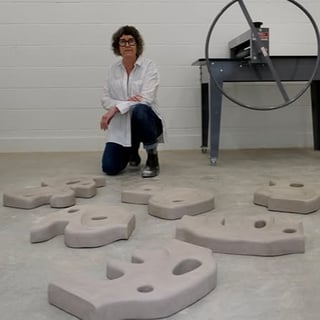
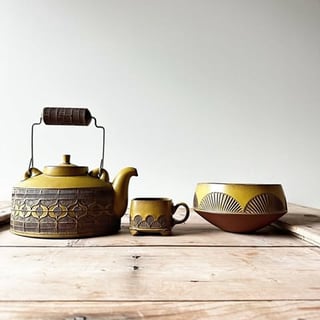
Speaker: What is up, Shaping Nation? This is Nick Torres here, and on this episode of Shaping Your Pottery, I got to interview Juliette Daven. Juliette makes some really wonderful geometrical themed pottery. In this episode, you will learn how Juliette makes her geometrical themed pottery. You'll learn how watching other potters can really help you grow your own voice and really impact your own voice.
Speaker: Finally, you'll learn about taking risks and trying everything as many things as you can with pottery so you can find your voice more effectively. Juliette, welcome to Shaping Your Pottery and share with me what is something people might not know about you. Hi Nick, thanks for having me on. And something people might not know about me is we lived overseas for many years in Southeast Asia and I was an elementary school teacher.
Speaker: So I taught fifth grade at Jakarta International School. Oh, awesome, awesome. Tell me the story of how you got started with ceramics.
Speaker: Well, I got my Bachelor of Fine Arts in at University of Texas in graphic design, and I had to take, you know, definitely lots of fine arts classes. That was my love. I did painting and drawing and things, but ceramics never really fit into my schedule. So my emphasis was graphic design. So I was working as a graphic designer, and there was an evening course that I looked into that was ceramics. I was like, hey, I want to take that.
Speaker: That was it. I was hooked. So I had basically just one six week intro class as kind of an after work evening class. And after that, we got transferred to Bangkok, Thailand. So I took a wheel with me and a small used kiln and started teaching myself. Awesome. That's really, that's really interesting. That's kind of how it went. So I'm like, you know, 95 or more percent self taught. That's awesome. I love that.
Speaker: What experiences would you say helped you with growing as an artist?
Speaker: You know, I think for me, the biggest thing is travel. So we, I spent some time kind of off and on with my art. So whether it was, you know, drawing and paintings or ceramics, I, we were having children when we were overseas and it really just, I spent a lot of time traveling. And so I, every time we traveled somewhere, we would go to museums and go see local artists, but mostly it was people in the community, you know, around us that, and, you know, some of the art they did, especially in Thailand and also in Indonesia. So I think travel and.
Speaker: you know, the people around me really inspire me. How did travel impact what you were going to make? I think it more got me excited about what I was making. So it kind of introduced me to a lot of different kinds and different looks, you know, like in Indonesia, it was a lot of, I think that's when the, a lot of the repeating patterns that I really liked to do and all the, you know, those type of things were the Indonesian batik.
Speaker: So, you know, I would watch these people with their batik and they would do these, these repeating patterns and these, you know, some of them were geometrical, some of them weren't, but it was, you know, that's kind of, I think how I kind of honed in on what I, what, what I really liked to do. Love it. So can you describe to me the moment when you decided to go full time with your pottery? So I did pottery off and on when I could, you know, for 20 something years. So.
Speaker: You know, there were sometimes I could, sometimes I couldn't, depending on where we were living. And then we came back to the U .S. and my stuff sat in storage for 10 years.
Speaker: And it just, I didn't have space. I didn't have the time. My kids were growing up, you know, so I put it aside for a while. And then in 2018, I got everything back out. And kids were off at college and I took a room in the house and made it into a studio. And so at that time, it was still a hobby. And then I was on Instagram and I had posted a picture of something that I had done.
Speaker: a guy from this, it's a Texas Works competition. And so one of the guys that runs it, Tripper, he had commented on my piece and said, you should enter it in this competition. I didn't know anything about it. So I went and looked into it and I was like, oh, you know, it's for Texas makers. And I was like, okay, this is cool. I'll try this. But in the application process, you had to have a name for your business.
Speaker: You had to have a way to sell. So I had to open an Etsy shop and, you know, decide on a name for my business. And then it was like, oh my God, am I really doing this? And at that time I still wasn't full time, but it was like, okay, you know, maybe I really can sell some of my pieces. But I had to have that really to enter.
Speaker: And so I did enter it, and it won first place in its category. So not the overall competition, but in its category. And I think that kind of gave me the boost, like, well, maybe, you know, there's always that niggling feeling that's like, oh, I'm not good enough, you know, and I don't know if anybody's going to want to buy my stuff, you know, and stuff. So I think that's kind of
Speaker: the beginning of when I was like, okay, well, maybe I really can do this. And I opened my Etsy store and I started putting things out on Etsy. And that's when I stopped doing anything else and I started going full -time with ceramics. That's amazing. So it was kind of the kick in the pants that I needed.
Speaker: I love that. Shaping Nation, you know, if you're like maybe debating about going full time, all it takes is really that one little thing to put your pottery over the edge, put your voice over the edge. It's that one little thing that's all it takes you to really push you further. I love that. Yeah, that encouragement, I think for, you know, to get your confidence up and say, yeah, I really, you know, this is something I can do.
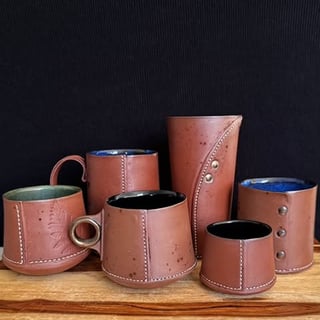
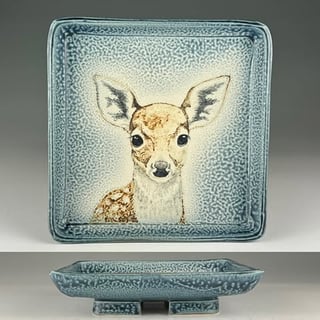
Speaker: Absolutely agree. Let's talk about your pottery. In one sentence, can you tell me what you make? That's really hard to say it in one sentence, but I would say I make functional art that is intricately carved and highly decorated for every day. So I think one thing I really like about my pots, I do a lot of carving on them, and that I think makes each piece unique, but I really want to be that mug that somebody pulls out of their cupboard every day.
Speaker: and uses as, okay, this is mine. To me, having a cup of coffee is an experience. So I really like pulling out a particular mug and using that. So if I can be that one that somebody pulls out, that one mug that is mine, then I really like that. I love thinking like that, especially the way you think about that because I think it makes you make really great pottery just for yourself and for everybody else. I love that.
Speaker: Well, there's an emotional component, I think, that goes into it. So, because each piece has a little piece of meat in it, and I like to think of it that way. So, I really like my pieces are very functional. I don't make sculptural pieces or anything. I really like my pieces to be used. That's the purpose. Definitely love that a lot. Now, you are inspired by geometric patterns, but you are also inspired by watching other potters throw. How does this impact your work, your own work?
Speaker: for both of those. So I think first of all, so when I came back to the States and I wasn't really involved in pottery, there was that kind of 10 year gap. And then when I decided to get back involved in it, Instagram was such a, was a big thing. Instagram and Facebook were huge. I mean, I'm dating myself, but you know, there wasn't that back then when I left, you know, when I was learning overseas and stuff, we didn't have social media, you know, yet. So not in the way that it is today. So when I get on something like Instagram and I'm scrolling through
Speaker: you know, watching people throw and watching people carve and do things, it just is, that's very exciting to me. So that is, it's inspiring, not just in the things that they make, like watching them make a specific thing, but just watching all of this pottery and this creativity and stuff, I think really kind of gets the wheels turning and the creative juices going. And the geometric shapes really, I mean, that's what makes my brain happy. So I really just, that's very calming for me, those repeating,
Speaker: geometric patterns is that's like very soothing to my brain so I really enjoy making those. So that's that's how both of those things really you know affect my pieces. Absolutely love it. Can you give me a simplified explanation of how you create your geometrical pottery?
Speaker: So, I guess, I mean, what I start with is a sketch. So, I'll start with the sketch, and then what I usually do is take a piece, or are you saying, like, just physically how I lay it out, how I do it that way? Yeah. Okay. Well, you can do both. Like, you can explain, like, the mental part and also, like, the physical part, if you want. It doesn't matter.
Speaker: Okay. Well, let's go with the physical part. So what I do is I usually have a sketch that I'm starting with and maybe it's some kind of a repeating pattern, but I have to figure out, you know, there's little math involved of how I'm going to fit it on the pot. So let's say if I have a cup or something and I know this pattern is going to be, you know, an inch and a half wide, you know, I kind of give it a wedge shape. I sketch it out and then I make sure that that many pieces can fit around.
Speaker: you know, the mug enlarge it, reduce it, you know, whatever, from those initial sketches. And then, you know, I measure everything out on the mug and then I have, you know, kind of a swath of shape that I'm using. And I know that piece will repeat. So I sketch it in a way that I know will continue on around the piece. I use a laser level. So when I'm making the vertical lines, I put my piece on a on a banding wheel.
Speaker: And then I use a laser level to make sure I've got a vertical, a really straight vertical line because making a vertical line on a curve can be difficult. So that's what I do. And then the banding wheel to make the horizontal line. So I usually put some kind of a grid on the piece just to give me guidelines to go by. And where do you get this laser level at? Oh, if you look on Amazon or any, we have Home Depot and Lowe's,
Speaker: So any big box, you know, home improvement store or something, they'll have them. And it doesn't have to be an expensive one. I think mine costs like $30 or something, but it is a self -leveling. It's got kind of a pendulum level in it. And it projects both a horizontal and a vertical line. And then it has a, I just made sure that mine has an attachment on the bottom to fit on a tripod.
Speaker: Mm, very nice, very nice. Yeah, so that way I can raise and lower it and move it around and stuff. And sometimes I just stack it up on a Tupperware or something that gets it up high enough on my banding wheel so that I can use it. Love it. Now, what advice would you give to someone trying to add some more emotion into their pottery? That's a hard question in that I think you have to figure out what elicits emotion in yourself first and what kind of emotion you want to put in your piece. So for some people that might
Speaker: you know, putting, you know, flowers or something freeform on it or, you know, just sitting down and sketching something straight onto the piece that comes right out of your head. I'm a little more, you know, I like to be a little more exact and a little more meticulous. So, you know, I tend to like measure things out and make sure everything's exactly even and symmetrical. And, you know, so, but sometimes I make just
Speaker: sit down and go for it and not have a plan, you know, but it kind of depends on what what type of emotional effect you want to have. But I think I think the biggest thing you have to do is identify that first and see what elicits that kind of emotion in you visually, like what you see if it's, you know, whether it's patterns or it's, you know, a landscape scene or flowers or whatever it is that you would want to transfer onto your piece. And then that kind of becomes a part of a part of you.
Speaker: I absolutely love that. I love thinking about how you can add emotion into your pottery. And I think that really helps people with actually finding their own unique voice with that. I love that. Well, I think it's really, if you make pottery, I mean, we all make pottery, we want it to sell.
Speaker: make pieces that we think other people will like, but you have to love it first yourself. I think that it has to elicit that emotion and that reaction from you first, and that's what kind of helps you find your voice and figure out exactly what you want to make and what says this is from you, this is unique.
Speaker: Absolutely agree. You must love it first and then you can try to sell it later. Absolutely agree. Let's talk about discovering your voice. What was your biggest struggle when it came to finding your voice? I feel like I'm still finding my voice. So I think there's two ways to go about it. You know, when I, when I look at potters and I see, I see, say they're, they're set up for a fair or something, you know, their booth set up and everything is, you know, kind of cohesive, you know, there's,
Speaker: similar color patterns and shapes and things that all kind of go well together and the whole thing looks so nice together. And then there's patterns like me where I kind of do a little bit of everything. I'm all over the place with colors and shapes and patterns, but I think that is part of who I am. So that's part of my voice is that I don't stick with one
Speaker: kind of, if that makes sense. So that, I feel like, I feel like your voice is not something that you find and go, aha.
Speaker: That's it. I've found it. I'm done. I'm always going to make things like this. I think it's always evolving and always growing just as we, you know, in life mature and grow. I think our voice tends to kind of grow and mature with us. So, you know, I think it's, it took me a long time to find the one thing I really liked to do, which was carving. So even though each of my pieces might be very different and unique, they usually have that one component where there's always some kind of carving on it.
Speaker: Absolutely agree with that. Yeah. So that, that kind of starts to speak to who, you know, who I am and, and, and what I like and everything. So I guess that's another, you know, that's a part of, of my voice and, and what I want to portray with my work.
Speaker: I absolutely love it. Shaping nation, your voice should be always evolving. It's not, it shouldn't be a one and done thing. It should be always evolving, always growing. And that's how you're gonna get better. And that's how you actually will find your voice and improve it as well. Love that so much. So big thing with finding your voice is getting over boredom and getting through that like boredom stage. What do you do to prevent boredom or to just really spice things up with your pottery?
Speaker: I think it's really easy to get stuck in making the same thing over and over again. You know, when you look at something and say, oh, I've got to make, you know, this many, this many mugs or this many bowls, I make herb strippers. And so I started making those a few years ago and it's just a little bowl and you run the, the herbs through the hole and the herbs come off the stem and they fall in the bowl. So, but I'm making those over and over and over again, and it can get boring. But what I've started to do is make each one different.
Speaker: So, you know, they don't have to be made in sets or anything. So I use each one as kind of a different blank.
Speaker: palette for it's just kind of that blank slate. What do I want to carve on this one? What colors do I want to put on it? You know, they're almost like little test tiles where each one is different. So that, for me, that spices it up a bit. So because they don't all have to be the same in sets, then I can experiment within one single shape. So if this one shape I'm doing over and over and over again, at least I can keep it, you know, keep it a little more exciting for me by carving different patterns and putting different glazes on them.
Speaker: Love that. So that's an excellent advice. Can you tell me how has your pottery evolved into what it is today? How my pottery has evolved into what it is today. I think I spent a long time still learning. I mean, we're all still, you know, still evolving and learning, but I spent the first many, many years that I was doing pottery because I was teaching myself. There was a lot of trial and error.
Speaker: So, you know, I was still kind of figuring out, you know, what to do. If I had had a teacher, you know, that could, you know, look at my work and tell me how to improve, it would have been easier. And I've done a few little workshops here and there and stuff, but for the most part, as far as my throwing and creating of the pottery, I haven't had a lot of instruction with that. So, I think I spent longer than most people would figuring it out. And so, you know, that was a huge change then from now that I, by no means do I feel like I've figured it all out, but it's easier for me.
Speaker: So now I'm able to do repeat throwing and make sets of things. And so I feel like my work has become more refined. And then in the last few years, it's really been the carving. So I think that that's a huge change from what I used to do. So all those patterns and different, whether it's more organic looks or geometric designs or something, it's all the carving in the pieces that's changed from what I used to do before.
Speaker: Now what advice would you give to someone trying to discover their own unique voice with their pottery?
Speaker: I think to me it's taking risks, you know, and try everything out. Try out lots of different styles of pottery until it clicks. And sometimes it doesn't click at first. You know, you have to kind of practice things. But for me, I like to try a lot of different things. So, you know, whether it's throwing or hand building or, you know, whether you're doing raccoon or you're doing, you know, oxidation fire or, you know, lots of different things, you know, making your own glazes, using commercial glazes, you know, try a lot of new things.
Speaker: until you kind of find something that clicks with you. You know, I find that was something that helped me a lot. And then even within that, each method that you try might not be your thing, but you can take something from that and the little pieces that you take from each thing that you've tried and you put it together and make all of that into something new, something your own, you know, will evolve into, I think, a stronger.
Speaker: Definitely agree. Shaping Nation, one of the easiest things and probably most effective things that you can do is just to try a bunch of things with your pottery. That's how you're really going to find your voice. You're just trying a bunch of things, taking a lot of risks, trying to see what you want to actually make with your pottery. That's some excellent advice right there. As we're coming to a close here, what is one thing you want to hammer home with my audience today?
Speaker: I think as, you know, as you're growing as a potter, you know, the big thing is, like we said, try everything. Keep practicing. Don't give up and, you know, try to find that niche for yourself. But, you know, the biggest thing I think I did is I never gave up, you know, no matter how difficult it was or where we were and I didn't have the right voltage or, you know, whatever was happening, I found a way to do it. But it takes time and it takes practice. So, you know, sometimes there are lots of
Speaker: You know, things blowing up in the kiln or something. Don't be discouraged. You know, just keep at it because you'll get there. Some excellent last piece of advice. Juliette, it was really great sharing with you today. Where can my audience go and learn more about you? My Instagram is the best place. That's where you'll see everything that I do. So it's just Juliette Daven at Juliette Daven.
Speaker: Hey thanks for listening to this episode of Shaping Your Pottery with Nick Torres. If you enjoyed this episode and you would like to learn how to discover your own unique voice with your pottery, I put together a free quiz to help you guys discover your own unique voice.
Speaker: All you have to do to take this quiz, it's very short, it's 30 seconds long, four questions. All you have to do to take this quiz is go to shapingyourpodder .com forward slash quiz to go start taking this quiz. Or you could just simply go to shapingyourpodder .com and be right at the top. I'll see you guys next time.