Transcript
Speaker: I know some people are like on one side of the river and other people are on the other side of the river, but I'm like definitely just in the river. I want to learn how to incorporate them. I want to work kind of combine them and helped me like that. I didn't have those rules of like, I have to be doing one or the other.
Speaker: What is up Shaping Nation this is Nick Torres here and on this episode of Shaping Your Pottery I gotta interview Jane Brooks. Jane makes some really incredible octopus planners and other animal themed pottery. In this episode you will learn how Jane makes her octopus planners, you'll also learn about
Speaker: how creativity is a practice and why you should be making time to practice it. You also learn about how Jane uses her inspiration for nature and resiliency and applies it into her own pottery. Finally, you also learn about forming habits of making pottery. And there's so much more in this episode. I hope you guys enjoy it. I'll see you guys in there.
Speaker: If you love pottery and want to take your skills to the next level, you're in the right place. Find your own pottery style right here on Shaping Your Pottery with Nick Torres. Let's get started. Jane, welcome to Shaping Your Pottery and share with me what is something you love besides making pottery? So I'm actually a therapist and I'm actually trained in art therapy. So I really love helping people and doing my therapy. It's been just so awesome.
Speaker: I love that. So tell me the story, how you got started. So it was 2013. So I've been doing it on and off for about 10 years now. And it has really picked up in the last probably three years, but in 2013, I was a freshman in college and I signed up for RACU class.
Speaker: And I wasn't very good at it. I definitely go into art classes assuming that I'm going to be rather sufficient. And Pottery kicked my ass. And I really love this because I kept going with it to win. That's what I told people. I was like, no, I want to win. I want to figure this out. I was not a natural on the wheel.
Speaker: And I was really struggling. So when I teach classes, I think that I can really normalize that, like, beginning struggle when there's some people in the class that just seem to have, like, a feel for it. And others, I let them know, like, you can still get to the same place or as far as you want with this because some, I wasn't a natural on the wheel either. I definitely agree with that. I wanted to win because, like, when I first started pottery, there was, like, four of us that were serious about it. And I liked the worst one. I was like, I want to win. I want to beat them. I don't care.
Speaker: I love that so much. I was really, really competitive. I think also just with the clay. I was like, come on, I'm going to learn how to win. You're not going to beat me this time. And it continues to beat me. I love that. It's always humbling, but you got to love it. So what has been your biggest obstacle since you started making water? I would definitely say my mental health. As a therapist, as an artist, my own mental health journey,
Speaker: has always been a little bit of a challenge. And part of that is because I am hyperactive ADHD. Well, I'm actually like both presenting, but the hard part is the hyperactivity makes me want to do everything all the time. And then I also really miss
Speaker: conceive time. So like my conception of time is just completely warped. So I'm always trying to do more than I actually can. And that ends up with me feeling really exhausted and tired and not doing the things that I actually said I told people I would do. And so that's probably the biggest obstacle that I am still working with and learning how to adjust so that way I can make with integrity.
Speaker: So what is something that you have done to help you with these time constraints? So I definitely try and check in with myself. One of the things I've done is I actually just don't really take custom orders. I will rarely do it still. And I even have that on my platform on Instagram that like, Hey, sometimes I will take custom orders, but for the most part, I'm not going to because there's something about custom orders that like actually hurts my brain. Like it's as soon as I'm told that I have to do it.
Speaker: but like my brain doesn't want to. It's like, okay, I'm good, like goodbye. And it's all of a sudden the motivation's gone for some reason. I've also gotten more and more comfortable with changing my timelines. Like my shop drop for this coming September one has changed about three times and getting comfortable with that. And my upcoming change is also hopefully like what I'm trying to do now is schedule things out more. So I have already an idea of the date
Speaker: like for the next shot drop, that's like maybe like six to eight weeks from now. And I'm really hoping that spreading it out like that will help me prioritize and help me actually be on time for things. But I have lovely humans in my life that often check with me before I take something on. They kind of like, they kind of filter me. I love that. So what would you do differently if you were just starting out in pottery?
Speaker: You know, so I was thinking about this question and about how like, it depends if you're just starting out, like wanting to like make pottery, I would say, just take as many classes as possible. You know, I definitely didn't take actually very many pottery classes. I moved pretty quickly from, I took maybe four pottery classes in total. And then I was also the glaze technician.
Speaker: at the college I was working at. And I kind of just like, I didn't focus a lot on my own stuff. And then I also would, if I was just starting out and if I could take a piece of wisdom, it would be that creativity is a practice. It's not something that like people are just born with and recognizing that the more I make, the more ideas I'm going to have, the things that are, that I'm doing now will develop and just kind of reduce that
Speaker: pressure to like have an amazing original, like incredible idea and know that ideas will come. For potters who are starting to think about selling, I would say create a business plan, like just get some just base organization. Again, I just like hyperactive, just like I'm going to do it. And then it took me about two years to actually learn the business skills that I needed to actually manage and understand how to sell my pottery and keep it above board.
Speaker: So we're going to talk about how creativity is a practice later on. But for now, let's talk about your pottery. In one sentence, can you tell me what you make? Yes, I make functional artwork to provide joy and increase beauty in everyday spaces. Perfect one sentence. I love it. So tell me the story how you started making this part of that you made today. So I
Speaker: let's see, I really started with small mugs. Again, I wasn't ever a good thrower. I wouldn't say I made anything very impressive. But then about five years later, I made a giant octopus planter. And then from there, I've slowly sunk more and more into it. I also like
Speaker: I think a big thing for me about how I make pottery and what I make pottery today is that throughout the time I've always been able to hand build and wheel throw. I know some people are like on one side of the river and other people are on the other side of the river, but I'm like definitely just in the river. I want to learn how to incorporate them. I want to work kind of combine them. And it helps me like that I didn't have those rules of like I have to be doing one or the other.
Speaker: So why did you decide to choose both hand building and wheel throwing? Because you can just only get some certain results with hand building and some with wheel throwing. And especially, I know we're going to talk about this later, but the animal planters I make, I think the combination of wheel throwing and hand building gives it this really cool
Speaker: combination because like if you wheel through the body it's going to have that like symmetry, it's going to have that like look that like nature does where it's like so perfectly imperfect and then you hand build and alter that form then you get some of that imperfection in it and so I really think it speaks to that.
Speaker: I love that. Shaping Nation, you do not have to be stuck doing just one technique. I know it says all the time, but I'm gonna say it again. You don't have to be stuck doing the same technique. You do choose whatever you want. Hand building, wheel throwing, mold casting, whatever you want. Do what you like. I completely agree. I teach my students when I'm teaching classes how to pull handles in so many different ways. I try and teach them all the different ways.
Speaker: then explain to them what I am teaching guidelines. I am not teaching anything concrete. It's like hand positions, tips, tricks. They're gonna figure out their own way. Definitely, nothing is set in stone. I love that so much. So you are inspired by nature and resiliency. Can you tell me how this impacts the way you make your potters? Yeah, definitely.
Speaker: So I think the best thing to start talking about this is the project that I recently started, which is the River Rock Project, which is where I've been gathering small and large river rocks, which is kind of obnoxious probably for everyone who has to live in my home. And now there's all these river rocks just surrounding my life and also for the trip. So I'm like, oh, here's a cool rock. I need to take it with me.
Speaker: but yeah so that is taking actual rocks and then using them as a mold to mold bowls plates forms and you know i really think about nature and like when i'm out in nature i'm looking for textures i'm looking for patterns i'm looking for life that it's just like resilience really
Speaker: Resiliency is all a part of that, you know, I was like, you know, and I'm from, I'm living in New Mexico, especially, I think that's where a lot of the resiliency comes from is that I think nature always has to be resilient, but it's a little bit more like present in the desert because like there's water scarcity and there are like these very hardy plants, you know, they're pokey. They're very interesting looking, the trees,
Speaker: Instagram parts of New Mexico are very like twisted and so interesting because they're growing differently because of the climate that they live in. And so I really love this idea of taking rocks or taking something inspiration from nature and then actually using nature to sculpt my artwork. And in other ways too, I want to like replicate textures. I want to.
Speaker: Think about how things are made and also then like I really am interested not only in the animal planters that I make but then expanding past that is making things that then like Other things grow out of so, you know, like how do it does my work intersect with actual nature? I love that so much. I love Seeing people take things actually from nature and like putting it into their own poverty. I think that is so cool So you create functional work?
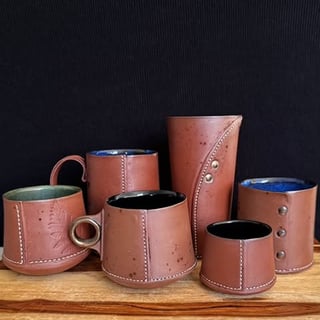
Speaker: But you work to make it more than a mug planter or bowl. Can you tell me more about this? Yeah, definitely. So I have very little interest in just like throwing a mug and then that's it, you know, like, and I have a ton of those mugs. I think they're gorgeous. And I think there's lots of value in the.
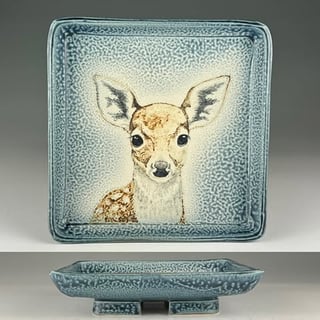
Speaker: traditional like Western style of like pottery and that craft of like crafting these beautiful mugs, these beautiful bowls. But you know, I really want to add more detail to it, you know, either sculpting something onto it, carving into it, altering it in some way. So that way it takes it from a mug, then also to a mug that is also an art piece that someone looks at and they are like,
Speaker: I guess like also I guess your traditional pottery mugs are also an art piece but really helping like adding something where it like feels more like my pottery surface is also a little bit like my canvas. I love that shaping nation. You can make your pottery stand out a little bit more just by putting in a little bit extra extra effort so that you can make it more like an art piece rather than just a functional piece of art. I love that. So can you
Speaker: Give me a brief explanation on how you create one of your octopus plants. Yes, I love my octopods, which is the new name for them, except I also still call them octopus planters because that doesn't, octopods does not describe what they actually are. People are like, what? So my octopus planters, it depends on what size I'm making them. For the really large ones, it's a hundred percent hand building.
Speaker: which I really hope to do a 2023 giant octopus here soon. But for the smaller ones, it's usually a combination between wheel throwing and hand building. So I will throw the body of the octopus planter on the wheel and then I will alter it a little bit to kind of give it more of the octopus kind of like head shape. And then I will either throw the tentacles on the wheel and that's throwing typically off the hump. And I'm just like,
Speaker: throwing little like tiny cones that then I alter and, or I make tentacles by like pulling a handle. And I really like doing the handle version a little bit more right now, but I'm sure I'll switch in the next month again. Um, because like you have like more of that length, that octopus tentacle length, and they can like, kind of like more like weave into each other. And I really love that. Um, that's actually what the 22 that I have currently in progress, they're all like,
Speaker: long and like crazy tentacles. And then I worked to combine it. And so I put the tentacles on the wheel thrown piece. And then the final step is adding the eye. Well, I forgot about the eyes, but I always add eyes to them. And then I add texture by using I don't know the technical name, but it's that stick with a ball on the end.
Speaker: and you like can mix that little like dented shape in the clay. And that's how I get that texture that glaze pools in very well. And it gives it that like variation that are on all of my octopus planters. The colors are very flowy. They're pooling in those dents. And then I slip trail the little suckers on the tentacles. And that's been a really easy way to do it. It just always depends on what I'm making because I'm balancing it with
Speaker: a lot of people want these. I want to get people these octopus planters and that means sustainably I can't sculpt each tentacle or each sucker on the tentacle but sometimes I'll go back to that style and I'll occasionally make like four or six of those that have like really intricate suckers which are so beautiful but again not realistic for for each batch.
Speaker: So you kind of hit on this earlier, but why octopus planters? Why octopuses in general? I love octopuses. Talk about resiliency and a little creature. They are so incredible and so intelligent. A lot of people have always asked me, like, at all of my shows, they're like, oh, have you seen the octopus teacher on Netflix? And I'm always like, no, I actually haven't. And that's a whole side story on itself.
Speaker: But in 2018, I read a book called A Soul of an Octopus, and it's by an environmentalist author. And she studied octopuses in different aquariums and really got to know them and talked about the biology of octopuses. And that's what really inspired me to make my very first one. And then from there, I just kept doing it. And it is fair to say they are probably my favorite animal.
Speaker: I love that. So what is something you are doing to evolve your voice even further? Or your pottery even further? Voice and pottery. Absolutely. One in the same. So I have been
Speaker: really trying to slow down, even though probably to everyone who knows me, it does not seem like I am slowing down at all or being successful in that goal. I am trying because I really want to sink in to the making process. I'm also working on balancing a little bit more time towards making pottery. I'm always going to love being a therapist, but I also want time to like grow
Speaker: my art and my voice as an artist. And I would also say something that I'm doing, which has been a really fun thing. So I just started making some YouTube tutorials and I plan to actually do some on octopus planters here soon. So you mentioned that you're trying to make more time to actually make pottery. What does that look like, especially because you are a therapist as well? So that looks like reducing my caseload a little bit, you know, with the support
Speaker: of the organization that I work for. It also means like saying, like actually holding myself accountable to making more time for it. Um, you know, and it's, it's definitely like how creativity is a practice. I think time management is a practice and I am getting better at it. We were just talking to, I was just talking to someone about fall trips and being like, well, I want to say tentatively yes to that, but I really have to see where I'm at with making pottery because like.
Speaker: It's such an interesting thing to be part of your livelihood and career is actually something that you just like intimately love to do so much and you're so close to. And I think that's just always so interesting because it's like my ideal day is hanging out in my garage when other people like wanna go on trips. I want to do that too but still making art is kind of above that.
Speaker: I love that so much. So let's talk about discovering your voice. You contribute your growth as an artist to practicing creativity as you explained earlier. Can you explain this to me? Yes, I love this concept that creativity is a practice. I am really against this idea that some people are born creative and some people are not, you know, I think that's actually a really limiting concept. And also we can expand our
Speaker: idea of creativity to outside of the arts of like how do we live creatively? How do we set up our homes where it feels really good? How do we set up our spaces? How do we connect with others? And when I think about practicing creativity, it doesn't necessarily have to have an end goal. It's about developing this concept. Like it's about just engaging in something that
Speaker: stimulates your mind, makes you feel like you're in that flow state, and then continuing to build on it. And I also think it's the hardest part about being an artist is forming the habit of making. I mean, a few years ago, I never made it art every day. And now I do. And a lot of that is because I had to form the habit. And so I think this idea that some people are just creative and they naturally do that is not necessarily true.
Speaker: Definitely agree shaping nation. It's so important to practice creativity but you have to start by forming the habit of Making first being able to make every day or as much as you can. I love that so much What is something you are doing to help you practice creativity? one thing that I am doing to help myself practice creativity is that I don't limit myself to just pottery and
Speaker: I also am a 2D artist. I also really love to bake. I love to journal. I love to always be thinking about ideas and engaging in conversation about creativity and also teaching other people. You know, I find like I get so amped up and so excited about creating artwork and being able to share that with others, I feel like is just like,
Speaker: food for creative growth. It's like you're talking to someone and they're learning something new and you can see that excitement and it is just awesome to watch them succeed. Definitely agree. That's one of the reasons why I started this podcast was because I wanted to talk with other potters and learn from them and I think it's so great that you do that.
Speaker: So on your Instagram, you made a post talking about copying versus taking inspiration from someone. Can you tell me the difference and how you use this to help you with your own pottery? Yeah, absolutely. So I think that is such an interesting thing because I mean, pottery, for such a long time in the history, it was considered more of a craft, right? You know, and then it developed and it got more and more included into the fine art world.
Speaker: And, and then there's now this tension too, between like, we're always, people are sharing things worldwide on Instagram. And so you have this like unlimited resource of ideas, of new ways of doing things and pottery is like so interesting to me because it's like, you know, what lots of people are making.
Speaker: in some ways are very similar, you know, like mountain mugs. It's like, I, I carve mountains into my mugs and I don't even dream or dare to say that this is like, that's my invention. Of course it's not. Um, but what I would encourage people to do is that if they like styles, if they like, if they're wanting to carve mountains into their mugs, thinking about how they want to do it, thinking about how they want to make it their own, you know, and
Speaker: you know, do they want it to be more realistic? Do they want it to be more geometric and abstract and like impressionistic of amount? You know, it's like, what would they like, you know, to have? And then also with the octopus planters, I don't know, even though that's like my main thing, and that's definitely the thing, one of the things I'm most well known for. I do not want to gatekeep that object and this idea because
Speaker: There are so many people in the world. I know that I'm not the only human that has ever thought to myself, hey, what if we made a planter that looks like an octopus? And I want to encourage people who see my videos to look at my octopus planters and think about it critically when they're trying to make their own. How do I make my own that feels like me still? What would I do differently? Jane does it like this. How would I do it? And I also think that's also this really
Speaker: beautiful practice and letting go and like letting go control of this thing of like I own ideas. I don't like you can make anything that you want and I don't want to waste my energy trying to monitor who's making what or if someone's mimicking me. But I do want to encourage people growing creatively and expanding and building off of something that has inspired them.
Speaker: I love that so much. Shaping Nation, it's so important to take inspiration from people, but don't copy them exactly. Put your own spin on it and put your own style on it, because that's how you truly make it your own. I love that so much. So what advice would you give to someone trying to discover their own unique voice with their partner? I would say, let's see, if someone was trying to create their, or like discover, I love that word, discover their own unique voice.
Speaker: would encourage them to try a lot of different things. And I also made a post about this, but I would really encourage people to fail fast. Like that means try things out. If they don't work, okay, scrap it and try again. You know, it's okay that the first attempt didn't work out and, you know, trying out new things. It's like,
Speaker: It's like balancing it by like continuing to recreate what you know is working, but then also spending and having a percentage of your time trying out new ideas and allowing yourself to fail and learn and let yourself kind of explore another path. And then if that's not working, you can pivot, you can always return to what you know, but trying those new things. And then I also think that like, especially for those potters who are trying to find their own voice, they're on Instagram, they're posting about their work.
Speaker: You know, also on Instagram, how they show up on Instagram. I really encourage people to try and fail fast on a social media platform because like it's okay that like you tried a certain way to show your art and maybe you didn't get as much engagement as you hoped. It's okay that
Speaker: You tried something that you're never going to try again. It's okay. You know, and cause I would think back to like my very first real or my very first post to now, and it's so different. And so I think that like in some ways, having a community like a social media platform, as long as it's positive and not draining your mental health can really help someone discover their own voice. Cause there's something very intimate.
Speaker: and personal and vulnerable about saying, hey, look at the things I made world. And then sometimes receiving feedback that does not either feel good or it feels really great and having to kind of go through those highs and lows. I love that so much. So as we are coming to a close here, what is one thing you want to hammer home with my audience today? I think that one thing I really want to hammer home and this goes back to the three things, you know, practice creativity,
Speaker: discovering your voice and taking inspiration from others is just because someone else is already doing it does not mean that there is not space for you. There is space, you know, and it is about learning how you want to show up. It's about making artwork that feels really good to you. And, you know, you and let's say if there's someone out there who's going to be listening to this and was like, well, I was thinking about making an octopus planter, but I have never heard of Jane Brooks and sulee ceramics, then
Speaker: That is okay. They should make it. And they should never feel like someone else has, that I have more right to it than they do. And they, I really want to encourage them to make artwork that feels good for them. Some excellent parting words of advice. Jane, it was so great challenge today. Where can my audience come and learn more about? So on Instagram, I have on my Instagram, it's sule ceramics.
Speaker: And then I also will be having a website, which is suleceramics .com. Sule is spelled soul, but with an E on the end and then ceramics. And then I'm also doing, I do fairs in New Mexico.
Speaker: I hope you enjoyed this episode of Shaping Your Pottery with Nick Torres. If you would like to support the Shaping Your Pottery podcast, then go to shapingyourpottery .com forward slash donate and anything is appreciated. You could also click the link in the description. This is going to allow me to to create more and better episodes for you. I hope you guys enjoy this episode and I'll see you guys in the next one.