Transcript
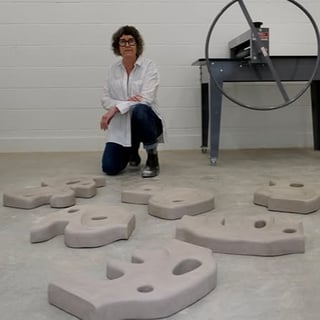
Speaker: If you love pottery and want to take your skills to the next level, you're in the right place. Find your own pottery style right here on Shaping Your Pottery with Nick Torres. Let's get started. What is up, Shaping Nation? This is Nick Torres here. And in this episode of Shaping Your Pottery, I got to interview Deidre Roat. Deidre is a mother and has been making pottery for almost 20 years now.
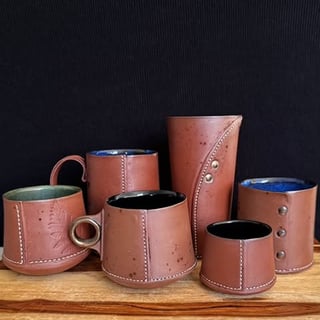
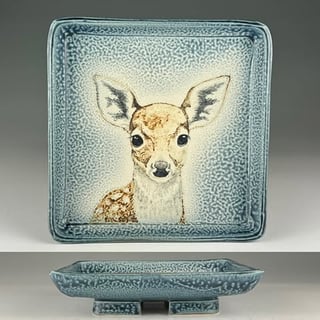
Speaker: Deidre makes some amazing illustrative pottery and in this episode you will learn how Deidre makes her illustrative pottery using stamps and carving and various other methods. You will learn how Deidre makes her unique textured handles for her mugs. You will also learn the power of just putting in the work and being consistent and how that is the best way to help you start discovering your voice.
Speaker: Deidra, welcome to Shaping Your Pottery and share with me what is something you believe potters should be doing to have success in pottery? Well, I think that's something they should be doing is really just like working on it all the time. It's almost like you have to have OCD. I don't think I think it has you have to have a certain level of but also just doing it even when you don't want to and just keep trying and working at it otherwise.
Speaker: you won't be as successful, I don't think. I definitely agree. You got to put in those reps in order to see that success later on. Right. Yeah, definitely. So can you tell me the story about the first time you made something with clay? So the first time I made something with clay, I was in college and I had, I, I had wanted to take like a pottery class and they had, they offered ceramics, but I always imagined that ceramics was like those, you know, those little molds.
Speaker: Things so I thought I was like, well, I don't want to do that. I want to make something so I took it like I took I think it was a sculpture class and they did a little bit of clay in there and So I got to make like it was like a little pitcher that I made and the first time I made something I was hooked was like my addiction How did you know that this was like something you wanted to pursue further well, um
Speaker: I guess, I don't know. It was just like, I grew up and I worked construction with my dad. So I grew up working with my hands and I'm actually trained as like a stone mason and bricklayer and that sort of thing. So I loved like making stuff and doing things. And I love the idea of finishing a job and like, you know. So when I made that thing, it was just like, I don't know.
Speaker: I had to, I had to do more. So it was like, I don't know, it's just an addiction almost right from the start. That's amazing. So can you describe the moment when you were debating about whether or not you should take the plunge and change your major to art?
Speaker: So what I did was I was at a different school at the time when I was studying like construction management. And so then I went to, I watched this potter and he was at it from, he was a professor at a different school. And so I was really inspired by him. He taught ceramics there. So I transferred schools and I went there. It was like a little Christian school. And I took a semester of just, you know,
Speaker: like pottery and different classes and that sort of thing. But I took a whole semester and I just really loved it. So I was trying to decide if I should switch my major. And at the time, I just really prayed about it a lot. And I thought, well, God is an artist. So I figured he makes really great stuff. So
Speaker: It couldn't be a bad career. I just didn't know how I could make a living from it. That was my main concern. It's like, how can I do this for a living? Back then, there wasn't a lot of resources and stuff that it seemed like. So you mentioned God is an artist. Would you mind explaining that a little bit further for me? Well, I don't know if you even look at an acorn. It's just so fascinating to me. Or a butterfly.
Speaker: or a fish. I just am so fascinated or even like fruit to strawberry and the smell and the way it looks and the colors and everything like that. I just think it's just amazing. The world that we live in is just really beautiful, even with all the craziness in it. There's always that that is amazing. So during your time when you were taking your plunge into studying art,
Speaker: What is something that you learned that helped your pottery grow to the next level? So when I was working and making art, I was really trying to find my voice as a potter. And I wanted to make something really unique that was just me and that people would see it and know it was me. And so I talked to my professor.
Speaker: His name was Steve Hanson. He makes really amazing work. And he makes these big sculptural things and stuff. And so I was trying to find my wife and he said, well, it kind of just comes as you just keep working it. And so when I was in college, I made just a ton of teapots and stuff. But I think for me, and I would imagine for most, is it's just kind of like you just have to keep doing it
Speaker: And it evolves as you work and you create things and it's just something that just takes a lot of time and that you just have to keep working at it to get to that point where you are. I definitely agree 100%. Shaping Nation, if you're listening right now...
Speaker: You may not find your voice today, tomorrow, or even next week. But if you keep on working at it, your pottery is going to evolve. And when your pottery evolves, that's when your voice is going to start showing up. So can you tell me the impact your husband has had on you to keep pursuing clay further?
Speaker: So when I graduated from school, my dad, he bought me a kiln and a wheel. So I had these two things and that kind of helped me keep going. But I didn't have anywhere to make a lot of stuff.
Speaker: So I was kind of discouraged about that. When I got married, you know, my husband's like, he helped me find my first little studio where I could start making stuff. And then, then that didn't work out. And he said, well, let's just, we'll build a garage and we'll put your studio above it. And, and then like, like I'd come up with these ideas. Cause I used to, um, so my process, the way I used to make my mugs and stuff is I would, I would throw them on the wheel and then I would, I would like,
Speaker: So I would like, for example, I would draw like a picture, you know, I would draw the picture out and then I would put it on the mug and then I would use a pen and I would draw that all in there and then I would carve it out and it would take me forever to do a mug. And I was just getting discouraged because it was just not feasible to make a living spending like two hours carving a mug.
Speaker: And I just couldn't charge what the amount of time it was taking me. So, you know, he's like, well, let's see what we can do. And so he come up with an idea and he had a CNC and then he made some like, he made me these stamps. Um, you know, I don't know.
Speaker: You can see, but so he made me these stamps and it really saved a lot of time. It still takes me forever to do it, but it really cut out a lot of time to have to do that. And so he's been always like really supportive in helping me to figure out how I can make it as a potter, which is really encouraging to me. That is really amazing. I love that so much. So can you tell me the story, how you started making the pottery that you make today?
Speaker: So I started like, well, I had gone to, I don't know if you've ever heard of Sarah Pike. She's like one of my favorite potters. And so I went to a week long workshop with her and I had been doing my little carvings and that sort of thing. And like, there was this one carving that I did of, it was kind of like, it was me.
Speaker: that I had done, but actually there was a lot of people that really liked that carving. And then one day I had, there was, so I kind of changed how I made my mugs and stuff because of her workshop. And then I had a girl ask me one day, she said, well, when my good friend, her mother died, can you make a mug with, you know, and she told me how she, her hair looked, it was like a longer hair. And so then I did my little illustration and I had never thought to like do a different like,
Speaker: someone with long hair or without glasses or something like that. So it kind of opened up a new thing for me and I thought I was really excited to try making new designs and putting those on mugs. So that's kind of what I've been pursuing and I really like it. So it's been really fun just trying to imagine new people and draw new things and put them on mugs.
Speaker: I love it, love it so much. So can you give me a simplified version of how you create your illustration designs? So like I say, I used to draw them all out and just do different sketches and stuff. But now what I do is I've got an iPad and it's really great because then I can like draw them on there and then I can send them to my husband and then he can either make a stamp or whatever.
Speaker: And so then that really helps. And then I can just really work a long time on making the design that I want. And the great thing about the iPad is you can send it however you want, like as a TIFF or a PNG, so any kind of file like that. Or if I just wanted to print it out, I could do that too. So I like the versatility that that offers there. So that's kind of how I do that.
Speaker: What advice would you give to people trying to add some illustrations to their pottery so that they can maybe practice it and start incorporate it to their own pottery? So I think the best way to start is to do it kind of like how I did. You draw it out on a piece of paper and then you take that piece of paper and you put it against like your leather hard clay and then you can use like a pencil
Speaker: or like a ballpoint pen, and then you kind of trace that image that you've made. You can chase it on there.
Speaker: And then from there, you can, you know, take it off and then you can carve in that image. So then, you know, you've got kind of like, you don't have to like redraw it every single time. That was what saved me a lot of time is because I didn't have to just sketch it on there first and redraw it. I could just use the same illustration. There's another girl that does that. I'm trying to think. Kip, Kip O 'Krongley. Is that her name?
Speaker: I think that's how she does it. Or she did, at least. Kind of that same method.
Speaker: Some excellent advice, thank you so much. So you have a unique way of making handles. Can you explain to me how you create your handles for your mugs? Okay, so my handles was kind of like, they've evolved quite a bit, but I really wanted handles with some texture to them. So I used to like just roll, I'd make some coils, and then I'd try to press them into some texture, but it never seemed like my hand would always squish out some of the texture.
Speaker: So I was trying to think of a different way, so then I used a really flat piece of clay. I roll it out to about, maybe about an eighth of an inch, so it's really thin. And then I can, I use my little roller, it's like a printmaking roller, and then I roll it onto whatever texture I want. I just, my father -in -law, he works, he was a carpenter, and so he always had all kinds of
Speaker: industrial things or whatever so I go over there and find different textures and then I roll it in there and then from there I just almost like roll it up like a straw almost but a little bit thicker and you know how most of the time you can't you can't have anything that's hollow or it will kind of blow up unless you poke a hole in it but what I found is that
Speaker: It doesn't affect it as long as I don't, like I just roll it up and I don't slip or score it or anything. I just roll it and then bend it. And then the air can escape through that crack. It only needs just a tiny little bit. And then I can glaze in everything and I don't poke a hole in it or anything. I just attach it. So it works really good that way.
Speaker: I love it. When I was making a lot of mugs, I was always trying to figure out new ways to make my handles easier and I think that way is really, really simple.
Speaker: Yeah, that's what I like about it, is that you can get textures. That's really amazing. So something I found interesting from your website is you said, Clay is socially responsible. Would you mind explaining this to me further? Well, I guess by that, what I mean is Clay's been around for forever. And I try to be a good steward of the earth and that sort of thing. And I just think Clay is just one of those things. I try to use natural materials for packaging and sending.
Speaker: You know, I just think it's just been around forever. It's not like plastic or anything like that. And then you help a small business and it's just a great thing. So I guess that's what I meant by that. Love it. So when you are feeling overwhelmed or unfocused, what do you do to get back on track?
Speaker: So I just, I really just try to stick to like just a routine because even if I'm not feeling focused, I just stick to it. I get up at like four in the morning. I have two kids and they're pretty young. So like I'll come out here and I'll work from like four in the morning until like 10. So then I feel like I can still be with them and I've got a good amount of time in, but just doing it all the time, you know, as I can.
Speaker: Sometimes it's scattered in the summer, but I try to just, I think that's the best way is just to just be consistent. I love that. Shaping Nation, if you're listening right now, it's better to be consistent than rather just kind of being all over the place. If you're more consistent, your pottery is going to grow. And even if you don't like to do something at that day, if you're consistent, you'll get through it. Right.
Speaker: Let's talk about finding your voice. When it came to finding your voice, sorry. When it came to finding your voice, what made you, man, I'm sorry. What was your biggest struggle when it came to finding your voice? The biggest struggle in trying to find my voice was mostly me. I had a lot of like, you know, I still was real insecure and I sometimes still struggle with
Speaker: you have to charge what you're worth and I still struggle with that sometimes. So I guess just finding my voice, it's just been really just pushing past my own insecurities. Social media has really helped in a lot of ways because it's encouraged me to think,
Speaker: people want to buy my work and they want to support me. And so they have really encouraged me in a lot of ways as well to help me be more confident. So that's been one way. So you mentioned insecurities. What other ways do you use to kind of push past your insecurities? So just I guess for me to push past that would be just
Speaker: kind of like before is just to keep doing it. You know, you put stuff out there and maybe it's a fail, but just to keep doing it. And that helps me to give me more confidence is just to keep doing it and trying new things and getting out there, I guess.
Speaker: I definitely agree. I love that so much. So if you had to start over, what would you do to find your unique voice with your pottery? So this question is kind of a tough one for me because if I had to start over, I mean, I guess if I had to start over and I didn't know anything that I know now, it would probably be a lot of the same things. It's just
Speaker: just being consistent and pushing myself just to keep at it. But I don't really know. I've thought a lot about that question. If I had to start over, what I would do differently. I mean, like I say, when I was in college, things were so much different than they are now. So if they, I would
Speaker: I would have a better chance at like getting my voice out there and getting my work out there than I did, you know, 20 years ago. Very, very interesting. So as we're coming to a close here, do you have any parting words advice for Shaping Nation today? Um, so my parting words would be to potters out there, people trying to, to make a way at it. It's just, just to keep at it. Um,
Speaker: and not to give up and not to get discouraged even when it's sometimes pottery can be very discouraging because you can like you can lose a whole kiln full of stuff and just just it can be very discouraging but not to lose heart just to keep at it that's that is the biggest thing is just not to give up and just keep going that would be my advice and yeah
Speaker: That is some amazing advice. Deidre, it was really great chatting with you today. Where can my audience go and check out your work? Have you ever asked yourself the question, how
Speaker: Can I find my own style with my pottery? If you have asked this question, you are not alone. That's why I created a free 15 question template to help you discover your own voice with your pottery. All you have to do is go to shapingyourpottery .com forward slash questions to get this free template.