Transcript
Speaker: Hey, Gia.
Speaker: Hey, Christine.
Speaker: What comes to mind when I say health and wellness?
Speaker: Like the world cares about one of those things far more than the other, and we like to pair them together.
Speaker: But actually, do we care about someone's wellness?
Speaker: What does it mean to be well?
Speaker: And that you can be healthy and not well, or you can be well and not healthy.
Speaker: The two are not like super synonymous, but we love to preach that on the world.
Speaker: As if that's like the ultimate goal while simultaneously also judging people.
Speaker: But, you know, you don't know someone's health by looking at them.
Speaker: So how can you preach health and wellness to really anyone unless you're following them around all day, every day?
Speaker: And that's weird.
Speaker: And don't be weird unless you're me and Christine, because we're about to get weird.
Speaker: Yeah.
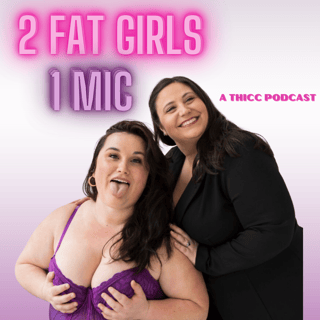
Speaker: Welcome to Two Fat Girls, One Microphone.
Speaker: I'm Gia.
Speaker: I'm a fat girl.
Speaker: I'm Christine, and I'm going to be just fabulous today.
Speaker: Yes.
Speaker: Oh, you can always substitute another F word.
Speaker: Last time you told me, I didn't have to be fat.
Speaker: You don't have to be fat.
Speaker: So I'm going to do something different today.
Speaker: You can do whatever you want.
Speaker: I like the idea of picking different F words.
Speaker: Well, that opens up a can of worms.
Speaker: Anywho.
Speaker: Today, we have a very special episode with very special things because the woman who brought us together is here today, Dr. Corey Jennings.
Speaker: Hi.
Speaker: Crazy cheers.
Speaker: Applause.
Speaker: I didn't say your... I didn't say the dash.
Speaker: It's Jennings Houston, right?
Speaker: That's what I should have said.
Speaker: No, I mean, I really just still go by Jennings.
Speaker: Oh, good.
Speaker: Houston, I'm happy.
Speaker: We added to Facebook so people can find you.
Speaker: That's why.
Speaker: Not like official.
Speaker: Okay.
Speaker: So, we have a lot to talk about with Kory because we relate a lot and...
Speaker: Gia is like on the other end of the spectrum.
Speaker: So it's going to be a really fun chat today.
Speaker: We just have different things.
Speaker: One of the things is that Corey is our voice teacher or was mine and is still Gia's.
Speaker: And Corey-
Speaker: Wait, what?
Speaker: I said, whatever.
Speaker: And so, Corey, why don't you just we kind of want to talk a little bit first about your background with going into opera.
Speaker: So do you want to just give a little overview about like how you got into opera?
Speaker: Maybe.
Speaker: Yeah, I mean, so I have an older sister.
Speaker: She's three years older than me, and she has a gorgeous voice.
Speaker: And basically, I just wanted to kind of be her and also annoy her all at the same time.
Speaker: So that is why I joined choir in high school.
Speaker: And frankly, I was more of a pianist than anything, but I have very small hands.
Speaker: And so when I decided to go to college, I thought I was going to be a piano major and be an accompanist.
Speaker: And my teacher was like, yeah, you can't.
Speaker: Your hands are too small.
Speaker: You'll never do it.
Speaker: But you have a great voice, so you should major in singing and minor in piano, which is what I did.
Speaker: But I'm older.
Speaker: I'm 49.
Speaker: And so when I went to undergrad, it was still that place where it's like you can do one.
Speaker: You can be an opera singer or you can do musical theater, but you are not allowed to do both because it is safe.
Speaker: The opera people are very snobby.
Speaker: And yeah, I don't sing opera anymore.
Speaker: But so I went and they sort of gave me a choice, which was lovely.
Speaker: But I have always been fat.
Speaker: And I have always had hardcore issues with the way that I looked and the way that I felt and the way that I felt like people looked at me.
Speaker: at me in the world and sort of negated me because of the size of my body.
Speaker: And admittedly, now looking back, I chose opera because in the opera world, I was the skinny girl.
Speaker: Back then I was a size 14, 16.
Speaker: And opera singers are notoriously, some of them, at least back in the day, were bigger.
Speaker: And so I knew that I could do a lead role and things like that.
Speaker: And people wouldn't look at me crazy.
Speaker: But if I wanted to go and be, you know, Cinderella and Into the Woods,
Speaker: You're too big.
Speaker: And so I thought that I would have a better chance to be cast in opera.
Speaker: And, you know, and I love it, too.
Speaker: But I would say the body image was about a 50 percent, 50 percent part of that decision to go roll into opera.
Speaker: And part of that is because of your where your voice falls.
Speaker: Yeah.
Speaker: And the parts you would sing and see nobody people that aren't in, in the arts like this, they don't understand that.
Speaker: I mean, they do cause they see it, but you know, this is the thing we've been talking about where if you're going to be an ingenue, you have to look like a pretty little princess or something with your high, um,
Speaker: voice you know like yeah so this is it's crazy that I mean it's not crazy because I've done the same things but this is how fucked up we are this is how fucked up I am and I get it and it's so funny because it wasn't until you sent me that out like hey here's what we might be talking about and I was thinking about like what made me choose opera and I was like damn
Speaker: You know what I mean?
Speaker: Like, okay, this, I'm going to be honest today.
Speaker: And that, that would be the reason.
Speaker: Now loved opera had a really good time.
Speaker: It's as fucked up.
Speaker: Am I allowed to swear?
Speaker: Yes.
Speaker: Oh yeah.
Speaker: Okay.
Speaker: Um, excuse me.
Speaker: Can I swear?
Speaker: Um, it's as fucked up as musical theater, but in a different, in a different way.
Speaker: Like when I did my graduate work at LSU, I was in a production.
Speaker: I was the witch and Hansel and Gretel.
Speaker: And sort of the commentary, one of the commentary things that people would say to me was, oh my God, you had so much energy on stage that I forgot you were fat.
Speaker: A mentor of mine said that to me.
Speaker: They thought, I'm going to say they, thought that they were being very kind.
Speaker: And it was, oh my gosh, you were so energetic.
Speaker: You looked so free on stage.
Speaker: You were so great.
Speaker: I forgot.
Speaker: I don't know if they admittedly use the F word, but I think it was like, I forgot that you were a larger person.
Speaker: Because at that point, I think I was probably my biggest and I was like 22, 24.
Speaker: And yeah.
Speaker: see obsessively keeping track of what's also same that's what we do over here in the older generation yeah it's just so funny because like 14 16 in the musical theater world is like ah no no too big too big too big so it's crazy but continue continue
Speaker: No, I mean, so it was a lot of that, like, it was a lot of, okay, whether it was my age, or whether it was the size, it was okay, you're too old, so you're not allowed to audition for the ingenue, plus the ingenue has to be skinny.
Speaker: So like, there was a time, again, sorry, LSU, but there was an opera that they were doing, and I should have been at least given the opportunity to audition for the lead role, who happened to be a mezzo-soprano.
Speaker: And what I was told verbatim was, no, we need the old lady.
Speaker: And that's you.
Speaker: And I was actually told I wasn't.
Speaker: Now, I was older than everybody there.
Speaker: It took me a while to get my shit together.
Speaker: So I was like a decade older than everybody else.
Speaker: That role was something that at my age, I should have been working on.
Speaker: But because it was in a student situation and I was not the favorite and I was a plus size person and this person did not like plus size people, I wasn't even given the opportunity.
Speaker: I was like, can I just sing the art?
Speaker: Like, let me just.
Speaker: No, you're the old lady.
Speaker: That's so crazy.
Speaker: Yeah.
Speaker: So it's like in musical theater and opera, you got different things, but the body shaming is still always there, especially with females.
Speaker: No one ever said that about do you want to be Prince Charming in the opera world?
Speaker: They're all big bellies and whatever.
Speaker: They don't care, but the women have to look a certain way.
Speaker: And now that when I moved to opera back in the day thinking, oh my gosh, they're okay.
Speaker: Now the change is happening in opera too, where it's like, oh, these bigger sized women, we are not finding them as attractive.
Speaker: And so you're seeing smaller and smaller singers, which I got issues with, but you're also seeing some people like a Jamie Barton coming out who is amazing and a bigger woman and LGBTQ and bringing the diversity.
Speaker: So we just have to like honor, um,
Speaker: the few that are the few and the mighty that are that are trying to do what you guys are doing it's like where did it ain't over till the fat lady sings i literally i literally was about to say that i like who came up with it who came up with that line though right i don't know we gotta google that shit
Speaker: Well, I just, to me, I'm just taking that as an invitation of, well, I don't think it's over, so I'm going to keep singing.
Speaker: You made up this phrase, so I'm going to take it to heart.
Speaker: Well, I mean, I know what it's from.
Speaker: It's like the final, one of the biggest, like an 11 o'clock, 11 hour, we're going to get an 11 o'clock number, like a musical theater.
Speaker: That's the same thing for like opera probably.
Speaker: So I get that it ain't over till the fat lady sings, but at the same time, like who came up with that fucking line, right?
Speaker: Yeah.
Speaker: although the women used to be able to be a man a man came up definitely a man i'm saying oh man oh man oh man oh gia do you wanna you wanna get in here anything oh i i i do i i was about to say the fat lady sings thing oh sorry no it's fine um what was i gonna say to you
Speaker: I don't know.
Speaker: It left my brain.
Speaker: Okay.
Speaker: Okay.
Speaker: So basically, it's funny because we talk about this a lot on here because we're performers and we talk about this kind of... It's like... What's the word I'm looking for?
Speaker: I'm too much of a pothead now that I can't remember words when I'm thinking about them.
Speaker: Basically, it's like the you should be grateful to be in the show type of vibe, right?
Speaker: It's like the well, you know, we have parts for you.
Speaker: It's the old lady.
Speaker: It's it's the old lady.
Speaker: You're like, I'm 16 sometimes and I'm playing an old lady.
Speaker: It's the old lady.
Speaker: It's the nanny.
Speaker: It's the whatever.
Speaker: Like I got in big trouble because I wanted to do the witch and Hansel and Gretel.
Speaker: And there was a role in an opera at school that they wanted before, which was an old lady.
Speaker: And I said, no.
Speaker: And it caused the biggest brouhaha.
Speaker: And it's something I'll never apologize for.
Speaker: If I handled it the wrong way, then I can apologize for that.
Speaker: But when you are handed kind of the role of a lifetime, I mean, I got to be green and cackle and do all that stuff and like hit all these things.
Speaker: And it was like all this high singing and the things that I was working on.
Speaker: Or you could be whatever the old lady's name is in Lil Night Music, who like sits in the wheelchair.
Speaker: Which is a wonderful role.
Speaker: But just, it was like, I already had my low nose.
Speaker: I wasn't going to learn anything new when I was in school to learn.
Speaker: But you just wanted me because I could sit my big old ass in a wheelchair and pretend to be an old lady.
Speaker: And I did that a couple times for them and I wasn't going to do it that time.
Speaker: Well, not so true.
Speaker: I feel like it's such a thing of like you said you weren't even given the opportunity to sing it.
Speaker: And I feel like that's still so real just across the board of we're not even going to give people an opportunity to prove us right.
Speaker: Right.
Speaker: It's like.
Speaker: Exactly.
Speaker: What would it have taken for me to sing that aria?
Speaker: It would have been three and a half minutes of your life.
Speaker: It's like the shortest damn aria in the world.
Speaker: Like three pages.
Speaker: Guess what?
Speaker: If they're terrible, then you get to say, oh, see, fat people can't do it.
Speaker: But but it's like, well, then why don't you give them the shot?
Speaker: And I feel like that's I mean, I definitely feel that's the way in the industry.
Speaker: But I just feel like anywhere, you know, like in any job interview situation, you know, I think there are preconceived notions on fat bodies and you're immediately playing a losing game a little bit.
Speaker: Absolutely.
Speaker: But look, just like you guys were talking about in your last episode that I listened to, it's like I'm conflicted too.
Speaker: I have hardcore fat phobia.
Speaker: I have visual things that I look for amongst myself, amongst other people.
Speaker: I definitely judge.
Speaker: So it's like I can...
Speaker: I can get why they said that.
Speaker: I don't like it.
Speaker: It needs to change.
Speaker: But it was like not surprising, you know?
Speaker: Yeah.
Speaker: And this is the area that is like this.
Speaker: This is the stuff that is crazy when you think about it, in my opinion, with the difference between Gia and myself, because she has I mean, you had such a different situation.
Speaker: Me and me and Corey come from this world where we're like, yeah, I knew they were going to say that.
Speaker: You know, it's like, well, yeah, I know, I know what they're going to say.
Speaker: Not only did I know what they're going to say, I predicted it.
Speaker: I had a conversation with my head about like how I could, you know, fix it, whatever.
Speaker: but we don't come from the place of like, I feel like Gia, you come more from the, your gender, like your generation, your, your group of people that you were probably went to school with, right?
Speaker: Like you guys come from a place of, no, I want to, I want to audition for this and I'm going to, and no, I'm going to do this and I'm going to do this and you're going to let me.
Speaker: And like, I just, I don't know if that's true.
Speaker: That's what it feels like because that's what it looks like.
Speaker: That's what it feels like when we watch it back, because I feel like you and I were told like, sit down, be quiet, except the scraps because you're, you have fat arms.
Speaker: Yes.
Speaker: And like the real fuck mind fuck for me is that like I spoke about previously, it's like most of the shows I was in, I was either, you know, I was like bigger than the quote unquote normal size people, but I wasn't considered like plus size at that time.
Speaker: But I was like curvy and like different.
Speaker: Yeah.
Speaker: looking so i was always a prostitute or a whore or something like that you know like my first role was a prostitute yes i've been almost all the whores in les mis i just need one more one more one day now let us not let us not for like uh not give credit to our spectacular titties as to the reason because if someone told me if someone told me
Speaker: Look, yeah, I had to put you in the ensemble as a whore because anybody else got nice titties like you.
Speaker: I would be like, bet I will give the performance of my life.
Speaker: But for any other reason, fuck you.
Speaker: It kind of plays off of the and this is part of where my what's the word?
Speaker: Guys, send help.
Speaker: How do I stop smoking weed at night?
Speaker: Um,
Speaker: It's like that thing where you're just, wait, what did you say, Gia?
Speaker: I had it in my head, but what did you just say?
Speaker: Because I was thinking of something so good.
Speaker: Titties.
Speaker: Titties.
Speaker: Playing horse.
Speaker: It's that thing where it's like when you have a larger, curvy, voluptuous body,
Speaker: You are, I'm talking about me, scared to show it off in a way because of the attention you get.
Speaker: So it's a thing where these men will give you attention and then shame you for being fat at the same time.
Speaker: And that's kind of how it feels getting those kinds of roles in a specific kind of body.
Speaker: We're going to celebrate your curves in this moment, but you're not going to be the lead.
Speaker: You're going to be the supporting character prostitute, but apparently men want to pay for sex with you.
Speaker: You're going to be like a, yeah, you're a dirty whore.
Speaker: Yeah, you're dirty.
Speaker: You're not the one that gets love and affection from a man.
Speaker: You're not the one we're pining over.
Speaker: You're the one we go and pay to fuck.
Speaker: Okay, cool.
Speaker: Yes.
Speaker: Okay, really cool.
Speaker: Me?
Speaker: I mean, I mean.
Speaker: She likes it.
Speaker: She's spicy today.
Speaker: Listen.
Speaker: You know, I wish I was 29 again.
Speaker: Okay.
Speaker: So you keep talking about, you keep talking about like you're like you and Corey come from the same world.
Speaker: So tell me what that world is, Corey.
Speaker: Like where, so where do things start for you?
Speaker: Okay.
Speaker: Like Christina and I have talked about this a lot.
Speaker: And I think we were raised in in a similar fashion.
Speaker: And I think that when I was coming up, it was, you know, the Kate Moss, like we're super skinny supermodels, that sort of body type was really glorified and glamorized.
Speaker: The rise of Weight Watchers was really happening.
Speaker: And let me just I'm just gonna
Speaker: We'll baseline this.
Speaker: I love my mother very much.
Speaker: She's a wonderful, wonderful person.
Speaker: But she has her own body issues.
Speaker: And sadly, those body issues, as much as she tried, were put onto me.
Speaker: And so I would, you know, see her say horrific things about her body and about herself.
Speaker: And in my young brain, I thought, but I'm bigger than you.
Speaker: So what does that mean for me?
Speaker: being very young and remember, don't wear this, don't wear that.
Speaker: It shows your back fat.
Speaker: Don't show your arms.
Speaker: They're too big.
Speaker: We don't do that.
Speaker: I remember being, and what sucks for me about my childhood is that I don't remember when things happen during a certain age.
Speaker: My husband remembers like down to the month and year what happens, but somewhere between the ages of like 11 and 13, my mom invited me to go to Weight Watchers with her.
Speaker: Okay.
Speaker: If your mom asks you to go to Weight Watchers, apparently you're a fatty.
Speaker: And so I went to Weight Watchers and I was one of, you know, I think maybe there was another teenager there or two, but it was basically me and these old women who just bitched about their lives and somebody, you know, took, took, put me on a scale and yelled out my number every week.
Speaker: And it was like in the basement of a church, which I find upsetting.
Speaker: And so it was a lot of that.
Speaker: It was, do you need that bread?
Speaker: It was, my serving size is smaller than my sister, who is wonderful.
Speaker: She tiny, right?
Speaker: And she worked out and she did all these things that I didn't do.
Speaker: I mean, I hated myself so much back then.
Speaker: I was like, well, why even work out?
Speaker: That's never going to work for me.
Speaker: I'm just going to be a fatty.
Speaker: And Christine, I don't know if you feel the same way.
Speaker: I look back at high school and I'm like, ah.
Speaker: I was a hottie and I thought I was obese.
Speaker: I thought I was a beast.
Speaker: That's the word I would use about myself.
Speaker: I'm a beast.
Speaker: No one wants me.
Speaker: I'm ugly.
Speaker: And then I look back and I'm like, no, you were really cute.
Speaker: Yeah.
Speaker: And if only I could have enjoyed it then.
Speaker: And I just don't see myself in the mirror the way that I am.
Speaker: And I have some health things going on.
Speaker: And I did dedicate some time to losing some weight, which we can talk about.
Speaker: But I see the same person in the mirror.
Speaker: I'm significantly in a smaller wrapping now.
Speaker: And I see the same person.
Speaker: I don't.
Speaker: It's hard for me.
Speaker: And that is body dysmorphia right there.
Speaker: Yes.
Speaker: And I'm with you.
Speaker: And that goes into like with we have to think about the wellness part with health and wellness like wellness.
Speaker: And that's why I mean, last episode I talked about this.
Speaker: I think any physical change, if you're actively trying to make a physical change to your body, you need to be working on the mental at the same time because we don't treat the brain like it's part of the body that we're trying to change.
Speaker: And that makes no fucking sense.
Speaker: And yeah, it's like you're, you know, I would just love to see.
Speaker: some type of something where someone's trying to lose a ton of weight, but they're also in therapy, like intensive therapy at the same time.
Speaker: I mean, that's what I've been going through the last year, year and a half.
Speaker: And it's just because, yeah, because I think that still exists, right?
Speaker: It's like we see people who think, oh, OK, well, once I lose weight, then everything's going to fall into place.
Speaker: It's the fix.
Speaker: I'll be happy.
Speaker: All of the old feelings about myself will go away.
Speaker: And frankly, there are days where I feel like they're even worse.
Speaker: You know, I have found myself.
Speaker: I know you guys both hate this, but I'll just I'm just kind of that thing.
Speaker: You know, I find myself right now obsessed with the scale because right now I'm happy where I am.
Speaker: I am.
Speaker: I am.
Speaker: Me.
Speaker: I feel the most me right now that I have in a really long time.
Speaker: And I'm still not super tiny.
Speaker: I never will be.
Speaker: But I'm obsessed with the scale and going like, oh my gosh, I'm in maintenance now.
Speaker: How'd I do this week?
Speaker: Am I still in this thing?
Speaker: And now working to try to fucking deal with that now.
Speaker: And I hate to rain on the parade going on right now.
Speaker: But this is why diets do not work.
Speaker: And this is why there is not, I'm still not convinced there's a healthy way to lose weight if you don't, I mean, if you don't work on your mental health like Gia says.
Speaker: Because the problem here is that when you diet your whole life,
Speaker: you will go like, this is my story is the up and down, up and down of weight.
Speaker: Yes.
Speaker: And that is why I'm in a larger body right now.
Speaker: So yes, I could go on a diet again and lose weight, but what's going to happen.
Speaker: I'm going to gain the weight back.
Speaker: I'm not saying everyone's going to gain the weight back.
Speaker: I'm just saying that this is my conflict right now because I'm don't want to be this in this body.
Speaker: Yeah.
Speaker: Hi, everyone.
Speaker: That's why I don't want to be a fat girl right now because I'm sick of it.
Speaker: I'm sick of everything that I have to deal with because of it.
Speaker: And that is my conflict right now.
Speaker: And it's very hard that I know these facts.
Speaker: And that's what I've been doing during the pandemic.
Speaker: That's what I was doing.
Speaker: I was learning about all this.
Speaker: And it's very hard.
Speaker: When I know that intentional weight loss does not last because you're still thinking about it.
Speaker: Well, yeah.
Speaker: And it's like, you know, you say diets don't work.
Speaker: And I'm like, define diet.
Speaker: I think, you know, I dieted.
Speaker: I needed, my whole life was out of control.
Speaker: Putting what food in my mouth was the only sense of control that I had a year and a half ago.
Speaker: And I was like, okay, so that's what I can control right now.
Speaker: And that's what I'm going to do.
Speaker: So diets do work.
Speaker: You can make your body smaller.
Speaker: But-
Speaker: In the long term, they don't.
Speaker: But in the head, it's like, I feel like they're two different things because it's the diet, but then the diet messaging in your head.
Speaker: And what is that?
Speaker: Does that make sense?
Speaker: Do you know what I mean?
Speaker: Well, the thing I will say is like, I think the first thing you would do to make you feel better with whatever you put in your mouth and don't put in your mouth is to stop weighing yourself.
Speaker: I know.
Speaker: Because.
Speaker: I've gotten better.
Speaker: I really have gotten better.
Speaker: It's just been since I've been at a place where I go like, okay, I think this is probably where my body naturally seems to be sitting.
Speaker: I'm not losing anymore.
Speaker: I'm not whatever.
Speaker: I feel happy and all of that.
Speaker: And you're happy with how much you move and what you eat.
Speaker: Then yeah.
Speaker: Yes.
Speaker: But yes, you're right.
Speaker: I need to put the scale away.
Speaker: Can I ask how often are you doing it?
Speaker: Once every two weeks.
Speaker: So not terribly.
Speaker: I'm trying to be good.
Speaker: I used to be that girl that weighed every day and it had to be in the morning, you know, we're naked because, you know, God forbid an extra pound for clothing or whatever.
Speaker: And so now I'm just like, it's something that makes it if I do it once every two weeks, then it's almost like then for two weeks, I can let that part of my brain go and be like, girl, you're keep the path you're doing.
Speaker: Okay.
Speaker: But I wonder if I'll ever be able to let go of that.
Speaker: I, when I did it, I, it was October, 2018.
Speaker: I see.
Speaker: I remember the day.
Speaker: I remember it because I was like, you know what?
Speaker: I cannot because I had started gaining weight at that point and I was like a size 10 consistently.
Speaker: And then I started gaining weight and I knew I was getting to 12 and I was like not happy about it, of course.
Speaker: And I was like, you know what?
Speaker: I can't do this anymore.
Speaker: I can't I can't like let this number rule my entire perspective of my day.
Speaker: Yeah.
Speaker: And it was I'm very glad I didn't weigh myself.
Speaker: But as me and she were talking about last time, I'm never I can't weigh myself again.
Speaker: Ever, because I will have a mental breakdown if I see the number that that I am right now.
Speaker: And I know probably around what I am.
Speaker: And I think it might be bigger than what I've ever been.
Speaker: And I'm already going to on the verge of mental breakdown daily because of this.
Speaker: It's like I can't see the number because then that's just taken me to the edge, the full on edge.
Speaker: Yeah.
Speaker: What's so weird is when I was younger and doing the Weight Watchers, because, I mean, you're right.
Speaker: I've been on a diet basically since I was asked to go to Weight Watchers.
Speaker: And it's always been try this or do blah, you know, whatever.
Speaker: And I just lost my train of thought.
Speaker: See, it happens.
Speaker: Oh, you're going for it.
Speaker: Okay.
Speaker: It's funny that y'all have these.
Speaker: Seeing the number, seeing the number, seeing the number.
Speaker: Yeah.
Speaker: But seeing that number, like I used to never weigh myself and it was more what size pants am I wearing?
Speaker: That's literally like, am I able to shop at what I call a normal store?
Speaker: Can I shop in a normal store?
Speaker: Do I have to go to the big girl store?
Speaker: And that's literally how I would gauge it.
Speaker: So it's interesting now that I find myself wanting that security.
Speaker: God, that's a terrible word, but the security of knowing that I haven't gone off the rails too much.
Speaker: But that's the thing.
Speaker: That's the thing.
Speaker: But that's what you're getting.
Speaker: That's what we're getting at here is that
Speaker: until we can eradicate fat phobia and like body size, we're all going to, we all go there because of how we were brought up.
Speaker: We all go there because, you know, your mom's telling you one thing growing up.
Speaker: My mom's telling me she doesn't wear shorts or show her arms off.
Speaker: That was my big, my mom's big thing.
Speaker: No shorts, no arms.
Speaker: And, oh, I look like your body type.
Speaker: Oh, I guess I can't wear shorts.
Speaker: And that sleeveless stops.
Speaker: So it's like, it's a whole bucket of crazy is what it is.
Speaker: It's a lot of listening to people's things and then getting it validated in the, in the, in the media.
Speaker: Well, and it's interesting because it's like, you know, I still get that messaging now.
Speaker: Like even several years ago, I had, you know, I'm constantly going up and down and up and down and up and down.
Speaker: And I had lost a little bit and I was shopping with my mom and my sister.
Speaker: And, you know, I'm an adult in a full relationship.
Speaker: And I tried something on in the dressing room and the commentary I got was don't get that top.
Speaker: It shows your back fat.
Speaker: And finally, you know, like I don't, I'm not, I'm always good five minutes after a moment, like five minutes after something, I have a really good comeback.
Speaker: And it finally one time came together and I looked at my mom and said, I love you.
Speaker: Stop putting your shit on me.
Speaker: But then I went and I bought the shirt because I was like, I'll show her.
Speaker: And then I never wore the shirt because I couldn't get that comment out of my head.
Speaker: Yeah.
Speaker: Do you still have it?
Speaker: No, I don't need it.
Speaker: Oh, good.
Speaker: I know.
Speaker: I know.
Speaker: I know.
Speaker: This is the crazy stuff we did.
Speaker: Yeah.
Speaker: I mean, it was there for me too.
Speaker: It's just, I don't, I don't know.
Speaker: I guess it's funny because growing up, I never had a scale in my house, but like I, I would associate being weighed with like the doctor.
Speaker: Right.
Speaker: But then when I started going to the gym and like the gym where I grew up, it was like,
Speaker: You could hang out there too.
Speaker: It wasn't like it was this place for like you to hang out after school to just as much as it was to work out.
Speaker: And so I remember like it was almost like a secret thing that I would do was I would like secretly go away myself in the gym locker room or if I went to someone's house and they had a scale in their bathroom, I would secretly weigh myself there and then just like internally feel like shit about myself because I never liked what I saw.
Speaker: But I was like, oh, I have to, no one can know.
Speaker: No one can know that the fat girl is getting on the scale to see how fat she is.
Speaker: Like we have to just, but it's because I had this very, you know, I had a persona to keep up, baby.
Speaker: And it's interesting too, because like I remember just always being on a diet and doing all of that.
Speaker: But basically that turned the opposite way.
Speaker: So let's just really confess, I was a binge eater.
Speaker: Same.
Speaker: I hid food in my room.
Speaker: I would be like, I'm being the perfect diet daughter and doing all of that.
Speaker: And then I'd go and eat ho-hos and whatever I could find at the store that I had enough money to purchase.
Speaker: Like I really binged eight.
Speaker: And so it,
Speaker: That's mostly gone.
Speaker: Every once in a while when emotions come up, that's still a trigger for me.
Speaker: But, you know, you just find different ways to do it.
Speaker: Sorry, that was a weird tangent.
Speaker: No, that was not a weird tangent because you're highlighting the facts that when you go on maybe a too restrictive diet.
Speaker: Yeah.
Speaker: then you do binge because that is what happens when you restrict to a point that is not working for your body.
Speaker: And so that is what amps it up.
Speaker: And then same as me, add the emotions to it and I'm going off the deep end, right?
Speaker: I mean, comfort food is real.
Speaker: I really fell into that trap during the pandemic.
Speaker: Well, you, okay.
Speaker: You release serotonin every time you eat food, no matter what.
Speaker: Like isn't it dopamine food?
Speaker: One of them.
Speaker: One of the happy serotonin.
Speaker: I thought it was serotonin.
Speaker: I believe it's serotonin.
Speaker: Doctor, can you tell us?
Speaker: Well, because.
Speaker: Well, it's because my.
Speaker: See, I'll check my parents right under that bus.
Speaker: My father, my father said that about my brother, who is also in a bigger body.
Speaker: And he said he should be looking at food for fuel instead of for serotonin.
Speaker: And of course, my mother doesn't tell me these things until I'm out of the state because she knows what I'll do.
Speaker: And I said, I would, I would have just said, actually, you're scientifically inaccurate, you know, like, because you're going, your body is going to release serotonin every time you put food in your mouth.
Speaker: It's just, is it, I guess, is that like, good feeling you get heightened by something else?
Speaker: Yeah.
Speaker: Yeah.
Speaker: I don't know.
Speaker: But the serotonin is there.
Speaker: The comfort from food is always going to be there because it tastes good.
Speaker: And it should be there.
Speaker: And it should be there.
Speaker: But what's also interesting is I would shame and guilt myself the whole time doing it.
Speaker: So then by the end, it would be like, this makes me feel better.
Speaker: But oh, my God, I'm fatty.
Speaker: And this but this makes me feel better.
Speaker: But now I'm eating too much.
Speaker: And now I feel nauseous.
Speaker: And oh, my God.
Speaker: But my hand was still going to my mouth and putting it into it, even though I felt like shit.
Speaker: Corey, I love that you're saying that because it's so true.
Speaker: It's so true.
Speaker: It's like that.
Speaker: And that is what I've released from, you know, working on this.
Speaker: That is the food stuff I've released from.
Speaker: I like to just give the credit to intuitive eating, which are principles.
Speaker: It's not a diet.
Speaker: But the point is, that was the thing that was bothering me.
Speaker: It's that I would still eat all these things that I wanted to eat.
Speaker: But then what I used to do was be like, you're a fat fucking bitch.
Speaker: You're fucking disgusting.
Speaker: You know, like talking shit to yourself.
Speaker: And so it's like that's why, honestly, Gia, if you do your point is correct, I think if you are working on the mental health and your own personal issues towards food or whatever it is.
Speaker: you might end up in a smaller body than you are in because you're getting healthy with the shit going on in your head.
Speaker: Yeah.
Speaker: So, and you're happier with what you're putting in your mouth because you're getting better up there.
Speaker: Well, it's just my philosophy is if you're going to work on your body, work on your whole body.
Speaker: Absolutely.
Speaker: Work on your whole body.
Speaker: I could not be in this smaller body if I wasn't also going through therapy, hardcore therapy right now.
Speaker: For me, they had to go hand in hand.
Speaker: How much would you like to share about like your health stuff, anything?
Speaker: You don't have to.
Speaker: You don't have to.
Speaker: I'll share whatever you want.
Speaker: You tell me what you want to know.
Speaker: No, because I think it's interesting because you, A, I feel like you are the perfect example of you do not know someone's health by looking at them.
Speaker: And-
Speaker: Like, obviously, you have lost weight and you look fabulous.
Speaker: And like, you're still Corey to me.
Speaker: Oh, yeah.
Speaker: I'm still at work.
Speaker: Like, to be honest with you, when we came and visited you, like, when I saw you in person for the first time, I was like, what comments has Corey been getting, like, from other people?
Speaker: Oh, my God.
Speaker: Because I know, like, I'm sure people have been telling you how good you look without knowing, like, the medical hell you've been through.
Speaker: Yeah, I mean, there's some of that.
Speaker: Definitely, we were at Penn State this weekend, not throwing anybody under a bus or anything, but the first comment from a lot of people was, oh my God, you're so skinny.
Speaker: And my comment right back was, and I'm feeling so good.
Speaker: Yeah.
Speaker: disorder, something.
Speaker: And then about 10 years ago, I was also diagnosed with chronic fatigue syndrome.
Speaker: So basically, it's like every day I woke up and I, you know, when you have those flu, when you have the flu and you have those aches, like those over all body aches, your flu aches were my really, really excellent day, because my flu aches would be like times five, or times 10.
Speaker: And then the pain sort of moves.
Speaker: And so it's like one day I couldn't walk.
Speaker: And then the next day, my lower back hurt and all of that.
Speaker: So
Speaker: You know, for a long time in my life, I had to hide it because a lot of people told me that because I was a performer, if anybody knew that I had a pain issue, they would not hire me.
Speaker: So like there was one opera one time where it was a one act.
Speaker: I forget what it was.
Speaker: But I remember the whole time we were drinking vodka, pretend vodka.
Speaker: So right up my right up my alley.
Speaker: And.
Speaker: the director had me fall off of my stool on the same hip.
Speaker: And I think I fell off during the course of a one act, like six times off the chair.
Speaker: And I remember saying to them, can I fall off of the other hip?
Speaker: Cause I'm just trying to not be crippled.
Speaker: And they were like, no, that's part of the gig.
Speaker: It's gotta be the same way every single time.
Speaker: I,
Speaker: I did so, so much.
Speaker: No one knew I was in pain.
Speaker: I mean, I was bruised.
Speaker: I could barely walk.
Speaker: I woke up looking like I was 80, all of that.
Speaker: So that's sort of the thing.
Speaker: But I was always told, hide it, hide it, hide it.
Speaker: And that adds pressure too.
Speaker: And that made the pain even worse because you're like, oh my gosh, there's something terribly, horrifically wrong with me.
Speaker: If people find out, my career is over.
Speaker: But really what happened was these last two years have been really difficult for my fibro and the pandemic didn't help.
Speaker: I was eating a ton and depressed and worried about the world for a shit ton of reasons.
Speaker: and really started to put on weight.
Speaker: But what really was bad is I couldn't stop talking about the pain and it got worse and worse and worse.
Speaker: So basically by Christmas, I was a girl on a cane.
Speaker: I'm 49 and my grandmother passed away and we were getting ready to go see the family.
Speaker: And I said to my husband, you know, when I asked you for that cane for Christmas as a very romantical Christmas present, I'm going to need it before Christmas and had to like walk in front of my whole family with a cane and do all of this.
Speaker: And I just thought,
Speaker: This is no life.
Speaker: Like, like there were so many good things in my life, a great marriage.
Speaker: I have a great, you know, job and I love my students and I love the life that I've built for myself, but it sucks to be in pain every day and feel like shit and have no energy.
Speaker: And like, I would get up and teach two lessons and go take a nap and like that sort of thing.
Speaker: And so I found this book by there's this doctor back in the day, his name is John Sarno.
Speaker: And he started talking about basically TMS, which they call the mind body syndrome, which is basically the moral of the story is my nervous system got messed up.
Speaker: And so throughout the course of my life, dealing with different traumas in my life,
Speaker: I basically just compartmentalized everything.
Speaker: I didn't think it.
Speaker: I'd just be like, oh, somebody else's life is worse.
Speaker: Don't compare yourself.
Speaker: Just push through, push through, push through.
Speaker: And so all I did was push through, repressed feelings, repressed feelings.
Speaker: And so what my new therapist said to me was, basically your nervous system thinks that the pain that it is putting onto your body is better than the repressed trauma that you have been through.
Speaker: So I am now currently in trauma therapy.
Speaker: And it is a lot of, you know, it's against everything that I believe in because I have had my therapist, Judy, for 26 years now.
Speaker: And that's talk therapy.
Speaker: But when I went to this other person and I said, you know, did I like waste my money?
Speaker: Like, what's going on?
Speaker: And they were like, this is a whole different type of therapy.
Speaker: Like, we don't care why.
Speaker: We don't need to fix it.
Speaker: But I need you to like sit in the cry.
Speaker: And I need you to feel those feelings.
Speaker: And I need you to journal and not...
Speaker: try to solve a problem and do all of that, which you know that it's very hard for me not to try to solve a problem.
Speaker: But I'm learning and doing it.
Speaker: But what's really amazing is I'm walking, I'm up to like, I can do a four mile walk if I need to average and more like three.
Speaker: And it brings me
Speaker: so much joy because I'm like, I feel like I'm out in the world again.
Speaker: I am excited about life again.
Speaker: And that's what I really care about.
Speaker: Yes.
Speaker: I'm in a smaller body.
Speaker: Yes.
Speaker: At that moment, I was very restrictive at the beginning and what I was eating because it was the only goddamn thing I could control.
Speaker: And, and, and so I was like, you know, you can't do anything else.
Speaker: At least you can do this.
Speaker: And so I'm working that out.
Speaker: That's on my list of the many things that I'm working on.
Speaker: Um, yeah,
Speaker: Do you still feel any kind of pain like you used to feel is my question.
Speaker: Like what is happening?
Speaker: What's happening with that?
Speaker: What's happening?
Speaker: So I do still have, we call them sensations.
Speaker: We don't use the P word anymore.
Speaker: And I still do have sensations.
Speaker: When I started this process, I was a nine on a pain scale out of 10.
Speaker: And now I'm down to averaging about a three.
Speaker: Which, you know, when I first met with my new therapist, and she said, what's your goal?
Speaker: And I was like, a five, make me a five on a Bain scale, and I can rule the world.
Speaker: And I remember her saying, like, why would you just settle for a five?
Speaker: And I was like, you don't understand.
Speaker: And now I'm like, bitch, why are you settling for a three?
Speaker: So I'm still doing it because I still have more work to do.
Speaker: But what's really great, what's the most exciting thing is, you know, like this past weekend, my husband and I were out of town.
Speaker: We did a bunch of fun things.
Speaker: I got very tired by Sunday.
Speaker: Something that would have then taken me out for two weeks and I would have been laying down and canceling lessons and been in a lot of pain and being tired, like so tired.
Speaker: It's like you can't put sentences together, like really hardcore and all of that.
Speaker: And by Monday, I was I was better.
Speaker: And so the recovery time is so much smaller and I have to do homework.
Speaker: You know, I have to remind myself this.
Speaker: It sounds so silly.
Speaker: Like when you just like say it out loud, but like I have to talk to myself, like structurally, there's nothing wrong with you.
Speaker: You're fine.
Speaker: And yeah.
Speaker: Okay.
Speaker: So you have pain in your lower back, deal with it, like accept it and move on.
Speaker: I'm still going to have fun.
Speaker: And yeah,
Speaker: It sounds so simple, but it really works.
Speaker: It sounds simple and you did it.
Speaker: You got to that point where you can do it.
Speaker: Sorry, I appreciate it.
Speaker: Thanks.
Speaker: Cheers to Corey.
Speaker: What about us?
Speaker: No, you saying that, that your recovery time was shorter.
Speaker: It's just funny because I was just talking to someone the other day who was not in any type of therapy.
Speaker: And I said, I said, you know, therapy doesn't inherently change anything about you.
Speaker: You just get there faster.
Speaker: You just you just catch yourself faster and therefore you recover faster.
Speaker: Like when when you're putting, you know, which is ironically something Corey once said to me.
Speaker: Whoa, whoa.
Speaker: I'm having a moment.
Speaker: Corey was like, Gia, you remind me.
Speaker: She goes, you remind me a lot of myself, but I need you to get there faster than I did.
Speaker: Whoa, boom.
Speaker: That's what I tell all of you guys.
Speaker: It took me a really long time to get my shit together.
Speaker: So my legacy as a teacher will feel successful to me if I help you guys get your shit together faster than I ever did.
Speaker: I'm already on the Corey path of not getting my shit together fast.
Speaker: Actually, you got it before me.
Speaker: No, you're still on the path, but it's just, you know what I mean?
Speaker: Like, yeah.
Speaker: We're all just scooping shit.
Speaker: Well, we are.
Speaker: And look, the biggest thing, because, you know, I've been in therapy.
Speaker: I've always dealt with depression.
Speaker: I've always dealt with anxiety.
Speaker: That's another thing.
Speaker: Yeah.
Speaker: you know, all of that.
Speaker: And Judy has really helped me with that.
Speaker: But I always said like the unraveling it's my brain was like Christmas tree lights, but they were all in a ball.
Speaker: And what therapy helped me do was unravel the ball so that I could look at every light.
Speaker: That's what I needed.
Speaker: I couldn't do it without somebody going like, no, let's do like, let's untangle this little portion.
Speaker: I like that.
Speaker: I like that analogy a lot.
Speaker: Yeah.
Speaker: Pop off Judy.
Speaker: Shout out to Judy.
Speaker: And Karen, my girl, my girl, Karen just sometimes says, Gia, you can't control everything, but you can shut the fuck up.
Speaker: And I, and you know what?
Speaker: Karen ain't wrong.
Speaker: She ain't wrong at all.
Speaker: But no, it's just to me, like, that's such a beautiful, a beautiful story of showing, like, when you do do that work to work on that mental, sometimes the physical that you've always wanted,
Speaker: wanted it's like let's be honest every single one of us has always wanted to know what it would just what it would be like to have a flat stomach just so it'd be like to be smaller right oh baby i don't have one day you know this this bitch is never gonna have a flat stomach but i mean definitely i was like oh i haven't been into this size jeans for a really long time you know and is it exciting yes i'm sad to say that it feels good but also then i go how long is it gonna last
Speaker: You know, I've said to Huey, like, this is probably the smallest show I've ever seen.
Speaker: And I don't know how long it's going to last.
Speaker: But what I'm really trying to do better this time is now really figuring out the balance of it.
Speaker: Where I can make good choices, but I can not feel guilty when, you know, friends, we went out Saturday night after a football game and I got fried fish and french fries and it was real yummy.
Speaker: Now, I didn't eat the whole thing.
Speaker: but you could have had it because you deserve it.
Speaker: I appreciate that.
Speaker: It would have made me, it would have made me sick.
Speaker: Well, yeah, exactly.
Speaker: But that's, there's intuitive eating right there.
Speaker: But I, yeah, I never would have stopped before.
Speaker: I would have just kept going.
Speaker: So I'm, I'm learning, I'm figuring, I'm figuring some shit out.
Speaker: It's just like, I think that, um, people discredit the fact that, um,
Speaker: You do have to – satisfaction, which is a principle of intuitive eating, satisfaction is something that we have to still have in our meals because that's why you were able to not finish the whole thing because you're like, this is really good, but my stomach is – or whatever it is.
Speaker: You know what I mean?
Speaker: Yeah.
Speaker: Because I would binge when I was younger thinking once the next time I'm going to be able to come up.
Speaker: Exactly.
Speaker: Yeah.
Speaker: Now I'm just like, well, if I want a fish sandwich tomorrow night, I'll get a fish sandwich tomorrow night.
Speaker: And then it makes it so that then I have, I don't want to say better judgment, but like the, I guess balance is the word.
Speaker: It is balance.
Speaker: It is balance.
Speaker: It's so funny.
Speaker: Cause like, I always talk about this.
Speaker: You know, at work, I work with a lot of my coworkers are like younger than me.
Speaker: They're like early twenties.
Speaker: So on lunch, like in the break room, you'll always see like Wendy's McDonald's stickies, chicken fingers, like just some type of fried fast food.
Speaker: And I'll always be like, Oh, I couldn't, I couldn't eat that on lunch break, but it's not because like I have any like fear of the food making me fat.
Speaker: It's like, I will be a sleepy, sleepy goose.
Speaker: I will, I will, I will go night, night.
Speaker: But when I say that,
Speaker: Two people, I see them bracing for it, right?
Speaker: It's like they're bracing to tell me, oh, no, you can eat that if you want.
Speaker: Oh, no.
Speaker: Like they're bracing for me to say, oh, I can't eat that because I'm fat or whatever.
Speaker: So I always, your story just of the fried fish just made me think of that because...
Speaker: But it's also the same thing.
Speaker: It's like, oh my gosh, people now know I'm in a smaller body.
Speaker: Should I eat the cookie and the sweet?
Speaker: Or are people going to look at me going like, oh, I wonder how long... So it's like old judgments are now replaced by new judgments.
Speaker: And I just want to not care.
Speaker: Well, I've worked so hard on that.
Speaker: I have a sticky note that says something I'm here about the opinions of others are not my problem.
Speaker: Because I also...
Speaker: very concerned.
Speaker: That's another thing that we're talking about of where I'm the old lady side.
Speaker: And well, we're sexy, so it doesn't, we're not really old, but I'm saying that it's like all those things that we were thinking like so many steps ahead about what somebody going to think about this, what somebody to say about this, what I'm like, what am I doing?
Speaker: That's going to make somebody think like, Oh, she's the fat girl.
Speaker: So of course she's doing that.
Speaker: Like that is the anxiety for me behind that stuff.
Speaker: is, is the stuff that really gets me used to get me going a lot more crazy than I would do now.
Speaker: If I had that level now, I don't know if I'd be alive right now.
Speaker: I mean, seriously, it's like being in a larger body and thinking that I can't do it anymore.
Speaker: Or I don't know if I would survive to be quite honest with you.
Speaker: What's so interesting though is, and edit this out if this is off topic, but, um,
Speaker: It's so interesting because I spiral.
Speaker: What do people think about my body?
Speaker: Do people think I'm pretty blah, blah, blah, blah.
Speaker: So I reached out to a former ex and said,
Speaker: what do you think about my body?
Speaker: Like, like we're friends now.
Speaker: And I was like, did that the fact that I was like the biggest I ever was when we were like having some fun, did that ever cross your mind?
Speaker: And they were like, no, never crossed my mind.
Speaker: You were, you were Corey.
Speaker: You were, we had fun.
Speaker: And that was it.
Speaker: And I was like, wait, no, seriously.
Speaker: Like I really wanted you to tell the truth.
Speaker: Like, like I didn't believe it.
Speaker: And he was like, no, really?
Speaker: I didn't.
Speaker: It didn't cross my mind at all.
Speaker: And I was like,
Speaker: Do you know how much time I wasted worrying in my brain about, oh, my God, am I at a good angle?
Speaker: Which shirt am I going to wear to dinner?
Speaker: You know?
Speaker: Yep.
Speaker: I wasted a lot of time.
Speaker: But on the converse of that, it's like I've had conversations with, like, my straight guy friends where they'll be like, oh, I'm just not into her.
Speaker: And I'll be like, but why?
Speaker: But why?
Speaker: And like sometimes it's like, but why aren't you attracted to those people?
Speaker: So it's, I feel like it's like there's, there's both sides of that coin too.
Speaker: Because yeah.
Speaker: And yeah, but it's like, what are, what are fat girls always told?
Speaker: What do all these movies teach us?
Speaker: It's like, well, if you have a really great personality, then yeah, they're just going to see you for you, but you have to work harder.
Speaker: You have to work harder to really cultivate that really great personality.
Speaker: It makes them fall.
Speaker: We always, we, we also get,
Speaker: you are the wife material do you know what i mean like someday when i'm older and i'm more mature and it doesn't matter what you look like like we really like your personality so like your wife goals and like when i'm not ready for you now like when they used to say childbearing hips you mean oh yeah like it's that kind of vibe it's like it's that kind of vibe you look yeah because you're like you would have kids and you'd be a wife and you'd be taking care of people and
Speaker: That's how this is a really random thing.
Speaker: I have a really weird, this is related, but random.
Speaker: I have a really weird thing about how I feel about my boobs.
Speaker: And I've talked to them many times in here, but because I feel like I'm an old lady with some big titties that wants their, it's going to suffocate their grandchild, right?
Speaker: Like, come here, baby, let me, you know, I'm like suffocating my titties.
Speaker: And it's like, so I feel like, you know what I mean?
Speaker: It like makes me feel weird.
Speaker: Cause I'm like,
Speaker: I'm 41.
Speaker: I'm not grandma age yet.
Speaker: And it's like, therefore, when I show if I don't like to show them off because I feel like that.
Speaker: Because I feel like that is related to that.
Speaker: I need you to know I am in the Gia corner with this and I'm going to need you to show your yitties.
Speaker: And I used to be you and not show my titties.
Speaker: And shout out to an old friend of mine, Jeff, who one time we were out doing karaoke and I was wearing one of my fat girl shirts, which is like the tank top, but then like some really ugly lace Lane Bryant shit on top of it.
Speaker: That's all I wear.
Speaker: He...
Speaker: was possibly a little inebriated and ripped my shirt and was like, show the girls.
Speaker: Now, he's a very close friend and that sounds terrible, but it was really funny and not problematic in any way in our relationship.
Speaker: But show the girls.
Speaker: I just did it to my mother when I went to Vegas.
Speaker: I went to Vegas with my mom and my really good friend that I've known since childhood.
Speaker: And my mom like had on this dress and it was a super cute dress.
Speaker: It was a maxi dress.
Speaker: And then she had like a tank top on under the dress.
Speaker: And I didn't even, I didn't say anything.
Speaker: My friend just goes, girl, what are you doing?
Speaker: Girl, why are you wearing that?
Speaker: She's like,
Speaker: And then my mom was like, well, I don't know.
Speaker: And then I was like, mom, let them out.
Speaker: Let them out.
Speaker: Because my mom.
Speaker: Let them out.
Speaker: Lisa, I know you're going to listen to this.
Speaker: You got to let your girls out more.
Speaker: Hi, Lisa.
Speaker: Let your yitties yitties.
Speaker: Lisa, I'm here too.
Speaker: They looked nice.
Speaker: They looked nice in that dress.
Speaker: They did.
Speaker: They did.
Speaker: But it's just so funny.
Speaker: Did she take it off?
Speaker: Yeah, she did.
Speaker: Now, I do think.
Speaker: I do think if my friend hadn't been there, it would have become an argument between my mother and her.
Speaker: Like, I literally didn't say anything because I was like, if I say anything about this, it might turn into an argument.
Speaker: It's going to go bad.
Speaker: But if Genevieve does, then maybe, just maybe.
Speaker: But it was so funny because she looked great.
Speaker: And, like, she looked great the whole night.
Speaker: And they were locked in there.
Speaker: But it's so funny how...
Speaker: I feel like when we start gaining weight, we start like boobies.
Speaker: We start feeling insecure about the boobies too.
Speaker: Which ironically, when I was at my smallest, I never lost them.
Speaker: Like when I was working out five times a week and in dance classes and playing soccer, they didn't go anywhere.
Speaker: They wouldn't go anywhere.
Speaker: Everywhere else got small.
Speaker: Well, that is one of the things that has happened to me.
Speaker: This is again, TMI, but you guys knew what you were getting when you asked me on.
Speaker: Losing weight at 49.
Speaker: The Yiddies are Yaddies because they're Saginaw.
Speaker: They're a little Southern.
Speaker: That is a horrifying change.
Speaker: That is a horrifying, not good reason, not good thing that happened because I lost.
Speaker: Deflategate.
Speaker: Can that be a hashtag for this episode?
Speaker: This is my worst fear.
Speaker: This is my worst fear.
Speaker: This is why I deflating.
Speaker: We're going to get them lifted.
Speaker: This is why I bench press.
Speaker: No one ever told me to bench press.
Speaker: So these things are just saggy.
Speaker: Other TMI is I was born with saggy titties.
Speaker: So just for everyone out there that's got a weird ass boob like me, welcome.
Speaker: When my mom taught me how to bench press when I was like 12, she was like, yeah, because you don't want to have saggy boobs like my grandmother did.
Speaker: Thank you, Lisa.
Speaker: Thank you.
Speaker: Damn.
Speaker: Now my grandmother, it's like boobs in my family skip a generation.
Speaker: Because my grandmother had no boobs and my mom has smaller boobs than me.
Speaker: But my apparently great grandmother, like this Sicilian woman, apparently she had some huge knockers.
Speaker: Boobs.
Speaker: It always comes back to boobs with us.
Speaker: It always comes back.
Speaker: Oh, shouldn't it?
Speaker: Everything should come back to boobs.
Speaker: I think every meeting I have at work should come back to boobs.
Speaker: It would make everyone happier, you know?
Speaker: It's true.
Speaker: Not in a corporate setting, but.
Speaker: I disagree.
Speaker: I disagree.
Speaker: That's why I run my own business.
Speaker: Yeah.
Speaker: To deal with those sorts of politics.
Speaker: That's what I need to start doing.
Speaker: Oh, goodness.
Speaker: Well, Corey, thank you so much for being here today and for talking to us.
Speaker: Thank you for having me.
Speaker: I feel super excited and honored.
Speaker: And sharing your story and your thoughts, your star.
Speaker: And if anyone in New York is looking, in the New York area, is looking for a vocal teacher, Corey Jennings, everyone.
Speaker: She's a queen.
Speaker: And you should go take lessons from her and give her your money.
Speaker: And you should.
Speaker: I'm like, yeah, you should.
Speaker: You should.
Speaker: And I'm just really proud and excited for the both of you.
Speaker: Thank you for letting me sort of like force you guys to be friends.
Speaker: I appreciate it because I just I'm loving what's happening here.
Speaker: Every episode is getting better and better.
Speaker: And so thank you for letting me be a part of it.
Speaker: I love you both.
Speaker: Thanks for bringing us together.
Speaker: That was a big sappy one.
Speaker: We love you.
Speaker: That was a sappy episode.
Speaker: I mean, I'm cheesy.
Speaker: You know me.
Speaker: Good.
Speaker: I need it.
Speaker: That's going to be the name of the episode.
Speaker: Titties and cheese.
Speaker: Please.
Speaker: No, maybe.
Speaker: I'm still up for deflate gate, but that's just me.
Speaker: Oh, man.
Speaker: Oh, my God.
Speaker: We're crazy.
Speaker: We're going to wrap it up.
Speaker: Thanks again, Corey.
Speaker: Thank you, Corey.
Speaker: Thank you both so much.
Speaker: Love you.
Speaker: Bye.
Speaker: Bye.