Transcript
Speaker: You are listening to something rather than nothing. Creator and host, Jan Valente. Editor and producer, Peter Bauer. I want to spread out a little bit more geographically as well. You know, a lot of it, I'm in Oregon, but I'm from the East Coast. I'm from Rhode Island. And I lived in Madison and Milwaukee, Wisconsin for about 12 years.
Speaker: I'm just trying to bring in more, uh, more geographical, you know, and, you know, that the Midwest is near and dear to my heart as well. Um, and having dealt with the, you know, with the Wisconsin uprising in 2011 and, you know, that type of thing. Um, I like to connect back to that. So, okay. All right. Want to get into it? Yeah.
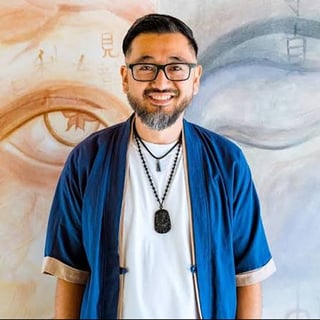
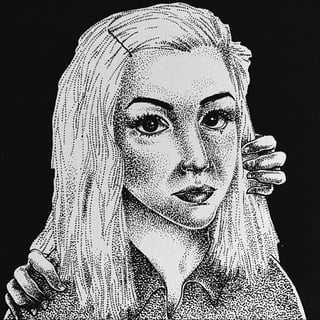
Speaker: This is the something rather than nothing podcast. And this week we have Vico Alvarez Vega, who is an illustrator, author, creator of publications that she's done. Rosita gets scared. Also a scholar or a scholar. And she's also worked in the education arena. She's based in Chicago.
Speaker: on the south side of Chicago. And I just wanted to welcome you, Vico, to something rather than nothing. Yeah, thank you for having me, Ken. Yeah. The first question we ask guests is to kind of go back and ask what you were like as a young child. And were you always interested in art, or is it this type of
Speaker: It was a type of an activity that that you picked up along the way. But yeah, what were you like as a young child? No, I was definitely always interested in art. I think I just wasn't sure where to take it, maybe. But when I was in middle school, I was actually in a visual art class. I was in band, orchestra and choir all at the same time. So
Speaker: I've always been super interested in just exploring any sort of creation that I could get my hands on. And yeah, eventually the realities of academia hit you in the face and you realize that or people tell you rather that you can't prioritize art as much because it's not as valuable as math or science or any other
Speaker: subject that's considered a core subject. But yeah, I've definitely always just liked art in general. And I eventually just ended up gravitating towards visual art painting and drawing around maybe college or so. But it was very much like a hobby. By the time college came around, I wasn't really I wasn't really prioritizing it at all.
Speaker: And I see that at least, you know, from some of your some of your posts and within your work that that's been a struggle for you. It's like kind of finding the space to do it and having kind of like it affirmed from the outside. You know, if your art that you're creating is affirmed by others, it can kind of help propel you along because you're saying, well, I'm not sure what I'm supposed to be doing, but everybody's telling me I'm supposed to be producing art. So, you know, I'll do it. It's tell me if I'm wrong. I mean, it feels to me like you've had the really kind of
Speaker: when you've gone into that artistic process or prioritizing, you kind of had to do that on your own. Is that accurate? Yeah, and I try to weave this into my stories as much as possible, whether it's my personal stories or my comics, this idea, this lack of appreciation, essentially, for the arts. And that basically means nobody really shows you how to make a living off of it, for one.
Speaker: And when you're somebody who grew up working class, a kid of immigrants, art is not the thing that's going to make you money. Art is not the reason that your family crossed the border and risked their lives for you to do. They came here for you to carry out a profession. So in terms of my journey towards art, it's been very much just like,
Speaker: taking risk, but it's also been necessary risk I felt because art was something that was always really healthy for me. So there were moments when I just wasn't doing well mentally. And the one thing that I could do was draw. Maybe I couldn't get out of bed because work was just really tough or XYZ thing happened in my family or in life.
Speaker: The one thing that I could always muster up the energy to do is just grab a little sheet of paper and doodle. So for me, I just feel like the health benefits of art, and this is something that I integrate into my workshops, are so important that I have to just promote it in whatever way that I can.
Speaker: That's kind of how I ended up shaping my comics. They address emotion a lot. They address health a lot, especially in young people. I noticed that in there, and I just want to just put a pin on that. I think it's, in having read your work and seen it, I think what's so powerful to me is the emotions in it, right? And I know you're trying to connect with
Speaker: the reader of trying to express that, whether it's within the drawings or with the words that you use. And I know you produce it in, you know, in Spanish, in English, if I'm correct. And, you know, just like the evocative aspect, I really think it's such a nice way to connect with the reader. But I really feel that as a reader, when the emotions come through,
Speaker: And for me, that's an area which I think can be difficult for people to articulate. And one of the pieces I really love about your art is that using that or having emotions be the lead is not an easy task to pull off. And I think that you do it.
Speaker: Did you did you look at when you were creating the work to just say, hey, this is the place I'm going to proceed from when it comes to, you know, the emotions or how the characters are feeling? It was a bit of a process. So when I first started my comics, I was actually just recovering from just a lot of mental health issues. And I started drawing just my own stories, really, but through this character scholar that I created.
Speaker: There's nothing that people know better than their own stories, right? So it was just the easiest thing for me to pull out of my brain and put onto paper. So it was personally therapeutic for me. And then once I started developing the character scholar and I gave her friends, this was around the time when I was actually in graduate school to be a teacher. And I took a class specifically on social and emotional learning, which I had never heard about before.
Speaker: And it was actually that class that really helped me like refine my language and refine the goal of my comics. It really helped me figure out how can I make something that's not just me an adult creating something that I think young people will like, but create something that will actually resonate, something that they will actually
Speaker: remember and can apply to their lives. And that's how Rosita Gets Scared came about. The comic zine about Rosita, a young undocumented little girl who's learning what it means to be undocumented, is learning about deportations, these really heavy topics that are just a part of her life. But yeah.
Speaker: Yeah, and I think your work's important. That's another draw for me. And I know in your work that Chicago is important to you. And I sometimes ask guests about the physical locations that they create and how that impacts what you're creating. But what does Chicago mean to you and how does it impact the art that you create?
Speaker: I feel like there's bits of Chicago in everything that I make, even though my stories are actually about me growing up in Texas sometimes. So the zine, Rosita gets scared, for example, was created for a group here called Organized Communities Against Deportations. I had actually been talking to some of them about creating material that was informative, but for younger audiences.
Speaker: You know, they have plenty of Know Your Rights material and things like that, but it's for adults for the most part. So the language is obviously different. And they just didn't have much for young people. But young people are everywhere. You know, the parents who are fighting their deportation cases come with their children. Whether it's a legal office or whether it's an organizing meeting, there's kids around.
Speaker: So the whole idea was to create something that could educate them on what was going on around them instead of leaving them in the dark instead of sort of just letting them sit on the side and kids see and observe everything. Right. So they're going to hear these conversations that their parents are having. So the idea is for the for us to not just like ignore them but to have them be a part of
Speaker: this informative process that the parents are going through as well. So that's the main reason I ended up creating the Zeno. It was for Chicago, really. And I had no idea that once I would post it online that I'd be getting orders coast to coast. And it kind of just blew up from there. But it is kind of a duh situation. If Chicago needed it, of course California would need it. Of course Texas would need it.
Speaker: having to handle the topic of undocumented migration, teachers need it. Everything is just not good right now that there's so many bad policies that people need the tools to educate the young people being affected by it. Yeah, and you bring up teachers in the education system. As I mentioned to you, I work within out in Oregon
Speaker: with teachers and I've worked with teachers and support staff for 20 years and it's really a complicated dynamic because teachers in some areas, they have the opportunity to be more overt activists or take advantage of the opportunity or push to become more activists and then
Speaker: Teachers come from the same population as everybody else. They can also be in the way or need education around these issues and the changing demographics of the public school system over the past 10 to 20 years. It really creates a lot of challenges within that system. One of the things I'm hopeful about is I do see a lot of education. I do see a lot of resources, at least where I am,
Speaker: um, towards, uh, teachers and support staff to learn things about, you know, the social, emotional learning, uh, and learning about where, um, you know, their students, um, come from. You're in, you're in, uh, Chicago and Chicago's heating up again when it comes to labor, you know, resistance, um,
Speaker: you know, and, you know, potential teacher strike in Chicago has been in the news, you know, when in the past fighting, you know, the austerity policy of Rahm Emanuel, that horrific politician for a certain amount of time that you had there. And are you in a position to give us a little bit of a vibe of how things feel when it comes to that, you know, that struggle or what you see around the city with regards to Chicago teachers?
Speaker: Yeah, I mean, Chicago is a union town, just like the chant goes. And Chicago is a super political city. There's a lot of people in the city who will say Chicago's got Chicago. We got each other, where this really big city in the Midwest that sometimes feels like a small town.
Speaker: because we all function within the parameters of the city. So when it comes to politics, whether you're involved or not, you know about it. Whether you're involved in politics or not, you know that the teachers are going on strike. And what's happening right now is the CTU has really set a high bar for activism, especially labor activism in the city, because their issues go beyond a union contract, their issues go beyond
Speaker: salary and benefits, they do a really good job pushing for smaller class sizes, pushing for more nurses in schools, librarians, these things that don't just involve self -interest and it really is for the community. And what the union that supports the staff at CPS, so janitors,
Speaker: bus aides and other folks who actually assist a lot of special education students. What that union has done is essentially come together with the CTU for the first time in years and they are really just growing each other's strengths. They're growing the strike numbers. The CTU is notorious for going on strike and with SEIU and the support staff coming in.
Speaker: It's becoming a much bigger story, I think, because it's not just about the teachers now. Now we're addressing the entire ecosystem of the schools in Chicago. So it's pretty cool to watch. I'm sorry. Go ahead. Yeah. I mean, it's so exciting to see. And what you mentioned about that growing solidarity with the employee groups,
Speaker: I think that the style of bargaining had taken into account the needs of the community, the needs of students in building those larger coalitions, which make efforts like this and long -term growth and militancy of the labor movement really inspiring to see. So do you see this building up even more because of that partnership that you're seeing? You've seen just this might look different in its scope
Speaker: And also the maturity of the relationship with the community. I don't want to assume this, but I've seen it as an authentic connection. You know, it's not perfect. That's not my point, but authentic connection with the needs of the community. And do you see it in a similar fashion, the teachers union and teachers connected to the community? Yeah, definitely. And it's
Speaker: It feels like it's in large part because they've promoted the leadership of a lot of teachers who are from the community, right? Their own children go to CPS school. So you sort of inevitably involve the community when they when they live and work within the same few blocks of the school. And with the inclusion of the support staff, I think that's super interesting because it's also opening people's eyes to
Speaker: members of the working class that aren't considered quote -unquote professional. So custodians, for example, and it's really, I think that it's pushing teachers to also be more inclusive of the staff and it's pushing the staff to really understand what they have in common with the teachers. So that's also been really cool to see. Since I was working for SEIU 73, I was able to see some of those conversations
Speaker: It was just cool to see it all come together. Yeah, I work with a group of nine unions in the region outside of Salem, Oregon, and I found it to be a blessing that I
Speaker: I represent about a thousand members who are teachers. And I also represent a thousand members who would be called classified support workers, education support professionals. So one of the things I love about my work is that I'm able to work with both of those groups instead of operating in a very clumsy fashion that does not build power by treating everything
Speaker: differently and it's it's it's a journey for a lot of folks to Connect as workers within you know a professional You know the professional atmosphere But when it happens, I just see what workers are are able to do mm -hmm the I want to go back to about your your creative process and
Speaker: It sounded to me when you were describing, you know, the question is, this is why do you create? And what I heard from you, it sounded like, you know, you had certain needs like for yourself where you're like, this is something I'm going to do. It's going to make me feel better. I'm dealing with a lot. This is like, you know, sometimes it feels like breathing as an artist, like this is what I'm going to do.
Speaker: Um, but also I think you're responding to you know, kind of external realities and political realities That have been foisted upon us and that that we're dealing with in the political climate So I do want to ask you the question directly Why do you create the art that you create? I think Initially I thought of art and my creation process as
Speaker: a service, so not in the sort of mechanical sense of the word, but to be in service of community, to be in service of anybody around me who may need something. And I think that some of the best art really does that for people, whether you're in service because you make somebody
Speaker: feel a certain way and that feeling just needed to happen or you're literally in service and you know I'm creating a zine that can literally be used in schools to be a teaching tool. So I think that's kind of how I've been able to give my work direction is that if I feel like it's going to contribute to the communities that I care about then I feel like I'm making good art and then
Speaker: For me personally, and just my own craft, I mean, I'm always going to challenge myself. So I don't like staying in one place for too long. I don't like staying in one skill level for too long. So for me personally, it's cool to just continue to practice my craft and have an audience there who's ready to receive it.
Speaker: no matter what level I'm at. I look back at some of my old comics and I was like, wow, this is real rough. This was just straight pen and paper. I had no idea what I was doing on Photoshop. Now, I'm able to continue to create work that people share and they use in the classrooms while practicing my craft. I know how to use Illustrator now. For me, that's therapeutic too. I love learning.
Speaker: And I think all people do. All people just love learning new things. So that's sort of how I view it and how I give my work value. Yeah, I really appreciate that. We're speaking with Biko Alvarez -Bega, and she's talking about a couple of publications in the Scholar and Rosita Gets Scared, which is Rosita se asusta, I think, in Español.
Speaker: Um, how, so we don't miss this. This is an important, uh, Rosita gets scared as an important, uh, piece of art for many people across the country to get in their hands. How do they get it if they want it? You can just visit scholar comics .com and that's scholar, just like the word scholar. And there'll be a link right there. That's a, that takes you directly to the store.
Speaker: Thank you because I really want to make sure I don't miss that and we can speak specifically, you know and get that There I had sent you a question vehicle and I'd seen and again got excited about the work that you were doing I know you'd done some research on the Black Panther Fred Hampton and I had heard a lot of I could tell you right now I worked with
Speaker: a good friend of mine, a comrade, Ed Sidlowski, whose dad was a big figure within the steel workers in the 70s, the democratic movement within the unions. The Sidlowski's taught me a ton about Chicago, Chicago labor history. And I had conversations about Fred Hampton. And I know you've done some research on Fred Hampton and
Speaker: I wanted to ask you if you could tell the listeners about what Fred Hampton did about your research and what his story and the horror of his assassination at the hands of the FBI and the Chicago Police Department. Who was Fred Hampton and what does he mean to you?
Speaker: Yeah, so when I was in graduate school to be a teacher, I was specifically focusing on being a history teacher. And even more specifically, I wanted to get my hands on more curriculum that addressed Chicago history. And there really wasn't much, especially for middle grade, which is what I was looking at. So I just sort of started to piece my own
Speaker: research together to create accessible curriculum on activists in Chicago. And you won't, you don't gotta Google much until you find Fred Hampton. And he was the chairman of the Black Panther Party here in Chicago's west side. Super young activists. He rose up very quickly because of his ability to build
Speaker: solidarity incredibly effectively. He was a part of the Rainbow Push Coalition and was really building bridges between black folks, white folks, Puerto Ricans, Mexicans, and it was becoming super clear in the growth of the Black Panther Party and general movements for poor people here in Chicago. Around the time when the Black Panther Party was organizing, you know, Boricuas and Humboldt Park were also organizing
Speaker: the south side was organizing and it was in large part because of his ability to just get along with folks and his like strategic mind on how to do it. Again, very young guy. I believe he was just 21 when the FBI had been tracking him already for years and so had the Chicago Police Department and at 21
Speaker: In the dead of night, his home was raided on the premise that the home was hoarding guns, something along those lines. And he was shot right then and there next to his pregnant wife. And it was a huge hit for Chicago at the time because everybody knew him. So when Fred Hampton was murdered so brutally, people just really
Speaker: All of Chicago took a hit. And what then happened after that was, of course, the Chicago PD and the FBI did anything possible to try to erase his memory. To this day, actually, you'll occasionally hear folks maybe trying to start an initiative to rename a street after Fred Hampton. And you'll hear the Chicago PD protest in City Hall.
Speaker: It's very interesting. So for me, he just like, I always love, a lot of my work revolves around trying to figure out how to build bridges, trying to figure out how to communicate, how to tell stories across communities. So he just really stuck out to me when I was doing the research and the fact that his history was being erased stuck out to me, which kind of just encouraged me to continue to put his name out there.
Speaker: lift up his story and his impact on Chicago. Yeah, I want to thank you for that. It was very inspiring to me. I think in my mind, it strongly connects to a lot of the work that the Black Panthers had done around urban areas, California and the Bay Area as well, where the breakfast programs in Feeding Kids, that didn't come from some altruistic
Speaker: you know, Ronald Reagan as governor and whenever he was a governor in the 60s, it came from the Panthers who were looking as a way to, you know, get kids food and have programs after school for them. And I think that's why, at least in my mind, for a long time, that's why they were such a threat. They were connecting and providing important resources to the youth in those cities.
Speaker: And folks did not want that to happen. I think what you're struggling against, and when I've looked at these stories, is a desire to erase that history, that these folks were fighting for the people and that the ideas of the school lunch program, et cetera, has its genesis in the work that they were doing. Yeah. And in addition to the school lunch program,
Speaker: One almost very Chicago specific accomplishment of his was also his ability to build bridges and peace packs with Chicago street gangs. And I think that was also a big tipping point when the FBI and CPD labeled him a major threat. If you're somebody who's able to communicate, relate with the street gangs in a way that you can find peace with them,
Speaker: That's incredible. Chicago, to this day, is known for its violence. And a lot of people don't talk about where that violence comes from. And it does come from street gangs, a lot of it, unfortunately. But when you talk about these gangs, sometimes you're talking about 16 -year -olds. Again, Hampton was 21. He was still a young guy. So his youth, I think, made him super relatable to members of gangs here. They're still high schoolers.
Speaker: And that is incredible. But again, I think that's what made him a threat. And it's something that we still struggle with today. There's definitely people in the neighborhood who are activists. And they do actually have very good relationships with some folks who are in gangs. But that's not something to be ashamed of, to be completely honest. And if we're going to talk about the realities of the city,
Speaker: You have to talk about some of the things that people are afraid to talk about, some of the things that we're ashamed to talk about, and that includes our violence, but it won't get fixed if we don't address it head on. Yeah, and I do appreciate it. I did not know that component at all about Fred, and it definitely adds a piece where you could see the
Speaker: The threat, you know, where's the threat come from? In my mind, the threat comes from what you said that, you know, maybe there's greater power in doing that. But there's also, and this might sound a bit odd, there's also the threat that if he was successful, there'd be, you know, less crime and maybe a need for less policing if the people were, if the people were, you know, connecting with each other and agreeing not to harm each other and starting to recognize
Speaker: you know, some of the source of their major problems. So for whatever the reasons, he definitely, as you know, emerges as such a threat to be to be a target. So there's a lot of pieces of your art, you know, that, you know, be seen as political. And I always find the language clumsy, right? Because I think politics feeds into a lot of things. But
Speaker: The main question, the big question I have for you is, what do you think is art? What is art? That is a million dollar question. I guess for me personally, art is literally everywhere. It's the creation, I think, of anything that leads to
Speaker: building communities that leads people to just think more about one another, whether it's making connections through art that has us discuss our emotions, or whether it's art that is, quote unquote, political protest banners, or even if it's more traditional museum art, museum, again, quote unquote, worthy art,
Speaker: that just encourages you to think more about the human existence. That's sort of how I see it. If it can push a conversation, if it can push us to think more about our values as people, that's kind of what I consider art. And I mean, the reason I say art is everywhere is because literally I think it's everywhere. So a professor bringing together
Speaker: Their discussion topics for the day is a form of art. You're weaving together conversations with your students. Math is a form of art. Like math is actually very heavily rooted in our natural processes across across nature. I was a math GED teacher for a while, so I kind of nerded out
Speaker: on how patterns and leaves are actually the ways in which some mathematicians came to famous formulas, etc. But again, this is all like humans just observing the world around them and their existence. So that's kind of how I view it. And that's why sometimes when I do my own art, you know, I do comics for kids, but I'm also doing these illustrations about Fred Hampton.
Speaker: Um, I have worked as a teacher, but I've also been a union organizer. Um, I definitely, you know, we'll have people who are kind of like, you need to focus yourself. And I'm just like, why? Like, this is all just a part of me exploring as much of my surroundings as I can. And I love it. Like, I love being a math GD teacher. I love being a comic teacher. Um, I love music. My partner's a musician and,
Speaker: We also just throw another thing that I do. We throw these parties here in Chicago that really revolve around how to use nightlife as a communal space, not just a space where you go and drink with your friends. Have it mean something more. Have it actually build communities and neighborhoods. And I think that, I mean, I highly encourage people to try whatever it is that they want to try.
Speaker: And I think art is actually one of the best ways to do that. There's so many different tools that you could dig into. It's kind of like, why not? Yeah, there's so much in your answer there, and it's really inspiring. I think that the experience of art, one of my approaches is to really tell other artists
Speaker: like how it impacts me and that it is really good and that it did change my day. I think a lot of your artwork does that for me and is really inspiring. I've seen that you have an active component where you look to encourage younger people
Speaker: you know, younger kids, younger artists, mini artists to, to, to create. Do you, do you view it as a duty that, you know, that you're an artist to create, create other artists with your time? Do you see that as a duty or where's that come from? In a way, like I definitely think that all adults have a duty to support young people at any point in time, whether you have children or not.
Speaker: One of the components that I sometimes work into my workshops about my practice is the concept of adultism, actually. Adultism being a form of oppression towards young people, those not considered adults, and the oppressor is the adult. So our government systems all function through adults, right? Our education system is run by adults
Speaker: without the input of the young people who are actually being taught. And it's because of this idea that young people just aren't mature enough to know what they want for themselves, which in my opinion is a total lie. But it's more about providing them the tools and the space to be able to even think critically about what it is that they need
Speaker: in their classrooms or what they need from their parents. And instinctually, there's a lot of things that they do know that they need. They know they need love, for example. They know, even instinctually, they know that they'll need books at some point. We all gravitate towards reading in one way or another or observing shapes, observing the world around us. So, but those are things that aren't, that young people aren't always given the space to say,
Speaker: So a lot of my workshops and a lot of the things that I talk about are just the need to be able to give young people more agency over their lives. And we can do that by, as adults, being able to show them maybe the things that we didn't have or the means to think critically, essentially, the space to think critically.
Speaker: Yeah, I don't know if that answers your question. No, it certainly does. And just use your language. I mean, I actually completely agree with you as far as this lie of, look, as you get older, you have life experience. You can learn things. You can do a lot of things. You can have access to different types of information. You can have experience.
Speaker: But goodness gracious, that does not make you an expert. It doesn't make you a responsible person when it comes to interacting with youth. And are there differences? Yes, of course there's going to be differences. But I think it's one of the strange forms of oppression where it's like you absolutely have nothing valid to say until you're an adult. And sometimes it feels that heavy.
Speaker: in society and I look around when I hear kind of that attitude and I'm like, well, what we're talking about here is differences and not absolutes. And if you look at the climate change, the resistance that's coming from students, I think what you're really seeing is kids calling adults on their complete and utter bullshit. And it's very inspiring.
Speaker: Uh, you know, that doesn't mean, you know, have a parliament or a Congress, you know, it's filled by kids, although nowadays, why not? Why not? I mean, seeing what I've seen. Um, but so I really connect, um, with, with what you said and, um, you know, kind of, I think we miss a lot of the ideas of kids, a lot of the creativity, a lot of this.
Speaker: I don't know, discussions. I can't imagine if we had facilitated discussions about what to do about issues, what great ideas we'd get from those who are younger. I think we do a lot better policy -wise. Yeah, for sure. And I appreciated that in just the connection to what duties adults or artists have towards kids.
Speaker: Um, got a couple more questions. Uh, one, the one, which is the name of the program is why is there something rather than nothing? I always invite guests to, or usually invite guests to answer it a couple of ways. Um, you know, it's a philosophical question. I was like, why are there, you know, why are there things that, um, why is there things rather than not being things? Why there's something rather than nothing, but also for artists, there tends to be a, an angle to get at with.
Speaker: Um, the creative process. And by that, I mean that, um, you know, Vico, when you sit down, you get a blank sheet of paper and you're looking to create something. Where does that come from? I mean, does that, that's something that you create? Does that come from other things? Um, you know, why is there something rather than nothing? Hmm.
Speaker: I feel like every artist probably has their moment of writer's block, their moment where they do see that white sheet of paper. And they're like, oh, snap, there is nothing. But I know for me, the moments where there is something, it's because I feel like the community is calling for me to do something. And I don't mean just me personally, but with
Speaker: my finger on the pulse of the community, I can hear the moments in which they need more representation of little brown girls, the moments in which they need to hear about more Chicago activist icons, the moments when we just need a certain message delivered to us.
Speaker: Unfortunately, because of the current administration, those moments just seem to be more frequent because it feels like so much is being taken from us. So the moments in which I feel like I'm most creative and like I need to do something is because I can see my neighbors around me having something taken and we got to do something to bring back
Speaker: their humanity. And if that's going to happen through art and illustration, whether it's going to happen through comic books or music, then I'm more than happy to see what that something is that I can contribute. And again, that's that's that that's inspiring. And I really felt feel the connection. I can I can hear you as an organizer, the connection from what you're producing.
Speaker: its impact on people and kind of like this reciprocal relationship. I definitely see that in the work that you do. The last piece is really, again, as you can tell by my appreciation of the work that you create, of your art pieces, I want other people to connect to them. And I'm a supporter of yours on the Patreon app where you can have individuals
Speaker: you know, support your work at different levels. But can you open, this is open to you. And I know you had mentioned, Rosita, get scared in that website. Could you mention that again and just let listeners know again how to connect to the work that you do, either for specifically within, you know, within Chicago, but also, you know, for everybody else? Yeah. So my main page for my webcam mix
Speaker: is scholarcomics .com. And I also have a Patreon page that is in support of Scholar Comics, but also supports general illustrating that I do and also workshops that I sometimes get invited to. It helps me buy tools. Sometimes it helps me buy flights.
Speaker: to get to the universities that I go to, and that link to the Patreon is just patreon .com slash Vico Alvarez, V -I -C -K -O -A -L -V -A -R -E -Z. Otherwise, I post a lot on Instagram, so you can also follow me on Instagram at La Vico, L -A -V -I -C -K -O.
Speaker: Yeah, and I really appreciate a lot of the work that you share there. I look forward to it. I had seen an illustration you've done of Fred Hampton and maybe a quote that was right with it. And again, very, very inspiring, very powerful work for me, very necessary. And your connection to the education process and advocating for vulnerable
Speaker: humans and young humans facing horrors of deportation or just the feeling and the emotions that you express of being scared. To help them out with that is such a wonderful thing and that's why I really want the listeners to be able to experience and connect to really the resources, the art resources that you share.
Speaker: Vico, it's been a great pleasure to talk to you and to actually learn a lot from you and learn about you in your process, but really a lot of what you had to say just learning for me about history and about the artistic process. And that's why I like these conversations because it kind of
Speaker: propels us to interact in a different way and for me helps build a larger movement being, you know, art, political, education wise. But I do wanna thank you deeply for spending your time and I very much look forward to your work in the future. Yeah, thank you for having me. I super appreciate the conversation. It gives me a little bit of perspective on just how much I've done.
Speaker: It's good to talk about it. If you talk for a little while, then you're like, well, I've done a few things, right? Yeah. Thanks again, Biko. And again, it's been a great pleasure. Have a great evening. Thank you. You too. You are listening to something rather than nothing.