Transcript
Speaker: You are listening to something rather than nothing. Creator and host Ken Volante. Editor and producer Peter Bauer. This is Ken Volante with something rather than nothing. And for this episode, I'm pleased to meet Betty Yeager, also known as Peach's Von Killingsworth.
Speaker: Baroque Betty, an artist, a performer, and it's a great joy to get to chat with you, Betty. Welcome to something rather than nothing. Yeah, hi. The first question to ask is, were you an artist when you were born? When I was born.
Speaker: Well, no. I probably spent some time being a baby. But no, I picked up art very, very young. I always drew and predominantly did visual art and dance when I was a kid. And then switched gears into music around my late teens.
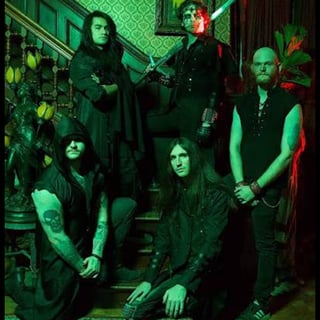
Speaker: And as far as with the music, I know you're involved with a band, High Steps Society, that's actually going to be touring later this week. So I know you're moving to do that. What I was wondering is, could you tell us a little bit about High Steps Society and the role you play singing in that part of your art?
Speaker: Sure. Um, so I've, I've known high society since they started, uh, way back in the day, I guess, like probably going on five or six years now. Um, and I was performing with, um, a few other groups and, and then eventually they, they needed a vocalist and approached me to kind of fill that role.
Speaker: And it's just been kind of a wild ride since. They are a very, very hardworking electronic jazz swing group. And we've done a number of tours together up until this point. Obviously COVID really put the kibosh on a lot of the work we were doing. But it's finally starting to pick back up again. And we're leaving this week to do a national
Speaker: tour kind of all over the place for the month of July.
Speaker: Oh, that's fantastic and exciting. I'm sure it might be a bit nerve -wracking as well. And it's great to hear that the band has a new release and you have a new release and it's called Blues in the Basement. And Betty, I just wanted to jump to that jump to that track so we can have the listeners get a little bit of a taste for a high step society. Sure, yeah.
Speaker: Thank you, High Steps Society and Betty. I love that track. So what's it gonna, what's your favorite, as far as where you're heading out on tour, is there a spot that you've been to that you wanna see again or is there a spot you're excited to see for the first time? Most of the spots we're going, I've never been before.
Speaker: particularly excited to be on the East Coast. It'll be the farthest I've ever been. So it'll be interesting. I think one of the concerns I have is it's going to be pretty hot everywhere we go. But I don't know. It'll be a fun trip, I hope.
Speaker: It'll, it'll be, it'll be exciting. It gets a little soupy out East. I'm originally from Rhode Island. So, um, as you head out there, I'm sure it'll be a hot, fun time. Yeah. Oh yeah. Yeah. You're playing Boston, right? Uh -huh. Well, I think a little outside Boston, but yeah.
Speaker: Wonderful. I'll send some people over your way. I do want to say that during the song, I did have the enjoyment of listening to it with a high volume and subwoofer, which was not the experience you had. So apologize for, I was able to enjoy it a little bit with a little bit more energy and verve that you could hear it through the speaker. So, um, uh,
Speaker: Got a big question that I wanted to ask you, is what or who made you who you are? Well, I made me. I guess there's like some influences. Maybe early on would have been my dad's a poet and
Speaker: kind of a, he's also a teacher over at the community college where I'm from in Montana. So at least that part of like writing was in my life very early on. And then my mother was a, she dabbled in acting and dance and had a children's theater when I was young.
Speaker: Um, so I've always really been interested in, in, in show business and show production. And then on the other hand, music and literature and writing. So those are all things that have kind of like shaped my, my interest in, in art in general.
Speaker: Yeah, and thank you for that. I wanted to ask you, you do a lot of live performance, and to be honest with you, I've always had such a reverence for live
Speaker: live performance and all the things that you have to manage and doing that because I paint, I produce things and then I show them or I do a podcast and I edit and then I show it, which is great. That's the way I work. But I've always had this deep reverence for live performances. I was wondering what you're thinking about as far as
Speaker: being able to tour again and being in that kind of like energy and live. Do you have any thoughts about that? Or like, do you feel trepidatious or like feel like you need the energy of that live performance now in a bigger crowd? Yeah, definitely. I mean, we've just spent a year doing like live stream performances
Speaker: which I learned is very much not my favorite thing to do at all, mostly because of the energetic exchange between a live audience and our music. It's really, really necessary, in my opinion. And live art is specifically the route that I've chosen to take with my art. And so, I mean, having to go strictly to a digital world was really difficult.
Speaker: I think that answered your question. There was like kind of a few questions in there. No, I mean, there's always a few questions. And no, but it was exactly I was I wonder, like, with, you know, music and performance, and of course, you're a burlesque performer, like, like with going back into the into the world for live performance.
Speaker: I wanted to ask you a big question. You do a lot of art, you do a lot of different performances. What is art? What is it? I mean, I don't know how to answer that. I guess art is what people make, what people do.
Speaker: how they interpret their experience and their place in their life. But I don't know. I think art is sort of like a, it's sort of magic too. I think the art that we create comes from places that we don't necessarily know where they come from. And for me, I have many different identities with my own art that I've
Speaker: frequently have trouble kind of combining. And that's been an interesting journey for me. But as far as what art is, I think that's that's kind of left up to interpretation. So that's a hard question, Ken. Yeah. Well, what about I'm glad I just I just keep asking.
Speaker: No, I'm still on. I'm still on my coffee. We are in the Pacific Northwest. We are behaving properly. So in this show, and both for myself as a human being, issues of identity are really big for me. I'm fascinated by them and all the difficulties in China.
Speaker: You know, who am I? Am I performing in this way, this way, now? What do I do for work? All these type of things. And I'm intrigued by how you talk about the different ways you perform and identities with that. So, you know, we've talked a bit about high step society and singing some of your background, but like, for example, who is Peaches von Killingsworth? I mean, you're going to know more who that is than anybody, which is why I'm asking you. Who's Peaches von Killingsworth?
Speaker: Peaches is my, that's my burlesque name identity. It was a name that I didn't choose. When I started performing burlesque, I didn't have a name. And I started with the Broadway review show here in Eugene. And at my audition, they put a bunch of names into a, like a
Speaker: a hat and drew out Dame Peach's Von Killingsworth. And then that's just been my name ever since I kept it. But that's where I kind of utilize a platform to, I guess, offer my sexuality for my creativity also, which was something that I
Speaker: didn't really get to do much of my life. I was married very young with a pretty controlling individual and and then after I exited that situation and literally walked right into a burlesque audition and became that character and it was incredibly therapeutic and healing to to develop that character and then that character took me is basically the segue to high step society and
Speaker: And how I got to that point because I became more confident being a character on stage, being a showgirl, being, I guess, like bigger than what I present on like a civilian basis. Yeah, this is just like much, much, much, much more like I find it
Speaker: that you went right from that situation that you left right into kind of like this persona that feels just so powerful. And just thinking about your empowerment within that.
Speaker: Yeah, it was also an outlet to try and tell my story. And in the early days of when I was first starting to do burlesque, I was very, I was like a kind of an avant -garde storyteller on stage in a sense that have like kind of developed into more of a, like a, I mean, I'm always going to be kind of weird, but like a more classic persona on stage.
Speaker: classic, classic weird persona, right? Polished. There's like, we're asking and classic is kind of like the more like commercial. I mean, I don't know. I don't I don't actually know how to describe that very well. But I was not I was not it. And I still don't really think I'm it. But I've kind of like moved what I try to do on stage to make more sense instead of being such a like
Speaker: mime sort of on stage.
Speaker: Yeah. Do you think that there's something, I mean, I'm speaking in particular with the burlesque community in Pacific Northwest and just kind of like how it seems, well, at least in places like Portland, there seems to be more of a vibrancy to the culture. It tends to be, in my observation, you're living it, but it tends to be a space that's like super complicated by like male, like male
Speaker: concentrations of power or access to where you're performing and things like that. And so it seems like to be a tricky place for you to navigate. Or is the culture that I've, when I've talked to performers, is that they've said,
Speaker: folks take care of each other. So how is the field, like how's the field in like 2021, how does it feel for you as a performer? Specifically, I guess for, I mean, entertainment is ultimately very male dominated. And that is just kind of a fact for a lot of different industries. And
Speaker: I feel like Burlesque in particular, like you said, there's a really, really large community who's sort of networked with each other and we all look out for each other. It's usually hugely emphasized at shows that it's a safe space for all identities and walks of life. I've almost never felt unsafe
Speaker: being vulnerable on a stage or being vulnerable in a new venue. It's been an overwhelmingly positive experience in my life and an overwhelmingly healing one. So regardless of like, you know, patriarchy and male dominated industries, that is one that specifically is very welcoming and healing for me specifically.
Speaker: Yeah, thank you for that. I think a lot of times as far as like how we operate in society for me, I find capitalism just to be just an absolute human disaster and like for like how it, you know, can treat humans. And it's like there's these social dynamics. And I always wonder like how artists handle it, activate themselves, become empowered within that because the world's the fucking world. We know that, right? And it's kind of tough to
Speaker: like move to it. I'm always interested about the agency that art is sold. And I'm happy to hear your experience. Okay. What is the role of art? What is the role of art? Like we talked about like what art is like, but what's art supposed to do? Like what's it supposed to do for us? Another tough question.
Speaker: I mean, I guess like my immediate thought on that is that the role of art would be to try and authentically interpret our experiences here as like a human existence. And oftentimes it's the segue for people to be vulnerable that allows other people to be vulnerable, which is really, really important.
Speaker: And then, of course, it's also healing and entertaining for people to see and do on multiple levels. And I appreciate your comments. The role of art has been a bumpy thing when I've been talking about, particularly through the pandemic, right? It's like people have been like,
Speaker: I don't know anymore like or like I'm just going to read obsessively like go into another world to like escape or whatever anybody's doing like there's this super intense activity around art and I feel now like right now we're heading to like summer 2021 and with the politics of the pandemic where things open up I'm just really fascinated by like what occurs like what occurs like artistically and creatively in the environment where it opens back up.
Speaker: Um, uh, Betty, I got another big question for you. I like, I'm kind of like the last one you're like, ah, another big question, but I even have like a bigger one too. Cause I had a couple more. So the, the, the, the big one, and I know, you know, the answer to this one is, um, why is there something rather than nothing? Uh,
Speaker: I guess that would be a perspective choice, right? I mean, because you can look at everything like it's nothing or you can look at everything like it's something. And that's kind of also like a big part of art where some people see trash and other people have this imagination to turn it into something beautiful. And I guess, I mean, I try to choose life as looking at everything as something, everything
Speaker: you know, sort of has some level of meaning. But art is also something that gives my life a lot of meaning. I feel very fortunate for that. Yeah, yeah, I do too. More and more each day, which has been very, very helpful for me, like more and more each day, like learning how to create things and just trying to consume a lot of things that are created.
Speaker: Uh, I wanted to ask you one more question because I actually don't know about this part of you, but do you want to mention anything about, um, Baroque, uh, Betty and the general question about how you're thinking about yourself now in these different art personas that you have? Uh, sure. Yeah. Um.
Speaker: Baroque Betty is essentially my life's work in songwriting. It was originally a group called Betty and the Boy, which was me and my ex -husband and three other members. And then once I was divorced, I rebranded the group to be Baroque Betty. And we actually released a new album during 2020.
Speaker: which is very painstaking and difficult, but it did happen. And then at this point, the group is reconfiguring. And I'm playing primarily by myself if I do play that music right now, but it's not exactly my primary project. But in its form, when we released the album, it was a,
Speaker: kind of a folk noir orchestral folk group and much of the music on our album that was released this summer was music that I had written in the middle in the thick of my divorce that was not released and then released now which so it's a bit heavy it's a bit it's also kind of whimsical too because I was
Speaker: I was in college at the U of O studying German literature at the time. Some of the songs are based off of very - Oh yeah, rock and roll star. Yeah. Very strange stories that were - You were at U of O German literature. Yeah. Yeah. Sorry to interrupt. I just had to note that. No, there's a couple tunes on there that are odd.
Speaker: kind of this bizarre world I was trying to escape into during a really tumultuous time in my life. So yeah, that's my story with that group. We were a folk group for about 10 years. It was a good run. Yeah, yeah.
Speaker: And thank you for filling that part out too. I just, I had this visceral reaction to think about like Dauer, melancholy German literature and the, you were living in that world for a little bit at that time. Oh my goodness. Nothing against your, yeah.
Speaker: I remember I was in a pretty heavy period of my life and I was reading William Faulkner intensely and it was like all going like way down into the depths. Like there was just no escape. It was like once I got deeper into it and I was like, you know, no lifeboat or not. I mean, you just got to go all the way in. It just felt like I had to. And I did. Yeah. I'm not sure what happened after that. At the time buried in Kafka and Hoffman.
Speaker: There is a very Kafka dream state that I was thinking in. I think that Kafka is an honorary representative and hero of this podcast. So I do it pretty well. Oh, yeah? No. It seems to me that Kafka should. I have one recommendation to all listeners and to you, Betty, as well, because they're so fascinating.
Speaker: Kafka wrote love letters. And I want to say a couple things. That sentence is a little bit jarring. Love letters is being used very liberally and expansively to talk about what he was doing. And I love the man, but it was very difficult for him to express how he's feeling to his beloved in words, as you might imagine.
Speaker: I'm sure. Yeah, so if you want a strange, bizarre journey on your tour, look up Kafka love letters. Betty, speaking of the tour and events and all the art and material you have, where do people go to find you, your music, your art, your performances, the tour? What did they do? So, I mean, I guess I would recommend
Speaker: Social media is always the place that we're posting new upcoming things that we're doing. But there's also a website for High Step Society that you can check our tour dates on. As far as like Ralaskan dance goes, that's going to be a bit slow moving for me personally because a majority of my summer is going to be eaten by this tour. But I do have
Speaker: a show that I will be producing in Rosebird with my little troupe, The Wax Poetry Review on August 13th at Draper's Brewery. And that's just kind of a cute, fun thing that I try to do as a quarterly at that venue. And then trying to think if there's anything else.
Speaker: Yeah, I don't know social media and for the tour dates and such or but people can pop onto Yeah, no, I know. Yeah in funny the way I want to make sure Yeah, I wanted to make sure folks should be able to connect with your your various projects I I wanted to thank you Betty
Speaker: Um, because I, I, I, I really love your art and, um, I, I like, uh, I really enjoy it. And I want to thank you because all artists, uh, you know, it's, it's, it's tough to do. It's tough to do. And, um, I wanted to thank you for what you're doing and wish you.
Speaker: great safety, health, and fun on the tour. I will try to send loud, cheering, fun people cheering you on in locations, maybe Boston and wish you very well. Yeah. Thank you. Have a great tour and hopefully you'll get a chance to chat soon. Okay. Yeah. Thank you. Thanks for having me.
Speaker: This is something rather than nothing.