Transcript
Speaker: Hey, real quick before we get started, if you would like to find your own theme for your pottery so your voice really stands out and you're not getting bored with making the same thing over and over again, I put together 53 themes for you guys and it's completely free. All you have to do to get it is just go to shapingyourpottery .com forward slash 53 themes. That's shapingyourpottery .com forward slash 53 themes.
Speaker: If you love pottery and want to take your skills to the next level, you're in the right place. Find your own pottery style right here on Shaping Your Pottery with Nick Torres. Let's get started. I'll see you guys in there.
Speaker: What is up, Shaping Nation? This is Nick Torres here. In this episode of Shaping Your Pottery, I got to interview Kate Dean. Kate makes some really incredible graffiti style design pottery. In this episode, you will learn how Kate uses graffiti style pottery and puts her own spin on it to make it truly her own voice. You'll also learn about changing perspective about your art. Finally, you'll also learn about
Speaker: learn getting peers to help you grow as an artist. I hope you guys enjoy this episode and I'll see you guys in there. Kate, welcome to Shaping Your Podery and share with me what is something people might not know about you. Sure, so I was kind of ruminating on this question and I asked my husband like what do people maybe not know about me and he was like that you're incredibly loyal and I was like I don't know if that's good for the podcast or if that's what they're really looking for.
Speaker: But when I thought about things that people might not know about me, I kind of went to like the things that I love that bring me a lot of joy. So I'm a dog mom, I'm a huge animal lover, love music, and I spend a lot of my time like traveling to different music and arts festivals. And I've been a vegetarian for 14 years. So those are some kind of things that maybe people wouldn't know about me right off the bat. Absolutely. What type of dog do you have?
Speaker: I have two French bulldogs. They're equal parts, horrible and sweet baby angels. And I rescued both of them and they run the house. It's amazing. Yeah, I feel the same way behind the dogs. I have three Huskies and one Chihuahua wiener dog mix. There are a lot of dogs, but it's fun. So tell me the story how you got started in ceramics.
Speaker: Oh, my gosh, so I took my 1st pottery class in 2013 and I fell in love with it. I was doing like a dual enrollment from high school and the community college and it was 1 of the art classes they had open. I thought I would get a jump on some credits. So I took that class.
Speaker: And while I liked it, I wasn't sure if it was still like my calling yet as an artist. So when I ended up going to college for arts, I was like, I'm going to be a printmaker. Because of my love of music, I like have this vision in my head that I was going to design posters for like different bands on the scene.
Speaker: So I was like, all right, that's my calling. I'm going to go and do this printmaking career. And I ended up never taking a printmaking this late. They just didn't have space in the class. And so I was like, all right, well, I took a ceramics class before, like there's an opening in this class and I'm going to just have an easy time with it because I have a little bit of a baseline knowledge. And when I got there,
Speaker: I had a really amazing professor named Greg Moore and he changed my thinking about art kind of as a whole and about pottery and he was kind of the first professor that like really made me think not just about like what we were making but why we were making it, right? So he kind of changed my course as far as like what I was doing with my life and I don't know if he knows that but like it really really
Speaker: made me fall in love with art, with pottery as an art form, basically. So that's kind of how I got started was just right place, right time. And then having somebody, I think that like having the right teacher makes all of the difference. Having somebody who's encouraging you to try new things and kind of unpack some of the reason that things are working or not working or why we're motivated to make artwork in the first place.
Speaker: So you mentioned that your perspective changed about art. What was your perspective before and then what did it change into? My perspective before I went into this kind of like different headspace was about, you know, making things that are like using air bunnies and people aren't going to be able to see it on the podcast, but that are pretty, you know, that things that sell that are pretty. And it really shifted from just making things that were like aesthetically pleasing to making things that had
Speaker: a drive behind him or like a conscious making or like thinking about what is this piece designed for right so for me with with the work that I make I spend a lot of time
Speaker: thinking about the person that's going to use the piece of pottery. So while I'm putting a lot of my energy into designing it, creating it, making it, I'm also thinking about the user experience of holding the piece of pottery and what part of that ritual of their day it gets incorporated into.
Speaker: This professor that I was talking about before, he kind of had like a, I don't want to say it was like a speech, but he had a bit of like explaining when we were thinking about addressing like the lip of a mug or a rim, you know what I mean? And he kind of was like, think about how many things in our life touch our lips, right? Like maybe someone we love, a pet, something, you know, there's so few things that we put on our mouth intentionally, like we should really pay attention to
Speaker: the way that it's finished and the way that it feels. And so that kind of mindset carried with me and shifted from is it aesthetically pleasing to is it something that somebody wants to use?
Speaker: I love that shape nation. It's important to make your pottery aesthetically pleasing, but it's also important to make it, think about if somebody's gonna be using it, like if it's the lip or the rim or maybe the handle of a mug, think about those things, the comfort and the way it feels, think about those things and that's at the end of the day is what makes the pottery so great. Absolutely. So tell me about the moment when you went from being a painter to becoming a potter. Hmm.
Speaker: I hate to say that there was a moment like going from one to another because I really never stopped being either. If that makes sense. What I really love about having that foundation of being a painter is that it informs my process of being a potter. So I still paint, not in the capacity like I used to. And one day when pottery is my sole focus, I'd love to dive back into painting as a hobby. But right now there's only so many hours in the day, but I do still paint. It's just
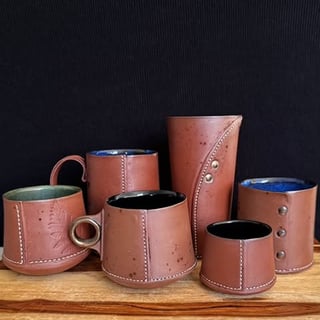
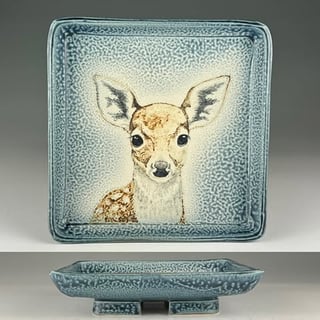
Speaker: more with underglazes and slips instead of watercolors and oil. I don't know why I said oil. I don't paint with oil. We're going to talk about that a little bit later, but for now, let's talk about your pottery. In one sentence, can you tell me what you make? My elevator pitch for the type of work that I make is handmade, hand -carved pottery designed to bring beauty and joy into the user's daily ritual.
Speaker: Love that. So tell them the story how you started making the party they make today.
Speaker: So back in college I did a project that was called a mandala a day project where I literally just let my mind run wild and I would draw these really complex mandalas every single day just like one a day whether that was like intentionally setting that time aside and like doing it on a piece of paper or doing it as I'm taking notes in my biology class sure my teachers love that. In either way I would try to really make sure that I was creating one mandala a day.
Speaker: And I often use those drawings as kind of a reference point for my current illustrations. I'm really bad at meditation. I really want to be good at meditation. I'm so sorry. All right. So I'm really bad at meditation. I really want to be good at meditation, but I'm like one of those people that it's impossible for me to keep my mind still. So kind of drawing while I am meditating and focusing and finding that oneness.
Speaker: creates that space where I can kind of get into a meditative state. So that is part of what I use to help design the pottery that I'm making today is I use it as part of that practice. And then when I'm looking to other potters and people for inspiration, I found that there were not a lot of folks that were doing the type of intricate design work that I make.
Speaker: And so I was kind of like, well, that's it. That's my niche. I'm going to take what I know and like what I'm good at and what there isn't a huge market for and kind of combine it all together to make the specific work that I'm making. So you mentioned mandala. Is that what you said? Yeah. Can you explain to me what that is?
Speaker: So it is a intricate pattern that kind of starts from the center and radiates outwards, right? So it can be a lot of, it can be anything your heart desires really, but like most of the time it starts with like a circle shape and then you kind of just build it outwards from there. So like concentric circle patterns is I think the way I would explain it to somebody that could not see what was happening. So.
Speaker: Before I get into my next question, Shaping Nation, it's important to take what you know and what you already know outside of pottery and start trying to apply that into your pottery because that's where you're going to find your own little niche in this little pottery space. Earlier, as we were talking about, you were a painter before. How did this skill of being a painter help you with your own pottery? The skill of being a painter definitely like
Speaker: flowed very nicely into being a potter because it made me recognize what I especially loved about pottery, which was surface design and having the opportunity to make functional artwork. I love artwork for artwork safe, but there's something really important to me about being able to use something that an artist made and having that space that you can be joined in a moment of
Speaker: creation and like I feel like you just you get to use pottery in a way that you can't use a painting you know you can look at them both but you can't drink or have a meal off of a painting or you shouldn't at least you know yeah I definitely agree agree that's what I love about pottery that you can add all these different things onto your pots but it still looks like art but you can use it I love that yeah so you are inspired by nature and life experiences how do these things impact your pottery
Speaker: So, nature and life experience. I think that life experience is a super broad term, right? But when I break it down, I think about what life experiences I use to inform the work that I do.
Speaker: I travel a lot. That's, as I said, that's something that's super important to me. And I take a lot of the experiences and aesthetics that I see when I'm traveling, whether it be in architecture or cultural, but through the, an architecture or cultural experience. A lot of that informs like the design work that I do on my mugs or.
Speaker: life experiences, like meeting somebody new and like the excitement of what that feels like, trying to create a piece that when you pick it up, it feels like meeting a new friend or like having something that's exciting and special to hold.
Speaker: if that makes sense. As far as the nature portion of what inspires me, I grew up in the woods. I've always loved nature, but I also recognize that clay is of the earth and it's definitely something that informs that whole process. So it feels kind of magical to be able to take a bit of the earth and manipulate it in different ways that it can transform something completely. So kind of marrying the idea of
Speaker: having it be something from nature and then putting nature inspired illustrations onto my work is kind of where that being inspired by nature portion of that comes together. So you mentioned that a lot of your experiences come from your travels. What is something from your travels that you took and put it into your pottery?
Speaker: So for example, I'm thinking specifically to when I went to Barcelona and looked at a lot of the architecture they had there, I remember trying to take little pictures of the corners of the buildings that had these super intricate designs on them and thinking like, I could turn that into part of a mandala if I kind of referenced that shape. And maybe not everybody would know that that's a reference to
Speaker: this specific piece of architecture, but I'll know that and that's kind of like a little secret thing for me. I love that so much. So what is something in pottery that you believe is a waste of time? Oh my God, nothing. So I was thinking about this question and I have to say like I was like thinking about what part of the pottery process could I like eliminate? I think it's a waste of time and I really feel like
Speaker: You can't eliminate any part of the process if you want to do it right. But I will say cleaning my wheel is a waste of time for me a lot of the times, not in a community studio. You have to be cool about that. You have to be respectful, clean up that wheel. But at home, my wheel is shamefully, shamefully left, completely like coated in clay. I probably clean my wheel like once every six months. It's pretty bad.
Speaker: Yeah, that's about the same with me. I hate cleaning my wheel. So can you give me a simplified explanation on how you create your product? If I was like explaining it so, so simply, I would say wedge and then throw and then let it let it dry a little bit and then trim it and then underglaze. And then you got to let it dry a little bit more and then you carve it. Then you got to let it dry completely and then biscuit.
Speaker: wash it, let it dry out again, glaze it, glaze fire that, pray, prayer that nothing explodes or cracks or anything in the final firing, unload it, and then sand it. So can you dive a little bit deeper on how you create your carving designs? I use a technique that's called Scoffito when I'm doing a lot of my like black and white carving designs. Basically what you're going to do
Speaker: Throw your piece of powdery with one color of clay and then you paint either another color clay on top or an underglaze on globe slip. There's lots of different ways you can do it. But then you're carving through that top layer to reveal the color underneath. So it's called Scrapito.
Speaker: It's my absolute favorite thing to do in pottery. I think it has like a really dramatic fun effect. But I've also recently started kind of skipping that step of like putting another color on and just carving straight into the clay for super intricate design work. Do you add the underglaze or slip after that?
Speaker: Not in the case of the work I've been doing kind of recently, I've really just been like carving it and then using like an iron oxide to highlight the texture of the piece and leaving the clay raw on the outside or using kind of like a celadon finish glaze on it so that it sinks into the lower areas and then highlights the higher areas of the clay.
Speaker: That was a very great explanation of that. So let's talk about discovering your voice. You contribute your growth as an artist to surrounding yourself with peers that push you to succeed. How has this helped you with your growth? Sure. I'm somebody that thrives off of feedback and energy. So seeing my friends get better, try new things, make me want to try them as well.
Speaker: It's really easy to get stuck in the rut of like what sells and it's important to have people encourage you to go outside of your comfort zone.
Speaker: So for me, finding my voice meant trying new things all the time and seeing what was successful for me. And maybe, you know, I've made some things that sold really quickly and my friends were like, you need to make a hundred more of those. But it didn't align with what I wanted to do as an artist. So finding the balance between what sells what's pretty, what's exciting and what's exciting to you as a maker.
Speaker: What is your best advice to help find that balance between selling and then what you actually want to make? So you have to figure out again, what is exciting you and then what is selling and then you have to kind of just like figure out
Speaker: How many of the things that are selling quickly are things that also excite you? And how many of the things that excite you are just sitting for a long time? I think that it is still really worthwhile to make pieces strictly because they excite you and not just because it sells. Because I think if you are only putting your energy into things that sell quickly, you're kind of losing a little bit about
Speaker: what gives you your voice as an artist. But at the same time, you've got to make a living, so you have to really, again, balance out what the people want and what you want. And again, with those kind of one -off pieces, everything sells eventually. There's going to be somebody that walks in and sees that weird thing that you make that they're like, this is everything I've ever wanted.
Speaker: Shaping Nation, it is so important to find that balance between selling but also trying to make things that you actually like because if you're only focusing on selling, then that's where it's gonna get boring and then you're gonna eventually give up. But at the same time, you have to be making things that you actually want to be making so you can continue going for it. It's that balance you gotta find. I love that so much.
Speaker: So you mentioned finding peers that helped you really grow as an artist. Where can people go out and find peers to help them push their own work?
Speaker: So you have to be a little bit social to do this. And it can be hard if you're an introverted person. Anybody that knows me would be like, you are the most extroverted. I know. So these are things that come naturally for me, but maybe not for everybody. My advice would be to, again, be social. Put yourself out there. Instagram is a great place to make friends and discover other artists. There is never any harm in shooting somebody a little message like, hey, I saw what you're doing.
Speaker: That's gorgeous. I'm really inspired by you. What do you do for X, Y, and Z? I love it when people reach out to me on Instagram. I'm always happy to kind of fill in the blanks for somebody. I can tell they're another potter when they're like, I think you're doing this. Is that right? I can kind of connect over that. So that's one way to make some connections.
Speaker: And I also want to point out that it doesn't have to be other potters. Sometimes it's really healthy to have. One of my best friends is a jewelry maker. And she also does macrame. And so we collaborate all the time. Her name is Emily Sherman with Great Adventures Jewelry. And we do like
Speaker: birdhouses and hanging planters. And so like, she'll have an idea and be like, we should really make a wall hanging that has this type of pottery in it. And I'll be like, I've never tried that before, but I'm gonna do it so that we can collaborate and push each other's boundaries. And you know, like I said, architecture inspires me, artwork inspires me. So
Speaker: If there's somebody that you see doing something really well that you love, compliment them, reach out to them, ask them how they're doing it and how you guys can work together. And then I think too, just like at markets, at shows, anywhere that you're vending or have work for sale or that other people are selling their work, you can always make that in -person connection, reach out, give them your information. And I am a big advocate for
Speaker: art nights, working together on different projects and just like getting a sense of community to have somebody to bounce those ideas off of. Absolutely agree. 100%. I feel like if we could find a peer or peers, that's where our growth like 10 X is because we're just like 10 minds coming together. I absolutely love that. So when you were first starting out in ceramics, what did you wish you would have done to help you discover your current and force faster?
Speaker: make more, make more work and don't be as attached to it. I think as a pottery teacher too, I see my students do this a lot where they treat their first pieces really precious. And I love like, I get it. I get where it's coming from. I've been there. Those are your babies.
Speaker: But ultimately, they're all going to suck. You're not going to take one instrument lesson and have somebody ask you to join their band. That's what I always think of. So the first pieces you do, the first times you do something, they're special to you, but they're not going to be special to
Speaker: a large group of people. So you just got to keep making more until you figured out how to refine your craft and hone in on your skills and then ultimately find your voice. I also would recommend using other Potter's work that inspires you.
Speaker: My house has almost none of my own pottery in it. It's all other people that I respect and admire like one element or another of their pottery because it informs my process. Like maybe I really love the handle on this piece and I really love the body on another piece and the foot on a third piece. And I kind of can think about bringing those all together to make something that really is what I would envision as the perfect mug.
Speaker: absolutely reshape nation. It's important to use and model from other powders because that's where a lot of inspiration is going to come. And you can see what you like and don't like. I love that so much. Now, what is something you are working with to evolve your voice even further?
Speaker: something that I am working with to evolve my voice even further. Right now I'm in an era of trying a lot of different new clay bodies because I think that that can have a lot of effect on how your process kind of evolves. So for a long time I was stuck with just using like the same type because I kind of knew the result and
Speaker: I love ceramics because it's unpredictable, but I also love knowing what's going to happen to it. So it's a juxtaposition I struggle with. But I've been trying a couple of different clay bodies that have kind of informed me with what I want to do. And you think you're going to get this certain clay body because you want one end result.
Speaker: it fires a different way and then you're like okay well now the whole process is flipped because this is not doing what i was intending it to do but i love the outcome and i'm going to try doing it this way absolutely love that so what is something what do you want your in the future what are your goals for your pottery hmm
Speaker: I would love to be doing pottery full -time. Right now it is like a full -time job but I still work another full -time job and you can only burn a candle at both ends for so many seconds. So ultimately my goal is to be focused on pottery full -time because it is the love of my life.
Speaker: would want to continue to collaborate with other artists. I would want to continue to collaborate with other events. And I have some ideas in the works for a show later in the year that kind of play more off of the illustrative nature of my pottery and less off the functional while still kind of nodding to that notion of functional pottery. So as we are coming to a close here, what is one thing you want to hammer home with my audience today?
Speaker: I would say that all processes inform each other. It's really cliche, but you've got to crack a lot of eggs to make an omelet. It's okay to try new things and not have them work out. That's part of the process, but that's how you figure out what does work out too. So you're unintimidated by making mistakes and making a hundred things that don't work because ultimately you're going to find your voice in that mix.
Speaker: Definitely great Kate. It was so great chat today. Where can my audience go and learn more about you on Instagram? I'm hand I heart designs and they're all like the the body parts hand uie Heart like your heart and then designs and I'm on Facebook as well
Speaker: We hope you enjoyed this episode of Shaping Your Pottery with Nick Torres. Do you have questions about pottery that you'd like Nick to answer? Send them to us on Instagram at Nick Torres underscore pottery. We'll see you next time.