Transcript
Speaker: You are listening to something rather than nothing. Creator and host Ken Valente. Editor and producer Peter Bauer. Yes, we're good. All right, you ready? Yes. Okay.
Speaker: You're listening to the podcast, Something Rather Than Nothing. And this week we have a great guest, multi -talented artist, Joanna Valente. And we're talking to her from the East Coast out in Brooklyn. And Joanna, it's great to have you on this show. I'm really excited to talk about a lot of the art that you do and a lot of the projects that you're in.
Speaker: Um, I'm going to go right into it. And, uh, one of the questions, uh, we'd like to ask is, um, what were you like as, as, uh, as a young human? What, what, what types of things were you, were you curious about? Yeah. So I was definitely very, very shy, very quiet, very introspective, which surprises people.
Speaker: when I tell them that today, just because now I, you know, often seem pretty extroverted and friendly. And this is not to say that I wasn't friendly. I definitely was, but it was hard for me to put myself out there. I was like really kind of terrified of a lot of like interactions with people. And I was, as you can imagine, very artistic. I can remember, you know,
Speaker: from a young age always being like painting something or drawing something or writing something. And I'm not really sure why. I mean, my parents definitely were not unsupportive of that, but it's not like they, they aren't necessarily artists themselves. I think it's just something for some reason I just did a lot. I guess perhaps just because I was so shy and introspective, it was kind of a way for me.
Speaker: to express my emotions and kind of take some sort of control or power over myself. And of course, all of this was subconscious. I wasn't thinking about that as a kid. But yeah, I think it was just kind of interesting for me growing up, because I had a good childhood. I have an amazing sister that I'm very close with, and my parents did the best that they could to raise us. But for some reason,
Speaker: It was difficult, I think, for me emotionally in a lot of ways, just because of my extreme shyness. Yeah. So that was something that obviously is connected to the things that you've created over time. What types of creativity enter into? I know you do photography, poet.
Speaker: Well, over time, what are the what have you spent a lot of time doing as far as our projects? Yeah, that's a great question. I mean, so definitely a writer. And I write fiction, poetry and nonfiction, I guess, like, you know, as I guess we'll talk more and more, you'll see, like, I just don't love having to choose one form. So writing of any kind, although definitely poetry has been like my main
Speaker: focus for a long time. That's what I have my MFA in. And visual art as a whole, I would say photography and like painting and illustration also are my main forms. But I've always loved to just dabble in everything as much as possible. I do collage art as well. Just because I kind of believe that the more you do, you know, art or otherwise, like the smarter you are, the better you can
Speaker: understand yourself, perceive the world in different ways. I kind of liken it to a kaleidoscope and that like the more you open yourself to like the more you'll be able to see these different ways to perceive the world around us. I would say I've always been really visually oriented. Like I was a visual artist before I was a writer, actually. And I mean, I've done both since I was a child, but for
Speaker: most of my childhood, I was really primarily focusing on my visual art. So I think that probably makes a lot of sense because even my writing is so image based and even when I'm kind of translating images that I have in my head. So I definitely obviously am a writer and a lot of people know me as a writer, but I think like ironically, like being a visual artist has always been the most natural and organic
Speaker: for me. So I think it's kind of funny when people don't even realize like, that visual art so important to me, I think just because for such a long time, I was publicizing mostly just my writing. And I think like in the last several years, I've been trying to kind of change that and, you know, really kind of put my visual art on the forefront again. And I think that was just a natural inclination that happened after I got my Emma Fane writing because like,
Speaker: you're encouraged basically to like live and breathe and die by your writing, which I'm not criticizing that, but I think sometimes you can get lost in the literary world and like forget that there are other modes of operation and art that you can do. Yeah. And you know, I was thinking, I was thinking about, um, you know, uh, you know, your work in interview questions, um, yesterday,
Speaker: And I started to think about something that you mentioned about images, because I saw that in your work. And there's different ways of trying to present that. And obviously, there's a huge creative act in creating a photograph, but that's one particular type of medium. And I do see in your poetry those images that come up where you evoke in a poetic way, which is different than just
Speaker: shared description. It's painting into photographs and the poems. It seemed to me a lot, and I've been really thinking about a lot about this, is less strictly descriptive and more of the presentation of an image throughout your work. And I think you pretty much said that. Is that the main driver as far as the content?
Speaker: you're presenting an image or that's helpful for you? Is that the best way to put it? Um, no, that definitely makes sense. I think it's kind of a mix of both. I think it's more like, I definitely have feelings and emotions and like narratives, um, and like sort of concepts that I want to get across in my writing. I think I often think of things as like cinematic movie scenes. So everything kind of like comes to me in these like momentary,
Speaker: images or movements and then I think they try to translate those as poems. So I think in some way I always think of my poems as having a narrative like they're kind of like um short stories or novels like all of my poetry books I would say are almost like they're all narratives and stories that I tell through the poems themselves so they're not unlike what we would consider a short story or a novel they're just kind of written in
Speaker: these momentary vignettes, kind of like films or short films. And I think that's how I kind of think of my poetry in particular, is just having these like cinematic qualities. And like each poem is kind of its own moment that the reader is supposed to inhabit. Yeah. I wanted to zoom in on, you do some, I think it might even refer to them as Twin Peaks poem.
Speaker: Right. Yes. And you and I have, you know, communicated a bit about this when you're in Twin Peaks, when you're a Twin Peaks fan, Twin Peaks freak. I'll have myself as that. You know, you enter into that world and I think it's a very wild, violent, beautiful, fantastic, scary
Speaker: but ultimately poetic, poetic place. When you're doing, well, first of all, tell us about one Twin Peaks poem you did and how you go about trying to bring that world out in your poetry. Sure. So, you know, it's kind of interesting because I never really thought of myself as someone who really commented much on
Speaker: pop culture for a while. But then I realized that I do, which is kind of a funny realization because I always have like, you know, ever since my first book, even like with my first book, that is like, what I would consider in some ways my most formal collection. I reference a lot of like literature and film and songs, which
Speaker: are still pop culture. I think when we reference things like even Emily Dickinson or Walt Whitman, like we don't necessarily think of it as pop culture, but it is, you know, it was at the time, it's part of our canon and our living history. And then of course, like, you know, I've evolved and changed as a writer over time and started doing more of like actual, like in the moment pop culture. And, you know, I'm obsessed with David Lynch as a whole and Twin Peaks.
Speaker: is a big deal for me. I first discovered it when I was in high school. So when the third season came out, I was super excited and I watched it. I loved it. I loved the third season more than, to be honest, the original because I felt like it was Lynch at his best, you know, like kind of putting together a duality of like darkness and camp and surreal and mundane.
Speaker: And that's always something that I've been obsessed with in my own art. I mean, you can definitely say Lynch is a huge inspiration for me since I was a teenager. So I think when I watched the third season, I started thinking about it in terms of the queer body, spirituality, sexuality, gender, all of these different things that I'm already obsessed with in life.
Speaker: particularly I think with Killer Bob, I think it's easy to just kind of like be like, oh, Killer Bob is just like this evil demon dude or whatever we really want to call him, you know, a spirit from some other dimension. And like, while this is definitely true, that he is like the archetypal abuser and like sort of demonic force. I also think it was interesting just for me to think about why and is that
Speaker: just because someone is that way, that doesn't mean they're not their own victim or a victim of something else. And I was trying to really get behind the psychology of Killer Bob. So I actually wrote an entire collection of poems called Killer Bob, a love story, because it's just a side project I was working on just while I was like doing a bunch of other things because I'm a freak and work on like a million things at once. Um,
Speaker: So then when I really began to inhabit Bob as a persona, I really got into the rest of the universe of Twin Geeks and other characters like Laura, of course, or Bobby, et cetera. All of the characters kind of make their way through the collection. And so it's kind of interesting just because I have all of these poems that basically are doing all of that. One of them is called Killer Bob, Variations in Blue.
Speaker: And I think that just kind of came to mind to me right now just because I'm trying to humanize the figure of Bob and just humanize like all of these ideas of like how people become abusers, what happens when you identify as queer in a world that's not queer friendly. Since like I'm kind of writing and inhabiting Bob as like a queer figure, although that's never been like obviously
Speaker: explicitly stated by any means in the show. And just because there's a lot of weird gender dynamics within the show itself, so I'm like kind of really working through a lot of that, especially because right now we're in this moment politically, you know, and emotionally where people are really thinking about gender and gender dynamics. And for me, especially as like a queer person who also identifies
Speaker: As non -binary, clearly I'm working through what this means for me within society. So clearly I'm taking this a lot more seriously than probably David Lynch ever imagined. But I find it fascinating, too, to use pop culture as a way to explore these deeper themes. And I think it's easy for people to read them and unpack it themselves because we all
Speaker: Understand like this greater like zeitgeist and theme Versus I think if I was only writing for my own personal perspective It's not to say that people won't be able to relate to it But I think people can kind of easily relate to things that they themselves have engaged with whereas like not everybody knows my personal life or personal Aesthetic, I don't know if that makes any sense. I feel like I just know
Speaker: No, no, no, it really does and I actually like the active component on gender That you talk about because I think the text itself and you know with with with David Lynch and with Twin Peaks in particular is extremely complicated and I think the you know on one pole of analysis, you know, there is this a
Speaker: kind of extreme almost oppressive patriarchy of traditionalism that's within the text. And there's just extreme violence that is the basis of the show. But at the same time, I think it's wonderful how you enter that and explore that. Because I believe the text is a lot more dynamic than just kind of this polarity. Is David Lynch?
Speaker: is, you know, is he, you know, what, what is, is, is he supporting, you know, they try to, everybody tries to politicize it. And I think that's, that's fantastic to try to, but I think part of his thing with Lynch is that he says, well, I've tried to create, you know, these images that have come up in my head and I've seen these things, you know, so there's like less, it's like, not, I'm not trying to overtly create, um, uh,
Speaker: uh, killer bob, you know, like that type of, you know, that type of violence that are all bad necessarily. I mean, clearly, you know, I'm the first person to say that, like, obviously some things are, you know, violence or, you know, assault or any of these terrible things, murder, like those are bad, you know, like those are intrinsically bad things. Um,
Speaker: by no means am I like glorifying or condoning that, but I do think there's a lot of gray areas and nuances in all of these things. And I'm always interested in kind of exploring the nuance even within like something that is violent and terrible, because I think it's important to know where these things stem from, you know what I mean? Because I think a lot of times like people want to shy away from like
Speaker: exploring these things because it's easy to be like, well, this is just wrong or this is just bad. So like, we're going to leave it boxed up. And I kind of do the opposite where it's like, I'm like, well, where's all the gray areas? And like, that's always just kind of been fascinating to me. And I think David Lynch in general, his art does that really well, where he's not really necessarily making like,
Speaker: judgments or statements on the characters. He's just presenting them as they are. And I think sometimes it's the strongest kind of art where you're not trying to hold the reader's hand in making them decide what the character is like or what the actions represent. And I kind of try to do the same thing in my art because I feel like it's clear for me on a personal level when I speak in interviews or just anyone who knows me that I would never condone any violent acts.
Speaker: But at the same time, I think, you know, I want the reader or my viewer to make their own choices. You know what I mean? Like I treat my reader as like a smart human, if that makes sense.
Speaker: It makes it makes a lot of sense. I want to thank you for I mean, just for example, the newsletter that that you send out. I mean, you do offer up a lot of your material, which is which is great. And I and I read all that. But you also have questions in there, too. And I think I probably told you that that was attractive. I like that because yours. And I don't think I've responded to formally. I meant to like 100 times under questions that you ask.
Speaker: In in your newsletter because I think I think they're fantastic because your material prompts the reader or the viewer to think but then you ask over questions that I think a lot of times are very Challenging challenging questions and disruptive And in useful speaking about that since I think it's so great and I think folks may enjoy it How do how do folks get on your email list?
Speaker: they can just subscribe. So when you go to the link to the newsletter, you can click on this subscribe section and you can just enter your email address and do your thing. And it's nice because people can kind of voluntarily do it and sign up and all of that fun stuff. And I like it because it's a smaller medium. Clearly, I'm on every social media site possible, basically, just as an artist for my art.
Speaker: But I think the newsletter is kind of like my virtual diary. And even though I'm not always like as candid, obviously, as I could be, as if it was my private journal, like I try to be as like vulnerable as possible while also being like respectful of like people's boundaries, because obviously I wouldn't want to like talk about like all of my personal relationships, because that would be exploitative for like the people within them.
Speaker: but I try to really like just use it as a place to kind of be honest with myself because I like am actually really bad at keeping a personal journal. You think I'd be good at it, but I'm really not. And I think like for me, this was actually just like a selfish exercise to make myself accountable to like my own feelings, even if I'm kind of like obscuring them a little bit to like highlight like,
Speaker: other things that I like like writing by other people and music I'm listening to and just kind of use it as a way to promote others and bring others up and like be vulnerable and like ask questions that like are both for myself and my friends because I feel like I have so many people in my life that I care about but I can't necessarily talk to every day and this is also kind of a way for me to like keep in touch and like keep us honest if that makes sense.
Speaker: Yeah, I really like that. It's interesting that you described that, you know, maybe like a concern, you know, is this selfish? And I was just thinking is like, you know, that you're giving, I mean, you were giving some of your art, you're given some of your thinking, and then you ask questions of others, which express expresses an explicit interest. And, you know, how do others think, think about that? So I think, you know, it's there's a lot there for everybody. It's like a quid pro quo for the
Speaker: I'm just like a curious person like so anytime anyone responds like I'm just so happy that someone responds because like I just also like feel Like what's the point of life if we're not like close to the people around us? Yeah, I I can I can definitely I can definitely connect with that and then the power of art or communication near to help bridge that I want to ask a couple
Speaker: a little bit bigger questions about art itself. And I know you've touched on some of this, but one of the questions I'm always interested is about creating. Do you feel in creating art and what you create that you're just absolutely compelled to do it?
Speaker: Or do you, you know, kind of make a little bit more of an active choice saying, you know, I want to create this, you know, whether you're compelled or not. So how is it? What is, what is, what is your process like? I mean, you just compelled. I mean, so that's the question. Yeah.
Speaker: Yeah, no, of course. I mean, it's a great question and it's like a super complicated question. For me, as you can imagine, nothing I do is ever, I mean, everything I do is simple and yet complicated. I'm sure you understand that duality. So on one hand, the simple answer is that I'm compelled. I mean, making art for me is just how I process my feelings and my emotions and the world around me, which I think has always been useful.
Speaker: for me as a self -aware person and not taking my emotions out on other people. So for me, it's definitely also a form of therapy. I know for some artists, that's not the case. For me, it definitely is. So a lot of times, I'm just creating stuff just because I have to. I also just find it fun. I just find making art really enjoyable. It doesn't feel like a job.
Speaker: for me. And I spend a lot of my time doing that because I'm not a big partier and I don't stay out late. I'm kind of always been an old lady that way. So I think because of that, the time I would spend going out, I usually kind of just spend making art. I think on the other hand, though, I definitely also do purposely want to set out to make different concepts.
Speaker: that I find interesting or things that are important to me. So I think it's kind of the mix of both. And I definitely do schedule time for those concepts. For instance, my book, Marries of the Sea, is about sexual assault and abortion, which are things that have happened to me. And so on one hand, the poems definitely, obviously, were written as an act
Speaker: that I couldn't even control. Like I was compelled to write them for my own mental health and just understanding what happened to me. But on the other hand, I definitely like thought of the concept of using like mother Mary and Mary Magdalene as like the personas of the book and like really refined the concept and the narrative of the book to be something outside of myself. And also just to comment on those tropes and on
Speaker: Christianity, which I was raised in. So it's kind of a mix of both. Because I think in a lot of ways, I'm also all about concepts. I love concept albums. I'm that person that loves when musicians do that. And I think I kind of look at writing the same way, or really any of my art. Everything I do is within a particular theme. I'm not the kind of person that really just releases random
Speaker: collections or poetry books or art. Like everything kind of fits within some kind of series, I think. Which I think makes it easier for me to finish something too because I think when you know the concept is done, like you can actually just kind of like edit it or like refine it versus I think I find it a little overwhelming to work without a concept because it's hard I think for me to really place a theme
Speaker: So I don't know if that makes any sense, but also I think as someone who has like a day job, you kind of do have to be really diligent and scheduled because like so much of my day is obviously dedicated to my job. So I think because of that too, like I am very scheduled with my art and do kind of refine it, but at the same time I also like find
Speaker: you know, spare moments throughout my day just to make art. So like, I really utilize like my subway commute, or like, when I take walks, or like, maybe I have a half hour before I'm meeting someone for dinner. So I also kind of like, utilize my time, I think really well, like that also, I'm sure affects my art, you know, the brevity of time. Yeah, and I, I, when,
Speaker: When you were talking there about the concept, I latched onto that because I'm a concept album. I never thought about in that sense, are you a sucker for concept albums? I am, and it sounds like that you are. Maybe it's just a way to kind of collate themes, but be able to kind of keep approaching it from a different direction, not giving up on the idea.
Speaker: and as a way to collect, almost to collect your thought. Does that make sense? Oh, totally. Totally. Yeah, I'm asking you that question. Every time we've been talking now, when you say, does that make any sense whatsoever? Everything that you said's made total sense to me, so it's a prompt a lot of times. Yeah, that's really helpful.
Speaker: I've been asking you questions about creating art. You've been talking about spaces and time when you're doing it. Sure. The freedom, but also the schedule and diligence. And you enjoy creating art. But what is art? Or what is art to you? Oh, man, that's a question. So I think on the simplest side of it,
Speaker: I think art is something that comments on the society in which we live and exist. I think it is supposed to make us think deeper about why we do the things that we do. I have always looked at art as being very progressive and political. And I think that's also just the way that I was taught, I think, in general.
Speaker: How can we be better people? And art is kind of a way for us to be able to do that. So I think the question of what good or bad art is is so irrelevant to me because I think art, if it makes you question and rethink things or see things in a new way or change your perception, that's art. And I think anything can be art because of that. Because if you see a building that makes you think about life in a new way, whether it's sustainable
Speaker: just how you exist within a space. Like that's art, you know, a drawing that might not even be like masterfully crafted drawing. Like if somehow that makes you see things in a new light, I think that's art. And I think like honestly thinking of art in simple terms like that is kind of less confusing for me, whereas I think the more like conceptual we get about what art is or what art isn't, like I think also just kind of defeats the purpose for me.
Speaker: When I've asked that question, what is art? I think it's one of the reasons why I love the question so much, and it is intimidating. I think that a lot of people, a lot of regular folks don't necessarily think in a philosophical way.
Speaker: think about that question because we make so many judgments and evaluation, whether it's the TV shows that we watch, or whether it's music, we're saying that this is art, or that's not art, or that's crap, or music was art back in the 70s. I mean, there's a lot of comments around whether something falls in the category of it or not. And I like asking, and I think a lot of people engage in the question.
Speaker: They don't quite realize they're doing philosophy. And the way that you ask, like I said, questions in your newsletter and questions in general and interrogate, I think that you're active in doing that. And that's why I really enjoy asking you these questions.
Speaker: I came in contact with your work through a friend of mine, somebody you know, Bunkuang Twan, BK Twan, a poet and somebody that I've known and we've been able to reconnect online. He's also somebody that you collaborated with. He's also somebody who was on this podcast, something rather than nothing.
Speaker: I got a clip here from him that I'm going to play from the episode with BK and I'm going to play that and I'm going to stop it and I'm just going to ask you to comment on some of the questions that he's asking you. There's one actually related to you. There's Joanna Valente who worked
Speaker: with me. Yes, she is a future guest as well. And my understanding now that you had done some poetry, but also she had done some drawings or sketchings that went along with that. Could you talk about that process and what your intent and what you're trying to do with that? Yeah, I would like to actually send her
Speaker: via email, a list of questions about the process. I was really interested in how she would... I haven't thought about this very clearly, so the words might not be right, but how does she translate from one medium to another? What does she notice? What does she pick up?
Speaker: How can she relate my experience of being a refugee Cambodian orphan in America? How does she relate to that otherness? So those are some questions that I really want her to tackle once she is done with her sketching.
Speaker: BK had a lot of other questions as well. And towards the end of that discussion with him, he had mentioned, you know, the what if, you know, what if, if I just, if she sent me, you know, one of the drawings and then I were to create
Speaker: a poem out of that, which was just a fantastic interplay. But you heard the questions there that came from BK that he indicated he might end up emailing you anyways. So your response to what BK was asking? Sure, which I think are amazing questions. And of course, I've thought about them a lot before and after he asked them. And we've kind of talked a little bit, of course, about things as we've
Speaker: been collaborating. So I think on one hand, his poems are similar to mine in the sense that while we definitely have, of course, different aesthetics and ways of using language, I think his poems are also really momentary and cinematic and image -based. A lot of them focus on or inhabit these moments in time.
Speaker: whether they were, you know, him as a child kind of remembering his life there or even like poems about or to his wife. And I think that was one thing that I noticed about his poems from the get -go even like before we started collaborating was that I really appreciate that in general because I love narratives. I felt like through the poems I could understand the speaker really well and like,
Speaker: relate to them in that way. So when he asked me if I was interested in doing an illustrative collaboration, I definitely said yes, because I felt like it would be so easy for me to translate the poems into illustrations, because I felt like they lend themselves really easily to that. So on that level, that's kind of a very simple way, of course.
Speaker: When I do that, I try to inhabit the speaker's landscape or mind, so to speak, in the sense of the otherness. That's such a great question because, of course, on one hand, I am not a refugee nor an immigrant. I was born and raised in New York. So it's an interesting thing because, on one hand, I use the experience of my grandparents
Speaker: who came over to the US, you know, my parents are first generation. So I'm very close in particular with my grandmother who I actually wrote an entire chapbook on because she came to the US from Greece. And I was always kind of fascinated by her childhood and like early adulthood and, you know,
Speaker: assimilating into American culture and feeling othered and really trying to navigate an identity, especially as a woman during the 40s and 50s, because she was born in the early 20s. So I think I was already kind of in that mindset of exploring what otherness in the US is. And I think from my own perspective,
Speaker: I definitely have felt otherness when it comes to like my own gender and sexuality, you know, because being queer while seemingly more like accepted now is still obviously not really considered the norm by any means.
Speaker: And I think obviously, especially in this current political climate, there's a lot of pushback. And I think especially identifying as non -binary is still so new of a concept to people. And some people have never even heard of it. And I think it can be confusing, especially as I present very femme or feminine. And I think people are confused. If you don't present as androgynous or something else, what does that mean? So I think I'm just using my own emotional
Speaker: understanding of my own feelings of otherness into BKs, although there are different forms and identities of otherness. So obviously I can't emotionally or physically understand his in his very unique way. But I think I can use my own sort of experiences to
Speaker: blend our own experiences together, if that makes sense, because there's definitely this interesting sense of loneliness, aloneness, kind of rejection, and like a longing and a desire to fit in. I think in his poems, especially the ones that he sent me, and
Speaker: I think those are very universal feelings. And I think a lot of times, anyone who's ever felt any of those things, you can relate to them, even if you can't relate to someone's exact experience. And I think that really drew me into, because I think EK does a really amazing job of expressing those emotions through these moments and poems that he writes.
Speaker: You know, like I remember like there's this poem called Grool where he's describing eating, you know, this food and just like how that feels as a child, you know, and just like that sense of sort of like dissatisfaction and loneliness and like also tenderness for his family. You know what I mean? There's so much wrapped up in that. I think we've all kind of experienced these things on different levels and different situations.
Speaker: And I think I'm always thinking about ways that we're all connected through those sort of universal emotions, even if we're not all connected through our memories or our experiences, because we're singular beings, only we can live in our bodies and in our lives. So I think that's the fascinating thing about art. I think that's what art kind of does, is that it connects people through these emotions.
Speaker: Yeah. And that's, that's, it's, it's, I find it really powerful. You know, you're talking about his work. I found both of both of, you know, your work overall and in general amazing, but your poetry in, in, in his poetry and his, you know, I have, I find it, you know, particularly moving, known him or been interested in his story over time and
Speaker: such a great collaboration and I'm definitely glad it led me to your work and we have the the opportunity to talk and the you know he had you know he had just had a lot of you know Questions that came about that that process like I really want to you know understand. I think that's really helpful You know as you know as as you've described it
Speaker: And some of the bits that you mentioned, I've done just some recent thinking about the otherness and friends and those in the community who are struggling with identity, but also gay and lesbian, queer, and the threat that say, hey, is in a place like
Speaker: Portland, Oregon, right? So it's been a political eye opener for me, like, I'm not disengaged. I'm very engaged in politics. But, you know, I'll hear in with this being, you know, this this kind of at times battleground between the far right and what's deemed to be the far left, or, you know, Nazis versus, you know, society trying to protect people from Nazis is that
Speaker: You know, those communities, I listen to community radio, and they're overtly targeted and targeted in such a fashion where it's been increased by people who want to eliminate those people. There's that hatred there.
Speaker: You know, and this is Portland, Oregon, and Portland, Oregon is only going to be just a very complicated place, just like many other places around the country are very complicated. And so I really connect with the way you describe, you know, the otherness or kind of that drive to connect that I think is very apparent.
Speaker: as attention in your writing but also in in BK's Now I wanted to um, I want to just Ask you a little bit more about you know, like your job and the thing that that you do which of course is highly creative and you have a lot of Work that you do in yes magazine
Speaker: Can you tell us about your work on that and, you know, for listeners so, you know, they can connect with what you're doing with? Yes. Yeah, of course. So I started the magazine in 2010. So it was a long time ago. It's almost, it'll be 10 years ago, 2020. So I've been doing this for a really long time and I hope to do it for
Speaker: a really, really long time in general. So it's kind of evolved, as you can imagine, since it's almost been 10 years. And it's definitely going to keep evolving because I have a lot of plans for it in the future. Unfortunately, I can't discuss too many of those because I have to work out some like logistics. But of course, very exciting. But I can definitely talk about obviously what's happening now. So I would like best, I guess, describe it as being like a
Speaker: lifestyle magazine, particularly an art lifestyle magazine, where there's obviously a huge focus on poetry and writing, because that's what it initially was. When I first started it, it was really strictly a poetry magazine. And then as I grew it and got older and started evolving, and the internet really kind of became what it is now. Because in 2010, when I started it, obviously the internet
Speaker: existed, you know, but like online magazines weren't really that common or that popular. So it was kind of like the Wild West a little bit. And, you know, because of that, it was kind of amazing to start, but obviously like has grown since then. So really now it's kind of just really meant to be a thought provoking space for
Speaker: everyone, but specifically really I guess people that either identify as progressive or queer, feminists, anyone who feels like they don't really fit into the status quo or the mainstream, like this is kind of a magazine for weirdos to explore their identities and their interests in a safe way and a welcoming way.
Speaker: I've always been interested in diversity and diverse voices and really like giving a space for people to just explore themselves without feeling like they're going to be overly edited or like boxed into a specific demographic or vision. And I think that for me is always going to be the most important thing about the magazine.
Speaker: you know, to do it in any form, whether someone wants to write an essay or write a poem or have a video or whatever, you know, whatever it is. And I think that's something that thankfully has really come across to people. A lot of people really, like they tell me that they feel that way, which is like amazing and like humbling, of course. So I kind of like at this point, just look at the magazine as being this like interactive,
Speaker: online experience. We have done like physical like collections before and we do ebooks now. That's something that definitely I'm kind of in the process of like reworking a lot of that which unfortunately I can't give too many details because I'm kind of still like figuring it all out but like I wanted to kind of be this like all -encompassing
Speaker: movement, if that makes sense. Like I want to engage people in like kind of a lot of aspects of their lives and really just be a support system because I think a lot of magazines, they say this is someone who's like loves magazines, reads them all the time. On one hand, there, you know, there's a magazine for everyone, which I think is great. But on the other hand, I think sometimes things get shoe -nish
Speaker: to the point that you can no longer really relate to it or you feel like, okay, I like this magazine, but I gotta get this other thing out of this other magazine. And like, you're kind of like reading like 20 ,000 magazines to kind of fill your entire like identity. And I totally understand that as someone who's worked at various magazines, like in my life. And I understand like needing to fit
Speaker: like essays into like the voice of the overall like aesthetic like whether it's the New Yorker of the New York Times or like you know glamour or you know New York magazine like you know anytime you mention these names you like definitely get a sense of like what these are about like you know anytime anyone's ever read the New York Times you know what their aesthetic is and I think actually I've been trying to dismantle that I think with Yes Poetry just because
Speaker: I want it to be a magazine where anyone can read it. Like obviously it's not going to be for everyone. Like I doubt someone who's like a Trump supporter or like a super conservative far right person is going to read the magazine because it's super liberal. Um, but at the same time, I don't want someone to feel like, well, I'm queer. I can't relate to this or like I, you know,
Speaker: Identify as a witch like what about me? You know, I want everyone of different backgrounds to be able to like find something for themselves if that makes sense Yeah, I think it's I think it's very affirming and it sounds like you rather than the kind of if I could say the intermittent pieces that might be contributed with an you know a traditional format magazine it does sound like you're creating more of a community and
Speaker: and allowing those contributions to help define the identity of your project. Do you think you're trying to create more of a community with what you're doing? Oh, totally. I think for me, creating
Speaker: a community that's both obviously physical and tangible, but also online and on the internet. I think it's so important for me because I want people to feel seen. I want them to feel heard. And I think doing that through art and through a lifestyle platform can definitely
Speaker: do that. So it's like kind of a weird thing. Like it's both like a virtual gallery of art, but also like a community space for people to be connected like virtually and physically. And I think somehow I'm trying to do both. And I guess like it's kind of working out for me. I mean, I'm kind of also just like doing things as I go. I think because that is how sort of the internet functions now is we're all kind of learning.
Speaker: as we trudge along. Um, so it's kind of interesting because on one hand, like obviously the site is definitely unmistakably strange and weird, which is kind of my own like personal aesthetic. But on the other hand, I think just like, it's almost its own beast at this point, you know, which I think you kind of hit on where it's like when you visit the site, it's like a clamor of voices that somehow I've like,
Speaker: put together and it works somehow. Right. Yeah, I like that. And I hope listeners get to enjoy and come and contact more with Yes Magazine. I know I'm going to do that myself. Joanne, I want to make two comments or let you know a couple of things and then ask just a couple more questions.
Speaker: first comment goes back to Twin Peaks season 3 I thought season 3 put Twin Peaks original Twin Peaks to shame and Twin Peaks the original Twin Peaks has been my favorite show ever since Twin Peaks season 3 so sure it was just I agree just with I
Speaker: There's so much there. I've been almost intimidated to watch it again because but it is a glorious, magnificent, massive season three that I think is the greatest single season of TV I've seen. So I have a very high regard for it. The other one you might find interest in a future guest we're going to have is Zora Van Pavanini and she's actually from
Speaker: has some Greek heritage, I guess I'd say as well. She also is in this fantastic documentary about Portland and Portland Burlesque and about Portland creatives. It's on Netflix called Glitter Tribe. And if you haven't seen it, it might be something that you're quite interested in. It might very well interest you. And
Speaker: that sometime in a few weeks Zora herself will be a guest and she's just a fantastic, wonderful artist. So that's kind of like just a little note for you. So yeah, yeah, a couple questions. And this one's the big one. Why is there something rather than nothing? And in that I'm talking about
Speaker: You could talk about art or you talk about, in general, what this show looks to explore is the creative act and why people create things and why we create something or why is there anything, why is there something rather than nothing, Joanna? In general, with art? Yeah. Hmm. That's an interesting question.
Speaker: I guess my first thought to that is just that we're all something. You know what I mean? Humans aren't nothing. We don't exist in vacuums or voids. Everything we experience and touch, even our dreams, are something. They're real. Everything we perceive is real, even if it's not necessarily what we consider part of our physical or tangible reality. And I think because of that,
Speaker: how could anything be nothing? You know what I mean? How could we do nothing? It's just not possible. Like we wake up, we make coffee, you know, we go to work or we meet someone for coffee. And I think like even those things, even the act of dressing, you know, like all of these things are, are acts and acts in themselves can be seen as art, you know, especially when you isolate them, what does it mean? Anything that we isolate, we kind of,
Speaker: naturally have an inclination to analyze the deeper value, the deeper meaning, assign meaning to things because we create narratives and identities because that's how we survive and it's how we exist because we need to rationalize our existence and our being, you know what I mean? Like that's how we enter into relationships, you know, friendship or romantic. So I think
Speaker: that very logic is the same thing for why art but really why anything if that makes sense. Yeah and what I like is you ask in that question when I was interviewing BK he was the trick to this. I'm not sure if I should tell everybody and all the guests. The trick of this is always to
Speaker: to ask the questions back in philosophy. And I used to make a career of it. Somebody asks you a question, they ask the question back. So I love the questions that you ask. And I love that question. And I actually learned a lot about your thinking in your answer. And I want to thank you for that.
Speaker: I know you work, you got some big things coming up and one I know of a book, The Survivor and a book of poetry. But in general, one of the things I wanna do with this program is really when people listen to you is to be able to connect to, as you described, a lot of art that you do. So is there any, can you share anything else you wanna share about what you're doing and how people can connect
Speaker: with be it your social media platforms and in, in the work that you do. Yeah, of course. So, I mean, about my photo book in particular, since, you know, we've discussed some of that before ourselves, like it's definitely a huge focus on my, in my life right now, especially within my art. And so that is kind of an interesting,
Speaker: like culmination of a lot of what I've been working on in general when exploring really the trauma. Like a lot of my art in general is really focusing on gender and sex and all of these dynamics. And I'm always been outspoken as someone who is, you know, survived sexual assault and someone who had an abortion. So,
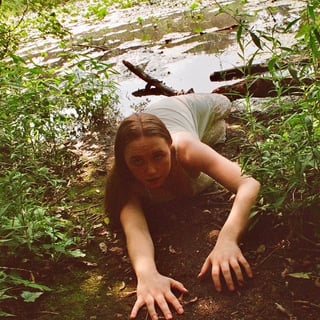
Speaker: a lot of my poetry, my writing has dealt with this, but then I started this photo series that is an exploration on trauma in the body and in landscapes. So it's kind of interesting because it's sort of merging together a lot of my writing and a lot of my visual art and putting it all together in one place. So the book, you know, I took photos of myself and of other people and places. And it's kind of an amazing,
Speaker: thing, whether or not someone likes it, whether or not my photos are actually good, I think is maybe beside the point for me. But I think just like being able to connect people through their various traumas and through our pain and show that there is, you know, a light at the end of the tunnel, so to speak, like I'm trying with the book to
Speaker: focus on the positive aspect of surviving. You know, we can survive, you will survive this and everything passes, like our pain and trauma maybe doesn't go away. You know, it's not like we can move on from it forever, but healing is a process. And I think healing allows us to take ownership over what happened to us and allows us to figure out ways to survive it and like,
Speaker: live lives that we consider fulfilling. So that's kind of what the photo book is about. And it kind of all happened on a whim. I was just at an art residency about a year ago at this point to work on my novel, ironically. And instead I started this whole photo series, which was amazing, but also just kind of funny because I really didn't plan it out. I think my body just literally was like,
Speaker: you need to do this thing and it needs to be a visual piece and involve other people and places. So that's coming out from RK artists in 2020 around spring. I think we're hoping to launch it for AWP, which is happening in San Antonio this year. So that will be an exciting time. There was actually working on the manuscript this morning before we spoke.
Speaker: So yeah, that's kind of been really my focus. I'm excited for it to be over, but also excited to be doing it.
Speaker: Yeah, I don't know. I feel like there was another part to your question, but I got Oh, yeah, just you know in in about that survivor. I mean I For that and amongst your other other works. I mean the photographs are amazing. It's it's intense the work the work that you do, you know, I'm so you know drawn to it because
Speaker: it really it really interrogates, you know the reader or the viewer and There's there's a lot of thought and there's disruption to it in order to cause change, you know, so I work in labor movement So I really connect to those images those type of things things that like are intended to kind of prompt and change and
Speaker: potentially advocate and the work that you do as far as art given a community. The only other piece of the question is just making sure folks can connect. Just see your stuff. I know you're on Instagram. Did you have a website when you were describing the connecting to the newsletter? Was that a reference to the website? I just want to make sure folks knew that.
Speaker: I know there's so many sites and things. So I mean, it's actually really easy on one hand to find me. Thankfully, I guess if you just Google my name, I'm like everywhere, unfortunately. But yeah, so the easiest ways to connect to me are like, definitely social media, like I'm Instagram is actually my favorite social media site, because I feel like it's like both
Speaker: artistic, but also personal, you know, because a lot of times in the stories I share, like my day to day goings on and within like the actual feed itself, I share a lot of my art. Um, so that's just my name. So it's just like Joanna C. Valente. And like, I'm on Twitter and Facebook too. And Twitter, I also really like, I mean, because it's like kind of my snarkier. So it's kind of funny. I feel like the different social media sites have like different
Speaker: things that come out. Like my Instagram is definitely like personal and like artistic and visual and like kind of philosophical words. Like my Twitter is kind of like a lot of my weird like snark and jokes. Um, and that is Joanna said, and Facebook is kind of my least favorite to be honest. Like it's also just my name, but like, so that's easy to find, but I kind of don't love it. I feel like the algorithm is weird and like,
Speaker: Sometimes it's useful for creating discussions, but I kind of can do that on the other sites as well. Um, but I'm on it. I'm there. Um, and then of course, like my newsletter I have, which is also like a very personal thing. And I really enjoy that. Um, that's a little harder to find because it's not like, I do link to it on my website. My website is just my name, which would be Joanna Valencia .com.
Speaker: But yeah, I do the newsletter for Tiny Letter, which is like a kind of, I think, subsidiary of MailChimp, which is like this email platform. So that would just be like tinyletter .com slash JFolante. I mean, so the fun thing is the theme, as you're seeing, is like everything's connected to my name because marketing, I guess, is a powerful thing.
Speaker: But yeah, I mean, I kind of also just encourage anyone who's ever like interested in anything that I do just to like email me and like I have my email on my website. I love emails. I will respond to everything even if it takes me like a little while to respond. Like I always do because it's just important for me because I feel like if someone like actually took the time to like get in touch with me, like that's awesome. And like that's a potential.
Speaker: like new friends, basically. See, I'm really easy to get in touch with, basically, is what I... Yeah. And I want to thank you for sharing that. And again, for you sharing as an artist, as a human. And I do think there's a lot of work that you do.
Speaker: You know that that quite simply is brave and is important and You know, I I do think those things that you do They're very helpful in and it's the kind of the the gift of art. So I just kind of really wanted to make sure that that folks can connect with that I Want to thank you so much Joanna for being on the podcast
Speaker: For my own reasons, you know, I've learned, I've learned a lot and I really appreciate you taking the time and I very much look forward to everything else that we'll see you create. Thank you and thank you for having me. It was an honor and a pleasure and this was super fun to do. Thanks Joanna and I hope you have a great day.
Speaker: You too. Thank you. You are listening to something rather than nothing.