Become a Creator today!Start creating today - Share your story with the world!
Start for free
00:00:00
00:00:01

#61 How to tell a story with your pottery w/ Celia Feldberg

33 Plays3 years ago
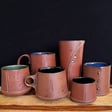
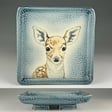
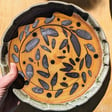
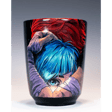
On this episode of Shaping Your Pottery we got to interview Celia Feldberg. Celia makes some really wonderful illustrations for her pottery that tell a story.
Top 3 Value bombs:
1. how to make illustrative pottery
2. The Power of building relationships
3. Getting used to drawing on your pottery
and so much more
Check out Celia's work on her Instagram @cel.fel
Recommended

Transcript
Introduction of Celia Feldberg
00:00:01
Speaker
Hey everybody this is Nick Torres here and in this episode I got to interview Celia Feldberg and Celia makes some amazing pottery that has some amazing illustrations on it. Her pottery literally tells a story.
Illustration Process and Artistic Collaboration
00:00:18
Speaker
In this episode, you will learn how Celia makes these illustrations, why she uses red clay, and reaching out to other artists to improve your work. Celia, welcome to Shaping Your Pottery.
Importance of Continuous Creation
00:00:31
Speaker
And share with me what is one thing you believe potters need to do in order to have success in pottery. Thank you. I would say
00:00:42
Speaker
Just keep making stuff that's really the thing that I think you need to have success. Like if you keep sewing and keep putting your work out there, it's just go hopefully get somewhere eventually.
Learning at Penland School of Crafts
00:00:53
Speaker
So can you share with me about your time as a studio assistant with Ben Carter?
00:00:59
Speaker
So I assisted Ben for the fall concentration at Henland School of Crafts, actually about this time last year. And I just worked with another assistant who's just out in South Sonoma, a ceramics person. And we just helped fire the cones and mix the grazers and help the people in the workshop, making sure everything ran smoothly. So what would you say was the number one thing you learned from Ben?
Inspiration from Creative Atmosphere
00:01:27
Speaker
I think just being at Pennland was a really amazing opportunity to meet a lot of potters and artists working in that area. There's tons of them, and it was just great to see us find and take in a lot of new information. And the whole topic, so, oh, sorry. Okay, go ahead. It's all about low fire ceramic.
00:01:49
Speaker
And so we did like all sorts of different growing techniques and hand-building techniques and blade exploration, surface exploration. It was just like a really great time to practice and learn. How did this kind of help develop your, your style more? Well, I think.
00:02:09
Speaker
Just getting to be around so much ceramics and like having this really focused time to try new things and just get back to learning. Like it came, it came at a really good time for me because I had been out of school for a couple of years. He had a pandemic. So it was just like feeling like really isolated and like not getting to take in on
00:02:36
Speaker
new stuff during that time. So it was just really amazing to be in a space with so many other creative people. Now, you say being in a space of the creative people, how did being in that space really just help come up with new ideas?
00:02:53
Speaker
Penland is like really special in that you have all of your shared meals together and you get to interact with people from all different studios there. And it's just like the day is kind of split up between like having demos and class in the morning and then getting time to work on your own stuff.
Personal Experiences in Pottery Illustrations
00:03:12
Speaker
So can you tell me the story on why you started making your illustrations on your pottery? Yeah, I've always really loved to draw and it just kind of seemed like inevitable to like want to put those drawings on the surfaces as well. So how do you come up with like the stories that kind of go with your pottery?
00:03:34
Speaker
A lot of times they're inspired by things that I'm doing or like something that happened in my life with something funny that someone says or like something that I do that like brings me like happiness or comfort. I'm just like, I have to make a vlog about that. Could you give me a simplified version of how you make your illustrations onto your
Passion for Red Clay
00:03:55
Speaker
pottery?
00:03:55
Speaker
So I work in red clay and I'll either draw a little rectangle and then I'll dip everything in a white sweat and then carve back through to make all of the lines. So I do straffito for the drawing. And then I color everything that's scared, glaze it, and there you go. Why do you use a red clay?
00:04:14
Speaker
I really love the way it feels to work with, like very smooth, but then it has like a little bit of brow which I enjoy. And I love their warmth that comes from the red clay and just like having that white slip and then darker underneath that kind of like feels more like drawing with a pen because like the line is darker than the surface that I'm drawing on.
00:04:38
Speaker
Can you tell me what advice would you give to someone looking to add illustrations to the soldries?
Integrating Illustrations into Pottery
00:04:44
Speaker
I would say just not being precious with the pieces that you made. So like it helps me to make a lot. Like if I have like 50 mugs or something, then I can just pick one up, draw on it. And maybe I don't like that drawing, but it's no problem. I just finish that one and do another one. So just like not being too precious.
00:05:03
Speaker
really helped with getting comfortable with like drawing on it and giving yourself time to just do exactly that. So if you could be a character in any fictional story, who would you be?
Choosing to be Mordecai
00:05:17
Speaker
I thought I wrote this question a lot and I don't even
00:05:19
Speaker
necessarily know this is like the best answer but I was thinking about the regular show and with Mordecai and like I just feel like he has a lot of adventures and they always turn out good in the end. They're always like neatly wrapped up by the end of the episode so I'm gonna go with Mordecai. I like that because regular show is pretty funny. It is pretty funny. Could you tell me what is something in pottery that just kind of grinds your gears?
00:05:45
Speaker
Um, getting glaze D set like right at the end, because there's so many things that can go wrong at like every stage. And then just like pulling it out in the glaze film and just like having some like little like pinhole or something just drives me crazy. When you were trying to discover your unique voice with your pottery, what was the biggest challenge that you faced?
Finding a Unique Artistic Voice
00:06:08
Speaker
Um, I think like,
00:06:10
Speaker
like two things, like one of them being like the way that a lot of times I feel like when someone like teach you something, it can seem like that's the only way to do it. And that's like the way that you should do it. And so I think realizing that there are so many different ways to do everything in ceramics, and you just kind of have to spy different things and figure out what works for you. And then the other thing would be like carving out time to experiment and play. They think it's like,
00:06:39
Speaker
really nice sometimes to just do something that you know it's going to work and that you're really comfortable with, but then you're not like necessarily like learning something or trying something new that can then like contribute to that voice. I definitely agree. If you had to start over, what would you do differently to discover your unique voice?
00:06:59
Speaker
I think just like just playing around a lot and not being as concerned with how things are going to come out and just like doing things to get to the next place instead of to like get this like final piece that you're really happy with. Really losing yourself in the process and trying to print things.
00:07:21
Speaker
I think sometimes I get stuck because I'm just like, I want the thing to come out late. What does that look like losing yourself in the process? What do you mean by that? I guess, you know, like when you're like working really intuitively and you're like, Oh, like, what have I tried this thing? Like that could be really cool. And you're like, Oh, like talk yourself out of it. Because maybe it doesn't work. Or maybe you're like, it's going to take up too much time or
00:07:45
Speaker
You know, maybe I will do that in the future, but right now I just need to get the order done. Like playing it safe instead of trying to share it. Like maybe sacrifice that like piece isn't going to come out like necessarily perfect this time. But like maybe if you keep trying this new thing over and over again, you'll figure out how to do it better. I love it. So in pottery, there's a lot of failure. Could you share with me how a failure or a parent failure led you to future success?
Learning from Firing Struggles
00:08:15
Speaker
I think trying to think of like something specific and I'm not thinking of anything but I would say like I before going to Finland like
00:08:27
Speaker
I had been trying to figure out all of these things with my low fire play and games by myself. And I was really struggling with my firing schedules and temperatures. And I was kind of listening that when you're in school and you have some meetings, you can just ask for stuff. And it really pushed me to go ahead and apply.
00:08:49
Speaker
for the SUNY Assist Scholarship at Finland. I think doing that just has really like opened up a lot of new things for me in terms of like having so many more connections and just like really getting to explore a lot of new like things in ceramics that I was really interested in but maybe didn't have the like person direction before I got there.
00:09:15
Speaker
I love, I love that because I love that you are like getting out of your comfort zone to expand your knowledge. Yeah. And kind of like, just like realizing that there's so many people out there who like have knowledge and are so generous and they want to share it with you, but you have to kind of like meet in a position where you can like ask them and connect to them. And so what we have that, sorry, we have that kind of like Liz, like you can just email someone or DM them.
00:09:43
Speaker
But it's really nice to do their work in person and get to see their studio and practice and get to know them. And then it really gives you so much more that you want to ask them. What advice would you give to someone looking to reach out to other potters?
Networking with Fellow Potters
00:09:58
Speaker
What would you say? Just go for it, I think. The worst thing they could do is not reply to me, right? I mean, nobody's going to... I think everyone wants to help.
00:10:10
Speaker
is that our community is like really generous and really knowledgeable. So you should definitely just go ahead and like send that message or send that email. I definitely agree. It's our relationships that build our, help build our pottery betters. Yes, definitely. What advice would you give to someone looking to try to develop their own unique voice in pottery? Maybe like trying to find
00:10:37
Speaker
what things that you enjoy doing and leaning into that.
00:10:41
Speaker
So I feel like I've kind of tried a lot of different things and the things that have stuck are the things that I enjoy doing. So I think the first thing you need to do is like, really like free yourself up to play and explore and then like focus in on the things that like made you feel really good while you're doing them or you like really loved the result. That is so true because you can't really accomplish anything if you're not gonna love it. Yeah. So as we are coming up on this last question here,
00:11:10
Speaker
What is one thing you want to hammer home with my audience today? Yeah, I feel like just keep making stuff and like figuring out like what those things are that you enjoy and like not letting things feel too fresh here it's reaching out to other people that you admire or like think that they could maybe help you in some way like feel free to like ask questions.
00:11:35
Speaker
Celia, I had a really great time chatting with you today. Where can my audience go and check
Celia's Online Presence
00:11:42
Speaker
out your work? My Instagram is cellfel, c-e-l dot f-e-l, and my website is c-e-l-f-l-g-r dot com.
00:11:51
Speaker
Thanks for listening to this episode of Shaping Your Pottery. If you would like to learn how to discover your voice, I put together a free six step guide that will help you discover your voice and so that you can make your pottery stand out. Go to shapingyourpottery.com forward slash voice to get this free guide.