Become a Creator today!Start creating today - Share your story with the world!
Start for free
00:00:00
00:00:01

#9 Raquel Acosta - Glazes, Books, Managing What You Make and More

62 Plays3 years ago
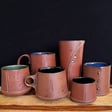
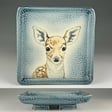
On this Episode of Shaping Your Pottery with Nic Torres we interviewed Raquel Acosta! Raquel is an expert at applying glazes to get some really cool effects. The Three Biggest things you will learn in this episode are Glazing
Using Books
Managing your work
You can follow Raquel on Instagram @glazemepretty
Recommended
Transcript
Introduction to Raquel Acosta's Pottery Journey
00:00:01
Speaker
Welcome to Shaping Your Pottery with Nick Torres. Today, I am interviewing Raquel Acosta. She makes some really pretty glazes for her pottery. All of her pieces look really cool. You can follow her on Instagram at glaze me pretty. Now, welcome Raquel. Oh, thank you for having me. That was a super kind introduction. Thank you. Oh, no problem. I'm glad you are here.
Inspiration and Self-Learning Challenges
00:00:28
Speaker
So now,
00:00:29
Speaker
I thought the first thing that we get started or talk about was, could you tell me the story on how you got started in Pottery? It might sound a bit cliche, but it was after watching the Pottery Showdown here in the UK. Are you familiar with the show? Yeah. Yeah, that was in November 2015. That was the first season. And at that time, I was looking for a hobbyist, something to do with my hands.
00:00:58
Speaker
And I had tried a few things, but nothing was really, I wasn't connecting with anything. And then I watched the show and I thought, oh, I know, why not give it a go? So I booked some classes. And after the show, because it was really popular, all the classes were held out. So I had to wait until the following March, March 2016, to be able to find classes here in London.
00:01:27
Speaker
So yeah, I have never touched clay before that. So it was just purely because of that show. So I did evening classes once a week for a couple of years. And you know, I really, really liked it. A few years later, here I am. What were some of the challenges that you faced being a self-taught potter? Yeah.
00:02:01
Speaker
Gosh, a lot. Not knowing what you don't know. Because you don't have anybody teaching you and going through the steps. There are so many things that you are not aware of and you don't know. So you feel a bit lost.
00:02:27
Speaker
And also you get a lot of imposter syndrome. You compare yourself with all these people that have just come out of an art degree. Yeah, you don't feel so adequate, I suppose. So how did you get out of that imposter syndrome? I guess,
00:02:54
Speaker
time and being more confident, improving my skills, my throwing skills, when they reached a level where I was happy, then that was the point where I stopped having imposter syndrome. But I truly believe that my work was worth it, had the quality that I wanted it to have. Yeah.
Experimenting with Glazes
00:03:18
Speaker
So now, at what point did you start experimenting with glazes?
00:03:23
Speaker
Yeah, that was January, 2018. So a couple of years after doing my first pottery class. So at that point, I had a little studio in my kitchen, the corner of my kitchen, and I was just throwing pots with a little wheel and I had bought a few commercial glazes.
00:03:51
Speaker
but I was really interested in glazes and I knew that I wanted to make my own glazes. So I bought a few books, just took note of the few recipes that I liked and started testing, really hundreds of tests. What was probably the best book that helped you with your glazing? Oh, um,
00:04:22
Speaker
The John Britt books are pretty good. And then there's one from, gosh, I have them here next to me. I can't remember the name. So it's a book from Greg Daly. He's an Australian potter. I was really helpful in giving you an idea of how to do volumetric blends and how to extract your tests. So that was really helpful.
00:04:50
Speaker
although I have to say that it's quite difficult to learn to do glazes from books. So I thought it wasn't enough. And then I don't know how I came across this, but I don't know if it was Boolean glaze courses or something. I came across ceramic material workshop just run by Matt Katz. He's from the US and they do online glaze courses.
Influences and Preferred Techniques
00:05:20
Speaker
and I took the basic and advanced place courses and that helped immensely. Would you say it helped you like kind of start finding your own style when you're glazing? Yeah, it helped me to be in control of the glazes because when you're testing glazes you feel like you're not in control, you're just changing things but you don't really know what you're doing.
00:05:49
Speaker
But it gave me a framework and a framework. I'll put this into words.
00:06:29
Speaker
It just helped me understand how places work and what each material was doing and why and how to fix mistakes, how to correct the places. If I was tweaking a material, then I knew what I was doing. It wasn't just a matter of luck or just blind testing.
00:06:53
Speaker
Now, what is it about glazes that fascinate you? Oh, they are so cool. So I like glazes that do something rather than, you know, the solid ones, plain ones. I like glazes that either have crystals or face separation, you know, have different things going on. I just find it fascinating. But you can do that in a kiln. So now you mentioned crystals.
00:07:24
Speaker
Could you explain to me what those are? Crystals. Yeah, they are molecules bonding in a regular pattern inside the glaze. So the crystals that I, in my glazes, those are zinc silicate crystals. So zinc bonding with silica in a regular pattern. Now, how do you,
00:07:53
Speaker
how do you control to be able to get those crystals like when you want? Well, it's all in the chemistry. So the amount of sink in the glaze, the ratio of materials, then the peak temperature, that's mainly the materials. So the ratio of materials and then the temperature.
00:08:24
Speaker
So you can control it. You can tweak a few things to get more or less crystals. Sorry, I'm going to be nervous now. It's OK. It's OK. That's why I was concerned, because English is not my first language. So sometimes it's difficult to find the word. So yeah.
00:08:54
Speaker
Anyway, if you don't end up using it, it's fine. You're doing a great job. So the next thing I thought I would talk about was something that you put on your website.
Creating Joyful Everyday Objects
00:09:09
Speaker
You said something that I find joy in making simple everyday objects beautiful. Could you explain that a little bit more? Yeah, something that really makes me happy to run in myself with
00:09:24
Speaker
just things that make me smile. And it can be simple things and everyday things like a water bottle that, you know, in a color that I really like, or a mug, or I don't know, the color of a wall, something. So little things, but it just, it really lifts my mood. So that's what I want to do with my work. You know, I want them to be things that make other people smile.
00:09:54
Speaker
everyday objects that bring people joy to the simple things. And does that help you kind of like have a focus when you're making your pottery? Have a focus. Yeah, I guess I don't put a lot of pressure on myself to do, I guess, artistic work in a sense.
00:10:21
Speaker
I'm happy with simple things like ala coaster, a spoon rest, a little jewelry dish. I think that's beautiful and that's enough and that can make somebody happy. That is really great. So now, tell me about the day when you decided to become a full-time potter.
Transition to Full-Time Potter
00:10:46
Speaker
That was exactly
00:10:48
Speaker
almost exactly one year ago. So it was in April 2021. I had been doing pottery on the side of a full-time job, which was a lot of work. You can imagine working all the weekends, all the evenings. So yeah, it was a lot of work.
00:11:17
Speaker
I gradually reduced the hours in my day job as sales were increasing. And towards the end of 2020, I was working only three days a week in my day job and doing pottery the rest of the week. And by early 2021, I felt that I was ready to quit. You know, I had stable sales.
00:11:40
Speaker
and more demand than what I could supply. So I felt that that was enough for me to quit. How did that make you feel when you were able to quit your job to do this full time? Free. The feeling of freedom, relief. My mental health improved a lot. So I stopped
00:12:08
Speaker
I stopped feeling anxiety because it was tough. I was working a lot back then. So yeah, it was really liberating. But at the same time, it is scary to be self-employed and not having the reliable paycheck at the end of the month. So that can be stressful as well. But overall, I felt free and relieved. Yeah.
00:12:37
Speaker
That's great. So now I wanna talk to you about a little bit about kind of like failure. So how has a failure or a parent failure sets you up for later success? Oh gosh, with pottery, you need to be really comfortable with failure. Failure is at every step of the way, literally. But it's the only way, not the only way, but the best way you learn.
00:13:06
Speaker
When you make a mistake, you make it once, but you don't make it twice. So every mistake that I've made has been a learning opportunity. So I'm not really sad or upset about any of my failures. I see all of them as learning opportunities. Yeah. And how has approaching like that helped improve your pottery overall? Hmm.
00:13:36
Speaker
I guess by not being scared of making mistakes, if something doesn't work, it doesn't work. You try something different, you adjust. So yeah, it gives you a bit more, if you embrace the failures, if you embrace the mistake, it gives you a bit more freedom to just give it a go and try things. That is great. So now,
00:14:03
Speaker
The next thing I thought I'd talk about, so you recently renovated your pottery studio.
Studio Renovation and Environment
00:14:10
Speaker
Could you tell me the reasoning behind that? That was last summer. Before that, I was working on a very small space that
00:14:22
Speaker
typical British shed at the back of the garden that we all seem to have. So I had a really small one, and you can imagine the wheel, the kiln, a table. There was barely any space for me to stand up in the middle of everything. So I had been saving for a few years. And when I had enough savings to go ahead, we just built
00:14:52
Speaker
a decent garden room and it's like a room. It's a decent sized studio and it's great. I have running water now, but before I was just bringing the bucket of water in and out from the house. I have running water, internet, electricity, everything. I mean, it's been, I want to say life changing. I don't know if that's too much, but
00:15:21
Speaker
It's just such a joy now every day to go to a studio. I think it's so important to have a workplace that you feel comfortable in and that is inspiring. So yeah, I just want to be there all the time. So how did this like kind of make things easier for you in the long run? Oh, it's made a huge difference. Before I didn't have space really.
00:15:49
Speaker
So it was really challenging just to produce pots in any decent amount. So now I have the space. I couldn't make large pieces because again, I didn't have the space. It was really, really challenging. It wasn't insulated, so it was very cold in the winter. So yeah, it has allowed me to make the work that I'm making right now.
00:16:18
Speaker
completely. Now, how much planning went into the actual design of the studio? Oh, I love that. I love that part. I did the design. I had a clear idea of what the layout of the furniture, because since I have been kind of making pottery in a small studio,
00:16:44
Speaker
I know what I wanted. I know where I wanted the shelves. I know where I wanted the table, the wheels, things could kind of flow. So yeah, that was super exciting. A couple of months, just drawing everything, looking at furniture and designing things. Yeah, I love that part. How many changes while you were making the plan did you make? Not many.
00:17:13
Speaker
It was super clear in my mind. Yeah. So I really had a good idea of what I wanted and that's what I built. So yeah, not many changes. So now what is the best thing that you have in your studio that kind of helps you on a day to day? Well, one thing that I really love is the skylight, the window I have on the ceiling.
00:17:44
Speaker
I know it might not be kind of, it's not kind of directly related to the work that I do, but just the amount of light that I get every day is just incredible. And then one thing I really like as well is, so I have on the sink area, the countertop is kind of
00:18:13
Speaker
like melamine. How do you say that? Melamine. I'm not too sure. It's like the countertop that you have in your kitchen that you can wipe easily. It's not like wood that you're concerned about staining sometimes. So it's wipeable and I have a splash pack as well of the same material. So cleaning the glaze splashes is super, super, super easy.
00:18:44
Speaker
just to wipe everything out. So yeah, that's very handy when I'm glazing. Yeah, I would say those two things, I love them. So now, I forgot to ask you this while I was talking about the glazes, but how often do you test different glazes, like making new glazes?
00:19:14
Speaker
Yeah. So right now, one of the, not goals, but one of the things that I want to do this year is test places more often. Cause last year, I think I only did one, one new place in the whole year. But it's because I had a lot going on at the same time. I had the studio build and, you know, just building my range and everything. So making places didn't take a priority last year.
00:19:44
Speaker
But this year I've made it a priority. Every month I would test at least a couple of places or tweak a glaze that I'm working on. So I have two or three in the works right now. And a couple of months ago I made a new one, a new color. So yeah, I'm trying to keep it as part of my practice.
00:20:12
Speaker
on a monthly basis, just test something new.
Artistic Preferences and Style
00:20:15
Speaker
Do you have a favorite type of glaze? Type of glaze. Like a favorite color. Yeah. I like soft colors in general in any type of glaze. So that's what I make, the colors that I like. I mean, I love crystalline glazes.
00:20:38
Speaker
I love anything with titanium, the floating blues and all that stuff. And really anything that has something going on in the glaze, any little detail going on, I love a lot of glazes. So now the next thing I thought I would ask you was, so when you feel overwhelmed or unfocused, what do you do to kind of get back on track?
00:21:08
Speaker
Yeah, so writing things down, so the work that I need to do every day, writing it down on a notebook, kind of journal, that helps a lot. And having, I have a monthly planner as well, so with like all the days of the month in a grid. So kind of penciling the task that I need to do in the month, in the monthly planner, that helps a lot. So if I'm cleaning over well, I go back and see if I'm on track,
00:21:37
Speaker
and see if there's any task that I can drop or push it. So that helps me feel less overwhelmed because I kind of have a plan. I'm taking a break as well. Sometimes you get very caught into working and making and then you start finishing later and later every day and then working on the weekend because you have a few pieces that need trimming and need finishing
00:22:07
Speaker
So just taking a step back and being a bit more strict and saying, no, I'm going to take this weekend off completely. I want to wrap everything in plastic and I don't care if I have 20 pots that need trimming. I'm going to just take a rest. So it takes a bit of being proactive and forcing yourself to step back a bit and take a rest.
00:22:35
Speaker
And how has that actually helped you with your pottery process, doing it that way? I guess I know now how much it takes me to do things. So I have now, not a streak, but quite of like,
00:23:05
Speaker
and a schedule that I repeat every month. So I work in monthly cycles. The first couple of weeks of the month, I do the throwing and trimming, then I do the firings, the big frying, then glazing, sanding the bottom, and then taking the pictures and uploading the work to my website. So I do the same thing every month. So that kind of frees up a lot of stress
00:23:33
Speaker
Because I don't have to think about it anymore. I know exactly how long takes take and what I need to do on each week of the month. So I think that's been really helpful.
Advice for Aspiring Potters
00:23:45
Speaker
Being organized. Being organized. Yeah. Writing things down. Yeah. Being a bit strict. Having that shuttle.
00:23:58
Speaker
So now this will probably be my last question. If you could give advice to someone looking to experiment with glazes, what would that be? Explain my multi-glazes. Buy a few books about glazes. And then if you can do an online course, that's better.
00:24:27
Speaker
the more you know about place chemistry, the better. Yes, because it gives you a framework. It gives you a set of rules. So instead of having infinite possibilities, it gives you, as I say, a framework. So you know what things are going to work when you're testing, instead of just testing randomly, doing tweaks that might not have sense. So if you can do an online course better,
00:24:58
Speaker
you do a lot of testing. You know, sometimes it takes months to create a glaze and you are tweaking and tweaking and tweaking. So, but yeah, just don't be scared. What else? Sometimes going from a test style
00:25:27
Speaker
to production is a journey in itself. So scaling from a test style to an actual piece, the glaze might not work as you expected. So yeah, that's like another part of the testing. Once you have a test style that you like, then test it on a little pod and get used to the glaze. You need to get used to the application as well. Get familiar with the application, you know,
00:25:57
Speaker
the glaze might work better thinner or might work better thicker. So you want to try different thicknesses, different amounts of water in the glaze. The viscosity try with like a bit thicker, a bit thinner. So yeah, it doesn't end in the test style. You need to get familiar with the application and try different things and then write everything down. Write down the amount of water you are adding
00:26:26
Speaker
into the glaze that's like another material to be consistent and always add them the same proportion of water and the viscosity as well measure how long it takes. How long it takes you well how long your dips are when you if you're deep in the glaze. And that's it just write everything down but don't be scared of testing is really fun.
00:26:55
Speaker
Thank you, that was great, some great pieces of advice.