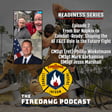
Introduction to Episode 59
00:00:01
Speaker
This is the Fire Dog Podcast.
00:00:14
Speaker
Welcome, my name is Matt Wilson, and thank you for listening to episode 59 of the Fire Dog
Overview of the 2020 Kadena Fire Incident
00:00:17
Speaker
Podcast. In this episode, we dive into an after-action review of a hazardous material storage facility fire at Kadena Air Base in June 2020. I speak with Chief Mass Sergeant Kyle Rollins, who was the incident commander during the response, which was initiated by calcium hypochloride, material that presents unique and often underestimated hazards when exposed to heat and
Details of Incident Response and Agency Cooperation
00:00:36
Speaker
During this episode, we'll walk through the conditions that led up to the incident, the initial response and size up and the interoperability between multiple agencies. Chief Rollins also shares what went well, what didn't, and the lessons learned that other departments can apply to their own response planning and training.
00:00:54
Speaker
It is my pleasure to welcome Chief Master Sergeant Kyle Rollins. Well, Kyle, welcome. It's great to have you, brother. And thanks for having me, man. You guys been doing, uh, doing this for several years now. And so I'm, uh, I'm really honored to to be on here and to to talk about this incident back in 2020 and, and, uh, yeah, man, we'll, we'll jump right
Chief Rollins' Career and Impact of the Incident
00:01:12
Speaker
into it. and So yeah yeah, looking forward to it.
00:01:15
Speaker
Yeah, man, we'd been doing it for a handful of years and you and i you know, we go way back and, uh, you know, I should have had you on sooner probably. Um, certainly a little bit closer posts incident, post hazmat fire incident.
00:01:28
Speaker
Um, but Hey, here we are. So, Yeah, I mean, we started our, you know, career, we synced up back in 2012 at Kunsan, definitely one of the highlights of
Post-Incident Reflections and Ongoing Discussions
00:01:37
Speaker
my career. And yeah it took a little while for this to kind of, I guess, propagate just because, you know, post-fire is like a couple years of kind of going through the SIB and AIB. And I'm sure if you reach out to to to Dan Linares, Chief Linares out there at Kadena, like, you know they still talk about, you know, this incident. And so there was a lot of, there's a lot of lessons learned. Yeah.
00:01:56
Speaker
you know, through that and kind of what shaped, you know, shaped me as ah as a, as a senior fire officer and now chief fire officer. And so, uh, yeah, I, I appreciate being able share this and and hopefully this not only prevent this, you know, from, from other installations, but really like your ICS and like how this can really help you out. And there's our, you know, there's our, our crews heading out to a call now. So, um, yeah, it's an honor and privilege to be in the fire service. Yeah.
00:02:19
Speaker
Oh, dude, that's awesome. Listen to that in the background, man. A little yeah is a little showmanship on yeah on Kyle Rollins' part. yeah He had the guys rolling on an exercise real quick.
Response Strategy and Media Management
00:02:30
Speaker
Hey, guys. stick yeah but Hey, get hit the sirens and lights real quick. Um, yeah, that's cool, man. Glad to have you on the, uh, yeah, with the SIBs and the investigations and all that. There's sometimes where I'll reach out to people, you know, post big incident, you see it on the news or whatever, like, Hey, let's get you on. Let's talk about it. And people are always like, Oh, hold on a second. Like, let's wait a couple of years for the dust to settle. Cause I don't know what I can talk about and not talk about. I'm like, okay, a good call.
00:02:56
Speaker
Um, I don't want to put you in a tight spot, you know, the, the, The crash in, where was it? Louisville, Kentucky, you know, recently, the real serious one. There was some Air National Guard guys that went out to that.
00:03:09
Speaker
And i know one of them, I reached out. He's like, let's let the dust settle a little bit, brother. i'm like, roger that. Yeah. I had to shoot my shot, though.
00:03:19
Speaker
Like, let me, i want to be your first. Yeah, because I mean, what you guys are doing, it's amazing. and Before CNN gets to you, I want to talk to you. And they're like, you know, through talking crash, you know, I was on there and got to share so some of this and
Personal Background of Chief Rollins
00:03:31
Speaker
we'll talk about some of that today. But yeah, you know, it's all about, you know, helping helping out the enterprise.
00:03:36
Speaker
Cool. Well, before we get into that, brother, let the audience, you know, hear from you. Tell us who you are briefly, maybe where you've been, how long you've been in the Air Force, whatever else you'd like to share.
00:03:49
Speaker
Okay. So born and raised Columbus, Ohio. So Buckeye fan out there. I'm coming up on 20 years here next year. Time to sign up. Yeah. 20 years in Air Force. Yeah. come Come June. Still got a lot of lot of lot of runway left.
00:04:03
Speaker
um Started off my career at Langley Air Force Base back in 2006. I was there for about five years. um PCS here to Kunsan. That's where we met Yoon. And a lot of other rock stars are still still serving today.
00:04:14
Speaker
Went to Aviano, which so I'm back here for the second time. But Aviano, then to McConnell. And from McConnell to Kadena, Kadena up to Yokota, Yokota over here to Aviano. So been married 15 years. Definitely. Megan, she's my rock. She's my better half. I have four children, Gabe, Grace, and Evelyn, and Dottie, 11, 9, 7, and 5. And so they truly drive me to to show up to work every day. And um yeah I'm just honored and privileged to to to be in this position and to really help others continue to grow. So, but yeah, and so that's me in a nutshell.
00:04:47
Speaker
Yeah, man, you're you're a guy that, you know, i know we're peers, but you're a guy to look up to, man. I've always appreciated your friendship and kind of ah watched your progress from afar. or just a Just an example worth following, brother. So glad to have you on. and Glad to have your family. Glad to see that your family is
Initial Response and Strategic Decisions
00:05:05
Speaker
with you. I know that you've had an assignments where they've had to to be elsewhere. So it's cool to have them. And you got a tribe, dude.
00:05:11
Speaker
So as I say, we got a little little little basketball team, man. And likewise, man, I loved our i love our time there in Kunsan and looking back and, you know, where we're at today. It's like, wow, we, you know, we are the the future of the enterprise and really developing in the next generation. So, yeah, it it's a privilege to be here.
00:05:30
Speaker
That feels like yesterday.
00:05:33
Speaker
Well, let's get into it, dude. Let's talk about the event. It was 2020, correct? Yeah, 2020. June of 2020 is when this incident happened. There was some things that led you know led up to it. um And we were actually trying to overpack it, our our EM partners. But and don't want to get too
Challenges and Key Moments
00:05:52
Speaker
far ahead of it. So we'll kind of guess, lay down kind of what this stuff is. So this is...
00:05:58
Speaker
calcium hypochlorite, it arrived around 2018 timeframe, was stored in the hazard it or Hazmat like pharmacy, the LRS warehouse. And so over a couple of years, it it degraded.
00:06:10
Speaker
um it was It was recognized and in 2020. Fast forward a couple years, a lot of pictures on it. and You can see um this stuff when it came in. It was packaged in like plastic and then there was cardboard. It was all palletized. and so when they When they found it, it was just completely deteriorated falling apart. and You can see this like basically powdered chlorine you know laying on the ground in this storage warehouse. and so Our EM partners were like, hey, we have the the bandwidth to to overpack this stuff. And so they started to overpack it. um
00:06:43
Speaker
And so... kind of as we jump into this, so about two weeks prior to the incident, they were overpacking it and it off gas during that operation. um So we responded to it and was like, hey, we need to kind of re-attack this, how how we're how we're handling this. And so they created a a robust robust plan to overpack it using level Bs and Tyvek suits and we were kind of on standby.
00:07:06
Speaker
um but ultimately by them just walking on it and just kind of shuffling, shuffling their feet, uh, was enough, uh, friction, uh, enough heat that caused it. And once it's oxidizing agent. So once it, once it went, it just erupted.
00:07:20
Speaker
Thankfully. yeah Thankfully everyone, everyone made it out. Um, but yeah, we got the notification immediately and, um, you know I won't call pages. There's some Facebook pages out there that make you famous.
00:07:31
Speaker
um But I was able to rip the video from from someone that took that. But as soon as we left the station, you could see like a 200-foot fireball. And were like, all right boys, you know here here we go. Strap in. Yeah.
00:07:42
Speaker
And so you said the it was calcium hy hypochloride, and it was delivered in around 2018. And there had been like verbal corrections that through like inspections, correct? And they're being like, Hey, you probably need to take care of this
Operational Execution and Agency Cooperation
00:07:56
Speaker
problem. Cause the palette, as you mentioned, was kind of like deteriorating, right?
00:08:00
Speaker
Yeah. Yeah. So, um, it's calcium hypochlorite. Um, can't get into specifics of why it's there, it's throughout the, it was throughout the Pacific theater. So there was a lot of other bases that had this, um, uh, this chemical available. Um, so, But yeah, like through those inspections um and through it deteriorating, we're like, hey, we need to we need to overpack and move this and get this into a a cool, dry space because it was left on on basically not climate controlled and open raptors. And so it deteriorated over time.
00:08:28
Speaker
Well, let's get into the response. Um, so we talked a little bit about the conditions leading up to, I mean, there's not much more to say on it. You know, they, this calcium hypochlorite was delivered, right. It and was just sitting in there, probably not stored in the correct temperature, some verbal corrections, never made the corrections. Um, our EM brethren tried to go in there and and take care of the problem. And then, you know, 22 June, 2020, here we are,
00:08:51
Speaker
twenty-t twentyy here we are ah Smoking fire, blowing out of this place. and So tell me about that, man. Like, ah I guess your first introduction to it, you know, when the tones dropped and you stepped out the side the station or, you know, whatever. Just walk us through it.
00:09:06
Speaker
Yeah, so I was the ah assistant chief training at the time. um so you know, call comes in, 3150, And we're like, oh, like we know exactly, pretty much and know what we're what we're heading into. And so I jumped on chief one with a slew of other other fire officers and our chief at the time. And so as soon as we pull out the station, um you can see it. It's about a half mile you know in front of us and just this big, big fireball in the air. And so...
00:09:33
Speaker
i mean, it was gonna be pretty complex. So we were just behind chief two and our truck at the time. So it was a full, full box response. We had, i believe two engines at the time, two engines, the truck, you know, ambulance chief one. Um, and then of course, then we're starting to shut down some stations and bring the rest of our our resources. Cause we know this is a ah big one. Um, so initial IC, you know, they painted, painted a pretty good picture. Um,
00:09:58
Speaker
Didn't really make, you really need to paint too much of a picture when you're rolling up to this thing. You can kind of see it that you got heavy smoke and fire involved. But they, you know made the right calls, went defensive operations, started setting their crews up.
00:10:08
Speaker
um And it was just a surround and drowned operation.
Leadership and Strategic Insights
00:10:11
Speaker
But at the same time, knowing this is a hazmat, you know, pharmacy warehouse, like there's a lot of other things in there that, ah you know, pretty, pretty bad stuff. So oh it was trying to get,
00:10:24
Speaker
trying to get the shelter in place going, get people out of the Security forces were a big part of that because it's right next to the the housing area. um So it was, you know, those first five minutes are so crucial, you on the fire ground. And and I'll say that like the fire officer getting those trucks and in the right position, you know, on that the Alpha, kind of Alpha Bravo side and Charlie Delta side and start the pull lines. It was, um,
00:10:46
Speaker
it was It was helpful for us as um as the chief and I and a couple other senior officers rolling on scene. um I think what was something I'll never forget as we're heading out there, the chief was like, hey, rolling some of the guys scene, you got it.
00:11:01
Speaker
you know And so not exactly what to what you expect. um I was you know like, let's go. like This is my my opportunity. And um as we talk about some more of the strengths like down the road, um I can see how how beneficial that was, not only for me but for the team. um because when you We have such a ah strong, you know, senior fire officer corps that can handle those type of complex incidents. It allowed the fire chief to really like sync with the cat. You got ah you got a one star on base. you're You're in Japan. So there's a lot of PA. There's a lot of host nation um kind of um things you want to get ahead of and let them know what you know what we're doing. So having that ability to him.
00:11:38
Speaker
for him to go, to go be that, uh, be the person in that role, like just took all that pressure, like off of us operationally. Um, so that's something, uh, I definitely, uh, I definitely took, took away from and and appreciate the, ah the opportunity.
00:11:55
Speaker
Man, this is one of those events where, I mean, I don't want to say firefighters wish for fire, but, you know, let's let's be honest, man we just We want to do our job, right? But when you hear that the pharmacy warehouse is up like no and you you know you know that some hazmats are potentially involved, it's like, oh dude, like,
00:12:11
Speaker
this isn't the fire that I dreamed about, right? Like, this is exactly what I don't want to have to contend with. um You know, like a, you know, single family dwelling, room and contents, you know, I go save a baby, you know what I'm saying? Like, that's, that's kind of what,
00:12:27
Speaker
what you want Now, unfortunately, in this case, you guys so you were able to
Importance of Training and Preparedness
00:12:33
Speaker
take accountability pretty early on then knowing that, hey, there's nobody in there. Like we've accounted for everybody that's a part of this operation. So they could make the call to be defensive defensively.
00:12:43
Speaker
Right off the bat. Yeah, that's correct. um Yeah, so we knew exactly who was operating there and they, you know, they were currently overpacking, you know, and so that was the first, you know, first questions, you know, is everyone out, you know, do you have full accountability? And and they did. So, you know, that that life safety and sensibilization property conservation piece, you know, it's running through your mind. Right.
00:13:00
Speaker
theyre Another big ah big takeaway that's important for departments is like having you know having those sets and reps, right? And you don't get sets and reps of a large hazmat fire. But you do get sets and reps day-to-day with those 14-10 drills and pulling lines and just having those SOGs drilled into where you don't have to micromanage as IC person.
00:13:23
Speaker
And so about two months prior to that, we had a large, a fully engulfed house um to where we can, yeah know, we were able to get that sets and reps when it comes to like the ICS form. And um we, we, we had blue card at the time and I'm not to say like, Hey, you know,
00:13:37
Speaker
that's the best thing out there. You know, there's a lot of, you know, there's a lot of ICS different, um different platforms, but that's what we use. And it was well vetted. So leading up to that event, having, having that foundation was easy to get, you know, everything
Operational Challenges and Solutions
00:13:52
Speaker
in line. And, and another Pete, another part to being at Kadena, you know's it's a large fire department. So, you know, we had 82 firefighters out there that day, 134 total person personnel scene. So,
00:14:03
Speaker
believe we had like five or six, you know, senior NCOs. So when you're talking about, you know, fire ground experience, um that that was super helpful too. So we had, you know, I had a fire chief and a chief master sergeant and senior master sergeant that wasn't on scene that they were like letting us just kind of run with it.
00:14:21
Speaker
And so that was like super beneficial, the fact that You know, the deputy was actually, you know, in the ECC because, you know, one thing that occurs, like when you get a large fire fire like that, like the 911 phone calls just start screaming in. And so you're trying to get the shelter in place. You're trying to make the notifications. You know, the dispatcher is trying to support, you know, support us on scene.
00:14:42
Speaker
and you know, you're already trying to stand up the EOC. So, you know, having, having those other chief fire officers, you know, kind of take that kind of burden off, you know, off, off the IC, we're kind of both running that 10 dash 10 dash two checklist.
00:14:54
Speaker
Uh, was super helpful that we could just stay operationally focused and taking care of firefighters. Um, so yeah, that was, um, yeah that was important. So we, uh, were able to get a level, level two staging up. So I had a master sergeant over there running the staging as we were, you know, running through the firefighter recall.
00:15:11
Speaker
That's another blessing. um Being at Kadena is, you know, most of the firefighters are within a couple miles of base or on base. um So we really get a recall pretty quickly um because, you know, you recommend shut down flying.
00:15:24
Speaker
um That is one of those spaces that like that just, you know, it's the keystone of the Pacific. So not an easy task, but they're always flying over there. Yeah, so to be able to shut that, you know, shut the shut the airfield down and it brought a crash truck on scene while we got backfilled, we could stand it back up. um So it really helped to get that the staging in place. And so we had...
00:15:46
Speaker
We had the puck system. It was super helpful with the Velcro. So we were able to check in with the IC. Hey, here's where you're going. Here's your attach to. I need and need red helmets, direct and black helmets and yellow helmets. and And so having that staging officer to say, hey, I got a crew of four on deck. I got a crew of eight on deck was was super helpful as we started to go through the rotations. Because it was it was a long day. it was a couple operational periods.
00:16:08
Speaker
Yeah. Man, big incident. um Talk to me about... a little bit of like the interoperability with other agencies, you know, how did that go? um i always like to, I feel like, you know, we we kind of stay in our silos, in our lane in in the fire service. We think about it from our perspective, right?
00:16:26
Speaker
But I always like to, on a large scale incident like this, kind of think about how that interoperability went. Because, you know, you never really talk to each other until things like go really bad, right? Or during an exercise when you're you're pretending that things are going really bad. And so always curious to see how that goes.
00:16:41
Speaker
Yeah, um we had a really great relationship. you know Being a large squadron, you know we had we worked a lot with our C Environmental. Environmental is always a big to it's a big topic everywhere, but with the PFOS and the PFOA, things were going on, we were always we were working real close with C c Environmental and And that was the big, you know, that was one of the big agencies that, you know, where's all this runoff going?
Environmental and Logistical Coordination
00:17:03
Speaker
um You know, is it, are we able to continue to pay? So they were, they were instrumental through that piece. So we, we were coordinating really well. So once you got on scene, Hey, you, you you know, activating all these additional agencies, you need, you need bio, you need new security forces on scene PA, you know, you're just kind of, you're running through the 10 dash to all these people that i need, but,
00:17:21
Speaker
we were We were able to get them there relatively quickly because we were able to isolate electric um partially to the facility. But, you know, I had to see electricians, you know, right there. and they're like, hey, we're like, we're going to shut down this grid. I'm like, cool. Full send. Let me let me know when it ah when you get the power shut down. So they were able to isolate, you know, all the electric. So we kind of took that hazard out.
00:17:41
Speaker
we only sprayed water. So C environmental is like, they're, you know, they're, they're, they're happy that we're not, you know, not using a triple up or something like that. Just kind of increases some of the, you know, some of the, the notifications and, and things like that. So they were, they were able to kind of walk us, walk us through that. They were able to isolate the gates to to keep the runoff, um you know, isolate to the base.
00:18:02
Speaker
um We had security forces, you know, they were getting those technical control points, you know, all set up. um And so, As we were fighting fire, then it's just like, okay, where's this stuff going? You know, you don't have a whole lot of time to get all this like plume modeling, you know, floating. So and we had the ah em you know, they were on scene, so they were starting to pull up their devices. We had Bioenvironmental out there, you know, they were playing as well. So they brought some...
00:18:25
Speaker
some monitoring equipment. So, um, cause at one part we actually had to move our, um, our ECP back a little bit because they're like, Hey, we're picking up something. Can't quite tell what it is, but it's something. So let's, uh, let's step it back. So we were able to, to re relocate to a better position. So, um, as far as the interoperability, um, I was super thankful. Um, the other, the other half of that, that really led to my success was having, that i had a command aid.
00:18:49
Speaker
So I had another senior NCO, um, like said, one those, one of those blessings of a large department, but, I had another senior NCO sit next to me and he was running the 10-2 and the other yeah the other response checklist as I'm you know able to kind of focus my efforts and um really kind of put the you know put in the pucks to where people need to be as far as fire attack and your you know alpha division, Charlie division.
Hazardous Materials and Community Safety
00:19:11
Speaker
we had another ops chief and so we were able to really get I guess get formalized everything, but having that person next to me, you know, linked up with our ESF4 and the EOC and start to get ahead of some of these extra
00:19:26
Speaker
um, extra items that we we were, we would need, uh, was super beneficial. So those large scale incidents, you know, we don't really, we don't practice that a whole lot, you know, through the wit, we might have this large scale incident, but we don't kind of think about, Hey, what's it like to have that command aid, you know, when you have multiple, multiple resources. So yeah, the inner interoperability was, uh, was, uh, was significant. And then even further so during the incident as, um,
00:19:51
Speaker
you know It's a surrounded-round operation, but you know nothing's cookie-cutter, right? So the the the roof collapses in the facility. um We can't get in because it's deep-seated. We're not going to you know unnecessarily expose firefighters. you know You risk a lot to save a lot at this point. It's just like, let's just continue to throw water on it, put it out. But we're ready to get structures.
00:20:10
Speaker
on scene And so they, you know, their DART team, their damage assessment team was able to look at it and say, hey, this is a structural column. This is a structural column. We can cherry pick some of this brick and mortar and actually remove the outer wall. And that's what that's what we did. And so we' we're able to get, you know, get a crash truck and some other hand lines, you know, in there to ultimately ultimately put it out.
00:20:30
Speaker
Talk to me about the IDLH, man. We're talking about hazardous materials that who the hell knows, you know what saying, what's burning in there. Like not only the IDLH and what we're telling firefighters that are immediately around the facility, but I think you'd mentioned kind of shelter in place or something like that for downwind facilities and maybe even notifying the local community like, hey, this is burning and it could be, you know, there could be some bad stuff in the air.
00:20:53
Speaker
um Was any of that considered or, you know, communicated? Oh, yeah. So the initial IDOH was like 500 feet. And it was um more importantly, it was like everyone's packed up, masked up, you know, when they're when they're pulling lines. And so you guys are probably burning through some some air then.
00:21:11
Speaker
Yeah, burning through it. Another blessing is we have a mobile, you know mobile trailer, SCBA cart. You bring that on scene. So, yeah, so we were we were about 1,000 feet away was was our ECP. But, yeah, 500 feet at the time while they were continuing to monitor to to kind of, you know, close that gap.
00:21:28
Speaker
um Because it it that chemical kind of burned up relatively quick. So it went up, but super thankful that it was blowing east. And so if it would have blown south, it would have went right through housing, right through the ex-commissary. It would have been much more traumatic.
00:21:43
Speaker
And then you know you have this giant cloud, all sudden it starts raining. So now you have like acid rain that's happening. So there was a lot of data there there was a lot of communication through PA and getting getting the information out to the community about about what's you know what's occurred. had local local helicopters above scene, like, hey, this is actually happening here on the base. And so, um yeah, that PA rep, and and, you know, I don't have all the specifics on um what the fire chief was was doing, but I know, like, he's talking with, you know, talking with the general, letting us, letting him know, hey, what this is what's occurring on scene.
00:22:15
Speaker
Here's what's the EOC's rep prepping, but, like, here's that PA piece to to start prepping and get, you know, get that information out to the community. Yeah, so we were super thankful that they're...
00:22:27
Speaker
Yeah, we were super thankful. And that's something, you know, when you're we're going through these exercises, you know, how often do you
Air Force Infrastructure and Command Structures
00:22:34
Speaker
shelter in place? You know, um what's that look like? You know, is it is it feasible at your BX commissary area where you have a lot of patrons that are on your you know on your installations or in your community that...
00:22:45
Speaker
you know, don't necessarily hear that giant voice all the time. So, um, it, it took, ah it took a little while, you know, it's got to go through the wickets and when you're recommend shutdown flying, when you're trying to shelter in place, it's got to go through the command post and, um, having, you know having a DSF four rep right away and, and the, and the chief up there right away saying like, Hey, we need to, we need to get this done. And so to my knowledge, I don't, believe I don't believe that, um,
00:23:07
Speaker
I don't believe the installation has ever had a complete shelter in place like it did that incident. So I'm super thankful that we were able to get, you know, the maintainers off the flight line and and undercover while we were continuing to to extinguish that fire.
00:23:22
Speaker
Man, i think we I think we sometimes, or at least me, I take for granted our capabilities in the Air Force. We're so robust in in like the resources that we have. I mean, you'd already mentioned how many firefighters are on scene, how many senior fire officers, had a command aid, but even like the infrastructure to notify people and then the people within the organization to notify people. So like I think back to examples like that I've read you know i've read like after action for Paradise, California fires that killed you know hundreds of people in that town.
00:23:53
Speaker
um it that That wildland fire that started and it actually knocked out a cell phone tower. Well, their infrastructure – for notifying residents, the community was this this app that people had to download, right? Like that was that was the system they had in place. And so it was a single point of failure, you know, like the minute the cell service goes out, like nobody knows what the hell's going on.
00:24:13
Speaker
um And I'm not saying that couldn't happen on an Air Force base. And that's, you know, that's a really... um That was a very kind of, I don't want like like a rare event, like a very, you know, 100 or 500 year event where that doesn't happen very often, where the wind was as strong as it was for Paradise, California.
00:24:28
Speaker
But like you think about that, then you think about kind of the infrastructure that we have on Air Force bases and like how robust it is and like how... how on top of it, you know, we we are like, we're just always like kind of ready to go. Like we're always eager to, you know, to to exercise our capabilities, right? Because it doesn't happen too often for us. But when it does, like everybody is on board. Like sometimes you'll notice like the electricians, they'll get out there before you ask them.
00:24:53
Speaker
right like If they know that yeah I have to shut power, like, yep, we already did it. you know but A lot of times when you call for it, you know i mean And same thing with maintainers on the airfield and in all that airfield support if there's an aircraft mishap, man, like they're they're like Johnny on the spot.
00:25:08
Speaker
So it's something that we take for granted that but just like to highlight and have some gratitude for, man. like And then another thing is like, you know, commanders, like wing commanders is like, you know, equivalent to your city mayor to...
00:25:20
Speaker
um or your city manager and then your mayor, right? Like you're in text message conversation with the fire chief, like, Hey, tell me what's going on. You know, that that's always how it goes down. So yeah just, yeah, it's cool to hear like, you know, how well, it's cool to see how well that interoperability works, you know, when, when things hit the fan, you know,
00:25:40
Speaker
Yeah, it's such a large, you know, large base like that. I mean, there's multiple, you got sister services there. And, and ah you know, anytime you have a ah geo, you know, as your installation commander, you know, like you that's ah that's a large mission. and And just, you know I think... I didn't realize it was general, yeah.
00:25:55
Speaker
Yeah. and And so, you know, I think about like just being that just giant machine. Right. And so like when something like that happens, it's just like, man, you just get all the resources, you know, at your disposal, which is which is, which is great, you know, for us, but like not everyone has that. And it's important to exercise that like, you know, every base is a little bit different. Like, do I have those resources available? You know, you, if,
00:26:16
Speaker
you know, at night, you know, if that would happen at 11 o'clock at night, what's that look like? You know, do I have, do I have electricians available? Do I have, you know, environmental available? Like this happened around like eight 30, you know, nine o'clock in the morning, you know, kind of started that started the duty day. So, um,
00:26:30
Speaker
you know So it's just you know we're thankful to to have those sets and reps and to to have these takeaways and lessons learned um when everything goes well. and so um you know But that's not always not always the case, right? So I had the active shooter, hostile event, you know which know they're changing some of the terminology.
00:26:47
Speaker
um But through that course, they were bringing up you know some of these apps, right? And so a lot of us use you know Facebook you know as as a notification tool or signal and some of these other things. But They're like, when you have a large scale incident and like everyone floods your Facebook page, like it just locks it up.
00:27:02
Speaker
um So like you got to have multiple tools, you know, like ad hoc and some other, other avenues to get this out to the public. And one thing that they talked about was like having kind of like a ghost page. So When something does occur that you can kind of fire this page up through the command post or through PA and then do all the messaging through that so it doesn't get
Communication and Preparedness Strategies
00:27:20
Speaker
bogged down. And so I've brought that up in some some forums and in just just kind of get that you know think tank going. Like what's that look like if we have you know a large incident where just all the communication just overwhelms the ah infrastructure?
00:27:33
Speaker
Yeah, yeah. Well, let's talk about them, man. Let's talk about some of the strengths, some of the lessons learned. So yeah, first talk about like what went well. And I think, you know, you probably hit it and you hit, you know, a lot of it. And I'm kind of explaining how the incident incident went down. But, you know, I know you you put together this brief for talking crash. Like what are some of the strengths that you you talked about that, you know, you'd what you' like to convey to people?
00:27:55
Speaker
Yeah. Kind of, kind of going back to like, what's your training, you know, what's your training plan look like? If I go into a scene as an IC and I say, Hey, i want to go offensive quick attack. Like, do I need to tell your crews anything else? And so, you know, for those first five minutes on scene, when they said, Hey, everyone's out, like go defensive, like teams went straight to, you know, finding hydrants, you know, got a hydrant on the opposite. I got hydrant on the Charlie Delta corner. And so they went straight to getting, know, we need big water, you big water on the fire. And so,
00:28:22
Speaker
By showing up just a couple, you know, pretty much a couple minutes after and I'm already like stretching lines um was a significant strength to to get water on that. So um I always talk about like, what does that, what does that look like for your department? Yeah, they say like how how how the first line goes is how the fire goes. You know, you'll hear a lot of guys say stuff like that. And of course, they're talking structured fire. But it's so important for those, like those company officers, like the decisions they make within the first minute of arriving, you know, they dictate everything.
00:28:50
Speaker
how the rest of the scene goes. According, we're talking about a defensive operation. So maybe you have some more time to think things through because you're not worried about, um you know, a potential occupant, right, that you're trying to sort that you're trying to to bring out of the facility. But, you know, how goes the first line is how the fire goes. And so it's so important to your point, but go ahead, man.
00:29:10
Speaker
Yeah, just, you know, for me, like, you was, i was an administrative section at that point at ACA training. And luckily, like, you know, i' or thankfully, id I'd worked with both shifts. And so I had a pretty good idea of like knowledge, skills and abilities on scene. So that was helpful. I knew who like the red helmets were and who the black helmets were, but.
00:29:25
Speaker
So like having like, you know, in your department, like, do you know, ah do you know everyone's capability? You know, ah do you know who that AC or, or you know, or someone who's going to fall underneath them? Like, you know, can they execute, you know, those that those standard operating procedures or guides or whatever you want to call them in your department?
00:29:41
Speaker
um So that was super helpful. and then, and then, cause for us as as an IC, like we want to, we want to be structured. Like we want to, we want to be able to scale up and scale down, you know, as, as, as needed. And so having that large fire prior to like, we had those sets and reps of like, what does accountability to look like? Cause at the end of the day, like that's like,
00:29:59
Speaker
You know, we're here to ensure like our safety as well as the safety of others. So um having that puck system, having an accountability officer, having a safety officer to make sure people were wearing the right PPE. Like those are all like I look back and like, man, I'm super, super thankful that, you know, everyone in those positions like absolutely owned it, you know, and they had they had the right experience to ah to make to to ensure the safety and to ensure, you know, the execution, you know, of the of the operation.
Strategic Decisions and Equipment Use
00:30:24
Speaker
So those those are the big ones.
00:30:26
Speaker
some good hand line, you know, good hand line operations and they were grabbing three inch lines instead of, you know, inch and inch three quarter, you know, so they they went right to big water. Um, we were able to get a crash truck, you know, out there right away. So having, having the, the deputy fire chief, you know, he was texting me on side. He's like, Hey, do you want a crash truck? Like, absolutely. You know, send it. And so we were able to, we were able to, were able to kind of work all that stuff outside of the radio channels and not plugging things up and letting, you know, operate like letting firefighters operate. So, That was a big call. Another thing on that is, sorry to interrupt you, but like I just thought about that, having the crash truck and all the trucks there, man, like think about the water supply infrastructure.
00:31:05
Speaker
Like that's another thing we need to take for granted on Air Force bases, like how solid that is in most cases. You are pushing a lot of water onto this building, you know saying? And I know some bases, you know, every one of them is different, you know, for us at IELTSON.
00:31:20
Speaker
we We had to make a phone call, man. Like if we needed a lot of water, like, hey, can you guys open up all these valves and shut off some other ones to the public while we, you know, handle business over here. But in most places, it's pretty damn solid and something we take for granted, you know.
00:31:36
Speaker
Yeah, you're talking about that's a lot lot of volume. And so they were able to kind of redistribute water there, which is super thankful. I've been to a couple of bases where, you know, water is a challenge, you know, and so like, what does that look like? You know do you have sprinkler systems? Like, are you and do you understand some of the risk? and ah But more importantly, um You know, those those those crash trucks operated for like eight to 10 hours straight. I mean, we were literally fueling them on site.
00:32:00
Speaker
And so I give it up to the the vehicle mechanics, you know, for for them for those trucks to operate the way they did was, you know, just pure excellence, you know, and what they do and the pride that they had to take care of those those vehicles.
00:32:12
Speaker
So now that was that was some of the other, you know, as we get into some of the challenges. some of the things that you kind of take for grant granted. But yeah, some, but some other strengths that we talked about, some of the ICS piece, having the command aid was a big piece.
00:32:24
Speaker
um Having, um having an the ability to shut down flying, get the crash vehicle. Like those were all big, so big, big strengths. um Having the ability of just that many firefighters, you know to rotate in and rotate out. Oh, for sure. We were able to,
00:32:38
Speaker
We were able to bring up the the cart on scene and, you know, the cart was able to operate, you know, for, you know, for that amount of time. And as we're starting to rotate crews. um So, yeah, there was, there was a lot of good takeaways from, um from just ah from an IC standpoint.
00:32:53
Speaker
um But at the end of the day, like, it's, it's not about me. It's about the, it's about the team out there putting in the work. You know, they're the one that are, putting water on the fire, you know, sucking air, like coming out, you know, it's all bunch of smiles, you know, when you, when you have, you know, have that, that type of operation, but you know, it's, you know, all the credit goes
Aftermath and Recovery Challenges
00:33:10
Speaker
to those guys. I mean, I'm just, I'm just, I'm just, I'm just,
00:33:14
Speaker
um rubber i' just road you know Yeah, i'm just I'm just orchestrating, you know, keeping keeping calm, you know, to the of the chaos. Yeah, so yes and we we kind of, we breeze over it a little bit, you know, and I think i think you could pretty much figure out kind of,
00:33:32
Speaker
you know, how this went. But I guess in in a little more detail detail, so when they first showed up, there was a little bit, there was it was a defensive operation right off the bat. Then you bring the crash truck, you know, you put water on this thing. So how long are we putting water on it?
00:33:43
Speaker
How much was damaged? How much was saved? Like, did the facility eventually come down? um Did the guys ever go inside for any reason, for overhaul or anything like that? Like, yeah, mean, you're talking about burnt up whatever hazmat.
00:33:57
Speaker
You know I'm saying? Like, what do you do with that? You know what i mean? Do you put it in an overpack drum and ship it off, you know? Yeah, so it was ah ultimately the facility was a total loss. um It was i was condemned. And so they worked like contracts for that cleanup because we didn't have the capability of, you know, overpacking all this. And and so i it sat there for, you know, roughly roughly a year, if not longer, to to do that part.
00:34:21
Speaker
um Let's see what some of the other... that That's crazy. That's another unique thing about the Air Force. um you know Or the DoD in general is that you know we have to... and when When we can't... you know you You need military construction money to build new new facilities. and you know You're talking about years out in some cases. right We can't just... like a local community... like hey, let's start building it next week or next month or whatever, you know what I'm saying? Like, it's so, in a lot of places you'll see, you know, Eilson, we had a, ah there was a house fire in like 21.
00:34:53
Speaker
And, you know, is far as far, as late as 25, I think they started renovations on this house. and So there was this house sitting from 21, 22, 23, 24, 25, just like,
00:35:04
Speaker
twenty five just like Burned up, you know what I'm saying? Burned scars. Yeah, make it. Make it, you know, because they have to work through the process of, you know, doing the insurance adjustments and then finding the money for it and, you know, all these different things. And same thing applies to like that base-owned infrastructure, those facilities. Like you can't just – we had a – I keep using Ielson as an example, but there was a a roof collapse because of a snow load.
00:35:30
Speaker
And like on this really big facility, this facility is still sitting there with the roof collapsed. That was ah again around 21 or so. And here we are and in 2025, almost 2026, and there's still a collapsed roof.
00:35:42
Speaker
Like this is just, just to tear down a building like that, you're talking about a multi-million. So even just to tear it down, you know, for somebody to hit it with a jackhammer or whatever, it's like, it takes a long time to to find the money and to and then to go,
00:35:58
Speaker
put those contracts out for bid and all. And then of course you have the environmental restrictions that add this, you know, a significant cost if it's an older building. And then now you're talking about hazmat. you got to find the right people that can clean hazmat. Cause you don't want to send in, you know, airmen to put stuff yeah over. but Like you could send an airman with shovels or whatever, but it's probably not the right answer, you know? So, yeah. Yeah.
00:36:18
Speaker
Yeah, it it took a while to come to come fruition for that part. And it's it's it's not it's not funny. but no But yeah, previous base the same way. They had a large large house fire, and it sat vacant for a while because um just the amount of loss. i me So this particular fire was like a $2 million dollars loss, which you know drives a Class A you know mishap. And then you got everything you know that comes to happen with that side being a piece. But but yeah, that that structure was a a brick, uh, kind of like town house configuration that my previous base. And so everyone was vacated, but it it just, it took a long time to, to, to write up those contracts and get the, you know, get the bids and, and everything to, to demolish that, that facility. Yeah.
00:37:00
Speaker
Well, what other strengths you got brother? Or if, if he's hit of all, we can, we can move on to, you know, some areas for improvement. Yeah. I mean, we can, we can kind of move on to some, some areas of improvement. Uh, when it comes to, come to strengths, I think, uh,
00:37:14
Speaker
think it just rule comes down to like what's your, you always look back and like what's your, like how are you training this? You know, if you have this large scale, like how often are you working with your wood to like get these, get the right injects to make sure that you're getting the right muscle, you know, muscle fibers that are, that are working to, to, to, to to see what type of capability that, to that you have.
00:37:32
Speaker
And so, know, we had a lot of, uh, we had a lot of experience there because that's a very active, you know, close to thousand calls a year, you know, some of those bases. So a very, very, very proficient crew at the time. So I'm super, super thankful for that. Yeah. As much as we hate, hate like large scale base exercises, um, they're, they're so important when, when push comes to shove, because when that moment hits and ah you you've already worked through some of the kinks at least for like the communications just, and I'm not talking just fire department, but you know, kind of on a broader scale, you've worked out some of the kinks on how do you communicate, how you stand up the EOC, like locking into the computers at the EOC, like those little things, you know, in the moment it's, you know,
00:38:17
Speaker
during the exercises, you you don't, I don't think realize it, but when the moment hits and, you know I've been a part of ah a handful of large scale incidents and there's, there's a couple that, again, at IELTS
Resource Planning and Logistical Management
00:38:27
Speaker
and just in the past year. Right. And when it goes down, man, uh, you really appreciate that, uh,
00:38:34
Speaker
that you do exercises and that you exercise through some of those little things, but it's important at the tactical and operational level too. Like you don't want to have to think about things. And we talk about a lot on this podcast, like when when you arrive to, um, low frequency, high risk event, you you're not going to have time to think things, think things through, right? Like your decisions, your initial decisions are going to have to be muscle memory, right? You're going to have to have a mental Rolodex, um,
00:39:00
Speaker
And, you know, what you do ahead of that incident months and years and throughout a career is going to build that mental Rolodex. And so it's just so important, man. I can never, I can never um not bring up the importance of training for things like this.
00:39:16
Speaker
Yeah, go back here, your you're quoting the old golden gram, right? And it's just like, slow down, you know? And so there's a lot of truth it's there's a lot lot of truth to that. So like, I'm going through that mental Rolodex and like, what like what can I compare this to?
00:39:29
Speaker
um And so like for that incident, like I couldn't compare that to anything. Like I've never had this large hazmat um incident before. And so it definitely, ah it it gave me a lot of confidence. um It gave the team a lot of confidence on our capability. And so,
00:39:44
Speaker
you know, and and like you said, you talk about like a training, like that's what leads up to that. Like if you have, you know, if you're, you know, even if you're tabletop and like, this is what this looks like and then go out and do some time trials, like how long does it take to, to drive from, from point A to point B. Um, and as we get into some, matter as we get into some of these takeaways, I mean, there's a lot of things that happen on that day that, you know, you take for granted. Um, um,
00:40:05
Speaker
you know One of them is how long does it take to the shelter in place? know How long does it take to shut down flying to get these resources? And I was super, super thankful. um that was how that was you know that that That occurred pretty quickly um But as simple as fuel, right? We're out there for for a while.
00:40:21
Speaker
um You know, crash trucks, or you know they're giving me their their fuel levels are at three quarters or a half a tank. And we've we've already requested through the EOC, like, hey, we need some fuel. And this, you know, this isn't, you know, ding to anyone. But one thing i realized was, like, there's not a lot of jerry cans laying around. Like, how am I getting, you know...
00:40:38
Speaker
I can get you a fuel truck, but I can't get you a fuel truck close enough to where I can resurface. Like, how are we going to fill these things up? And so, you know, we were, you know, the OCs, you know, they're they're trying to trying to get us the resources, right? and it took And it took a point to where the trucks actually ran out like ran out of fuel. and they actually you know i And I learned from this, like, once once you get low, like, you have to shut the truck down.
00:41:01
Speaker
Like, you can't let a crash truck run out of fuel because it's got to be primed to to turn back over. um So, you know, our vehicle maintenance crews, like we were able to escort them in there um and able to to do that for us. And so um that was something i learned that day that I thought would take like 20 minutes to get fuel, like took took a little bit longer than it than expected.
00:41:20
Speaker
um Another one was, a you know, we're calling it the EOC, like any generators, right? You're, you know, you're working on an LMRs, you know you got your iPad and other other resources that need to be powered up. You need to get lights, right?
00:41:32
Speaker
Um, and so I'm like a, ah it's somewhat like a fire forget, like, Hey, any generators in my mind? I'm thinking they're going to bring me these like little hundred generators. Good to go. And you know, they follow back up. And then if you mentioned like, you need 30 amp, 50 amp, a hundred amp. And I'm like, uh, I just need this type of generator. And so,
00:41:49
Speaker
um sort that So you know those are things that you know but you you like you don't think about when you're just like, I need generators, I need lights, I need food. You're just you're just kind of going through you know kind of the sets and reps of of of the request. Another one was so it started to rain. It was like, okay, I need tents.
00:42:05
Speaker
And FSS was like, we got you. um So i in my mind, I expect them to come up with the foldable pop-up tents that that you take to your you know your football games on the weekend.
00:42:16
Speaker
And they show up with these like tent style, like carnival it takes like 12 people to erect. You know, you probably see me able to do big old like white tarps. And so um those are just the lessons that, you know, that, that, that i learned that day that, um you know, you have to be specific. I need a courting style, like pop up tents. um So like, I'm super thankful. Like they were bringing anything that we asked, but um going back to that, I was like, man, going be, would be much more like specific on my, on my requests.
00:42:43
Speaker
Yeah, that's a good lesson for instant commanders. um Not only the specificity, but just appreciating as an instant commander the time that it takes. Like, don't forget where you came from. Like, don't forget how long it takes to find it on the shelf, load it into a truck, drive it to the scene, put it up, you know, and and enlist people to help you to you know, to do that, right? Like, as an instant commander, we like we're just moving down a checklist in some cases, right? Yeah.
00:43:10
Speaker
don't be a ah checklist jockey or, you know, like appreciate what you're asking and yeah appreciate the time that it takes and and put that into your decision-making algorithm. Like, okay, it's going to take, I'm probably going to have tense best case scenario, 30 minutes, you know, worst case scenario, two hours, you know what i mean? So.
00:43:29
Speaker
Yeah. As we, you know, as we get into some of our operations, like here at Aviala specific and, you know, we have some, some high level, um i guess, response type of scenarios i'm just trying i guess speak around a little bit but i'm in the you know i get the opportunity to be in there with the msg commander and the uh and the wing commander and say you know hey this is you know we need to we need to request these things early you know and this is this type of stuff that we're going to need to support this type of event so some of the operations here you know they're sending up you know full-on like nipper and zipper and like all these extra things and like
00:44:02
Speaker
You know, we went out and exercised it about a month ago and, you know, you think you're going to get in 30 minutes and like it takes a couple hours to to do this. yeah So it depends on the airman that you're bringing and everything else. So it's, it was really good like lessons learned on like what, if we actually have to go do this thing, like this is, these this is some realistic expectations that we have to have. And so, you know, maybe not calling for this first, but hey, let's go ahead and call this other thing first um because we know it's going to take, you know, 30 minutes for this versus an
Personnel Management During Emergencies
00:44:28
Speaker
hour for that. Right.
00:44:29
Speaker
ah You think about even people, not not everybody's sitting in a fire station like we are. Now, fortunately, I think for you in this case, it was during the day. And of course, that's when the risk is higher, right? Because more people are on base. And in this case, there was people moving, you know, hazardous materials around in the building trying to to get them out of there. Right. So, and that's what initiated the event, right. It's something like this is probably not going to happen at night in most cases, right. You're risking to be hired during the day, but you know, for those at night incidents, you know, you're like waking somebody up. Like, so number one, hopefully we have the phone number, right. Number two, hopefully they wake up to the phone call, you know, bus and then they got to put clothes on, get in the truck. Like, um, so just so another thing to consider. And I think, I know a lot of people know that, but it's always worth mentioning,
00:45:11
Speaker
Cool. We'll try to finish up some of these lessons learned. rather ah What other lessons learned would you like to share? um So the, some of the, I guess the the takeaways that that we kind of, kind of get into is like, you know, like understanding risk. um You know, we all have like,
00:45:27
Speaker
a sock or CraySock, facility risk assessment tool that we use in prevention. um Those are definitely um some some good takeaways, you know, as I've kind of utilized like moving forward as as a fire chief. And I provide this brief. It's kind of like one of my kind of kickoff briefs because there's a lot of pictures and good video. and And I ask them like, where's our 3150?
00:45:45
Speaker
Like what what are we, you know, what are what are we missing? um So having having a deep dive um and just driving around, you know, I've JOLO just out looking around. You go find find some of these areas on the weekend and um and making sure that we you know that we're postured to set up for that is is definitely something that I i i' focus on when it comes to operation and and the and the prevention side.
Accountability and Readiness Standards
00:46:07
Speaker
um another big Another big takeaway is like what's your relationship with the wing commander? you know Have you had those opportunities to kind of sit down and say, hey, this is – we talk a lot about our um our response matrix and kind of our levels of service as far as capability-wise.
00:46:22
Speaker
But more importantly, like, what does that capability look like? You know, we have this type of incident, like this is what you're, what you're getting, testing the recall, you know, how long does it take to, uh, to get your folks? Um, you know, cause from, from this base, you know, uh, here at Aviano, like it's going to take, you know, a couple hours to probably get folks. Um, if, you know, if they're even, you know, in town, it could be two out, two, three hours away and join the sites of Europe. And so, um,
00:46:48
Speaker
It's important to know like what that you know what what that looks like. um the um The finance piece, that was a lesson learned. we We were asking for food, right? And it's all about like well who's writing the check.
00:46:59
Speaker
you know So when you have you have these weight exercises, like let's let's get some food for our responders if we have you know a six to eight hour you know exercise day. um Let's get some food. Yeah. it got to the point where, you know, our, our chief fire officers had to, had to go pick up pizzas and buy Gatorade, you know for everybody. and So, um, not, not, not, uh, not atypical, super thankful, um, for them to, to go do that. But, um, that was, that was definitely helpful for, for the crews, you know, in rehab. And one of the other, um,
00:47:27
Speaker
you know, one of the other big takeaways is like, are you ready for the SIBA? So one one of the smart things, you know, that the chief at the time was like, he grabbed his three ring binder and he just started pulling all the documents, grabbing, you know, going through NICE system, grabbing all the radio traffic, you know, grabbing all our ICS forms, grabbing all the fire prevention record. And so, um you know, it's,
00:47:46
Speaker
You know, you think like, you know, of course that stuff's coming, but for him to centralize all that and and gain all that, you know, all that information to one one source. So, um you know, when, you know, when PACAF, you know, came down, it was just like, here you go. Here's, you know, here we are like open book. Here's how the response went. Here's what things led up to it. Here's.
00:48:04
Speaker
here's all the information. So that was um super helpful. And actually and did that somewhere with another major fire that I had at my um my previous base. Cause it was a big, big stakeholder fire. And so that's something that I, I definitely, I definitely took away from that and, you know, and and going, you know, and more in depth is asking like, what's, what's our FSDs look like? And, you know, what's our fire prevention, like, have we looked at real property and like, are we making sure we're,
00:48:27
Speaker
what we should be doing and identifying and recognizing, you know, these type of risks. And, and I tell the guys like when you get into those, you know, hazmat facilities and stuff that it's not your typical um business, you know, you know, walking through the NPS, like slow down, you know, slow down, um make sure that we can,
00:48:45
Speaker
can understand like what we're looking at and then it's, you know, stored appropriately and, you know, has the right, you know, separation distances and right suppression system.
Final Reflections and Gratitude
00:48:53
Speaker
so like all that stuff is like super, super beneficial important. So there was, there was a lot of, lot of, lot of good takeaways from that.
00:49:00
Speaker
Well, Kai, appreciate your time, brother. Thanks for taking the time to share, you know, your lessons learned, the strengths, like just highlighting the event at Katina in 2020. You know, we do this just like the Chalk and Crash to to share these stories so that people can learn from them. And, you know, maybe they can implement some kind of things within their departments or within the ways that they do business as a company officer, or a firefighter, an incident the commander to make sure that, you know,
00:49:26
Speaker
they can, you know, provide the best service to their base, to their community. So thanks for your time, brother. Yeah, i appreciate it. um You know, at the end of the day, like it's all about, you know, protecting our external stakeholders as well as, you know, the the firefighters and, you know, everyone in the department. So we talk about, you know, with with my team here is like, where's our 3150? What are we missing? And, you know how are we, you know, what keeps you up at night?
00:49:48
Speaker
You know, is it, is it that fuel farm over there? Is it our aircrafts? You know, are we getting enough hands-on? So, um that's important because at the end of the day that, you know, we say that your worst days are every day, you know, so when they, when they, when that 911 phone call comes in, they don't want,
00:50:03
Speaker
you know two goobers in a pickup truck, you know, they want, you know, world-class marathon runners, precision, you know, doctors that are going to, you know, take this, you know, um you know, fix, fix the situations. And so, you know, and there's a lot of, a lot of pride that walks around this department of of how, how well we operate. And so I'm, I'm super, super thankful to be part of this team. I really appreciate the opportunity to come on here and and share this hopefully Hopefully the video and everything comes through really well, but yeah, looking forward to do this more and talk and crash. And there's, yeah, I'm, I'm, I'm happy to, to be part of the air force enterprise and, and thankful to, um yeah to be here today. So thank you for what you're doing and, and continuing to, to get, get folks on here to share, you know, share their experiences. and And that's what makes us all better at the end of the day. Yeah, brother. but
00:50:52
Speaker
Great, great way to end it. I appreciate you, Kyle. And you have a good one, brother. Thanks, Matt. Take care, brother. We'll talk soon. Thank you for listening to this episode of the Fire Dog Podcast. can find more episodes like this on our website, firedog.us or wherever you listen to podcasts. We're also on social media. Check us out on Facebook, Instagram, and LinkedIn at the Fire Dog Podcast. That is the Fire, D-A-W-G podcast.
00:51:14
Speaker
Don't forget to subscribe, like, and follow so you can stay plugged into every new episode. We'd also appreciate it if you'd share this podcast with your friends or coworkers, whether on social media or right there within your firehouse. This is Matt Wilson with guest Kyle Rollins. Till next time, stay safe.