Become a Creator today!Start creating today - Share your story with the world!
Start for free
00:00:00
00:00:01

#58 How to carve animals onto your pottery w/ Kyra Miller

32 Plays3 years ago
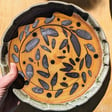
On this episode of Shaping Your Pottery we got to Interview Kyra Miller. Kyra makes some amazingly detailed animal carvings.
Top 3 value bombs:
How to carve animals onto your pottery?
Taking Inspiration From nature
Starting Simple
and so much more
Check out Kyra's Instagram to see her pottery. @kyramillerart
Check out other episodes here https://www.shapingyourpottery.com/
If you have questions about pottery send them to Nic on Instagram @nictorres_pottery
Recommended
Transcript
Introduction and Guest Announcement
00:00:00
Speaker
What is up everybody and welcome to Shaping Your Pottery with Nick Torres. On this episode of Shaping Your Pottery we got to interview Kira Miller. Kira makes some amazing looking pottery using carvings and she makes some amazing carved animals.
Passions Beyond Pottery
00:00:18
Speaker
In this episode you will learn how to make these carved animals and you will learn how to discover your voice and being inspired by nature.
00:00:28
Speaker
Ira, welcome to Shaping Your Pottery and share with me one thing you love besides pottery. I really love plants. I would say that would be my hobby. You know, I do pottery kind of for my job and my hobby outside of that would be plants, taking care of them, building terrariums or propagating them. I'm kind of a plant nerd, I would say.
00:00:52
Speaker
That is awesome. So for those that are listening, we have an awesome episode today. You're going to learn all about carving animals and getting a bunch of detail on them and taking inspiration from nature.
From Drawing to Ceramics
00:01:03
Speaker
Now, Kira, could you share with me what made you start ceramics?
00:01:07
Speaker
Well, I've kind of experimented with ceramics since high school, and I always thought it was fun. I was always kind of in the mindset that I would only do two-dimensional work, like drawing and painting, illustrations. I didn't even consider that I would have a future in ceramics, especially in high school. I was kind of just making stuff for fun.
00:01:31
Speaker
And then in college, I took ceramics one. It was kind of hand building stuff. That was really fun. And I kind of discovered and learned through my professor that you can do illustrations on the surface of pottery. And I was like,
00:01:46
Speaker
Wow, you know, and she showed me all the techniques and, you know, I kind of experimented, started lightly experimenting then. And I didn't really get serious about it until I took a wheel throwing class about, I want to say my junior year of college.
00:02:05
Speaker
I took a wheel throwing class and that kind of changed everything in a way. I was like, I can make functional art. I can make, you know, stuff that people can use in their daily life with my illustrations on them. And I thought that was really inspiring. So it kind of just took off from there. So when you like changed from drawing and painting, how did the painting and drawing help with like what you made today?
00:02:32
Speaker
I would say it gave me a leg up in the style situation. I kind of already have been working on this illustrative style and being able to translate that to the surface. I'm already moving from my illustrative style to ceramics. Some people, they don't get to start out with that so I can see how that would be way, way harder. I'm very fortunate to have had that background.
00:03:00
Speaker
So could you tell me what was your biggest challenge going from painting and drawing to ceramics? I would say illustrating on the form of a ceramic piece it has been the biggest challenge because you know when you're drawing on a piece of paper you know two-dimensional surface it's you know pretty easy you can kind of angle it
00:03:23
Speaker
easier, but when you're drawing on an actual form, you know, it's kind of like you're holding it upside down. You're trying to take into account the curvature of it and it really can be difficult.
Nature as Inspiration
00:03:34
Speaker
So you have to kind of adapt the drawing to the form, kind of go with the form or else if you just act like it's, you know, if you just try to draw straight on it, it's going to look a little strange. So you just got to work with the form in a way, which can be a learning curve at first.
00:03:51
Speaker
You are very inspired by nature. Can you tell me what about nature inspires you? There's definitely a lot of things. If I had to narrow it down, I would say ecology and just how all the organisms in the world interact with each other and their environment. I'm very inspired by just kind of behind the scenes, all the things that go on in nature, and even how we interact with nature.
00:04:17
Speaker
It's always been a source of inspiration for me and I would say I focus mainly on symbiotic relationships and defense mechanisms and just really unique things that animals and plants have developed over time.
00:04:33
Speaker
Can you explain that last bit a little bit for me more? Just like how over time like you know plants and animals or animals and animals have developed like symbiotic relationships with each other to kind of work together and you know survive in the world and I think that's kind of a cool message that you know
00:04:52
Speaker
You know, these two separate species are working together to benefit each other. And well, sometimes it's not always beneficial, but I do like the beneficial symbiotic relationships. I will say that. How does this kind of affect what you are going to make for your pottery? How does how does it affect it? Gosh, I mean, it just I do a lot of nature theme pottery, basically. And like my
00:05:21
Speaker
It's a little bit more, kind of my artist statement and my, you know, with the symbiotic relationships and all that, that definitely is evident in my illustrative work, but I'm still kind of figuring out ways to reflect that in my ceramic work. I feel like I have a long ways to go before I'm reflecting that.
The Carving Process
00:05:42
Speaker
in my ceramics right now it's kind of just I'm figuring out how detailed can I get and what what all can I fit on this vessel and what can I portray. Right. So can you explain to me how you are able to carve your animals and how you get so much detail on them?
00:06:00
Speaker
Sure, basically I throw a form on a wheel or I pinch it, you know, I'll make a pinch pot or just I start with a form that I create out of the moist clay and then I let it dry for like
00:06:16
Speaker
maybe a day underneath some plastic, get it leather hard. And then when it's leather hard, I'll trim it, attach a handle if it's needed, and then I will take underglaze. Well, first, actually, I got ahead of myself. I'll hold the piece up and kind of sketch on the piece. You know, I prefer to sketch directly on the piece in order to kind of work with the shape. So I'll take kind of a dull pencil and just lightly, you know, kind of sketch the animal that I want to do.
00:06:46
Speaker
Then I'll paint the silhouette with underglaze. And, you know, I instantly have to start carving because the window of time between leather hard and bone dry is maybe a couple hours. So I'm going at it as soon as I get that underglaze down. And I'm doing the process of sgraffito, like scraping away the underglaze to reveal the natural clay body.
00:07:12
Speaker
So how do you get the detail into your animals? What goes through your mind when you're given the details?
00:07:20
Speaker
Well, I use a wide array of tools. I use, you know, I have an exacto knife and needle tool. I have just a lot of different carving tools and you don't need anything fancy, but I pretty much kind of go with the flow, like whatever I feel looks good. And I'll look at sketches that I've done or references and see, you know, do I want to add detail in this area or do I want to
00:07:44
Speaker
be more general in this area. It's all just in the moment. I really don't do a whole lot of planning with these. I kind of just get the animal on and I'm just kind of sketching what feels right. I mean, I have a general idea. Sometimes it's important to just kind of just go with the flow and to see where it's going to take you. Absolutely.
00:08:12
Speaker
What advice would you give to help people get started with carving animals or anything? Like you said, going with the flow is important. I also think starting small and
Focus and Technique Improvement
00:08:23
Speaker
starting simple, like don't tackle a crazy
00:08:28
Speaker
detailed animal at first. Do something simple like a snake or like a little hamster. Just try something simple and give yourself some leeway with, you know, the anatomy. It can be kind of a funky shape. It doesn't have to be completely realistic. In fact, the more abstract probably the better. You know, I personally, I would like to loosen up a little bit more in my own style. So I would suggest that start simple, you know, nothing super detailed and
00:08:58
Speaker
Just go from there. When you feel overwhelmed or unfocused, what do you do to get back on track? So for that, I would say I have to distance myself from my studio, from any sort of creating. I have to, you know, I go and get out into nature or I go on a small mini road trip somewhere just to kind of breathe and not focus on creating. I really do have to distance myself.
00:09:27
Speaker
So you know I'll go on a long hike or I'll basically just kind of not think, kind of just relax and you know just usually when I return to the studio after this break I feel refreshed and I also have to remind myself to just take it take one piece at a time. Don't try to don't try to work on multiple pieces at once just
00:09:52
Speaker
just one piece at a time, get that one done, and then move on to the next. I'm a huge, like, multitasker, so I sometimes I'll have eight to ten pieces that I'm working on at once and it's like, you know, that's when things start to get, you know, I get a little flustered and I have to just take a break from it.
00:10:11
Speaker
For those that are listening, we need those breaks in order to kind of rejuvenate ourselves and to also focus on one thing at a time so you're not getting overwhelmed. How did your pottery change over time to what it is now?
00:10:25
Speaker
I would say I am slowly improving my technical skills. I've only been doing ceramics for about four years, so you can imagine my stuff. I still consider my forms and my everything to kind of still be very beginner.
00:10:42
Speaker
So I would say over time, my handles, my vessels, their shape has improved, the comfort of the handle has improved, and just how well my illustration flows with the piece and the shape, I think that's improved slightly. But I still feel like I'm very much in the beginning stages, despite, you know,
00:11:03
Speaker
All I can say is just keep making, keep practicing. That's kind of what has been good for me. How long did it take you to discover your voice with your pottery? I would say probably two to three years into my pottery, just into experimenting with pottery, probably took about two or three years to even
00:11:30
Speaker
kind of figure out that, hey, I want to draw, I want to illustrate on pottery, I want to illustrate on my ceramics. I've experimented with other, like I've just dipping glazes and, you know, and I kind of just two, three years in came to the conclusion that I love illustrating on pottery. And this is the direction that I'd like to continue going in. When somebody is looking at your pottery or picking up your pottery for your first time,
00:11:59
Speaker
What do you want them to feel? I want them to feel
00:12:04
Speaker
very happy and connected to the image, hopefully. I know my artwork will not speak for everyone and not everyone will be able to relate to my artwork, but I know that anyone that loves nature is, I hope to spark some sort of joy within them when they see my work. And if they use it for any sort of functional purpose, I hope that they use it daily and it brings them a lot of happiness. I like the idea of that.
00:12:32
Speaker
Can you share with me how you go about choosing what you're going to make for the day? I kind of just pick an animal. I kind of pick an animal and I do extensive research on that animal and or plant that I decide to depict.
00:12:53
Speaker
create a lineup of different I make a kind of a master list of animals that I'm interested in illustrating and then I will kind of narrow it down to okay like what would be a great grouping of of mugs or what would what would go well on this bowl you know I also kind of have to see the shape first so I do I feel like I do things a little out of order I'll you know throw the throw the form completely just
00:13:19
Speaker
having fun with it, not even thinking about the animal necessarily. And then when I see the form after it's finished, I'm like, you know what? A hippopotamus would look really good on this, or a toucan would look really fabulous on this piece. You know, I just kind of have
Artistic Passion and Style Development
00:13:34
Speaker
to... It really is a go with the flow, kind of... I cannot plan ahead too much, is basically what I'm saying.
00:13:44
Speaker
What advice would you give to someone looking to start carving their pottery so they can get good fast? What advice? To get good fast? Yeah, to get their carvings to look as beautiful as possible, like as quickly as they can.
00:14:02
Speaker
That's a good question. I really would say practice. I'm pretty slow. Each piece takes me several, several hours, so I wouldn't say there's a fast way to do it, but practicing and making as many pieces as possible
00:14:26
Speaker
That's probably the best advice I could give, and you don't necessarily have to keep every single piece. In fact, it's probably best that you don't. Just keep making and dedicate a lot of time and thought into what you're making and making it correctly. Those that are listening, you got to put in the reps so you can start getting good, because sometimes there isn't a quicker way.
00:14:52
Speaker
What advice would you give to someone looking to discover their unique voice with their pottery? I would say don't put a lot of pressure on yourself to find your style right away. I truly feel like
00:15:09
Speaker
If you practice a lot, continue to just make, make, make nonstop. I mean, obviously take a break, but I'm saying like when you're in the studio, you know, keep creating, keep making stuff. Like, and I feel like when you make things that you're passionate about and when you make things that you love and
00:15:29
Speaker
that you're happy about, I feel like that will reflect through your work in a way. I feel like everyone has their own style. No matter what, it's just whether they want to pursue it and keep practicing and working towards it, or if they're like, you know, ceramics really isn't my thing, you know, move on to something else.
00:15:48
Speaker
But I truly do believe that if you're really passionate about what you're creating, it reflects through. I've seen it in my peers. I've seen it with most people I've ever had a ceramics class with. I start to pick up on how they stylize their handles or how they make their vessels. And it's really neat, actually, to pay attention to that.
00:16:11
Speaker
That was some excellent advice. That was really great. So as we're coming to a close here, what is one thing from this interview that you want to hammer home with my audience?
00:16:21
Speaker
Don't worry, do not worry, don't stress about your style because I promise you, you might not see your style. You might not see it but I promise you that other people are seeing it and I feel like in a way your style kind of develops before you even notice it. If you look back on your work you're like, you know, as you're making the work you don't see it but when you look at your work in a grouping or you go back and look at old pictures of your work,
00:16:46
Speaker
You can start to notice a style, in my opinion. I feel like just keep creating, document your work, and do some deep thinking and research on what you want to convey to the audience with your piece. Kira,
Connecting with Kira Online
00:17:03
Speaker
thank you so much for being on here today, and where can my audience go and connect with you?
00:17:08
Speaker
Um, I have an Instagram at Kiera Miller Art. I also have a Twitter with the same handle. I don't really post on Twitter as much, but I have Facebook, Kiera Miller Art, and also KieraMillerArt.com. Pretty much just type in Kiera Miller Art and you'll find me.
00:17:31
Speaker
We hope you enjoyed this episode of Shaping Your Pottery with Nick Torres. Do you have questions about pottery that you'd like Nick to answer? Send them to us on Instagram at Nick Torres underscore pottery. We'll see you next time.