Transcript
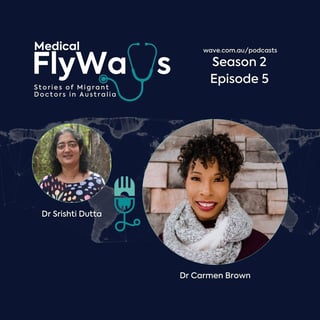
Speaker: Medical Flyways, the untold journeys of migrant doctors in Australia. Welcome to the podcast, Dr. Cashel. As you're aware, I am a GP who, like you, has trained part of my training in the UK. So it was really great to reach out to you. And when I did start looking, I realized that our timelines were not that dissimilar either. So I see that you're trained in Edinburgh and have been working in Sydney since 2012 as a GP at Avalon Medical Center with a team of JPs and ah RNs. Have I missed out anything in the introduction?
Speaker: No, I'm a GP just like you. I love being a GP. I came out to Australia in 2012. I completed my GP training in Edinburgh in 2005. I had been at university in Dundee in Scotland, but obviously my accent is actually Northern Irish. I grew up in Belfast in Northern Ireland. So I've been around. I came out to Australia in 1999 for a year and worked in Brisbane actually.
Speaker: So that meant that when I came back in 2012, I could work anywhere. ah interesting. Yes. Was that hospital-based role at that stage? Yeah, it was just like second year out of university. So had a year and based at Princess Alexandra Hospital. Is that the right name? Is that what it's called? Princess? That is still called Princess Alexandra Hospital, albeit a few of them have changed names since that time. You're right. So yes. And was that initial experience helpful in making the decision to come back to Australia?
Speaker: No, I think that was just something you did. Lots of people what came over from the UK sort of after their first year of training to, you know, have a different experience, have a bit of a working holiday. And I hadn't really intended to come back. So it was a bit of a random decision. In early 2012, my husband and I were sort of looking for a new adventure. And somehow over the course of an evening and some glasses of wine, we were suddenly going to Australia from Edinburgh. And nine months later, we were in Avalon in Sydney, which is... Beautiful. There you go. Yeah, beautiful. para I must admit, Nine Munsters in the scheme of things sound like it was not too long because we hear other numbers. As a question following from that, what made you pick where you are now?
Speaker: And what was the kind of challenges, if at all, in the process coming over? so I can't remember what forum it was back in those days. And in 2012, it wasn't Instagram or TikTok. it was an email.
Speaker: Was it email or Facebook? No, there was Facebook groups. There was definitely a forum where we were sort of trying to work out where we wanted to live. We knew we wanted to come to Sydney. One of my best friends from home was living in Manly. She still is there. So we were keen to sort of go somewhere where we had a bit of a personal connection. And Avalon came up as a beautiful place to live because it's got quite a small community and primary school. We had two boys at that point and the school was raided. And then I got a job through Wavelength.
Speaker: But the job was in a place called Blacktown, which is actually probably a 90 minute commute from Avalon. Although the practice owners told me it would take 40 minutes, ah maybe in a jet, not in a car. And then, so we'd already decided to come to Avalon. I had a job, you know, in West Sydney, and then suddenly a job appeared randomly in an email, I think, to work in Avalon. It was, and it was perfect. And because I was able to work anywhere, I could accept it. So Wavelength did all the paperwork for me. I actually found it a pretty easy process, to be honest. I already had my membership of the Royal College General Practice in the UK. So we were at that point, I think it's changed again. At that point, it was very easy to transfer that across. And yeah, so apart from getting visas and they organized the process, it was really easy, I felt. You're packing up the house, selling the house, moving a family of four around the world, dealing with my mother having a breakdown that I was leaving. That was the hard part.
Speaker: But Wavelength made the paperwork very easy. The logistics was made easy by them. So powered by Waveland for logistics. That's also common between you and me, I suppose, in that sense. Yeah. Because that's the part that they've supported me with in the podcast as well. So yeah, there is that commonality.
Speaker: I'm intrigued because for me, and it is strange how similar our journeys are, because I chose to work in a small place outside of Brisbane called Samford Valley. Funny enough, I had only one child at that stage and primary school was a consideration. And I had trained in the yeah UK in the Peak District. So I don't know, it felt very similar in some ways. They are not quite that similar, even just the weather. So there's that. I had misunderstood one of the clauses in the legislation around the moratorium. So I didn't actually realize I didn't have to work rural. So i had picked a location that was considered rural.
Speaker: But was Blacktown just one of the jobs? Or was there something else that initially made you think of Blacktown as the place where you'd work? No, that was just a place where they had a job. And there was, I think, somebody who was working there at that point who was very charismatic. He was an expat who'd been out for a year. So he did sell it as a wonderful job. But really, I do think that where I ended up is probably what we call, remember the Carlsberg ads? Like if Carlsberg could make, like getting something that is the epitome of perfection. I work in a sort of four full-time equivalent GP practice in what really is still like a small village. It's 200 meters walk to the beach and there's a lot of multi-generational families. know I look after great grannies right down to great grandchildren. It's like the general practice my mum would have practiced in the 80s and 90s. And so really, I think I was very lucky to end up in the job that I did. That's amazing. Definitely. i don't think Blacktown would have been quite the same experience. You know, my practice population is reasonably well off, so very health literate and very health motivated. And that does make a job a lot but eight easier. I worked in quite deprived areas in Edinburgh, so it's very, very different.
Speaker: It's a question, what do you think is similar in terms of the Australian healthcare system and the values in the health system to what both you and I kind of trained with in the UK? What do you think is, I guess, the commonalities that allow us to translate the skills that we pick up when we come here?
Speaker: General practice training is phenomenal in the yeah UK. I do feel really, really lucky, but it was very, very focused on patient-centered, you know, empowering the patient with information. you know, that was our whole kind of education around the consultation model. You know, I think we learned about 20 different consultation models, but yeah and I sort of laugh because you kind of forget about them then you go oh that's what I'm doing but they really do it is really about putting the patient first so you let the patient talk when they come into the room you hear what they're saying what their concerns are so you're not just addressing a symptom you're really putting it into the context of what they're worried about there's was a period of time in Scotland certainly where I lost that because it was so pressured you know trying to consult in these very short and appointment times, which obviously a lot of people do still do in Australia, but it can be very challenging to provide that patient-centered care, which is what we're aiming for when you've got short consultations.
Speaker: So very similar in putting patient first. And that's really how any practitioner should be working because you know it's about what that person needs and putting it very much in their site you know social, psychological, biological context. And so I think that is very similar. We suppose we act like gatekeepers for secondary care, so you know we're able to refer on.
Speaker: When I worked in Edinburgh, we still had a very highly functioning secondary care system. Even you know working in app-deprived practice, it was very easy to get support and advice from secondary care. it was still you know I don't know Edinburgh, don't know what they were doing, but it still worked very, very well. So patients weren't waiting for a year or 18 months to be seen by a specialist. They were usually being seen within a few months.
Speaker: And we had lots of e-referral systems where you could get immediate advice. advice So a very, very effective ecosystem, I think, is different to here because a lot of secondary care is private. There's obviously is this two-tier system of public and private, whereas in the UK it is largely publics. Well, it was then, it has changed, but that also means that there is still a reasonably and accessible cohort of specialists. You know, I've got very good relationships with my local private specialists who are very happy to give advice. And I think because the private system is slightly protecting the public system, then you can still access, you know, advice in the public system as well. So those, certainly that patient-centered care, that gatekeeping, but also a very good relationship with secondary care, I think is similar. Certainly where I'm working, I don't think that's the case throughout Australia. i think there's some places where GPs are quite isolated and don't have access. Obviously the size of Australia, the geographical spread can make it very difficult for people working in rural and remote places and who are also trying to manage a phenomenal amount of work in primary care. You know, what GPs do in Australia is so much more...
Speaker: Yes, you know, GP obstetrician, GP anesthetist, that doesn't really exist in the UK, apart from maybe out on the Scottish islands, you know, for the majority. Absolutely, it does. the You know, that's the only one that compares for remoteness, I think, to Australia. Yeah, absolutely.
Speaker: Not everybody knows that, by the way. And when I speak to people and talk about the Highlands where they advertise for the one GP who's going to do everything, they're like, oh it exists in the UK, yes, in that one place. And the Isle of Man, I think. Yes. Isn't it? The Isle of Man? Yes. yeah I actually don't know what and jurisdiction the Isle of Man is under.
Speaker: Pretty sure I saw a job advert at one stage. That said, one GP, he should be able to bicycle around or something, it said. so There are some limitations to transport as well. yeah I guess the Australian equivalent is being able to fly. yes yeah So yeah, similarities. What values do you think, like for me, as you described it, one of the things I have noticed is patient choices different between the two systems. And not to say that one is better than the other, but they're probably aligned with what the system offers in that context. Do you feel it helps in the Australian context and your experience to have that choice?
Speaker: I mean, I think it does. I guess it depends where you work. My patients do you have, in general, the finances to be able to pay for private care, to be able to afford to access private radiology. and even and And I think that really makes my job a lot easier. So I know back in the UK, I went back and locummed for a year in Northern Ireland, 2017 to 2018. And Northern Ireland in terms of the UK has had less funding, probably one of the lowest levels of public funding for the whole of the UK and primary care there is really struggling. so you know, patients then, and it's worse now, were waiting, you know, maybe 18 months to see a gynecologist to get an ultrasound scan or two years to see a urologist with persistent blood in the urine. And therefore the GPs are managing so much medicine that really should be in secondary care. So I don't have that. I'm not trying to manage in traditional medicine. I'm not trying to manage things that should be managed by secondary care. And I think that access, particularly to radiology, i always wonder if the UK invested a bit more money in radiology service and imaging services. It's transformational. You need to easily be able to get a scan and reassure somebody that the recurrent headaches are not a brain tumor you know taking that anxiety out i think that's always a classic one we would quote but certainly because i do a lot of hormonal health care it's very easy for me to get you know pelvic ultrasounds know even a deep infiltrating ultrasound to look for endometriosis and i know that that can still miss it but you know being able to get imaging for me if i was going to choose one thing to make dental practice easier in other countries it would be that real-time access to good imaging which can really determine who needs to see a specialist and who you can reassure and remove that health anxiety and actually just you know create a new treatment plan that's much more appropriate.
Speaker: I noticed that you mentioned one area of clinical expertise, but you have others as well in terms of when I and looked at your bio for child and adolescent health, menopause or women's health. Are these things that you've been able to blend together in your work in Australia or have you had to kind of make compromises in that regard?
Speaker: I still very much do sort of create little degree of care. So I look after everything with it, but with a focus on, well, I would see more women and girls. I do have a special interest in perimenopause and menopause care, but a lot of my women in their 40s and fifty s want to bring their kids to me. I also still have, you know, a huge court of older adults and I do see some men as well. I think through upskilling in perimenopause and menopause, it slightly shifted how I look at medicines. I look at everything through a much more hormonal lens. I look at a lot more disease prevention.
Speaker: And I think, you know, there's so much commonality in medicine we've been taught in these very siloed systems, but actually, you know, the same certainly health prevention interventions. tend to apply to everything from heart disease to dementia to cancer you know to mental health it's the same stuff it's eat good food move plenty get enough sleep create boundaries in your life you know the intersection of trauma and how it impacts everything and and then more recently i've become very interested in hypermobility and collective tissue conditions which i was never taught anything about there's like half a page on ellers danlos and how common hypermobility spectrum disorders are and then they are very much a
Speaker: associated with an overactive immune system, this condition called mast cell activation, and then the dysautonomia, the postural orthostatic tachycardia syndrome. So these are things that are like in this chronic complex illness world, which is really interesting. And it certainly seems to be coming to the fore in mainstream medical and education. I think there's been a lot of misdiagnosis and underdiagnosis that have left a lot of, particularly women, you know, without a diagnosis and just left in that it's just all in your head, you know.
Speaker: I think starting with the hormones and starting to look at systems, you know, the whole ecosystem of the body, as opposed to separate systems has been a really wonderful way to change. And then you can just apply that framework.
Speaker: to everything it just suddenly like this this is a much easier way of doing medicine so does it doesn't matter if you're you know a 14 year old boy in with acne or you know a 27 year old woman in with postnatal depression or a 75 year old lady who's struggling with postural hypotension you know there's those that that kind of system approach has really transformed how i practice medicine i find it easier and a lot more interesting now with that new lens It's probably the first time I've heard someone describe it in that way, but it kind of makes sense in that even when you're doing general practice, you're looking after the whole person. You're looking at it as a, as you said, one environment. When you move something, as they say, in the world of consciousness, energy is neither created nor destroyed. It just moves from one place to the other. so I think you're right in that way. And to me, it sounds like you're just simply expressing your...
Speaker: expertise at much higher and higher and higher levels the way you just described it what does that feel to you like you're a GP with extra superpowers almost yeah almost does feel like an awakening I keep saying you know for the first 20 years of medicine I was in the matrix and just like you know here's a guideline let's try and squeeze you into that guideline and you know and then suddenly realizing well no these are ecosystems these aren't arms and legs and all joined up I remember somebody when I arrived in Australia saying do you practice holistic care and I was like yeah Of course I do. I can't really offend it. Yes.
Speaker: No, of course I do. And I do think, you know, GPs are the specialists in whole person care. That's something I'm really passionate about. I think there's a lot of GPs who, you know, we talked about this before, who become specialists in, you know, dermatology or mental health or whatever it is.
Speaker: But it's critical that we have specialists in whole person care. This siloed medicine, it doesn't serve the individual well, because exactly as you said, when there's a problem in one area, you know, if you're burning down the rainforests in Brazil, you know, it's going to affect the coral reef in Australia, you know, and the human body is exactly the same. And it's because the same things impact every single system.
Speaker: And the same things can also improve the quality of cellular function in multiple systems at the same time. So I do think it's so important that we really keep people in general practice, you know, but maybe just shift how we look at medicine as opposed to just, you know, here's your blood pressure. Let's make sure we get that to target, which was in the yeah UK. So it was very target driven. and And back to your question about the differences that I don't think serve patients well, like let's get that blood pressure down there. You know, have you ticked 25 boxes for you know 74 conditions and that's only way you're going to get paid as a practice although i understand that's trying to achieve better outcomes doesn't really serve the person in front of you well so i love that in australia we have that there is still more flexibility to really you know create ah a way of practice that does serve that whole person so well
Speaker: Completely. And I do think that giving patients choice and empowers that ability for for clinicians as well, because we don't have to fit ourselves into any particular mold. We have to just serve the patient in front of us, not other masters, as I call it. And in terms of, you know, you've got so many feathers to your head. So what other areas like a patient education or training and education, is that an area that you have got involved in or had experience in at all?
Speaker: I sort of upskilled in perimenopause menopause from about 2021, realizing how abysmal my knowledge was after a patient came in and asked me to prescribe her testosterone. And I was like, I have no idea how to do that. Is it even a female hormone? And she quickly corrected me. and and even offered me a course that I could go and upskill in, which was wonderful. And that's the other wonderful thing about living and working in the same place. You know, you can't hide, you can't go off and sit in your ivory tower. These are the the women particularly that are teaching at your school or who are running local businesses or who are your local MPs. So it's really important that, you know, I do my job really well because if I don't, then it's going to have such a ripple of effect. And we know that in women's health in general. Mineralism Society and Families Together. So at that point, then I started JobSkill. I got connected quite a few people through Louise Newsome in the UK. So I've ended up then my business partner, louis and Emma Harvey, is a GP up in Ballina. And together we set up Healthy Hormones, which is a medical education platform, which is now an app. And we have both a side for healthcare professionals of all disciplines. when We've got specialists, we've got GPs, we've got psychologists, You know, dietitians, physiotherapists, the whole whole gamut of people who are working, looking after women. And then we've got a second side, which is for the general public. And then in between, we've got a list of menopause informed practitioners. So we really for our clinical colleagues, one is to create that ah space where you can discuss cases and share information because so much of women's health has been so poorly researched. We all know ourselves. We got very little teaching in women's health. I basically realized I got taught about how to treat a man, a white 70 kilo man. And then, you know, there was you know an R on women. And, you know, we are different. Diseases present differently in women. And there are a whole range of diseases that are much more common in women. You know, everything from autoimmune disease to these kind of hypermobility connected and connective tissue conditions.
Speaker: So that forum, I think is fabulous. And I just wish that was there. I would love it for diabetes. I'd love to be clicking on and having a chat about diabetes to people. So it's in your pocket as an app. So that's our medical education. We do fortnightly lives. We had our first conference last year.
Speaker: we had about a thousand people there face to face and online and we did a huge event at the Opera House for the general public. We had two and a half thousand people there listening to some of the biggest educators in menopause, which was phenomenal. It's still the largest public menopause event in the world and we had it on the Opera House stage. So that was pretty cool. So we're big, very passionate. in the education field and also trying to cut through a lot of misinformation for women. There's so many people educating, some fabulous educators out there, but there's a lot of people who realize that menopausal women are a massive market to sell to because, you know, women in midlife do make the majority of and the household purchasing decisions but they're also in a time of hormonal flux that can really impact their health so really trying to support women to navigate through this maze of sharks of people wanting to sell them a lot you know i'm sure you've had plenty of patients coming in with their bag of supplements going you know i had to remortgage my house and i still don't be any better and you know everybody's got their own health journey but really trying to cut through some of that to make it easier and cheaper
Speaker: I kind of feel like I should read this out to you because yesterday or one of these days I found this phrase. It was called Wayfinder. Have you heard of this before? No. A deeply intuitive person who has the courage to navigate through the chaos and confusion of darkness and division, who refuses to accept the dysfunction of the status quo and it devotes their life to exploring a more joyful, harmonious, cooperative, created, a sustainable existence of Earth.
Speaker: Oh, I love that. Oh, you need to send me that. I need to have that written down. I will send you that. I'm going to put that on my wall. This is absolutely one for the wayfinders here. And so what do you think, and the part of me that asks this question is you came at a similar age as your children. So, you know, we've had this life in this country. We've seen the, you know, a mix of good, bad and our life experience, so to speak. If you had something to wish in healthcare in the next 10 years, what do you think that would be? And it's a big question. I'll give you a couple of minutes to have a think, but because our kids are going to be at the receiving end of this healthcare system and probably are already, but even more so as adults in a few years.
Speaker: Well, I think in terms of overarching themes, we need to really support a system that allows healthcare professionals to remain curious, compassionate, and being able to communicate and collaborate with other people. So our current system, I think there's a lot of medical trauma in our training. A lot of us get burnt out. And when you're burning out, you really can only deal with what's right in front of you. And we know that, you know, there's no space left for creativity. You're in fight or flight mode as a practitioner.
Speaker: You know, never mind the per patient that's struggling to navigate the system. But as doctors, you know, if you're trying to see, you know, six to 10 patients in our and some systems, and I have a lot of issue about how Medicare rebates doctors because it does disproportionately penalize female doctors who tend to do longer appointments and it disproportionately penalizes women who often have complex conditions.
Speaker: I think we know there's a huge level of burnout and I think the system is really crushing that curiosity and compassion that we all went into medicine with in pocket loads and then came out with a teacup full. And you know, after you've been working for a few years, there's maybe a teaspoon left. So I think really...
Speaker: to change that system. And the ways I think that we can do that would be one given, I think a big thing is that we need to put female physiology into the medical curriculum because we're all coming out untrained to treat 51% of the population properly. And that's not just as GPs, that's a cardiologist, a rheumatologist, an endocrinologist, a neurologist. Women are not small men, our physiology is different. So I think putting into the medical education how to treat 100% of the population, not just half, would be a good start. I would like to have the manual of medicine for the majority of my patients as opposed to discovering you know 20 years into the job that I hadn't actually been trained and suddenly having a panic to go and upskill and only knowing that because I was working in a practice where i had time and you know i was able to still be curious know and I got maybe to that was that stage of reinvention and rewiring in my own perimenopausal brain and so I think
Speaker: really, you know, changing the medical education system. I think also really teaching our doctors how to maintain that compassion. So that also um means that we need to teach doctors how to take care of themselves. I think there is a shift, you know, but we still know there's a high significant level of medical bullying. And there's also quite a high level of assault, which even includes sexual assault for females working in surgical disciplines, which, you know, so there's a real culture still that is...
Speaker: a very unhealthy hierarchy that doesn't allow people to ask questions so their curiosity again is being squashed and belittled or made to feel stupid for asking questions and the only stupid question is the one you don't ask yeah I've heard that one I'm sure you remember plenty of instances where you if you just being able to ask a question a patient might have done a lot better and I'm sure there's patients that would have died under my care as a junior doctor because I was just too scared to ask you know a senior for help because it was seen as a weakness so really again coming always I think coming back to that curiosity and compassion but also putting into the system proper education empowering you know young doctors to be confident in their ignorance it's okay not to know and I think that's still something and as AI and
Speaker: Patient education improves and social media and there's a lot of pushback about patients coming in with their folders and their Google search. I have no issue with that. And I think that makes it really easy. So a patient comes in with a Google search. I'm like, that's fine. Let's work through it. You know, there's a good chance you've found something that I don't know because I know I only know a very small part of medicine. have no arrogance about that. So I think again, and that's about the compassion. It's like, you know, and not being ah being confident that you don't know everything. It's okay.
Speaker: I think there's a lot that goes back to those kind of themes. As you say, I'm amazed by the one C that you haven't mentioned. Noting the two C's in your name is... Courage, yes. Because you have not boldly just said there that there's somebody who might have died because i didn't ask a question. I challenge you to find another person who would be able to say that on air like this in a public space. So thank you for saying out loud what most of us think but can't say. Thank you so much.
Speaker: Yes, you're right. I'm going to add courage to that. And I think it's taken a lot of courage to do what we've done with healthy hormones. We've had huge pushback from the medical establishment. We've had some really unpleasant things happen to us. And you just think, you know, we're not doing this for the good of our own health. This is really for the good of health in general. And I think when you want to be a changemaker, you do have to have a level of courage and conviction. And you also need the support of a community. I'm surrounded by some, you know, quite impressive women. You're not necessarily in medicine who really are champions for, you know, pushing you to you know really ah believe in yourself but also just maintaining that compassion for yourself too for yourself too yes you directed inward every so often absolutely yeah that gave me much more than what I would have ever thought you would so thank you for that and I'm going to finish up with this last question which is if you had to say something to yourself that in intern that didn't ask the question or the person that was coming to Australia or any previous version of yourself what would that be that you'll be happy with in 20 years time
Speaker: I think just always be up for stuff, like just be open to new challenges. Because I think as humans, like novelty and change and pushing yourself is really, you know, you really can find yourself in that, you know, and I'm 51. Like I never thought at 51 I'd be living the best life. And it's, I just love it. You know, I love my job. I love my job more than I've ever loved it before. i love the other job that I have in and healthy hormones.
Speaker: I'm still a mom of three kids. I love that. I play soccer. I took up soccer at 39. I love that. So, you know, there's plenty of things that I get annoyed about and get, you know, I'm tired and, you know, with too many things to do. But like there's, yeah, I think just be open to new challenges because you'll just find new paths and new people. And yeah, it's just, I just love it.
Speaker: Sounds like you're having a lot of fun. So keep having fun while you're doing all of that. you know Yes, yes. Oh, that is amazing. Thank you so much for giving us your time and your energy. And that's what I'm feeling at the moment. Thank you so much. And I definitely look forward to meeting you in person whenever the universe you'll can aspire to make that happen. Yes, definitely. i would love that, Shresti. Thank you so much for having me on. hope this ah inspires lots of other people to come to Australia. It's a brilliant place to work.
Speaker: It is indeed. Thank you.
Speaker: Medical Flyways, the inspiring stories of migrant doctors in Australia. We're always on the lookout for inspiring stories from migrant doctors in Australia. If you know a colleague whose story deserves to be told, visit wave.com.au forward slash Subscribe to this podcast to make sure you never miss another episode.