Transcript
Speaker: There's going to be some salty language in this episode. So if you have some sensitive ears nearby, forewarned. I'm Jeremy. And I'm Tyler. Welcome to GoodPing. I've been looking for repair in this industry for a long time, in this media industry. And I've been looking for repair in this system. I want the world to be a better place. I keep trying because I believe in repair.
Speaker: Part of what I can give is interception. I can intercept your trajectory. i can just put a little bump in it and maybe you'll orbit a different way, right? Instead of going straight for where all the other fucking stars in the galaxy are, go start a new galaxy, motherfucker.
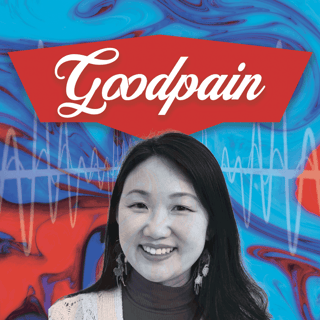
Speaker: In today's conversation, media veteran educator and artist TK Duteste joins Jeremy and I to explore her grueling and rewarding creative journey. For over 15 years, Duteste lived a dual life, working exhausting shifts as a pediatric home care nurse to survive while chasing creative show highs, hosting independent hip-hop showcases and broadcasting on New York's WBAI.
Speaker: While the clinical healthcare machine and the subtle isms of gentrified Brooklyn wore TK down, TK's audio work kept her spirit alive. Hoping to escape the grind, Dutess transitioned into professional podcasting, only to find the podcast industrial complex. replicating the same exclusionary corporate structures of legacy media. The ultimate heartbreak came when she witnessed peers of color replicating these toxic, profit-driven systems, which eventually broke her and forced her into a needed sabbatical.
Speaker: Dutess found healing and a pure space of control in visual arts, specifically resin crafting. And today, Dutess uses her hard-won wisdom to act as an interceptor for the next generation. TK launched her own media company, a boutique audio house named after her grandmother called Philo's Future Media and produces her own podcast, which everyone should be listening to, The Secret Life of TK Dutess. We will waste no more time.
Speaker: Buckle up. This one's a ride.
Speaker: My memory of of early expression, probably like elementary school, um you know, like, I don't know, trying little different, different like drawings and stuff like that. And also like ripping out things out of magazines and putting them on my wall. But like in a way that was kind of extreme, like, you know, like it on TV that like the coming of age movies where the girl or the guy kid puts something on the wall, things on the wall. there were things all over the wall, not just like, this is a curation. No, it was crazy. i was trying to say something like when you enter this room, you know, must knock, give me privacy and look at the breath of my brain and the things I like. And I, maybe y'all are, you know, like tapping into something where I think I had something to say early and didn't know how to say it.
Speaker: And then those things, drawings from school and bringing them home. i distinctly remember doing like a piece of graph paper and every square inside the graph paper had its own little thing and showing it to my mom and her being impressed, but also on the phone at the same time. So it's like, oh, good job.
Speaker: i yeah, yeah. Yeah. So like then realizing like, OK, is this what am i do? I like doing this even or did I just want to show my mom something cool? You know, so like there's a quest for validation that I think started to repeat in my life, you know? Yeah. That would be the earliest time. And then I went to high school and did the school paper. And that was like another way of expressing TK has something to say. I hadn't discovered this version of me yet.
Speaker: You have something to say and then you're looking for means for saying it in a way that has some other things that also feed you. They validate you. Yeah. So you're looking for these means. Now I'm going to say it through the lens of the school paper. Yeah. There's a conforming ourselves to the tasks that are at hand to to this is the techniques. This is the craft. Yeah.
Speaker: I have something to say, but I'm allowed to say it in these specific ways as part of the best practices of the medium. Per the rules, right? And, you know, that's like part of, I mean, that's part of life. You got to learn how to do a thing so that you can break the thing and and and then make it your own. And when you're first starting, you don't know that. So, and you think everyone older than you, everyone with a title knows better than you. So you don't realize like that you could step out of the box. and that that's an option until someone shows you. Once I started to realize in terms of the world and how systems work, that it's all fake. You know, like once I started to go like go there, then that's when I saw myself even just the smallest ways change. And then the change is what brought me the reward, right?
Speaker: Not the doing it the right way. At the end of the day, sure i started writing for the school paper and I would bring other young people in. um I went to school in Long Island and it was like that middle time, right? Like 1995, 96.
Speaker: ninety six That's like the second wave of Black people in New York City moving to the suburbs. So you're still a minority group inside of a majority suburban white town. So there's still like not a lot of people that that look like you, but there's more than the first group. I realized early, A, I was a representative for people to feel safe to come write on the paper. So next thing you know, all these city kids started writing for the suburban school paper.
Speaker: Then realizing that's a way of breaking things, then writing stuff. And by the end, the reward for me was by senior year, I got to be the editor. You know what i'm saying? So I'm like, all this stuff, like doing it the right way. And also who like the the teachers that are doing those afterschool programs, I don't know if they care. So they could have just been like, you seem dedicated.
Speaker: but But what I realized is um doing it my own way ends up being more rewarding than any other way. And let me just keep going. But it took me, I think, till right now, my adult adult.
Speaker: adult adulthood time to realize like I could do my whole life like that. That's really empowering. Finally. but yeah Yeah. No, I think that's right.
Speaker: That type of quest does not come readily and quickly. It's, you have to test out a lot of the the parameters, go down the path that's presented to you and try to conform. And then you realize, yeah, it's not worth that conforming. Yeah.
Speaker: What hate to go back, but you you kind of stopped us at high school here. How did you express yourself? How did you explore creativity in your college? College is when um that form of written media turned into using my voice.
Speaker: um school School newspaper turned into school radio station, college radio stations. And I'm just so thankful that like I came to that at a time where it's different. It's different. Like whatever the kids are doing now, um bless them. But I got to be at that college radio station with the tape decks and all the posters and like just ragtag. I'm like, I feel so lucky and blessed to have had that experience, except except for the fact that
Speaker: I went to a city university and the culture of college in New York city is very different than anywhere else. So I had, it's like, you're just a person with a day job that goes to school. Like you're not like a person ensconced in like the greenery and the quad. And like, I yearned for that experience. So I got that little microcosm in the radio station because that's what my brain said. Wow. You know, this is what, this is what the cool kids are doing. And And that was probably some real nerdy shit. but
Speaker: But I thought that's what the cool kids were doing. Yeah. So then it became a vocal expression of sharing music, sharing thoughts, like little little by little sharing thoughts.
Speaker: What's going on around me in the world? OK. And then also then realizing, again, no one's watching. No one cares. The three people that are listening, they already like me. i can do I can change it. I can do whatever I want.
Speaker: And then I started doing it again, shifting, breaking. And it only takes one person to tell me I'm good at something to for me to pursue the next thing. So then we went to broadcast and then, you know, yeah, life is crazy.
Speaker: That dance. Hey, I want this experience. Getting into it, building your craft, realizing that you're building your craft within the box. Nobody's listening anyway.
Speaker: You're not getting the validation in the in these ways. And then all of a sudden it's like, okay, I'm just gonna yeah fuck it. I'm just going to go. Yeah. And then the nature of the conversation changes of feedback that starts coming up.
Speaker: We like what you're putting out there. We like this. How does that hit you when the feedback starts coming back and saying like you being you? We like that. How does that start to influence you in how you show up? Definitely a confidence builder. You know, um you you know, you you can relax a little. Your shoulders go down because you're like, OK,
Speaker: cool, I know how to do this. The metrics people say, I know how to do this. Like, unless a bunch of people come up to me and say that they're disturbed or I said something crazy, I'm at this point, I haven't had that feedback. So I can relax a little bit into this.
Speaker: the The other worry, though, for a young person paying their own way, the margin of error was so slim. There was no plan B, right? Like um plan B, I was already doing it nursing, even though I was in health care at that time. um It was allowing me to go to college.
Speaker: Right. So it wasn't the thing I was going to go do instead of college. So I was like, I better be good at this or I better do my best at this so that I could say I gave myself a fair shake. Because I at that point, I wouldn't even classify myself as good as something. It was just some people were telling me that they thought I had aptitude for. And I just said, well, like, let me pursue it because this might be it. Right. Like this might be the way I can like sustain and live my life.
Speaker: okay, now where would this thread follow me? And then I eventually upgraded to broadcast in New York City, which is very hard. And I did it in a very unofficial way and a very unpaid way, um you know, on Pacifica Station, WBAI. And I just hoped that someone official would hear me one day or I would, I could just have, I would just have to make something out of that opportunity. um But there were more rules there than I've ever had before because even though maybe we just reach in New York, New Jersey, a little bit of upstate and all the prisons, shout out to, I got prison, I got a couple of prison letters. Right. So that's when the metrics be metricing, right? Like when you get the letters from prison, you know, hey, sister, I heard you on Friday night. And I was like, yes, I made it. Prison. um But they have rules. The FCC, you can't curse. You got to double check yourself. If we're talking about, you know, if we have situation. political candidate on. We have to have the other side on because all of these journalistic things that, you know, kind of fell through the cracks in college. You just, you just doing credits. I had to now learn the process, but because that radio station was so left and so community run anyway, it was already a broken process where within those rules and parameters, long as I don't say the seven dirty words, I'm
Speaker: George Carlin and present factual information. And this group of people that I'm doing radio with, we all follow the same rules. We can do whatever we want. And then inside of that box, again, another bending of the process of the forum. And each time you're moving through this, the stature and the validation starts to get bigger.
Speaker: But so do the stakes for you. Putting food on the table for yourself, the responsibilities that come for just living and surviving, they also get bigger and bigger. Nursing is providing that in a big way on the expression side of things. The ramp wasn't as aggressive. So there's almost this divergence, this splitting of self. This is taking more over here. It's what's keeping me alive. It's keeping me going, but it's also kind of killing me.
Speaker: Because something else is dying. And then over here, this thing is not, it's not paying the bills. It can't carry the weight of what it means to live, but it is keeping me alive in a different way. yeah What is that splitting like?
Speaker: Yeah, let's get into it. gotta say, that was, it was a tough time and a long time too because it was never a fork in the road obvious thing. It was small negotiations and also like running two programs on your computer concurrently.
Speaker: So every day I'm, i I'm this, right? I'm toggling, I'm toggling. So literally from 11 to seven or whatever, sometimes I would do 16s, right? Or 12 hour shifts. Like I would do that by night.
Speaker: That was my preferred shift. Then I would daytime go do something in audio, something in expressive. My medium for a long time was only audio. So it was either that show, it was either my own stuff, then it was learning how to do client work. I stayed in nursing all the way till I got to professional podcasting because there was no plan b right? So it was just run these two programs and it's exhaust it was exhausting, but I was an age that you could kind of still do that and and not feel it. But so, and also, okay, I said exhausting three times. Depressing is really also like the the the like main thing that came up because I'd be doing...
Speaker: on Friday nights, I'd be doing the show. And then from the show, people would be like, well, if you host a radio, can you host my live event? And then I became i became a person in the independent New York City hip hop scene. And I was one of the preferred people that they would call to come host the thing. And man, when I experienced that high, right, being in front of people, because that's more immediate, right? It's faster than a prison letter, y'all. Twitter got invented while we were on the air at WBAI, but still, even then, like, oh yeah, tweets, great. You know, yeah we weren't a big show, so that was negotiable in terms of the gratification. It putting me in front of people turned me into, like, my brain was like, there it is.
Speaker: This is it. You know, like even the act of preparing for it got me the the journey like, okay, so we have a show. There's a one feature, three openers. I'm going to listen to a I have to have something, the perfect intro for each person. Like I put so much work into it, y'all. And then like...
Speaker: getting dressed the day of what's my outfit. Because like in, in, for me, when you're building a, like when you have a show, a team, a group of people, everything is as good as, as the person that does their job. So in my head, if I do my job really well and have you, the experience of you, um, of this show, if you took me out of it, there would be a void in my head. Right.
Speaker: Because if I, you just say, I got two guys, Coming to the stage, that's not fun. But if i if it's like, yo, my man Tyler from Good Pain, boop, boop, boop. Like, you know, if i give you a good little, you know, like, then I i was like, oh, I'm important. I'm important.
Speaker: I'm important to the process. And also, yeah, sure, they could do this without me, but it would suck. And and then people respond to that. So I would be sky high. Like, no joke. I used to call it show high. Like I would do activity. The event would be over. They give me my little fifty dollars if I'm lucky. I would go home sky high, y'all. Eat a sandwich and crash. Yeah. And then go to work on Monday. Like, what the fuck is my life?
Speaker: The higher you get on this thing that is feeding something for you, it also is juxtaposing against I've got to go to this job that you don't get that. I'm not getting that.
Speaker: I'm not getting that. And and now I've got to dissociate. Yes, that's that TK over there. That's a more authentic version, maybe even. And this one is the one that is a machine. Yeah.
Speaker: And that's what healthcare care is. It's a machine, right? Every two hours, you document, you check the patient, you get the vitals, you document, you check the patient, you get the vitals, you document, you maybe report to someone, have a snack. Okay. Now what do I do for six more hours? You check the, you know, it's a machine and it it was wearing me down. And then also, of course, that's also a place where I started to learn dynamics, right?
Speaker: I already saw the world a certain way, not a certain way, the way it is. Sex is whatever. Racism. All that all that stuff. All that stuff. I started seeing that early, but I didn't. The way the experiences came to me were also through work. The system is encouraging that behavior. It's embedded in the system. It's not software on top of the hardware. It is the hardware. It's the hardware. And it's just, you know, you get exposed in health care, especially you get exposed to people's raw, true selves. And I was doing in the I was doing health care in the home. I was doing home care. So you become part of the fabric of the family, right, of the society that they have for themselves. I'm a black woman in Brooklyn, New York. that, I mean, I guess, you know, i present young now, but at that time I was young properly, you know, but, ah but, but fully an adult, right? Like I got all the credentials fully an adult.
Speaker: That also clouds how people see you when you at your house, You just tend to do and say whatever you want. And then it makes you realize, man, I'm not supposed to be here. Like a couple of the households, I was not welcome in. Not just me, but it's just the, I'm an intruder. The healthcare professional is the intruder to your microcosm. Now, how people take that, they show it in different ways.
Speaker: In all my presentations, me and my colleagues were often receivers of weird comments and behaviors and shit like that. And could you imagine being me during 08 Obama era? Like, oh, girl, like the progressives. I was like, girl, I don't care. Like, you know, I just came to I just came to do my job. um But like little shit would come out and I would realize I was like, man, so it's not just like the big ways on TV. yeah You know, um when I was doing my radio at night on the weekends, I always say I can track my career through police violence.
Speaker: The thing that I first reported on was Sean Bell being shot on the eve of his wedding night at his bachelor party in Queens, New York. that was That's how I measured time.
Speaker: So those are the to me, like those are the big things. Those are the things we know about. And then in other parts of my life, I was also experiencing the underlying weirdness that falls under all the isms. The little discomforts, the weird comments, then I'm realizing, oh, this is how you see me now put together. Let's go. Let's go one step further.
Speaker: um ah Yes. ah Brooklyn, New York. New York is a melting pot, blah, blah, blah. But every neighborhood has its own little weird whatever. At that time, Park Slope was a very becoming more and more and more and more gentrified, more and more and more. You know, it was turning from Puerto Rican working class to white families with babies and strollers.
Speaker: So it was very telling because I'm a licensed professional here to do specialized work, but I'm also um indistinguishable from the nannies. which is a different kind of specialized work. So now I have this experience of almost a domestic worker type experience, which comes with comments and weirdness. And if do they invite people into their home that don't know the difference, then you you get more of that, right? But then when they hear, it's like having an American passport somewhere else. Until you start talking, you just black or you just another person. But when I start talking, oh, I'm American, she got money now. So, you know, when you got a a degree,
Speaker: Oh, oh, oh, I shouldn't have said that. But you shouldn't have said it ever. You shouldn't have been weird. You shouldn't. So I was experiencing this in my the life that I wanted. I was covering these topics and I had covered them so long that they started to wear me down.
Speaker: of the big effed up things in life that illustrated to me as always being my people getting killed, fucked up, disenfranchised, the big things. And then the second part of my life that I ain't even want to be in really. Now I got to smile and be and be like, yeah, sure. You know,
Speaker: yeah And then we have these little weird small talks and it's just like, I'm here for the kids. That that was my preferred demographic. I was a all ages caretaker, but mostly children because the kids don't know it's the grownups. Yeah.
Speaker: you know? um And that's also what helped me stay in it longer. I'll shout out to the kids. And I don't know if that's a good thing, right? Because maybe if I have more friction or if I had ah a different kind of excuse to get out, maybe I would have got out sooner. But when you need to pay your bills, you have to find a silver lining.
Speaker: Helping children, it doesn't matter whose children they are, is a silver lining. So that's kind of how I ended up staying for 15 16 years. okay That's a really, really long time for you to put up with all of that. It sounds like a grind and it's really in polar opposition to the high that you described of doing the presentations and being in the broadcast booth and all of that. So kudos to you for putting up with it for that long, because that sounds like that would be wearing on pretty much anybody given the circumstances, but you, you made it. So yeah. you Thank you.
Speaker: Trying. Yeah. So how did that push you into realizing that there's another creative outlet for you to explore? Because broadcasting, yes, but then you also transitioned into this visual medium as well. Oh, man. um It was still a journey like between conversation current iteration, I guess, of myself, of this like creative journey, um I was still grinding. So like I finally went to, i got i I got into a program that made me meet all the people that I met today, I know today in podcasting.
Speaker: And then in from that program, like I i really took a bet on life, y'all. um I applied and it was like kind of like a cohort thing that like maybe like a month. And so it was like five days ah for three weeks of like targeted, you know, stuff. And and I would just pay attention to what the people would say. So, oh, you could go to this conference. And if you email here. So I was following the webs and I was like, OK.
Speaker: If I do everything they say, I could get in the spaces. So that's the girl shows up Friday nights to do radio and like independent hip hop showcases and hosting and stuff to entering the professional podcast sphere. And I'm like, oh, I thought I made it, guys. I thought I made it. And that was just a ah ah different, terrible journey. Yeah.
Speaker: But rewarding because I wouldn't be here with y'all today. And I wouldn't, there's skills that I i wouldn't have right now. um So like skills building is never a problem. People and isms are always my issue and they wear me down.
Speaker: And have been wearing me down since I was a kid early enough to realize this shit was happening. And I was foolish enough to think that if I left one thing that I would leave behind the bullshit.
Speaker: I did not compute in my brain that the bullshit would follow me because people are people and people do. As my friend Cooley High says, people do people shit. So I thought, man, it doesn't matter. Long as I'm doing audio and long I'm editing, um im I'm getting my way in the world. And then I'm realizing, oh, this people people are the in charge of systems.
Speaker: Systems are killing me. And i think I got to a place where the system started killing me more and more and more. But I wanted to stay here. And this is the problem. The wanting to stay And the system's killing me. And out the compartmentalization I was doing in nursing, i wasn't able to do here because it was so personal.
Speaker: Podcasting to me, audio to me, all this stuff, us talking. This is so personal to me that it was like the the dumb thing you said that I could brush up for years, brush off for years over there. It was like you were doing it to me.
Speaker: you, the person sitting across from me and not just your job, your system or whatever is telling you that, you know, you need to fill a quota. No, I understood it as they don't want TK. They don't want her to live. They don't want her to talk. They don't want her to be here. They don't need her talent. And then I'm looking around and I'm getting validated because my colleagues that look like me, sound like me of different, you know, ethnicities, religions or whatever,
Speaker: are all like struggling in this way. And all the bosses, all the people that were disenfranchising us were of the mainstream majority. They're white folks, right? Like, and also in this like boom, this podcasting boom, it's a business boom. It's a technology boom, right?
Speaker: They're replicating systems that I come to recognize as replicants of public media, replicants of corporate media. So why have this new technology that we could do whatever we want?
Speaker: Why have this and make the same thing again? I've came to understand like, oh, because if you follow the money, it's all they know how to do. Right. If there's no model for this new thing we're doing, we're plugging microphones in and now cameras. And and we don't have an example for that. What's my example?
Speaker: Legacy television, which already it's hard enough to get your program seen. Ellen, right? Ellen, you can watch Ellen on TV now, but you couldn't watch Ellen on TV in the 90s. That was a problem. Why would we replicate that? So in the people of podcasting that were in charge decided to just do the same shit and disenfranchise their fucking colleagues again in the sake you know in the search for dollars and cents.
Speaker: And building and capital. And we recognized that early. And I took it as an affront to me personally, which wore me down even faster, which I'm sorry it took me so long to get here, Jeremy.
Speaker: Finally got me to visual arts because at least that's something I could control myself. Yeah, there's no other voice about, hey, you can't do that, or let me tell you the better way to do this, or these are the rules for this. Yeah. This was a pure opportunity for you to start to play in a way that was meaningful to you. Yeah, absolutely. Okay.
Speaker: Oh, I love that. Wow. Going back, you find these venues where you are given access to share your voice. School newspaper, I can express, I can put this out there. Get to college, you find that one little pocket that feels like the college experience and I have access to this and i can I can Reinvent, I can create, I can express there. And then you go into nursing. It takes a long time because there's somebody who knows how to disguise how things actually operate. They know how to leverage whatever hooks they can get in you, even if that is children. yeah And that being almost part of your compensation package of, hey, just just keep sacrificing parts of yourself. At least you got the kids. Yeah.
Speaker: And then you go into this venue where, hey, we really have what you want right now, which is direct access to be able to express as long as kill these parts of yourself. Yeah.
Speaker: And offer them on this altar to... what's predictable, what's reliable, what's gonna generate the most money. And if anything that conflicts with that, whether that is even parts of who you are, well, there's this inherent naive wisdom that's built in the system of wouldn't you want to kill that? Don't you want to grow? Don't you want to get your voice out there?
Speaker: And what they're continually asking you is to contort, conform and break parts of yourself. yeah You got to a point where you're like, let me just finish the job of breaking myself. And I'm going to find this other area where I can start putting myself back together. And this was a part of that, that this helped start to assemble you back into finding, hey, I've got something to say. TK's got something to say. Yeah, yeah. It had to, I mean, and I didn't have, that's the thing when people go like, oh, and I had to be broken down or I had to i had to go to the ah bottom of the barrel or, you know, that's the thing. We don't have to, right? Like there are gentler ways to learn a lesson, to to like live a fuller life. And I hate that I had to go through this. I hate that anyone has to like learn in in such a harsh way or like when when parents are like, you know, if i don't if I don't teach them, if I don't spank them or if I don't yell at them, then they'll never learn. And I'm like, ah, no, no, they will. Like if if you just like find another way to teach and the and the world, I was like, world, can you find another way to teach me? Cause goddamn, cause goddamn.
Speaker: um um um Because this is too much. And I knew and like, you know, there's like that guilt of it's not even that bad for me, you know, because I'm in in my departmentalization life. Right. I'm now, you know, reporting on stories. OK, I moved from broadcast to online radio and in in discovering, making, creating a different pocket for myself, me and my um friends.
Speaker: created online radio station and I was doing a morning show for six years, over 1000 episodes of reporting, of talking, of making people happy in the morning. I mean, you can't make nobody happier from helping them eat up like two hours of their work day before they get to lunch. And then you cut off your show and they get to go eat the sandwich. People love that shit, yo. So morning radio, it always has a special place in my heart, but also wore me down, wore my co-host down.
Speaker: I remember there was a moment in time, you know, like, like close around the Black Lives Matter, like the beginning of it, because like it hadn't fully popped off yet. But there were two, like literally on Monday's broadcasts.
Speaker: That morning, someone got shot by police. We processed that. We opened the lines. We talked to our listeners. We threw away the whole template of the show that day and said, we're open.
Speaker: Call us. Came back on the air Wednesday. Fucking look at the news. We look at the news before the show so we know what we're going to talk about. Another person. And I said, I guess we're gonna open the lines again. Like, like universe, there's gotta be another way for us all to learn this fucking lesson. um like and then then So that's the universe and then the personal lessons, right? um So I just really like I got tired. I got exhausted. And then when you add on again in the replication of systems um that people, you know, in, you know, black folks say it'd be your own. Sometime it'd be your own people. Right. Right.
Speaker: Um, so, you know, I got into these things where people would know me as OTK. ah She'll be interested in working on the show about woman, black, gay, like anything under the diversity umbrella, inclusion umbrella.
Speaker: They will, people would find me somehow. which is great, right? Because I love that, but I also would like a chance at not that, you know? So um that was always like a thing I was fighting with.
Speaker: And it was easier because your guard is down. My guard is always up for white shit, white nonsense. My boundaries are up here. Yes. Yeah. I don't think we can blame it. But black people doing white nonsense, y'all blew my mind because I thought, you know, ah what is it? Is it the Bible, y'all? I don't know. But treat treat the person how you want to be treated. Yeah.
Speaker: Yeah. It's in that book, right? Got some gems. And one of them, i so my brain had not processed yet in that moment that I could be so also so profoundly hurt by people that were replicating systems so much that they look like me and they wanted to be the system.
Speaker: Like I hadn't, I intellectually knew it right from learning, studying, being exposed to like ah the, the, the life, um ah my but it hadn't happened to me yet.
Speaker: And that is what took me out of the game. Y'all. Um, Everything culminated. And that is what made me go, well, there's no chance. There's no chance I have to rethink this whole thing. I have to leave. I have to leave. I have to take a moment. I have to take my own version of a sabbatical, which is for ah a person that hustles and grinds and freelances. It's not even really a sabbatical, right? A sabbatical means you're going to go and, you know, you're going to do some things. You might learn something. No, I was still working. I just wasn't working.
Speaker: I couldn't say yes to people. I literally couldn't have conversation. I couldn't um because I was so scared. This thing would be a fluke. Right. already have my boundaries up for systems.
Speaker: Then I had my boundaries up for a group of people in the system. Then I had to have my boundary up for my people in the system that weren't acting in our own best interests as a people. um And my brain didn't know what to do with that.
Speaker: So I said, well, I'll just take gigs that like, you know, so like sometimes it's just rote work. I know how to do it or people outside of the industry. Right. So it wasn't fellow podcast people. It would be a school. It would be a nonprofit. Right. Because now I can say i could be the teacher. Hey, I'm TK. I'm here to help you run your show. Awesome. Here's all the professional advice. What would you like to do with it? Great. OK, you have money. Send it to this address and I'll do the work. Right.
Speaker: Just rote work. And also kind of world building work that it might not have been the most exciting. It gave me a break from being inside the podcast industrial complex, the media industrial complex that I was so hurt by. in the process of you being unethically broken, you're finding your ethic. You're finding that not only do I have something to say, the way I go about saying that, whether that's in the expression for you and your direct art or the art that you have in coming along and mentoring and apprenticing and working with others, yeah is that now you have this voice that says there's a right way to do this and there's a wrong way. Even if if if it's not the right way or the wrong way, there's another way. There are other options. And the system, quote unquote, right, we keep saying it, but but it is what it is. It's a collective bunch of things that we all operate under. And it requires us all to kind of fall into ah a sameness situation.
Speaker: Right. And then when you have different groups of people with different beliefs, that sameness holds them together. And this sameness holds them together. And then you get you get them pit against each other. Right. You got America 2026, you know. you And and for me, it's just like I don't require that sameness from the people I surround myself. We could be different. You know, there's some hard lines, of course. And the the ethic of it all of like finding my way through the bullshit.
Speaker: I am who I am because of the bullshit. oh think as fucking i i did was it like you know That's why I'm like, man, was there another way for for me to learn this lesson? But maybe, I don't know, maybe, maybe not. But I will say like the the children um in nursing, for me, that is when I i feel my most of...
Speaker: My second, my most alive is when I'm on stage, when I'm performing. My second most alive is when I'm facilitating, when I'm teaching a program or something, because now I've realized in my head that if I get to y'all early enough, if I get to a group of people early enough, I'm also an eldest daughter and a big sister. So this is part of my like group. my DNA, y'all, that I could, I could just put a little something on your experience before you get to this promised land where you think that once you get the job at NPR or Spotify or Apple, that's going to be it for you, that you're never going to have to worry. And I'm here to say, you'll still have to worry, but you'll be well paid for it.
Speaker: So never give up your dreams. These are the, these are If you're going to do it, keep a side project in your pocket. You know what I'm saying? Like never give up. Like I've seen too many people let go of their things, let go of their spirit, let go of in favor of becoming a same cog in the system.
Speaker: And like I said, no shade in it at all, whether it's an another audio project or whatever. or a whole different practice. I'm like, girl, you like collaging?
Speaker: Please keep collaging. Please keep, you like plants? Come on, I would love to meet you, junior gardener. i keep telling, i want to tell all the people that I facilitate with to keep their spirit. That's the underlying thing when I'm facilitating classes. So that's when I feel like my second most alive, because I'm like, man, that I got one chance. I may never meet you. I mean, Tyler, we we keep in touch, but I don't know. I sometimes I never see them again. But I know i know something got through.
Speaker: You know, sometimes we get paired up with people. And I had a mentee for a period of time and I was able to have these meetings with her and she was navigating her so way. And we had a lot in common. And I just shared. I said, listen, these are my experiences. You take them with a grain of salt.
Speaker: Cool. At the end, she sent me a card and a thank you box with like all these little gifts in it. And I read the card and she has said um something to the effect of everything you said that might happen, happened.
Speaker: Thank you for helping me to navigate that. And in that, I realized it's time for me to let go of this job, this thing. And as happy as I am for my friends and my colleagues to go up in their careers, I also am equally proud of them to know when to walk away.
Speaker: And when I got that card, I didn't realize that until I got that card, how important it was knowing when to walk away because she is easily 20 years younger than me and she had figured it out so early and I cried.
Speaker: I don't be crying. know? yeah you know Because I said, wow, i how come how come I'm still fighting for this thing? You know, like if if I had a ah me to tell me what to look for and the red flags, why am I even? I'm 20 years older than hear her and I'm still trying. Can I venture a theory on that? We've talked about the breaking of things. Yeah. You're champion for breaking the sameness. And when you're confronted with sameness, there's something inside of you that says sameness is where individuals go to die. Yeah. So why do you hang around? Because you know that it's important to break the sameness. There's people trapped in that. Yeah. Yeah. And I can get to y'all, you know. So even if I'm struggling with that, it's harder to walk away because, A, I think in any conflict, in any situation, it's hard to walk away because we're looking for repair. I've been looking for repair in this industry for a long time, in this media industry.
Speaker: And I've been looking for repair in this system. I want the world to be a better place. I want a better treatment for my people. I want better treatment for all people. I want better treatment for the earth, to the earth, towards the earth. It reflects on a lot of the things that I work on, right? That even it's not my voice, but my fingerprint is on it. And I'm like, well, of course I took that gig, right? There's something I believe in here. And I believe in the ultimate. I keep trying because I believe in repair. Mm-hmm. And some people that's walking away. For me, I think now that you've pointed it out, for me, a part of my, what I could give is interception. I can intercept your trajectory. i can just put a little bump in it and maybe you'll orbit a different way, right?
Speaker: Instead of going straight for where all the other fucking stars in the galaxy are, go start a new galaxy, motherfucker. Like, yeah. i'm just I don't want to do too much in your journey. I just want to just boop you a little bit so you know you're boopable and it'll be okay. Sure. Sometimes that's just enough. And that's just what people need, right? The little adjustment. And if you could do it, then that's a huge gift for the people you influence. Jeremy and I have had these conversations going through any kind of artistic school.
Speaker: i mean, Jeremy, you what would your perspective be on the work you have to do when somebody brings you a design to say, don't do the same? Sure. Where are you in this?
Speaker: i I think... It's a really, it's a great question. It's a loaded one. The takeaway is that I think people start from a safe place and I'm hearing and you say the same, right? I took this job because it felt like the right choice. If I do this, I'll be on the safe path. Then you realize after doing it for a while, gosh, there's nothing about this that excites me anymore.
Speaker: i want to venture off to something else. Doing that immediately is one is hard for me. i think you've seen this as well because, yeah, you can do this. This has been done before. Everything you've done is going to be associated with this other maker that you're copying or stealing these ideas from. And these are safe words in the art space. These are not bad words. Copying, stealing. This is what we do. yeah until you find your own voice but just the journey that people have to take in the creative space so you have to go through those steps you have to realize i loved it when i loved it now i no longer love it and now i need to go somewhere else and it hits everybody at different times sometimes it never does sometimes they go off and do something else but when you do find your own voice that's when the magic happens and it's much like what you described being on stage and just feeling that adrenaline that is magic that you cannot find any other way Yeah, for sharing that. And I and that's I think also, you know, like I say to, you know, like being so acquainted with all these things makes you acquainted with what you what you want even more. I want the magic. Right. I want the magic. I want to be recognized for the magic. And for me, it's more than recognition. Right. Because I. I'm not hard to find. I'm pretty visible. Like, you know what I'm saying Like the people know where to find me for work. And that's how I know something else is amiss because it's like being famous in a fishbowl, right? People know where to find you.
Speaker: They know how to get you to jump through that little fish hoop on top of the thing. And then you go to the other side and you do it again. And people love that shit. But when it's time to sprinkle that money, the money pellets, right? Something is amiss. There's something stopping those pellets from coming down. And i i'm that's what's hard for me to um reconcile because in being so acquainted with my pain and the pain points, I'm also now acquainted with what makes me feel good inside and what I know makes you feel good about me. And if that does not turn into sustainability, which our world runs on money, let's be real, then if I'm doing everything right, what the fuck is wrong?
Speaker: There's now another introductory place for another type of depression, another type of grief. Right. Because I see you see, I see you see me. I see, you know, I see you see me. What's the problem? Yeah. So what's the problem? It ain't me. Cause I, I went through that. I went right. Then we go through,
Speaker: You know, okay, well shit, if it ain't me, if I use, you know, you're an artist, if I use the right pencils, if I did the right technique, if I, my energy and my spirit is vibrant, they keep telling me I'm invited to art shows. What the fuck?
Speaker: But the art shows ain't paying. What what the fuck? Right? So what what is it in the system? So now, instead of being occupied with my magic, I'm preoccupied with the system. I'm trying to figure out trying to figure out what's so what's wrong with it. Is it me? Did I not smile? ah Was I an angry Black woman? Did I say some, you know, like, I'm queer. Did I say some gay shit today? Like, what what happened? What happened? Like, so... but So it's like a lot and it's exhausting. So by the time you get to explore yourself, you get to have your magic, you get to, you have to divest. And that's where we end up with the secret life of TK Dutess, right? and And the visual art and the dive. I was trying to get away. i was trying to get away and I started making things.
Speaker: I didn't know. I just saw on YouTube how to use these materials, mix them together, make a thing. And I just kept going. And now I'm like a maniac. Maybe at the end, I'll i'll take you out to my shelf and show you like I have stuff everywhere. And um I'm just like I had to that I had to take my mind. The art came from taking my mind off trying to fix something that at the at the moment is unfixable. I know we like to have a lot of hope right now. For me, the things that we're dealing with are not in a fixable state.
Speaker: fix it within the bounds of the way it operates. To me, it sounds like you have an inherent knowledge that, no, this, it's not even appropriate within healthcare. care When people say things like healthcare care is broken, my response to that is, no, it's not. It's operating exactly the way it's designed.
Speaker: By design. And and so fixing it is this belief that you have to operate within the structures as it is to improve it. But nobody is interested in breaking it and actually getting it to be broken and showing that this isn't working for us.
Speaker: And for you you, have this inherent knowing that in all of these areas where you have been, you've got this balance between it breaking you in the ways that demean you, profane you. yeah And then looking around and saying that they want me to try and fix it. They want me to do my breaking the same as long as. This as long as is the cost of your soul. As long as you give us that. yeah And you're like, no. No, at the left at the end of the day, I'm going to have this. that That's what it's going on. That's it.
Speaker: yeah I know, you know, like I may not get what I want in terms of the sustainability of it all. I may, you know, just be... A lady just saying a lot of words at you in rapid succession and just trying to get through.
Speaker: um must still have my soul. You know, um must still have the things that are important to me. So, you know, I already know how to be broke. So that's not a problem. Yeah. Right. I might never be rich, but I already know. Don't worry about me, baby. I'll be fine. Yeah. Yeah.
Speaker: So, so talk us through, I mean, the, you had this story about, um, you're doing this resonant the first, you know, and in the, you step on one of them. Yeah.
Speaker: this is so So I have a question for you real quick. When you had poured this resin, was it, it was all the same material at that point? Yeah. Or like at the, I think I had realized like, oh, you could do different colors and like layer them or, you know, like ah do a little bit of this and a little bit of that. And that would be in, inside the mold, one shape, one uniform shape.
Speaker: Same. All the same. Oh, damn y'all. Shit. This shit is following me. ah And then I think I just like went to the bathroom or something. I just came back and I wasn't paying attention.
Speaker: And crack, I had stepped on one of the plates or one of the dishes. And I was like, well, damn. um Okay. And i had it was a new it was a new you know thing for me. So I was like, well, if I... put this in here and I add more stuff to it, um what will happen? Will it set the same? Will it be weaker or will it be like, I said, will it be like tiles, right? Like you put the thing, you put the grout in the middle. I was like, is this grout? Am I grouting? What's happening right now? Like like like when I like learn some new shit, I'm like, boom, firecrackers in my brain. What's happening?
Speaker: And I was just like, okay, let's just try and see what happens. And I was like, this is more interesting than the thing I was trying to make in the first place. Then I got a hammer and I started smashing shit on purpose or, you know, try to make a bigger piece. And I was like, okay, what if I smash two different things?
Speaker: TK, was nothing in your home safe at that point? Would you realize that breaking things wasn't magic? Yeah, nothing was safe. Yeah. This is no joke. You really are a fixer because I think a lot of people would see that as a failure, right? The thing broke. Oh, it didn't come out exactly as I planned it. You bypassed all of that and went right to the, oh, what if?
Speaker: And you just saw the opportunity, right? That was kind of a really fantastic vision of of possibility. So that was great. Thank you. It seemed like it served you well. I want to, yeah i I didn't know, you know, you don't, I don't know. i didn't know what I was doing. And I think the ignorance too, um, and the lack of like formal training in this space, ah you know, like no one could tell me no one. i had no one to advise me. So I was just like, well, no one's here. I could also at the end of the day, throw this in the garbage totally, you know? And
Speaker: And that's not something that we get to do when we're in our professions, right? People know you for the thing. So if you flub, it's more than a flub. i It's a flub in front of 20 people. And if it goes out on air, it's a flub in front of all ah all those listeners. and So the the permission to make a mistake and quote unquote fix a mistake, but really create something new, um really did something for me. It really did something for me. And I think it was the beginning of what was whatever was next, which is now. So there's this point where you stepped on it, you're experimenting, it's been broken, it hasn't emerged as something new yet. You're still in that space of just experimenting, seeing what could be. Is that where you feel like you are right now? It's like you still don't know what it is. it's yeah It's still very divergent in where it could be with always this siren call of the system kind of whispering is like,
Speaker: What determines whether this is something that can exist or not is whether it can somehow find its way into the system and actually provide and do all the things that also are important. How is that balance of saying like trying to hold open the space for it ah something new emerging without getting it closed down as soon as something commercial about it pops up and you're like, okay, now I'm just going to Yeah. Now I'm going to codify it. I'm going to make it predictable. I'm going to do all those things. Safe, safe, safe. To get it to to to yield.
Speaker: I, man, at this point, y'all, I, I'm like, okay, if the system keeps calling me and there's a way forward, that's why I never promise anyone that I will, you know, i want say fully divest because there's things from it that I want, right? I'm not going, I'm not going lie to y'all. There are things that I want from it that it owes me. Mm-hmm.
Speaker: That I deserve. And I want to try everything that I can try to procure those things minus selling my soul at this point. Right. Because I know who I know. I know that it exists now. I know what she's worth.
Speaker: I know I'm not giving her up. And i already did that. And I already did that. Thank you. like So what can I do within this, you know, the whisper, the whisper.
Speaker: OK, so here's my plan. And and thanks for asking. but If it calls me again, it knows who I am. Right. There's no secret. I can't hide. The Internet is a a giant eyeball in the sky. Right. So TK is this type of person. She has these kind of views and this kind of skill level and this kind of talent.
Speaker: OK, whoever should approach me now, they can talk. These people, the system, the people in charge, they can talk as much shit as they want. I'll never hear it. But the people that do trickle down into my inbox, they're for those for For the most part, once you're that kind of person, they tend to know who you are.
Speaker: Right? So I don't want nobody approaching me. I had to retrain my brain because I used to say, why isn't this company approaching me? Why am I not getting the second interview? Why am I this? Why am I that? Like I'm doing everything right. And the thing is, i don't want to be in that company. I don't want to be in the company of people or or entities that will take, take, take from me, from my people, from humanity in a way that is unethical, immoral. Like, you know what I'm saying? so that's and that's the majority. So now I'm thinking great filter. All right. It's going to take longer.
Speaker: For the fish pellets to come down, when they hit the water, I can now choose the pellets that are appropriate for a person like me. This is the plan. This is what I'm hoping, right? So should there be one, two or three companies and three in 300 that are that pellet, i ah I await them to come to me. Yes.
Speaker: Right. I mean, because I might not know they exist yet. I don't know. But I'm realizing the the the filter was too open before. I was trying too much, trying too hard, bending myself, being something that I wasn't. OK, time to close that filter. Who's left?
Speaker: People that I want to fuck with. Yeah. Yeah. At least talk to that, that at least have approached me or you in a way that they already know what they're coming to. Yeah.
Speaker: Yeah. You know, you are, you built your own noise gate. yeah As long as it's this loud, let it through. Yeah. Cut out that electric hum. Get that electric hum out of here. Yeah. Oh my gosh. Yeah. Yeah. Yeah. That process is ongoing. You've seen this multiple times that that filter has shifted at multiple points.
Speaker: And, and there's something about also making sure that in that filter that you're, you're saying, like saying, like, I don't want that's to tip me over into the self-protection of my soul that doesn't, that closes off the possibility still. But there's something between being 100% open to to the possibility of everything. We're starting to develop discernment, wisdom. You asked that question, I got here. Did it have to be this path? yeah I like where I arrived, but it was painful. But I got me here. yeah Was that good? I mean, that's that's our good pain. That's the struggle, the paradox.
Speaker: Yeah. I mean, you know, y'all, it's good. It's good when we can talk about it like this. But there are days when it's really hard to talk about, you know, like the times between the times between the gigs or the times that you're watching your friends, you know, but then the times and I'm realizing they're having their own difficulties inside. Yeah.
Speaker: that they're having their own good pain as well. But, or the times when you realize how much you're paying for it. um I always say this and I'll say here too, you know, black women have the, one of the highest rates of autoimmune issues because of this weathering um of the chipping away of you, of your spirit and of holding up so much on your backs. Family, culture, society, and also the the visual of who all, you know, that who you all think we are. Right. um So I do not. I want to get to the good pain, but also I don't want to get to it at the expense of my health and my body, which is where we're at.
Speaker: There is an unethic that says the expression of TK also requires TK to be here in order to express it. Yeah. We're demeaning that if we're like if we're saying we we cannot say that the outcome of, hey I arrived at a good spot, so it makes it all worth it.
Speaker: Yeah. How we got here matters. Are you asking me to sacrifice parts of myself, my physical self, my emotional, psychological, all those? And and and part of what I also hear with the sameness is is that there is power in diversity. Yeah. that That says that even within a group of people that are different stages Of the of their arc. Yeah. And it gets really exhausting at some point where what you just said with black women is, is that when do they get carried? Yeah. Does it make them stronger? Does it make them paragons of just presence and grace and power? Yes. But but when do they get to wear the hat of being honored by being carried some? Yeah.
Speaker: Treating that as a sameness, that the same group needs to be carrying that weight is something that we have to say, you need to carry those others. We need to carry you. It's okay to name that. And this is a very particular, of course, y'all know this is a very particular time in history, right? Where we're seeing so much.
Speaker: It's... Of course, in our political systems and also so much in just like conversation know, like even in the compliment of, oh, yes, listen to black women. Black women will save us. Michelle Obama for president, Oprah for senator. And I'm like, they don't want that job. Leave them alone. Karate, karate, karate. Right. You know, just like, you know, and like they're like, what do you mean? And I'm like, I mean, Michelle Obama wants to do her podcast with her brother. Let her do that. That's the job she wants. She's not even doing a law anymore. know I'm saying? She don't want to have nothing to do with the shit y'all are trying to sign her up for. And that's just a a giant example of the weight that the world puts on, you know, ah their black co-worker. Or let me ask you some advice. Or what do you think? Or how should I braid my daughter's hair? Child, I don't know. Google it. Right. You know, or, you know, we cool. We could do that thing. But like so the world expects you to stop and give them an answer. Yeah. And I need the world to stop expecting answers from people that might not have it in them. I don't have it in me all the time. And that was also another thing about when we did the daily morning show. At some point, we didn't have it anymore in us. Right. Right. It was a different kind of carrying, even though it was carrying it for our people. You know, like the show was for everyone, but geared for, you know, black folks. It's like I feel like we all take weights off and we put a new one on because we're trying something different and then it becomes too heavy. Let's take that off. But to be expected to carry that same weight, you know, all the time and answer the questions and
Speaker: do the things. We need to rotate. We need to share some of that weight. We need to in sharing the weight and finding things to do. um Sometimes it means being selfish in the not negative way, right? Like yeah I'm selfish right now. These past couple years of exploring, of learning, of our arting, of crafting, um I've been exploring what It means to be me, to be cared for, to have people around me that want me to feel comfort and care and joy.
Speaker: and I went on a podcast tour. of Just I made it up and I went. Yeah, I was going places that i either had never been. like Denver, or had been, but I didn't have really a landscape yet, you know you know, like of where things are and what to do and my friends or even the friends of friends, I had never experienced certain levels of care. Mm-hmm. of generosity. Y'all, if you let the world, if you say what you want to it, man, things will show up. I mean, like just a simple act of a fellow podcaster hosted me in Detroit, like let me stay in their home and and was just like,
Speaker: Oh, TK, like you not just staying in my house, like this whole section, like I don't even live in this part. Like this, you know, there's like an upset. and And they were, I could say, I could see the effort someone one put into my visit for literally just two days. You know, they got the good soap, right? Like I could tell, i could tell. and and this was, it was a dude, especially when it's like ah a dude, right? Like he's like, okay, a woman is, a woman is she coming.
Speaker: And that she should have the soap bar with the lotion in it. Like I could feel this like effort in care. And then when I went to Oakland and they were like, my, my friends were like, you like to do art. You like to do crafts. um Here, here is a plethora of options that you can pick from our local menu of things to do.
Speaker: i know you like thrifting. Cause I saw you go, you know, in Instagram. and I was like, i was like, is this real bro? Like, Are people like, I care, i want I want that care, so I have to keep giving that care in my way. So facilitating classes, booping people into the universe, into a different orbit, right? I might not have it in the, like, my space. I'm in New York City. My space isn't set up like how other, you know, like, I can't give you the good lotion bar because you can't even stay here. But, but, I will give you something else from me. And this generosity is what I'm looking for. I'm looking for care and I'm looking for love, y'all. you know And I'm looking for the universe to love me back the way I love it.
Speaker: And and it's it's a hard lesson sometimes, but getting here has been so rewarding. So in terms of good pain, that is the good pain. I don't want to pay my body. I don't want that exchange.
Speaker: I don't want us to learn hard lessons that take away our loved ones. I don't want us to, you know i'm saying? I don't want that shit. There's got to be another way. But if we're going to do it, let it bring people to me that give a fuck. That's it. You know? Ooh, child. Love it.
Speaker: Thank you for sitting with us in this conversation, for bringing your own story, your own questions, and your own hard-won wisdom to what we're building together. If you want to keep this going, subscribe to Good Pain on Apple Podcasts or Spotify, where you can also leave us a review that helps others find their way to these conversations.
Speaker: And for weekly doses of conversations that go beyond quick fixes or surface-level advice, subscribe to our Kindling newsletter at goodpainco.com. Good Pain is recorded in Colorado on Arapaho, Ute, and Cheyenne ancestral lands.
Speaker: And let's remember, we are not alone in this. Our struggle is not our shame. Whatever we are carrying today, we don't have to carry it alone. We will see you next time.