Become a Creator today!Start creating today - Share your story with the world!
Start for free
00:00:00
00:00:01

#84 Creating Comfort and a Sense of Belonging w/ Stephanie Mae Wilhelm

29 Plays3 years ago
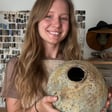
On this of Shaping Your Pottery I got to interview Stephanie May Wilhelm. Stephanie makes some great pottery she is a teacher and has exhibited her work across the U.S. and Internationally.
Top 3 Value Bombs:
- How to create a sense of belonging with your pottery
- Keeping up your health so you can make pottery for a long time
- How not knowing what you are making can actually help you become a better potter
You can check out Stephanie's work on Instagram @stephanie.m.wilhelm
Also you can check her website here https://www.stephaniemwilhelm.com/
The first step to discovering your unique pottery voice is finding what you like to make. Grab your FREE quick start guide by clicking here
Recommended
Transcript
Introduction & Quick Start Guide
00:00:00
Speaker
Hey everybody, real quick. The first step to discovering your voice is finding what you actually like to make with your pottery. That's why I created a quick start guide so that you can start discovering what you like to make with pottery without having to give up experimenting on your pottery. Now let's get started. Go to shapingyourpottery.com forward slash ace to get this free guide.
00:00:24
Speaker
Do you love pottery and are ready to stand out from the crowd? Then you're in the right place. Welcome to Shaping Your Pottery with Nick Torres where we help you discover your own unique voice. Now let's get started.
Meet Stephanie Mae Wilhelm
00:00:34
Speaker
What is up everybody? This is Nick Torres here. In this episode of Shaping Your Pottery, I got to interview Stephanie Mae Wilhelm. Stephanie is
Defining Success in Pottery
00:00:44
Speaker
a art teacher and makes some really incredible flower floral designs. In this episode, you will learn how Stephanie makes her pottery, how Stephanie approaches
00:01:07
Speaker
Mmm, that's a really good question I think that the first thing is to know what you define as success You know Whereas someone might see success is in the amount of work they sell and how they can like financially sustain themselves Another person might have a very definite different definition of success for them and maybe that's how they
00:01:24
Speaker
discovering her voice and so much more.
00:01:36
Speaker
Share their experience of ceramics with people around them So I think it's more along the lines of asking yourself. What do you think is a success for you? How do you see success for yourself and moving forward with that? In a way that kind of aligns with your goals Absolutely. So
Residencies & Artistic Growth
00:01:59
Speaker
Let's talk about your time at residencies. Can you tell me the story on why you decided to attend residencies?
00:02:08
Speaker
Yeah, the first residency I attended was a small one that was just kind of getting started. It's called Brockway Center of Arts and Crafts. And that one actually changed my life in a pretty dramatic way. I was thinking about kind of stepping away from clay for a while. Oh, sorry, the lights in the studio just went off. I was thinking about stepping away from ceramics and traveling a little bit and
00:02:37
Speaker
I got offered this residency, and it really helped me fall back in love with clay. That residency was great. It provided me housing, free materials, free studio space, and it was an outreach program, and we worked with high schoolers.
00:02:59
Speaker
I think one of the helpful aspects of residencies is that some of them can really take off a financial burden that holds a lot of young artists in particular back when it comes to having to juggle several jobs so that you can make ends meet to pay for the bills.
00:03:20
Speaker
Which then can in turn take away from the time that you have for investing in your work. And so that's kind of one aspect. A lot of the residencies that I've done provide housing. So that was kind of taken off the list for me as a thing I needed to worry about.
00:03:38
Speaker
As well, like the amount of opportunity that you have, not just when it comes to making your work, but meeting people that are like-minded, but also very different. Traveling, I love to travel. I love seeing different places. And that was a way for me also to be able to live in different parts of the U.S., you know, or internationally had I chosen, that otherwise would have been harder to attain, I think, for myself.
00:04:07
Speaker
So it's kind of a combination of these like financial aspects, you know, and the realities of supporting yourself as well as the desire to develop a body of work, develop relationships and experiences that are going to impact me moving forward with my career. So you mentioned that you were planning on stepping away from clay before residencies. Can you go into that a little bit more?
00:04:33
Speaker
Yeah, I think I was at a point in my life where I was really having a hard time kind of honestly affording things. I was living in a more expensive area, just working at a wonderful community play center in Maryland and waiting tables a lot to be able to kind of make ends meet. And I think that
00:04:58
Speaker
in all honesty that financial pressure that I had on me and those struggles I had kind of really being able to pay my bills um took away a part of what I love about clay and what I enjoyed about it um and I I also kind of really missed traveling and was just asking a lot of questions um for myself who I wanted to be what I wanted to be doing in my life and
00:05:28
Speaker
It felt appropriate at the time to kind of think about stepping away from clay, doing something different, you know? Glad
Skills & Lessons from Residencies
00:05:36
Speaker
to have you here. Thank you, me too. So what is one thing from any of the residencies you attended that you still use today? Yeah. I can give you two things. One's kind of like technical, and then one's just like life.
00:05:53
Speaker
The technical side, my time at the Red Lodge Clay Center in Montana, the way that we learned to pack and ship work was wonderful. And I still use a lot of those techniques when it comes to packing and shipping and kind of organizing and photographing the work, the kind of system they have in place in the gallery. It was probably one of the most helpful things I learned how to do.
00:06:22
Speaker
just really helpful and we're packing all different types of work so that's kind of like a technical thing that's been really helpful as time goes on and I think just kind of more of a more of a personal thing is just
00:06:41
Speaker
being open to meeting just tons of people, even outside of ceramics. I think at Eremont, that was huge. It wasn't necessarily a clay residency. And those conversations and relationships that you make with people outside of your own craft is a really valuable thing artistically and personally. So you mentioned these packing techniques. What are some little techniques that you use to help with your packaging now?
00:07:11
Speaker
I mean, we learned that like a really good box and pushing in the peanuts really well and so they're like all packed in there tight. You didn't need to double box things.
00:07:23
Speaker
And I came from like taking all of my cups and wrapping them individually and just setting them in the box and putting all the peanuts in. But at the Clay Center, I learned the importance of actually wrapping them individually, but then wrapping them all as one big cluster kept everything tight and in one place versus how they would kind of bounce around the box. And so that was like, oh, that makes sense. Yeah.
00:07:51
Speaker
very, very awesome. So what advice would you give to someone trying to attend a residency somewhere? I think figuring out what you
00:08:01
Speaker
And I hate to bring up the financial aspect, but I think it's a really important thing that might not get talked about enough. But I think figuring out financially for yourself what you can and can't do. First of all, you may be like, I want to live alone and I can afford that. Therefore, you might want to look at residencies that.
00:08:22
Speaker
don't really provide you housing, you know, or provide you a certain type of housing. But then if you
Techniques & Inspirations in Pottery
00:08:29
Speaker
see yourself as someone who really doesn't have the financial means to pay for rent, pay for utilities, go through that experience of trying to find a place to live, then you'll want to really narrow down the things that you're looking for and what's provided to you as an artist in residence.
00:08:48
Speaker
and talking to the residents themselves you know past and present residents to kind of get a good perspective on their experiences and their advice and suggestions you know there's a lot of things that you don't have in mind in the beginning and then you get there and you go through that experience and you're like oh i didn't think about this it was kind of important so yeah now let's talk about your pottery can you give me a simplified version of how you make your pottery
00:09:18
Speaker
So like technically how I make it? Yes. Okay. I do a combination of both wheel and hand building. And I alter my pieces quite a bit. So kind of stepping away from just like more of a once thrown, once made simple form. I like to go in and kind of fold them, bend them, cut them and finding ways to
00:09:48
Speaker
combine form with my surface design, I would say. I don't know if that answers your question. Yeah, that was great. So can you tell me the story, how you started adding plant patterns to your pottery? Yeah, so when I was in grad school, I was making work that had imagery of like the dog and human together on these kind of large plate-like forms.
00:10:19
Speaker
And I became obsessed with drawing these really tiny details of like fabrics and like blankets and pillows or like couch patterns. And it turned out to be one of the things I enjoyed the most.
00:10:37
Speaker
in the process of making my work was sitting there and painting all of these beautiful little floral motifs and designs. And then I came into kind of blocking those shapes and those patterns. And then I realized that I was definitely more interested and attracted to floral motifs versus other patterns.
00:11:02
Speaker
And then my love of just plants and that kind of green thumb I nurtured, especially during COVID, you know, and the interaction of making planters, you know, just kind of everything just kind of flowed kind of naturally into one another. But I think I've always loved color. I've always loved pattern.
00:11:25
Speaker
And just that floral motif aspect and then, you know, making these planters and these things specifically for plants, it just kind of merged really, really naturally together. Yeah. How would you say that affects like what you're going to make with the plants? Can you say that again? What do you mean? How would they affect like your style, like from adding the plants?
00:11:49
Speaker
than before, I guess. Oh, so you mean like the floral patterns? Yes. Like how that has maybe impacted the kind of work I make or? Yes, that yes. Whoa, that's a good question. Um, I think it definitely had me thinking about function in new ways.
00:12:13
Speaker
whether I was making a piece that was intended for something related to plants or not related to plants, as well as like allowing myself to step away from function and make something purely decorative. Sorry,
Themes of Comfort & Belonging
00:12:31
Speaker
the school bell just rang. And
00:12:37
Speaker
Those, so for example, I was going to be making these floral plates, like a plate with like a floral pattern. And I want it to be really basic and simple, like this kind of like flower head and then the line of the stem with the leaf. And I had a slab and I was putting like I was kind of drawing and sketching and clay that decoration. And then I, I kind of saw a different thing come out of it when I cut it.
00:13:05
Speaker
And I kind of like lined it up on the table and kind of curved it. And that's where my plant pockets came from. So I guess even the way that I was like kind of drawing on the clay surface and thinking about that really impacted the way I saw form. Love it. So something I found interesting on your website was that you said comfort and a sense of belonging have remained a constant theme in my work throughout the years. Would you mind explaining the statement a little bit more? Yeah.
00:13:35
Speaker
Um.
00:13:38
Speaker
When I was in grad school and my work developed, my work developed a lot and changed. I was doing all these different things. But when I started to kind of step into the work that included like the dog and the human, I was really thinking about things that like mattered to me and where, and the warmth, like those pieces felt warm to me. They felt comfortable and like home. And that's for me,
00:14:08
Speaker
I mean, I love dogs. And they've always provided a sense of comfort, even in like social situations for me. And so that idea of comfort and belonging, I mean, there's nothing for a lot of people that makes you feel more at home and more loved than like your animal friend, whether it's your dog or cat, you know, this, this complete acceptance and safety and
00:14:34
Speaker
security in that. And a lot of the fabrics and patterns that I was including in that work, you know, for me had a very kind of domestic nostalgic feeling, you know, thinking about when I was a kid in the wallpaper, you know, or my grandmother's sheets with like that, you know, wonderfully gaudy kind of floral pattern and orange colors.
00:15:01
Speaker
And so I think that even myself as a person, I'm kind of always searching for where I belong, you know, where I fit in, where I'm comfortable. And I love. Also, it's important for me to that other people feel that way. And so that's something I care about. I wanted to kind of.
00:15:20
Speaker
think about more in my work. And so when I'm thinking about comfort and
Balancing Art & Self-Care
00:15:27
Speaker
belonging, you know, specifically, like I was talking about with the dog work, but even within the plant work, my more recent work, you know, the bodies of work look pretty different, but they feel the same to me in a lot of ways. Plants for a lot of people, including myself, it's a ritual, it's a routine, you know, it's kind of this
00:15:50
Speaker
comforting experience and routine to go about like nurturing my plants, watering them, and then gifting them to people as well and kind of sharing that with everyone. And so those are kind of the feelings that I get when making the work, as well as when I'm presenting it that I hope other people are kind of feeling with those pieces and what they're getting back.
00:16:19
Speaker
For those that are listening, how can you add a sense of belonging, a sense of calmness into your pottery, into your work? Over the last 15 years, what is a tip or trick you have learned that has helped you make pottery easier? I think that's a really tricky question. I think Kristen Keepers talked about this in the past, I believe. You know, tips and tricks, you know,
00:16:48
Speaker
It's really just the time that you're investing, the time that you've invested to explore and be curious and create and really perfect a skill. But I will say that, and this is also similar to Kristin in a way, taking care of myself.
00:17:13
Speaker
in the way that I make my work has mattered a lot. Out of grad school, I worked for a production potter. And I was also in school at the same time at another program and I had gotten like tendonitis in my hand, my back was hurting, you know, all these things. And I really changed the way that I worked.
00:17:33
Speaker
making sure I'm working with soft play, I stand when I throw, I use a mirror so I'm not bending. And so while most people wouldn't consider that really like a tip or a trick, I do think it really changed the way that I made my work and how my body felt when I was making my work. Clothes are listening. The most important thing is to take care of yourself first.
00:18:00
Speaker
And if you can't take care of yourself, then you're not going to be able to make pottery. So take care of yourselves. So now
Finding Your Artistic Voice
00:18:08
Speaker
let's talk about discovering your voice. Before you start discovering the voice, what would you say was your biggest struggle? I think there's a lot of pressure, whether it's from the outside world or that we put on ourselves to have this particular voice or identity in our work.
00:18:30
Speaker
And this might be a long-winded answer. But I learned a lot while working with Linda Arbuckle. And she used to say that making art, what really matters is figuring out what it is that you care about and how you're going to share that with the world around you.
00:18:53
Speaker
And I remember in an artist studio visit with her, I had just come back from a workshop in Anderson Ranch and I was really struggling because I loved sculpting and I enjoyed it and I felt like I was pretty good at it, but I also really loved making pottery and kind of this push-pull thing. And one of the artists there had asked me what it is that I'm good at, and I didn't know how to answer.
00:19:21
Speaker
I love sculpting. I also love pottery. And I think I'm pretty good at both of them. And she then asked me that question. She asked, what is it that you think you're good at, Stephanie? And I just froze and I started crying. And then she started to list off all these things that she thought I was good at that had nothing to do with art, was maybe about
00:19:50
Speaker
the dogs that I've fostered, how nurturing I am, or the empathy that I feel for other people and how I love to bring people together. And that was, I think, the first time in my life that someone and myself realized that our work is really more about who we are than what we want to make.
00:20:15
Speaker
Who are we? What do we care about? What are our values? What are the conversations we want to have that we find important as well? And then that translating into the work that you make. And so I think that when it came to struggles that I had, it was like, oh, I have to have this look. I have to have this thing that's going to look a certain way that people will see. And they'll be like, oh, Stephanie made that.
00:20:43
Speaker
And once I let that go and I just allowed myself to make things that I enjoyed and I cared about, things just kind of really flowed naturally and I still try to continue to keep that pressure off of myself and to allow myself the freedom to be creative and play and curious with what I do. So how do you find what you actually are quote unquote good at for like your pottery?
00:21:10
Speaker
I have no idea. I mean, I really don't. I think that you just have to be willing to fail, fail. I do this with my students too. It's like really, what is failure? It's like, you're not failing. You're still learning something and there's something in that experience. And so I think just allowing yourself to like,
00:21:32
Speaker
Stumble a bit to do something new to have no idea what you're making. I think it's really really important because a lot of really great things whether it's the work that you make from it or the Experience that you have and what it gives you like matters. So Yeah, perfect answer. That was great So as we're coming to a close here, what is one thing you want to hammer home with my audience today? I mean, I think along the lines of
00:22:02
Speaker
when we were talking about the lights went off again, I'm sorry. I think along the lines of what we were talking about with like finding your voice, finding the identity in your work,
00:22:18
Speaker
Kind of how I was saying like allowing that freedom that pressure to kind of Be lifted off of you a bit and allow yourself to explore is probably one of the most important things I struggled a lot I still do sometimes but I struggled a lot with how different the two bodies of work I have are the decorative ones with like the dogs and patterns and then the floral work, you know and the vessels and
00:22:48
Speaker
I felt like they needed to be more of the same. Like I couldn't have two different things in my life that I was making. And then after talking to lots of other artists, it's like, well, it doesn't matter. They're from the same person. There's the same values, the same interests. There's still a relationship between the two and the two of those pieces with me and allowing myself to have different forms of expression.
00:23:17
Speaker
And allowing yourself to have different forms of expression is really important. We all identify in a lot of different ways. We're full of layers of interests and loves and passions and curiosities. And I think that our work should be that way too. And allowing yourself
Connect with Stephanie Mae Wilhelm
00:23:35
Speaker
to just explore and the work to reflect all of the things that you care about and are interested in is a really good thing and will help a lot. Absolutely love it. Very, very great.
00:23:47
Speaker
Stephanie, it was really great sharing with you today. Where can my artists go and check out your work?
00:23:52
Speaker
Yeah, I have a website. I haven't updated it in a lot of time, but teaching full-time has kind of changed a little bit for me. But my website is stephaniemwillhelm.com. And then you can also find me on Instagram. Pretty active on there. And I also have a lot of pictures of my dog and my students' work, which I'm really proud of. And that is stephanie.m.com.
00:24:19
Speaker
Thanks for listening to this episode of Shaping Your Pottery. If you have questions about developing your voice or just pottery questions in general, send them to me my way. Go to shapingyourpottery.com forward slash contact to send me your questions.