Transcript
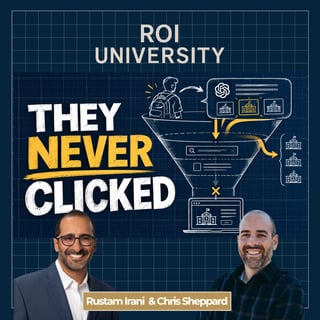
Speaker: Google AI overviews jump from 26 % to 80 % of branded queries.
Speaker: Welcome to ah ROI University. a higher ed marketing show for people turning big ideas into real results. Join Rustem Arani and Chris Shepard as they explore the strategies, stories, and technology shaping how institutions connect with students. From marketing and enrollment to data and AI. Every conversation brings a fresh perspective and something you can put to work.
Speaker: This is ah ROI University.
Speaker: Chris? What are your thoughts on this new search engine land article that just pushed out actually yesterday? hot off the the presses. Can you believe, like...
Speaker: Google AI overviews jump from 26 % to 80 % of branded queries. What are your thoughts on that? this is a big topic big topic for our uh you know clients a big topic just in general is Our students.
Speaker: finding information? Are they finding out about us? through other ways besides our website. which used to be our front door. What are your thoughts there? Yeah, I think it's a a valid point and a great article. I don't think it's anything. new today. I think we've Been aware of it for.
Speaker: a year or more. particularly as AI overviews has been rolling out across the country. And, you know, it's just becoming more and more now, of course, just because it's.
Speaker: more relevant. Everybody notices it. We're so actually seeing the actual direct effect of it being there. And look, I'll say this, that article, Search Engine Lane article is pretty neat. And I did read through it and it demands fear. So this company, they basically did a study and they tracked branded keywords. This isn't necessarily for higher ed, but just in general, tracked branded keywords daily. In early September, Google showed an AI overview on about 26%. By the end of the month, it was over 80%, so roughly triple. and
Speaker: I'll tell you, we've seen that too. you know As you start looking at branded search, AI overview might pop up for your brand and people are no longer. going down to the organic results and clicking on your website. They're finding everything they need there. Similar to if you're in ChatGBT or another LLM, finding everything they need.
Speaker: There. So. What does that mean? um now How do we kind of know this is happening? All that good stuff. Bad. Let's dive into it. Yeah. I think.
Speaker: You know, with any of this stuff that's coming out, the core of it. goes back to brand in general. And I think. you know, Whether they're now finding out about you through a friend or through an alumni or whatever that is, again, it all goes back to. you know,
Speaker: How much awareness is there of your brand? right and i think that's the important thing when you're looking at it is The awareness and... how far out does that awareness actually...
Speaker: kind of go you know we've done some of these studies with a few of our clients where we've looked at you know, the brand radius. How much of a radius does your brand presence have from the center of campus? Now, there may be multiple campuses. Some schools have multiple campuses, right? but like How much actual brand presence is there? And I think you can you can actually do some of these studies if you have.
Speaker: You know, you can even look in Google Analytics. If you have GA4 data, you can look and see. how much of your impression share of your intake and your you know, your traffic is coming.
Speaker: outside of certain. bubbles or certain circles right and then even on the paid side same thing with google like your search impression share. If you start to kind of build these circles and look out.
Speaker: your costs start to go up. Your impression share starts to go down. Like all of those things you can kind of are indicators of. the strength of your brand.
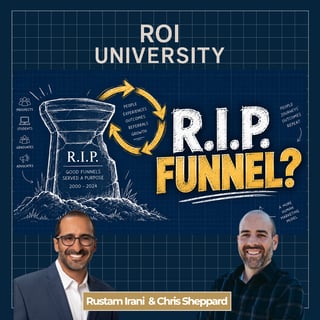
Speaker: But now with AI overviews, like. You know. Is the front door changing is, you know, we're so used to optimizing our websites, right? for you know the best experience when somebody comes to the website we're so used to optimizing it for being the main storefront but is that really the case anymore. And I think that's the conversation we're having.
Speaker: That's right. And I think it's interesting that Search Engine Land had an article on this, and then... The same time. Inside Higher Ed. came out with an article, and it was obviously around the higher ed space. and It talks about. Half the small colleges missed their enrollment goals. And Google now answers when students search their names. so Again.
Speaker: Back to AI overview. Now yeah I think. In my opinion, you could probably just put this in chat GBT, you could put this in cloud. And of course, AI overview is Google's AI. tool, which is great because it's actually directly embedded right into Google search. And so now people are finding it and.
Speaker: They're getting that data. But... How does that data get there? that's obviously something that we should talk through and how to understand how that's getting cited, how to...
Speaker: Get your brand and ah your organization cited there, even if it's not for branded search, if it's for some of your queries or keywords that you've been historically been focused on. But I did see this. So it says 61 % of colleges met their fall 26 enrollment goals. Among small colleges under 2000 students, it was only 50%. So the biggest unsolved challenge was brand recognition. Where is that? Where is that one from? That's inside higher ed. Yeah.
Speaker: okay So so they they came out with they ah they came out with something. and so This yeah might have been. a little a cup About a month ago. Go. Interesting. Yeah. So...
Speaker: Yeah. And so they're actually seeing the same thing in search and work. trying to kind of track that back and understand where that's coming from. If enrollments are down, they're obviously, depending on you know what kind of school you are, there could be different reasons why enrollment's down, depending on everything that's happening in the world and different things. but Is it?
Speaker: because of these different front doors, as you mentioned. you know We talked about the know, like, and trust and the funnel, ah but where are they actually finding you and how are they getting the information they need to make those decisions? So I think that's...
Speaker: That's kind of where we're at Yeah. And. You know, one of the conversations and and we've had actually quite a bit of this. We keep talking about this with a lot of our, you know. folks that we're we're talking to our clients as well as others is what can we do about it?
Speaker: you know how How can we both you know make sure? we are showing up and in these searches right for for google because Look. even you know there are the the paid campaign side where you can be engaging to bring these students to your to your site, to your landing pages, into your ecosystem. but you know If they're finding out and doing research where you're just not aware of it, that can...
Speaker: pose a challenge, right? And so there are ways to kind of look at this. And and I think I mentioned this before. is There are a lot of tools right now that will show you how you're showing up in these LLMs, you know, and there's some core components to that, right? Your visibility rate.
Speaker: How often are you showing up? That's important. your share of voice, you know, which is kind of how much are you showing up? when you know, it's relevant to your school. Again, ah brand is is another whole side, but.
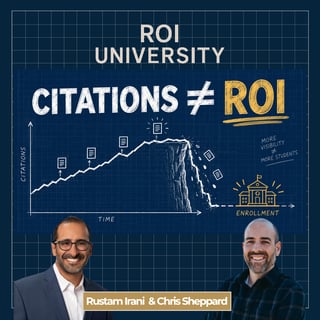
Speaker: Are you showing up in those searches? Does your brand even resonate with those conversations? Are you even kind of having to to kind of show up there? And then your citation rate, like, are you being cited?
Speaker: for these responses. And there is absolutely a way to be strategic about building a lot of those things out. Right. Again, we we look back, you know, and I'm sure you're you remember this, right? Long tail.
Speaker: ah Keyword or keyword stuff articles, right? yeah Well, that's... The white hat stuff, Chris, not the black hat. Oh, we're not looking that far back, huh? No, no, we're not looking that far back, but you know, the long tail, like.
Speaker: Oh my gosh. I remember, you know, this was, yeah, again. Back in the day, I remember maybe 2008, 2010. So I was like, all right, how do we so how do we get more long tail keywords in there where we're but we're we're showing up for all these searches that.
Speaker: that people are doing. and The other side of it is people are grabbing their phones and they're talking into it, right? and Those are the searches that they're doing. I think I mentioned this last time I saw an ad for ChatGPT where it had two old ladies that were talking to ChatGPT trying to get results and and find out information, right? And so as we keep moving forward in this. And this.
Speaker: new era or whatever. you know, you've you've got to be coming up when these conversations are happening. It's more conversational now. um But the fact that.
Speaker: You know, the fact that demand share and these other sources are finding that a lot of these brand queries are coming through. AI and they're getting their information about your brand.
Speaker: before you even know it or see them. I think that's that's going to definitely continue to be an opportunity and a challenge, especially from an attribution perspective. Yeah, totally. Yeah. And look, I'm guilty. I walk ah my dog a few times a day. um We go on some good long walks and I talk to Claude or chat GPT most of those walks. And I love it. I love learning about things. i
Speaker: Really don't go to websites. I'm sure it's citing and sourcing. a lot of websites as I'm talking and getting its information. In fact, I know it is it'll actually asked me if I want to go to that website to you know, do other things on that site. learn more different things like that. But, ah you know, If I'm using it, surely ah the younger crowd is using it, you know? and so The question is, where is it?
Speaker: Like, where is Google getting its info info from? Where is ChatGPT getting its info from? Like, how is it citing those sources? well We might. understand where and Like.
Speaker: There's. different websites, different top citations. For instance, we know Wikipedia is a huge one that it sources. Wikipedia is one of those things where you can't just go build it yourself. It kind of has to be something that somebody else builds and it gets contributed to. And therefore the information is quote unquote accurate. I put quotes there because we all know we've seen a lot of Wikipedias that are absolute garbage, but it is a great source, you know, and it it could be out there. it's it's a
Speaker: heavily trafficked website. Along with that... Obviously, YouTube's another huge one. LinkedIn, you know, if you're not on YouTube yet. you definitely have to get your brand on YouTube. Even if you're just doing like campus walkthroughs, that kind of stuff, but like Everything. You could put everything on YouTube and make it turn into a story on YouTube, YouTube shorts. It is, I do believe it's still the second most.
Speaker: visited website or search engine rather on the internet. So that's still huge. LinkedIn is obviously a big one, um you know, for citations. So where it gets information, I'm not saying that, you know, TikTok's obviously huge. Instagram's obviously huge depending on where you're at, but citation based. So we do see some other ones like there's ah the niche website, the US News, Reddit. We talked about Reddit a few weeks ago. Is it still relevant? Is it still a place to to be for citations?
Speaker: Still trying to figure that out. ah But there's a lot of these kind of websites where you need to be and want to have your um citations and your. listings filled out, um you want to be able to use them. And then what does that mean for your website?
Speaker: I don't know, Rustam, are we still doing SEO on our site or what are we doing differently there? Are we doing like FAQs? like what What does all that look like? Yeah. and And, you know, I think it goes back to answering some.
Speaker: Basic. Questions that are now. being more conversational. Like. That's what it's all boiling down to. And you've got the standard ones, right?
Speaker: Trying to find out how much does it cost? How long will it take? you know Can I get a job afterwards? What types of jobs am I going to be able to get? Like. Those are the types of... searches and queries, but Now they're getting to a point where.
Speaker: you know And in AI, they could just easily ask Gemini or chat GBT, like what psychology programs can I complete in less than two years in South Florida?
Speaker: Like. that is and And I'm looking at just some of these searches that we're seeing in in our side from the LLMs and in the AEO tool that we have. like What are the best psychology programs in Miami for the best outcomes?
Speaker: Question mark. Yeah. These are. actual LLM queries that are, you know, being put in. and like Are you showing up? is are you are you there Not only if you're there, but like, where are you showing up in that?
Speaker: right on that list. So I think that's where it's, it's definitely expanding and changing. And again, going back to the brand. You know, I think the other thing that I've talked about over time as well as like. I do believe there's a brand. kind of awareness decay that happens like From the data that... i was talking about earlier like we've seen like within a five to ten mile radius like You've got really strong brand presence typically now
Speaker: I think this this differs based on the size, the history like of the school. I think there's a lot of different things there. 10 miles, you're still strong, you know, and then 25.
Speaker: to 50 miles you're starting to get a little bit more you know, where it isn't as strong. And then you also have overlap that starts to happen because you know, there's another school that starts to pop up that could have overlapping programs. And then after a hundred miles or so, you know,
Speaker: Unless you're... Yeah. Everybody talks about it. Unless you're the Harvard or you're whatever, like. It... it's going to decay. Like that's going to happen. And the other thing I want to point out, and and so I looked up this article that you were talking about and in Inside Higher Ed, the one thing that's interesting and not surprising.
Speaker: is the fact that, you know, of the respondents, they had 134 higher ed leaders that filled out this survey, 61%. felt like they were going to hit their fall goals and their enrollment targets, but it was only 50 % or lower for colleges with less than 2 ,000 students. That's right.
Speaker: That's right. So. And one thing I. I know this because this is always a conversation when we do speak with colleges that are less than 2 ,000 students.
Speaker: The brand recognition absolutely decays. You know, and that is a challenge. And especially with this new data coming out from search engine land, which shows that.
Speaker: brand queries like are happening in these LLMs. And. Are you showing up and who else is showing up? And so um I think this is really interesting kind of.
Speaker: data on both sides, on the school side, and then also just kind of what we're seeing in in the LLMs. do you Well, do you think, like...
Speaker: If we compared larger schools to smaller schools, is there... Do you think there's a difference in the output of those schools from a marketing perspective? So like going to Wikipedia and get it making sure that you have one. Like a larger school might already have one set up and already going compared to a smaller school who might not. And so that's a good example. But like maybe all these different things, these citations and places you need to be, the larger schools doing that and on it versus the smaller school who might not be.
Speaker: Is that already just a competitive advantage too? of of that happening that the larger school already has all this built out and is doing it versus the smaller school and if that's the case the smaller school should do that right and they'd have a fair advantage or do you think It's still.
Speaker: It's still way off there. Here's my my thought on that. Chris is like I think you can't be everything to everyone. Right. Okay. And I think. The larger schools have larger program sets. They have like.
Speaker: I mean, we're in Florida, right? i University of Florida, Florida State, University of Central Florida, universities. I mean, we have, we literally have a dozen schools that probably have 30 or 40 ,000 students in each of those schools. Those are large schools, right?
Speaker: And they have. hundred plus programs in some of these schools, right? So they can be everything to everyone. And so for for them, it's a little different kind of story and on how that works. I think.
Speaker: For some of the smaller schools, it's like. What are we really good at? What are we known for? What do we have history with? What are our core competencies and and program sets and differentiators?
Speaker: Those are things that you want to be putting out. along with your brand attached to that. right yeah Because that's when you really start to stand out and the LLMs see this differentiation. They see how you are truly.
Speaker: the number one source that should be cited. for that program in that area. And so that's the way. We look at it. That's the way I look at it. Chris is...
Speaker: I mean, I think it's it's different. Like, you've got to play in a different ballpark. Like you cannot play the same game as some of these larger institutions because.
Speaker: They've got some, I mean, I've seen some of these schools with like. The number of the, the amount of content. That's right. how yeah They have the advantage. Over the years. Right. yeah How they're showing up for that. i mean Just absolutely. That's right. Right.
Speaker: But you don't need to do that You don't need to be there, but you do need to know. where you're not showing up. and why you're not showing up. ah for the for the areas where you should be showing.
Speaker: Well... I've got a plug in this kind of fits right in, but we actually have a tool. that would do this. And so we have an a AEO audit tool for anyone who's interested. You can go to aeo dot rgiconsulting .net. And you could actually... forward slash audit, we'll put it in the show notes below. But um you can actually put in your information and get an audit of where you stand and like the different queries you can put in your competitors and how you stack up against your competitors with different queries across different LLMs.
Speaker: And just kind of just get an overview of what that might look like. It includes Google AI overview, Gemini, Claw, ChatGPT. So I'd suggest you go do that and you can see. But anyway, while we're on that topic, I just remembered we have that tool. so I think.
Speaker: A lot of people can get use out of that. Yeah, absolutely. And again, that tool is... I mean, it's great to just at least see. and it and it basically breaks it out into those core kind of segments that I mentioned, right? Visibility rate, average share of voice, citation rate, and then... Also, we track sentiment. like Positive.
Speaker: neutral or negative like how are you showing up because That's the other side. is if there's a pricing conversation and you're showing up in a negative way. Because people keep talking about. the price in a negative way and not talking about the value or the return or or those other things, like you're not controlling that narrative.
Speaker: that That could also backfire. right The fact that you are showing up might not be showing up for in in the best way. Right. And that's. That's the other side of it. We talked about that last week, right? Like the the making sure we have positive sentiment. sentiment
Speaker: Good reviews, always getting reviews, making sure that we've got good information, that's solid. People actually know, like, and trust us, refer us, all those things. Because it... To your point, it can work in the actual opposite way, right? It could say bad things about you, and it does. like Interesting enough, Claude will say bad things about...
Speaker: um something. um I'm sure we've all seen it. You could ask it a question and it could. It can go off. you yeah You don't want to be on the other side of that. Yeah, and and the thing on that side also is...
Speaker: you know you want to be you know the more you can kind of build the community the more you can kind of control the conversation and making sure that you're pushing out. you know, the key.
Speaker: values of your institution or your college or your school or whatever it is. Uh, That's going to control the narrative and that community. Will... continue to also push that narrative forward. And you're seeing that with.
Speaker: Reddit. Right. We've talked about this before, but. When you're doing those things and you're in those conversations, your community will also show up for you. And that's also going to be helpful from an LLM um perspective and from a search perspective. So all of those things play really, really well together. And I think like you can't just. Now think of like.
Speaker: Okay, we're gonna run Google And we're going to run meta and we'll do some SEO. And like, all right, we tackled all three of those components and we're good. like you really have to be looking at all three of these components together understanding.
Speaker: you know, your brand sentiment across each of them. A lot of times what we'll do is within the SEO side and the paid side, we'll look and see. How are we showing up? Where are we showing up organically? How are we showing up? Where are we showing up on the paid as well? And what makes sense there that could be? some cannibalization there could be some overlap there's there's a lot that can happen on that side right
Speaker: And so I think that's that's pretty important. And there's definitely an AEO component to SEO now that we have to absolutely build into the plan. There's no doubt about it.
Speaker: It's just it's a part of the SEO. plan and strategy The strategy. Yep. I agree. And so. if we're Talking through brand and brand search, AIO review.
Speaker: The recommendation might be like, Let's start. Let's ah fire up. Google Analytics, start tracking brand clicks, brand queries, and then maybe even use a tool like our tool, the AO audit tool to try to understand what that stuff looks like. Is there anything else we need to be doing to start understanding some of this?
Speaker: I mean, those are the key research tools. There's other tools out there too. Google Search Console. Yeah. Google search console is just. Phenomenal, right? I personally think it's one of the most.
Speaker: The, the... the best tools out there that Google has that I don't know if people use it as much as they could. or should. GA for Google Analytics is is really powerful. And then there's a ton of other tools you know we use.
Speaker: but There's SEMRush, there's Ahrefs, there's so many different tools. The other one that's kind of cool too, that's... that's out there is SparkToro and SparkToro does a really good job of. of showing you like where you're showing up.
Speaker: For what? searches and what conversations and so on. And that's been a really good tool for us as well when we're looking at kind of audience segmentation, audience interest and and so on. so There's just there's a ton out there, but I think like at the core of it like start with the basics of understanding at least.
Speaker: where your brand search is happening. What are the conversations that are happening around your brand? and then You know, how are you impacting that?
Speaker: Those are the core components. And if you can at least get a good idea there, then you can start to build from that. Awesome. yeah I agree. I think I don't have much more to say on that. I mean, brand overview, brand yeah AI search, it's it's all there. And I think it's just like you said, we just need to put it in our strategy and and understand it more and keep going with it.
Speaker: Yeah. So... The Front Door I think. Has moved a little bit Right. People are still coming to the website. maybe not as many people because they're finding out answers out there.
Speaker: But I think there's a few different doors now. And I think that's the key, I would say. for people to kind of take away here is like You've got to realize that information isn't just.
Speaker: going to be gathered and acquired from your website. which you have had in the past as you being your main storefront. It's going to be out there and you need to be making sure that. What makes you unique? What makes you different? What makes you the right choice for that potential?
Speaker: prospective student or whatever that is, aligns because it's got to be a good fit both ways, right? and it resonates and you're there in those conversations and if you can do that I think that's where you know you can continue to.
Speaker: to make sure to be in the right place at the right time. And that's that's what it's going to help. Continue to be absolutely Especially since we're seeing a lot of shifts and and how people are getting the information. That's right. So Chris.
Speaker: This awesome. I appreciate. conversation. I think there's a lot of moving pieces out there right now. We're having a lot of conversations just, you know, with our clients, obviously, and and others.
Speaker: I can tell you. It's an exciting time. It's also, you know, a lot of uncertainty right now. But, you know, we're trying to stay on top of it as much as possible, learn and and and keep things moving. But yeah, I appreciate it. Great, great episode, Chris.
Speaker: And until next time. Chris and Rustem signing out. Bye.