Transcript
Speaker: you're listening to From the Horse's Mouth, intrepid conversations with Phil First.
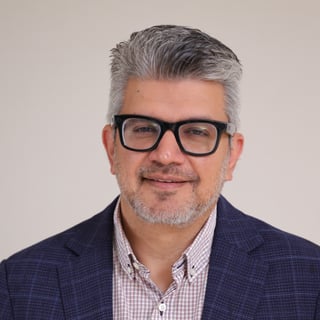
Speaker: Welcome to the latest edition of From the Horse's Mouth podcast. I'm your host, Phil First, and joining me today is somebody I think I've known for around 20 His name his name is Francisco, or as a lot of us call him in the industry, Frank D'Souza. And Frank, do you want to just quickly introduce yourself to the audience who don't know you?
Speaker: Sure. Phil, first of all, thanks for having me on the on the podcast. um I was um the founder ah co-founder of Cognizant Technology Solutions in the early 1990s. I spent 26 years at Cognizant, including 12 years.
Speaker: My last 12 years there as CEO of the business. We grew that company from a startup 280,000 people, $16 billion dollars of revenue, and about $40 billion dollars of market cap.
Speaker: When I left, and i left about six years ago and created Recognize, which is a private equity business that focuses entirely on investing in the next generation of digital services businesses. and i've been doing that for the last six years.
Speaker: It's great to be with you. Terrific. Thanks. It's good to have you back. um So i've known I've known Frank, I think, as as I mentioned, for like 20 years, and during which time I've seen him grow one of the largest scale, most successful services firms in the industry.
Speaker: And I know you've probably been asked this question many times, Frank, but as you look back now and you look at where the industry is now, um what maybe two or three things would you contribute or would you credit most to your success at Cognizant?
Speaker: you know, Phil, I think there were two or three things. The first is that we founded Cognizant at a moment when the industry was going through a massive operating model change, and that was the offshoring ah moment.
Speaker: In the early 1990s, there was a whole confluence of things that were that happened at the same time, low-cost bandwidth, the Internet, and so on and so forth, that enabled global delivery to happen at scale.
Speaker: um And so we were, in that sense, we were in the right place at the right time. The second part of it was that we executed really well. We had an incredible team and we spent a lot of time on this idea of talent density, putting the best team against the highest opportunities.
Speaker: And then the third thing is that we we we created for ourselves and with our investors the opportunity to invest in the business, which is that we we sort of had a rule of 40 business before we talked about the rule of 40, which was that we had said to our investors all along that… um we were going to maintain our margins at a level that was consistent between 19 and 20 percent in those days, ah below where our competitors were, to give us the room to reinvest in growth and that our investors should expect to have faster growth as a result of that investment. So I think it was those three things. We were in um in an um at a moment when The industry had tremendous tailwinds. We had, I would say, the best team in the industry, and we had the space to make the right investments in the business.
Speaker: And those things together created some magic. I mean, drawing some comparisons, From then to now, would you say maybe it was also a time where some of the incumbents took their eye off the ball, they might have been a little complacent, and they they didn't really focus and enough on who were the next wave coming up behind them? And that's maybe happening now a bit?
Speaker: Yeah, i would absolutely, Phil. You know, look, the when when industries, whether it's our industry or others, go through moments of big change, you have the well-documented phenomenon of the innovator's dilemma, which is that... the incumbents ah tend to focus on the current operating model, the operating model that they know, the rules of competition that they are comfortable with. And it's very hard for incumbents ah to reinvent themselves. And so at at those moments in time, the challengers have ah ah an advantage. The challengers are able to, they don't have the baggage of the past. They start with a clean sheet of paper and they're able to, in in some sense, disrupt the status quo.
Speaker: And you see the the pecking order shift at these moments of great disruption. Yeah. So let's move along to, I know you put out a,
Speaker: a paper very recently, and obviously we'll get into some of what you talked about there, but one of the things you started with was a core paradox where you said code is becoming more valuable while it also becomes worthless at the same time.
Speaker: And the services industry was built on monetizing that labor. um So what do you think this paradox means And how would you advise a CEO today on communicating this on earnings calls, you know, when utilization drops, but AI productivity rises?
Speaker: Yeah. Well, you know, in the in the white paper, what I talk about is this idea that code, in some senses, has never been more valuable. If you think about some of the most valuable companies in the world, we talk about Anthropic, we talk about OpenAI and these massive and SpaceX and so on, these massive IPOs that are lining up um companies that have achieved um revenue growth.
Speaker: that you know growth in in periods of time that have never been seen before what underpins the value of many of these companies is their code is their their product which is embedded in code or embodied in code at the same time the coding that is the act of producing code is the cost of that is falling to zero large language models today are incredibly capable and of writing code and the um the the act of writing code is becoming lower and lower cost. In fact, the marginal cost is tending towards zero.
Speaker: And so you have this this paradox where code has never been more valuable, coding is is becoming lower and lower cost. um But if you think about that in the context of any other industry, um if you were the CEO of any other company where you said, listen, you know, your product has never been more valuable and your factor of production, what it costs you to produce, is becoming cheaper and cheaper, well, that would be a formula for tremendous value creation.
Speaker: um in most industries where your product has never been more valuable, but your cost to produce that product is dropping. That's a pretty good scenario to be in The issue in our industry is that we have, for some reason, ah historically anchored pricing on the input, not on the output.
Speaker: And, um you know, if you think about that, you You don't go to ah to to buy a new car and say, well, I'm not buying a car. I'm actually buying four tires and a transmission chassis and and six cylinders and spark plugs and and so on and so forth. You just go buy the car. In our industry, for some reason, buyers have got used to and and the industry has got used to selling the tires and the chassis and the spark plugs and the cylinders and so on and so forth.
Speaker: And ah so I think the industry has this great opportunity to move to output and outcome pricing ah and then have a situation where the factors of production um change and create tremendous value in that process.
Speaker: Right, right. I mean, you you do articulate that very well. i mean, it's having a selling experience, right, versus the inputs. And it's ah it's a big mindset shift that needs to happen. I mean, do you think...
Speaker: it's possible in the current way that big corporates are set up and these relationships were set up to make this mind shift mind mind shift leap? I think so. I think, um the look, the industry has been talking about this for a long time, Phil. It's been accelerated, I think, by AI and generative AI in particular. But as long as I've been in the industry, we've been talking about moving more towards output and outcome-based pricing and commercial models.
Speaker: I think the industry understands how to do this. There are some places where it's it's quite possible, and actually by moving to output and outcome pricing, you align interests between the service provider and the client much more strongly.
Speaker: um And so I think that it's possible. But I do think that it's not an easy transition for the incumbents because everything about the industry ah right now, the culture, the way that people have been trained, many of the incentives, many of the metrics that we have,
Speaker: traditionally and typically use in the industry to track the health of a business are anchored on the what I call the abundance era the era, excuse me, the scarcity era, where you know ah producing code was the scarce resource. And so we we you know we anchored on utilization, we anchored on numbers of people as as measures, we anchored on on many input measures, and that's how people were rewarded.
Speaker: And so making the shift is going to require firms to sort of focus on a new set of metrics, and then change the culture and the compensation accordingly. Yeah, I mean, I sat through a tremendous round table last week with I think around 20 major clients present and we got into the inertia that they're facing, just trying to move their own sort of AI agendas forward. And the real thing, everything kept dialing back to was talent. um yeah You could talk about process debt, data debt, tech debt, all these types of things, but if you don't have access to talent with the passion, the curiosity, the desire,
Speaker: to do things differently, you're never really gonna make that shift. And I get the sense, maybe that's a symbol of hope for services, is that if this really does go back to ultimately talent and becoming the best partner to your clients, isn't that the big opportunity that's opening up? It's those services firms that can win the talent race in terms of creating that next wave of and smart, young and mid-career talent that gonna win.
Speaker: Absolutely. I've always believed, Phil, and I continue to believe that one of the most, perhaps even underappreciated aspects of the services industry is the fact that because the services industry ah has, you know, because any individual company has clients across a range of industries, across a range of different areas and and technologies and functional areas, that that diversity of work attracts the best and the brightest people to come work in the industry or can because people want to have you know breath of experiences. They want to experience different technologies. They want to experience different industries. And so structurally, I believe that the industry is advantaged in that they can that the industry can create more interesting career experiences for consultants that come to the industry. And
Speaker: That, I think, continues to be an advantage that the industry has. And so I believe that, you know, of course, we're going through a moment right now where everything is changing. Technology is new. um AI expertise is scarce and so on and so forth. But I also believe that this is a moment when the industry can shine by attracting the best and the brightest to come and do their best work for the great clients that the industry has.
Speaker: Right, right. So moving forward, you talk about the J curve danger. This resonated me a bit at our summit where you you were keen enough to talk about this.
Speaker: But what are the earliest signals where a firm is maybe on the wrong side of this? And which firms today look closest to that cliff?
Speaker: You know, look, I think, Phil, the J-curve, when I talk about the J-curve, what I mean is that there's this, um there's sort of a gap, right, which is that AI, for the existing work that any firm is doing,
Speaker: If you're really deploying AI and you're really using the tools um to their fullest potential, you're likely going to see a compression in the sense that for a given amount of work, you'll be able to do it with with fewer humans um because ai can fill fill that gap. and so And if your pricing model is based on an input price, which is the number of billable hours, then you're likely going to see some compression in revenue. And so you might have this this J curve of revenue, which is that you you find that youre you find some compression in revenue before you start to work your way out of it.
Speaker: And so I would contend that most firms that have been in the industry for a while face some degree of J-curve. That's just my definition. And if you're not facing that J-curve, it's probably a sign that you're not deploying and you're not using the latest AI technology in the most effective way.
Speaker: um And I would say that, you know, if you're ah revenue per or your profit per employee is um is flat or declining, it's probably a pretty good sign that you're on the wrong side of the J curve. If it's starting to flatten out or or increase, then it's probably a sign that you're through the J curve and on the other side of it.
Speaker: Right. And if you're running a business in this industry today, you know, we're seeing several leading services firms struggling with their stock, for example, and Wall Street and other investors are looking negative negatively at people-heavy businesses.
Speaker: um Is that going to get worse, that attitude, or do you think we're just in this whole part of this joker that you're talking about where you know, the big frontier companies, they're coming to the vast realization that they need talent and services if they're going to get enterprise adoption. So do you think we're just in a dip before this starts to come through the other side?
Speaker: Yeah, and you know, i I believe, Phil, that if you if you step back for a minute, that there is, you know, we've we we've all talked and ah quite a lot about so-called Jeevan's paradox, this idea that as the cost of something um comes down, the demand for that thing goes up.
Speaker: And I think that over time, I believe that to be true in software. I think that we we've already seen it, frankly. um And you know anecdotally, if you look around, the world is clearly becoming more software and more technology intensive, not less software and technology intensive. So the need for software, I think, is going to be substantially greater than it is today. The demand for software is going to be substantially greater than it is today.
Speaker: um I think that the challenge right now is that um In many of the the public companies, we are still using abundance or rather scarcity era metrics when we when we're talking to investors. And investors don't understand, and it has not been made clear, what is how to how to dimension the J-curve.
Speaker: I think if we were um clear with investors that we were that we are in this moment of transition, which um everybody intuitively understands, um that but that there is a path through it, and we were able to dimension that path through it, we were able to explain to investors and had the courage to explain to investors that you have to take and accept that there is a productivity gain from AI. And I think investors intuitively understand that.
Speaker: And that causes a short-term compression on the existing revenue base. But in theory, if done right, should improve margins.
Speaker: and um And that once we get through that, that we come out the other side. I think that that's a message and ah and ah an explanation that investors are capable of understanding and frankly would welcome.
Speaker: Right, right. But it might actually take them to see some examples of leading firms really starting to move in the right direction. I mean, because they're looking at, you know, anyone who's in that anthropic ecosystem right now seems to be growing exponentially.
Speaker: um You look at the revenues of the big AI tech, Firms on the whole, theyre they're exciting investors. You know, was it America has taken a giant bet on AI right now. So is there like just some, this needs to be some better alignment between services also taking that giant bet and saying, hey, look, we get it too. We are really going down a path where we're going to meet that demand. And maybe they're just not doing a good enough job convincing investors that they're on the right track.
Speaker: Yeah, look, I think, Phil, when you... um it It has always been the case that great technology innovation um leads then to a great tailwind for the services industry.
Speaker: um that's That's always been the case. And I think it it continues to be the case here. You know, I think that the the frontier labs that continue to innovate... and ah produce you know ever better models, ever better vertical slices of those models, ever better functional versions of those models. Every time that there's that level of innovation, it creates an opportunity for services firms to focus on what I call the first mile and the last mile. Because in order to take that technology and make it real, make it do something important and do that in a safe, ethical, compliant way, requires a set of services around the edges. at you know At the beginning, to express intent, and at the end, to assure that it's properly integrated with the with the enterprise's framework.
Speaker: environment with their with their other systems to make sure that it's safe, to make sure that there are guardrails, to make sure that it's it's traceable if necessary. And so I think that the um the courage that the services firms need to to have right now is to say, look, some of the things that we did in the past, um AI is better at doing.
Speaker: We know that AI is generally better at writing code. We know that AI is going to be better at writing test cases and those kinds of things than humans.
Speaker: And that's not to say that the role of humans in those things will be zero, um but the productivity will be dramatically improved in those things. And um that that is progress. And so the services firms need to stand up and be able to say, these are the parts of my business where productivity is going to have a dramatic effect.
Speaker: But these are the other opportunities that are being, um that are being that are emerging where we think we can grow and on balance that that's going to be a ah net positive for the industry.
Speaker: Right, right. So how do you view the recent announcements that OpenAI and and Anthropic made where they're generating billions of dollars of consortia to partner with various entities in the market. And you see big names like McKinsey, Capgemini, and a few of these firms really trying to get in early.
Speaker: When I first saw this, my gut feel was this could be really bad for the traditional services industry. But the more I look at it now, the more I think this creates a big opportunity to partner with these companies. And this may be their way of building out that capability to say, look, we want to work with you to help you train the talent of the future who can implement these models into the enterprise do you view this as a big threat or do you also view this as a potentially a big solution to a lot of the problems we've been talking about
Speaker: I view it as a tremendous opportunity, Phil. I'm very much in the latter camp. and And here's why I think, just building on what you said, I think, you know, in the, in the call it first days of of generative AI, there was this great fear and this and this notion in the industry that that LLMs were going to, and and generative AI was going to do all the things that that humans do, and therefore there would be no need for services firms. That essentially AI was going to be able to do everything that the humans in a services firm ah do today.
Speaker: And the fact that these large language models of frontier lab companies are actually partnering to create their own services businesses, in my mind, is first and foremost an acknowledgement that the technology still needs humans in order to make the technology work and do something productive for the client. they are these these These services businesses and deploy codes and so on and so forth that that we hear a lot about, um to me, are a great acknowledgement that the future belongs to humans and agents together deploying solutions for a client, not one or the other.
Speaker: And so I think that model is now clear and the investments that you've seen and that you referred to make that model clear, which then makes it an equal opportunity for the services firms to to partner with the large language models, with the frontier labs to create that same set of services.
Speaker: Yeah. And doesn't this feel though, like we're now going into almost like a mass retraining. I mean, I was, ah my, my, Nephew is doing an MPhil in AI at Cambridge University.
Speaker: And I was just hearing more from him about how he's evolving and developing. appearing and i'm like, hey, you could become an FTE soon with york with what you're learning. But it starts to feel like if the more we see, especially young talent coming out of universities who really started to learn this technology and how to apply it, um is that really where this is going to head? We're going to start to look at armies of younger talent who just get the new models and they can start to evolve in these traditional organizations.
Speaker: ah For sure. um And I think, Phil, that's not just in our industry, not just in software or technology. I mean, you know, there's this it's almost a cliche now where people are saying, you know, you're not going to lose your job to AI. You're going to lose your job to somebody else who's using AI. and've I'm sure you've heard that many times already. um I think the jobs are changing um and the jobs are going to be.
Speaker: for anything, whether you're a software developer or anything else, is, you know are you are you skilled at making, at at using this technology in the most optimal way possible? Therefore, freeing yourself up to do the things that are uniquely human, right? And not Not to get off too much on a tangent here, but you know sometimes I talk about, art when when I'm asked about artificial intelligence, we talk about artificial intelligence, but I don't think we yet have artificial wisdom. And wisdom is still yet the the exclusive domain of humans, because wisdom is the sum of all of our human experiences as individuals and then the sum of humanity. and And computers yet haven't been able to capture all of that. And so the wisdom of Phil first doesn't exist in any large language model anywhere.
Speaker: The knowledge that Phil has, some of that may exist in a large language model. And so the the the collaboration between agents and humans is a collaboration between artificial intelligence and human wisdom.
Speaker: And those things, when they come together, will will allow us to discover new things, will allow us to make the world better. And I think that's where that's that's the great promise of of this new technology.
Speaker: Yeah, can it stop spitting out the same thing I said 20 times over and over? So we've we've had ah some interesting debates and I still feel the future is unsettled here around how big firms are going to structure themselves in the future. Obviously, we'veve we've come from an industry based on very large, 100,000 plus companies. How do you see these models evolving as we try to re you know re retrain at scale, do things differently at scale? Do you see dramatic shifts going in one way or the other? Do you see things that you think could work very well? And do you see warning signs that some are gonna really fall away they're not careful?
Speaker: Yeah. So I think, ah Phil, you know you Let's start, and you and I have had some debates about this issue um offline, but this this idea of what what is the what I call the talent geometry gonna look like? you know This idea of, the industry used to focus on pyramids, of ah humans humans that are organized in pyramids, and I believe that the future is gonna belong to teams that look more like a diamond shape.
Speaker: You call that a doer model, and you've introduced this idea of the DUA model, um you know, whatever you call it, i think that what the the Today's AI automates many of the tasks that less experienced folks used to do in the industry before. So and if you think about the old model of software development, and I use software development, by the way, as a proxy for everything else that the industry does. And I choose software development only because large language models are particularly good at software development. And so when if you look at that and you study that, you can get a good sense of what's going to happen in in other parts of the services ecosystem. So coding was done usually by by by junior developers. Testing was usually done by junior developers, and that's going to increasingly become become automated. And so the the real productive work is going to be done by a diamond-shaped team of people um where experience is going to matter.
Speaker: I think there are two important things, though, to to keep in mind. Number one is that that this is a tale, in some sense, a tale of two middles. What do I mean by that? The middle of the diamond is not the same skills as the middle of the pyramid. The people in the middle of the pyramid were largely people managers. Their job was to manage up, they were managing the people above them, and they were managing the teams that that existed below them. In a diamond, the middle of a diamond
Speaker: um People management is not the the core skill. It what, you know, it's it's the first mile and last mile skills that that are needed in order to direct and manage AI. And so the middle of your diamond is really directing and managing AI. The middle of the pyramid is managing and directing humans. And so it's a it's a very different skill set between the middle of a pyramid and the middle of a diamond. It's number one.
Speaker: I don't know if over time services firms will have fewer people. And why do I say that? That seems logically inconsistent. I think the reason is that we still need to find a way to bring people into the industry to train them to make them functional at that middle level.
Speaker: And so I believe that the gap that gets created at the bottom of the organization as we move from the pyramid to the diamond, that gap gets filled by very deep apprenticeship programs. I think that what we're going to have to do is is bring people entry-level folks into the industry, but train them in in very much the same way that we train other engineers. And I give this example. I say, you know, if you imagine other engineers, you know, engineers who, civil engineers who build bridges or nuclear engineers that that work on power plants or whatever it is, you you wouldn't dream of bringing somebody in from college in those industries and saying, you know, we're going to give you two or three months of training. Now you go build a bridge on your own or you go, you work on on a nuclear power plant. We have very structured apprenticeship programs where they they get to watch and learn and sit alongside experienced engineers to know how those those things are done. The same will be true of software going forward where we will have to build apprenticeship programs. And one one of the ideas that I've put forward is that those apprenticeship programs perhaps should be collectively done by the industry as opposed to be done individually by firms.
Speaker: that this may be an area for the whole industry to come together and say, how are we going to create an industry-wide apprenticeship program so that everybody can build a common set of skills that benefit the whole industry?
Speaker: Right. So talking about India, this would be like something like a NASCOM, which would require maybe a lot more investment and a lot more focus to work with.
Speaker: academia as well as corporate to really try and figure out how do we get a stronger pipeline of entry level? Because I mean, my concern would be the pipeline entry level needs to raise its bar and it needs to be maybe different skills taught at university. So when kids do come out, they're much more ready to bring into apprenticeship situations than and maybe they are today.
Speaker: Yeah. You know, Phil, you've brought up absolutely, but you've also brought up in in other forms a very interesting a very very, very important, maybe the most important point here, which is that even if you put aside the issue of how we bring people into the industry,
Speaker: I don't think, and you've brought up this point, you can't build a sustainable culture in a firm by hiring middle level folks from the outside and bringing them into the organization and trying to integrate them. You have to build, you build culture from the bottom as people come in and and and grow with the organization. And so to build a truly sustainable firm, even if there was talent in the industry that you could just hire from the outside, I believe that individual firms absolutely are going to need to build the the internship programs from the bottom up in order to build a sustainable culture. And so yeah we also have to think a lot about culture here and how firms will build culture in ah in a world where the talent geometry looks more like a diamond. Yeah.
Speaker: I think you've raised a very important point. I mean, it used to mean something 20 years ago to go work for a McKinsey or a PwC or Infosys or even ah you know some of these companies we could go through them all. They had a specific culture. And I do worry when I look at some of these firms today, i feel I've lost some of that.
Speaker: It suddenly just becomes the brand almost becoming a little diluted and it's much more down to what's it like to, what's the experience of working in this business? and Do you feel like that a bit? Are we just getting old and curmudgeonly, Frank, or ah are we looking at maybe businesses have lost a bit of their mojo in the last few years?
Speaker: Yeah, look, I mean, I think that the industry has grown dramatically, Phil, over the last decade. And um i think maybe there has been a little bit of that, what you describe. but I don't think it has to be so.
Speaker: Let me be clear about that. I i do think that, and i would I would argue that at moments like this, at times of great change, um Look, we we are at a moment in time like none of us have seen before in in our careers. um AI is, or let's call it generative AI, is the most profound technology, certainly, of our lives. And so I think that...
Speaker: we or let's say computing technology. um And so I think that the ability for a services firm to put together a compelling business and a compelling culture to do great work for customers has never been higher.
Speaker: and And ultimately, doing great work. People want to come to a place where they wake up every morning and say, this is the place where I can do the best work. Um, and so that opportunity in my view has never been higher.
Speaker: Um, we are at an incredibly exciting moment in time and the great firms, um, that you mentioned, the great technology services businesses have that opportunity right now.
Speaker: Clients need help. Um, The rules of deploying AI are just forming. Wisdom about how to deploy AI is scarce. And so if you can build a firm that is on the bleeding edge of that, um two things will happen. You'll attract the best people.
Speaker: Those people want to stay and therefore a great culture can can can emerge, can can be reinforced, can continue to exist. Right. do we need better leaders in this industry?
Speaker: Do you feel that we're just sort of maybe lacking a bit and leaders who can truly inspire and create that next next layer, the next level?
Speaker: I think that's a little unfair, Phil. I think, look, this is ah if you think about the industry and and the growth of the industry, we've had great leaders building great firms in in the industry.
Speaker: I think the industry is facing a incredible moment of change. um And that requires...
Speaker: clear-minded, courageous leaders. I think we have them in the industry, and I think those people will emerge. I think right now we're in the midst of that transition, and you know when you're in the middle of a storm, it's sometimes hard to see ah to see clearly.
Speaker: I think when we look back on this industry five years from now, they will clearly have been winners and losers, as always happens in in times of great disruption. But I have no doubt that you'll see that great leaders will have taken their firms through this through this transition as well as they have in the past.
Speaker: Yeah, I mean, I don't know any names, but I'm seeing some companies, most of the top 10 or so providers have leaders with vision who inspire.
Speaker: It's when you go down to the layer below them and the layer below them is where there's sometimes almost iraq irrecoverable gaps between. So the client loved what the CEO said or the team, maybe one other individual said, but they're not seeing that at the mid-layer within their company and and below that. And i I guess where I'm going with this is, are some of these firms just too big to create that culture throughout the companies and they're sort of creating them in pockets and maybe it's going to be smaller scale companies coming up without so much of the baggage who can take that take that a initiative.
Speaker: You know, Phil, it's it' i I don't think it's one or the other. I think it's both. And what do I mean by that? I don't mean to, that may sound a little bit like a cop-out. But in this battle, oh in this transition, of both have relative advantages. and continue to have relative advantages. The smaller companies have the benefit of being small and nimble, and and therefore that brings that set of advantages. But you can't um you can't ignore the fact that the big companies have incredible client relationships, they've got incredible distribution, they've got an ability to invest,
Speaker: that That's critically important now. It's an ability to invest both organically and inorganically that the smaller companies don't have at that same at that same magnitude. So the question is not, is one going to win or... or Is one group going to win at the expense of the other? The question is, are the leaders of there of these respective firms going to truly be able to understand what assets they have at their disposal, people, capital, companies?
Speaker: client relationships and capitalize on those assets in a way that's unique and different. I think the big firms have incredible client relationships. um Yes, they have you know a much bigger change management challenge than a smaller firm because they've got 100,000 people, hundreds of thousands of people in some cases that they need to take to the next level.
Speaker: um But you know they've got they've got tremendous assets as well. So you know that's the chessboard right now. And you know how you how you make the next set of moves is gonna count, right? If you're the CEO of one of these businesses, um how you play the chessboard has always been important, but I think these moments it's going to be even more important. we you know If I go back to the Cognizant example,
Speaker: um you know, we were, when we started the business in 1994, we were tiny. They had been, there were many, there were 700 other firms just in India at the time.
Speaker: And so by definition, we were behind 700 other firms. But, you know, we we played the we we played our hand, I think, um smartly, and we were able to, you know,
Speaker: As a small company, where we were able to outmaneuver many of the larger ones. and So I think that having said that, you know, many of the large firms continue to thrive and survive and just and thrive as well. So it's not one or the other. It's how you play your cards here.
Speaker: Yeah. where been So as we conclude this great conversation, um you've invested in an IT services firm, which is largely in Ukraine.
Speaker: based for talent and obviously they've been through a hell of experience in the last few years but you're still fighting away coming out the other side what lessons have you learned that maybe you can apply to broader services from from that experience um in terms of resilience and talent and and and and maybe making the best of adverse situations and that sort of thing Yeah.
Speaker: Phil, you know, um the the firm you're referring to is Cyclum. It's a firm that was our first investment at Recognize. significant When we invested a significant amount of the business of the of the firm's talent was in in Ukraine.
Speaker: This was before the war. And so, um you know, we've had to manage this business through a very difficult ah period of time. And I'm incredibly proud of the Cyclam team.
Speaker: And I'll go on record every day saying that this is ah a team that's resilient, a team that's incredibly committed to the mission, that as wakes up every morning in in very difficult circumstances and says, how do I do the best for my customer?
Speaker: How do I deliver well? um And, you know, it's been a privilege, frankly, um to work with this team over the last several years to manage this business through through a very difficult circumstance. Against that backdrop, um the the transformation that we have accomplished at Cyclam has been incredible. We've taken this business through the J-curve because, know, when we invested in the business, um the business was largely a staffing business. They had begun the the transition from a staffing business to an output outcome project based business, but they were very early in that journey.
Speaker: And so in addition to managing the business, through the war and having to diversify the the the geographic locations from the Ukraine to other parts of Eastern Europe and to India and so on. We've also had to manage the business through this J curve.
Speaker: And what we've done there very successfully and we've we've been able to show is that you can manage the business to the J curve. Revenue at Cyclam declined for a while, but now is very much on ah on a growth trajectory.
Speaker: um In the process, we've moved the entire company from a pyramid um to a diamond-shaped talent model. um And we've we've been able to protect margins in the business, both gross margins and operating margins. Revenue per employee has gone up.
Speaker: And so we've we've completely reshaped that business um from a ah traditional low margin staffing business to a diamond um high value AI first development shop.
Speaker: And we've done all of that against the backdrop of a war in the country. So a lot to be learned there. I hope that I never have to manage a business through a war again.
Speaker: um But I'm incredibly proud of what we've done at Cyclum, and that should be the topic of a podcast all on its own, because it's such a great story.
Speaker: Great. It's good to hear. i remember when you started making that investment a few years ago, and it's good to hear how the firm is really evolving and reaching new levels of value through that. So we'll talk more about that one. So final question.
Speaker: Based on everything you're seeing right now and hearing, what do you think we're going to be generally talking about in maybe two years' time?
Speaker: You know, I think... um I think we're going to be talking about the firms that made it through this transition and perhaps those that didn't.
Speaker: ah Those that um made the transition to talking about their business in terms business. what I call outcome density, the but the business value that the firms deliver per person per quarter.
Speaker: we' we We'll be talking about firms that showed that they could drive up revenue per employee, gross margin per product. ah We'll be talking about the firms that talk about their business in terms of share of revenue from fixed fee engagements, from certainty bundles, from outcome-based contracts.
Speaker: um And firms that can credibly talk about their business ah being the one that's tied to proprietary IP, that is, code or data, models, agents, rather than ah staffing or people or utilization.
Speaker: Those will be the the firms that that, I think, make it through this this J-curve. And we'll be talking about the firms that did that successfully, and we'll be talking about the firms that didn't quite make that that transition.
Speaker: yeah And I sense that we're moving into a period of really chaotic consolidation. There's another deal this morning with fairly large-scale businesses struggling in this market, getting acquired by other businesses that feel they can do a better job of it. Do you think this is going to exacerbate? We're going to get a very sort of chaotic time coming up?
Speaker: yeah Look, I mean, I think any any moment of, as I said at the beginning, Phil, any moment of big disruption like this is going to feel chaotic, um both from an organic standpoint, from an inorganic standpoint. I do think that M&A is a very valuable tool for um firms to make a transition. um you know, you can try to change and make the change organically, or you can try to find companies that have already made the change and acquire those companies as a way to um seed the change within your organization.
Speaker: And so I think you'll see you'll see that pattern. You'll also see the pattern of, um you know, perhaps weaker companies that, you know,
Speaker: aren't going to make it being acquired by stronger companies who have the ability to to either reshape those companies or to reshape their cost structure to make them more efficient. So I think you'll see you'll see all of that. um But, you know, i the last thing I would say is that very large-scale M&A in the services industry has been difficult because of the cultural challenges of integrating two large firms together. So, um, I don't know how much of that, you'll see or will be practical going forward. Yeah.
Speaker: Okay. Well, on that note, I'd like to thank you for the last, uh, 45 minutes. I think we've been going on here. Um, terrific to hear from you again, Frank. Um, uh, I'd like to share, I'll, I'll advertise a copy of your white paper to people reading this. The great decoupling is what it's called. So I look forward to sharing that with everyone. And, um,
Speaker: you know We've had some great conversations over the years, so I look forward to the next the next time. Phil, thanks so much for having me, and thank you for what you're doing for the industry. I think what HFS is publishing is is very much on the on point and and kind of the bleeding edge of thinking around how the industry is emerging. So thanks for everything that you do for the industry.
Speaker: Appreciate Thank you. Appreciate that. Thank Thank you.