Introduction and Guest Welcome
00:00:00
Speaker
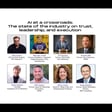
Welcome to the latest edition of From the Horse's Mouth. I'm delighted to announce that today we have KK, who is the CEO of Ascendion, a long-time industry heavyweight who I've known for several years, who's here to join me.
00:00:18
Speaker
And we're going to talk about, I think, a lot of 2025 and what happened and where we're going in 2026. Great to meet you in the podcast studio, Karthik. How are you doing?
Benefits of Small to Medium-Sized Businesses
00:00:30
Speaker
Doing incredible, Phil. Yeah, i we've known each other quite a while. have to say congratulations to you on this incredible thing that you're building. Yeah, thank you very much. Incredible.
00:00:42
Speaker
Yeah, it's a fun time to be in a small to medium-sized business where you can pivot and absorb what's going on around you and get ahead of what's going on in the markets. But, I mean, this has been an incredible year, one of...
AI Evolution: 2024 vs 2025
00:00:56
Speaker
politics, process, and prediction um driven by someone was describing it this morning as a joyless AI boom. But how would you describe 2025? 2025?
00:01:10
Speaker
Yeah. yeah Honestly, I'm sort of a little schizo on the market at this point. um I think the the the way I would think about 2025 from a market perspective is that it was the year of...
00:01:27
Speaker
early stage opportunity. um To me, it was the year where green shoots have really started to emerge all on the agentic AI revolution in a very real way.
00:01:47
Speaker
And so if I thought about sort of 2024 as a year where it was all about agentic and AI for fun, The way I classify 2025 is the year of agent to get work.
00:02:02
Speaker
What is still open for conversation and debate is the whole notion of when do we get to agent to get at scale?
Market Disruption and Authenticity
00:02:10
Speaker
um And you know we could spend the rest of the debate while the rest of the one hour talking about that.
00:02:16
Speaker
That's sort of how I think about it. And the reason I believe that is because along with all the hype and the hoopla,
00:02:27
Speaker
the noise levels have also increased. And you know, as as you yourself being somebody that's trying to drive, you know, disruption in the market, that if you don't have noise, the change is not enough.
00:02:44
Speaker
And so that's sort of how I think about 2025. Yeah. Noise is important. You know, that's what we try harder HFS to is to drive a narrative and have people take you seriously, be authentic in the market. And, uh,
00:02:57
Speaker
a market that people care about influence and people care about advice. What do I do?
AI Tools and Personal Empowerment
00:03:03
Speaker
One of the things which has impressed me, and we term this the AI velocity gap at HFS, but it's as individuals, we've really empowered ourselves with AI. So we figured out how to connect our calendars.
00:03:17
Speaker
our scheduling, our Gmail and everything. We're allowed to experiment. We try things out. We're using all these different tools to do our jobs better, faster, slicker, smarter. I don't have anybody right now who isn't using ChetGPT or Claude or these tools to do their jobs. And I find it funny when you accidentally see someone screenshot during a call now and youre they're always sitting there on ChetGPT or something. But it's incredible how I think Ultimately, we're forces of nature. And if your job is under threat, you know it, right? yeah You know it. And you're forcing yourself to really figure this stuff out. Many people will do that and go to work on a Monday morning and, oh my God, it's the same old crappy systems. Everything's in silos. Everything requires a committee.
00:04:04
Speaker
HR doesn't talk to finance. He doesn't talk to procurement and marketing is over here and sales is over there.
Leadership in AI Transformation
00:04:10
Speaker
You know, so my concern is that people are gonna get pretty slick and focused and they're gonna look at their companies and turn around and think, why do I wanna work here? This company is gonna be toasting in a year or two. sorry you know I agree with that because, that and you know it's an interesting point that you bring out, right? Because on the personal side, I am my own leader.
00:04:37
Speaker
That's ultimately the difference between the personal and the professional side, right? I am my own leader. On the professional side, there's somebody else that's my leader. And so when I am my own leader, I get to define my set of values, my own set of ways of judging my my journey on this.
00:04:53
Speaker
So yeah, so I've decided to go use ChatGPT. The question I always think about, especially as leaders is in the corporate context, what are leaders doing?
00:05:04
Speaker
Because there you are actually disconnecting between the doer and the leader. That's why, you know, and I know, you know, we talk about this quite a bit about the leadership debt that exists, the leadership crisis that exists during this time.
00:05:18
Speaker
ah It is incredibly important for very well intentioned, purposeful, hands on, lean forward leadership now.
00:05:32
Speaker
Now, leadership that is able to understand that trust is the new currency of artificial intelligence. If you are not able to create trust in the organization with the people that you believe will need to be part of this journey, then this thing doesn't get anywhere.
00:05:54
Speaker
um And that's why I see this big difference between the personal, why are we using it so much on the personal side and why are we struggling so much on the professional side? Because on the personal side, i am my own leader. On the professional side, i am not.
00:06:07
Speaker
I look for leadership. And when I look for leadership, if that leadership is not acting and behaving in the way that I want to behave, I'm always going to have that gap.
00:06:22
Speaker
And and that that, I think, is so important now for leaders in the industry, in every industry, to do. um And until that gap gets closed at some level, the human transformation that needs to happen.
00:06:39
Speaker
will not go at the speed that we need it to. And that's something that we think about a lot at Asenia. all Right.
Values in Leadership and Organizational Growth
00:06:46
Speaker
Yeah. um And when you look at leadership values, I don't think they've changed.
00:06:52
Speaker
I think it's about listening, admitting what you don't know, creating a safe space for your people to feel psychologically safe to express what they want to do and then share their learnings with everybody. You know, we have situations where client staff is figuring really cool stuff out. and and And I know they're using AI and I said, can you share this?
00:07:15
Speaker
What prompts did you write? This is an organization now where we need to start showing people how we're using these tools to make our jobs better. Because I think some people are kind of hiding it a little bit as well. I'm 10 times more productive than I used to be.
00:07:28
Speaker
i've got this. Jack GPD seriously is getting to know me in a scary way. knows how I think. It knows everything I've written in the last two years. I'm just pulling some stuff all the time. It's fantastic. So I think if you're good at what you do, it can really empower you.
00:07:44
Speaker
But as a leader in this organization, I think it's embracing what's happening in our personal lives and try and bring it into the what we're doing as a company, right? How do we sit down? We're all learning together.
00:07:57
Speaker
This isn't a question of I know better than you. This is a question of we're all learning. We're all getting smarter at this. We're all evolving. And I think
Opportunities for Medium-Sized Businesses
00:08:06
Speaker
you're right. Trust is everything, right? Most staff at people people are scared. A lot of people are wired right now. They can see how they can be replaced.
00:08:14
Speaker
I did a podcast do with this 26-year-old guy, Ed Elson, yesterday, who does a great profit G-Market thing in the mornings. And he this is a very savvy kid who knows these technologies, and knows the stock market, knows everything. He's giving a very different view of AI than I've been hearing from the adults in the room, yeah that um because I don't think leadership should be painting pretty pictures around the staff.
00:08:41
Speaker
I think we need to be dead honest. And it's our responsibility to say to our staff, you need to get with this thing for your own sake, because you're going to be irrelevant in a couple of years if you don't.
00:08:52
Speaker
And it's having the tough conversations. And it's better to shout and scream at people than just having a sort of passive aggressive type relationship. Yeah, no, you we have to be very purposeful and very intentional about our leadership now.
00:09:09
Speaker
The ostrich strategy doesn't work. You can't just put your head in the sand and hope that everything blows over. It's not because it's you that's getting blown over. And completely agree with you. Yeah.
00:09:22
Speaker
And that's why it's fun. This is a time for... you know You said this thing about small and medium-sized businesses, you know at least in the world that I live in. I think the only nuance I would add there is it's incredible to be a medium-sized business right now.
00:09:38
Speaker
Because I think when you serve enterprises, enterprises look for you know look for impact and look for disruption, but at the same time, they look for a calming mind, a calming head. They look for somebody that they believe has dealt with enterprise complexities before.
00:09:54
Speaker
It's perfect to be a medium-sized company with a ton of intentionality around driving agentic transformation for clients.
00:10:07
Speaker
Because ultimately, what they're looking for, at least this has been our learned experience, Phil, is that ultimately what they're looking for is a partner that can help them reduce outcome risk.
00:10:20
Speaker
and somebody that's able to put forth a model through which they can reduce outcome risk. In that context, especially as you serve enterprises, being sort of the right size of scale, you don't have to be too big because if you're too big, there's another word for it, we call them dinosaurs, but you know, if you have to be just about the right size,
00:10:42
Speaker
where you can impact at an enterprise level value at the same time, have sort of the speed and the flexibility ah and the willingness to learn to be able to change and adapt and move forward. Right.
00:10:54
Speaker
And so I think being a medium sized business is a perfect size to be, especially if you're serving enterprises. Yeah. We're working with a number of, I'd say more of the enterprise level clients and I can think of two in particular who are very unhappy with their legacy relationships. They're stuck in these FTE type contracts and they're hearing the leaderships of these providers waxing about AI and all this sort of stuff. And they're saying, well, why aren't I getting any of this?
00:11:26
Speaker
Right? And at the same time, we're advising them and saying, well, maybe you should consider going out to market, doing a competitive bid, looking at some new partners who are gonna work with you to invest in innovation and the Gentic and other solutions in your enterprise. and I see with some clients sheer terror of change, like the thought of just saying, I don't want to work with you guys anymore. We're going go and work with these guys.
00:11:55
Speaker
And it's this fear of change. I'm like, you know, why why are you, you're not scared to change your own habits of a lifetime. and get chat GPT to help you write your emails and do all sorts of things for you. But you're too scared to take a little risk that you're going to move infrastructure management from this company to this company and that sort of thing. So why is this fear of change? shows I mean, I'm sure you're experiencing it with your own conversations, but you know what do you think is going to happen to force clients to make the shift? Or do you think some are just not going to do it?
Leadership's Role in Change Management
00:12:31
Speaker
Listen, I think... If you think about the force multiplier here, but back to your question, I think some may just not do it. that is That's just the, that's the reality of human evolution, right?
00:12:42
Speaker
That's absolutely the reality of human evolution. But having said that, I think that ah those that end up doing it will end up doing it, I think for the following reasons, at least that's what we're seeing, the ones that are actually getting it done.
00:12:56
Speaker
One is very, like I said, and I keep saying this, but very well intentioned leadership in this direction. Leadership that I think is defined by optimism and courage, being relentlessly curious, and at the same time, having a certain degree of empathy for what people are going through.
00:13:14
Speaker
That's where the trust factor becomes important. So so it it is a real challenge for leadership now to be able to be relentless and empathetic at the same time.
00:13:27
Speaker
And so I do believe that leadership that's able to show that over time would be able to scale this significantly. And there are many of those types of enterprise leaders that have been able to navigate through change in the market.
00:13:40
Speaker
So the this will hopefully look like a forever increasing sine wave, right? But unless you conquer that problem, i ah I think it's difficult to move to agent AI at scale. Yeah, I think i think it's conquering conquering fear.
00:13:56
Speaker
there's you know We've been talking about automation taking jobs for years. I remember RPA in 2012, which we coined actually. There was the same conversation happening back then about what's going to happen when, you know,
00:14:11
Speaker
I remember the huge numbers that came out into the market of how automation was going to went back to organizations and then it didn't happen. One, because the technology wasn't good enough.
00:14:22
Speaker
and can scale effectively. um But also it was just lip service from CFOs and CIOs who would say, yeah, we're going automation. And they would dumb it down two three steps, blow them in the organization.
00:14:36
Speaker
I feel now with Agentec, I call it like the distant cousin of RPA because the concept's the same. It's about autonomous capability. Most of the what people are doing right now Genki. It's knowledge creation using LLMs and stuff like that.
00:14:51
Speaker
Agenic obviously has LLMs at the core, but it's genuine automation that can scale. can be developed between people who have no tech skills versus people with tech development skills. So we are seeing this final revolution to, I think, real autonomous capability. And it's great if you're in a small company that doesn't have all the legacy behind you to do it, right? But then we're at a point now where when we talked about layoffs 10, 20 years ago, it was always cyclical. ah
00:15:25
Speaker
going through a cyclical time in the economy, we're going shed some stuff or create jobs. Now what's happening is, We're seeing jobs being eliminated that are never ever going to come back. but They're gone for good. that That's the difference. and This is this just the first time I think our industry is facing this conundrum. And how do you see us coming to the other side here? Do you think we're just going to be a smaller industry in a couple of years?
00:15:52
Speaker
Or do you think there's going to be all sorts of opportunity created because of the stimulus of AI? How do you see this playing out? I absolutely think that our industry is going to be much, much bigger than what it is right now.
Technology's Growing Impact on Industry
00:16:08
Speaker
won't look the same. though
00:16:11
Speaker
And those that will not make the cut will be those that assume that it will remain the same. And ah my sort of two leading points on that hypothesis is this.
00:16:23
Speaker
One is we serve the mission ultimately of technology being more useful for humanity. That is what we are we are all consciously or subconsciously ultimately doing.
00:16:40
Speaker
And in an industry which is getting, getting in a world, sorry, in a world which is getting incrementally more dependent on technology every day,
00:16:52
Speaker
our industry is more relevant than ever before. And the way I define our industry is not as an on-site offshore industry, is not as an an IT services industry.
00:17:03
Speaker
I define our industry as an industry that connects technology to outcomes. We are the last mile.
00:17:13
Speaker
We are the last mile industry in connecting technology to outcomes. So I absolutely think that in that sort of broader a curve of technology being more and more relevant in the world.
00:17:25
Speaker
That is important. Then there's the second thing, which I always think about, right? And and the analogy that I give is sort of the retail industry. If you think about the retail industry, the retail industry prior Amazon was massive.
00:17:40
Speaker
But the biggest part of that retail industry was the, was the what what would they call it? The unorganized retail or the home retail, right?
00:17:51
Speaker
Where if somebody wanted a bottle of milk, they they wouldn't walk into a fancy store. They were just order it in the store around the corner, right? Now, I think our industry has the potential to start getting reshaped like how the retail industry started to get reshaped once Amazon came in.
00:18:12
Speaker
If you look at, for example, the top 15 companies in our industry, the services industry, whichever way you slice it, if you look at the cumulative market share, I think if I remember right, the last time I saw it was about 30-40% of what could be either a $1.5 or $2 trillion market as HFS defines it.
00:18:33
Speaker
This is not an industry where the top players dominate 90% of the market with not much room to move further up. So if you think about the new value proposition where we are able to go on and we're basically breaking the linearity that exists between revenue and people by bringing forth platforms, getting a lot more IP-centric, starting to move towards a platform-based operating model with humans at the wheel.
00:19:03
Speaker
then you actually create a value proposition that is not just about taking share from each other. It's actually about going after that 60%.
00:19:14
Speaker
That's the opportunity that I get excited about.
00:19:19
Speaker
Over the next 10 years, in my mind, in our industry can evolve to one where we are actually able to go very legitimately after the million people out there that ask for two people to help them.
00:19:38
Speaker
And that shift will happen if you have the right value proposition. So that's why to me, this industry, if we embrace the new, can be an order of six to seven times larger than what it is now. So what do services firms need to do to grow and scale in this environment. I love this connecting technology to outcomes principle.
00:20:04
Speaker
I'm totally with you. But then I look at companies with hundreds of thousands of employees who are not doing that. They're running a process, they're running tasks and they're charging for effort versus a complete flip of the model saying we need better talent so we can charge for outcomes. How how do we go about making that shift? This is the trillion dollar question we've got to solve.
00:20:28
Speaker
Look, I think we've got people to learn from, right? And we just have to look back to about 15 to 16 years. When the digital revolution happened, the digital revolution did not disrupt our industry. It created a revenue stream for our industry because there were other industries that got disrupted significantly, whether it be financial services, whether it be healthcare, whether it be retail.
00:20:49
Speaker
And there are leaders in the market that have been able to manage and innovate through that disruption. Look at JP Morgan. Look at Walmart, look at a lot of these companies, which were massive companies that were still able to innovate, ah be very, very intentioned about intentional about the innovation and move in that direction.
00:21:09
Speaker
What did they do? They started, in my mind, if I sort of stay step back look at it, they started by taking look at their leadership. They started to see what types of leaders should you have to be. Right?
00:21:20
Speaker
It's garbage in, garbage out at the end of the day.
Transforming Service Companies
00:21:23
Speaker
So, you know, you have to start to think about what types of leaders you need to start bringing in. If you've been hiring from the same old, same old, stop doing that.
00:21:32
Speaker
Start looking at the companies that are putting in place value propositions that are more akin to who we are. Right? You start there. Then you start to lean forward on IP significantly.
00:21:46
Speaker
If you don't have a platform today, I don't think you should be in this business. I think you're much better at starting bagel shops.
00:21:56
Speaker
hit And I can tell you that everybody wants bagels, at least in New Jersey. And so I would start with leadership. Then I would go to product and IP. Then the third thing I would do is I would take a very, very hard look at your sales engine.
00:22:09
Speaker
If you have salespeople that cannot demo your platform in the first 15 minutes of a conversation with a client, then I think you would have a trust issue with the
00:22:23
Speaker
And I'll give you this example. I mean, I won't quote this, but one of my one of my competitors who talks about the platform a lot in marketing and so on and so forth. was talking to a client that told me this. They said that they wanted to understand their platform.
00:22:37
Speaker
And they said, hey, had send me something about the platform. They send a PowerPoint presentation. Then the guy says, no, I want to know more about the platform. He sends another PowerPoint presentation. They did it four times.
00:22:50
Speaker
On the other hand, when my sales guy walks in with an iPad, with the demo that he shows of how the platform actually delivers outcomes, it starts there, right? So you have to start to rewire.
00:23:05
Speaker
And to me, though, the difference is going to be culture. It's not going to be the technology. I can tell you one thing. This time around, like you said, on on the automation time, it was different. This time around, you don't get to blame the technology. because eight of the top 10 most important companies in the world by market cap are making a massive bet on this.
00:23:24
Speaker
It's not going to be a technology problem. 10 years back, only two of them did. This year, now, if you go back and look at the market cap, you will see that, right? If you look at the market cap of the last, you know what that i I went back and looked at this during the big data revolution, 2010, 2011, 2012. If you take the top 10 market cap companies, only two or three of them made a public go forward, bet on AI.
00:23:48
Speaker
You do the same thing right now, I think it's eight or nine out of the 10.
00:23:53
Speaker
And that tells you that this is not gonna be a problem of investments in technology and technology moving fast. That's massive, as you know, AI in front of Apex that's going in. This is gonna be about culture.
00:24:04
Speaker
This is gonna be about leadership. This is gonna be about how much are we leading with outcomes How much are we talking about outcome acceleration versus, oh, look at all the fancy stuff I got.
00:24:21
Speaker
And that's what we really focus on. We talk about four outcomes. We always talk about four outcomes. in In the way that we go to market, we say, listen, we have a method that we call engineering to the power of AI, which helps you deliver on four meaningful outcomes.
00:24:36
Speaker
Revenue acceleration, profit maximization, enhancing your experiences, keeping your CEO out of jail. to These the four.
00:24:50
Speaker
And everything that we do, which is our engineering does part of AI method, which involves three things, which is our platform, our AVA platform, our delivery playbook, which we have very carefully nuanced and built for multiple use cases and environments.
00:25:05
Speaker
ah This playbook is the core of the whole thing. And our people, our agentic delivery managers and asinia, you know, agentified asinia as we call them, all three of them coming together to work with clients to deliver on those four outcomes.
00:25:21
Speaker
That is, to me, it has to be about outcome acceleration. Right. Well, I'm 100% with you on the fact that technology is not the problem. And our research has shown that where I think it was, we asked the Global 2000, what's holding you back from achieving your goals?
00:25:37
Speaker
corporate objectives, it was process by a mile was the number one problem. And when we look at debts, I think we have tech debt at about 2 trillion and process debts about 4 trillion, total enterprise debts, 10 trillion. But what's the point in sizing debts as you're deciding how screwed up everything else?
00:25:55
Speaker
I think you're absolutely right that we're going through a cultural um revolution, a redesign of work revolution. And a lot of companies aren't going to make it through this because it requires a huge amount of change, a huge amount of effort.
00:26:10
Speaker
You've grown up like me, I think in the services industry, you've come from a traditional background and now you're in a feisty, sort of mid-ties business. How do you guys make it over this hump? think we're going over an 18-month cycle to get through the other side.
00:26:28
Speaker
How do you convince in investors that this is the way forward? And are you even going to be called a services firm in a year? Is there any point calling yourself a services firm anymore? Yeah.
00:26:40
Speaker
You know, the last question that you brought up and I talked about that, that's something that we think about almost all the time. I genuinely like the terminology that HFS has come up with, services or software.
00:26:52
Speaker
I think it's a great terminology. Ultimately, if we are in service of a human outcome,
00:27:06
Speaker
then the word service becomes critical in whatever shape and form we become. But the end entire method is changing. And so what we decide to call ourselves, I think, that is an important decision point that we have to make. We have to make the call on whether we want to make that name about the outcome of what we're delivering or about the method in which we deliver.
00:27:30
Speaker
If it's going to be about the method in which we deliver, the term doesn't become relevant anymore. If it's about the outcome of what we're delivering, then it starts to become more relevant.
00:27:42
Speaker
Right? Because I also do not believe that this phase of this world is going to be just about pushing licenses.
00:27:54
Speaker
it won't just be about pushing licenses. It will be about a new category that gets created. It will absolutely, absolutely be be about a new category that gets created. But I am staying away honestly from trying to call us something right now.
00:28:09
Speaker
And I'm allowing the outcomes to dictate sort of that journey for us. So when we go in and for some of the deals that we're winning, and very soon we'll talk about some of these, and these are like multi-hundred dollar, multi-hundred million dollar deals, thank you, not just multi-hundred.
00:28:26
Speaker
Multi-hundred million dollar deals with the Fortune 100 companies, helping them transform the way that they build software so that they can deliver much more accelerated and exponentialized outcomes.
00:28:42
Speaker
As those stories start to happen, Phil, I do believe the investors will get in line. um But I also do believe that in the investor world and sort of the more classically defined private equity world, I think there is is an important question to be asked about how do you define success?
00:29:02
Speaker
How do you define excellence? What metrics do you use? right For example, I don't think headcount is relevant anymore. but We talked about small, medium, large businesses, but how do you define those? You define those in terms of revenue and headcount.
00:29:17
Speaker
But why should headcount be relevant anymore in this new world? Those types of questions, I think, are very relevant questions that investors sort of need to go through. I know HFS, for example, you know you've been talking a lot about revenue per FTE and operating margin per FTE.
00:29:31
Speaker
As an industry, we have not thought about that. We've not really put a massive focus on operating margin for FTE, which I think is a very, very relevant metric to take a look at.
00:29:42
Speaker
ah And so now in the investor community, I think there are two things that become very relevant. And this is where I think as as leaders, we have the opportunity to drive education, which is to say,
00:29:55
Speaker
Listen, these are the outcomes and therefore you can trust us. And these deals are happening and these genuine sort of inflection points are happening. And the proof of those coming to life is lies lies in these types of metrics.
00:30:11
Speaker
Right? Not just in looking at scale, but ah but really in looking at output the input ratios. Right? um And that's really how you do it.
00:30:23
Speaker
ah I think another part of this also from an investor perspective, my experience is that I think investors think a lot about not just anymore.
00:30:34
Speaker
I mean, at least in my experience, not just about the broader business case, but about what's your starting point. And ah by that, again, I come back to what types of leaders do you have?
00:30:46
Speaker
What type of IP investments are you making? What is your secret sauce? I get asked this question every day. What is your secret sauce?
00:30:57
Speaker
like How do you know that the platform that you're building will not be upstaged by Bay Area startup 12 months from now? So we keep getting asked that question. and and i general And so those are the types of things that I think we need to be able to answer very well for us to be able to get investors on board.
00:31:17
Speaker
And there are some that are getting on board now. Many of that are getting on board, When you look at bringing on, you talk a lot about your leadership, your talent, you recognize that's where you need to see the shift.
00:31:29
Speaker
I look at a lot of your competitors and I don't see a lot of leadership who are any different from the same people than 10 years ago. They're still selling the same way. They think in the same way.
00:31:42
Speaker
They're trying to talk big games with PowerPoint. They're not actually getting their hands dirty. And clients aren't stupid. They can tell who's getting their hands dirty and who is not. So when you're looking at that next wave of talent to take your company to the next place, what are you looking for in people now? Are you looking for a completely different profile? Are you looking for people who've had 20 years in services or is it a very different mindset?
00:32:09
Speaker
Well, I think it the it's ah it's a very, very important question because I think that ah ultimately there are roles that are played in front of clients where some things remain the same and some things need to change. And I'll tell you what needs to remain the same.
00:32:26
Speaker
Our ability to be able to make the client problem our problem is still the same. The need for us to continue to be
00:32:39
Speaker
flexible and mindful and thoughtful about the challenges, the inherent complexities and challenges that lie in our client's environment is still the same.
00:32:49
Speaker
You can't be somebody that walks in and says, hey, listen, you know, i don't um I don't really care about what you got, but this is what my product does. You know, that I don't think it will work in today's world, especially when what you're doing has become so impactful and so important for the client. So that is still the same.
00:33:08
Speaker
Now, those are all some very fundamental traits that we have had in the tech services industry, because we're all wired with the services mindset of we're in service of someone. So I think those types of skills are very relevant.
00:33:25
Speaker
But at the same time, the skills that I believe aren't necessarily new, but are also one needs to be thinking about a lot more is technical hands-on-ness.
Tech-Comfortable Leadership
00:33:36
Speaker
You have to be very comfortable as a leader, building an agent very quickly. And I'm not talking about deep technology complexity. I'm just talking about somebody that's not used to sitting in a room with four walls and barking out orders, right?
00:33:50
Speaker
Someone that's actually building agents for themselves, showing that you can lead from the front. I think um that that that technological comfort is incredibly important.
00:34:06
Speaker
The second piece of this is commercialism. How do you actually commercialize the whole thing? There is so much you can learn from the product industry around how you start to commercialize and create solutions here that work for clients in a commercial construct that makes a ton of sense for them.
00:34:25
Speaker
That, I think, is skill sets that you need to start to think about. So where you know some of the areas that we we are starting to look at, I will tell you broadly some of the areas that we're starting to look at.
00:34:36
Speaker
ah product industry for one, especially in terms of go-to-market and sales orientation. The product industry, again, for us to be able to strengthen the productization of our platforms, right? For too long, the services industry has built platforms as just you know, sort of an afterthought that emerged from a bunch of very intentioned client conversations.
00:35:00
Speaker
But, you know, we need to product ah we need to productize our platforms a lot more and we invest significantly in hiring from there. Then the third thing is we have to look at non-traditional markets.
00:35:12
Speaker
I look very deeply at the movie industry. And the reason I do this is because storytelling is at the core of our ability to be able to communicate outcomes, right?
00:35:29
Speaker
So we need to have more storytellers and story writers and storytellers. So I think, you know, I've been researching that and we've actually looked at a couple of people that can help us in that, on
Storytelling in Technology
00:35:40
Speaker
that space. So that's, I think, an industry that we start to look at more seriously now than ever before, given the importance of storytelling in our market, connecting outcomes to technology, simplifying it, telling the story right, I think is incredibly important.
00:35:55
Speaker
Yeah, I would say these are some of the industries that I would really start to push on from a people standpoint. Yeah, terrific. also value learnability a lot.
00:36:07
Speaker
So yeah people who can learn on the job, start to build curiosity and learn new things and new skills. To me, that's the core. And what frustrates me most is when I have staff who won't learn new things.
00:36:23
Speaker
Right? Honestly, I go to my finance people. They should be using the latest, they should be looking at the latest expense management tools. How do you make this easy for people?
00:36:35
Speaker
Same with marketing and agenda capabilities and campaign management. You can go through everything. Everybody in the company should be using and exploring advances in the technologies that are driving their function forward. Because then you can have...
00:36:50
Speaker
marketing and sales sit down and think, Hey guys, we're all trying to do the same thing here. We're trying to productize for our clients. We're trying to delight them. We need, we need better data. We need to be on top of this. Just getting people out of this process mindset into this learning mindset. And then it's a huge challenge for leadership to do, but I think it means you need to spend more time bringing your people together.
00:37:14
Speaker
I think this was Steve Jobs' great big thing was he would bring his leadership team together once a week and they would just thrash out how they work together more effectively to achieve the goals. And I don't think enough companies have that have that mindset.
00:37:27
Speaker
It's especially true in our industry where it's one way, mark everything is tick the box. Marketing does it this way. Sales does it this way. delivery does it this way. And it's until we sort of break down these silos and start bringing everyone back together, like what problem are we trying to solve and how do we do this together? And do we have the right people to deliver against that?
00:37:46
Speaker
we're never gonna We're never gonna get anywhere in the next couple of years. so Agree, agree, agree. Yeah. That's exciting though. The exciting part of that is the opportunity for us to be able to make a massive impact.
00:38:02
Speaker
You are so right. i was just thinking back during pandemic. I remember like as an analyst, it was like, if I could just write one interesting thing a month that will keep me going. Right.
00:38:13
Speaker
Cause it was just, we were just trying to survive. Now it's like, I've got about 20 things on the go. ah There's something interesting to talk about every day.
00:38:23
Speaker
What is happening right now is beyond comprehension of change, of opportunity, of overcoming fears and and and everything. it mean This is an incredible moment of change. And I think if you're good at what you do,
00:38:36
Speaker
These technologies can make you great at what you do. And, you know, I tell my staff, it's like, you know, if you're going to use AI to help you with your research, write your research first and then see what AI can do to improve it.
00:38:49
Speaker
Don't ever ask the AI to write your research for you. It's as simple as that. Very, very true. You know, i think i we go back to talking about the change and so on and so forth. One one real area that I think services companies have to take a hard look at is capital allocation models.
Rethinking Capital Allocation
00:39:06
Speaker
We have to learn from the product industry on how to do smart, meaningful capital allocation. yeah Traditionally, we've not been a CapEx intensive industry. Our CapEx has been around buildings and infrastructure and so on and so forth, right? Network equipment and things like that.
00:39:23
Speaker
But it is incredibly important for us to be able to understand how to do a very meaningful capital allocation and think about long was a short in a very real manner.
00:39:34
Speaker
And that's where I think, you know, when you talk about new skills, the need for a new form of leadership, all of that becomes so relevant. That com conversation becomes so relevant because, you know, for many, many years as an industry, we never really worried about any type of non-infrastructure related capital that needed to go beyond one or two years.
00:40:01
Speaker
Never had to worry about it. It was always about the optics. I spend a lot more thinking about what's below the line then now from an EBITDA line than what's above the line. I spend a lot more time about where that thing is going.
00:40:16
Speaker
yeah a Way more time on it. Think a lot harder about account receivables because you need that cash for you to be able to do a capital allocation very effectively in in the larger scheme of things. So things that we just sort of thought were The responsibilities of CFOs to just drive good quality operating excellence has now become even more mission critical for you because you need to think about where your capital is going with much more meaningfulness. It's not just something that only the CEO of $15 billion dollars company needs to worry about.
00:40:51
Speaker
Medium-sized companies and CEOs and leadership teams need to worry about this significantly because there used to be a time when what it meant for you to go from S to M and from M to slightly oversized M, I mean small and medium to slightly oversized M, was just to keep responding to the client's needs for people.
00:41:12
Speaker
That's not the case anymore. Clearly not the case anymore. I mean, if you look at my sales channel, 87% of my deals are proactive.
00:41:30
Speaker
of the time, you're not hitting competition to six months, seven months into the deal shaping process. right And so for you to be able to do those types of things, the way you think about capital is very, very different.
Proactive Deal Shaping
00:41:49
Speaker
I think that's a that is that is something that the CEOs of services companies, of leaders in services companies need to really start to think about with much more intention and purpose. Yeah. When you look at how much services firms invest in R&D, it's pathetic.
00:42:06
Speaker
I worked on a major deal recently and I was shocked at the tiny sums of money being put aside for innovation funds for hundred
Critique of R&D Investment in Service Firms
00:42:15
Speaker
billion dollar clients. It was insane.
00:42:17
Speaker
And then you actually look at the product companies and they put huge proportions of their and rate with profits and income back into the R&D. They're giving it all back to the shareholders.
00:42:31
Speaker
It's just a cash, it's a cash slot in a machine. That's why if that's all you're going to do, you're on an erosion, you're on a journey like many legacy services firms have been on where it's, they celebrate shrinking profitably every year.
00:42:48
Speaker
Celebrate. That's a good one. I'm not going to name names. I read about one recently. You probably, probably know about. Yeah. let's do ah Hey, look, this is really fantastic.
Conclusion and Future Excitement
00:43:02
Speaker
where We can continue this for another hour or two, and I look forward to meeting up with you in person again soon. Tremendous fun. Really enjoyed the conversation and sharing this with the world ah very, very quickly. So thank you for your time today.
00:43:15
Speaker
Of course. It's super exciting to have had this chat with you, Phil. It's an incredibly exciting time to be in an industry which is going through so much change. You know, people used to say, somebody said this, everybody loves progress, nobody likes change. This is one where the responsibility of making people get on board with it really sort of lies with people like us. And that's, I think, the most exciting part.
00:43:35
Speaker
I've never had so much fun, honestly. And a couple of years ago, it's sort of like, how do I make enough money to just call it a day, i sit on a boat somewhere? And now I'm just like, all right, I'm I'm very excited about the next five, six, seven years of this industry and where this is going. And being at the core is um it's a privileged place to be.
00:43:57
Speaker
Thanks for tuning in to From the Horse's Mouth, intrepid conversations with Phil First. Remember to follow Phil on LinkedIn and subscribe and like on YouTube, Apple Podcasts, Spotify, or your favourite platform for no-nonsense takes on the intricate dance between technology, business, and ideological systems.
00:44:17
Speaker
Got something to add to the discussion? Let's have it. Drop us a line at fromthehorsesmouth at hfsresearch.com or connect with Phil on LinkedIn.