Transcript
Speaker: You're listening to From the Horse's Mouth, intrepid conversations with Phil First.
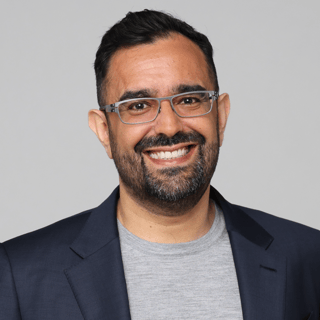
Speaker: Hello, welcome welcome to the latest edition of From the Horse's Mouth podcast. I'm your host, Phil First. And today joining me is Richard Socher, who's co-founder and CEO of u.com, which is the leading web search infrastructure provider for AI. And he's co-founder and CEO of the Recursive Superintelligence, which is a company building self-improving AI to automate scientific discovery.
Speaker: So on this line of things, I think I might let Richard talk a bit more about um himself and his background and the businesses that he's trying to run at the moment. So good to meet you, Richard.
Speaker: Richard Schauffler Thanks and thanks everyone for listening. Yeah. My name is Richard. I'm originally from Germany with my PhD at Stanford. I had this crazy idea in 2010 to use neural nets for natural language processing. It was a very controversial idea in 2010. It's a very obvious one now. um In fact, it's so obvious, I almost wonder if some people should try some other ideas as well. um But ah it's been it's been an exciting ah last like two decades in NLP.
Speaker: um I even studied linguistic computer science back in Germany for undergrad. But then mostly at Stanford, I started really doing research and um invented a few things people liked, like word vectors um ah that are very popular called GloVe, and a couple of other papers that led eventually to prompt engineering and essentially trying to unify all of natural language processing in one neural network.
Speaker: um After the PhD, I started a company called Metamind, got acquired by Salesforce, became chief scientist and eventually executive vice president, running lot of the AI efforts there, starting a research team, working on the suite of products under the Einstein umbrella.
Speaker: um And then after four and a half very happy years at Salesforce Research, where we also invented prompt engineering and a few other things like large language models for protein generation, and i felt like ah the world could do better in search. Search was still mostly 10 blue links.
Speaker: And felt to me like clearly we should be able to give people just an answer when that makes sense rather than a list of 10 blue links. And so I started ah working at u.com mostly on consumer. Eventually we realized consumer, um the the dominance there of ah of Google is very strong. And most people don't change a default setting. And if, you know, one is the default, it stays the default. And so it's an uphill battle.
Speaker: But the technology we had built and the index and so on ah has been very helpful for companies and other firms that want to ah have their LMs be up-to-date, accurate, and have citations. And so after pivoting into that, our revenue massively increased last year. we raised it at $1.5 billion.
Speaker: evaluation. accounted And it's been very exciting to bring knowledge yeah into into LMs and into people's agents. um And then at Recursive, which we just started ah this year, um we're building Recursive Self-Improving Superintelligence to really actually allow AI to do this manual research of ideating, implementing, and validating ideas automatically.
Speaker: ah and ah on on its own, given certain environments and goals and rewards that we give it. And so together, um it's it's just a very exciting time to both bring more knowledge to the world that already exists on the Internet through research APIs and ah to actually push that frontier of knowledge forward with superintelligence.
Speaker: This is terrific, Richard. I have to confess, um when I was a young analyst, sort of around the dot-com time. I remember when Craig Venter sequenced the human genome using a cluster of, I think, compact servers back in the day.
Speaker: And then later on in my career, I worked a little bit with IBM Watson, where a lot of the tools were being built out, which were quite good at stamping out like bad science and things. But Can you talk to me a bit about the technologies that you're using today for scientific discovery and how different they are from, you know, what I was starting on 25 years ago and and how much more capable are they today based on the large language models that you're working with?
Speaker: Yeah, I mean, of course, nowadays you can have a full conversation with a model. It becomes more and more of a co-worker, more and more. And this is something I predicted a few years ago when I said everyone will become a manager of ai You know, it's not just like a simple tool. It is now a technology that you delegate certain tasks to. And so delegation actually is becoming one of the crucial capabilities and skills of this new age, the agency, the creativity and the delegation of of different tasks. And so that's that's probably the biggest change from the past. You had to be an expert. Computer science has been phenomenally good at building levels of abstraction. You know, you used to have to code in assembler, right? as Zeros and ones, really thinking about how to shift things around. Then you got to work in C and C++ plus plus and Java and Python, and now it's English.
Speaker: You know, and like, I don't know where we can go from there. Like that is sort of the ultimate abstraction level because language is the most interesting manifestation of human intelligence and getting computers to be so good now at understanding and producing both language and code is the major difference. You know, AI has always been code, but now AI also can code.
Speaker: And so that that that's the big ah sort of why now for for recursive too. so So how is this changing the the life of the scientists? Is it that they don't have to be so dependent on technical relationships and their IT people that they did before, they got more empowerment to sort of just use the software themselves? i mean, how is their life changing as a result of these advancements?
Speaker: So I think for for, you know, it's interesting in terms of research, a lot of researchers, um I think, are doing some of the most important work of humanity. um But many people appreciate the outputs of ah research, but they don't necessarily want to spend more money on research and researchers. And so so ah more and more um of ah of us are now becoming...
Speaker: like program directors at the National Science Foundation rather than individual contributors. Again, like you now you now really have to be ah able to just say, oh, like go explore these 10 different ideas and then maybe only one will work. And then you go after that one. And instead of, you know, you doing one of those ideas like in math or even in in biology, one of those ideas for like 10 years of your life, you just do some of that ah for a few weeks or months with one of your agents. right And so you become more and more like an NSF director ah than an individual um contributing researcher, individually contributing researcher. And so I think that, to me, is is the big shift. And honestly, that means we're just making more progress in science. Like we are are a fairly small team here at Recursive, and we're seeing just incredible progress.
Speaker: ah progress, it's as if we we're several hundreds of people um in terms of the outputs. And so I see that across the board. I also invest at my venture firm called AIX Ventures and we've invested in like eight ah unicorns in our seed rounds and and we're seeing just like the level of sophistication when you're now raising a seed round is much higher. Instead of having a wireframe that you come with, you know, be like, oh this is kind of what I think the product might be or Here's my high level idea. You should just have vibe coded V1 of that idea. You can show it to people and you can already show it to customers. And ideally, customers already said, yeah, we would want that if it existed. Right. And so that everything is getting accelerated.
Speaker: Yeah, well, so so you have a lot of affiliation as an adjunct professor at Stanford, right? So what's changing academia? You don't need more. Okay.
Speaker: All right. so But, I mean, but what's changing, do you feel, in terms of the kids coming out of college today with computer science degrees, et cetera? Are they getting skilled differently than they were 10 years ago in terms of how they're approaching education? how they're approaching AI?
Speaker: I wish they were. um They aren't, unfortunately. i think education has to change. I think there's some things ah where ah AI is putting a lot of pressure on education, but some people maybe overshoot a little bit.
Speaker: um They almost think that all of education needs to change. But actually, um ah there's some skills that even though AI can now do them, we should still learn how to do them ourselves. ah you know, a lot of training and and school and universities around how to be a functional member of our society, how to...
Speaker: learn anything, right? It's not the particular thing like calculus and taking a derivative of this that you had to learn, but you're training your mind. You're learning how to memorize things. You're learning how to debate and think on the fly and communicate your intentions well, which will be helpful for reward engineering of AI too. um And ah in many ways, I think of of school also as kind of a gym for the mind. You know, like you're just training to think it doesn't matter that you're not learning this particular skill that will then later be ah important for your work. And so at the same time, I think we do need to teach kids more creativity, agency, creativity.
Speaker: and ah the ability to learn with these tools. And so, you know, of course you can go to the gym and you just like build a massive machine that lifts the weights up and down. Like, I mean, that but that's useless. Like, yeah. And and like the like going going to the gym and having the machines lift their own weights is like useless. And so i think it's the same thing in school. But the problem is the way we structured school is that a lot of kids think, well, if I can just ask ChanchiBT this question and it gives me the answer, why should I study It's like, well, you could have asked a calculator too for a certain answer, but we still want kids to have some sense of how to multiply numbers in their heads so that they can you know not be fooled easily in the middle of a conversation.
Speaker: Yeah. was having this conversation just today about... cognitive issues with people over relying on uh prom tools and actually getting these tools to do their writing for them not even just not just help them with ideas and creativity but to actually write for them and now we're getting this sort of like synthesized english that's starting to appear everywhere and that's um Yeah, i don't know. I think we're reaching a rather important threshold in how we accept AI-generated information versus human-generated information and being able to tell the difference between the two, right? Yeah.
Speaker: there's There's a lot of co-adaptation between humans and and their tools and their AIs. And I think ultimately you just have to test students in the classroom writing an essay with no internet access. like it's It's not that hard. you know And so if if they if they cannot do that, then they clearly weren't practicing it. And I think the the tricky bit with writing is that very often writing is thinking. Actually, two types of people. Some people think in sentences and some people think more in abstract thought clouds. um But for both of them, it's very helpful to put something on a page, to put together a coherent argument. um and
Speaker: And that skill, I think, is is very important for for humanity and civilization. So I hope um we we continue practicing it. And it is, I think, also the case that the more you're forced to have to say novel and interesting things that no one has said before, the less you can actually rely on AI. Like I was recently finished my book um that's coming out in September. And, um you know, a lot of people ah like ask me, like, did you use AI to write the book? And I'm like, I mean, I really tried. But like, if you want to say something truly novel,
Speaker: that no one has said before, you just can't do it with an eye. You have to write it yourself because the eye will pull it back into the space of things that have been said before. ah you're You're preaching to the choir.
Speaker: i'm I'm an analyst and I'm all about the more I use these tools, the more I'm starting to turn them off and write myself. And then I go back to using the tools later because they're very, very good at helping me frame ideas. and Stuff like PowerPoint. Oh, my God. This is like dream come true for me of 30 years of using this terrible application. But it's great to hear that you'll you'll see things the same way as I am. So let's take let's take the conversation down this area of search, which is where you're really focusing on with your U.com business, right? So why does search need to be really rebuilt for the AI era, Richard?
Speaker: Good question. You know, I think there's really only ah like one or two well-known large scale consumer search engines. Right. And there's no really strong business on the enterprise side where you can rely on search. It's really Google and Microsoft Bing.
Speaker: that have a full search index of the web, but they're not providing useful APIs for everyone else. So if you have your own open source LLM and you don't want to be on that stack, you have to build um the ability ah to search the web into your LLM.
Speaker: Otherwise, it will not be up-to-date, accurate, and have citations. And then people think, oh, will we search less? No, actually, there will be even more searches because you can ask one agent a very complex question.
Speaker: And that one question can trigger hundreds of searches, right? Like analyze this thing for me, think about rare earth metals, come up with all these different ideas and realize, okay, there's a huge reliance on China. It then double clicks and goes down the rabbit holes, proverbially speaking, for you and then bring it all back and then summarize the knowledge of the world and um And i think that ah to me is ah is incredibly important and it's important to get it right and partner with the people that actually then use those ah web results in a way that minimize hallucinations and and all the other problems, biases and so on that these LMs have.
Speaker: Right, right. So where do you see the search world shifting to next? It's moving through such a revolution with the use of these tools. I mean, they've transformed how people in their personal lives are functioning and searching for things. We've now got Google.
Speaker: as the dark horse in the race, because of their established base, they're going to be an incredibly strong AI-led business at this point. What do you think is going to happen in the next couple of years as a result of everything that's going on today?
Speaker: like to all of humanity? I mean, i think a lot of, like every industry will change with AI, just like sort of of electricity. I think right now what we're seeing is sort of the equivalent of, okay, you have electricity, but you still have just one massive spinning wheel in your factory. You don't yet realize you can have like handheld electricity and things like that. And it changes all the different workflows. within like a factory or something like that. I think a lot of companies are still adjusting. They're thinking about this workflow and that workflow and replace it with AI and this task and so on. um I think ah as ah the technology becomes more and more ubiquitous and easier and easier to adapt for everyone, it will seep into organizations and then really question ah existing workflows entirely like
Speaker: There's people like reading in faxes and then typing them up, right? And like taking pictures of driver's licenses and then typing them up. Like those things will just like disappear ah fairly quickly, those kinds of tasks. um ah And then ah we we'll see massive transformation in different sectors. So for instance, a tech bio, um I think there's a big shift. ah It used to be that bio companies have like one drug, one compound, and and they spend like 10 years, hundreds of millions of dollars.
Speaker: And then by the very end, they're already publicly traded now, the drug just fails. Yeah. And so that has kind of put a damper on the tech biomarkets. But we're now seeing startups that have three, four, five, or even eight different ah compounds in trials as a Series B startup. right And so the probability that all of them will fail is very small.
Speaker: um And so you, I think, well will see a whole ah acceleration in biology. I think generally what calculus did for physics, AI will do for biology. It's the right language for these complex systems and explaining them and describing them and and making them from a natural science into an engineering science. um And that will change all of health ah and disease and longevity and so on in the next few years.
Speaker: um I think we're seeing already sort of this acceleration of certain industries and countries ah that that have leaned into ai And we're seeing some folks who want to sort of off ramp from progress. Right. And then it starts to worry me a little bit because there are some really nice people. And I think they don't quite realize what it means to off ramp from progress. And that will, you know, sort of in comparison to other nations or regions, um sort of put them at a massive disadvantage over time. Right.
Speaker: Interesting. I could go on. It's a very open-ended question. I could talk for hours on yeah all the different aspects of life that are in the AI. But yeah. No, I like this um conversation around the off-ramp from progress.
Speaker: um You know, I got a a few friends and colleagues who work in the U.S. healthcare care system. Some of them work for the big, you the big providers as well. And the potential is huge um to improve a system where I think um the...
Speaker: annual spend on healthcare care in the US is greater than the GDP of Germany, right? and um How do you see the impact ultimately of AI on the US healthcare care system? Do you think it's going to fully embrace the capabilities moving forward? Or do you think it's going to be a little bit of this off-ramping?
Speaker: as As we go over the next couple of years. um I do think like like the FDA actually has improved quite significantly in the US in recent years. And it's much more ah sort of future leaning. um And.
Speaker: And so, yeah, I see, um especially in China, too, like just a lot of like a lot of even U.S. companies now like to run their first trials in China because it's so much more efficient and less bureaucratic and faster. um And so, yeah, I do see acceleration in ah in the healthcare space. I see more and more doctors, like, using AI, right, like, ah both to do some diagnostics, but, like, also... um
Speaker: ah Just to get rid of boring work, like Ambien is one of our ah successful investments at AIX. They allow doctors to just record the conversation. And so by the end of the meeting, they're done with having it all filled out in the forms and follow-ups and the prescriptions and so on. They don't need to spend another 10, 15 minutes typing it all up. And then, ah you know, filling out the right forms to to actually get the prescriptions going. And so these efficiency gains are are going to be everywhere. And that will allow doctors to actually spend time with patients, which is what most of them actually wanted to do when they got into the field.
Speaker: Yeah. Yeah. Big issue with the system out here right now. Okay. So final question then. you' You've got your book, The Eureka Machine, coming out.
Speaker: You said it's coming out soon, right? Okay. Yeah, in September. September. Fantastic. So can you maybe talk a little bit about the book? What were the key sort of two or three takeaways that you'd like our audience here to think about as we wait for the book to be published?
Speaker: Science has been the main reason humanity progressed so much um in so many ways. And there's no... material problem that we couldn't solve with better science and more inventions and explanations of of our surroundings. The world is getting more and more complicated. ah Science is fragmenting more and more. And so we need new tools to actually make sense of all of this. That new tool is loosely described as AI, obviously many different variants of it. And AI will allow us to build a new Eureka machine, a machine that will make
Speaker: endlessly many inventions and explanations and discoveries for us. And that will usher in a new area of of growth, of health, of wealth, ah and and progress ultimately for humanity. And then I explain on how we can build that machine, um what the necessary pillars are, knowledge, ah scientific ah data, and and sort of infusing measurements into the into this Eureka machine, simulations, anything we can simulate, we can solve with the eye
Speaker: And ah ultimately, real-world experiments potentially supported with robotics. And then having an agent swarm of researchers sitting on top of that. ah and And that will allow us then to think about you know what the limits are of intelligence, of longevity, of of knowledge along its many different dimensions.
Speaker: Okay. Well, sounds fascinating. And um I really look forward to how you define intelligence in the book. and And I love the vision that you've been talking about here. So I really i really thank you for your time today, Arishat, and i'm sharing this conversation with our with our audience.
Speaker: Appreciate it. Thank you. Thanks for listening, everyone. Have great day. All right. Thank you.