Transcript
Speaker: You're listening to From the Horse's Mouth, intrepid conversations with Phil First.
Speaker: So welcome to the latest edition of From the Horses Now podcast. I'm your host, Phil Fursht. And today I'm delighted to be joined by somebody I've got to know in the last few years.
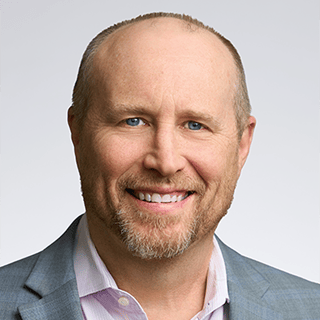
Speaker: His name is Rohan Murti. um He does have a rather famous father who he'll tell you about himself. But... um You know, Rohan is um an academic at heart. He has a PhD in computer science from Harvard. and He was a postdoctoral fellow at MIT and then was elected as a junior fellow of the Harvard Society of Fellows, where he was only the second computer scientist elected in the society's nearly 100 years history after Marvin Minsky, who's a founding father of AI. Yeah.
Speaker: He's been named in Fortune's 40 under 40, even though he's now over 40, he tells me, and has published more than 20 technical papers and multiple HBR articles on enterprise AI and and work graph and and has more than 600 patent claims. So welcome, um Rohan. um So are you an academic or are you a business entrepreneur? Tell me a bit about where you're going with your life.
Speaker: Well, first of all, no, thank you for having me on, Phil. I'm a big fan. um ah I would say I'm um i' a recovering academic is probably very dissident. So um um i I used to be in a full-time academic, but then I transitioned over to actually trying to build companies. um and And But the kinds of companies i always wanted to build would be ones where, because what academia typically trains you, right, is um to solve a hard problem first. um And somehow that I can't get out of my system.
Speaker: And so therefore, the kinds of companies I love building are ones where we solve a hard problem earlier than others and then hopefully make, you know, create value for customers and solve a real problem. um So I spent the better part of the last 10 years being an entrepreneur.
Speaker: Yeah. Yeah. But you said you're a recovering academic. Do you keep getting pulled back into the academic side or do you have that entrepreneurial bug now? No, i I spend all my time building companies, but there are aspects of my former life that I do miss, that I enjoy.
Speaker: Students, um just the idea of research and working on the open-ended and the unknown. um but there are things I don't miss as well. is Here, i I love the fact that we could actually translate all of that.
Speaker: build products, have people use them. You have accountability for some of these these these products, get feedback, improve it, and so on. i love that that part of the entrepreneur entrepreneurial work.
Speaker: That's right. And it's probably never been a time when learning and education has never been so important to development in technology. So you're probably straddling both worlds at the right time, right?
Speaker: So... yeah so we know we you took yeah So you talked a lot about the symmetry between like system speed and human comprehension, and and that's not new, right? But what is new is that the human translation layer that is bridged at the center is just dissolving. So talk to me a bit more about about this and and and how this is impacting what you're doing with your latest business venture.
Speaker: Yeah, no, absolutely. Absolutely. the for the better part of the last 40 or let's say 50 years, we have spent, um you know, the the very nature of how we work has changed, right? We have been um changing all our interfaces to being digital. We are changing We're streamlining things to be more digital um and so on. and And again, this is in the tradition of a long line of sort of productivity waves starting from the beginning of industrial revolution.
Speaker: um and And specifically, if you know in the last 50 years, there's been this immense growth of of office work or white-collar work or call it what you will. And all of this work today is determined or largely influenced by my digital systems.
Speaker: um and and And what I think the current wave of AI lets us do is it lets us, in my opinion, to ask a very fundamental question that we have not been able to answer so far.
Speaker: And that is, is there a scientific and structural way of understanding and therefore improving And therefore, you know, changing office work. um Manufacturing for the last 100 years has actually had a very detailed scientific way of understanding itself, of improving, ah um for fixing different things and so on. Whereas office work, knowledge work has largely remained outside the purview of those kinds of things.
Speaker: At most, you could hire consultants would come into your people, try and understand what's happening, then perhaps advise you on what you can do better. But I think the current wave of of AI lets us change that. It lets us finally create a formal, more rigorous way of understanding how we work or how offices work.
Speaker: how they can be done differently or can be done better. And of course, it it it also quite disrupts it severely as well. um So I think that's kind of, you know, from my vantage point, that's what really excites me, thinking of work, office his work, in a far more structured, ah scientific way.
Speaker: um So, yeah. And, um you know, when you... started out in various AI ventures, and I remember at the company Soroka you spent a long time at before WorkFabric.
Speaker: We've seen the technology mature quite a lot. um In fact, the last year, I think it's been really marked in terms of what these tools can do and that sort of thing.
Speaker: um How different would you describe the capabilities today than they even were a couple of years ago? the the current instantiation of progress that AI has made, um, lets us, um, look at work as a a director graph, if you will.
Speaker: Um, and what I mean by that is work, the work that we do on our machines, the work that we do, that's a tribal knowledge, that's the tacit knowledge. It's actually far more structured than we realized that, that we've actually understood in, in office work.
Speaker: Um, And, you know, a couple of years ago when we started down this path, there wasn't, nobody else was doing this at the time. we Our thesis was, hey, just by tapping into how people and machines interface with each other, we think we can discover the true underlying structure and the map of this work.
Speaker: And once you kind of sketch out this map, there's a very detailed map. You can use that for a lot of good. You can use that to figure out what should you be automating or what should you be changing, what should you be improving, et cetera, et cetera, and so on.
Speaker: um But at the time, there's no such category. Companies didn't know that this would be useful. Nobody really thought of it this way. And so at the time, you know, we tried all the existing models and architectures. And what we found immediately was that The interface between humans and machines turns out to be fundamentally a new modality, much like you have pixels are a modality, text is a modality, you know, ah audio and so on are their own modality. That human-machine interface itself, ah that the the data that arises when humans and machines interface with each other, itself is another modality.
Speaker: um And so for that, um we realized we actually had to do more fundamental research, create a new family of models that could understand what happens when humans and machines interface, and then make sense of of that to creating these these maps, which we call as the work graph.
Speaker: Right. So getting um the machines to interact with each other like humans. um I had a deep conversation with a friend of mine who um has developed very detailed agentic systems.
Speaker: and he He informed me his one problem is when agents in one company trying negotiate with agents in another company. And things like just trying to settle on a price and these types of things is where they really struggle at the edge. um what What's your take on that? do you do you think Where do you think these agents are finding real value in terms of human contacts versus where there's still lots of ways to improve?
Speaker: That's a great great question. So I'll start by seeing the following, which is, i think um I think there's a level zero problem itself, and that is... um Agents need to understand, and that's perhaps an original point of view that we developed about two years ago, because we had built all this technology to understand how humans and machines interface with each other um ah and and to make sense of of how they interact with each other and so on.
Speaker: ah But then we were looking for where can this be more and more relevant? And then when we saw sort of the growth of of AI, we realized, hey, unwittingly so, we were at the right place at the right time and we perhaps had solved the right problems. And the problem was this, which is unless you can ground AI in the reality of not just an organization, but each team in an organization is unique, the tribal and tacit knowledge in each team in an organization is unique. And that's what we had found in our work.
Speaker: um Unless you can do that, no agent or model will generate sufficient value. um I'm not saying this is sufficient, but it is a necessary condition. You have to be able to get agents and AI models to understand the tribal tacit knowledge of how a team in each team in each organization works. what matters to them, what works, et cetera, and so on.
Speaker: um And so that's the first first thing. So if you can actually do that, if you can bridge that gap and get these models to understand that last mile of tribal knowledge, you actually have a chance of making these agents produce value.
Speaker: Now, specifically, right, to the point that you're making, let's say you have two agents in two different organizations. Well, by definition, these two agents have to be powered by very different sources of context.
Speaker: um because the two organizations are indeed different. The a way that those two organizations actually ah come to life or how they work, how they solve problems, et cetera, are indeed different.
Speaker: And so if you can contextualize both of these agents in the reality of the respective organizations, you have ah perhaps have a chance of then being able to do things on top. um And so, you know, where does this find value? Well, there's actually, is there's if I were kind of put a meta frame around it, Phil, I think perhaps the biggest frame is, or the most valuable frame is breaking silos.
Speaker: And I'll give you an example. um And, you know, this is something that we have done with um our really, our valued partners like Cognizant of our customers as well. um If you take a customer, right, and you take an organization serving the customer, there are many parts of an organization that that serve the same customer.
Speaker: Different parts of the customer stack. Sales talks to the customer, product talks to the customer, customer success talks to the customer, support, etc., etc., and so on. And each one of these silos or these teams are collecting um unique context about this customer. And often this information, this context about that customer isn't in any system. It's definitely not in your CRM because your CRM is not meant for this purpose.
Speaker: um And it's not in any other system of record. um And this is the last mile tribal knowledge about that customer. You heard a rumor about something, you know that something matters them, you know something is not working, et cetera, and so on.
Speaker: And so if you could actually collect all this context across these different teams, that is your own company's understanding of the customer, and you bring it together, you now certainly have a more complete picture or knowledge of that customer that no single individual holds. So it's knowledge that no one person has, but your company as a collective has.
Speaker: And that now leads to lots of different opportunities. You can find, for example, are there new revenue opportunities? can Can we go sell them things that perhaps we otherwise would not have thought of? Can we proactively figure out if this customer is happy or not? Can we solve problems for them before they even escalate? um Can we have perhaps one customer learn from another customer using the respective context that the organization has about both of these accounts and so on and so forth?
Speaker: um And so that is how this kind of context comes to life. And that's the importance of grounding ai and agents in in the tribal knowledge of teams. Okay. So how do we make this work in practice? Is it you have to sit down with enterprise clients and really get them to open up on how they do business, how they think, how they feel, you know, what's their values. I mean, how how does this work?
Speaker: Right. Well, So, you know, Phil, um for the longest time, we kept trying to figure out what is it. So the the the data that and and the the the the models we built, the technology that we built, were all about trying to understand how do humans and machines interface with each other. And for the longest time, we kept trying to figure out what is this thing? What is this thing? how do What do we call it? and and What is the intuitive way of understanding it? And we actually, ah about two years ago, we realized what this really is, is this is human attention data.
Speaker: This is what are people paying attention to when they do digital work? Right. um And I start from there because that's a characterization of the data and then and it'll lead into sort of how you you gather that.
Speaker: and And the reason that's important is when you look at it from the lens of what do people pay attention to as they work, that can't actually be captured by interviewing anyone. That's not written down in any document. That's not in any system.
Speaker: The only way to understand or capture and make sense of human attention data is by actually you know having a piece of software that as people work, it sees what they're paying attention and learns from that.
Speaker: but So it's done automatically. It's not done based on interviews or asking people things. It's literally saying, what am i the user, paying attention to? And in what sequence or what order am I doing that?
Speaker: got on right and And so that's that's how you go about doing that. And in terms of how you're all getting your clients and partners to use your software, um as is this something that like employees have to sign up to? Or can they just be applied across corporate applications and systems and things like that?
Speaker: Yes. So ah the way that we approach this is we we look at the we we look at human attention entirely from the perspective of of the user. And therefore, this can't be done inside any system. This has to be done entirely at at um at each each device.
Speaker: um And so it requires user cooperation. um We tell our customers none of this should happen without explicit consent from the user. um ah But having said that, there's a very important point here, Phil, and that is, okay, if a user were to cooperate with this, what's in it for them?
Speaker: How do you create an incentive structure where it's not just the organization that wins, but also the end user that wins? um because very often a lot of the approaches that people have tried to take with this that we have seen, and there's some well-known contemporary names of people trying to do this. And I think the very basic fact that they have missed is people often don't think of the incentive for the end user. And the analogy I draw is,
Speaker: There lots of pictures of me on Facebook that I voluntarily uploaded. um Why? Because, you know, derive value in sharing my photos and sharing information. And that's been true, you know, for all of these kinds of networks.
Speaker: And so if we can create incentive for the end user to care, Then you can derive as a second order sort of ah value value, you can derive sort of positives for the enterprise as well. And so therefore, the way that we do this is we actually create twins of people.
Speaker: but um Because if you're learning from the human attention data of a person, can you actually create a twin of that person? And can that person then use their own twin to isolat accelerate their lives, to accelerate their work, to collaborate better with other people? Can they do net new things and so on? So therefore, um our perspective is all of this truth starts from giving people access to their own twins and empowering them with their own twins. Because we think that the beginning of this truth has to start with empowering users. And as a second order derivative, you can then produce enterprise outcomes from the same data.
Speaker: Wow. That's funny because we're just looking at, we have a agentic tool we use for our research site. And we were looking at an application today where you can actually ask a question to an analyst and it will be pulling off all their research and answering to the user as that analyst would answer those questions. And I'm like, wow, this is this is pretty impressive. Like it's you're almost creating a twin of that analyst based on the work that they've produced into the system and the opinions and things they've got in there. So it's um you start to sort of see it in practice. And then then I'm like, well, maybe ah maybe I need to talk to the analyst to see if they're comfortable with being twinned in that way. But i know I know exactly what you're saying. And and it starts to create that that interactive capability, which um is, I think, the next next wave of computing.
Speaker: That's right. and and And even from that analyst perspective, right? If their daily lives can be improved from the fact that they have a twin, for example, they can use their twin to work with other twins. They can tell their twin, hey, get this piece of work done. And their twin works with 10 other twins in your firm to get that piece of work done. Now, the analyst himself benefits, him or herself benefits, right? So if you can create an incentive structure for the analyst to benefit and you yourself to benefit, right? Then the organization wins, people win.
Speaker: And that's why to me, the beginning of truth always starts with what do you do for the edge? What do you do for people? If you can solve that problem, then everything else I think follows. Yes. I mean, it's like saying to these tools, um can you summarize this report I wrote um so I can send it, send it out to my clients or put it on LinkedIn? I don't know, but do it in my voice, right? That was incredibly, that would be incredibly valuable because right now,
Speaker: the check gpts and c clods and co they can't do that everything sounds very sanitized and i don't know the minute i see something and it's clearly written by one of these llms it's just a massive turnoff i don't want to read it it's like that's right and that's right that's right and and and you can extend it further right phil you can say write this in my voice but then ask my managers twin to interview it right So you can now start to have a multiplayer facet to this whole thing. can have multiple twins work together, each one of them powered by the unique context of the humans that they mirror but to solving a common problem. And then you can say, okay, now have finance redline this or legal redline this.
Speaker: but And so you finally get a draft, which otherwise previously would have set up three separate meetings, sent lots of emails and so on. So these twins can actually get together and solve problems. And these are the kinds of things today in our company we're able to do with the kind of context that we are powering.
Speaker: So tell me a bit more about WorkGraph, because I know you've spent years building this. um And, um you know, you clearly see it as the foundation that everything depends upon.
Speaker: Where do you see this evolving from here in terms of like, what what are we going to talk about and and in 12 months time when we next do a podcast or something? Absolutely. So very quickly, right? So we, um and talking of sort of academia and entrepreneurship, when I was in undergrad, one of my professors was a very famous professor at Cornell named John Kleinberg.
Speaker: John was the first person in computer science to see the web um as a set of relationships between pages and proceed in a certain structure, which then became the foundation for all modern search.
Speaker: John's a pioneer. So I'd taken all these courses under him and that idea of, you know, how he viewed the web as a structured piece of information as a graph greatly influenced me.
Speaker: um um And that was a big leap. And so when, you know, several years ago when we started on this journey to understand how do humans and machines interface with each other, my immediate instinct was the way that knowledge work happens, the way people use systems and digital systems and do work on their systems and so on.
Speaker: All of that, too, is a graph. All of that, too, is some kind of a structured piece of information. But we have never viewed it like that. Right. And if what I pay attention to, the sequence in which I do things, they're all structured pieces of information. And so therefore, for me, my work itself as a white collar worker, as an office worker itself is a graph.
Speaker: That was the intuition that I started from my colleagues and I. And that's how the work graph was born. So we said, let's not just excavate this human attention data um and just put into some database so on. Instead, let's excavate it and find patterns and build a structured piece of of of of information that we call as the work graph.
Speaker: Because our understanding was this thing can then become a basis for it. For example, you know, we had we had these grand ideas that we would build, for example, an automated cons consultant. The automated consultant would use the work graph to understand the company, the live reality of the company is in the work graph, and then figure out how they can help the company do better.
Speaker: Or whatever, if you're generating code, you'd use the work graph. There are infinite number of use cases from the work graph. Today, we're using the work graph to ground ai models and agents in the reality of a team in an organization. right um So to me, therefore, that's a fundamental organizing principle that we've, and we've we sort of had this idea of perhaps a little bit too early to the market with that, but I think our time has finally come now.
Speaker: within and so that's that's um that's how sort of we um we it kind of came to came to be Oh, yeah. no Definitely too early. I remember, i mean, the concepts behind RPA even 15 years ago were very similar to what we're talking about today, except it was a very different technology, very different capability.
Speaker: It was hard to scale brittle code and things like that and than we are today. So it's it's very interesting to see where things are thingss are shifting. um Now, in terms of how this impacts how companies organize themselves, I've been looking at something um I call it the duo model, where companies really get flattened out in terms of this middle management layer, rather than becoming relays of information between leadership and juniors.
Speaker: um They become more player coaches who are operating much more in real time ah and with the organization. So leadership can have much faster access to information and make decisions. Because often in rigid structures today, by the time leadership gets the information they need to make a decision, something's already moved on or that decision no longer no longer needs to be made.
Speaker: um So how do you see, as companies invest and develop this work graph, how do you see them reorganizing around it? um a Fantastic question.
Speaker: I think, you know, Phil, ah
Speaker: so So an observation ah connected to you know, what you're saying, and which is um i have a hypothesis based on some of the data that we're seeing that.
Speaker: All of this how also gets tied to delegation organizational structure. And what I mean by that is the more company scale by, you know, a very natural response is you start delegating, right? That's, it's a necessary condition for scale.
Speaker: But what happens with every act of delegation is you're pushing context or you pushing information the work craft towards your edges, right? but So, for example, the way something happens in Germany is very different from something happens in South Africa and so on. And Germany will deal with its local issues, South Africa will deal with local issues, et cetera, et cetera, and so on.
Speaker: And so now it ends up happening in when you have these kinds of organizational structures with lot of you know, middle management, middle layers, you know, who are relaying information up and down, et cetera, and so on, is the true context of how that company does things is actually sits at the edge, sits at the, if you think of it as a tree, it sits at the bottom part of the tree and it's it's right pushed away at the edges.
Speaker: And so now then when you say, I want to make AI understand my organization's context and serve me better, well, you have em the bigger your tree, the bigger your challenge because your context is truly pushed out to the edges, right?
Speaker: And so sometimes I wonder, is it, therefore, is the scale and the challenge of, capturing and using context um to making AI worth your organization? Is it harder in companies that have more delegation, meaning meaning companies that have scaled more, companies that have more context pushed to the edges versus smaller companies where that has not yet happened? Therefore, in some sense, therefore, it may be a lot easier because the context isn't as fragmented.
Speaker: right um And so that's how I understand this question of or ah the consequence of having many middle layers. It's part of a larger design, organizational design. But I think then there's a connection from there to being able to adopt AI to working well in your own context.
Speaker: Yeah. I mean, and I had a fantastic experience. roundtable recently where we talked about enterprise debt and what companies needed to do to connect break from pilots to proof of concepts to actual full deployed AI implementations.
Speaker: And the big inclusion I came to was it was about culture in these organizations. And companies don't recognize that they actually do have a talent problem. They think their talent is fine. It's just There's an issue with training and adoption.
Speaker: But I got to the fact of area of thinking you need to have staff who are really excited and energized by the possibilities of AI personally.
Speaker: um And people who may be ah using these tools in their home lives, their everyday lives, and they're very excited by it. So they will identify with a tool in the workplace which will start to let let them operate in the same way at work than they do personally. Do do you feel that um it is a very cultural shift that companies are having to go through with this?
Speaker: I completely agree with you, Phil. um And the root of that culture really comes from, if you take each one of our own individual experiences, right? um When we use these AI tools for personal productivity, out of let's not even use the word productivity. When we use these tools and we feel like we're being better, we're doing something that we previously couldn't do as easily and our lives are better, right? It's so much more of a natural cell and and you know where no one has to no manager has to convince you. You don't have to see tutorial videos or whatever. else it's on it's a na It's fish taking to water. but um and And being able to do this at scale, getting your people to seeing how can this help you solve your daily problem or maybe have less friction at work. um That's perhaps at at at at the ground level, getting people to see how their daily lives will change with this. is the way that that culture begins to change. It's it's exactly what you said. If we we see it in our personal lives, but if it translates over into the into our professional lives, then we are more likely to use this.
Speaker: And we, by the way, Phil, we see this in many of our customers, right? Where when people have their twins and suddenly they're saying, hey, previously used to set up 20 meetings and used to go door to door to door. to send lots of emails. Then people don't have time. Somebody's unsure meeting. Instead, now I have my twin at least doing a first version of this.
Speaker: That is a remarkable change in how I do my own job function. I have less, far less frustration. that Those are the moments that we see the spark in people's eyes. um And that's when we realize, hey, this is actually how you you know you begin to make change to the culture, right? You get people to see something in it for themselves.
Speaker: Yeah, no, completely. And I think it's how you incentivize teams as well. so it's like um a middle manager should not be incentivized on how many projects they oversee.
Speaker: They should be incentivized on how much better their team performs because of their direct involvement and how quickly they can develop junior talent. um and what outcomes they personally drove rather than supervised so isn't it like bringing together junior and senior people uh in a much more flat model where maybe be you want to have um you're you incentivized to have junior staff to be far more efficient and productive than than they were in the past Yeah, um it's certainly true in in our company, for example. um We, um you know, our own sense of what would was previously pod that could build software that had lots of different functions and roles, um cross-functional things and so on, um is far more simplified now.
Speaker: ah Instead, um our own young engineers see how they can be far more effective for themselves. um they don't They need to rely less on other teams in getting work done.
Speaker: um And therefore, being able to equip them this with this certainly has created a structure where we don't have as many managers. We don't have as many people overseeing someone else's work.
Speaker: um It certainly has changed. It absolutely has changed that the way that we build companies. that At least at our scale, it's true. Yeah.
Speaker: And then I guess the final question, you know, we both have ties to the services industry still. um How do you honestly think when you look at some of these very large scale organizations that that thrive on old ways of working. do you what what are What's your advice to these companies on how they can make that shift in terms of changing mindsets and changing how they think when you're that big, and you're so reliant on legacy, revenue and legacy work? You know, how do how do these companies change?
Speaker: Well, far be it for me to preach to these large companies that have provided, you know, been very successful in their own right, provided employment to large numbers of people. um But i can I can just share a perspective that I have. um um And there's so much to say here. So one is,
Speaker: In my personal opinion, i think the best thing that all service companies can do is um context engineering. ah ah or at least for for the for for the software part of their business.
Speaker: um ah Because it it is based on a view of the future vision of the world. The last 40 years, we organized ourselves around the microprocessor, which was, um we all organized ourselves in giving specific instructions to the microprocessor, and it did exactly what you told it to do.
Speaker: Right? And in this entire world has been organized around it. And that created lots of products, it created a lot of services, and so on. Well, clearly a future state of the world is going to be one where you have this stochastic machine where you can you can describe intent and it will produce a range of possibilities.
Speaker: You've never had such a computing device before at this kind of a scale. um And so if we accept that model of the world, then the main role or job that we all have is that machine clearly will get more and more and more intelligent. ah there's some There is some dependence on power and infrastructure and so on.
Speaker: Then the job that the rest of us have is to keep giving it context about physical reality that we all live and operate in. um And so therefore, for me, services firms which understand their customers better than anyone else, which have built that kind of expertise, can play an asymmetrically important role um in in giving context to models, to getting these models to actually organizing themselves, to doing work for companies.
Speaker: um The rage in the valley everywhere. Now, people keep, you know, I've been hearing for the last few years, forward deployment engineering, even last year, last 10 years. right But to me, forward deployment engineering versus traditional services, a key difference is forward deployment engineering um is basically, again, services play, but with probably with more expensive engineers um solving a narrower set of technical problems.
Speaker: um and And so i I don't see why services companies can't take that kind of an approach and say, hey, we want to be the guardians who will give provide context to models and solve problems for our customers and embrace the models wholeheartedly. Now, of course, there are questions of then do you need as many people, et cetera, and so on.
Speaker: And there are people far more competent than I am um to answer those questions. But to me, this seemed like the inevitable future that all services organizations, as an example, must embrace.
Speaker: Yeah, well, i think we're seeing the mass democrat democratization of AI and automation in terms of the whole C-suite can start to engage in these technologies and transform their businesses. And I think we're going to see a whole plethora of small to medium-sized firms opening up because we're getting to a world where you don't need as many people to do certain tasks.
Speaker: But that doesn't mean there's not less opportunity. And if I was a university graduate today, I'm pretty sure I'll be getting job offers from smaller companies than bigger companies because bigger companies are looking to get smaller and smaller companies are looking for specific expertise.
Speaker: Right. And, you know, I just think we're going to be looking at a different business landscape in and two, three years. And um some of these great big firms might not be as big.
Speaker: But those people who might not be there anymore will be somewhere else. i I definitely feel like we're creating more opportunity, even though it's creating, i think, a big headache for companies relying on old ways of doing business.
Speaker: Right. and And I would say, I would i completely agree with you, Phil. And I had two things because was once saying this to a friend of mine um who who runs, you know, one of these large companies.
Speaker: was saying, look, my perspective is you'll likely encounter competition this time, not from your peers, but you'll encounter competition from hordes of younger companies, each of them doing very specific things and you know ah in in very challenging ways.
Speaker: And that's not something, because you know the previous cycles of challenge have been, our competition is doing something better, and you know they're big companies, and we're all big companies, and everyone's doing something better, et cetera, and so on. But that's not the case. You'll you'll have you know people doing roll-ups, people saying, okay, I bought 10 law firms, and I'm going to make them 10 times more effective. And by the it's not just for software services companies, right? This is true for law companies. law firms it's true for accounting companies is true for consulting companies it's true for any any kind of company where there is you know which have a common business model um and i think the attack surface area is very different this time around uh or the attack vector um but and and a second thing you feel you know which is uh actually i i can't believe i'm going to say this but i'm going to quote vivekrabaswamy who you know me made this one comment once, and I thought it was he was actually spot on. He just said, look, you look at incentives and I'll tell you the exact behavior you will get.
Speaker: right Incentives dictate behavior. but um And I think part of the challenge is all these models have been, of these companies have been built on The incentive structure is willing if the intense is in ah incentive structure based on more hours and so on. And I still think there's going to be room for that in this world. I don't think that's going to go away.
Speaker: But there is also perhaps going to be incentive for something else, which is the opposing force. like which is can you do more with less or with with tokens or whatever? There's some other metric that is not ours.
Speaker: right And so part of the challenge is how do you get the person who's incentivized for more hours to now care about the opposing incentive? And that's hard. So, you know, just brainstorming about, do you now have a part of the workforce worried about one metric and the other one worried about the other metric? And they both, so that way companies capture value on both sides of of of the metric, right? Like if if the hours reduce, you capture value on the other thing that expands or if the other thing reduces, then the hours expand and so on. So therefore you still capture total value. that is um that's ah That's another thing worth considering.
Speaker: it's like, what makes up value? You can't go from one model to another model without some blending of the two, if you think about and it. was exactly Exactly.
Speaker: And I think that's the problem with Silicon Valley is they they see the world in bright, shiny lights of this is where we're going. And the services industry is like, well, we're the suckers that are going to have get you there.
Speaker: That's where I think that's why think the hope is for services is that When Anthropic and Co. realize they need scaled support and help to get their clients, because only barely 10% of them are going to any maturity in this.
Speaker: That's the opportunity for services firms to step in and say, right, we've got the scale and the skill to to help your clients. We'll get you there. Absolutely. And to me, all of that is context filled because all of that is understanding your customer, their nuances, their lived reality, there the expertise you've developed in working with it.
Speaker: Services companies understand this better than anyone else, better than any model company, better than any other company. Right. And that's why they're so valuable because they're in that last mile of they live and breathe that context.
Speaker: um You know, and from a few months ago, um ah you know, Ravi at cogni and I published this case making ah this article in Harvey Business Review making this case. Why context is a competitive advantage or a more.
Speaker: And I'll actually link it back to something you were saying at the beginning, Phil, which is, um you know, i was asking, you know, about 15 years ago that I was asking my father this question. i said, ah to him give me an argument for why do you believe services as a business will exist and he gave me a very elegant argument which I think extends into AI and context as well he said look assume you have two companies in the same industry that compete with each other that make similar products and why should they exist as two separate companies? He's like, look, if they exist as two separate companies, that means they probably sell to different customers or different segments of the market, et cetera, and so on. They have some differentiation in the marketplace and that's why they exist separately.
Speaker: And part of that differentiation comes from how they implement digital systems, software, and so on. If they're using the exact same systems exactly the same way, they run the processes exactly the same way, and do everything exactly the same way, and sell the same product to the same people, everything same way, then by definition, these two companies should merge into one. You shouldn't have two separate entities.
Speaker: And so his argument was part of that differentiation will come from how they customize and use software and their processes and how you know they execute things and so on. And so therefore, as long as you have separate companies or companies that exist as separate entities, you will have the need for this kind of customization. That was the argument he gave me, which I thought was very reasonable.
Speaker: And in some sense, I'm not saying anything new. It's the same argument holds even when it comes to AI. If you and i run to run two competing companies and we use the exact same model, why should we and we serve the same segment of the market or broadly the same market, why should we exist as two separate companies?
Speaker: It's not clear, right? The reason we'll exist as two separate companies is if the specific context with which we operate, you know the tribal knowledge of our people, our systems, and whatever else and so on,
Speaker: are indeed different and therefore they are our competitive advantages or our mode, then we exist as separate companies. And so house that's that's them. Well, I've certainly learned a lot about your business today and I really feel like you're at the last mile of humanization of AI where you're almost trying to create that forward deployed capability by understanding how people can replicate their own activities themselves and I think if you can get past that I think there's a tremendous opportunity for you and I look forward to hearing how this venture goes it's very very exciting and it's been great having you on today Raheem.
Speaker: No, thank you, Phil. And I really liked how you summed that up. It's the humanization of is of of this whole thing. And we think about it the same way too. We actually think humans, we humans, our expertise, our knowledge, um we have so much to offer.
Speaker: ah And and it's not it's not something that, you know, AI learns once and you're done. We think that um we can be co-partners with AI or co-equal to the AI in some very intelligent way. Because are you going to have companies with no people? I don't believe that's the future.
Speaker: As long as there are going to be people who have employment and jobs, we have something valuable to teach machines. And in some sense, that's, I always tell my colleagues, i'm like, anywhere where there's a human being and a machine, it doesn't even have to be a computer. It can be a phone. It can be glasses. It can be anything.
Speaker: You show me a machine and a human, or it could be a car, interacting with each other, I believe the human can teach the machine something. And in some sense, that's at the very heart and essence of why get up every day and my colleagues get up every day and we go to work because we think that, you know, let me say it this way.
Speaker: I don't know what AGI is because everyone debates on what is AGI. But I know one thing. The day... that machines don't need context from humans to function successfully anymore, where they just don't need it at all.
Speaker: That is a necessary condition for any kind of a future vision of AGI. Right. Right. And so this is the narrow baseline to go through. So... or It reminds me Marc Andreessen was coming out with his view that AGI is already here, but I think you've summed it up even better.
Speaker: That machines need context. and And I think we still have a little ways to go. like All right, man. Thank you, Phil. It's been a pleasure. Really enjoyed it.
Speaker: Great. No, thank you very much. Likewise. Thank you.