Transcript
Speaker: Something about that one year of working with it, I just got so into it and all the different techniques and styles and things that I could make. And it really opened up a lot of different possibilities.
Speaker: What is up Shaped Nation this is Nick Torres here and on today's episode I had the great pleasure of interviewing Nicole Dacey. Nicole makes both wheel throwing and sculptural work. In this episode you'll learn about why Nicole starts making both of these wheel throwing and sculptural work. You'll also learn about how Nicole started building confidence through teaching
Speaker: Nicole also gives some great advice on how to use Instagram to help you sell your pottery or build a following on Instagram with your pottery. And finally, one of the last things that Nicole talks about is how when she changed her environment, that's when her pottery truly started evolving further. And there's so much more in this episode. I really enjoyed this interview. I hope you guys enjoyed as well. See you guys in there.
Speaker: If you love pottery and want to take your skills to the next level, you're in the right place. Find your own pottery style right here on Shaping Your Pottery with Nick Torres. Let's get started. Nicole, welcome Shaping Your Pottery and share with me what is something you believe potters should be doing to have success in pottery. OK, so.
Speaker: This you start with a question that is like a big question. I would say like with success and pottery, the first thing you need to do is you need to define what success means to you because it's not going to be the same across the board for everybody. Once you know what success means to you, then you can, you know, set your goals and, you know, reach for that success. So you have to decide, like, does it mean that I want to be
Speaker: technically successful? Do I want to be like a master at what I do? Do I want to be a master potter? And then set your goals to reach that, you know, all the steps to get to that point. Do you want to be, you know, a full time potter? Do you want to financially support yourself? Do you want to have like a huge following on Instagram or some social media or whatever it is? And do you want to be making work that fulfills you? So once you and you get multiple things, it doesn't have to be just one. And then I think you just have to
Speaker: go for it, figure out the steps to get there and just aim for that. I absolutely love that advice. Excellent advice with there. Now tell the story how you got started making pottery. Making pottery. I think like a lot of us, you know, you have your, your young school age, you know, art classes, and I don't really count that for me only because, you know, elementary age, it was just sort of another fun thing to do. So it really wasn't until
Speaker: I was in college that I started kind of looking at pottery. My background is actually in art history. So I have both an undergrad and a master's degree in art history. And my goal in life was always to be like an art historian, a college teacher, you know, a researcher. And my life obviously went in a totally different direction. But when I was in college, one of the requirements of the art history degree was to do art classes.
Speaker: I did drawing, not for me. And then I did a ceramics pottery class. It was mostly hand -building. The teacher was an amazing sculptor. And so we did a lot more of the hand -building work. But it really wasn't until after that I worked in a museum aiming for that art history kind of lifestyle. But they had a really sweet offering of free art classes if you worked there. So I was like, well, I can't draw obviously from that experience in that art class.
Speaker: So I was like, all right, I'm just going to take this wheel throwing class because that was the part of it that I didn't get to do. And I just like fell in love with that. So that was I think 2009 was when I took the college class and it was like 2010 I graduated. So it was right around then when I started taking the wheel classes and then it was just nonstop from there. So you mentioned that you were originally going to be a professor doing art history. When was the moment that your path changed? Yeah, it was.
Speaker: I don't know the year it was, it was probably like 20, 2012, maybe I'm not entirely sure that maybe even after that there was a point where I was like, okay, I'm going to start getting into like teaching, like experimenting the teaching. Like I didn't have student teaching, like as the student teaching classes when I was in college, it was afterwards before my master's degree that I.
Speaker: Or maybe after, God, my timelines are so off at this point. But there was a point where I was like, okay, I'm going to start, try teaching some classes. And I got into sort of, I guess I would call them adult education. It was a program in Brookline, Massachusetts, which is where I'm from. And it was just sort of like, it ended up being a class full of like elderly. And when I say elderly, I guess I don't want to offend anyone, but I want to say like maybe the youngest person was in their sixties. And so they were just like.
Speaker: there to enjoy it. So they were just I would prep this whole class for them. It was like the Italian Renaissance was the first one and I did one on impressionism and all this and I would have all this like homework for them like reading and stuff and oh they'll come back and they'll want to discuss
Speaker: So, but no one wants to do that. They just wanted to like watch me talk about art and then go home for the day. And I even had some people, like there was one woman who fell asleep once cause it would get dark and I'd put the slides up and she just dozed off. And it was around that time that I realized like, I don't think this is for me because I got incredible stage fright from this like presentation and like the difference between pottery and I teach pottery now, which is the irony.
Speaker: The difference between like teaching pottery and teaching like art history or something is like art history, you have to remember so much. And it's like dates and facts and events and styles and all this stuff. And I have my notes, but you know, you don't want to sit there looking reading from the notes. You want to discuss the pottery. But with with teaching ceramics, you're teaching a skill half the time.
Speaker: And the other half of the time is being a cheerleader for the person and being like, don't give up. But it's a totally different way of teaching. If you know pottery and you know that skill, it's so, it's like teaching someone to ride a bike or a cook or whatever. It's just, I don't know. It just didn't end up feeling right for me, even though art history is still like my baby and I love it so much. And I wish, I wish I could have gotten more into it, but now I'm not. Now I'm here as a potter. So that's that.
Speaker: So you mentioned teaching. Can you tell me about the moment when you started teaching pottery? I think it was 2018. Maybe I moved out to California from Massachusetts in 2017. And I was just kind of spent a little bit of time getting my footing. I was doing a studio so I could get my work done. And at that point, I still considered myself a student.
Speaker: But the studio I was at, I told them, I said, you know, if you ever need like a sub for your classes or anything, I'm happy to jump in and teach some of these. And the owner was like, can you come tonight? Can you teach tonight? Can you actually take over this whole month class? And I was like, I don't know, because I had no confidence and I'd never taught before. I ended up being like, I can't tonight, but I'll come next week. And then I just started taking on more and more classes and I loved it and I just
Speaker: Anytime they wanted me, I was like, yep, I'll do another semester. Yep. Yep. Yep. How did teaching help you with developing your own pottery? That is, I want to say like it didn't, it didn't, because I feel like it's a, it's a totally different way of thinking for me. So like when I, when I'm trying to develop my own pottery, I'm thinking about like my own interests and desires and, and what I'm looking at and.
Speaker: feeling and whatever. When it comes to the teaching part of it, it's me, I teach a lot of beginner classes. So there's a lot of like those very basic, like we're going to make a cylinder today, like we're going to learn what a needle tool is, like the very bare bones basics. But I think where the overlap might be is when you teach something, you have to pretty much know it inside and out. And you need to know how, how
Speaker: you know, to answer every question. If there's like, hey, this weird thing happened to this pop that I'm making, you have to be able to say like, okay, so here's what that is and here's how you can fix it. And at the very least, I don't know what's going on. I'm going to figure it out for you or something like that. But I think, I think just being a teacher helped me build my own confidence. It helped me get my hands in clay way more often. It helped me see more,
Speaker: issues with pots that arise, it helped me see more designs that like other, that students had made. Cause you know, I, my brain works in a certain way. And when you're teaching, I teach a whole different group of students every month and it was about like 10 to 15 of them. And they're all going to have their own way of approaching design and, you know, the actual making of the pots and everything. So seeing the way that they,
Speaker: build and design and all that. I think it helps my brain see things in different ways too. So maybe that kind of helps me with my own style as well. I love that. Shaping Nation, sometimes if you're looking to spice up your potter, maybe get new ideas, get around other potters and see what they're making and that can help you get new ideas. I love that. Absolutely. So now let's talk about your pottery. Can you tell me the story how you started making the pottery that you make today? Stuff I make today. So I mean, it's not necessarily like a
Speaker: I woke up and started making this kind of stuff. It's like a years -long evolution of work because I've been doing this, like I said, since 2009. And I would say that I didn't feel like I had a style of voice of my own until maybe like 2019, I think it was. I think that entire time I was just working on learning and deciding what I like and trying to
Speaker: put other potters designs out of my mind, in a way, because I think in the beginning, you're just trying to learn, so you copy a lot, which is fine, as long as you're just learning. And so I think around 2019, if I go back in my own Instagram or something, I've done it, I've scrolled back, back, back, and there's a point where I can actually say, here's where I notice the beginning of my style starting to happen. And it was when I started
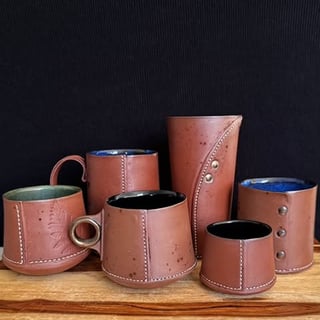
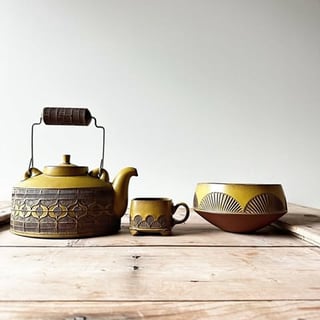
Speaker: I started being really interested in more raw clay. So when I say that, I mean like unglazed. I started getting interested in more like earth tones. So I used a darker chunkier brown clay or I used like a matte white glaze. So like really neutral kind of tones. I started using wood ash on my work as well as like iron flex. So it was a very like lots of texture and, and right around there, I noticed I was just like,
Speaker: thrilled. I was excited about what I was making for the first time. And I was like, this feels like something I haven't seen before. And that was a big thing for me. I was like, this feels like me, but out here, like the inside of me in my work on the outside world. And so from there, I just explored a lot of that for a while. And then
Speaker: things evolve, you know, maybe you find a new way to use like the wood ash I was using or something, and maybe you find a different clay, and that changes the way you use the glazes. So going into 2020, I had a bit of a blip of time where my work, I think everyone had, was affected by the pandemic. So I found that my work got very minimal. You know, all those like exciting things that I had
Speaker: been into, the wood ash, the iron flecks, all that kind of stuff, kind of disappeared for a little bit. It was very clean, minimal work. And then after that, there was a little hiccup with something else that kind of threw me off track that I won't get into. But then once I found I was like feeling like myself again, vibing with my work. And I think that happened when I moved to the house I'm in now and a totally different landscape around me and everything. And I was very inspired. That's when I started pulling a lot more
Speaker: from the colors, the textures of the nature around me and kind of inserting that to my work. But it's still, if I look back at all that work from 2019, that original work with the wood ash, the iron flex, the raw clay, it definitely talks to each other. It makes sense. It pulls from the past into the right now. I love that. That is so great. I love hearing that.
Speaker: So now, as you just kind of mentioned that you are inspired by natural landscapes. We're also inspired by anti -objects. How does it impact the way you make your pottery? Yeah, those are like really totally different things. I would say so that I think the natural landscape thing, I don't think I need to go into that too much because I think a lot of people are very inspired by nature. And I think it makes sense with pottery because you're working with material directly from the earth. So it's not
Speaker: you know, too out there to be like, I'm inspired by nature. I'm working with nature. So, but the whole antiques thing, I'm really inspired by other materials. So when it comes to when I want to look at something for inspiration, I try not to look at other potters, even potters that are like past or ancient pottery. It tends to put my brain into this exact, like in the same space that that potter was in as well. So I'm trying to put my brain into somewhere that
Speaker: is outside of pottery to get that inspiration. So I will, I'll look at antiques that are made of wood, especially stone, you know, marble things that, you know, cloth, fiber arts and stuff. And I find that antiques tend to have designs that people aren't necessarily using today, or if they are kind of using those designs, it's been changed enough over time.
Speaker: that the current version of that design is what we're used to seeing. So going further back and looking at much older work, and it's not even art. I'll look at hand brooms or something, whatever it is. And I'm not trying to find things that I'm like, oh, I can copy that and make it out of clay. It's more like, oh, that's a really interesting design. It makes me think of this other thing. And that's where I'll start and start to sketch or do something to help me get that.
Speaker: I don't think this is quite the answer to the question you had. I can't remember what you asked exactly, but I hope that's helpful. You answered it perfectly. Don't worry. You answered it perfectly. Great. One of the things you contribute your growth as an artist too is building your own pottery studio. Can you tell me a story about when you decided to create your own pottery studio? Desperation. I was living in an apartment building in Glendale, California for a few years when I first moved out here.
Speaker: And it was small ish and we had no outdoor space. And that's when we were living there when the pandemic happened. So I wasn't able to go to my normal pottery studio, which is where I had done my work. I just was stuck in my apartment. And I remember sticking my wheel in my living room and I was like, it was like this close to my couch. And I'm like, oh, God, this sucks.
Speaker: And once the pandemic was starting to like, I don't want to ease up, but kind of like the end of 2020 into 2021, we, my husband and I were like, we need to move. We need to go somewhere where there's like green space and like trees, outdoor space, not just a city. We're not city people. So we, we were looking for a house and I was like, if we can get a house with a garage, I can build my own home studio. And then I don't have to rely on outside.
Speaker: locations or anything to do my work. I can do my work. Even if there is a pandemic again. So, so I decided, you know, let's build this. We found a place exactly what we wanted. So I was like, all right, I'm going to build a home studio in my garage. And I knew I, you know, I did a lot of research into this ahead of time. And I asked other potters that had home studios, like, what do you wish you did? And what, what are things you love that you did?
Speaker: And I just googled around a lot. So I knew I wanted to have a lot of shelf space. I needed a lot of room to grow. So when I first started, it looked bare and empty. And I was like, oh, this looks like crap. But eventually you fill up every space and suddenly you're like, I need more shelves. I need more cabinets. I need more drawers. I need more everything. But I ended up really loving the space that I built. And I think that was a big, that's a big part of like,
Speaker: what I think every potter should do if they build their own space is not only make a space that functions well for you, but build a space that is going to inspire you to work in that space. I'm still technically in a garage, so sometimes it gets a little cold or a little musty or something, and especially when it's cold, I'm like, I don't want to go out there. It's too cold. I don't want to work. So if I could eliminate something like that,
Speaker: When it's a nice warm day, I go out there and it's beautiful and I can look out at the landscape around me outside my space and be inspired and the sun comes in at certain points and I want to be there and I want to create and I want to just spend time sketching, drawing, making. I love that. So you mentioned that you asked a bunch of partners what they wish they knew before starting a studio. What is something you wish you knew before starting your studio?
Speaker: I wish I knew it was a garage and there'd be a lot of bugs, spiders and everything. I think, I wish I had planned for water better.
Speaker: I mean, I didn't really have too many options and I have like a little like hose spigot just outside the door so I can like fill buckets of water. But figuring out like, where am I going to dump this old dirty water? Where am I going to get rid of my wet, gross clay that I'm not reclaiming? You know, how am I going to wash the floors and everything? I wish I had like a sink that I could use, but it just wasn't in the cards.
Speaker: But I'm actually, I'm very happy with how my space turned out. I know that if I were to build an actual studio, maybe like if I were to build like a building that would be my studio, I would plan to have like all the water stuff I mentioned. I'd plan to have like a bathroom in there. I'd plan to like heating and cooling. That's another issue that I have with the garage, which I knew getting into it, it was going to be hard to heat and cool. But other than that, I think I did a lot of
Speaker: smart moves when it came to building it because other people had done it before me. I did my research. I figured out the ergonomics of, you know, laying out the space, you know, so I don't have to drag things from one side to the other so much. And so just planning, planning was a big part that I was happy I did. I love that. And I feel you on the bugs because there's stink bugs that always get into my room.
Speaker: And when my brother was living at my house, his room was right next to my studio, so I was like, I would open the door, and I would kick the bucket there, and I would close it. You're a poor brother. He's fine. We get those earwigs, the pincher bugs a lot, and we actually get a lot of cockroaches, which I'm like, no. I can deal with the little earwigs and stuff.
Speaker: I'm glad I don't get cockroaches. I get a lot of spiders. My spiders are big spiders. Oh, no. Yeah. So as we're moving on here, so something that I love you do is while you mainly focus on wheel throwing, you also make sculptural hand built work. Why do you do this? It's actually not that exciting of a story to start with. But when what year was I going into? I think it was 2021 when I started making a lot of the sculptures. I mostly started because I was I have
Speaker: to deteriorating discs in my spine, in my lower spine. So the cushioning between my spine is like deteriorating. So I get a lot of back pain and I was just having a really tough time being on the wheel. So sitting at the wheel, I would stand up and I wouldn't even be able to like pick up my bucket because the pain was so bad. I couldn't lift like that. I just was like, I'd cry from the pain. It was that bad.
Speaker: So I tried a standing, like I tried all these things and eventually I just kind of, I just was at the table a lot more. So working on hand built stuff. And I was like, I guess I'm just going to make this coil pot today. And it just kind of snowballed from there. I started making abstract sculptures. I was really interested in, I started making little snake sculptures. I made some little animal sculptures, just like anything I was kind of into that day or week.
Speaker: And it just kind of turned into like a full year of almost hand building. Some wheel throwing on the side too. Eventually like I got to physical therapy and started healing my back a little bit more. But it was a really interesting year adding that in because I think before that I was like, I shouldn't say this, I was like hand building that. I was like, cause you know, I feel like wheel for me was a bigger challenge. And so I have spent all these years trying to
Speaker: tame the wheel in a way and learn. And hand -building just did not interest me. I even taught hand -building classes a couple of years ago, and it's fun. But to me, it was sort of that it was like playing with Play -Doh. I was like, oh, I'm not really into this. But something about that one year of working with it, I just got so into it and all the different techniques and styles and things that I could make. And it really opened up a lot of different possibilities.
Speaker: Because I think leading up to it, I was also getting a little bored of the wheel. I think I was bored of seeing the same things over and over. I think I was bored of just spinning the wheel and making cylinder after cylinder, even though I know I can shape it and everything. And I think I was just stuck for ideas. So going into hand building, suddenly this entire realm of possibilities opened up. I didn't have to wait for things to dry so that I could trim them so that I could dry them again and blah, blah, blah.
Speaker: I was like, I could make a piece in a day. I was like, that's awesome. So I think after that period, having both the wheel and hand building as options, I felt a lot freer in what I could do design wise. And I just felt like my world opened up. So I'm happy now that I feel I have both of those that I can do.
Speaker: I feel you 100 % on that. I used to think I was better because I knew how to throw in the wheel, but didn't. Oh yeah. Better compared to like hand builders. And once I started like sculpting, everything became so much better. I love that. Yeah. I also find that, you know, and it's very, it's very elitist, I think to be like, cause I had the same feelings. Like, like I do the wheel, like I'm so much better, you know? And I hate admitting that now, but I saw myself like thinking those things. And now that I do hand building, I'm like,
Speaker: Handbuilding is really hard to do well. I feel like handbuilding is easier in general for people to do coming into pottery than the wheel. I feel like it takes a long time to get good on the wheel. Handbuilding I think has a lot more freedom you can do. But handbuilding is really hard and I have such respect for handbuilders now that I didn't have before and I think everyone else should too.
Speaker: Absolutely. I love that. Shaping Nation, sometimes the best solution for you is to go the complete opposite direction of what you're currently making and try something completely new because your mind will probably open up. I love that. So something from your website that I found interesting is you said, even sculpture can be functional as well as beautiful. It brings you to a moment of pause and reflection. Can you tell me more about this? I said that. That's so smart of me.
Speaker: That, I'm just kidding. I know I said that. That actually, that came with from a conversation that I was having with, so the woman who designed my website for me, Elise Robertson, she, and I was just, we were just chit -chatting because she's like, I'm going to build this and just tell me about your work. And I, I said that and she typed it up and put it, and I had to think about it later. I remember thinking like, what do I mean by that? So I'm glad you actually asked that. So.
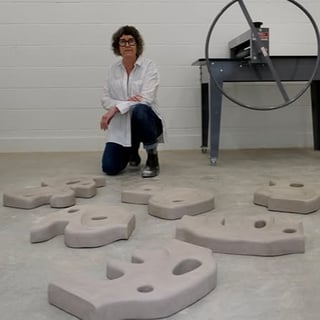
Speaker: Pausing, at least the word pause in that sentence comes from an actual design that I have that I call pause forms. And there are these little, probably about that big sculptures that I made and a lot of different shapes and sizes. It's not just one specific thing, but it was meant to be, like I would have them in groups of maybe three. You could buy a group of three of them. And the point was to place them around your house. They're just abstract forms, right?
Speaker: Put one in your bathroom, one in your kitchen, one at your front door or something. So then when you go about your day and maybe you're like, okay, time to wash the dishes and you're washing your dishes and you see your little pause form, you're meant to look at it and pause and do whatever you need to do in that moment, whether it's, I need to take a breath.
Speaker: or whether it's like I need to take a sip of water because I don't drink enough water or I need to tell myself a positive affirmation because I'm usually really down on myself or whatever it is that you need in that moment, take that moment to pause and then move on with your day. And so I was seeing these like sculptures as I was making them as, you know, these functional pieces because they're not just meant to be looked at and be like, oh, that's a pretty abstract sculpture. I looked at it and then that's it.
Speaker: It's meant to be something that gives you something in return. It gives you that reminder as well as, oh, even if it is beautiful, you're like, okay, that's pretty. I like looking at it. That gives me something too, but it gives me whatever reminder I need to do. And I think sculptures, and this is part of my art history background, sculptures in general, in the entire history of art, many of them have functions. They have political functions. They have any number of things, it depends on the
Speaker: sculpture, but not all of them are just pretty things to look at. I loved it. That was such a great explanation of that. So let's talk about the business side of pottery. Can you tell me about the moment when you decided to go full time with your pottery?
Speaker: Oh, hold on, this is falling out. When did I go full time? It was, I feel like a lot of my answers are just sort of like, it happened. When, when my husband and I moved out here to California, like before I had, I was working in, you know, a nine to five job and Pottery was my hobby. And when we moved out here, my husband got a job working in the entertainment industry and financially we were, we were set with his, his income.
Speaker: So we had the freedom for me to explore pottery as like a career rather than just a hobby. And I remember saying to him at the beginning, I was like, let me know when I need to get a part -time job or a full -time job. And I was like, when? Because I'm like, it's going to happen. There's no way I'm going to be able to be a full -time potter. So, but it's just time passed and I kept making and, you know, growing. Eventually I became a teacher, so I got a little more income that way.
Speaker: became, you know, started selling my work first on Etsy, then on my own website. And it just kind of grew from there. So I know that a lot of people have, if they go full time, it becomes a pressure because they need to pay the bills. So they need to sell their work. And I'm incredibly blessed that I can still be a full -time potter, whether I sell my work or not. Because like I said, my husband makes
Speaker: enough for both of us, for our family. So I'm incredibly grateful and blessed and I know what I have, but I still want to get my work out there. I'm still an artist and a business woman as well. And so, and I also don't want to hoard my work. I want to share it with the world. So I do still try and treat my pottery like it is a career, a full -time job that balances
Speaker: making and selling as well as teaching and educating. I love that. So now you mentioned your husband. How has your husband impacted you on your pottery journey? Oh, my God, has he? I don't even know. He's he has always been a good sounding board. You know, whenever I have like an idea for something, he's incredibly honest. And I think that he has a really good eye. He's a musician. So he's definitely a creative type.
Speaker: But I feel like his, the way his brain works is more on the like math and engineering side of things. Whereas mine is a little bit more on the other, you know, visual arts kind of stuff. But every time I have ideas, if I can bring it to him and say like, like, what do you think of this? Whether it's a sketch or whether it's like an actual piece, I know I'll get
Speaker: a 100 % honest answer. Like sometimes he'll be like, I don't get it. Or like that handle doesn't look like it's comfortable. And sometimes I'm like, Oh, what do you know? And I make it anyway. But you know, at least, at least I know that I'm going to get the truth out of them. So I think that's that's probably where the biggest impact comes from. But a lot of times, you know, I'll show him things and his responses. Well, I don't know, it's your art. Kind of like do do what you need to do. I'm like, right. Cool. I love that.
Speaker: to briefly talk about Instagram. Can you tell me about the moment when you decided to put more focus towards Instagram? Well, I think there, well, I've always been using Instagram. I started to, I had my own personal Instagram, which I still have. And if you try to find me, I'm private. So sorry. But I realized at one point, I think this was probably, it was before I moved out to California, where I started putting more photos of my work on my personal Instagram. And I realized I was like, I gotta,
Speaker: I got to split these out because if anyone doesn't care about this, they're going to get bored with, you know, it's just my family and friends, so they wouldn't care. But I was like, I'm a potter, so I'm going to make a new Instagram. And it was just Nicole Daisy Pottery. And it's just stayed that forever. But for a long time, it was just me sharing my work. And then when I moved out here and I'm like, I'm going to sell my work, it turned into more of a platform to market myself and my work as well as just to share it. But I would say,
Speaker: 2021, I think the summer was when I started doing the reels. Reels came up a little bit before then, because I remember doing a few of them, like when I was stuck at home with my wheel next to my couch during the pandemic. I remember doing some reels at that point, but it was really just sort of filming the work and being like, look, this is the thing I made. And then in 2021, I think it was July,
Speaker: I was like, I'm going to start doing these kind of silly funny reels that are sort of very, very niche, very specific to, if you don't make pottery, you're probably not going to get this. And people really responded, were really interested, laughing with me, hopefully with me and at me, but that's cool. And I think that's about the time when I really started putting a lot more work into things on the Instagram.
Speaker: Ironically, it was, well, probably not ironically, but it was way more work into the reels and into making these silly, funny things that just to make people laugh and to make them be like, oh my God, yeah, me too. I understand that when it comes to being a beginner potter or whatever it is. I think just being on the platform, more doing the reels made me also want to photograph my work more and try and learn more about how my camera worked and about laying out a composition.
Speaker: not to toot my own horn, but I feel like because I have an art history background, I have a pretty good eye for visual composition when it comes to like balancing colors and balancing light and dark in a photo and framing, you know, where does the pot go down here in the middle up here or whatever it is. So I got really interested in making my page visually pleasing, making sure that it had
Speaker: enough updates, you know, per week content coming out, both in the reels and in the pottery stuff and just making sure that like, it felt like me and felt like a cohesive, like, if, if you go to my page, you probably can see like color wise and everything. And it just kind of makes sense. So, so yeah. Now, what advice would you give to someone that wants to start using pottery to help them sell their own pottery?
Speaker: Instagram Instagram to sell their party. Well, I would say first of all, like play the game because Instagram is just a tool and it is free marketing like if Instagram didn't exist.
Speaker: Like think about how you would try to get your workout into the world. Maybe you would have like a newsletter, but how would you get people to sign up for your newsletter? You know, like social media is like a blessing and a curse in that way. Cause I know a lot of people would get mad and frustrated with social media, but if you can use it to your advantage, you've got to like, like I said, play the game, figure out what the algorithms want. But I think a big thing you want to do is you want to figure out.
Speaker: who your audience is, what you're trying to do, what you're trying to use social media for. Because I know you just mentioned if you want to use it to sell your work. If you're trying to sell your work, then you are trying to find customers. You are trying to find an audience that is going to purchase your work. So the way that you photograph your work or do your reels or whatever should all be aimed towards customers that will buy your work. My page also, because of those reels, I am trying to find an audience that are mostly
Speaker: beginner potters or somewhat seasoned potters that are interested in humor, that are interested in just kind of like finding fun videos. I try to do a lot of like educational stuff too. So even if you look at my, my reels below in the text is usually a lot of reading, but it's usually something that's going to teach you something. So I'm trying to find people who want to learn, who want to like get something out of that. And
Speaker: I found that as my following has grown, it has not made my sales grow. So I think a lot of people think, oh, if I get more followers, I'll sell more. It doesn't always make sense because my followers are not people that are interested. I mean, some of them, but in the majority of them are interested in my videos and laughing with me and learning with me, but not necessarily buying from me. So if I wanted to switch over to selling my work rather than
Speaker: the education and the humor and all that, the connection of the people, I would have to kind of transition my entire Instagram to being more of a marketing and finding customers to buy rather than finding people to follow for all those other reasons. That was some excellent advice right there. I love that. So let's talk about discovering your voice. You mentioned earlier that you found your voice by seeing patterns through your work. What were you feeling when you found your voice?
Speaker: I mean, I think, like I said with a lot of those things, it doesn't happen all at once. There's not always a moment where you're like, aha, it's sort of like, it happens over a chunk of time and then you look back and realize, oh, something's happening. But I would say like, if you're a person who's looking to find your style or find your voice, it's ironic we're talking about this because I'm literally writing like a whole journal post on my website right now about this, like before I even, you know, we even started talking about this.
Speaker: But I think if you are trying to find your style or find your voice, you need to pay attention to like the feelings, the emotions that you're having when you're working. Because if you are, it sounds so crunchy, but like, yeah. If you're like working on something and you realize like you're frustrated with the process, like I tried fastening mugs at one point and I hated it, but I'm like, I like the way it looks. The process, God, I hated it so much.
Speaker: And so like that feeling, like I paid attention to it and I was like, okay, this is not for me, regardless of how much I love how it looks. But there are other things that I've made that when I, when I make them and the process and the finished result and everything, I get this, like, this sense of excitement and energy, and it's just this visceral reaction to this work. And that's for me, a way that I know that I'm on the right track with something. So then I keep going with those things and.
Speaker: over time, all the multiple situations of me feeling those, you know, maybe I felt that with a mug and maybe I felt that with like a hand built sculpture or whatever. But I didn't feel it with this, this and this. The things I didn't feel it with drop off. And the things I do feel it with, I keep exploring and going in the direction. So then you're, you've got this collection of work that you're just like passionate about and excited about. And
Speaker: maybe eventually that changes as well and evolves. But if you can pay attention to those things, that's where you're going to kind of, I think, find your voice. And for me, that's kind of what happened with that situation in 2019 when I had all the wood ash and the iron flex and all that good stuff. I had this reaction to it and I was like, something is right. You'll feel this rightness. You're like, this is good. This is right. I'm on the right track.
Speaker: So I went in that direction. So that's kind of the moment and the feelings. And then as I evolved, because even if you went back and looked at those, you'd be like, oh, that's very different than what you make now. It is, but it's like the beginning of the evolution to what I make now. I love that shaping nation. There's going to be a feeling, there's going to be like a moment where you know, you're kind of going in the right direction. Maybe the whole process is just feeling great for you. Maybe the total outcome is feeling great. Listen to that moment and continue going down that moment. I love that.
Speaker: So outside of being a teacher and building your own pottery studio, you also contribute your growth as an artist to Joshua Tree. Can you tell me more about this? Joshua Tree. So it's funny that I attribute so much to this because I've only actually been there twice.
Speaker: And it started right after the pandemic. You know, my husband and I used to travel a lot before we moved to California. You know, we used to, from Massachusetts, it was easy to kind of fly to Europe. So we visited a lot in Europe. I spent a year in Scotland during my master's time period. And so like, we love travel and we love going places and discovering new things.
Speaker: But then when we moved out here and our finances kind of took a hit from the big move, we kind of didn't go anywhere for a while. And then when the pandemic happened and we were so stuck inside and we're just so sick of being indoors and we went, you know what, let's rent a little Airbnb, a little house or something in Joshua Tree, because it's only about two hours from LA if you're getting really good traffic. It took us about four hours.
Speaker: We rented this standalone little house, isolated from everything. And it is the most beautiful place. I've always been really drawn to the desert. And it's just, it's amazing that it's so close to LA. It's crazy how different of a world it is. And just the way that the hills are so rocky and you've got like, we went in January and it snowed and you know, we're from New England. So snow is a big deal for us. We're like, we were so excited to see snow for the first time in a few years.
Speaker: Um, so just like being in that space did something to my brain. And I think it's like that same thing we were just talking about where I had this like excitement, this visceral reaction to it. And it got my brain going in terms of, of design and pottery and creation, which I thought was interesting because like sometimes just going somewhere on vacation or whatever, you don't think about your work because you're like, Oh, I'm on vacation. I'm not going to think about my, my career, my job.
Speaker: And then, but for some reason, it's just all these ideas popped up in my head and I started sketching and drawing things and I had
Speaker: such a really great time. And then we went back again the year later and it was like totally different location in that area, different house and everything. Same exact thing. I had the exact same feelings. I brought my camera this time and I brought pots to photograph. And it was like the work that I had made within the year that I brought with me really made sense in the landscape. So I'm photographing all these things. And I was like, yes, everything was clicking and falling into place.
Speaker: So I like to think that I want to go back again, but now I have an infant. So I have to wait, I think until she can sleep in a big girl bed before, because I'm not dragging a crib or a pack and play around. But, you know, I'm pretty sure if I go back again, I'm probably going to have that same reaction. So for me, I think about it as sort of, I don't want to say like a Mecca, because it's, I don't know. I want to go there and I want to feel those feelings again. I want to bring my sketchbook and my camera and everything. And I just want to see what pops up a third time because
Speaker: I'm expecting the same, but who knows? Maybe I go and I'm just like, the magic's gone. I love that. We're running out of time here real quick, but before I got two more questions for you. So what advice would you give to someone looking to discover their own unique voice with their pottery? So what would I say? I would say you're going to have to copy for a long time, which I know is a weird thing. But when you're trying to find your voice, like you're trying to find something.
Speaker: So the best thing to do is to look around and see what's available, basically. It's almost like you're just kind of sampling from, you know, a buffet. And you might have artists that you're really drawn to and inspired by. It might be, you know, other potters, but it might be painters or woodworkers or whatever. And you might see something, especially with like pottery, you might say like, okay, that mug is so beautiful and I love it so much. And I'm going to attempt to make that exact mug.
Speaker: And then you make it and you realize, nah, it's not for me. Or maybe you make it and you realize, oh wow, I really like this process or whatever. But it makes me think of this other thing. So then you make something else. So copying in a way to learn, not in a way to steal and pass off designs as your own. But when you're a beginner copy, copy, copy, copy, copy, because you're going to learn what you love and what you don't love, which is more important, I think.
Speaker: I think you need to be willing to drop things. I think a lot of people when they're, when they're trying to find their style, they're like, but I want to make everything. I'm so interested in everything. That's a good sign. You're probably not ready because you're still learning. You're still in that process of absorbing, you know, it's like, it's like plant your seeds and then sow them. So you're still in that planting phase. You're trying to figure out what you like, what you want, what's even available as options.
Speaker: over time, you're going to have to drop things so that you can do your real true stuff, right? And I would say if you want to do an actual like physical homework assignment, because I am a teacher, then get yourself a piece of paper and a pen or pencil, dry yourself a Venn diagram that has one, two, three,
Speaker: And start with, what am I good at? And it doesn't necessarily have to be with pottery, but like, you know, kind of focus yourself. What am I good at? What do I enjoy? So, you know, maybe you're like, I really love nature, whatever. And then what is there like a need for, you know, so you're not going to make the same thing that
Speaker: Kurt Hammerly is making, you're not going to make the same thing that XYZ is making because that's already happening. Where is there a gap? Where is there a need in the, in the world of pottery? And if you can find one, two, and three, if you can find that overlap, that's a good sign. That's something that you should be making. So go in that direction towards that voice and style. I absolutely agree. I would also add one more thing to that Venn diagram, that is to
Speaker: to write down what you don't like as well so you can avoid those things that you don't want to do. Yeah. Yeah. That might be like, have your three van dye room. That could be their little box over here. Yeah. Just like this is the trash box. I love that. So Nicole, it has been great chatting today. And as we're coming to a close here, what is one thing you want to hammer home with my audience today? Be yourself. I know it's so cheesy, but I think like,
Speaker: There are so many potters in the world today. And like I said before, I'm so sick of seeing the same designs over and over so that when I see someone being their true authentic self, it comes through in their work and it's original and it's unique and it's exciting. Even it doesn't have to be complicated. It can be simple. Just be yourself. That's what everyone wants to see. I love that. Nicole, it has been a great time today. Where can my audience go and learn more about you?
Speaker: Well there's my instagram which is nicole dacy pottery and also my website is nicole dacy pottery dot com. Hey thanks for listening to this episode of shaping your pottery with Nick Torres. If you want to discover how close you are to actually discovering your own unique voice with your pottery, I put together a free
Speaker: I hope you guys enjoyed this episode and I'll see you guys next time.