Transcript
Speaker: What is the why behind your work? I really enjoy the thought of people. How does it help you think through things? Just designing things. So if I'm thinking about a set, I can see it. What are three tips you would give to someone to help elevate how they shape their own pot? Don't even think about other things. Just look at that.
Speaker: What advice would you give to someone who can discover their own unique voice? I would say to just keep doing things you... Hey, and welcome to Shape Your Pottery, and share with me what is something you believe potters should be doing to have success in pottery.
Speaker: So for me success just comes with my own exploration with material and so I mean success is subjective to everybody but for me it's just continuously looking for answers in the material and what it can do for me. And so I'm always exploring different clay bodies, different ranges of
Speaker: firing different types of kilns that I can use just just to find things that might beat to my work because you never know you might stumble across something that just really hits home to you so that's what I would say just keep exploring keep being curious be open -minded yeah
Speaker: Absolutely agree. Shaping Nation, be open -minded, be curious so that your pottery can continue to grow. I love that. Now, tell me the story how you got started making pottery.
Speaker: Well, I've always done art. Growing up, I would always draw and paint. I'd always have a sketchbook with me everywhere I went. And so that was just a way for me to manifest things that I had in my head. I went to undergrad knowing I wanted to teach and I wanted to pursue art. I just didn't know exactly what field I was going to go in. So initially it started out as graphic design.
Speaker: And I had a job doing graphic design for a newspaper, but I ended up taking ceramics just as one of my prerequisite classes. And the first class I took was all about hand building, and so I learned how to hand build. I wasn't necessarily
Speaker: good at it. I didn't necessarily like it that much either. It was a struggle for sure, but I would always watch the advanced students on the wheel and throwing. And so I was just drawn to that, just the wheel. And I also was just so involved in the community. I really love the ceramic community. And so that was a huge part of me changing my major.
Speaker: Two ceramics as well. So once I got on the wheel, I knew that was the direction I wanted to go in and I changed my major. And then here I am just graduated from grad school. So I think that's pretty cool. Just the journey that I've been on. So. Absolutely love it. So you mentioned that you, you would keep a sketchbook to help get your ideas from mind to real life. Do you still keep it sketchbook now?
Speaker: I do. I don't draw as much anymore just because ceramics just consumes my brain. But I use my sketchbook. I have two or three that I just take with me like whatever one I grab.
Speaker: And so I have a small pocket one I keep in my purse just in case something like comes into my brain and I don't have my big sketchbook with me, but I'm always just sketching out ideas. Most of them I never even pursue, but it's just a way for me to think, think through things. How does it help you think through things?
Speaker: I'm just designing things. So if I'm thinking about a set, I can see it in my head, but I know that realistically, that's probably not what it would look like when I go to make it. And so when I use my sketchbook, it's to realistically like think through the process of how do I build this structure.
Speaker: how do pots fit on that structure, even just proportions in pots. And so I do a lot of sketching in terms of proportions before I even throw. And so just, I'll have like a whole page full of different proportions for a certain form, like a mug or a cup or even a pitcher. And just thinking about those things before you even start throwing. So it's just a way to help me think of, think through the process and what I'm trying to make before I just go for it, I guess.
Speaker: Absolutely. Love a shaping nation. How can you use a sketchbook to help you better plan out what you're trying to make and maybe get your thoughts out as well? I love that. So you could trip growth as an artist to get in your BFA and going through graduate school to get your MFA. Tell me the story about why you started to pursue these things. Well, again, I got a BFA because I always, I knew I wanted to teach something involving art.
Speaker: But when I realized that ceramics was the road I wanted to go on, and I thought about it, and MSA really opens up job opportunities. And so I know that I wanted to teach on an academic level in terms of maybe just beginning level college, community college.
Speaker: And so you kind of have to get an MFA to be qualified for those things on paper. But an MFA has really taught me a lot more than I thought it would. And so it was worth it for sure going through that training. But now I just have a lot of options. I can go anywhere if I wanted to. I can do tech jobs. I can do teaching jobs. It just opens up a lot more opportunities.
Speaker: So that's why I did it, for sure. How would you say these experiences helped you to grow as an artist?
Speaker: Well, it has taught me how to really dig into why I'm making what I'm making and the things that inspire me and just makes me, it has taught me how to question everything that I do in my work. And I feel like that has led me down a path of making more genuine work to who I am. And so just, it's just taught me, it also has taught me how to
Speaker: juggle the whole schedule of like teaching and how to keep making your work on top of having a job, which is really difficult. And so just prioritizing those things. So you mentioned finding the why behind your work. What is the why behind your work?
Speaker: That's still a good question. Yeah, that one was really difficult for me. I like to make utilitarian work. I really enjoy the thought of people using my work and my work existing in their homes because they like it. But I've also been exploring sculptural stuff and making stands for work and what that means. And so that's still a question that I'm digging into.
Speaker: and that I don't have a definite answer for. I feel like that's a life pursuit for me. Absolutely love it. Shaping Nation, just because you don't have a why doesn't mean you cannot be making party that you love. The why is an endless journey. I love that. So now, what is something you learned during your time getting your BFA and your MFA that you still use today?
Speaker: Something that I learned how to just be curious, keep like exploring things, how to juggle a life on top of being an artist and just looking for opportunities in the field, just keeping my hands in clay for sure. Like it's hard to juggle all those things together and still make your own work. And so I feel like that's the biggest thing that it's taught me.
Speaker: So how do you juggle all this pottery and life together? What works for you? Well, for me, I like to get up early in the morning. I used to not.
Speaker: But I realized that getting up at, if it's 5am and just getting into the studio, that's the first thing that I do every single day. Even if I'm just sitting there enjoying my coffee for a little while, at least I'm there. So showing up for my work.
Speaker: And just prioritizing that, I know that having a full -time job and if you have a family, like, of course those things are high on the list, but if I just spend an hour or two in the morning, just, even if it's just sketching ideas, that's something. And so just, I.
Speaker: mapped out that part of my day every single day just for my work, even if that's the only time in my day that I touch play. So it's just a priority for me. Absolutely love that. Shaping Nation, if you can build that habit of getting into the studio, it becomes a lot easier to juggle all of life's uncertainties around you. I love that.
Speaker: So let's talk about your pottery. Tell me a story how you started making the pottery that you make today. Well, in undergrad, when I took my first wheel throwing class, it was all about the quantity of what we were making. And so I feel like it's making a quantity over quality in the beginning is really important just to get play through your hands.
Speaker: The more clay you get through your hands, the better because you build that muscle memory. And so it's just, it was good for me to not contemplate on one piece. Just move on. If I mess up, don't, you know, think about it too long. Like, okay, that went wrong. Let's try something else the next round. And so just doing quantity, just thinking about the skill and the craft behind it and what makes a good pot. And so.
Speaker: just learning how to throw I mean that takes a lot of time and so it wasn't really until I got into grad school where I was thinking about aesthetics over the skill because by the time I got to grad school I had that those skills.
Speaker: you know, in my hands already. And so that wasn't a struggle. I could then focus on the why, like the things that I like. And so one of the first things I was challenged to do was to define line in my work because I like architectural lines and very rigid bold lines. And so
Speaker: defining that for myself really led me into how my forms came about. So I was thinking about line and forms and how things could constrict or expand in different ways. I would do these whole series of a cup. I would just take a cup and think, okay, if I
Speaker: constricted it here and expanded it here more and more each time, what would that do? And I would push myself to the point to where it wouldn't work functionally anymore. And so it was more about aesthetics. And so I've been trying to balance the two because utility is still really important for me, but I've been challenging the way I look at the aesthetics of a pot over utility. So
Speaker: Yeah those things came from looking at architecture and birds for me. You mentioned that you were challenge yourself with the aesthetic of the pot. Tell me more about that. Yeah so utility has been really important for me and so I always made that priority but coming to grad school it's it's been really difficult because
Speaker: A pot doesn't have to work for it to be beautiful, and it could still be a pot.
Speaker: I took utility out of my work for a while and I would close spouts up just so I wouldn't worry about it working and just thinking about the proportions that I would find in a pot. Sorry, I have a cat. So yeah, I would just think about the proportions and don't even worry about how it worked. And that helped me see things differently. I can always go back and make those aesthetics
Speaker: utilitarian again, but it was just crucial that I closed things off and not even worry about, oh, there's this pot gonna pour right. I just wanted to say something else in my work that wasn't about utility. It was about line and architecture and birds and all this combination of things that I like.
Speaker: I absolutely love that shaping nation. You don't have to be making functional pottery to make a beautiful pot. It doesn't have to work. You can make whatever you want. I love that. So something I found interesting for your website is you said my work is centered around the solitude found in morning coffee. Can you tell me more about this?
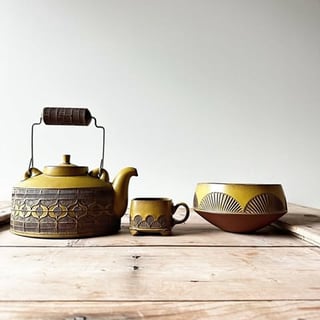
Speaker: Yeah. So that was one of my favorite things that I discovered in grad school. Again, like I, I would go to the studio super early every single morning and get there at like five 30 or six in the morning. And I would just make a pot of coffee. And that would just be my time where it was quiet, literally the only quiet time I would get during the day. And so I would just enjoy my coffee and just sit there and think about.
Speaker: The day ahead and the work that I wanted to make and how I was teaching my class and all these things. And so when I got into thesis, I realized, oh, like, this is something that I do every single day.
Speaker: And so I started digging into why that was. And so my work for my thesis revolved around just the solitude that I found. That's my peace and quiet for the day. And so when somebody uses my work, I would hope that
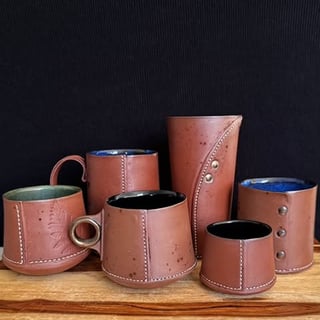
Speaker: it would give them a chance to slow down and to appreciate those quiet moments in their day because I know that is the same for everybody. Like, you know, life is crazy and those quiet moments are hard to come by. And so if they are using this handmade object, maybe they look at it and they think, oh, I love that color. I love that texture on it. And maybe it
Speaker: takes a moment just for them to like, flow down and think about it a little bit more and maybe that'll, you know, they'll think about other things in their life, just finding those quiet moments pretty much. I absolutely love that. That's super amazing. So you make some amazing shapes with your pottery. What are three tips you would give to someone to help elevate how they shape their own pots? Yeah, thank you. So
Speaker: One, I would say quantity again, just keep making, maybe pick one form, like a cup and just make 50 of those in a row. Like don't even think about other things. Just look at that cup, make 50 of them. And then maybe from there, take the one that you like the most.
Speaker: and think about why you like it, and then make 50 more of that one. And maybe change something every single time you make one, alter it just a little bit. Personally, for me, that's what I do. Every time I come across a form that I want to explore and try to find proportions in it, I'll sit there and make 50 of them.
Speaker: And then again, I also look into history a lot for forms. And so just looking at historical vessels, I've been looking at bronze ware from the Bronze Age in China. Also just different types of pouring vessels all over the world that I have found in history. It doesn't have to be ceramic. I've been looking at silver and glass sets just to see how those came together aesthetically. And so, so yeah, I would.
Speaker: I would just do quantity and then pick the one that you like and just alter that one, you know, even if it goes beyond utility, even if it doesn't work anymore. And then a lot of history, like just diving into history, finding forms you like in history, and seeing how you can translate those into the forms you're making.
Speaker: Absolutely agree. I love that. Shaping Nation, the simplest way to improve your pottery or to make a good shape is to make a buttload of pots. Keep making a buttload of pots because that's how you're going to be able to find something that works. I love that. So let's talk about discovering your voice. Can you tell me about the moment when you knew you were heading in the right direction with your pottery? That's a good one. I feel like that's something I'm still working on.
Speaker: I've always been a very tight potter. I love clean work, and again, utility in my work is really important. I guess it wasn't until this
Speaker: like a month ago maybe where something in my work finally clicked for me and I was like oh like this is I feel like this is speaking to who I am more than it ever has and so I've just been trying to dive into the things that I like trying not to look at contemporary stuff so much like it's good
Speaker: to be aware of what's going on in the world, but I try to base all of my research off of history and the things that I enjoy around me, so like architecture or birds, finding things out of those and just putting those into my work. And then just thinking about the why again, so like the morning ritual of coffee,
Speaker: Why do I like that? And so all of that coming together finally, like I feel like now at the end of grad school, I have found something that my voice, I guess, in my own work. And it feels good. It really does. Like just to have something like, oh, that's Peyton. How long do you think this took you to get to this point? I've been doing ceramics for about 10 years.
Speaker: There's been gap years where I didn't make any work, but just the culmination of the 10 years, just going through school.
Speaker: has helped a lot. I feel like I would not be where I am without the training I've had. Yeah, it's been a journey. I feel like it's, I'm not even close to having answers yet, but just for me so far, it's been a decade of just making pots. What would you say was your biggest obstacle when it came to finding your own voice?
Speaker: biggest obstacle, probably caring too much about feedback and outside voices, how people perceive my work. That's important too, but it can be, it can just cause you to stop in your tracks. Like for me, if I think about what other people think, how they perceive my work too much, then I
Speaker: end up hesitating too much and just stalling, I guess, on something too long when I could have already moved through it. And so just trying to get that out of my head and be like, okay, I like these things and that's valid. It's okay to like certain things as who you are. And so just accepting that and trying to listen to myself more, I guess so.
Speaker: absolutely love that shaping nation there's gonna be a bunch of outside feedback a bunch of people telling you maybe how you should make your pottery but you have to listen to your gut and stay focused on what you like to make i love that you know what is one thing you wish you knew when it came to finding your own voice one thing that i knew probably that
Speaker: It's not going to click automatically, but it does take time. And so when I feel frustrated with something that I'm making, I'm like, no, this doesn't feel right. It doesn't feel like me or like I just sit with it. And even if it's not something I like immediately, like I'll pull a piece out of a kiln. I'm like, no, like I immediately want to throw the dumpster. But I've trained myself to just keep those pieces and look at them, think about them. Like why?
Speaker: maybe why I don't like them and then challenge that. And so just accepting those, what I think are failures at first, but end up becoming probably segues into new ideas. And so just keeping that in mind, like if I get frustrated, it's okay. Like just sit with the work for a little while. I love that. I've never heard of that before. And it makes complete sense when you say it out loud. I love that.
Speaker: So now, what advice would you give to someone who can discover their own unique voice with their partner? I would say to just keep doing things you like doing. Be open -minded, of course, like maybe try new things. I think it's fun to try new materials, find new ways of firing. How do you combine materials?
Speaker: And so just staying curious, but always doing the things that you enjoy doing. And look into the things that inspire you and just sketch those out. Find ways of abstracting those things. For me, that's what I do. So just listening to yourself again. Absolutely love that excellent piece of advice right there. Peyton, it's been so great challenge today. And as we come to a close here, what is one thing you want to hammer home with my listeners today?
Speaker: I'd say just to find your joy, find the joy in making, even like if you're frustrated with work and things aren't shaping the way that you think they should be shaping, still find joy in that. And remember to slow down, to breathe, think about what makes you happy.
Speaker: While you're making, for me, that's what I do. Even when things get crazy, I slow down. I'm like, okay, I know I have a deadline. I know I have projects coming up, but I'm going to sit here and enjoy throwing and making. And so just trying to keep that in mind. Some excellent parting words of advice. Peyton, it's been so great chatting today. Where can my listeners go and learn more about you?
Speaker: I have a website and I also have an Instagram where I post a lot of pottery, as well as cat pictures. And so if they want, they can reach out to me via Instagram or my website either one.
Speaker: Hey, thanks for listening to this episode of Shaping Your Powdery with Nick Torres. Just letting you know that my upcoming workshop on May 31st with Mike served on how to hand -build a goblet cup is the seats are almost all full. So unless you don't want to attend and elevate your hand -building skills, click the link in the description to save your spot. There's only seven more spots left. So hopefully see you there.