Transcript
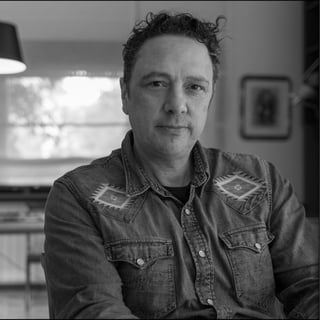
Speaker: You are listening to Something Rather Than Nothing. Creator and host, Ken Vellante. Editor and producer, Peter Bauer. This is Ken Vellante, and we're listening to the Something Rather Than Nothing podcast. And I'm very excited this episode to be talking to Jainim Javeri.
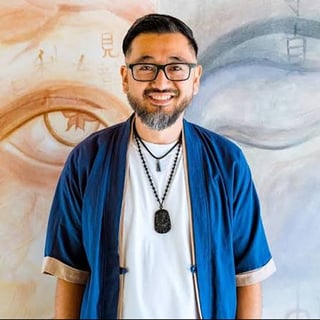
Speaker: who is a philosopher, thinker, astrologer in India. And I'm very excited and very happy to welcome you, Jay, to the program. Yeah, thank you for inviting me. And it's good to talk about philosophy and these things. Yeah. Yeah, I love that. I love that connection. So, Jaynam,
Speaker: I wanted to get to know you as a thinker and a philosopher, but before we get into some of those bigger things, what were you like when you were younger? Did you think about big issues? What influenced you when you were younger? When I was a kid, I was a very introverted guy. I was extremely introverted and I used to speak nothing all day.
Speaker: So that was the kind of person I was and yeah, people used to call me like old soul in a young person like that. So I used to be very philosophical since the beginning and yeah, it was difficult.
Speaker: to because the people I was around with were mostly extrovert people and it used to be very difficult for me. But yeah, I met a lot of friends. I made a lot of friends because I used to be like an advisor to everyone. So anyone who wanted some help or any opinion or anything, they would come to me from the beginning.
Speaker: So it was kind of easy for me in the school. But I think in the college time, it became really difficult because college is a time when the extroverts really shine. And it's a very difficult time for someone who is a complete introvert person who doesn't speak a lot in the groups or who's not able to communicate much with people or who cannot initiate a communication.
Speaker: So I think the college time was kind of difficult because I had to face all my fears of social anxiety. I had to speak a lot to survive, basically. So there was a time when it was really challenging. But yeah, and that was a time when I, that's the reason I did my graduation in marketing.
Speaker: because that is something which requires a person to speak, which requires a person to be forceful and like to engage with more and more strangers and more and more people. So that's the reason I chose my graduation in marketing so that I can challenge myself. I was a very challenging and very competitive person. So it made me lose the fear of speaking with people.
Speaker: So yeah, that's me. Yeah. Yeah. No, I just I just wanted to and sorry to interrupt there for a moment. I I really connected what what with what you said about, you know, just challenging yourself in that I myself have had experience that, you know, my younger years, the deep, deep, deep profound difficulty in communicating in public, in front of people.
Speaker: And it's been a very important journey for myself. But also the way that you challenge yourself.
Speaker: I think that's part of it for some folks is to kind of challenge yourself and put yourself into that. How difficult was it for you to do that? I mean, I would not recommend this to anyone. Like it worked for me, but I don't think this is the right way to like face the situations. I don't know, but it worked for me and I would give one more example. I used to have this fear of water, the hydrophobia.
Speaker: So I purposely went to the swimming pool and like I learnt swimming and I used to go everyday to swimming because I had the phobia of water. So I used to do things that I would never do and it is very chaotic like mentally it is very reassuring.
Speaker: But I thought that's the only way I could survive because I was the only child in my family. And in India, generally, the families are big. But my family, I only had my parents and me. And it was really difficult. If I would have not challenged myself and do a dead stuff that I was not capable of doing, then it would have been very difficult for me to survive or grow. That's what I felt. And yeah.
Speaker: Yeah, and thanks for sharing that, Jaynam. I was speaking with Jaynam Javeri from India, a philosopher. And we're going to be talking some big questions. And so we're going to jump around. Philosopher Jay, as he's also known. Jay,
Speaker: One of the big questions I always ask on this show is, I just wanted your opinion on the big question about what is art. I think art is everywhere. Let's say if someone plays chess, chess is considered a very theoretical sport where you learn the lines and it's very calculative. But even during playing a chess game,
Speaker: their grandmothers reach a point where there is a position where they have never reached before. And during that time, the real art of how good they are, of how they can play the game. Because not every time, everything will be a certain pattern. There will be changes. There will be adventures. There will be ups and downs.
Speaker: and to face those challenges to like it's an art to face those challenges and to survive and succeed. So I feel like art is everywhere like for example in astrology there is calculation like we calculate and cast a chart then there is science in it that the position of the planets and all but then comes the art of prediction because all the patterns cannot the prediction cannot be same for everyone. So we have to look at a person and the
Speaker: We have to judge by the person and by so many things. So the intuition which people call I think it's an art like the intuition is an art in astrology. That's what I feel. Yeah. And I appreciate that that piece a lot of times during
Speaker: the show and speaking with guests, there's a lot of connection between, you know, say science and art or what you know for sure and some of where the speculation is based on that knowledge. And I think that's a really great area and I'm glad you broached that.
Speaker: Jay, I wanted to get into some more general questions in our discussion. And in some of the communication we had prior to you joining the show, I was explaining to you that the show is something rather than nothing. And I've been looking to explore those concepts with some more depth and more
Speaker: points of view. One of the topics that I brought up over time was one of which we have a shared interest is Buddhism and the concepts of nothingness that exists with Buddhism. I wondered if I could rely on you for
Speaker: your general understanding of the Buddhist tradition, particularly when it comes to the question of nothingness.
Speaker: So the Buddhism started around 6th century BC by Buddha and their main philosophy if you can say their main philosophy is that everything is impermanent. Everything is ever -changing. So they call it in Sanskrit and said that everything is ever -changing and everything is non -lasting.
Speaker: Then they come towards Dukkham, Dukkham, Sarvam, Dukkham. That everything is suffering. You can say everything or everywhere is suffering. And then comes the Shunyam, Shunyam, Sarvam, Shunyam. That everything is void. Like in Buddhism, they believe that the existence is not permanent.
Speaker: everything is in a complete change like there is change in every millisecond or every moment of life everything is changing and we can see that we can see how the world in a bigger form we can see how the world has changed like every year if we see there is something new or the other coming and going in the world like let's say what 2019 was for us and what 2020 was it's completely opposite like it was completely different
Speaker: And in a very minute level, we can say the molecular changes or the atomic changes, the change in the energy, all those things. So Buddhism believes that everything is ever changing and there is no permanent existence. Like even the soul, Buddhism says that, okay, soul exists, but it doesn't have a permanent existence. At the end, it's all going in complete void in nothingness. So that's a basic philosophy of Buddhism.
Speaker: And it is one of the parts of, it came from India and it was one of the more atheistic philosophy compared to the Hinduism, which many sects of Hinduism are more theistic philosophies. While, and also Buddhism, even Jainism and Ajiva, these are the philosophies which are called as Sramana philosophy.
Speaker: that they consider becoming a monk, like leaving the material world is really important because this material world is ever changing and it's anyway not permanent. Then why to waste your time in pursuing this material world? It's better to completely leave it because it's not ours to enjoy anyway. So that is the basic concept of Buddhism or any Shramana tradition.
Speaker: Yeah, thank you, Jane. I wondered if I could follow up with one particular question that I've been considering with your thoughts on Buddhism. And it's about impermanence, the general changing nature of all things, of what you were mentioning, of one thing becoming another thing, of being and becoming.
Speaker: You know, with the chaos that has been felt by many in the world with the pandemic and the rapid political changes and other things affecting all human beings, there's been a greater sensitivity to the feeling of impermanence. Within that, do you think that, say, the kind of Buddhism's view
Speaker: is something that people are drawn or seem more present in the world, the general chaos or impermanence that they feel right now? Yeah, I think especially after 2020, there is a huge number of people who, whenever I look at any philosophical groups or any religious discussions, many people question the philosophies which say that everything is permanent, like everything was created by God and he's the one who is
Speaker: who is a doer and the creator and the destroyer, which this concept was questioned and especially by people who follow atheism or maybe Buddhism, Jainism, because in Buddhism, even in Jainism, it is believed that the world was never created and
Speaker: And the changes that are happening, that are happening in their own way, like self -regulating mechanism. It's not something with some, there is some divine intervention who is doing all those things. So I think especially after the COVID thing, the people, many people thought, many people questioned that whether God is actually doing stuff, because if he's doing stuff, then why is,
Speaker: the why did covid happen at the first place? Sure. And why did people suffer? So I think, yeah, if we look at this point of view, a giant point of view, it is very simple that these things were bound to happen. It happened. And according to each one's karma, they had to suffer. Like many people who have gained a lot also in during the times of covid, many people like
Speaker: They became like someone who works here in a medicinal field or hospital hospital field earned a lot of money. Like if we look at the material point of view, but there were people who were completely suffering too. So.
Speaker: The thing that happened outside necessarily cannot affect someone just badly. For some people it was good, some people it was bad. So that's the reason they say that all the things that are happening, you have to be neutral about them. Buddha also said that the middle path of being neutral, because no thing can be bad or good. It can be bad or good from a particular point of view for a person.
Speaker: but it cannot be at a very absolute point that it's bad or it is good. We cannot choose one. It can be good or bad for each and every individual. Thank you. Thank you, Jay. I really enjoy your explanation and listening to you because there's some really difficult and intricate concepts in there. One of them of which
Speaker: I'm relying on you a bit in some of your knowledge. I've studied Buddhism and in practice Buddhism over the course for myself of about 20 years or so. So I've had some exposure to the tradition and some practice. You had mentioned in your comments some reference to Jainism as a thought system.
Speaker: And I was wondering if I could again rely on you for your understanding and some background as far as that tradition and also connected to questions of nothingness or somethingness, those type of questions. Yeah, so I'll explain Jainism in respect to Buddhism, since you know Buddhism, so it will be much easier. So in Jainism,
Speaker: the 24th, the last Tirthankara. The Tirthankara are the people, are the souls who are in human form but they are the ones who show the path to liberation and they themselves achieve the liberation and they show us the path. So 24th Tirthankara was Lord Mahavir and he was a contemporary to Buddha and they were at the same city or that time it was called as Magat which is in present time the Bihar state in
Speaker: India and they were the contemporaries and they were at the same time itself and there's a lot of mention of Lord Mahavir and Jainism in even Buddhist scriptures. They called him as a Nikkanta Nataputta which means a monk who is without knowledgeable monk who is without clothes because Jain traditions believes that if you are leaving the material world you also have to leave your own clothes because even that is a material possession.
Speaker: And Jainism's basic, the main difference between Buddhism and Jainism is Jainism is also another Sramana tradition, which is opposite to the theistic school that God created in the universe. Jainism believes that the universe has been always there. It's infinite and it will always be there. And there are modifications, like there are two things that exist in the universe, that is soul and the matter. And there are always modifications happening in the souls and matters.
Speaker: The biggest difference is Buddhism says that at the end it's a complete void. While Jainism says that the quality of the matter or the soul always exists. The modifications are happening. Let's say for example, let's say water is getting evaporated and becoming clouds and then again it is coming down as rain.
Speaker: So there is change, but the matter substance remains constant. So Chinese says that everything is impermanent, but also everything is permanent. Both the view is from what angle we see. Like for example, Jainism says the soul is ever changing. It is impermanent, but the soul itself, the substance soul is everlasting and it is infinite and it has its permanent existence. And in Jainism,
Speaker: the karmas are actually literal matter which by a soul's activity they get attracted good or bad karma and once a person destroys all his karmas and realizes himself he achieves liberation and liberation is a point where they have achieved
Speaker: They have achieved the ultimate goal. They are at peace without any karma because the main reason for suffering is karma. Good or bad, but it is the main reason for suffering. So the point is to destroy complete karma and realize themselves and achieve liberation. This is the point of Jainism. And even Buddhism in a way believes many things, but the major difference is the permanence and impermanence part. That is one of the biggest differences between Jainism and Buddhism.
Speaker: rest, Jainism, both believe in monk, becoming a monk. They believe in the vratas, what we call vratas, like non -oilence, non -stealing, non -possessiveness, all these things. And many of things are similar, but I also, if we go more deeper, there is one of the bigger differences. Buddha showed a madhyam mark, a middle path.
Speaker: where you don't have to go to the extreme and you can stay in the middle to realize yourself or achieve the final goal but in Jainism it is you have to go to the extreme and as a reason in Jainism monks do not wear clothes and Jainism says that this body is not yours you are not the body you are the soul so anyway you have to just use the body to achieve self realization and even wearing clothes or eating food is not really required
Speaker: unless you are completely going to die then it's required to eat have something but Jains do not eat root vegetables or do not eat after sunset because it is said that root vegetables have infinite microorganisms and every organism has a soul in it because it's all alive so it is said that to do the most minimal sin possible the most minimal violence possible so they don't like Jains don't eat after sunset
Speaker: because after the sun is gone, there are so many infinite number of beings that just appear and it can come in a food or in... Yeah, so it's better to not eat after sunset, not eat root vegetables, be completely vegetarian, all these things. So, Jainism is a more extreme version while Buddhism is a more middle way. That's a major difference.
Speaker: the part of permanence, impermanence and the part of this ritual, the conduct which Jainism is more strict and Buddhism is a lenient about it.
Speaker: Thank you for the basis of your explanation jumping from Buddhism to Jainism, because I was able to really make some of the connections with some new material about Jainism and really appreciated some of the
Speaker: what seemed to be some of the profound dedication and faith that seemed to be involved in the Jainism belief system. I had one follow -up question, Jay. I was wondering, I know the concept of personhood in Buddhism is more of that there isn't this persevering ego or person or that continues
Speaker: Within Jainism, and I know you pointed to a couple pieces regarding personhood or ego. What is the idea of a person in Jainism? So a living, let's say, for example, me, myself, we all, as a living being, our soul,
Speaker: That is a permanent existence. We have been always been there. It's infinite. Nobody created us nor it will ever get destroyed. We have always been there. But due to our actions and due to our ignorance and due to our wrong belief that we never believed that we are soul. The problem was that we always had some of the other form, whether a vegetation form, whether animal form, whether whether in heaven or hell or whether a human form.
Speaker: So the most closest thing came because of the knowledge, the power of knowledge is in the soul. So the way we are trying, the way we can see things or perceive things, all these things are quality of soul. So the first thing that came
Speaker: In front of us was our own body our own mind so the soul like we thought that this is who we are and we associate it because of the bad qualities that we have like there is ego there is ignorance of
Speaker: There is greed, there is attachment. The main problem of the soul is attachment because of the attachment and that attachment is not just towards outer stuff but it also towards our own body and mind, our own ego that I am the doer or I am the one who does things.
Speaker: and this attachment leads us to ignorance and we are not able to realize who we really are and our existence is permanent.
Speaker: according to Jainism. It is changing forms because of our Karma, but once it is destroyed, it will still, or once the Karmas are destroyed, the existence will still there, but it will be in the absolute peace form, the form where there is no more suffering and it's in infinite bliss. So this is how the thing is. And the universe, according to Jainism, is soul and matter. There are two things.
Speaker: And under matter, there comes another four things like matter itself, then there is time, space. There are two more things which I haven't found it in any other religion and that is the motion and the rest.
Speaker: like the medium of motion and medium of rest. So everything that is moving is happening because there is some element of motion which is helping things to move and there is an element of rest, which is called as Dharmasthikai or Dharmasthikai in Prakrit and these are the two things which help in moving and staying for every soul and matter.
Speaker: So this is how the existence is according to James. I mean, none of this was created or destroyed. It was always
Speaker: going on like ever changing but always existed so main thing is the permanent existence of soul ever changing qualities of course like today we have attachment for something tomorrow we might not be attached to it today we have we have anger ego tomorrow we might have something else so yeah the qualities inside are ever changing but if we look at the permanent if we look at from the absolute point of view soul is something which
Speaker: in a way is a God like because the God in Jainism is someone who has destroyed all his karmas. All these bad qualities are destroyed and they achieve liberation. That's what is called a God in Jainism. Not someone who does things, but someone who sees things, who has seen the truth, who knows the truth. Yeah.
Speaker: Thank you. We're speaking with Jainem Javeri philosopher Jay also known as and Really really enjoy your analysis and Jainem before I ask you about another thought tradition that I indicated that I was interested in the Vedanta I wanted to ask you the bigger question of the show and maybe to frame that discussion your thoughts
Speaker: your thoughts on why is there something rather than nothing? For that we need the experience. I think the experience shows us that there is something because we have been a small kid, like we were born, then we were a child, then we became a teenager, then we became an adult. So all these times there was a permanent existence which was there, which was experiencing all these forms.
Speaker: like we experienced that we were growing up the things that were changing there is someone with experiencing those changes who is aware of those changes that shows it's like playing a video game and there is someone a third person or what we call we call it as a first person shooter right so who is someone who is controlling the this character but you know that you are there you cannot see yourself in the video game but you are there who is controlling the character and achieving the
Speaker: missions. So it's just like that, that all this we are experiencing, you know, right now we are talking. So there is an experience, there is knowledge, there is an awareness, which is experiencing all these things, the way we are talking and everything. So which shows that there is some existence because the very question when we ask that there is something or nothing proves that there is something because who is asking the question then. So that's what I said. Yeah. Yeah, I
Speaker: I really enjoy listening to you, philosopher Jay. We should call you Professor Jay as well. It's great to learn from you. Talk to us about the Vedanta tradition and the aspects of non -duality that exist within that tradition.
Speaker: So in Vedanta, which was especially popularized a lot by Swami Vivekananda, who went to USA for the first conference in Chicago, I think in 1893, I don't remember the year, but yeah. So Advaita Vedanta says that everything that exists came from Brahman. There is an absolute reality called Brahman. And living and the non -living, everything that exists is Brahman.
Speaker: So even the non -living things, even the living things, it's all Brahman. And we are all stuck because of Maya, that ignorance. Maya can be called as ignorance. That we are ignorant about the true nature of our own selves. And that's the reason we are stuck in the samsara, in this material world. And when we realize ourselves, then we achieve that Brahman. And the dialogue is that
Speaker: Brahma satyam jagat mithya jeevo brahma even apara, which means that only Brahman is the only reality and the entire universe is illusion and even we as a jeeva, as a soul are not apart from Brahman. So the dialogue, we are one with everything. I think it comes from Vedanta.
Speaker: which says that we are one with everything. Now that is different to Buddhism and Jainism. Jainism says that no, we are apart from everything and we have to realize that we are apart from everything. That we are soul, everything else is karma which is not us. But Vedanta says that we are one with everything and we have to realize the true nature of their oneness.
Speaker: to achieve liberation. So this is the major difference because all the three philosophies believe in karma, believe in self -realization, believe in more about meditation and knowing your own self rather than some God like praising some God or anything like that. It's not focused on that. It's more focused on the self meditation, self -realization. But these are the differences like Vedanta focuses more on the permanence of the substance.
Speaker: Buddhism focuses more on the impermanence of the substance, while Buddhism says that permanence and impermanence both exist. So these are the three philosophies of India. Yeah. Yeah, well, and I really appreciate your wide -ranging comments. I mean, I love the conversation around the concepts that you had pointed out overall. I mean, you're talking about personhood.
Speaker: Causality, motion, rest, just kind of like those big metaphysical concepts. And I really love talking about them and bringing them into this space in this conversation. In finishing up here, Jay, what I wanted to ask you was,
Speaker: I know you're working on some threads of thought that you hope to develop a project of writing and developing there. I wanted to ask you about that, but I also wanted to ask if you could let
Speaker: Any of the listeners know what might be a good way to be in touch with you or to see your writing or to learn from you or anything like that? Yeah, thank you for mentioning my work. So I'm working on a book. There are two types of books that I'm working on. One is a story of a person who is completely into material
Speaker: race, the right race of success, but who goes to pilgrimage in India and meets monk and then their stuff like the learns about life and all those things. So the basic story is this, and I'm working on that story. And one is something where I'm, I'm just putting
Speaker: In a very basic language, what is the true nature of reality and how we can slowly and steadily achieve that like, like many times people are just suffering because of their simple, like there are some simple things like ego, just one ego to satisfy that one ego, people spend their entire life like to achieve that
Speaker: small success, which is not even going to last forever. For that people are spending their entire life and wasting their life. Like with the human birth is so rare and so precious. And it is main reason we are born as human is to realize who we really are. That's that's how
Speaker: that's what the spiritual sages and monks and scriptures say that who we are that we have to realize that's the main purpose of human birth not to indulge into materialism or like earning money or anything like okay all these things come anyway they come because if we have good karma money will come or we will have a good family good relationships all these things automatically come and go
Speaker: those things are not in our own control. But we have to focus more on what is in our own control. And yeah, I'm like considering on writing about all these things. For someone who is a lot beginner into philosophy, like beginner, in the sense someone who might be young, but also I've seen that age doesn't matter like I'm just what 27. But yeah, I can I am able to understand all this philosophical concepts.
Speaker: So yeah, I think age doesn't matter but it's something like the understanding of the world and the perception like a person needs to develop perception to know the truth because they have to know it by themselves like nobody is going to spoon feed but to develop the right perception towards life is really important so and yeah if someone wants to connect with me they can connect through me from like through Instagram my ID is PhilosopherJ
Speaker: And also I have a YouTube channel where I post some videos and podcasts on astrology, philosophy, spirituality. So, yeah, these are the two options. Yeah. Yeah. Jaynam Javeri. I got it. I just wanted to take an additional moment to again. Thank you.
Speaker: um for the conversation and and also to really recognize some of the thoughts uh you mentioned at the beginning of you know uh the the the journey to get through challenges the journey to
Speaker: be comfortable speaking your mind. And I just wanted to thank you for your efforts in that regard and for sharing your deep and helpful explanations and understanding of some really, you know, tough concepts. I want to give you a big thanks that comes from me personally. Yeah. Thank you so much for inviting. But yeah, also I have seen a majority of the people who are of like young age, the major problem is
Speaker: psychological. That's what I feel. The very thing about achieving success or all these things and even the motivational speakers of like nowadays are more showing people to achieve more and more and more. And there's also the social validation, the issue of like getting validated socially on social networks or
Speaker: just general social validation. All these things overall just lead to more and more misery rather than happiness. And the outer success is kind of a, like, it's like a distraction for people so that they are not able to, like they are, like I've seen many people who say that they cannot be alone because they cannot be with their own thoughts because those thoughts are just chaos.
Speaker: So there's a reason they are always going outside and doing stuff. But I think the major thing which people should focus is focus on themselves. And just spend time with them, their own selves. And I think, especially in this lockdown, many people learn that. And which helps a person to become a better human being, to know who they really are.
Speaker: and destroy their bad qualities and try to have good knowledge from our scriptures and from the ancient teachings of monks. Yeah. Yeah. Well, and thank you. Thank you for saying that in addition at the end. And just some of the lessons we can learn and just being gentle with ourselves and just to acknowledge
Speaker: And just slow down and look in and think a little bit on some of these important questions. And I'm glad we were able to connect for this project because part of it is, you know, let's let's let's
Speaker: It's fun. It's serious. It makes you laugh. It makes you kind of concerned. It does all these type of things. And I just appreciate the time that you spend with us because that's part of the experience. So philosopher Jay, thank you so much. Thank you. And have a great day. And we'll talk again soon. OK? Yeah. Take care. Thank you so much. Bye now.
Speaker: This is something rather than nothing.