Kim's Passion for Pottery
00:00:00
Speaker
Every potter that you admire has filled more times.
00:00:03
Speaker
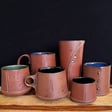
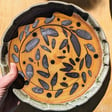
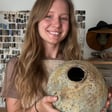
than you had. That's Kim Owens, a potter who loves to make dotted slip designs. When I get to get back into the studio and actually just sit there and do dots and decorate all day long, I'm in my happy place. In this episode, Kim gives some excellent advice if you were looking to pursue a career in
Advice for Aspiring Artists
00:00:24
Speaker
art. If you're going to be an artist, you really have to pour just every ounce of yourself into pursuing that.
00:00:32
Speaker
Kim also talks about why she loves repetition and how this actually helps her in her business and her pottery. Knowing what my tasks are to complete that day, I love having kind of an organized existence of what I need to do. Finally, one of the last things you'll learn about is Kim's best advice for anybody looking to discover their own unique voice with their pottery.
Key Qualities for Pottery Success
00:00:57
Speaker
Be patient with yourself. It's not going to happen overnight.
00:01:02
Speaker
And there's so much more in this episode. I hope you guys enjoy it and I'll see you guys in there. Kim, welcome to Shaper Pottery and share with me what is something you believe pottery should be doing to have success in pottery. Sure. Thanks Nick for having me. I would say that any aspiring potter should, could really benefit from a mentorship position or an apprenticeship position. If, if you can get an apprenticeship with a potter that you admire,
00:01:30
Speaker
That's really the key of learning how to do things. I get like what you learn in school, the school that when you really get into the real world, it's really nice to be in a real studio and learn from as many people
Learning and Growth in Pottery
00:01:45
Speaker
as possible. Take their workshops. If there's somebody out there that you admire on social media, see if they teach a workshop. There's just nothing like really getting that one-on-one interaction with that person that you want to learn from.
00:01:59
Speaker
So outside of attending workshops from other potters, what would you do to get mentored or be around other potters? Well, I am really fortunate. I live really close to a wonderful art community and it just, there's always different artists that I can talk to people my age, people who are older, people who are younger. If you don't have that, then social media, you know, I mean, there's a lot of platforms on Instagram.
00:02:29
Speaker
where you can view different, I personally do a lot of process videos, and I try to respond to anybody that's asking questions. I know some people do online workshops, so there's kind of a lot of different things that you can do in order to hone your skills and improve them. I don't know if I answered your question or not, but that's kind of what I would do if I was not in the position that I'm in. But if you can find a pottery community or even an art school,
00:02:59
Speaker
other potters that you can share your process with or your experiences with, that's kind of the way to go.
Embracing Failure and Personal Journey
00:03:06
Speaker
But I will say, here's one real quick thing for an aspiring potter. I love this kind of quote that Will Smith talks about. He has a video if you just Google Will Smith about failing. And he talks about failing early, fail often, and fail forward. And I tell my students when I teach throwing,
00:03:29
Speaker
every potter that you admire has failed more times than you have yet. And you have to just embrace that and learn from that and not be so hard on yourself because you're going to mess up. And the key to that is learning from how you messed up and not do it again. And that can take time.
00:03:48
Speaker
Absolutely agree. I love that. Shaping Nation. The two most important things, get around other potters and also learn to fail fast and fail forward. I love that. Yeah. And just embrace failure. I think it really is kind of the key, you know, to learning. Absolutely. I love that. So tell me the story, how you got started making pottery. So I was a ballet dancer for over 16 years. I even got a degree in dance.
00:04:17
Speaker
And I moved to New York city after I graduated cause I've always wanted to live in New York city, but about six months into living there, I really kind of head with my dancing career and I was just not loving it anymore. And I knew that this was any art form, whether it's performing arts or the visual arts, it's just too hard if you don't love it. And I just, I had done it for so long that I was ready for a change.
00:04:47
Speaker
And so I walked around Manhattan not knowing what I was going to do with my 24 year old self thinking like, Oh my gosh, I got to figure this out. And I looked in this window of the shop and it was pottery. And I was like, Oh my gosh, I love that. I did that in high school. I wonder if they teach classes. Cause I love to take a throwing class again. I did that. And I, I just, it really clicked with me back then. And so I look up.
00:05:14
Speaker
to see what the shop was called. And it literally said, classes taught here. And it was just kind of like that, oh, moment where I was like, oh, wow, I'm going to go in. So I went in, I talked to the person at the front desk was like, I see you teach classes. And they're like, yeah, we're starting one next week. I was like, sign me up.
Developing Skills Through Experience
00:05:33
Speaker
And then from then on, it just kind of was like, kismet. I mean, an apprenticeship position came open for me. I was able to learn how to fire accounts.
00:05:42
Speaker
mixed glazes, play, I got all the free studio time I wanted. And I also learned how to help run the gallery side of it. With that said, I knew I was a Texas girl and I really missed my hometown and Austin. And so I moved back. And from then on, it just kind of
00:06:04
Speaker
I went to the local ceramic shop. So anywhere you live, if you have a local ceramic shop, I highly recommend getting to know those people because they know everyone else in your area and they can kind of, you know, maybe gear you in the right direction of maybe seeking out that artist and that potter that you want to kind of hopefully get a mentorship with. But that's how I got in a pottery and that was over 25 years ago.
00:06:31
Speaker
So yeah, it worked out for me, but that doesn't say that I haven't tried many, many other jobs during as a potter to sustain my, my path for pottery. So. What were you feeling when you decided to hang up your ballet shoes and focus on pottery? It was kind of like, like I just said, I just, if you're going to be an artist, you really have to pour just every ounce of yourself
00:06:59
Speaker
into pursuing that. It's really hard to, or actually it's really easy to get distracted and go, I don't feel like going to the studio today, I'm really tired. Or I don't know if I can financially do this because I can't pay the bills, but we'll get another job. I worked three jobs in my earlier years just so I could be a potter.
00:07:23
Speaker
you know, it's sacrifice, really, because you want to do it. And I know from experience just with my ballet that I still want this. And 25 years later, I'm still wanting it. I hope I can do this for the rest of my life. I know potters that are in their 70s that have done it forever. And I really look up to those particular type of potters because they've been and they've done it all. And then I have my younger pottery friends who helped me with social media and encouraged me
00:07:52
Speaker
to do more types of that kind of publication for my work. So just try to find a pottery community is really what I encourage people to do. Absolutely. So now earlier you mentioned that you were an apprentice for a potter. Can you tell me more about this? Well, it was an apprenticeship slash job. So I work for a company called Sunset King and Pottery, and this is back in the 90s.
00:08:20
Speaker
And into the, I guess it was from the nineties to 2015 was when she sold the business to another, to another person. But I call it a purchase ship because I really didn't, I knew how to throw pots, but I didn't know very much else. You know, my skills are really limited. There wasn't a throwing position available when I went in for.
00:08:43
Speaker
the interview, but there was a kiln loading position available and I had never really loaded kilns. So I started off like that. And then a position came open in the glaze department. I worked in the glaze department for a year. And then a position finally opened up on the throwing wheel as one of the throwers. And that's when I really learned how to do and hone in my skills. With that said, like I said,
00:09:12
Speaker
I've had multiple jobs, even as a thrower for her, for Bridget, because it's really hard to survive off of an artist's income. It just is, especially when you're a beginner.
00:09:25
Speaker
And, but one of those things that led me to where I am now is I was an assistant pastry chef for a really reputable, fancy restaurant. And I didn't know how that experience would have influenced my pottery now. And it has like tenfold. And, and I think just being, whether you're a chef in a kitchen or you have to be a bartender at a, you know, at a bar, try to remember why you're doing this. And,
00:09:51
Speaker
maybe later on in life, you're going to be like, oh, yeah, I know how to do this because of that job. You just you never know. Right. How did this experience help you with building your own pottery skills?
Pottery Production and Efficiency
00:10:03
Speaker
Well, the biggest thing throwing for enjoying production throwing, which is different, was I was producing about one hundred two hundred pieces a week by the end of my 10 year, you know, experience working for this company.
00:10:22
Speaker
And I was the lead thrower, and I helped train other potters that were coming, whether they were fresh out of grad school or undergrad school or whatever. But time is money when you're working for yourself. And when you're in the studio, you want to be as efficient as possible when you're trying. And so that's just kind of what I learned. And my skills grew exponentially as a production thrower. So now I'm using that in my personal studio. And I can make my pots.
00:10:51
Speaker
pretty fast and they all, you know, I know how to throw to a pointer. I know how to make all of them the same size with the same weight, yada, yada. And then that frees up my time to really focus on my creativity and my design. So I spend like, an example would be last week, I made 54 cups in a couple of days, finished cendol and then this week I'm decorating them. And that's going to take me probably two weeks.
00:11:20
Speaker
You know, it's the most important thing that I learned as a production power was skill and efficiency. And that's just helped me where I am now. I love that. So let's talk about your pottery. Can you tell me a story? How you started making the pottery that you make? Yeah. Yeah. So where I am today did not just happen overnight. My pottery really, it's more of
00:11:49
Speaker
Hold on. I'm sorry. I need to, I want to make sure I, so my, I lost train of thought. Okay. So I started off back in 2015 when my, my boss told me she was retiring. She was like, you need to get your own line of pottery so you can sell it and, and do your own shows. And I was like, okay, great.
00:12:14
Speaker
Thanks for the heads up. And she gave me five years. So it wasn't like a shock. It was just, she was pushing me to do that. And I really kind of wanted to do it. I was ready to. And one of the things that I started off with was what I knew, which was atmospheric firing and reduction kilns. And I love Shino. I just had a lot of putters that I admired Shino work and stuff like that.
00:12:36
Speaker
But I also wanted my work to be really unique and stand out. And the way that I figured that out was brushwork. And even my own brushwork that I did on my pots, there was no two brush strokes the same. So I did that for like almost six years. And in those years, I really started growing a passion for porcelain pottery and salad on glazes and slip decoration.
00:13:04
Speaker
And I took a workshop with Tom Coleman and I took some other workshops of people that I admired with their decorating skills as well. And about six years ago, I really just honed in on what it is that I how I want to decorate my pots.
00:13:23
Speaker
And it all came kind of full circle when I started doing dots, because I love repetition. Ballet taught me that. As a ballet dancer, you work hours and hours every day on the same movements to improve your skills. And same thing with throwing, you do that as well. Well, with decorating, it just kind of frees up my experimentation with repetition.
00:13:50
Speaker
And it brings me into my happy place, really. So that's how I journeyed into what I do now, is just through experimentation and really kind of seeing what I enjoy doing. Now, a lot of people don't like, feel like, how do you do this all day? I get that all the time. How long does it take you to make this? I get that asked all the time. And in all honesty, I don't look at the clock. If I look at the clock, that's when I start
00:14:20
Speaker
getting out of my flow. I know we talk, a lot of people talk about the flow of, of your work and how you can get into that mindset of if you're in the flow. And if I, I generally listen to music or later in the day, when I need that extra energy boost, I will listen to podcasts or a story or a book, an audio book to keep me going. But I don't look at the clock because if I look at the clock, then I
00:14:46
Speaker
I get just kind of discouraged. Honestly. I love, I love hearing about the flow. I love that. Yeah. I mean, finding the flow and skills are kind of the tricky thing. And I learned that from one of my pottery friends. He's just such a wonderful human being and learning how to have the skills to do what you want. And then also having the creativity that you want and then trying to balance that out. And then somewhere in that is going to be the flow, right?
00:15:17
Speaker
Definitely. I love hearing about that. So earlier you mentioned that you enjoy the repetition. Can you tell me more about that? For me, repetition, and again, I'm going to go back to my ballet training and
00:15:31
Speaker
my on the wheel as a production potter training. Uh, I think it just kind of calms me knowing what I got to do all day, knowing what is, what my tasks are to complete that day. I love having kind of a organized existence of what I need to do for my, for my business now.
00:15:51
Speaker
where I kind of get off kilters when I got to figure out photography and put in writing descriptions and all that kind of stuff. And oh my gosh, don't even talk about bookkeeping and all of that. So when I get to get back into the studio and actually just sit there and do dots and decorate all day long, I'm in my happy place. Because the rest of the other stuff that I got to do as running my own
00:16:19
Speaker
business as a studio potter is you got to put on your accounting hat today. That's what I did all month in January. You got to put on your photographing hat. You got to learn how to edit. You got to learn how to do posts for social media. There's so many other variables that come along with
00:16:40
Speaker
promoting your work and trying to sell your work. And that's not even including the shows that I do.
Business Side of Pottery
00:16:46
Speaker
When I get ready for a show, I have a really big show in October that I've been doing called the Texas Clay Festival. And I prepare for four months for two days for that show. And, and that's six days a week. You know, I have, I take Mondays off now, which has, it's been, I started practicing that two years ago where I at least take Mondays off because I was,
00:17:09
Speaker
I was working too much and getting kind of burned down and I didn't want to do that to myself. I love that. So can you walk me through how you create the dot designs onto your potter? Yeah. Yeah. So I'm super excited. I'm going to be teaching this one day workshop next weekend at the Eye of the Dog. But yeah, let me break it down. Okay. So it's a process. I'm going to use my little cheat notes right here.
00:17:36
Speaker
So I make my own colored slip using Reclaim recycled or whatever you want to call it, trimmings. And I slack that down with water and I make a really juicy, yummy, like kind of pudding texture of slip that I use a 60 sieve, that I sieve it all through a 60 sieve grate. And then I add my mason stains and that changes the color and whatnot. But then
00:18:06
Speaker
I apply my different colors onto my pots. I divide it usually, let's just say for a mug, I'll divide it into quarter, into like four quadrants or sometimes three. I use, then I apply, so I divide my pot up and then I apply my colors, sometimes two to three. And then once I color my entire piece, I let that dry in my damp box. In a damp box, I have like,
00:18:35
Speaker
about six of them where you, and I kind of feel like every potter needs one, even if you're a sculptor, whatever kind of work you make in instruments. A damp box is one of those kind of sealed ziploc kind of boxes that they make where it's a fine little piece of foam on top. And I pour plaster, about one to two inches of plaster in it. And you can put your pots in one of these bins, these plastic bins, and they'll stay for
00:19:04
Speaker
forever, almost, as long as the plaster is wet. So I, my first step is applying my color, dividing my pot into different quadrants of where I can apply my color. And then I use my custom made paper stencils and I do a couple of different designs. I call it my ogee design, which is like this beautiful, just kind of architectural shape. And then my mandala design.
00:19:31
Speaker
When I apply another color on that, I have a lot of process videos where I'm peeling the paper stencil off. That's that second step that I do. Then I got to let that dry in the damp box and then I come back and then I use from my pastry days, the little piping tips that used to pipe icing cake and stuff like that on. I started using that to indent each dot that I make because it
00:19:58
Speaker
allows that dot to literally be perfectly circular and if you're especially if you're using like an underglaze where it's a little bit looser than slip, it holds that slip or that underglaze within that barrier of that indention. I also use straws to indent my dots for different sizes and I have some process videos of that as well on my Instagram page.
00:20:22
Speaker
So let's get to dotting. I dot all day and I use my air pen. It's an automatic slip trailer that I've been using for quite a while now. I used to use the Xiam slip trailers, but if those of y'all that are watching, if you do this all day, I already have kind of carpal tunnel because of all of my throwing days. The air pen, you don't have to do that.
00:20:47
Speaker
And it's super easy on your hands. But it does take a little practice on how to use that. I took me a couple of weeks to really get used to it. But now I just use it like as if I was writing a pen. I don't even think about it when I when I am slip trailing. I love it. That was a great explanation.
00:21:07
Speaker
Yeah. But the last thing I do, and this is something that is a little trick of mine. And usually I don't ever show this process in my Instagram is once I have all the dots on, I wait for 24 hours before I take them out of my damp boxes. And then I put cold, like any kind of wax that you buy at a ceramic shop, not hot wax, but cold wax. And I cover my entire pot with that on the outside where all the dots are. And then I can put it on the shelf and let it
00:21:35
Speaker
dry to bone dry, but that wax slows down the drying time of that dot, the wet slip, and it allows for those dots to kind of get firm but not want to pop off. And then I can also load my pieces into the bisque kiln without the fear of accidentally touching one of those dots and it popping off because it's already sealed with that wax on top. That's the last and final trick. That is the one that you don't want to
00:22:05
Speaker
Yeah, that's a good tip actually. So let's talk about the business side of pottery. Can you tell me the story about when you decided to become a full-time potter?
Transition to Full-Time Potter
00:22:15
Speaker
Well, when I decided to become a full-time potter, it goes all the way back to when my boss Bridget at Sunset Canyon told me she was going to retire. So that
00:22:26
Speaker
Pushed me in a direction where I had two options as a potter at that time was one to become a studio potter or the other is to be a wholesale potter and have my own company and have employees under me and kind of do that kind of thing. And I just didn't want to do that. I really wanted to focus more on my personal work and develop my own line of work.
00:22:51
Speaker
So that was my drive, but that doesn't mean that I wasn't like scared shitless. I was like, I don't know how I'm going to do this. How am I going to.
00:23:00
Speaker
like afford to do this. And so I was already teaching at that time and I took up more teaching positions, taught at different schools. I started trying to do workshops. I helped other potters when they would do a workshop to get, that's kind of another thing is see if you're, whoever you want to take a workshop with, if they have kind of like a scholarship position where you can help them set up their, their class and, and you can do it for free. Yeah.
00:23:29
Speaker
Don't be afraid to ask, but let's get back to becoming a full-time potter. Um, that, that's kind of, I was just passionate in pursuing my party and it was my dream, but having other jobs helped me. And I still, I still teach and I'm, and I still, I'm about to start teaching another wheel-throwing class. And, but I'm still in my field. Yeah. So it's tough, but you can make it work.
00:23:57
Speaker
sacrifice everything else though. Don't go shopping and I don't care about clothes. I just want to do my pottery. You can't really have, I don't know, what do you call it? Monitor your shopping, especially when it's online. What do you think has helped you the most with being able to sell your pottery and become a full-time potter?
00:24:21
Speaker
I tend to have a really strong self-discipline. I think that comes from my ballet training, but really staying focused on your schedule, getting into the studio every day if you can. And if you're not, then how are you?
00:24:38
Speaker
doing something that day to help promote your business, whether it's editing videos for your Instagram post or editing your photos, writing your descriptions for your social media posts.
00:24:51
Speaker
and then looking online to see what shows are out there that you can apply for different types of, there's a lot of different kinds of like cup shows and stuff like that. I don't really do those anymore, but I did for a long time. I might be something that I might start again if I have time, but if I'm not in the studio, then I'm either thinking about something about my business and that's kind of where,
00:25:21
Speaker
It's hard to take a break sometimes, but you do, you have to. That's where I always take my Mondays off and I usually do something where it's not in my studio, not in front of a computer, and not spending money. Figuring that balance out is really the hardest thing for me to do.
00:25:44
Speaker
I love that shaping nation. You could take steps so that you can build up your pottery business, whatever it is you're doing, maybe it's little steps, big steps, huge steps, whatever you try to do something to push that forward. I love that. And it's not even it's not even a try. It's just you do like I this my blues sell it on glaze that I had. I tested that glaze.
00:26:09
Speaker
almost a year and a half. I have so many hundreds of test cases, but what really is important is that I dropped it. I knew what color I wanted, but it took a while for me to get there. I think that's where that passion comes in is that you just
00:26:27
Speaker
Even though I want to turn it off sometimes, you can't, you know, you're just always thinking about what's the next thing I want to learn? What's the next thing I want to try? Experimentation is really kind of also the key to keeping that kind of balance. I'm going to be coming up next month where I'm just going to be really focused on just making and finishing parts. But this last month, I've been also really focusing on and jotting and journaling some new ideas that I have.
Pricing and Market Understanding
00:26:56
Speaker
So you are able to sell your pottery for over $100. What advice would you give to potters looking to sell the pottery for what it's worth? Okay, so that is probably one of the hardest questions I saw in your life because it is no joke. Trying to figure out how to get in that right price range for your work is tough. And I would say to anyone out there have to be comfortable with your prices. If you're not
00:27:25
Speaker
you're not going to sell it. You just won't. I don't know what it is. It's kind of like, you know, kids know when you're lying to them, but people know when you're not comfortable with your prices. And I do enough in-person shows to know that if I'm, and this could be like too high or too low, right? Like how do you know where the medium is and if it's going to sell or not? Well,
00:27:51
Speaker
I base it first off my mugs. Okay. Cause that's kind of the beginning of where my prices are. And I can either go from a little small dish to a big seven pound, 14 inch bowl, but it starts with my mugs. Now I know there's a lot of people out there that have really expensive mugs and I love them and I want them to, but because I make such a different variety of work,
00:28:19
Speaker
I have to kind of balance out like, where is my mug price? But really it's so subjective. I hate to say that it's just, it's kind of like, it's a trial era, but like I said, it's taken me years. It's just taken me years to figure out my pricing. And the one thing that has happened though, is that
00:28:40
Speaker
My costs have gone up. My material costs have gone up. I think anybody that uses underglaze know that it's no joke now that it's expensive. Porcelain is expensive. So the main key points is know your market, but know where your marketing is. Know what your cost is for your products.
00:29:03
Speaker
And it would be nice to pay you for your time, but it's really hard to, that's kind of a, another hard thing to do. I, especially when you don't look at the clock, I, my pots probably should be really hundreds and hundreds of dollars, but I want to make it affordable and I like doing it and I want to sell pots, you know? So it just, it just takes a while to figure that out. And each person is different. You just have to be really comfortable with how you sell your work. If you're not, it's not going to sell.
00:29:31
Speaker
Some excellent advice right there.
Discovering Unique Pottery Voice
00:29:34
Speaker
So let's talk about discovering your voice. Can you tell me about the moment when you knew you were heading in the right direction with your pottery? Discovering my voice was more of a journey rather than like an actual like aha moment. And it still is. It's one of the things when I first started working and trying to develop my own line of pottery and a cohesive line of pottery where people are like, oh yeah, that's a Kim Owens pot.
00:30:01
Speaker
was I had to consciously look at everything I made and make sure that I wasn't copying someone else. Especially as a production potter, I was taught to make the same thing and copy the same thing over and over again and look at a pot and copy it. Well, developing your own line of work is completely the opposite.
00:30:29
Speaker
You have to look at your work and go, oh, does that remind me of anybody? Or does this remind me of anything? And if it does and it starts looking too similar to somebody else's work, why would you want to make that? You know, there is, it's really hard to come up with an original idea. And I would say there's really not an original idea. We all influence each other. Naturally want to gear towards people that we like their work and we start making their work.
00:30:58
Speaker
I'd be really careful as a potter doing that. And that's to say mainly because you're going to get bored. If it wasn't your original idea, it's not going to be sustainable. And even unconsciously, if you're not realizing that your work starts looking similar to somebody else's, in the end, you just won't have any more new creative ideas because it wasn't your origin story, right? It was somebody else's.
00:31:26
Speaker
So take workshops, look at videos on social media, ask as many questions, but the main thing is experimenting on how you can develop your own style. And that just takes time and a lot of conscious effort on your part. Then hopefully one day you can suddenly go, oh yeah, and somebody's gonna be like, oh yeah, that's a Kim Owens pot or a Nick Torres pot. Yeah, that kind of thing. It will start developing on its own and you'll start realizing, oh yeah,
00:31:56
Speaker
I like this. This is my flow now. This is where I'm going to go in this direction. A lot of people come into my booth and like, I've never seen anything like this. And that's kind of a really great compliment for me because I've worked so hard on trying to make my work stand out and recognizable. But there's a lot of people that do dots on their pots now and a lot, and I love their work too, but it doesn't look like mine, you know?
00:32:21
Speaker
We're doing the same things. And that's kind of what I'm going to teach in my workshop in the next week or so is like, I'll teach you how to use colored slip. I will teach you how to use the air pen. I will teach you how I use paper stencils. But don't, don't make my work. That's boring, you know, and it's not really something that's coming from you, but you can use all these different tools that I'm going to teach you to create your own style. That's kind of the ultimate goal for me as a potter is just creating your own line of work.
00:32:52
Speaker
Absolutely agree. I love that. Shaping Nation, you could learn things from other potters and you could even try what they're doing, but don't copy them. You can copy them for a while. That's kind of how we learn, right? You know, we kind of like, oh, well, let me see if I can do this. And that's cool. You know, can you? I don't know. But then go forward with that. Don't stop there. Try something else.
00:33:17
Speaker
You know, you will not be happy in the end. I promise you just won't. If it's not your original idea, you'll get stuck and get stopped because it wasn't your original idea. And five or six years down the road from now, you just won't grow. Absolutely agree. I love that. What would you say are some of the new opportunities that started coming your way once you found your own voice?
00:33:42
Speaker
So I always tell people that it took the pandemic for me to be in front of the computer to figure out a website, because that's pretty much true. I did, like I said, I did Shino work and that type of pottery design for a long time, but I never made a website because I hate being in front of the computer. I'd rather be in front of my wheel, you know, and physically moving and doing that kind of stuff instead of staring at a computer. But when the pandemic hit, I was like,
00:34:11
Speaker
all my shows got canceled and all my teaching gigs got canceled. So I had to really kind of embrace my challenges on the computer and also photographing my work. Oh my gosh, how do you do that? And I just had to bear through it and go forward with it from that.
00:34:34
Speaker
though was you know from getting my website and learning my how to photograph my work that's helped me now in many ways on how to post something on social media even like a good photograph or a good video to where my pots are now all across the united states i don't ship internationally but the furthest my the furthest i've shipped was hawaii
00:35:03
Speaker
which is like pretty cool. You're like, oh wow, these people haven't even met me. They haven't even touched my work yet. And they're still buying my work. That's incredible. That's pretty cool. So I am glad that I just say for me in life, if something's really hard, you need to investigate that. Why is it hard for you? And try to figure out what is it that's making you not want to do that. And that's kind of for anything in life, right?
00:35:32
Speaker
because if you can figure it out, it's just gonna make you grow and learn more about how to do things. So that's really how I think my pottery is grown. And I've had a wonderful pottery community that has really helped me, encouraged me. I got a lot of people that have my back and are cheerleaders, you know, because we can't do this all by ourselves, right?
00:35:57
Speaker
And being a creative person is really nice to be around other creative people. You know, they, they, they, you influence them and they influence you and they got your back when, you know, it just, it's nice to be in a pottery community that I have. And I, and I am really just so happy I have that. And if you don't, like I said, maybe find it on social media and maybe go to your ceramic local supply shop. And when I say a group, it could be just like you and another person.
00:36:25
Speaker
It doesn't have to be a whole bunch of people. I love that. Kim, it has been so great champs today and as we come into a close here, what is one thing you want to hammer home with my listeners today? Let me one second. I got this. I don't want to forget this part. Yeah. So if you are trying to make your own pottery line or having
00:36:53
Speaker
being making, selling your pottery as a full time job. Be patient with yourself, you know, it's not going to happen overnight. Maybe for some people it does, but I know it didn't for me. And I think just being really like get into the studio, just get there because get your hands dirty and clay, just start experimenting. You're going to discover so many different things about your process, but just mentally thinking about it, that's not going to really do anything.
00:37:23
Speaker
It just, I mean, I think about it when I go to sleep, I think about when I get up, but then I get in the studio and then those ideas might not work in the real world, right? So getting into your studio as much as you can and be willing to do other jobs if you need to, you know, and those other jobs that I've had in my past have really actually influenced my work now, even though I didn't think about it at the time.
00:37:48
Speaker
Excellent parting words advice. Kim, it has been so great time today. Where can my listeners go and learn more about you? Well, through my social media, I'm at KO pottery. com is my website. And I'm also on Facebook with Kim Owens. I, I also do if you're in the Texas area, I tend to do a lot of
00:38:09
Speaker
different workshops at different places. I'm hopefully going to be doing one in San Antonio and Austin this year as well. And I tend to post a lot on my social media, my upcoming shows where you can meet me in person. And then my, and I always have goals every year, but my goal this year is to always have pots available on my website, you know, so people can always hopefully purchase something and try to really keep my website full. But, but yeah, through Instagram and Facebook,
00:38:39
Speaker
pretty much there all the time, hopefully posting something every week or so, if not a couple of times a week. You can also find my work for sale here in Texas at the Barn Gallery and Feats of Play, or you can go online to the Charlie Cummings Gallery and Artful Home.
00:39:00
Speaker
Thanks for listening to this episode of Shaping Your Pottery with Nick Torres. If you want to start discovering your own unique voice, you must first start with the right questions. That's why I put together a free 15 question booklet for you to start discovering your own unique pottery voice. All you have to do is go to shapingyourpottery.com forward slash questions to get this free booklet.