Transcript
Speaker: Real quick before we get started, I created a weekly newsletter that dives deep into the techniques of the potters in your view. If you want to join the newsletter, then go to shapingyourpottery .com forward slash newsletter. Now let's get to the interview. I learned that pottery was going to take a life to learn.
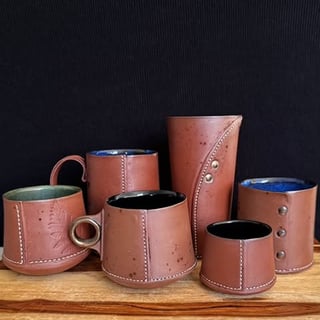
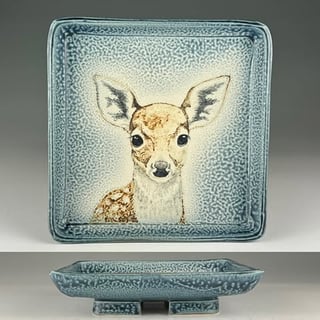
Speaker: Meet Lucy B. Phillips, a potter who makes some amazing lip decorated pots. In this episode, you will learn how Lucy got over her fear of surface decorating her pots. Eight or nine years, I just was so focused on format function that I was quite scared of surface decoration.
Speaker: Lucy had the great opportunity to be an assistant in Italy for Ceramic Studio, and this completely transitioned her work. That was the big transition for me when I went from being a... Lucy is a master of making teapots, and she breaks down the mistakes people make when making teapots. The first thing is to... they often overcomplicate them in the beginning. Finally, one of the last things you'll learn is the new opportunity that started coming this way, when she found her own podcast. I think that a lot of people gave me.
Speaker: opportunities, but it's also been. And there's so much more in this episode. I hope you guys enjoy it and I'll see you guys in there. Lucy, welcome to Shappy Pottery and share with me what is something that has helped you the most along your pottery journey so far. Hi Nick, thanks for having me. Probably resilience. I've never kind of given up and I've always just kind of taken each challenge as a lesson.
Speaker: And that has that has allowed me to have lots of different experiences, both in learning and teaching. And I think it's kind of gotten me to where I am today. Love that. Tell me a story how you got started making pottery. I was studying sculpture in London and I was quite I felt quite unfulfilled by studying conceptual art. And I went home for Christmas.
Speaker: and I had a dream, I'm not joking, I had a dream on Christmas Eve that I was in a studio filled with all these bowls that I'd made and I didn't really know much about pottery but I woke up the next morning and I ran downstairs and I was like
Speaker: I need to do ceramics, like I need to work in clay. And so I found that my university did have a ceramic program, but it was tucked away in the back. Nobody knew about it. And so I went back after Christmas break and I had an interview there just to work in clay, not to transfer. And the teacher said she saw a lot of potential in my sculpture work. And so I transferred into ceramic design and that was 11 years ago.
Speaker: I've been obsessed with it ever since. Unhealthy sometimes. So you mentioned that you were struggling with conceptual art. Tell me more about that. I have always been very creative. I went to a Steiner school. I've always used my hands. But I felt this disconnect, I think, from studying conceptual art because I didn't know how to engage in it. And when I discovered pottery,
Speaker: it was suddenly this canvas that I could be creative and make pots, but also I could use them. And it just tapped into the inner child in me that just was obsessed with playing and make -believe and imagination. And I still to this day, I'm always in that space of like, oh, I could make a teapot and I could use it. And I could wear this dress and I could use this cup and I could have this feeling when I
Speaker: pour myself a cup of tea and yeah it's pretty special. Absolutely love that. So tell me a story about when you worked for Mud Australia. So I did a degree in ceramic design so we didn't learn the wheel really we did a week of it but we did slip casting and mold making.
Speaker: really kind of advanced mold making. And so when I graduated, I moved to Australia and I got an internship with Mund and I thought I'd go on to be a mold maker. And they actually hired me after my first day, which was lovely. And I worked there for, I think, six months and had a great team. They were all lovely. And we poured, you know, the big lampshade molds and I did the teapots and the mugs.
Speaker: And I loved it. I loved the staff. I loved the environment, but it taught me that I never wanted to slip past again. I just, I didn't like, I didn't like the process as much as I liked the wheel. And so that's when I went and learned the wheel. So how did this time impact the way you make your pottery today?
Speaker: Well, I think from a lot of my training that I've done, I've learned what it means to be a disciplined artist. And I think that working for MUD taught me a lot about a schedule as well, you know, making work from eight in the morning until five in the afternoon. I love the streamlined process that they use, but it definitely, I sort of rebelled against it, I guess, because their work is very streamlined and mine is not.
Speaker: mine is sort of never quite repeated and so it's very different but I learnt the discipline I think from working there as well. Absolutely love it. So outside of working here at the Mud Australia you also were an assistant in Italy. Can you tell me more about this?
Speaker: Yeah, I was an assistant at La Meridiana for about three and a half months and then I went on to do a three -month workshop, I think it was that long. It's a beautiful place, I mean that was the big transition for me when I went from being a mould maker into a thrower and I worked with so many potters because I got to assist them in their workshops and I just learned to throw and throw and throw and it was
Speaker: I just expanded my range so much. I got to work with handbuilders and sculptors and glaze technicians. I learned so much. I was exposed to a lot. Outside of learning to throw on the wheel more, what else did you learn from this time? I learned that pottery was going to take a life to learn. I learned about the opportunities of apprenticeships.
Speaker: I also learned about wood firing. I did my first wood firing and I learned, I guess I saw a very traditional route of pottery that I'd never seen before. You know, I studied in London and it was a very kind of modern degree.
Speaker: And then being in Italy, I met all these apprentices and potters who took apprentices. And I thought, oh, there's this completely alternative route that I could take. And something was said to me when I was there, which I think kind of guided me through the next seven years, which was I was speaking to Ev, the glaze technician, and I said to her,
Speaker: Oh, but if I do an apprenticeship, it's going to be another two years of study. And she said, well, if you're going to be making pots your whole life, what is two years? And I thought, oh, okay. So this is really a long journey that I'm on. Love it. Shaping Nation. The pottery journey is a long journey as long as you keep trying to learn and keep growing so that you continue improving your skills. I absolutely love that.
Speaker: So let's talk about your pottery. Tell me a story how you started making your slip decorated pottery that you make today. Many years of trial and error. I guess for the first kind of like eight or nine years, I just was so focused on form and function that I was quite scared of surface decoration. I spent
Speaker: many years studying or training to be a woodfirer, which I kind of laugh at now sometimes because I've moved so far away from woodfire pottery, but I learnt the discipline from the woodfirers. I learnt the discipline of the craft.
Speaker: But my pots, I think that, yeah, for a long time, I was kind of scared of doing any decoration. I think most people I see that in my students quite a lot. And it wasn't until about a year or two years ago, I started decorating my tiny house and I had to make all these decisions about design and color and how I wanted to live.
Speaker: And that's kind of when the colorful slips came out. And I started really putting a lot more character into my pots. Yeah. So you mentioned that you were scared to add any surface design to your pots. Tell me more about that. Well, I think for me it was, I'm always quite nervous of what people will think of me. And the more I put out there, the more room there is for judgment. And so the more decorated a pot is,
Speaker: the more of myself I'm putting into it. And I think that by putting just one glaze on the pot, that felt quite safe. And it certainly felt more safe in terms of selling it. You know, I could see this and maybe it's from working at mud, you know, that one colour straight modern piece of pottery that can fit into anybody's home as opposed to something that is highly decorated.
Speaker: just felt quite scary and it happened very slowly it didn't just happen overnight and I have oh my gosh like even just around me now there are so many not failed attempts but attempts to decorate pots that didn't ultimately work or they didn't look the way that I wanted them to but it's a long long process I think and I'm still on it it's
Speaker: It's a never ending journey. What is something you did to help you get over this fear of decorating your pots? I guess I just kind of embraced myself. And I just decided that this is who I am. I'm not going to be anyone else. And if I sell way less pottery, but the pots make me so happy, then that's what I'm going to do.
Speaker: You know, and I just I looked at all my peers and selling, you know, more kind of simple, beautiful, refined pots. And I thought I'm just never going to be that. So I'm going to just do it my way and I'm going to give it all up. God love that. Shaping Nation, you have to embrace yourself, lean into your interests so that you can make the part that you truly want to be making. I absolutely love that.
Speaker: you are inspired by whimsical themes of playfulness and childlike curiosity like you mentioned earlier can you tell me more about this yeah so last year i had a teapot show which was so so good
Speaker: And I've learned about myself that I'm, like whatever I see a lot of, it kind of gets stuck in my mind, have a very sticky mind. And so that's what I will ultimately create. So it's very important to me what I put into my mind visually.
Speaker: So last year I had this show and I had to really go deep and find inspiration because it was a gallery filled with just teapots made by me. So I had to have a lot of kind of variation in it. And I found that I drew a lot from my childhood and that kind of that feeling of excitement when I used to play with a tea set.
Speaker: I remember I had this beautiful tea set and I used to play with all my dolls. It sounds so cliche, but I would get so excited to get lost in this other world. And that is the feeling that I'm always searching for now.
Speaker: And those, I have a certain color palette that I try, I try and make it vibrant and colorful, but still not look like candy. I'm always trying to find that balance, but I'm always drawing on that, that feeling that I had as a child, you know, and I try, I try to give adults, whoever uses the pots, I do sell a lot to children actually notice that feeling of escaping.
Speaker: You know, people always say, oh, your pots look like they're from Alice in Wonderland. And I think wonderful, because if they can take you there, then I've done my job. So I absolutely love that. So you've made a lot of pots or teapots throughout your pottery journey. You've even done a couple of workshops on them. What are some of the mistakes potters tend to make when making teapots and how do you avoid them?
Speaker: The first thing is to, they often over -complicate them in the beginning. I did that just to keep them simple whilst you work out all the different moving parts. There's classic things like the spout can often be too tall or too low. And so if it's too low, the water will come out of the spout before you fill the teapot. I mean, even I sometimes do that still. Like I get so carried away in the creativity, I forget the rule. They also need to be light.
Speaker: So that when they're full of teeth, they're comfortable to lift. And the handle needs to be quite generous. I think often they have these tiny little handles, but actually it's, you know, it's quite a large object that you're going to pick up. Can you walk me through the steps you take when creating one of your slip decorated pots? Often it starts with like a lot of daydreaming or some sort of color or a piece of furniture at the moment. I'll see a piece of furniture and then I get my deer.
Speaker: And so sometimes I will sketch it, sometimes I won't. I kind of just listen to whatever needs to happen. And I take some porcelain at the moment I'm using porcelain and wedge it up, throw it. Sometimes I have the drawing on the wall, sometimes I don't. I kind of, I guess I start with like
Speaker: the teapot form and the components and they're often the same or they're similar and that's kind of my blank it's like a blank canvas once I've got that they look very naked to me before they're decorated and then often I'll do that that will take a day like for the trimming and the assembling of the spout and all the parts
Speaker: And then I will either leave the studio for the day or, you know, go have lunch. And when I come back, I try. I have to be in a certain mindset. And then I will kind of sit down and start decorating. There's often an idea that I had, like I said, and that will run through until the end. But sometimes it's.
Speaker: I don't have a plan and that's really exciting but so I will decorate it and that takes, I don't know, they must dry very slowly in a box and then I just for about two or three days I come back and I just check them and neaten them up and finish them and that's kind of when I start falling in love with them there's always like an ugly stage they have to go through where I think should I recycle this or should I keep going but I've learnt now that I just have to keep going and then eventually it's
Speaker: It's there and then it gets fired, bisque fired and then glazed which takes so long. I've learnt that I can only do a few at a time because it takes so long. And then I fire them in my gas kiln to cone 10 and then they come out and it's either
Speaker: joy or tears. Nobody wants to be around me when I unpack the kiln. They don't know what I'm going to be. I absolutely love that. You got to get through the ugly middle to make the amazing beautiful pot. I love that. So let's talk about the business side of pottery. Can you tell me about the moment when you decided to become a full time potter?
Speaker: didn't really happen. I mean, it was always, I guess it was always my plan because I thought this is all I've ever done. So I just kind of gradually moved into it. I mean, I am full time, but I still teach and I work in a pottery shop selling clay and everything. And I mean, I need that financially, but I also really need that so that I can socialize with people because it's very
Speaker: I live very far out and I'm on my own and I make pots and it's very secluded. So I really need that balance. But I guess there was a point about three years ago where, well, when COVID started actually, I finished my apprenticeship and I was still working for a few people. And then I decided it was time to buy my first wheel. And like it was time to focus on making my own work because I'd been making for
Speaker: other people for so long. And I did a market once where I hid under the table because I was so, I found it so hard to talk about my work. And my brother said to me, I think you might need to practice the whole selling thing. So I was like, yes, okay, I need to do it.
Speaker: Yeah, that was in 20s and a 19, so not long ago. Absolutely love it. So outside of selling your pottery, you also teach workshops like you just mentioned. Tell me a story how you started teaching these workshops.
Speaker: I was an apprentice at the time and I was also working and volunteering at another studio about an hour away and I had two amazing mentors there and one of them fell sick actually and within a week I was asked to cover three classes and I was so nervous but I had amazing support and that's when I started teaching.
Speaker: That was 2016, I think. And from then I, I just started teaching like that. I taught beginners, I taught all sorts of workshops and that actually, you know, that got me through my apprenticeship. I was teaching, I think like four classes a week. It was pretty full on, but I found that I learned a lot about myself and my own practice through teaching others. But I like to teach certain things. I won't teach anything.
Speaker: I feel like I need to feel very confident in the process before I can help others. You won't see me teaching hand building very often. What did you learn about yourself from teaching? What did I learn about myself? I learned that for me, I guess, I'm never going to be a production potter and that my
Speaker: Pots are so kind of interconnected to me, to who I am, that when I see that in students, I get really joyful. And I love bringing that out in them. I also have, I've enjoyed watching the students, like I always tell them that the wheel is a mirror, you know, and that they are gonna have to like face themselves when they're on the wheel. And that's taught me a lot about my process and like how certain moods can determine what I make.
Speaker: Yeah, it's very interesting. But also I've learned a lot of technical things because I've had to teach them. And so I need to go away and learn that first. It's a bit of a mixture. Absolutely love that. So what advice would you give to someone that is looking to start selling their own pottery? Selling. So I would say not to rush it. Not to rush it. And I would say take your time. Take your time to find your place. And I was...
Speaker: For me, it took me a long time to sell my work, but that was kind of a confidence issue. I think some people are like doing a six week course and selling it. And I just think, yeah, well done to you because you're so confident. But I would say just, just, just wait. There's no rush. Give it a couple of years, get confident and then definitely find your market. Like, are you a potter who's going to sell really well at markets or are you going to sell more galleries?
Speaker: What type of markets are you a local farmers market or are you like a pottery specific market? And I think it also depends where you are and what you have access to. And I also think it's good to have, you know,
Speaker: do a little bit of everything, so a little bit of markets, a little bit of online, and then you slowly build up and find where you sit. Some excellent advice right there. So let's talk about discovering your voice. Can you tell me about the moment when you knew you're heading in the right direction with your potter? I think it was probably only last year. I think there was a teapot that I made
Speaker: I mean, there's been many, many small moments, but there was a big moment last year when I made a teapot and I think it cracked or something, but there was just, it just embodied this feeling that I had. And I just felt like I did it. There was this feeling of accomplishment. It's very hard to explain because, I mean, it had a pattern on it. It had slip decoration.
Speaker: It had a bit of gold luster. All these kind of parts came together really beautifully. And that was a big moment. And then that's kind of carried me through to where I am now. I've stuck with that theme. But definitely over the years, there's been like the process of elimination. Like, okay, no, I'm not a hand builder. I don't make coil pots because I think that the pots that we like to buy or have in our house are often different to what we make.
Speaker: So that took me a long time to be able to make that separation. I love buying this pot that's wood fired and loose, but I'm not necessarily gonna make that. And so kind of really always tuning into what naturally comes up when we sit down to make. Like I said earlier, we can't be anyone else. We can only be ourselves. And yeah, there was that moment last year. Absolutely. And I've just kind of run with it. And I've just found that like, I just wanna make enchanted
Speaker: well -made, beautifully fired, beautifully glazed pieces of pottery that whoever owns them will keep them forever. That's kind of, that's what I want to do. Oh, that feels nice to say. Absolutely love that. Absolutely love that. Shaping Nation, if you find your voice, if you find that moment, run with it and continue running with it because that's where your joy is going to be the most profound. I love that. So now,
Speaker: What new opportunities started coming your way when you found your own voice? Yeah, that's a really good question. Quite a lot, actually. Like a solo exhibition. I've now got another group exhibition coming up. I've just been selected for a big The World Stage at a big pottery conference coming up next week. I'm definitely moving into the more kind of gallery.
Speaker: side of things, less markets, which was a big moment for me to decide that. I feel like I'm being recognised for years and years and years of sweeping floors and terrible firings. It's finally coming together. I think that a lot of people gave me opportunities, but it's also been
Speaker: I've just had more confidence in myself and in my pot, so I've been able to make the decisions. Like, for example, not doing the local markets anymore was a really hard decision because it's my community, it's my friends, it's my peers, but recognizing that my work no longer sits in that category.
Speaker: And it doesn't really do very well there, so deciding to step away from that is probably the biggest kind of thing that's happened. Absolutely love it. So you contribute growth as an artist to working with other artists and learning R .E .K. about the materials and process. Can you tell me more about this? Yeah, so as a child, I did ballet up until I was 18, like very, very committed. And they would always speak about how freedom or expression comes from discipline.
Speaker: And that is something that has stayed with me throughout. So learning the craft and learning the technique and learning how to do it properly, because there is a proper way in terms of avoiding cracks and glazes not running. There is the hatch side. Having all of that figured out allows us to sit down and make something that is full of expression and character.
Speaker: It's very difficult to do that if we don't have that foundation. And so I am so fortunate because of the choices that I made and the people that I met, you know, that I did an amazing apprenticeship with Nick Collins and Sabine Nemet. And I learned the discipline of waking up every day and stacking thick wood and making pots and what it means to be a potter, you know? And I learned from many different potters
Speaker: the technique and the lifestyle of it and I just I'm always will be so grateful to them because that's what has allowed me to kind of figure all of this out and to make the pots that I make. I absolutely love and definitely agree. I love that. So what advice would you give to someone who discovered their own unique voice with their pottery? I would.
Speaker: tell them to just keep practicing, practicing the basic pots, learning more and more about the material. Like take, you know, have some glaze books on your couch or whatever and read those whenever you can, things like that. And I would always suggest that sometimes it's really good to look outside of clay for what we love and what inspires us. So for me, it's honestly like I love looking in antique shops. That's where I found
Speaker: those beautiful copper kettles. And that's how this whole teapot thing started, was just from those copper kettles. But look, you know, if you're into fashion, like look into clothes and what you like, and how could those maybe translate into pots or surface decoration? Or if you love nature, what can you find in nature to bring into your pots? I think sometimes, especially with social media, we can get very overwhelmed by what we see.
Speaker: in terms of pottery, but actually everybody's making pots and they are just interpretations of something else. So we need to look at the original source. So for me, like I'm making these jewelry boxes at the moment and I try not to look at potters who make jewelry boxes, but rather I look at vintage jewelry boxes. And I've been reading about the history of jewelry boxes and trying to always go to the source of something instead of what somebody else has already made.
Speaker: And that's been really helpful. Like I said, decorating my tiny house and choosing wallpaper and color and finishes taught me that I really like things to look old. I don't want anything to look modern. And so therefore that informed my pots and my kind of sense of self around it. So yeah, just keep, keep going, going back and digging deeper and not be too fixated on
Speaker: the object as an outcome, I think I would say. I absolutely love that. Shaping Nation, focus on learning about the materials, but also look outside of pottery to find your own interest and put those interests back into your pottery. I love that.
Speaker: Lucy, it has been a great challenge today. And as we come to a close here, what is one thing you want to hammer home with my listeners today? It's a really long journey. It's a pottery. Just keep learning, keep learning. And every mistake or failure is a learning opportunity. Love that. Some extra parting words of advice. Lucy, it's been a great time today. Where can my listeners go and learn more about you? I have a website, lucybceramics .com and it's B with one E. That is my full name. Or my Instagram is Lucy.
Speaker: I think it's Lucy underscore B E dot ceramics.