Transcript
Speaker: Hey, real quick before we get started and get into the episode, if you want to figure out how close you are to discovering your own unique voice, I put together a free little quiz for you to see how close you are to finding your own unique voice. If you would like to take this quiz, go to shapingyourpottery .com forward slash quiz, or you can just go to shapingyourpottery .com and it'll be right there.
Speaker: If you love pottery and want to take your skills to the next level, you're in the right place. Find your own pottery style right here on Shaping Your Pottery with Nick Torres. Let's get started. What is up, Shaping Nation? This is Nick Torres here. Today I'm here with... And you guys can call me Punch. Punch, it's so great having you here today. Thank you for having me. Of course. So what is something people might not know about you? Thank you for
Speaker: probably know that Ty and I came here for school and then not that I moved back home. But what people might not know about me that right now I'm in Tennessee, like talking to you. So right now I'm working as a resident artist as companion gallery in Tennessee this summer. Oh, awesome. Nice. So tell me the story how you got started in ceramics.
Speaker: I think my story started right before I went to Grand Undergraduate School. So I can say it was kind of like a mature choice that I made when I was 18. So I think how the thing were in Thailand that we kind of have to pre -select our majors even before we take a test to get into the university. So I didn't know what I liked back then, but I kind of know what I don't like.
Speaker: was not many options to study art in Thailand and there's like not too many schools and I really want to get in this school and they're only like four majors say like fashion design, graphic design, exhibition design and like ceramic design and I know that I don't like keeping up with the fashion trend or like working on computer for so long so I think like maybe ceramic is it like because I like working with my hands so
Speaker: I think that's how it started. And once I got working with Clay and then I got hooked like everybody else. Love that. So tell me the story about when you decided to move from Thailand into the United States for your MFA. So with my case, it was kind of weird. So usually, okay. So I got a teaching job in a university right before I moved, but
Speaker: Or you could say that like I moved because I got a job because actually when you, when you get a teaching job in Thailand, you're supposed to have like PhD on MFA. But with my case, my, the professor was trying to find the replacement, like new, new people to come teach for so long. And because ceramic is not like a big field in Thailand, so we don't have a lot of people getting home, higher education major in ceramics. So, so they've been like asking to reduce the,
Speaker: qualification and then they reduce it enough that I can get in with the condition that I have to pursue the higher education, say MFA within a year. So after I got that job, I applied to schools in the States and I moved. Absolutely love it. Absolutely love it. So how did this experience help you with your own pottery?
Speaker: mostly the thing has conceptually helped me when I think about the whole art making thing. So it profoundly helps develop the messaging story that I want to tell in my art. And so before I came to this date, it's like a normal life in Thailand, living with the family all the time, like, kind of like, I don't really aware that about things.
Speaker: But when I moved to the state, everything was new. Every little details or even little conversations matter. So I feel like I wouldn't have thought about all these things even if I haven't left my comfort zone back then. So to live in the new and foreign environment that it has opened up the world to me as a person and as an artist for sure.
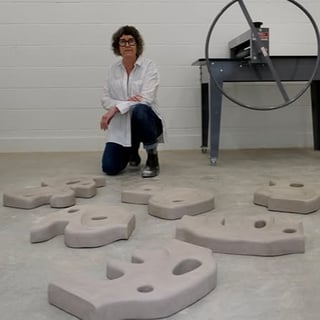
Speaker: I love that. Shaping Nation, sometimes it's important to get out of your comfort zone, whether it's in pottery or just straight up in life, because that's where your pottery is going to truly start growing. I love that so much. So let's talk about your pottery. In one sentence, can you tell me what you make? One sentence? I feel like I'm pursuing the idea to blur the lines between functional and sculptural work, because
Speaker: I think that's one sentence. So I'm gonna elaborate on this. I feel like people would, even like when I first got to the state for school, people asked me like, are you a potter or are you a sculptor? And I'm like, I don't know. Cause like I didn't have like style back then and I don't know if I have to choose. So I feel like what if I don't want to choose any, I want to be like both, you know? So, so right now I'm trying to,
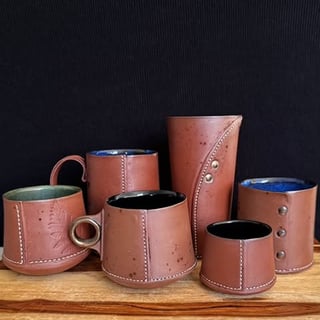
Speaker: blur the line and like join them together. So my work is kind of like functional vessel, sculptural vessel, or like some, what is it called? Like crazy form with little functional part, but I don't know. It's like, I'm trying to add some punch and kick to our daily life with, with, with my work. I love that shaping nation.
Speaker: You don't have to just stick to just either functional or sculptural. You can combine the two and make something that is truly unique to yourself. I love that you're combining the both of them together. So tell me the story how you started making the party that you're making today. It was kind of an accident because when I went to grad school, I was like solely making sculptural work because I feel like I enjoy doing that. But I always like want to make parts that look
Speaker: Like, okay. So back in time, I have never seen people like potters making functional work like this, like so elaborate and then so much work. And before I came here, I only saw like, what is it? Industrial pottery. Look, I have no idea like what, how people can do building their style and making pots. So in, in, in grad school, I was,
Speaker: cross path with Dieter Mert and she was like, she was so good with her parts. And so I asked her like, can you teach me like, how do you do that? I just amazed by her work, like in my first year. And then she was like, yeah, we can get onto that. And then like that thing never happened because I was scheduled. But then like one day she, I remember she gave me my name with a gallery in Chicago, Little Street. And like, and then Little Street people like,
Speaker: emailed me that want me to be in a functional show. And I'm like, functional, I never make any functional work before. And, but I feel like I want to like, be exposed in that, like, well -established museum, a gallery. So I feel like I have to like push myself and have to try to figure it out how to make parts that look like my work in that like, couple of weeks or a month or something like that.
Speaker: I think that's how I started. It's kind of like the force of nature that I want to make it happen. They look ugly. They look ugly, but like they are the great beginning, I think. I love that so much. Diem came on the podcast a while back and she gave some excellent advice. I love that you guys connected. She's amazing.
Speaker: So can you tell me how your pottery evolved into what it is today? So what were you making before it and now what you're making? I think it's going back and forth between like what I make in my sculpture and then what can I borrow from my sculpture to add on my pottery. So it's say like evolve, I think maybe that and also like the story behind each copy.
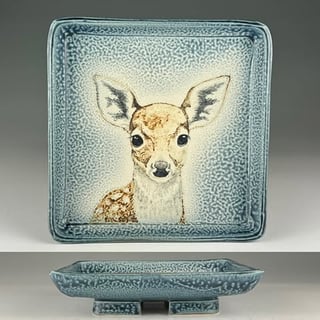
Speaker: So I usually title my cups. And so I think the combinations of my pottery are the form and 3D decorations, say flower or handles and illustration part. And the story of each piece usually appears on the illustration part. And what evolved, I think, is the storyline. So you mentioned that you title each of your pots. Can you tell me about that?
Speaker: So I have like developed this character, I call them dinosaur. It's kind of like character that representing myself when I think what people are the, what other people might see me from the outside. So when I was in grad school, it was in like small town Pennsylvania and I feel weird because
Speaker: not a lot of there were not a lot of Asian population or even like international population in that area. So I feel like it's just my insecurity that when I see people like looking at me or staring at me when I go to Walmart and stuff like, I will feel like why are they staring? Like am I don't look like other people? I know that I don't like I know that I don't look like I came from here. Like, I feel like people will pick up right away that
Speaker: I am not belong here. So I feel like when I was going out or like just living my life, people might see me as a dinosaur, like, because I, I don't look like them or something like that. It's just my insecurity. So when, so that is my sculpture thing. I know that's my like character things. And so I like to put that character on my part just to tell the story.
Speaker: And most of them are like funny and like some like slobber and jokes. And I feel like there's so many ways to like read into the image, but when I put the title on, it's kind of like guide how you read the image. So it's kind of like I draw something and I title them and just make people like laugh or something like that.
Speaker: I love that. I love that you put your own insecurities and you add it into your own pottery to make it something that much more unique. I love that. Thank you. So you are inspired by multiculturalism. Can you explain, explain this, explain to me what multiculturalism is and how this impacts work? It's a long answer. So I am Asian woman and I'm Buddhist, but I spent in Thailand, I spent 15 years in Christian school.
Speaker: And I celebrate Chinese New Year in January, but also like celebrate Christmas in a church in December. And I think that's just normal for people in Thailand because a lot of Thai, they have like some part of them are Chinese and because a lot of Chinese came to Thailand by boat and today they just stay. And so almost like,
Speaker: not more than 80 % of Thai people has like some Chinese blood, I don't know how to say it in them. So this is like, and then there's a lot of missionary came in to like, expand their like, the religion. So my, my school was one of them. So I feel like I've been raised in multiculturalism like this, and it was kind of like normal for me.
Speaker: But then I moved to the States and I started to feel like it was different because of like how I look and also like everything is almost kind of like you are this or you are that. It never like cross pin something or like not the majority of people here. So I feel like when I first moved to the States, I started to feel like as like I said, like I don't
Speaker: belong here or people will know that I'm not from here or something like that. And I've been having a many hard times when people ask me crazy questions and they have misperception about being Asian or all that stuff. So I understand how impatient people of color would feel after repeatedly such unpleasant events.
Speaker: You know, and, but, but it's also like, for me, like that kind of things kind of like make me stronger and also like make me focus more on this kind of stuff, like this kind of topic, like topic about my like cultures and multiculturalism or like identity and like who we are and what we want to do with the world or something like that. So, so I think that inspired me a lot. And I would not ever think about this kind of stuff if I haven't moved here.
Speaker: which I'm really grateful for. I love that. I think that's amazing. Thank you. So I share all the hard time and turn them into something powerful that I hope that my art can help, not help, but be a part of the art movement that changed the world into a better place for everybody. So now, can you give me a simplified explanation on how you create your work?
Speaker: like physically? Yeah. So I, I most mainly just coil builder. I sketch first. Is that what you're asking? Like step by step? Yeah. Okay. So usually I think about the concept and what, what story that I want to tell in this kind of like this certain pieces and my sketch before and I have to like my sketch before I
Speaker: flea tush clay and I and like once my sketch is done I kind of like divide them into like parts to see how big it's gonna be like overall because if not I just keep getting bigger and bigger and then they're gonna go through the lid of my kiln so so I just have to like plan and I usually like make a slab and then coil and I always imagine myself as a
Speaker: What is it? 3D printer. I just coil and then make shape and pinch. And yeah, I like to make the form and then make some decorative parts set aside. And then I just go back and forth, like cleaning up the area and like get the decoration, get the, like the flowers or maybe it's something else like, and keep adding to the work until I like it and just this and then paint.
Speaker: all that stuff. Love it. So let's talk about discovering your voice. What would you say was your biggest struggle when it came to finding your voice? I think discovering my voice came slowly and naturally. So I don't think I mean, there might be some struggle along the way. But I think the more challenging part is trying to keep holding on that voice. So
Speaker: Yeah, I think holding onto it could be a little challenging for me. As you know, I moved back to Thailand and I'm no longer viewing myself as a minority. And so there's, so personally is a bit weird to me at this stage that I'm like making work about like the thing that I just told you. So, because I feel like I'm not in the state anymore. And like, if I still like telling the same stuff, like, so
Speaker: what's next. But I've been trying to apply or take as much opportunities that I could to go work abroad. Because when I'm in Thailand, I almost feel like I have this autopilot on that I don't have to think about everything. For me, it's just easy to just live and work in Thailand. But when I'm working or traveling abroad, say when I'm here or when I'm doing some other thing in other countries,
Speaker: I noticed the tiniest details and like, by trying to like pay most attention to each conversations and just be conscious about how I feel. I think that just very helpful. And I feel like I need that to continue continually to find my voice. If that makes sense. Yeah. I, I love that. Cause it's like, it's always pushing you to be a little bit better. And I love that so much.
Speaker: So if you were starting over, what would you do to help you discover your own unique voice today? You are starting over. I don't know. Like over seems like undergrad. Well, let's just say like if you were if you were new to pottery, how would you what would you do to try to find your own unique voice?
Speaker: Okay. Before I apply to grad school, I have no idea that like there's so many other options like residency or like technical technician, like type of work of job that you can like apply other than being a grad student. So if I know that I would, it would change a lot. I think I would like learn so many other things and, you know, just like learn more from
Speaker: other people, other artists, I feel like that would impact a lot of how I think or how I work. But I think that's still not too late to do that. But it would be different for sure if I know that we can do other stuff instead of like go to grad school right away. So as we're coming to a close here, what advice would you give to someone trying to find their own unique voice with their pottery?
Speaker: I think they have to find a unique voice for their life first. Like what do you, like what important to you? It doesn't have to be like in the sake of art making, but like what do you want to speak or what do you want people to like see you and then thought of this and that kind of stuff. You know, like it doesn't have to be like, Oh, I'm gonna like look into this topic to make art.
Speaker: I think that's not sustainable. Like you have to like, generally into something and then slowly shift that thing into your art. Does that make sense? Like, yeah. Punch, it was so great chatting with you today. Where can my artists go and learn more about you? Probably Instagram. So my account is nump, nump is fart. It's like N -U -N -P -U -C -S -H underscore ceramics.
Speaker: Or there's another one like, or you can go into my website is www .numpucsh .com. And all these will be in the show notes for everybody that's listening. Yeah. And then I think the best place to like get ahold of my work is through a companion gallery where I'm at right now.
Speaker: We hope you enjoyed this episode of Shaping Your Pottery with Nick Torres. Do you have questions about pottery that you'd like Nick to answer? Send them to us on Instagram at Nick Torres underscore pottery. We'll see you next time.