Transcript
Speaker: I think it's cool, not really any questions, but just like I think it's cool that you're doing this just because it's nice to have that creative outlet and it just kind of, it generates interest. You know, I really liked
Speaker: seeing that afterward Sean was posting more videos and that really got me charged up, man. Yeah. There's just some really cool stuff and it's just nice to see. You've always been someone I've really enjoyed talking to you in general over the years. I didn't know if it was because we came from the same place in the world or what, but I just felt connected in some way. It was just nice to see you always had this
Speaker: the vigor passion for a thing and it's cool because like you see your friends kind of like producing something and being passionate about it and just doing it and not worrying about you know kind of what I was talking about before like oh I didn't get the proper microphone so I can't do this so and you know what I mean like
Speaker: You you weren't worried about that. You just did it and it's good and people are listening. I think it's cool. I think it's really cool. I appreciate that. And you know, and part of it too is I had to be deliberate about it too because I had found that over over over a few years that there was a lot of stuff I think I was acquiring like from the outside that wasn't my own. And a lot of those things had placed me in a position where I was like really creating a lot of
Speaker: excuses or barriers to me doing something, right? So, and even with this, with the podcast, you know, part of me was like, you know, I had recorded in the background, nobody really knew this, but you know, starting this calendar year, I started recording in February and I had like, you know, three, these three interviews that I, I didn't know what they were. I knew they were kind of cool, but I had them in the background and then, you know, I'm like, I'm going to have to launch this thing. Like I have material and,
Speaker: That that leap, it was really strange one because I'm like, you know, what do you know? You know what happens like in your head? You're like, well, oh, you know, why am I doing this? Like, is it silly? Is this stupid? I'm putting it out into the public. And what do I think of the public? And, you know, like, you know, just exposing yourself in that way. It's a weird feeling. And I think I don't I don't know. I feel like as an artist,
Speaker: You never get over that kind of like, this is my baby. This is what I'm passionate about. And putting it out there is kind of scary because you never know what the reaction is going to be. But at the end of the day, you look at the body of your work that you've been doing and like you've already done what? A dozen of these? Well, your your episode be the eighth episode and one per week. Yeah, that's awesome. Like that's just so cool. And so you have that.
Speaker: And so you have a physical body of work and not that you don't already because you have paintings and whatever else you do. But it's just kind of a nice thing and you're putting your thoughts out there and podcasts are so interesting these days. I mean, they really allow people to just really put what they think out on into the world. And it's a little scary, but I think at the end of the day,
Speaker: you're adding to a larger collective and you're positive. You know, if you're positive, I feel like that's a boon, you know? Absolutely. And, you know, I'm going to launch Ethan and get into the first question just a moment. You're listening to something rather than nothing podcast. And this week we have artist Ethan Slayton.
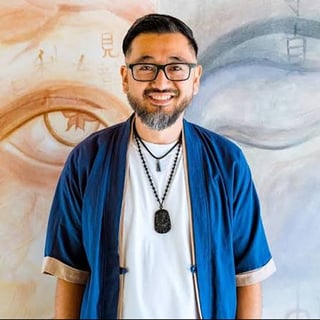
Speaker: And I'm very excited to talk to Ethan, who's usually busy at work illustrating and working hard on his art. He's somebody I've known for a while, but you get a chance to talk a little bit more in depth about your art. And so, Ethan, I wanted to welcome you onto the program. Thanks for having me here, Ken. I appreciate it. It's nice to be here. Nice to talk to you. Yeah.
Speaker: I know because of what we've talked about and recall that you're a Boston Bruins fan. You're from the New England area, Vermont, and I believe that makes you a Vermonster. Is that correct? Yeah, yeah. Yeah, you're a Vermonster. So tell me about young Ethan growing up. What were you interested in? What did you do? What took up your time?
Speaker: I mean, everything. You know, like, when I was a kid, I wanted to be a baseball player. I wanted to be a football player. I wanted to be a fireman. And this is, I'm talking about, like, 12 -year -old Ethan. You know, like, I have pictures of me and a friend of mine in, like, his football gear. And we were playing in our yard in Berlin, Vermont. And, you know, I just wanted to do everything possible. You know, I had no...
Speaker: I had no immediate idea of what I wanted to do. And then I'm an only child. And so I think being an only child and being the grandson of a painter in Vermont, Ron Slayton, my parents thought, well, when we're cooking dinner or need a minute to ourselves, let's put some paper in front of this kid. And
Speaker: A few years ago, my mom presented me with a gift, and the gift was a photo album. And the photo album was all of my drawings that she had saved from when I was actually three years old. Wow. And she had written on the backs of them. She had done this intentionally for years. And it says Ethan age three, Ethan age four. And they're just little squiggles, you know, basically little balloon faces with little smiley faces.
Speaker: And then they progress and I started drawing other characters, you know, and they're all like, you know, marker crayon drawings, but it was just kind of what I grew into. And having my grandpa as a living right next door to me, having him as an artist and an influence and just being really positive, my parents being really positive and always wanting me to kind of develop and grow and see what else was out there. And then one trip to Boston,
Speaker: where my dad was doing a Zen retreat. My dad is a Buddhist. My mom and I went with him. It was a huge retreat. It was really cool to keep me busy along with my sketchbooks. I think I was about, I might have been eight at this point, so I'm going back a little bit. We went to a drug store. We went to a general store,
Speaker: And they had, you know, remember the comic book racks in the spin racks, the spin racks. Yeah. Hey, kids, comics. And my dad bought me three comics. And I only remember what two of them are. I think one of them might have been in Avengers, but I'm not really sure. But the one that I remember very vividly was Shang -Chi, Master of Kung Fu and the Devil Dinosaur, Jack Kirby's Devil Dinosaur number seven.
Speaker: And those basically, I ate those up. You know, it was like, what is this? This is so cool. I love dinosaurs as a kid. Like I've always loved, you know, dinosaurs and monsters and medieval, you know, ancient religions and civilizations. And, and so devil dinosaur kind of like keyed into a lot of that. And then Shang -Chi master Kung Fu, where he's nunchucks and Kung Fu and everything. And it's a different world. I mean,
Speaker: I was just, I was sold, you know? And so like that kind of interestingly enough, you know, so I was into art, I was into sports and it's funny because I haven't done sports in years. I was actually on the cross country ski team in Vermont when I was about 16 or 17. To look at me now, you wouldn't know it. But I just kind of like, you know, developed and had all these opportunities
Speaker: Growing up in Vermont, I skied everywhere, you know, hiked a lot. Every summer, my dad and I would go up Campbell's Hump, and I remember going up Mount Mansfield, and just really gorgeous area. And so that, I think growing up in that area in Vermont really also kind of informed my love of art because I believe that the more you experience, the more your art
Speaker: Benefits from that whatever your art is whether it's music or drawing or writing or whatever And so I think I really lucked out so You mentioned you mentioned the the the book that your mom had kept and put together, you know all together What you had worked on did you did you end up developing the creative process?
Speaker: that you use way back then and it's continued. Tell us about your process and whether that's something you've just used for a while. And I'm talking about when you're sitting down to draw and to create. I think everything with me, as far back as I can remember, pretty much starts with a visual in my head. Something clicks. And I have to get it down, or I really want to get it down on paper.
Speaker: And I'll sketch it out maybe a couple of times. Maybe it'll go away. Maybe it won't stick around. But if it sticks around, I want to work on it a little bit. And I'll refine the penciling. I'll work with pencil first, and then I'll go into inks and that. But honestly, the stuff that hits me is stuff that I think about if I'm doing whatever, kind of like what I was talking about before, like if I'm out skiing or years ago, of course.
Speaker: or just out walking nowadays or hanging out with friends or conversation comes up or some piece of music hits and it kind of incites this vision in my head. More often than not, I'll jot it down or I'll just remember it and take that to the drawing board. And that typically ends up as an illustration.
Speaker: you know, a single illustration and then comic book wise, sometimes those illustrations will become a comic story that I'm writing or working on like Lucas. Lucas came from a visual of a father and his son out chopping wood because I used to chop wood with my dad out in Vermont in the wintertime. And Lucas is very much about, you know, this this father and son mentality.
Speaker: or story setting. And that story grew off of a visual that I did of a huge log cabin with some kind of medieval stuff. And then over time, I realized I'm just not going to have the time to draw all this as detailed as I have it in this picture. So I cartoonized it and put it into what Lucas is, which is
Speaker: kind of an anthropomorphized rabbit. That's about it, yeah. Is that the word? And I love that character, and not just to jump in right here, I love that character. There's something about even just the single image of that character that draws you in. And also the elements of the story that you talk about, it really evokes and really brings you into
Speaker: of that world rather quickly. So it didn't surprise me that much that when you described how that came about in your head that there was more to it, that there was a world to it. Because I really picked up on that. And I believe that story or that character is something you're gonna continue on a larger scale, is that correct? No, actually that's the funny part. It became a short story. Okay. And that's the short story, that's Lucas, that's done.
Speaker: Um, but I do get asked that question quite a bit from people who have read the book and liked it. And they're like, is there going to be more? I'm like, I kind of killed this, you know, not to give any away any innings, but no. Right. Right. You know, um, because I'm also a fan, like you mentioned earlier, horror and I love and suspense, like Twilight zone. I mentioned Twilight zone, the black and whites, the original series. It's definitely more suspense, but it's, but to me, the term horror,
Speaker: can be what fills you. It doesn't have to be like, oh, look, there's a psycho killer stabbing and there's blood and heads and gore. Horror can be how you react. So it can be how you feel about a situation if you put yourself in that situation. And so to me, the Twilight Zone is terrifying, right? But I also love it. I love it so much. And so I really enjoy that kind of that vehicle of here's a here's a window into this world
Speaker: that we've created because we have something else to say about it, but we just are gonna end it here because this is the story, this is the crux, there's something else here and we're letting you figure out what that something is and we're just gonna go on and tell another story. And that's so, Lucas is a part of a larger project called the October Ages and the October Ages is eventually gonna be an anthology of horror stories that I've been working on
Speaker: for a long time, and just when time allows, of course, and putting my own money into it, et cetera, et cetera. But yeah, I appreciate the, I'm glad that you saw something else behind the artwork because that setting and that world of Lucas, you know, I draw stuff and write stuff that I want to read, that I want to think about.
Speaker: You know, maybe there's something else there, you know, but I don't know. I just really enjoy creating that element that I grew up in. Not the horror element, of course, but the stuff that I love, the stuff that I know, like a forested winter surrounding family setting. Yeah. And I think I put horror in there.
Speaker: Well, right. Well, and on that too, you know, I can tell you that when it comes to that setting, whether it be Northern New England, Vermont, and, you know, that was a vacation place for my family. And, you know, growing up, we didn't we didn't travel much. That was the vacation in the summer. And it was
Speaker: being transported from the city outside of Providence, Rhode Island to a different world. So I can be sensitive in connecting to parts of the imagery, whether it is with the forest or being outside. And it's very powerful, and that's there. I wanted to ask you a question about, and I really liked your approach to talking about horror and what that is. It definitely brought more of a
Speaker: kind of like a subjective experience of the viewer, the person who's interacting with the story and what impacts the audience as being horror. I wanted to ask you, you have a series where you're creating monsters and you've done a lot of work for gaming
Speaker: in the visuals or far as characters in the gaming world. You played a lot of D &D. You've done you've done all those things. And there's this monster theme. And what I realized or what I thought in looking at your monsters is that some of them were some of them felt like they might be horror, right? Like they might be something you definitely encounter this like in a horror context.
Speaker: And a lot of them were just like a monster, like some sort of different being. So you create a series about monsters. So what makes something fit that category for you? What's a monster? That's a good question. A monster, you know, technically speaking, a monster is something that is monstrous, that is
Speaker: out of the realm, beyond the realm of the ordinary. So a monster could be a human form, but with some abnormal trait. So if I've got long claws and fangs and wolf eyes, but I look like me, you might crack up. But I might be a monster. I don't know. And then you can get into, I think,
Speaker: You can definitely, definitely get into the existential idea of a monster is something that is somebody that actually does horrible shit to somebody else. And they do it willfully and almost with a sense of enjoyment behind it. And so you have you have another definition of monster.
Speaker: It can be bestial in form, physical, and it can be bestial in mentality. And I think it really comes down to the story behind the image that I'm creating. Someone might ask me to do, I don't know, a couple of drawings of an orc or a werepig or something weird, and I kind of
Speaker: I get just the brass tacks of that image, like what it's wearing, if the client wants me to do that or whatever. But then as I'm working on it, I end up attaching my own story to it. Because if I don't do that, I definitely have done stuff where I haven't done that because it's just timing and I needed to get stuff done. And it always suffers, the art always suffers. So for me, having just little story elements about the creature, you know, if it's a monster, and if it's something that's
Speaker: uh, monstrous in form, I want to know a little bit more about it. If it's monstrous in personality, I definitely want to know a little bit more about it because that will inform the acting of the image that I'm drawing. Uh, for instance, if you've got, um, a creature that is, uh, into skinning, you know, other humans,
Speaker: Sorry, folks. It's a little gross. We're talking about monsters. My apologies. We're on monsters in horror right now. We're good. You know, you could probably and then they're not going to say that in the text of the format that the image is placed on. So I have to kind of inform the viewer through the image that I'm drawing. And so it speaks to the viewer.
Speaker: and says, oh, this guy's a bad guy. This guy's a villain. You know, whether he's got, you know, horns coming out of his head just as an example or, like I said earlier, like fangs and claws. That's one thing, but if the character's just kind of standing stock still, it doesn't really evoke anything in the reader or the viewer. But if I've got him kind of like crawling on all fours coming at the viewer and just kind of sneering towards the viewer, I mean, that's gonna create a whole different element.
Speaker: Um, and so I really, I really kind of look at that and say like, okay, well, that's how I create a monster. And that's what a monster is to me. Um, yeah, it helps. It helps to think about it in a, in a, in a, in a couple of ways. And I think comic books are probably a good way to be able to do both because what you describe is like inherent within the visual you there's, there's action or aspects that you're going to see that are going to be.
Speaker: that are going to evoke a certain background story of what that being is. But also, you know, comic book guys, right? I mean, origin stories, it's all about origin stories as well, right? Like we need to know how and what's the authentic origin story and like, why did this happen in this way? So, you know, and that's where the words can come in as well. But I think your answer really evokes, you know, kind of both. You're going to see it within the image.
Speaker: And you're going to be given some of it, you know, like where does this, where does this, you know, uh, being, uh, come from? I had, I never really thought much about like monsters as like more of a, like an intellectual concept until a friend of mine actually does a course on them and studies them. And, uh, and, uh, I've tried to get her on this podcast. She, she doesn't, she's kind of shy about it.
Speaker: Um, but I, I love the formal aspect of, of, of studying, you know, what appears as monstrous because I, I've always just assumed it's reflective of, you know, you know, who we are. Right. I mean, if it's monstrous to us or the individual or to a society, right. Yeah. A hundred percent. I mean, you know, when you talk about monsters and talk about the world today, you know, look at the world today. I mean, it's just filled with monsters. I mean,
Speaker: You don't have to be a deformed physical being to be a monster. You can just be somebody who just hates on somebody else because of their skin color. I mean, it's always been the case, but in my mind, that's a monster. Someone who is just treacherous and taking away people's rights because they don't like that person or what that person's life wants to be, that's a monster.
Speaker: Uh, you know, so we, we really, yeah, I mean, I don't know. I think that was based there a little bit. No, I mean, I think that's, that's, that's the question, right? I mean, the, like, look, like I said, once, once I looked at the question of like, you know, what's a monster and I haven't gone that far into it, but it was really evocative because there's completely a political element. There's, there's an element that's reflective of, you know, kind of like the guest stall of, you know, the society or the like mass psychology.
Speaker: and why certain things are horror at one time and not another. I mean, you could see like even the predominance of like nuclear horror, nuclear Holocaust, you know, our fears are so pressing at that point that that's what comes out. But, you know, nuclear terror or nuclear horrors hasn't gone away or the fear of it, it just manifests itself. It's a friend of mine
Speaker: This was roughly 10, 12 years ago. This is right around the time when The Walking Dead was starting to be a thing. So maybe more than this, maybe 15 years ago. It was starting to be a real thing. The show hadn't started yet. But it was starting to make real waves in the comic book world. And then after The Walking Dead's success, there were a lot of comics
Speaker: that were coming out, that were zombie -centric, and zombies were the monster of the day. And a friend of mine, she asked me, she said, why do you think zombies are so popular nowadays? And I said, and I really thought about it. And I said, you know, that's a good question. I think it's because, and I kind of used the idea of the title, The Walking Dead, because in the comic and The Walking Dead,
Speaker: They very aptly put the walking dead as us. And I kind of used that. I kind of said, you know, I think to a large degree, we are the walking dead. You know, our votes don't feel like they're going through. We have a Republican president at the time. I think it was. You know, and we all just felt like our votes didn't matter, you know, and it just we felt stifled, you know, and I think
Speaker: when you feel stifled and you feel powerless, you feel like a zombie. You get up in the morning, you go to work, you drink coffee, you take a dump, you go to bed, you know, and you do it again and you're put on repeat. And if you have no voice, if you have no means of creating a better life for yourself, you feel like a zombie. And so I think that's why zombies became so popular because it was just such a,
Speaker: a giant metaphor in a large degree. And then, of course, the popular, the popular, you know, I can't wait for a zombie apocalypse so I can just go kill some zombies, you know. But I think also that says something about stress levels of America and the world where we just want to go home and play video games and kill zombies because we have to work off all the stress. And so that's the fun game of like, oh, man, if it was a zombie apocalypse, you know. And so I think
Speaker: Monsters serve as metaphor, very much so. I mean, we've already kind of like touched on that, but at the same time, they serve as reminders. And maybe that's still a metaphor they serve as a reminder to me as to what we can become if we're not careful. You know, Dracula, the story of Dracula is a very, very much a story about what can happen if you let
Speaker: If you if you become obsessed with love or you become obsessed with a person You know, I'm not saying you're gonna sell your soul to the devil and drink blood for eons, but hey, you know metaphor, right? So it's important it's interesting So what's the what's the role? I mean I definitely I definitely I
Speaker: hear the explanation and the meaning of zombies in the culture, and I think you hit on a lot of good points there. So what's the role in art? What's the role in music or comic books or books or popular art? If that is the dynamic, what's the role of art in trying to break into that of some sort? It's about waking people up.
Speaker: Not everything is not all art is about waking people up. But honestly, you can attach that to a lot of stories that are out there. I was just reading Marvel Comics 1000 and there's some great commentary in there about how we need to be careful about making sure that everyone's equal. And that's I'm paraphrasing. But it's interesting to me that I keep seeing very bold
Speaker: powerful statements in comics That you know and it's been doing it for years And it always makes me happy it always always always makes me feel like okay. I'm not the only one who thinks you know Cripes, what are we doing to each other? You know These writers definitely feel that way these creators definitely feel that way so
Speaker: I, you can look at a comic and say, eh, I can just throw that in the trash after reading it and get nothing from it. Sure. But if you really read it, maybe there's something in there for you. And that art, that art, what that art I think is doing is trying to say, hey, be aware, be awake. You know, and you sure you could throw it
Speaker: I don't want to get on that subject. I was thinking of the word propaganda, but that's not correct. This, again, I think is talking about metaphor, how art can inform a culture and can warn a culture of saying, hey, we're headed down the same path we were headed down before. Music does that all the time. Musicians do that all the time when they're on stage and they have something to say about a song they're about to perform.
Speaker: writers, I mean, obviously poets, you know. Well, tell us tell us about tell us about your your work as as as a musician. I mean, and you know, and tell us, I mean, because I mean, in describing your process and your approach, I think one of the things that really what I was really interested is that you have that one process, but you also
Speaker: I think there's two pieces with your music. One is that you've done it. And I just want to hear a little bit about that process and your time with that. And connected to that is the darker themes that are in a style of music that we both like a lot in various forms of it, of heavy metal. So tell us a little bit about that, about music. So our process when we were in the Deep Sea events was very
Speaker: much. We just wrote about worlds we wanted to see. We wrote about, you know, horrific planescapes. And we wrote about crayons under the sea and stuff like that. But we threw a thrash doom metal kind of vibe on it. And it wasn't more, I think, then
Speaker: It was definitely our art form. It was our riff structures. It was trying to communicate a feeling of a different environment than the one that we're already in. And so it was definitely an escape, you know? And I think escape is good. I think art can definitely, that's another great thing that art and music can do. They offer an escape so that you can go out and just kind of, we need to as human beings, we need to just like,
Speaker: We need to let go. We need to think about things. We need to act on things and we need to be aware of things. But we also need to give ourselves a break because otherwise we're just gonna be tired all the time and we can't get beaten down. And so sometimes art will give you this great release. It will give you the ability to just thrash around with your friends and have a good time. And then you go home exhausted and you pass out and you wake up the next day feeling invigorated because everyone was in that pit with you and they were feeling good
Speaker: and there was a community there. And that's what music can give you is that community to a large degree. And you don't feel alone anymore. You feel connected. And so it might be a song about escapism, but everyone came together and needed that. And then that allowed them to kind of have this nadir of
Speaker: explosive energy and then the pass out happens and so you have the contrast where you sleep and then you get energized from that sleep and you're able to go out and do more and you're able to go out and write your senators and your congressmen and etc and fight more because that stuff's tiring and it's not what you want to do but then you see the horror stuff that's out there and then you have to do it. So it might not seem like
Speaker: So our music definitely didn't seem like activist music, but I think it it definitely held a world for people to go and visit and feel creative. You know, I think a lot of our creativity came from just those visuals that we were singing about and those sound bites that we were doing, the riffs, the music we were creating.
Speaker: And a lot of people that come together in a kind of a unified mentality and like, Oh, that was really cool. Or, Oh, that was terrible. I hope that doesn't happen to our world. Uh, I don't know, but definitely a release, a release for me. I mean, it's definitely a catharsis, you know, playing my base, uh, 80 miles an hour for a half an hour and just bellowing at the top of my lungs and coming away and feeling light and feeling like
Speaker: just, I'm, I'm weightless, you know? And, and I did that with my friends and some of my friends saw that and it created that energy, a good positive flow, which a lot of people don't identify positivity with heavy music, but there's a big amount positivity with heavy music. There's positivity with all kinds of music, but like the stigma of heavy metal is everyone's an angry, hateful person.
Speaker: who listens to heavy metal, and that's been taken away to a large degree, I feel like, but it's still there. And I think once you go to a show or something and you watch people and you talk to people and you interact with people, it's less of a chest beating experience and more of a like, handshaking experience. You know, like, hey, thanks for coming out, you know?
Speaker: I'd agree with with with metal and I think you hit a popular stereotype I mean, I think it's a style of music where you're going to attract you're going to attract unhinged French elements like there's no doubt given the level of aggression in some of the imagery and stuff like you're gonna attract that right? So here's the thing not to cut you off I just want to touch on this real quick, but the people that aren't like that They'll see those unhinged individuals and nine times out of ten. They'll kick them out of the box
Speaker: venue. They don't want that. They don't want that energy. They want people to have a good time and go home safe. They want people to have an artistic experience, a fun experience, a music experience. If someone's going to come in and be a jerk, they want them out of there. I completely agree with that. And I've seen that. And you also see some of the couple of components I've seen at metal shows, even the heaviest metal shows or the darkest type of metal is
Speaker: You definitely see a community. You see a lot of people very concerned about the safety of others in, you know, they're having more aggressive fun there. But also a very kind of almost spiritual element when you've seen, you know, kind of how people respond to the power of that music. And that's that I think that's the piece where
Speaker: You know, why are metal fans the way that they are and why they tend to be kind of permanent metal fans? It's for those larger components of the music. And it's great to hear your experience in playing and how much you enjoyed and what that
Speaker: what that did for you. I got a couple big questions, Ethan, and one of them is a big one. I've heard components or characteristics of things that we've called art, artistic objects. There's a couple of components I heard within your answer. One is to jar or to unsettle, possibly to awaken. But I don't want to
Speaker: assume too much about your answer. What is art? I mean, this is the big, this is the response that's going to get a lot of groans, but it's the, I keep coming back to it. Art is everything. I mean, it's really legitimately everything. There's art in how people walk down the street. There's art in how people talk.
Speaker: There's art in how people get up in the day and make themselves happy and create a great cup of coffee. There's art in that. Art, I think, beyond that, I think on a day -to -day basis, art is something that makes you think.
Speaker: Artists, but it's also I think it's also something that gives you a reaction, whether it's good or bad, funny, sad. You know, I think it's just. It can be anything that you think it is. And that is a very existential answer.
Speaker: But that is the most honest answer I can really come up with because it's different for everybody. It's not the same for me as it is for somebody else. Yeah, and part of the thing with this question, I mentioned it on another episode, is that it's a quirky one because I think a lot of people engage in assessments about what art is or isn't. They do that a lot with music, I think I had mentioned.
Speaker: You know, that this is this art or that was real music, you know, that there's this elevated status about something. So they're saying, you know, there's there's a sorting process with each person, each person, right, who's thinking about it, saying this is this isn't this is great. This is terrible. And so everybody grapples with the question because they're making statements and making qualitative judgments. So.
Speaker: Yeah, it's one I really like to ask and I've thought about it myself and I think really it matters How I'll answer that question it has might have to do with the conversation that I had before or what I just listened to or something like that and I think that it it has a it has this component where It's to the situation or what you're feeling at that time not that it's that loose and
Speaker: But I certainly answered the question, what is art a lot of different ways and not just at different times of my life, just in, you know, from one week to the next. So I do appreciate your response. Yeah. Yeah. Oh, absolutely. And what we're going to think fits into that category. Another big question, super, super big one. And I mentioned the guests, you know, we can apply this to art or, you know, the process of
Speaker: Making things or what comes before but the the the big question is why is there something rather than nothing? Because if there was nothing And that's a tough question It does the same thing to everybody. Yeah Because because if there was nothing What are we fighting for, you know? There has to be something
Speaker: I don't know. I think there's I think it's a deep question. I really do. It's like a deep cut. Thank you, Ken. It's it's a it's a lot heavier. I think it's literally that's very close to why are we here?
Speaker: It's fundamentally, why is that? And there's questions like this. I mean, for me, it's part of the experience of asking questions. And, you know, and I think questions, you kind of like they explode, they can explode a conversation to have it go in different directions. But you go back to Socrates. I mean, this is the answer to why Socrates was killed because
Speaker: You know, he would ask, you know, you'd ask these questions people like, you know, why are you asking me that? Like, that's really annoying. Like, I'm a just I am a just man. And because it is so don't ask questions about what is justice. Sure. So but it's a it's a great creative aspect to it. And I've always I've always appreciated the responses, Ethan.
Speaker: At the end of each episode, I kind of just open it up, hearing about some of the projects you have been working on and things that you're doing. I think I always like to have you share where things are going or what you're planning or thinking about as far as yourself as a creator, as an artist and what listeners can take away.
Speaker: Well, very, very obviously we're talking about monsters. I run a Patreon called Monster Weekly, and every week I put up a video, a process video of my work doing the artwork, drawing the monster, and then I'll do a secondary post for that monster with the completed monster and kind of my process about that. And people are free to ask questions and, you know, ask me
Speaker: anything about the process. And that's a lot of fun. And it just kind of gets me to the drawing table a bit more. So that's, that's been a fun thing. It just kind of gives me a little discipline, which I definitely need right now. So I have, as I mentioned earlier, the October ages, anthology of horror stories that includes Lucas,
Speaker: which was my first self -published mini -zine at the Indie Comic Con, Portland Indie Con, that I saw you at, which was awesome. And they're gonna do, apparently they're gonna do a second one, so I'm gonna definitely go to that one. Hopefully I'll have another zine. So I'm trying to do all the short stories that I've got together and then eventually compile them into one larger book, one anthology. And that's the years in the making. That's my own free time.
Speaker: At the moment, I've been locked down, as it were, to do a project that I can't get into right now, unfortunately, but I hope will bear fruit soon. It should be done by the end of the month. Then another one that I was hoping to have done by the end of the summer, but with summer being the way it is and needing to make money in commissions,
Speaker: hasn't gotten to that point yet, but we've finished writing most of issue one, and we've got issues two, three, and four bullet pointed and ready to go. We know where the story's going. We just have to flesh it out. We're in the hard part now. Four to five issue miniseries entitled The Year, and I'm co -writing that with one of my best friends, Kirsten Haynes, and we're basically taking our love of Dungeons and Dragons
Speaker: and doing a fan fiction of our own campaign. And we're asking the question, what is a year in the life of an adventurer? And the comic is entitled The Year. So I've got a bunch of projects on
Speaker: untap and, uh, I'm tired, but I'm happy, you know, as it goes, but also driven. And, uh, it's, you know, uh, and then I've got, you know, my second year of school coming up, so that'll be fun, uh, throwing all that into it. Oh, and, and, and, and, and, and good luck with all of that. And I tell you that the year, the year sounds, um, you know, sometimes you hear about a story or a project, you'd be like,
Speaker: particularly in this Amazon America. It's like, I want it right now. I want that issue right now. But I certainly look forward to it. And yeah, I really appreciate you sharing what you're working on going forward here. Really appreciated chatting with you, you know, philosophy and monsters and comic books and D &D.
Speaker: It's a real thrill. And one of the pieces I really like about what you have to talk about is really these different worlds that you can enter and that you help create. And I just wanted to take the time to thank you for that and to thank you for being a guest on something rather than nothing. Thanks for having me, man. I really appreciate it. It's nice to talk to you. And it's nice to hear that those worlds are appreciated. Absolutely.
Speaker: Thanks, Ethan, and hope you have a great labor day. Thank you, Ken. You too, man. Take care, brother. You too. You are listening to something rather than nothing.