Become a Creator today!Start creating today - Share your story with the world!
Start for free
00:00:00
00:00:01
#210 Slip Casting Secrets: Unlocking the Mysteries of Marbled Ceramics w/ Sean Forest Roberts image

#210 Slip Casting Secrets: Unlocking the Mysteries of Marbled Ceramics w/ Sean Forest Roberts

E210 · Shaping Your Pottery with Nic Torres
Avatar
88 Plays2 years ago

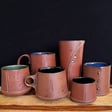
In this podcast episode, we explore the inspiring journey of Sean from Forest Ceramic Company, who transitioned from a chemist to a ceramics artist. We delve into the process of his unique marbled ceramics creations, his leap into full-time pottery, and the growth of his business. The episode also explores the technical aspects and challenges of slip casting and the incorporation of color and randomness in pottery. The conversation provides valuable insights and advice for both pottery enthusiasts and beginners. You can learn more about Sean by checking out his Instagram @forestceramicco

Top 3 value bombs:

1. Sean's journey from a chemist to a full-time ceramic artist is inspiring. His story emphasizes the importance of following your passion and embracing change, even when it means shifting from a conventional career path to a creative one.    2. The process of slip casting, involving the addition of color and randomness into pottery, is explained in detail. This offers valuable insights to pottery enthusiasts and beginners interested in experimenting with this technique. Sean's advice about understanding the limitations and requirements of slip casting before getting into it is another key takeaway.

3. The conversation highlights the importance of continuous experimentation, tweaking, and playing with the process to evolve as an artist. This approach not only helps in creating unique pieces but also keeps the work exciting and fresh. Sean's emphasis on enjoying the work and ensuring it doesn't become a slog is a crucial piece of advice for anyone considering turning their hobby into a profession.

Take this Free Quiz to see how close you are to finding your pottery voice click here to take the quiz shapingyourpottery.com/quiz 


Follow me on Instagram @nictorres_pottery

 

Recommended
Transcript

Discover Your Unique Voice Quiz

00:00:00
Speaker
Hey, real quick before we get started and get into the episode, if you want to figure out how close you are to discovering your own unique voice, I put together a free little quiz for you to see how close you are to finding your own unique voice. If you would like to take this quiz, go to shapingyourpottery.com forward slash quiz, or you could just go to shapingyourpottery.com and it'll be right there. What

Interview with Sean Forrest Roberts

00:00:23
Speaker
is up, shaping nation? This is Nick Torres here, and on this episode of Shaping Your Pottery, I got to interview Sean Forrest Roberts.
00:00:29
Speaker
In

Fun and Experimentation in Pottery

00:00:30
Speaker
this episode you will learn how Sean makes his incredible slip cast pottery that has lots of colors and lots of randomness into it and they look absolutely incredible. You'll also learn about why you should be having fun while making pottery and that is the most important thing for you right now is to have fun with your pottery. You'll also learn about making small tweaks until you finally are able to find something that you truly love.
00:00:58
Speaker
Hope you guys enjoy this episode and I'll see you guys in there. If you love pottery and want to take your skills to the next level, you're in the right place. Find your own pottery style right here on Shaping Your Pottery with Nick Torres. Let's get started.

Chemistry's Influence on Ceramics

00:01:15
Speaker
Sean, welcome to Shaping Your Pottery and share with me what is something people might not know about you.
00:01:20
Speaker
Um, so back in college, I actually have a chemistry degree and I did work in an organic chemistry lab for quite a while in something that I would have to give you a PowerPoint presentation to understand, but it was called an antioselective organocatalysis. So love it. So tell me the story, how you got started in ceramics.
00:01:43
Speaker
So I had an awesome program at my public school in Madison, Wisconsin in high school. And I fell in love with throwing on the wheel way back when, almost 20 years ago at this point, but it was a very serious hobby. It was just all for fun. I was a math science person academically, but that's, that's what started it was making functional wares on

Founding Forest Ceramic Company

00:02:06
Speaker
the wheel. And I just fell in love.
00:02:08
Speaker
So tell me about the moment when you decided to create Forest Ceramic Company. So Forest Ceramic Company was many years down the road after the beginning of my pottery journey. After my chemistry degree, I wanted to jump into ceramics and my kind of my academic transition into ceramics was in glaze chemistry. And I was playing around with that a lot.
00:02:33
Speaker
And then I learned to slipcast and started marbling and everything has been born from experimentation. But really the beginning of Forest Ceramic Camp company came after a whole lot of years coming out to Orcas Island where I now live. I was invited out here by another company. And I had the beginning of my marbling processes.
00:02:55
Speaker
or my marbling process at that point, it was very much hadn't been fleshed out nearly like it is now. But I was invited out here to Orcas Island and wanted to start selling my work and incorporated in 2015.
00:03:12
Speaker
was the birth of the name for a ceramic company. It's my middle name, my great grandfather's name, who was a theater professor in Northern Michigan. So I liked the family reference, but also the natural connotation. It just sounds like, you know, for a ceramic and there wasn't any other business called that. So it worked. It all worked out. I love that so much. So what would you say was your biggest obstacle when you were first starting?

Transition to Full-Time Ceramics

00:03:43
Speaker
You know, I didn't really have that many obstacles in terms of my ceramics process. I guess I let the business kind of happen naturally and ceramics for me was, was all for fun in this, in the beginning and this experimentation and where, how I came at the ceramics.
00:04:06
Speaker
the ceramic process was to experiment and have fun and make things that I liked making. So I guess the hurdles were, I guess the biggest hurdle for me was deciding to go full time. I worked as a baker in the interim for a year and a half, and I had to see the cups selling themselves off of the shelves at a local store here before I realized, oh, okay, this is,
00:04:36
Speaker
real and the cups are making me more money than my baking job. So it's time to take the leap and and go full time. What were you feeling before actually going full time like when you were deciding to go full time? Yeah, it's just scary, you know, jumping into
00:04:57
Speaker
working for yourself and motivating yourself. I guess there was a period at which I wasn't in the studio. It's hard working full time and going into the studio and still making work, but
00:05:13
Speaker
Really things kind of flipped when I met my partner, Valeri, who is a big part of the business as well. And we just started having so much fun in the studio and that made it fun to be there again. So I guess, yeah, I mean, just making the decision to go full time and support yourself is, was, was the hard
00:05:40
Speaker
decision to make, but it became clear that I needed to do it when the cups were selling so well. I love that so much. So you

Growing the Team

00:05:51
Speaker
have a small team of six people. Tell me about the moment when you knew you had to start adding people onto your team.
00:05:58
Speaker
Again, all of my decisions through business, I make decisions very slowly and I try things out first. So my first employee was actually planned to be, I was from Carleton college where I went to school. I reached out to my professor and I found someone that wanted a summer job. So it was always going to be, I didn't want to have to fire anyone. It was a test, but really, I mean, it became apparent.
00:06:27
Speaker
pretty early on that we needed help. I mean, it's a great problem to have when you can't, your time isn't enough and you can bring someone on to help you with all the parts. I mean, everyone who knows ceramics, there's a million steps.
00:06:43
Speaker
And really what is inherent to our process is the marbling. And there's a lot of steps that really anyone could do. So it was a no-brainer to bring someone on to try to help with all of the extra parts. I mean, we just put a clear glaze on the interior. Most people can apply a clear glaze on the inside and sponge the pieces off. Not to say that there's a lot of things that are
00:07:11
Speaker
a lot harder and that my, my employees nowadays are very skilled and do a whole gamut of things. But I think the first employee came on in 2016 for that summer and then we kind of just built from there. And now the six people that we have, I mean, we opened the gallery in 2020.
00:07:32
Speaker
And it was clear that making all the work, we needed someone to help out there. So we have a gallery manager who's full-time there, and we're actually down to five people now. So one person moved back into the serving industry, which was always kind of the plan. And we needed a bit of, we needed to step back a little, so that's good. Right. Shaping Nation.
00:07:57
Speaker
you can hire other people to help you with your pottery, even if you are kind of small time, whether it's like packing pots or doing some simple things, if you could hire somebody and then it frees up time for you to do other stuff with your pottery. I love that so much. So let's talk about your pottery. In one sentence,

Creating Functional Art

00:08:15
Speaker
can you tell me what you make? I make functional colored porcelain table and homewares. Set the
00:08:24
Speaker
Can you tell me the story how you started making this? Yeah, so going back to the University of Wisconsin after college, I got into a program kind of under the table where I just did whatever I wanted, which started out as glaze chemistry work. But there is where I learned to slipcast and slip casting. I was actually making for a video piece. I made a mold of a Frisbee.
00:08:53
Speaker
And I was making a ton of frisbees that I was going to throw off of cliffs and things like that and let them shatter for this video piece. So I just had to cast over and over and I kind of got that just for fun. I got bored of making white ones. I was like, Oh, I'll mix a little color into, so I put some cobalt in some of my slip. And this marbling happened that really just captivated me and I wanted to.
00:09:18
Speaker
learn to control how to create a pattern that would be consistent. So that's really where everything was born, was just that accident of mixing, not accident, but chance that I mixed color into the clay as I was making these Frisbees and I started making marbled Frisbees. And then, yeah, it just, I love the inherent randomness of colors mixing and how it's random yet wanting to control that process. So that's what hooked me.
00:09:48
Speaker
I love that. So as you mentioned earlier, you do have a background in chemistry. How did your background in chemistry help you with your pottery? So, I mean, I think the most important piece there is just the fact that I didn't study ceramics is a big piece of, even though I have such history in ceramics, I mean, 20 years of doing it,
00:10:16
Speaker
It was all for fun and experimental and just making, coming from a different background, trying to make something that I hadn't seen done before and the nature of science mind and I guess like working in a lab and things like that really just, I was, I'm clued into material and process and technique and just really
00:10:44
Speaker
having learning my material and being really precise in the way that you do everything in order to control something that is very difficult to control, I think is kind of where the chemistry comes in. You know, a lot of people want to talk about the colors and things like that. I don't use much of my glaze chemistry research anymore in
00:11:11
Speaker
or at all in the process that we work in. And I do mostly just use mason stains and us pigment. I don't do actual experimentation with color, even though color chemistry is a whole another interesting side of things that I don't get into. I love that. So shaping nation, it's important to treat pottery like an experiment because the more you treat like an experiment, the more fun it becomes. And the more you actually learned about your pottery. I love that a lot.
00:11:42
Speaker
So something I found interesting is that you are inspired by the randomness of patterns. How does this impact your work? Yeah. I mean, that's the really what hooked me. As I

Nature's Influence on Design

00:11:54
Speaker
said, that's the basis of everything was, and again, it goes to the science mind or background too, of like wanting to experiment with a process and material to figure out how to control it and manipulate it. And.
00:12:08
Speaker
the inherent randomness of, you know, snowflakes, geometries in nature have always captivated me in how they're random yet controlled. And to try to recreate that in a process is what was the most fun for me. I mean, I still enjoy, I still experiment and I experiment with the material and how to make new designs in different forms.
00:12:34
Speaker
And the most fun part for me is when I don't know exactly what I'm going to get. You know, my wave design was the very first reproducible design was just cobalt and white. And it's kind of a wave that swoops across the cup. And I've been making that for 10 years and I still make it. And that's one of our main series. But I have things like where I'm working with a heat gun now and I kind of create this film and then I pour and it creates a crackling effect. That's how I make the auroras.
00:13:04
Speaker
that are kind of the most fun for me right now. And it's still a lot of randomness involved. And yeah, I mean, just the control of the process, yet the randomness that is involved every time is the most fun part. So. That is really cool. So can you give me a simplified explanation on how you add the color and the randomness into your pottery?
00:13:34
Speaker
Yeah, so the basis of the process again is slip casting. So I throw all my original forms, I make my molds, everything's from scratch. And then for people that, you know, know about slip casting, it's liquid clay that's being poured into that mold. So really that, the basis of slip casting has been around for a thousand years, but really what I've developed from scratch is the application of the slip to the wall of the mold and the ability to
00:14:05
Speaker
make layers of different pores. So the basis I guess I should say is a lot of the times I work from a container that I put white slip into and then I'll lay colors on top of that and I pour some of that into the mold in different ways and then manipulate pick up the mold and manipulate the mold in different ways, adding things before and after.
00:14:29
Speaker
Again, it's a lot easier when you're actually looking at the work to show, okay, I poured here and then I picked the mold up and I made this wave. But again, whatever hits the surface of the mold is the design that you're going to see when that thing pops out. So nine years and still playing with different ways of pouring and manipulating. So a lot of possibilities. So what is it that drew you to slip casting?

The Art of Slip Casting

00:14:59
Speaker
You know, there's definitely definitely a technical side of mold making that drew me in, in some respect, but then really, I mean, I wish I could make throne forms and then pour onto them and make designs. I miss throwing, but really.
00:15:22
Speaker
The process that I use and how the slip sticks to the mold, and then you're creating a design on the exterior of the piece once it comes out, it's not possible to do any other way. So that was really what drew me in, was the ability to freeze marbling and slip and colored slip in time on the surface of the mold. There's plenty of things that I
00:15:52
Speaker
I wish I didn't have to slip cast and make molds and could have, make larger forms and more varied forms. Slip casting is, it's a beast when it comes to production. You need a lot of molds and there's a lot of downsides really to slip casting. It's not just a magical thing that you get to make a ton of pieces, like some people think.
00:16:19
Speaker
You need to have a ton of molds, which take up a lot of space and they're heavy. But yeah, the marbling process was, is why I got stuck in slip casting. So I have another question about the actual like process. So when you add the white slip and then the colors, do you wait for it to dry and then you add the slip afterwards? Or like, how does that work? It depends, I guess is.
00:16:45
Speaker
It depends on the process. It depends on the design process of whatever particular piece I'm making. Most of the time it dries on its own pretty fast. It is tricky to make sure that you're using up all the slip that you've put in the mold. If you're needing to fill it with white, you would be contaminating all of that slip if you don't use up what you have in there.
00:17:11
Speaker
Yeah, I guess for the most part, the design that you pour is a paper thin layer because it moves behind and you're just getting that layer and to show on the outside as the design. But most of the time you kind of have to use it up and it dries in seconds in a paper thin layer. But you want to make sure that you don't have a pool of colored stuff that you
00:17:38
Speaker
then pour white into and pour back to contaminate everything. So now, what is your best advice for people that want to start getting into slip casting?
00:17:51
Speaker
Best advice for slip casters. Yeah, we teach workshops and there's a whole conversation. This could be a whole podcast in itself of just talking about slip casting and the pros and cons for people that want to get into slip casting. I guess the first question is why like, do you actually, do you think it's going to make less work for yourself? Do you, I just feel like you need to.
00:18:15
Speaker
For someone who wants to get into slip casting, if they are aware of the limitations and want to do it for, you know, they can't throw, they have an injury or something like that, just understand how much, how many molds you need and that you're getting into an entirely different
00:18:38
Speaker
game. It's a studio is forever changed when you add plaster to it and you start creating space for all of your molds and your liquid clay and I mean if you just want to do it a little bit on the side it's yeah it's simple making it's hard to find good molds also I mean do you want to make something that is really your own and make your own mold then for if you want to get into the slip casting the first step is

Advice for Slip Casting Enthusiasts

00:19:06
Speaker
learning to make molds and mold make, which is, again, just an entirely different game and even art form. And it's a lot more technical. When we teach workshops, people get a little freaked out the first day. It's a lot more technical than people are used to in ceramics with mold making. But yeah, I guess that's what I have to say real quick. Hopefully it was somewhat coherent.
00:19:36
Speaker
So let's talk about discovering your voice. Can you tell me about the moment when you knew you were heading in the right direction with your pottery? Yeah. I mean, I think, again, that took a lot of time. When I had really the aha moment was with the process that I now use and that we use in the studio with marbling.
00:20:02
Speaker
It was really just getting those first few pours down and getting them consistent. Yeah, I don't know that I really ever was sure. And I just wanted to make sure I was having fun, I guess. I think that when I saw myself making something that I had never seen done before, I guess was the other thing. Not to say that.
00:20:31
Speaker
I've entirely revolutionized, there's aspects of the process that plenty of people had done before. But when I got to the point of six years in even making our rainbow falls design for the first time, when I can kind of surprise and get really excited and make something that I,
00:20:58
Speaker
and confused by sometimes or something like that or need to, you know, I get stuck in a process and I do something and it's like almost right. But then I just keep tweaking and tweaking and tweaking and trying and trying to get to something that's like, whoa, this is so cool. And I can feel like my own work is super cool and different. That's when I know I'm heading in the right direction.
00:21:22
Speaker
I love that. Shaping Nation, it's important to keep tweaking what you're working on because the more you keep tweaking, the more likely you're going to find something that is truly unique to yourself. You contribute growth as an artist to just playing. How has this helped you with growing as an artist? I mean, I think number one is it keeps things fresh. You know, I think I used to say.
00:21:48
Speaker
to people that I would never want to make ceramics my profession. You know, it was a serious hobby. I loved pottery so much. I said I never would want to do it professionally because I would lose my love of it. And the playing and experimentation is what keeps things fresh and keeps me excited to do it. I don't want to just have to, and of course I do have to just make
00:22:15
Speaker
a design a hundred times once in a while. Like there's no getting away from that, but I don't want to just throw. I mean, I'm, I'm lucky to have gotten into a process that even though I'm making the same design over and over and over, I'm excited to pop them out of the mold because they're all a little bit different.
00:22:37
Speaker
And I'm like, Oh yeah, I did that there. And that was cool how that came out. That's the most important thing to me. I mean, if I was still just throwing on the wheel, I loved making functional pieces. I love the process of throwing on the wheel, but I wouldn't have become a wheel throwing.

Keeping Pottery Enjoyable

00:22:53
Speaker
Like I wouldn't have become a potter as a professional, just making pots and pots and pots. Not to say that's like not some people's jam. I have tons of friends who.
00:23:05
Speaker
You know, you've got variety in form, you get to play with form, you get to do all sorts of different things on the wheel that I don't get to do. But I think the most important thing is to keep having fun. So for me, that's playing with process. Now, what is something you are doing right now to evolve your voice even further?
00:23:27
Speaker
That's a great question. You know, I'm at the eight year mark of full time with the business and it is hard to keep.
00:23:39
Speaker
coming up with new things and I need to figure that out for myself sometimes. Sometimes I feel like I'm in little ruts and I guess right now nothing. This is one answer. It's the summer. I'm super busy. I need to make lots of pots to sell to have our team work. So I don't feel like I'm really furthering.
00:24:05
Speaker
the process right now. I have plenty of sketches and ideas and things that I want to do in the future. And so I guess just keeping those on the sideline and, but needing to find the time to actually pursue them is what will happen at some point to get there. You know, you go through periods where you just got to work.
00:24:31
Speaker
And you can't always be experimenting and doing something new. But yeah, plenty of just trying to always keep sketching and keep ideas down somewhere to remember them is it'll be there when I find the time to keep experimenting. I really want to experiment with forms and lighting and all sorts of things. And I mean, we do make lamps and candle holders, but there's a whole world out there.
00:25:01
Speaker
that I'll get to someday.

Guidance for Aspiring Potters

00:25:04
Speaker
So as we're coming to a close here, what is one thing you want to hammer home with my audience today? I mean, I think I've probably said it enough times already, but when people come and ask me about having their own business and what to do and how to make pottery become their profession, I ask, I want to make sure that they realize
00:25:29
Speaker
how much work it is and it's not just all fun and games, owning a business. And the most important thing that I say to people is to make sure you're like having fun and that you know that you can keep having fun in your work and that it's not just going to become a slog that you eventually hate.
00:25:49
Speaker
Cause if it's your hobby, maybe it's good that it's a hobby. I don't know. If, if you're ready to jump in and try it out, like maybe try some sales and make sure, you know, go to a farmer's market or something like that. And, and before you quit your full-time job and make sure that you're really going to enjoy what you're doing. Cause that's the most important thing. Absolutely agree. That is some excellent party words of advice. Sean.
00:26:19
Speaker
It was so great sharing today. Where can my audience go and learn more about you?

Connect with Sean Online

00:26:24
Speaker
So we're on all social media at forest ceramic company or forest ceramic co on Instagram, tick tock, Facebook, Pinterest, Reddit, all of the above. The website is forest ceramic.com. And yeah, I think there's been.
00:26:45
Speaker
blog posts, you can just Google for ceramic and there's a whole bunch of fun videos and content and news articles and things. So, and the website is where we sell things. It was so.
00:27:03
Speaker
We hope you enjoyed this episode of Shaping Your Pottery with Nick Torres. Do you have questions about pottery that you'd like Nick to answer? Send them to us on Instagram at Nick Torres underscore pottery. We'll see you next time.