Transcript
Speaker: Hi everyone, a quick heads up ahead of the episode. Unfortunately, it's been brought to my attention that there is a scammer impersonating me. They've been emailing people from a faked account, posing as me, and offering paid packages to come on the podcast. To be clear, there is no payment involved for guests. I do not charge guests to come on the podcast, and obviously that means there are no packages for guests and the like.
Speaker: If you're unsure that you are in communication with me or the scammer, you can check by messaging me on my verified Instagram account at rightandwrongpodcast or through my website, contact page, rightandwrong.co.uk forward slash contact. That's all from me. Stay vigilant and enjoy the episode. Ooh, a spicy question. love it. Because the writing is sort of everything, right? You can fix plot holes, but if the writing... So some readers love that and some readers are were like, but I wanted more of this. So it's kind of, it's kind of a gamble.
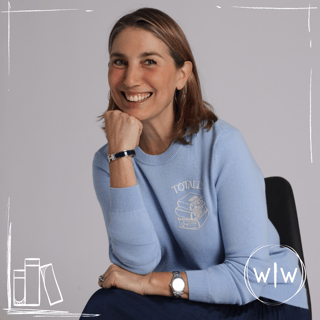
Speaker: Hello and welcome back to the Right and Wrong podcast. On today's episode, I am joined by a literary agent and founder of her own literary agency, Philippa Sitters. Hello. Hi, how are you?
Speaker: I'm very well, thanks. How are you? Yes. Good. Thank you. Busy week. Yes. Uh, busy, busy month, I would say probably, but, um, thank you so much for coming on and taking the time to, to chat with me.
Speaker: When I speak with agents, I'm always interested in finding out how you kind of got your way into publishing and then ultimately into becoming a literary agent. So I read, um,
Speaker: on your website that you, when you were university, you originally studied classical civilization and then ended up doing a master's in publishing. So was it around that time that you kind of thought to yourself, I think publishing is where I would like to work?
Speaker: Yes. So, I mean, ah kind of always had this thread of an idea that publishing would be the the industry for me because it's so versatile and just, you know, contains multitudes.
Speaker: So i did my thesis at on my undergrad, on the first three travel writers, Herodotus, Eucides and Xenophon, and compared their works. And then i was like, oh, you know what? Publishing master's. I can move to London. It will be really fun. And it was really fun. it gave me an overview of the industry. um And I knew that I didn't want to work in editorial because i um too chatty. And so it kind of showed me that there was more to it, loads more to it. and But mostly everyone on the course was like either marketing or editorial.
Speaker: um But I was keeping my eye out for something which would be bit more hands-on. um And so there was one day there was a lecture from a literary agent that ah and all the creative writers were going along to it. And I thought, you know what, I'll go along and see what the job's like. So I then harangued the agent afterwards for a business card and um managed to get an internship at her agency, Peters Fraser & Dunlop, which turned into a year-long internship, basically, where I was covering the assistant to the CEO ah here and there, which was very stressful because that is a big agency.
Speaker: And it was also kind of part of a talent agency. So there were all these famous people in and out all the time. And I loved the job, but I i couldn't work in an agency that was that big. It was so stressful. um ah don't even know. It was like the devil wears Prada, basically, you know, all hours of the day. Very, very intense. Yeah.
Speaker: emailing constantly. um And just generally, i just, I couldn't, I couldn't cope with it. So I was like, oh, I would love to work in a literary agency. I love the idea of supporting authors and meeting lots of interesting people, but I want to work somewhere that's a bit more manageable. And, um you know, I value my, my free time as well as my career. So i yeah, I wanted it to be sort of more realistic job.
Speaker: So um eventually, yeah I found a smaller agency to work in. and um stayed in a similar kind of place for the whole of my career until PSA began.
Speaker: Okay. Was that ah David Goodwin? David Goodwin, yeah. I was there for a decade, ah and I was the assistant to begin with, and then I was the assistant, and I was an agent, and then I was just an agent. Yeah. and ah And then I left and um thought I would start my own my own agency, because I ah pretty much had been doing...
Speaker: everything you need to run an agency at that, in that job. Um, you know, all the money stuff or the contracts or the office stuff. So I thought i you know, had a pretty good idea of, of what to, um, of how to, how to do everything. So yeah, it was, it's worked out pretty well.
Speaker: Okay. So you were sort of unusually actually, because when I, most agents, when I speak to them, they sort of say, yeah, i kind of tried out publishing and I had no idea what a literary agent was. And then I, and then I was like, wow, that's, that seems like a great job for me. And then kind of worked their way towards it. Whereas you had this lecture, yes saw what a literary agent was and they were like, I want to do that.
Speaker: Yes, exactly. Well, it's cause it's, you know, you've got lots of different projects on the go. You're not you're not hemmed in by having to work on a specific kind of book.
Speaker: And my reading is really versatile. Like I like reading pretty much. Well, I wouldn't say everything, but you know,
Speaker: a lot of different kinds of book, fiction, nonfiction, literary commercial, ah really serious, really funny, um gorgeously written little trashy. Sometimes, you know, it's everything. And that an agent gets to do that. Whereas if you're in a publisher, you are, you are sort of, um,
Speaker: you have a mission and, uh, you have to make sales and it's, it's different. Uh, and yeah, I basically spend my life finding really interesting people and getting them to write really brilliant, interesting books. And, um, yeah, I'm, I'm a bit, I'm a bit sad. I didn't, I've never worked in a publisher's. I did a few internships in a few publishers. I kind of get the, um, the vibe, but I remember, um, I remember, uh,
Speaker: talking to Caroline Michelle, who runs PFD in the in the ladies' toilets at one point. And she said, oh, you're our intern, are you? I'm like, yes, hello. and And she said, do you think you want to work in an agency? And I said, I'm not sure, but you've worked in both, haven't you? And she goes, yes, but agenting is so much more fun. And it always stuck with me. I'm like, well, if she if she thinks so, and she used to like run a big part of HarperCollins, then I'll stick with it.
Speaker: Yeah. Yeah. Good to get advice from someone who's done both. And I think a lot of, a lot, I get, I would say from most, most, my understanding is most agents, they're sort of the main route is similar to what you did. You know, you, you start, there's, there's very much this sort of apprenticeship model within literary agency. You start as the intern, the assistant, and then you slowly work your way up to becoming an agent. And then the other route, which is less common, but it's not uncommon is, um, quite a lot of editor editors, um,
Speaker: ah move over to agency. Yes, they do. And I'm always jealous of their sort of, you know, their knowledge of exactly how the, how the um the, you know, the cogs turn inside the public, inside the publisher that they've come from, for example, if they've worked across 10 different publishers, that's incredible. Yeah. um But from my perspective, you know, I've been there from the very beginning,
Speaker: And I've seen every single kind of book you can possibly imagine get published um or not. And yeah, you lose perspective on on the on the knowledge that you've absorbed over the years. But I've got far more than 10,000 hours to make an expert on it.
Speaker: as they say I mean, just because you can't recall that specific knowledge doesn't mean it's not that like it it just becomes second nature to you. it just becomes subconscious at a certain point. Yeah, it does. It does.
Speaker: So getting back onto you and your agency. So you started PSA, was it in 2024 you started PSA? Yes, it's almost exactly two years ago now.
Speaker: um I left DGA on third of September um and I started PSA on the 17th. And it was so completely ready to go at that point. Yeah, it was a very quick turnaround. it was amazing. I had so much support. um Yeah, like my my friend's husband put my website together and I designed my own logo.
Speaker: Okay. um And, you know, did everything i myself. ah Fortunately, practically all of my authors came with me from DGA. So I had a really wonderful list of authors that I was working with already.
Speaker: ah lots of projects that had been on the go. So yeah, um it was incredible, really. Kind of surreal, very surreal, actually, because, you know, you're suddenly completely in charge of every aspect of your life. Yeah. It's a little bit terrifying. Yeah, i was going to say, I mean, having especially having worked at, you know, agencies for for many years before that, it must be daunting to then be like, oh, I'm i'm doing this all by myself. I'm the kind of front of this.
Speaker: Yes. Yeah. And, uh, he's suddenly slightly paranoid about what there is on the internet. oh you know it's I mean, of course it's, I don't know. It's, ah when you grow up in, if you, you know, if you're a millennium child, you you spent your entire life on social media and on the internet. And I'm thinking, no, I'm pretty sure I'm fine, but you know, there is that element of, um,
Speaker: oh, my MySpace page is still up there somewhere. Yeah. Is this going to affect my reputation? Yeah, no, it's it's not. there's Yeah, it's all it's all been fine. But um yeah, the the entire company, fortunately, you know, I've got, I i think my authors really do, um they're standing up there for me um in their in all their glorious multitudes. They're all really wonderful, talented people and It's a privilege to work with them. So I kind of feel like they are the company really more than me. I'm just sort of their platform.
Speaker: um When you like change agency or or in this case, you know, you you leave your agency to start ah start a new one. um i think it's, you know, it's pretty common for most of the lists to come with you. There's various reasons why some people would rather stay with the previous agency or what have you, but When it comes to contracts, am I right in thinking that any contract that you made for for an author whilst you were at your previous agency, that stays with the previous agency?
Speaker: Yes. and Unless they decide to give them to you, but they yes, they do. ah And the, um you know, agents make varying degrees um of commission depending where they're working and what their agreement is with their with their boss. Um, and that, that has continued for me, you know, the contracts that I have in my previous job, I'm still, you know, earning a little bit from them, but, um, they are everything, everything I have to talk about with the publisher in regards to that contract, I have to then kind of go through the old agency, uh, because, you know, the contract is with them. So, ah but yeah, I mean, it's, it's different. It, it depends from agency to agency. What, what people decide, um, to, uh,
Speaker: to allow you to keep doing. Sometimes, you know, agencies have pretty, pretty serious, um, no compete clauses in your employment contracts that say you can't do any work with your authors that have been with us for six months or something. And I mean, fortunately I've never had to deal with that. Uh, but yeah, there's a lot, there's a lot of considerations when you're moving from agency to agency or setting up on your own that fortunately i didn't have to deal with. Like I say,
Speaker: but some agents, yeah, they they have to completely have a huge break or start again or just keep things on the back burner. And I find that really counterproductive.
Speaker: and Yeah. Yeah. Sort of stalling out, not just the agent, but obviously a lot of the authors who might be on on the list. Exactly. And when you hold when you hold job is to protect authors and keep them, you know, keep their careers going. That seems counterproductive to me. Yeah.
Speaker: Yeah, absolutely. Um, do you have a team at PSA or is it just you? It's just me, but I do have a co-agent, um, okay who handles my foreign rights and I work with various film and TV agents. I'm not going non-exclusive for film and TV in London and in America too.
Speaker: And I have an American co-agent I sometimes work with as well. So, yeah, I feel like I've got people who I talk to often about various different projects. And it's, you know, it's always fun. There's always the opportunity to go and approach another agent in another country and say, hello, you know, you know, you know, the lay of the land in your country much better than I do. Would you look into, would you be open to trying to sell this book that I've sold here in your country?
Speaker: okay And that's, yeah, really fun. Do you have any plans to grow out the agency a bit? um Not at the moment. I'm really enjoying...
Speaker: things as they are right now. It's kind of peaceful. But um not to say that I don't miss having people you know colleagues to check in with every day. yeah ah You know, I used to love, I love sitting alongside someone.
Speaker: um But at the moment, I'm running my business from my house. So it would be strange to have someone come and join me on the sofa. Sure. Yeah. But, you know, one day, you never say never, you know, it all depends on how it goes. So we'll have to see. But At the moment, I like keeping things neat and contained and yeah, just me. Okay.
Speaker: So not right now, but potentially in the future. Yeah. i Never say never. I counted 38 authors listed on your website. Is that a correct and up-to-date number?
Speaker: Uh, it may be plus or minus one at the moment, but yeah, it's about right. Yeah. Um, so let's talk about your list then, um, as an agent, what, um, what, what kinds of age ranges and genres is it that you represent it and that you're looking for?
Speaker: So I represent, i well, so there's always going to be an anomaly here and there, but I represent primarily adult fiction and nonfiction um for trade publishing, with the occasional exception with regards to sometimes I have an academic book that comes along, sell it to a university press. I have authors who have written children's books alongside their adult stuff that I've managed to find publishers for. I've had um adult novelists who've written poetry, for example, and also you know, sold that to. But primarily it's, um it's long form narrative nonfiction ah of all sorts, um but probably not really heavy, serious political stuff or ah ah self-help. um
Speaker: things like that. I find it really hard to remember what I don't represent because I never think about it. But things like that. And then novel-wise, I mean, um gosh where do you begin?
Speaker: ah yeah ah Where do you begin? um You know, book club. I'd like to find some kind of crime thrillery things at the moment. I don't have anything on my list like that. Uh, I'd like to represent more romance. Um, I've got fair amount of literary fiction on my list, which I love.
Speaker: Um, yeah, just, yeah, it's, I'm looking at my bookshelf and I'm feeling, I'm feeling a little intimidated by different options. Are you kind of open to everything in fiction then?
Speaker: Um, No, I don't do high fantasy. i don't do sort of heavy sci-fi. um I like it, but ah it's it's quite a different style and I find it quite hard to to gauge. um you know And there are small specialist agents out there who do a really good job at that, so i steer clear of it.
Speaker: um So we've got science fiction, fantasy, basically. Yeah, science fiction and fantasy. And I'd say... thrillers that focus on sort of wars and conspiracies and spies and things like that um yeah i guess it's kind of masculine thrillers sure i'm not really like other two yeah yeah other people you mentioned that there's anomalies i saw on your website that you you said that you know there are a few children's books and and this and that yes
Speaker: But you, on your website, it says you're not necessarily looking for those through query. That's authors that you've, you already represent doing those things. Indeed, yes. Yeah. Okay. Yeah, absolutely. You know, Ashley Hitson-Lovitz came along and said, I've written this um middle grade novel in verse. Would you like to try and find a publisher for it? And I was like, well, I'll never say no to a challenge. And we did, we sold it to Penguin and it was, it's doing really well. So yeah, go and buy Wild East everyone.
Speaker: Okay. Yeah. Amazing. Um, so it's, we're recording this right now in September, 2026. Are you currently open to submissions? I am. i am. and I have, uh, I, I'm of the attitude that you should always keep your eye out on submissions. Um, no matter how overwhelming it gets. Um, and I have this, I have, I'm kind of ashamed to say that I have not, I can't reply to people and their submissions at the moment.
Speaker: And I feel like that is a huge no-no in publishing, but I do receive five to 10 books a day. And if I were to reply to everyone, it would be, it's like another full-time job.
Speaker: Um, but I do try and make up for that by giving people a really quick turnaround window. So if you don't hear from me really quickly within a month, then it's a pass. Um, so yeah, I mean, ideally I would be getting back to everyone, but like I say, it's, um,
Speaker: It is really, really hard. And i I want everyone to know that I read everything and I have a great deal of respect for anyone who can write a book. um I've never done it myself. I'm an agent. I respect every...
Speaker: Everyone who sends me their work, um and it is a bit of a bugbear for me that I can't sleep at night because I'm thinking about how I wish I could reply to everyone. Yeah. it's um It's tough.
Speaker: it's yeah this I received three before 7 a.m. m this morning, you know.
Speaker: Yeah. I mean, it's especially when like at at the moment you are just a what a one person agency. So there's yeah it's a hundred percent on you and you've got, you know, 38 plus or minus one authors who you are, you know, that's your kind of first port of call is to make sure that everything's ticking along with them and working with them.
Speaker: Absolutely. And sometimes it can be such a busy week. I just, I don't even have a second to look at the submissions inbox. um And so, you know, you dedicate your Sunday to getting through things and concentrating. But again, you know, that's, that's an, that's a whole day of reading.
Speaker: yeah And yeah, it's, it's a weird job, but we, we do love it. Yes, it's so all encompassing, but that's sort of the appeal of it. But also is like, you know, obviously a strain that can be.
Speaker: Yeah. Just before we head to the Cozy Woodland cabin, um you mentioned that you are keen to to see some crime thrillers to add to your list. Are there any, yeah much more specifically, are there any like specific characters or stories or settings that you'd really like to see pop up in your inbox?
Speaker: That's a great question. um
Speaker: Kind of an impossible question too. um i you know, what um you will have heard this a hundred times from other agents, but we want a hook. We want something weird.
Speaker: We want something that is possibly a traditional story because, you know, there are only X number of ways he of telling a story, but something with a strange edge to it. Like, for example, i mean, this isn't crime thriller, but, um,
Speaker: And one of my authors, Connor Hutchinson, he wanted to write about working class Manchester. um And I absolutely was here for it, but there needed to be ah an edge to it um that would make it sort of a bit like, oh, weird, cool. And so his protagonist became the ah someone who runs a funeral home and would steal the jewelry off the of the corpses to fund his gambling addiction.
Speaker: And it was and it was actually it's actually really funny, by the way. it's ah it's It's quite so dark as I'm making out. um And so, yeah, so just that one thing, turning that character into having a strange, weird job. I think the same can be done in crime thrillers. You know, if you it's all about finding a protagonist who has that...
Speaker: a unique insight. Um, there are so many books written about people who work in publishing and i'm like, you don't need to, we, we need to have a fresh career, you know, we need to have someone involved in a really juicy story who yeah has the weirdest background, um, ever.
Speaker: And a really compelling voice. I really want more funny books. You know, i I just, I want to be entertained as I'm reading. I want there to be lots of witty, wittiness. um And I'm not seeing that at the moment. i'm seeing so many serious books come into my inbox. So many sort of something terrible has happened and we're going to spend the entire book trying to work out how to make things better. You know, and I, I, I'm kind of over that storyline. I'm afraid I need something, um, I need something lighter or at least sort of wild.
Speaker: Uh, yeah, that's really, that was a really roundabout way of answering your question. I'm sorry. No, it was good. i thought it was interesting. Um, okay. Yeah. So something maybe more along the lines of like how to murder your family or is it how to kill your family? Yeah.
Speaker: had to people of ah How to kill. Yeah. Sort of like dark humor. Yes, I do like a bit of dark humour, but i I don't think we need, it purely needs to be dark, you know. I think the darkest things are silly are the silliest things often. oh Yeah, yeah. Yeah, okay. No, I think there was there there was some great stuff in there that I think anyone listening can, can if they if that sort of struck a note with them and they think, oh, this is kind of what I'm writing, then maybe they can reach out to you. Great. um yeah that brings us to the point in the episode where I ask you Philippa if you were snowed in at a cozy woodland cabin in the middle of nowhere which book would you hope to have with you
Speaker: So I have thought about this. First of all, I was like, maybe I should have a how-to guide on survival. But um basically, my i I said for years that my favorite book was Middlesex by Geoffrey Eugenides.
Speaker: um And I read that when I was 24, which was a short while ago now. And i think I think I'd like to reread it. because I remember it being really pithy and really rich and indulgent and involve, you know, involving you kind of dive into it get completely lost in it because it's this huge, um, you know family epic saga across many years and different generations. And I think I loved it so much at the time, but I wonder, I kind of want to reread it to see if I have, um, changed my opinion. Cause I, it I haven't found anything since that I, I've, I'd be happy to declare as my favorite book.
Speaker: And i'm not really a i'm I'm not really a classics kind of person. um and So people often come to me and they say, oh, haven't you read X, Y, and z I'm like, I have to kind of keep my eye on contemporary stuff.
Speaker: um And so that is kind of one of the only sort of big epic books I am completely obsessed with. um And I love it. And I think that I could reread that and feel very distracted by it and not be worrying about the fact that was snowed in.
Speaker: Okay. No access to food. since Is there a part of you that is sort of slightly worried that you'll go back to this book that you read a long time ago that you loved and then you'll reread it and think, I don't know why I liked this.
Speaker: Yeah, definitely. yeah and And when your whole job is based on your opinion of writing, you're like, if was wrong then, i'm probably wrong now. How much have I been wrong about it?
Speaker: But that was a long time ago. You know, you would have changed lot since then, learned a lot, experienced a lot more. Yes. Yeah, absolutely. But I feel like the writing was so good. Yeah. um Maybe I am wrong.
Speaker: I feel like I put it alongside Donna Tartt, you know, Secret History, like that yeah that level of juicy writing. Okay. Yeah. Yeah. But maybe maybe it's worth rereading. um If you are going around saying it's your favorite book to people, just to double check. Yeah, exactly. Well, that's the thing, you know. and i I really hate saying what my favorite book is. I just, I don't like to be, you know, favoritism isn't cool in this industry. Yeah.
Speaker: Yeah. It's also a terrible, like people ask, you know, when, whenever you, I get asked that I'm always like, well, it depends on the week or the month that you ask me, because, you know, I may have just read something, which in that moment is my favorite thing, or it's made me think of something I read before that I was like, oh no, that was so good.
Speaker: You know? Yeah. changes Yeah, definitely. Oh yeah. Um, With the seasons, basically. Yes. Yeah. Yeah, yeah It's like, I don't even like that with food, though. People are what's your favorite food? I'm like, I don't know. Depends on what I feel like on that day. Exactly. like all the foods.
Speaker: Oh, the breakfast foods are the best, though. I do love a good breakfast. Yeah. So, uh, next up we are going to get into submissions and queries and all that fun stuff that will be available in the extended episode, which everyone listening can find at patreon.com forward slash right and wrong.
Speaker: Ridiculous for me book if I were to ever write anything down, but, um, such is the nature of of life. but yeah no i yeah but one day uh one day but not now yeah never say never never say never okay amazing um and that brings us to the to the end of the episode thank you so much philipa for coming on and chatting with me telling us all about your kind of journey through publishing everything you're up to and then going for that nice deep dive on on submissions it's been so interesting and fun chatting with you and you jamie thank you ever so much for having me
Speaker: And for anyone listening, if you want to keep up with what Philippa is doing, you can find her on Instagram at PSALiterary. Or for more information about her and everything she's doing with Literary Agency, go to the website philippasitters.co.uk.
Speaker: To support this podcast, like, follow and subscribe. Join the Patreon for ad-free extended episodes and check out my other podcast, The Chosen Ones and Other Tropes. Thanks again to Philippa and thanks to everyone listening. We will catch you on the next episode.