Transcript
Speaker: It's only the process. There's not this destination. The winning the World Championship wasn't the fun thing. that It was the 10 years I got to spend with brothers traveling around the world focused on a fun thing I loved.
Speaker: World Championship's a side effect of being that in love with it. I didn't have to convince myself to go train.
Speaker: This is the Home of Healthspan podcast, where we profile health and wellness role models, sharing their stories and the tools, practices, and routines they use to live a lively life.
Speaker: Matt Vinson, welcome to the Home of Healthspan podcast. Dude, what's up, man? It's really good to see you. It is great to see you again. we met up in Austin and you are back there. i am back in Atlanta right now.
Speaker: How's Atlanta? yeah it's It's good. It's good. I'd i'd rather be in Austin with you right now. but It's rainy and cold here, so I'm living in a van. It's a small square footage day for me. Okay.
Speaker: Well, before we get into all that, how how would you describe yourself? I'm a lively, unreasonable human being focused on trying to make the best of the life that I have left in front of Yeah. And I like the ah the use of unreasonable, right? It's that George Bernard Shaw quote of... It's a term that I've recently wanted to use a lot more of. um I think a lot of people followed a real reasonable path that was kind of sold to them as the way to go and safety and all that.
Speaker: Yeah. And whether you live and ah do that and have a bunch of questions you die with of what I could have or should have tried or if I would have played it bigger... I realized going to die at the end of both of them. So like, if most people following that path don't seem happy, I'm choosing the unreasonable one.
Speaker: Well, I think there's also something. So before we started recording, you were talking about Seeing more of what is possible, expanding the horizons. And, you know, there's that George Bernard Shaw said, the the reasonable man adapts himself to the world. The unreasonable man tries to adapt the world to himself.
Speaker: Therefore, all progress in the world depends on the unreasonable man. Right. And so if you really want to have an impact and you're in Austin, a place full of unreasonable people changing the world. Yes, it is. Yes, it is. Yeah.
Speaker: That's the way to go about it. Yeah, it's been really good, man. I think there's something to that. Hell, even allowing yourself to have the dream without limiting the idea of it and just being willing to take the first step toward it instead of getting too overwhelmed by what the big picture is. Because I think you can get to step 200 in your head before you start taking step one.
Speaker: And look, we've both been down the entrepreneurial path. And that's also what's fun is it's a bunch of people not starting the journey. It's a bunch of warriors who've been in the trenches figuring it all out for a number of years. And what you get from that is People waiting to take action, it's like they've got up to the edge of this minefield that's going to be change and they're trying to make all the preparations and get all the tools and do all this research.
Speaker: And then there's people like us who are unreasonable because we've been blown up before and don't know and no it's not that bad. And so we'll happily just walk into the minefield. And what happens is the other person eventually gets enough gall and prep and all this and goes in and gets blown up anyway.
Speaker: Right, right. Yeah. And then you realize it's not that bad and you make progress. Like it's just easier to get blown up quicker to iterate.
Speaker: Yeah, mean, it's the fastest way to learn, right? is to to do Especially if it's not dangerous to fail at that speed. If I can stomach the risk, that's also part of what the entrepreneur thing is, that you have to figure out how energetically to stomach that thing.
Speaker: all the time. And I mean, part of it is is, what you say, the experiencing it and realizing it's not that bad. But that first time before, you know, that as a swimmer, right, the worst thing in the world is before you jump in the water.
Speaker: Sure. The morning you got to practice, you're like, oh, well, I wonder, and like, you're in there for hour, it doesn't matter. But that first is just always, you're dreading that first step. I think that that covers just about any new experience. I mean, whether it's enthusiasm or anxiety, it's still this just high key focused attention on a moment and ah pre-competition or like pre-plant medicine or pre-adventure or, you know, pre-retreat kicking off. There's always this waiting for the fucking like, let's start because let's just get going. I'm into once we're in it.
Speaker: Yeah. Yeah. Every, everything you want is on the other side of that anxiety. it's Oh man, letting that eat you for years. i'd get why you would just go, I can't, it's too, I like, I can't figure it out.
Speaker: So you brought up competition, you brought up the the retreats. And so I would like to go back and touch on a topic of identity as a high, high performing competitive athlete, world champion more than once.
Speaker: in multiple disciplines, training, competing, and seeing yourself in one thing, right? Like this is something a lot of athletes struggle with. I know i struggled with when you were being an athlete.
Speaker: um But it it can carry over with parents once the kids, they're empty nesters. and can carry over you were entrepreneur and founder and you sell the company and that's gone, right? this This idea of identity, can you talk about your journey with that and kind of what you've learned there?
Speaker: Yeah, you start recognizing where you start putting on, I guess, that costume as part of who you are. You know, I'm aware in high school, I could feel it when I'm wearing the football jersey on Fridays before the game, right? That like part of my identity has been an athlete. I also got rewarded for that socially and...
Speaker: anything else. So, I mean, of course, yeah, man, go this way. I didn't identify with any of the other things. And so that one seemed like a good fit. You know, as that continues, you get out of athletics in high school and go to college and get to compete at that level. And that's kind of always stuck with you. You know, luckily when college track and field ended, it I definitely was a bit lost and didn't know what to train or anything to do, but I had stumbled into some other hobbies. I've always been kind of a curious guy.
Speaker: And so I have more identity attached to athlete than I do any of the actual sports. okay I've been really lucky that those things were always something I did, not who I was.
Speaker: I've gotten that way more lost in entrepreneurship than I have during athletics. Now, the identity that I really struggled with losing was no longer being an athlete.
Speaker: So this would have been after I got injured. So I compete from 2008 to in Highland Games. I win a couple world championships and take second place at a bunch of others.
Speaker: And so the end of the 2016 season, I finished second in the world. I'm trying to be... you know, smart athlete looking at longevity. And so I've kind of got a plan of like, I got a knee that's not going real great. so I'm going to get it fixed, be responsible. I'm going to take a year off to fully rehab this thing and come back out of the works and win another world championship in 2018.
Speaker: And the first knee surgery was, you know, it's an ACL that needed to get done. um Rehabbed it for four months, went in a checkup and it was gone. Like my body just so killed the cadaver tissue.
Speaker: So we scheduled another one pretty immediately. Did that one, went through another three or four months and the exact same thing. It's just gone. No injury, no slip, no fall, no pain, no anything.
Speaker: Everything else recovery-wise looks great. Legs moving. So we do again. Eventually through five of them. Tried cadaver, tried other stuff, tried Achilles. I just wasn't willing to go into my other knee to get parts.
Speaker: That one works. That seems dumb. Yeah. Yeah. And so over time, it just chewed things up to where and I wasn't ever going to get back to competing.
Speaker: And so going from being you know very proud of what I accomplished as an athlete, as a strength athlete, and now I travel with a cane and I can't go up and down stairs and I have to have a real debate with my wife whether or not we have to walk too fucking far.
Speaker: So that identity of feeling fragile was something that I've never had to battle with. Because so much of my confidence, so much of my understanding of discipline and how to push myself and where I burn off energy and maximize stress all came from this athletic thing that I was gifted with.
Speaker: And I don't know who I am without it. Or how to handle me.
Speaker: So losing that was really complicated. But it took a long time to go inside and look at what I loved from doing those things and how could I mimic that without necessarily having the sport.
Speaker: you know So am I truly in love with Highland Games and and is Highland Games the magic that I experience? Or maybe the spending four days outside doing a thing I like in the sun by myself would be equally as important for my brain.
Speaker: This is the thing I go back to a lot. ah there There was a big personal learning for me of, we talk a lot about passion, follow your passion, passion, passion. And then i find actually the process because passion is theoretical. It's temporary.
Speaker: Right. Whereas the purpose, the the process is what each day you're doing, right? Like our life is the sum of our days. So if you have this great passion, this purpose that you're going after, but you hate the process day to day, then you're kind of hating your life. You don't have a chance. Yeah.
Speaker: You distilled it down to understand, okay, like ah this was a thing that I was working towards, right? To be the best in the world, right? That was the thing around this. But what was my process to get there that was so enjoyable day after day after day? And this is what you're saying. Yeah, kind of giving it like a meta analysis of what the habits were.
Speaker: that like maybe we get that back online. So got back into cycling, a different passion, which, you know, doesn't hurt my body. I can train a bit. i need to lose weight anyway, because, well, if we ain't competing anymore, I don't need to walk around at 290 pounds.
Speaker: It's not to be a good move. um Especially if I'm not going be strong, this thing's going to turn into memory foam quick, man. This is not going to be a good look for me. And look, there was part of that, like, am I a world champion because I'm fucking good at a thing and I dedicated to it?
Speaker: Or did I go the easiest avenue because it's easy for me to get big and strong and I don't know how to change it once it's no longer valuable? I've seen a lot of athletes, they go kind of two ways to strength sports.
Speaker: They either get healthy and care about longevity or they're trapped in that identity and they can't ever let it go and they fucking die early. And I'm not interested in walking around trying to be an old ghost of me. I love nothing more than most people I meet now have no fucking clue I ever competed in the thing.
Speaker: I want it to be one of the least interesting things about me. Yeah. I mean, yeah. When when we met, I just got to know you. I had no idea, right? Like that that's not something you lead with. It's not, as you said, it's maybe a chapter, but it's... That's it. It's a thing I did.
Speaker: Right. It's a... What I learned is like your resume matters a lot to other people, but it shouldn't necessarily matter yourself. Like far more interesting is what what you're doing going forward. Well, I've started to really look at it, you know, because you did touch on this, right? Like this purpose, you know, and like not enjoying the process.
Speaker: I guess I've done enough things, man, that I realized it's only the process. There's not this destination. The winning the world championship wasn't the fun thing. that It was the 10 years I got to spend with brothers traveling around the world focused on a fun thing I loved.
Speaker: World championships, a side effect of being that in love with it.
Speaker: Because otherwise, why would anyone train that looking hard for something like this? Because I loved it. I didn't have to convince myself to go train.
Speaker: Yeah. And I know me well enough. Like, if I can find a thing that I lock in on like that, I'm unstoppable.
Speaker: But it has to be like that. Otherwise, I don't have this. I'm not gifted enough, man, for half energy to yield much of shit I've seen. Well, I mean, it's ah the surest path to mediocrity. and This is a conversation I have with my daughter. She's 10 and she was very, my I was on the national team. Her mom was on the national team for swimming. And so she was very naturally good swimming very well and she hated it.
Speaker: She did not enjoy it. She didn't have friends on the team. Her friends were doing other things. And said, well, don't you want me to swim because you and mommy swam? I said, no, absolutely not. or that That was my life. I got to do what you need to choose for you because it doesn't matter how good you start.
Speaker: You're never going to be great if you don't love it. The reason Cristiano Ronaldo and Lionel Messi, because you couldn't take a ball from them. They would live with it. That's all they did. They become the best because that's it's not work for them.
Speaker: And they're super gifted. It takes both. like like To be the GOAT, it requires both of those. I've seen hard work yield phenomenal results with miserable people.
Speaker: People do it all the time. I've seen giant building businesses built by people who fucking hate everything they're doing. They just grind it out. Can grind it out. Right on, I guess. Good work. um I don't know why you would do that, but it sounds fine.
Speaker: um And I've seen people do it with love. You can get both. But you're cheating yourself on the other path, thinking this destination that you're chasing is finally going to give you the relief.
Speaker: I mean, how many times have we done this? How many times have we, once I get here, I can be this or justify why I'm an asshole for the last six months or whatever it is Fuck, man, we're lying to ourselves over and over and over again.
Speaker: It's only the journey that's building it. Like that's where the actual skill acquisition happens, right? So like I've lost about a hundred pounds since I was at my largest.
Speaker: And the only thing I cared about in that process is that I didn't go backwards. I don't want to give it back. Yeah. And so I don't want this up and down flow. I'm okay with long, steady progress because I need to learn to reef myself as a different person.
Speaker: If I just do this based on getting the scale to a number, if it's destination based, I can't hold on to it because I didn't fucking learn anything.
Speaker: And so you lose it. because you weren't in the journey. You were only focused on this destination, which was finally gonna give you this relief and make you lovable whatever it would be. Good enough.
Speaker: I think there's scientific underpinning to this too. Just how the the dopamine cycle works, right? Of the higher, the high that you get, the the lower, the low after, and the longer the trough.
Speaker: And so person who's doing something for the destination, for the number on the scale, for, Hey, I want to run a marathon. So like I crossed that line, I get this versus the person.
Speaker: I really love running each morning. just love running the next day. And then it's more fun to run with large groups of people. They'll win. Yeah. Yeah. well And be more likely afterwards to keep doing it.
Speaker: Yeah. And let me define when they'll enjoy doing the thing more than you. Like my metric is no longer I'm done competing. Yeah.
Speaker: The only person I'm interested in beating is my yesterday. Yeah. You and I are not adversaries, man. If we're at an event, if we're running, if we're doing a workout together,
Speaker: Me, I don't care. I'm going to do my best because that's my standard. Yeah. And then the cards will fucking fall where they do, but I'm done using comparison to judge against where I'm at.
Speaker: What do you say? Because there are a lot of people who say that, okay, but you know i this is what got me to this level of success or that's how you get to success. And my question back a little bit, and I want your take on it, is you've you've gotten through all this.
Speaker: you've You've gotten all the trophies, the medal, and you say you're miserable and it didn't, like you still have the same hole. And so when you look back, you say, well, but I got the success. so like How are you defining success? If success isn't feeling whole, because I look at...
Speaker: I bring up all the time, The Last Dance with Michael Jordan. and he just seems so miserable. you Well, yeah, it's also, he's kind of notorious for being miserable, but also there aren't many greatest of all time who aren't.
Speaker: Like, it is part of that hole in him that drives that fucking human being to chase the thing. That, like, Michael Jordan's the same type of energy in him that, like, Daniel Plainview does from There Will Be Blood.
Speaker: yeah I've got a competition in me. yeah I don't want anyone else to win.
Speaker: It is a zero-sum game, period. Operating from that can yield giant amounts of progress. And I think it can yield tons of accolades and it can do lots of accomplishments.
Speaker: But it doesn't do anything for much of the heart or soul. And so if you don't serve it like we're unbalanced, man, then so you'll get there. And so what I look at the difference of that is, is you can only use that to kind of get to good.
Speaker: But if you want great, the fulfilled, the connected, the life, the happiness, and all the fucking rewards from the things that you've sacrificed and built for, At some point, the focus has to shift from acquiring more as the answer and really connecting back to what makes you stoked.
Speaker: Why do you do this? Why are you in love with it? What was the point? Was the point that you were going to build financial freedom for your family and all you do is lock yourself in a room 80 hours a week?
Speaker: What are we doing with when I think one time when I was at the in the sonnet at Eric's house, um Josh was talking to you and kind of finding out what you did right with that Not Dead Yet. and you're like, you know, I kind of help founders that are go go, go, go, and don't really know how to step back and look at that. You know, kind of like your partner, and kind of referring to me. So can you talk a little bit about the work you do with Not Dead Yet?
Speaker: So I'm a mindset high performance you know for mindset for high performers. And ah what I love about high performers and working with them is I don't need to talk to you about consistency. like i don't I don't want to spend a bunch of time coaching someone on trying to convince them that consistency instead of intensity is the answer to changing your life.
Speaker: Like you already fucking get it. Like you're a guy that already knows I've set my compass on I'm going that way. The problems between here and there are casualties of my war.
Speaker: But they will be defeated. Like, I fucking know that energy, and that's who I want to fuck with. That's who I love. Because I and understand this feeling, this drive of building this giant, giant like, high-performance optimized engine to get the fucking most out of you, to squeeze it out of the marrow.
Speaker: But if you build that big ass engine with no brakes, we're going to crash it into the wall over and over and over again. And then we have this rebuild period and this crash where we shame and guilt ourselves and we get shitty and we lose purpose and we lose sight of why we do it.
Speaker: And from an athlete perspective, that's injury. That's when I train so fucking hard in the red that I'm pushing because I can't be patient. And then I get hurt.
Speaker: And so then I waste three weeks or six weeks being injured. And I'm further back when I started and I'm compromised.
Speaker: I have a little bit more doubt.
Speaker: But if you train smart as an athlete, you don't train like that. I build in deloads every four weeks into my training cycle. Not because I'm tired and injured. I don't wait for tired and injured to be the reason I slow down.
Speaker: I slow down those weeks so I can recalibrate, look at what I just did. While I'm still excited, do slightly less, not shit on it and run away from it and be distractionary. Don't do a thing that damages it as a relaxation.
Speaker: Take care of me so that I can solve problems better, so that I can get out of this panic tunnel vision. and get a chance to look back at the whole picture of what we've accomplished so far and be proud of myself for a second and take a second to breathe so that I'm excited to turn back into it.
Speaker: We do this as athletes with deload. i have a last week where I do active recovery. I get massage. I do this so that I recalibrate to take the next training session cycle. So why wouldn't I do this for me spiritually, mentally?
Speaker: So for me on a daily practice, my morning is now.
Speaker: My training was always built to support the mission, which was be the best I could at Highland Games, right? My training is not the thing I care about.
Speaker: My training takes care of the me so that I do the thing well. So what does my training need to look like now to benefit my biggest goal, which is grow my business and grow my life?
Speaker: which is keep me healthy, keep me fit so that I can handle So I work on capacity and things like that. So do more cardio at this point in my life. I still move because my skeleton's important. I need to have muscle. It also burns off energy.
Speaker: So I'm training to support that more than I'm worried about my training being some other derivative I'm trying to chase that's in conflict with my work.
Speaker: Most corporate wellness programs overwhelm employees with too much, or they offer too little to be useful. Alively gets it right. We start with each employee's data and goals, then serve one clear, personalized action at a time.
Speaker: No noise, just real behavioral change. The outcome? A healthier, happier workforce. A measurable impact for your business. Visit Alively.com to see personalized wellness in action.
Speaker: the The mental and psychological deload. So in the physical world, I get it, right? Like, you okay, I'm going to do less weight or I'm going to do fewer sessions or these different kinds. so For the life side, yeah, what what is that?
Speaker: Yeah. Look, I think it varies for everyone determine what's that thing that refills your cup, whether that's solitude, being able to go out into nature, whether that's time by yourself. But if you're such a high-performance guy, my guess is being still sucks.
Speaker: And so barely happens. Yeah. You know, so with that said, you know, why can I basically be still all day facing my computer and not by bothered by it for 10 hours?
Speaker: I do have a treadmill desk, so I'm not even yeah sure. But even then, if I just asked you to sit still with your eyes closed for 10 minutes, you feel like your skin's being peeled off. Because we don't have any brakes.
Speaker: and We got the engine just pegged to red, but we don't know how to pull it back down to idle because we don't practice it. yeah It's just, we're bad at it. We haven't asked the system to do it in a long time to consciously say, slow down.
Speaker: And be really intentional with that. So that's breath work. That's journaling. That's meditation. That's the gratitude practice I use with my mala. That's time and community away from my phone. That's the time in the evening where my phone stays on the counter and I sit with my wife on the couch and smoke a joint and watch a movie.
Speaker: And maybe make out and have some sex. Because what the fuck else am I working all day for? Yeah. It's these times where I can really...
Speaker: slow down, down-regulate, whether that's sauna, cold plunge, any of these other modalities, they all work. But to intentionally do it so that I get back to the floodlight view of my life, instead of just getting stuck on the spotlight where it can only see problems, that's what it's for.
Speaker: It's a great tool. yeah But being able to use the floodlight allows me to get a peripheral vision to see how fucking great things already are. that we're already in the life we were dreaming about.
Speaker: That even the fact that we're going down the path means we're already that person. There isn't this destination that's going to give us permission. We're practicing becoming them now. And this is where every day on a microdose, I do breathe for a little bit and I do move for a little bit and I do slow down for a little bit and I take time and intention to ground myself and remind myself why I'm so in love with this.
Speaker: What it's brought me.
Speaker: why it's worth dying for.
Speaker: That pause to why really seems important because I think there are people, especially kind of the people that might listen to this and and do this and that I operate with that you have it stacked, right? You're doing all the things. So, hey, sauna's good, right? So you say, sit quiet. Well, I can go do it if I'm in the sauna and I have my breath work that I'm doing. but if you're doing it to check a box, it's not the same. And that's, that's what was just hitting me. Right. Like, cause I can go through the, like I have my journaling and you go through each thing. Yeah. But if your journaling is only related to your job.
Speaker: Right. Right. It's, it's these ticking boxes. It's activities that without that groundedness of, wow, you know, before I jump into the day, you know, Michael turn out, when he came on, he talks about each morning before he gets out of bed, the first thing he does is just smile.
Speaker: It's just like, let me get that mindset. And beyond that smile, that just, Mine is delayed. It's after coffee. Okay. But you talked about your your mala and the gratitude practice. How how many beads you you you were saying?
Speaker: it's It's 108. and think that's pretty standard for a mala. like I'm not much on religion. i like a totem. I like a thing I can physically touch. i like that it's with me. And over the time, that practice has gone from You knowll me writing a few things in my journal for gratitude every day and like having enough self-awareness of when I do that practice on a regular basis, do I feel better or worse?
Speaker: Oh, I feel better. it's It takes a couple minutes. Am I interested in being better? Then it seems like a non-negotiable to me. And so as that practice develops, you know, I'm picking up prompts and starting there and letting it kind of develop. And then over years, it does become a bit more intuitive where I'm writing what I think.
Speaker: And do I journal every single day? no Do I know when I have a problem in my head that journaling is the tool to solve? Yes. And do I have enough fluency with that practice that I can use it? Yeah.
Speaker: So as it builds over time, it has switched to being a mala where now I sit in the morning and now I do it three or four times a day. It's kind of a recalibration. If I've got minutes and I really need to hit the brakes,
Speaker: I just sit, I take five deep breaths, and I go around the mala saying thank you to various things. It sounds like...
Speaker: you Thank you universe for all the hard days that got me here. Thanks for the ability to change. Thanks for continuing on my path with love. Thank you for taking care of myself, the most important asset to solve my problems.
Speaker: Thank you for showing up every day. Thank you for being proud of ourselves. Thank you for solving all the problems that have gotten us here. Thank you for stepping through anxiety every time. Thank you for not listening to the imposter syndrome. Thank you for loving yourself the way your wife loves you.
Speaker: Thank you for treating everyone with love. Thank you for not recognizing scarcity in your life. Thank you for focusing on abundance. Thank you for my skin and the way it heals without my help. Thank you for my lungs that breathe air. Thank you for the heart in my chest that beats without me needing to do anything about it.
Speaker: Thank you for this incredible body that I was so lucky to be dropped into. Thank you for being alive right now. Thank you for having two parents that loved me. Thank you for having an older brother that was an incredible inspiration. Thank you for all the incredible people that I've been surrounded by in my life. Thank you for all the love I've felt. Thank you for understanding what unconditional love for myself is.
Speaker: Thank you for having time to breathe. Thank you for coffee. Thank you for countertops. Thank you for Mercedes Benz building fucking awesome vans. Like I didn't have to invent any of those things.
Speaker: Like, and so now that I'm so used to it, like there is some Pavlovian response to me touching it. Yeah. It just takes you, yeah, I mean, that is the, because we are three-dimensional beings.
Speaker: And like now, like, I fucking don it every day. You know what I mean? Like, I'm like i'm fucking engulfed in it. And over time, like, it's really become this really valuable tool that I have. And I i look at it now as this friend.
Speaker: And what a beautiful example of it holding space. Because it's not like it prevents me from getting worked up. I do. yeah And it just sits there fucking quiet.
Speaker: And it lets me vent. And it always reminds me how great everything already was. Like I'm so far in the black, man.
Speaker: Like I'm chasing out of my life just out of pure curiosity of what I'm capable of if I'll get out of my way. So you used the word tools a few different times.
Speaker: And i want to dig on that in particular, because there's, there are things that we have in our life that can become crutches rather than tools, or we fail to realize it's a tool that's right in certain circumstances or for certain situations and not others.
Speaker: And back to the, you know, if you if you're a hammer, you think everything's nail and you're trying think a nail and it's maladaptive. And so is, I'm thinking through even personally, right? Like the journaling or the sauna and all these different things of, hey, if they just come in, this is just every single day you do the same thing. Does does it lose its meaning of versus here's where this is really useful and helpful for.
Speaker: A lot of that's going to come down to user error. Because I mean, you could use the sauna and upregulate if you want to. i don't know why, you know what i mean? But like a lot of that's user error.
Speaker: You know what's the intention behind it? The intention is a lot more important than the actual practice, I believe. You know, I mean, I think there's a number of different things that happen for me using the sauna, right? Like, I trust the reason I can do four days of zone two cardio a week is look, I believe the science behind that decreases all life mortality by 50%.
Speaker: My most valuable thing to me is the time I haven't yet lived. I would like to, don't know, stack the cards the best in my favor to have as much rad time to do that as possible.
Speaker: And so that's my intention behind cardio. You know, i also noticed that if I have more endurance, I can work harder. I can work longer on my dreams, which is all I want to do all day anyway.
Speaker: So that's another reason I do It all comes down to intention. Like what's the intention of the breath? Am I checking a box so that I'm perceived as a person who does these things? Or am I fluent enough in the practice to actually get what it's for?
Speaker: And sauna, breath work, cold plunge, journaling, gratitude, prayer, any of them, they're all doing the same thing.
Speaker: They're all different tools for you to get present and get out of your head.
Speaker: Whether that's in the cold plunge because you recalibrate from that racing mind to realizing how long three minutes is again. And that singular focus pulls back. But that's the point. If I get all the cool Huberman side effects, sick.
Speaker: Those happen whether or not I have intention. And so i have to also override a thought and you get a lot of practice overriding the thought of I don't want to right now.
Speaker: It's not dangerous getting the cold plunge. It just sucks.
Speaker: Do I have to care? Can I choose? How lucky I am to get in it. How lucky I am to have the tools. Remember when I dreamed about it.
Speaker: Why do we have to lose sight of that? Because it becomes routine. That's on us. I choose what I pay attention to.
Speaker: Using the tools as a crutch, I agree. But also like that to me is the same type of shit as spiritual bypassing that you see from the spiritual crowd. It's like, oh, I can't do that because it doesn't feel aligned. Like, what do you mean?
Speaker: Like works work, man. Like there's building your dreams is hard. And if you're going to use that as the reason you don't show up, that's equally as stupid to me as just saying you can't.
Speaker: Like I don't let my feelings dictate the actions I take anymore.
Speaker: My feelings lie to me all the time. Yeah. I don't know why I think or feel the way I do sometimes, but I do know I have the ability to change how I feel with some of the practices and tools I have.
Speaker: And so if I ever feel a way I don't want to feel, why am I choosing to stay that way if I have a button I can technically go push to change it? by sitting in the sauna, doing breath, doing gratitude.
Speaker: But I also do those frequent enough that I'm fluent enough to use them when I need them. You brought up the the Huberman benefits for cold plunge, for example.
Speaker: And i have a kind of question here. So there's There's something we we have a podcast, right? So you're always bringing new things in. He has a podcast. You're you're bringing new things in New products, companies, tools, all these are constantly coming in.
Speaker: And there's one level of, oh, this is fun and exciting. I try new things, some things out. And there could be another level of, this is exhausting. Like it never ends. And how do you navigate that world? Because it does eventually end.
Speaker: What all do you track?
Speaker: Yeah. I mean, you're asking me personally. yeah So, yeah, I mean, I got so I wake up, I check what my deep sleep and REM were for the night before. That's kind of a big hate and HIV and resting heart rate.
Speaker: Now of respiratory rate ah as well. So what do you do with any of that? I see what is improving and not. So for example, I didn't know anything about respiratory rate.
Speaker: And so my respiratory rate was like up over 17. And then listening to Andy Galpin, he was like, you know, if we see people over 12, we think it's a real problem. We're like, wait, what? This is a real problem. And so then I did some research and found that as a swimmer, because we're constantly breathing in these chemicals, chlorine and all this, I had actually had a lot of lung damage.
Speaker: Okay. And it's common for swimmers. And so I got, ah he was on Tim Ferriss, the boss, like air breather muscle for the lungs. And I've gotten it down like last night, it was 13 point something.
Speaker: So I looked at him like, Oh, this is like, like dangerous for my health that I have lungs like this. I need to go work those lungs and get those better. And so I try to look at, or the HRV, right? I'm doing a prolon fast right now. My HRV went up 40%. So i can see, oh, wow, you know, these things that I do, body does recover in a totally different way or feel. Does all of this serve the greater mission?
Speaker: To give me more energy, I think so. Yeah. I mean, to to be here longer for my family. yeah yeah i At some point, um look, and this is me personally with data and i got into all this. I tracked everything for a long time. i mean, that was part of losing a lot of weight and changing my life is kind of going into all this.
Speaker: But I also found like that gamification thing I had. like I was trying to fucking win again. Yeah. Yeah. andnna And I don't think you can win wellness. It's a dumb thing to try to compete in.
Speaker: Because like the reason I'm trying to do all this restorative work is so I can purposely burn it down over and over and over again. And so... Whether it was looking at data analytics with my business with someone and getting really into the weeds. And then like after we'd go through all of it and I'd get an actionable step and I'd say, oh, so we need more revenue.
Speaker: No shit. Thanks. Like, oh, you're tired, sleep more. No shit. yeah Like we've operated for fucking millennia.
Speaker: Based on intuition and the sun.
Speaker: I trust my innate ability to do what it does if I provide its ability to rest and relax and not just live on the gas. Yeah. I don't know that i need those markers to tell me I'm doing well.
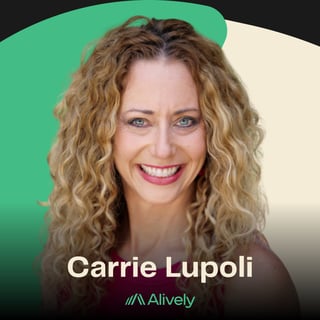
Speaker: Because, I mean, I'm going to fucking die one day, man. Yeah, I guess the one area i might push back on there is we we had a recent guest on the podcast, Carrie Lepoli, was talking about a lot of people have lost those signals from their body, right? that Whether it's we just kind of ground through or we've overridden them because we were told by society, this is good or this is bad. And so being able to see the objective, right? Like the number one thing for people that have a wearable,
Speaker: and And look, I want to empower people to get their information about themselves, but I've also seen them get owned by it. And that's what I hate. That's what I hate. And that's really what I mean. If you're using the data intentionally and it's benefiting you, keeping you on your overall kind of universal purpose, and it's not distracting you, it's not causing self-doubt, you're not questioning self-worth, you don't worry about your, like, if it's only net positive, I'm all in.
Speaker: Yeah. Yeah. That's a good distinction. But I've seen people get owned by it. That's back to user error. That's how I feel about people getting stressed about social media.
Speaker: That's fucking user error.
Speaker: Or AI or any of this. or or Or alcohol or like anything. yeah it's Whatever it is. yes It's a user error. Yeah. and and I'm not demonizing anything.
Speaker: Right. And then understanding your own limits, right? If it's user error and you say, hey, as a user, I know I need to put these in because if I have a mobile, I'll over obsess about it and it's going to get in my way. so i can't do Yeah, yeah. Look, I'm a lunatic.
Speaker: So like I've realized if most cycling adventures I go on, like I want my computer because I like the data at the end. But I have to like put it in my bag. Because otherwise I'm just doing this constant stupid math of what pace I'm moving at and how much longer that means and blah, blah, blah. And I'm doing it wrong. It's not like I'm good at it.
Speaker: But it's definitely stealing my ability to be present in the moment and just appreciate how cool it is to be on a bike out in nature riding. And that's why I wanted to go anyway. So like, why am I still treating this with this world champion retard brain?
Speaker: that has to focus in so fucking like this, we're not back there anymore. We have to change and be able to shift focus to something else.
Speaker: and Why can't I let cycling feel more like inner child work of I'm going to ride my bike with my friends and the side effect is my health. Yeah.
Speaker: Instead of I'm chasing my health, the side effect is I have to go ride my bike with my friends.
Speaker: Yeah. i think we could all do with revisiting that. Why? Cause there's certain things that the Y may have started right in the first place and it shifts over time. And yeah, like in business, like we do things that made sense at one point and then you get down there and you're like, wait, why, why do we spend time generating this report each time? Oh, because we need to see X, Y, and Z. Like, but we don't care about X, Y, and Z anymore. anymore Like, okay, so we should probably stop this, you know, but you lose sight of that.
Speaker: But that's the expansion and contraction that's supposed to happen with growth.
Speaker: You're supposed to spread out and try things and then cut back. Yeah. Yeah. I mean, if you look at it as all one big, great experiment, right? Like it's testing, learning, trying new things. that My entire life experience is one big experiment of trying, learning, doing new things.
Speaker: Like I'm more interested in now what is the body of work Matt Vincent comes up with in the course of his existence? Yeah. Not the thing, this one thing. I do lots of things.
Speaker: Yeah. And we're going to continue. You know, so like when we reach that like ultimate burnout, and I know we've both been there, various businesses, and I'm sure things in the past were like, I just have lost the purpose.
Speaker: I'm just grinding because of fallacy of sunk cost.
Speaker: That's the, it's the worst. It's being stuck in that like perpetual nightmare of doing this thing and you forget why we even started. And so that typically happens once I've gotten past enough of the goals that I said I would be happy with when I crossed and I wasn't.
Speaker: That we forget why, what's the point of this? You know, so I can also recognize I've gotten to destinations and not been fulfilled.
Speaker: but I didn't hate the process of getting there. I was really happy in the process. It's only once I knew the destination was an illusion that I lost interest in the process.
Speaker: So for men, especially like who do you love most? My daughter. Would you crawl through hundreds of yards of broken glass with a smile on your face? Yeah. Would you do it for a nickel?
Speaker: I'd do it for free. Right. Right. Right. Would you crawl through the glass? Oh, no, no. Would I? No, no, no, no, no. Right. Right. right Yeah. The glass didn't change. Yeah. The pain you experienced didn't change.
Speaker: Your connection to the purpose did.
Speaker: And that's all on you. That's an internal decision. Yeah. I get to set that. And if I choose to make the nickel worth the thing, I'll crawl through the glass. you know, that to me is that reflection of that nihilistic quote, right? Like once we have that very clear moment where the whole thing feels like a sham that I told if I got this, I'd be happy.
Speaker: That's the nihilistic idea of God is dead and we killed him. Like that purpose you were serving that you were willing to suffer for forever and be do it with a smile because of the reward of heaven.
Speaker: that someone's going to grant you.
Speaker: You realized it was an illusion.
Speaker: It was the belief that mattered, not the destination.
Speaker: And so that's what Nietzsche's talking about with that God is dead and we killed him, which means we don't need this divine given purpose anymore. It's the call to power within that we all have to place purpose on what we deem important.
Speaker: And whether that is God or whatever else you want to decide it is, ultimately you have to decide.
Speaker: That's a great, great place to close. Ultimately, we do have to decide each for ourselves. It's up to you. Yeah. And that's whether you live a life that you're completely in love with and proud of.
Speaker: And when the lights start to go out, you don't beg for more time and just say thank you. Or you die with a bunch of regret. Both are your choice. For those listening that want to learn more, to be able to work with you, ah the whole not dead yet movement, like where can they find you? What's what's the best place?
Speaker: Yeah, best bet. Instagram is Matthew P. Vincent is my personal page. Not dead yet underscore life is my coaching. um And if someone wants to reach out directly, they can. 337-370-4764 is my phone number.
Speaker: like i want to help Like, I know what it's like, man. i Like, there's so many high-powered, successful, capable fucking men that are dying in this self-doubt because they'll never feel like enough.
Speaker: And if we can get that to switch over, we get them to quit grinding for the sake of grinding to be this provider and start doing it out of love for those people that care about you that you get to fucking take care of.
Speaker: That since you're the one who has to solve all the problems, start treating yourself like the most valuable asset instead of the one that gets taken care of last. And I know that you'll convince yourself that that's selfish.
Speaker: But if those people unconditionally love you, don't they want to see you take care of you? Then don't they get a better version of you? Don't they get a more grounded, more present, more down-regulated, less triggered, less aggravated version of you?
Speaker: Wouldn't that provide you more love to go back into the fire with and chase that big dream? Getting men to reconnect back to that purpose after they lost it is my favorite thing.
Speaker: That's amazing work. And with all of this, we just scratched the surface. You have a book coming out. Yeah, yeah. I've got a book coming out. So I did a big coffee table book last year, and I've translated that now into a paperback.
Speaker: So it's 52 chapters with ideas that I worked through with journaling and kind of concepts that helped me redirect some perception in my life. Ultimately, I believe we get to choose our perception and that kind of creates our reality.
Speaker: Everything can be shit or everything can be great. I've felt both within the same hour. So ultimately it's up to me. And so the book's set up this way now and it has these chapters and it has journal prompts and then it has some pages to be able to dive in and journal and get the notes out.
Speaker: And so there's one for every week. And so I'm really excited to be able to get that out for people. So you could be able to find that over um on my Instagram. Okay. What's the best place? Not dead yet.
Speaker: a Handbook for the living. Handbook for the living. Beautiful. Matt, it is always a pleasure to catch up. Brother, I thank you so much, man. It's been a ah real treat, man. You know, one of the reasons I'm so in love with this town is because you just can't help but run into people like you doing great stuff.
Speaker: i'm I'm at a point in my life where I want to surround myself with other people that I don't have to convince chasing your dreams is a good idea. I just want to be in the energy of people that do.
Speaker: You know, it's like when I got into fitness, I just wanted to surround myself with people that already were fluent in that language that I didn't have to convince why taking care of yourself was a smart idea or pushing yourself as an athlete.
Speaker: like I want to be around other people that love it the way I do. Yeah. Because then we all learn from each other. it's amplifying. say Yes. sir Of course your environment amplifies you. why Wouldn't you be intentional about You don't think it affected who you became in the first, i don't know, 20 years of your life that you didn't pick?
Speaker: So what if you got really intentional with it for 10 years? Yeah. I mean, literally, there's a former data scientist from Google had a book. And one of the things was what what influences do parents have on the kids?
Speaker: And on big data, the only thing, the only thing, we think every decision, where I'm going to send you to school, the only thing was where they lived and the people they put them around. That was the only thing, that the only decision parents proactively made that had a difference on the trajectory of the kids.
Speaker: Here's another one. Look, as a man who's not having kids, um worked with lots of men who do, and high performers and various people, and one of the big separators I can see is people who either grew up with unconditional love or did not.
Speaker: So if you want to do the best thing you can for your kids, you make sure that's it. They know it. That lets them fail. And if you can't fail, you won't be able to accomplish anything.
Speaker: If your failure is attached to your self-worth, you'll lose. Always play it too safe.
Speaker: Yeah. Well, thank you so much, man. Thank you, Thank you all this. Yeah. Appreciate it, brother. Thank you for joining us on today's episode of the Home of Healthspan podcast.
Speaker: And remember, you can always find the products, practices, and routines mentioned by today's guests, as well as many other Healthspan role models on Alively.com. Enjoy a lively day.