Transcript
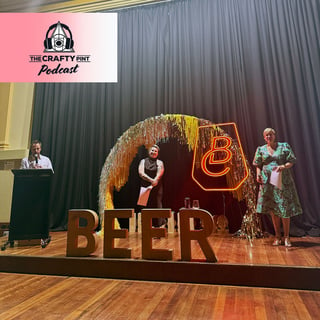
Speaker: James, we're at the end of Grainstock. How fun's it been? It's been pretty cool. um You know, I think we we got up here yesterday, started at Chris and Sam's farm once again, and went out for a lovely welcome event last night. few beers, a couple of wines, there with were some limoncello spritz going down, some delicious food as well. got Got ourselves straight off to bed like the professionals we are afterwards, so we were Fresh and easy today because we've had, I would say, a very full on day. I think this is, think we've got eight podcast interviews down. You've introduced about 4,000 guests on stages. I've still got to go and introduce some more people later on today. So it's been pretty full on. How about yourself? Yeah, great. As far as I'm aware, I'm yet to get a last name wrong either or a first name for that matter. so I've been getting your surname wrong for more than 10 years up until recently. it was Since I met your family at the wedding, I'm like, oh they all say it wrong. I'm just going to have to get rid of the program. here we've got a bit of a bit of a sort of one-off jam-packed episode for people today. And like we did at Grainstock last year, we've got a series of shorter interviews rather than sort of one long-form one. um Coming up first we have the founder of Grainstock and the co-founder of Voyager himself, Stu Whitecross. He has a bit of a chat with us about Grainstock this year, last year, what's going what he's seeing going on in the world of brewing and distilling.
Speaker: And because it's a distilling conversation of course you're joined by our sibling editor or but of the publication, The Full Measure. Yeah Luke McCarthy joins us for that chat as well um and it's interesting to see what's going on. you know Obviously, it's pretty tricky in both industry at the minute, but Stu's still finding plenty of positives and actually says that sort of what's happened the last couple of years, him and Brad have gone.
Speaker: We've been chasing growth for more than a decade now. Do we need to keep chasing growth? Can we you know settle where we are and just find different ways to sort of grow as a business? So that's pretty cool. And then after stew, we have um that malt girl who you were chatting to yesterday, and who's over from the States.
Speaker: Yeah, Kate Grudewski. It's awesome to have her on. So she's from America, but she works across both the American and the Canadian craft industry. Brewing industry, Nepo baby, she called herself, I think. Yeah, self-confessed. She even said that we were emailing to range of time and she confessed that over email. I was like, Oh, maybe I'll keep that quieter. It's good when you know who's an EpiBabian who's not. Um, yeah, she's, it was great to have her on younger member of the beer industry, just starting a business, but has so many great insights about Malt and, um, how she works with growers and suppliers and brewers and obviously they're not easy times in america either almost sound harder to a degree but um i thought she was really upfront and honest about sort of where the industry's at and the day-to-day challenges but also you know possible silver linings as well yeah you'd hope so And then the last of our, I guess, non-Lalamond chats for the podcast this week is with Mark and Matt from Bradley Brewhouse on the south coast of New South Wales. I had a chat with those guys. I've not been to visit, but as I say, and I'll chat with them when they sent their first sort of mixed sample box over to me. Not only did love the branding with the Black Cockatoo, the beers are all cracking. They're making excellent beers. One of the beers was a finalist at the...
Speaker: the beer championships this week. um So just just getting a bit of insight on on their business is a you know lovely origin story for those guys. And you know also how how they're so tapping into tourism and they don' how they're not really sort of holding back on the styles they make despite being in a tiny town you know in a regional part of New South Wales.
Speaker: And then finally, I'm going to catch up quickly with Richard Chamberlain from Lallemand. A lot of people in the Australian beer industry will know Richard. He's been, was brewing for a long time before he was with Lallemand. And, you know, as a support person and technical technical sales advisor at Lallemand, he's always, he's all over the place. He loves getting at breweries, catching up with people and supporting events with this. So that's right at the end. Cheers.
Speaker: Cheers. Today's episode was recorded at Grainstock 2026 in the Lallemand podcast studio. When it comes to brewing yeast, bacteria and process aids, Lallemand have been at the forefront of development and innovation for decades.
Speaker: At Lallemand, we brew with you and we're delighted to be sharing more industry insights today with their support. And to our first guest on the show, the host with the most, Stu Whitecross from Voyager and the man behind Grainstock, who also arranged for this lovely signage for us here here at the in the podcast studio. How are you going, Stu? I'm going good. A little tired, but... You don't look it, but maybe you always look tired. ah Possibly. possibly possibly no what yeah' Welcome to Whitten, guys. Welcome back. Welcome back. and i love it love coming up here.
Speaker: yeah um So tell us about Grainstock 2026 then, i mean or even your reflections on the first one, because we wouldn't have had you on air since the first one. Yeah, the first one was pretty surreal. I guess it was kind of, let's, know, open the doors and and see what happens and we'll we'll kind of overwhelm. We've got such a great facility here to do something like this, but we couldn't do it without the the support of the entire community. And we we asked for help and Jesus, they deliver. um And after that first event, it was kind of like if it was successful, maybe we might turn this into every second year. I don't think I've got enough energy in myself to do it every every year. And then I'm kind of not sure what happened. We kind of blinked and all of a sudden where we're lined up to do it again. And here we are. Well, there was just an incredible buzz afterwards yeah and we chatted about it fairly soon I'm like well it might be worth doing doing a second year in a row but um but yeah it's the same format though you you know sort of it is same point and I guess that was kind of part of the reason for doing it again this year one one was just kind of if we are going to do it every second year it would makes sense to kind of do it this year and have next year off so we're not clashing with the CIBD the other brewing distilling distilling conference that that's out there and
Speaker: Yeah, I guess the other part was that there was a lot of work doing last year and and probably some of the negative feedback we got, or really the only negative feedback was that there was too much stuff on. We never recorded anything. yeah And at any one time there was five other things happening. So we kind of thought if we really just ran with a very similar program, people could kind of, you those that missed out could jump on board and and we get the same presenters back. And um there's been quite a fit fair few changes in terms of presenters and and whatever else. But the model's kind of been very, very similar, which has meant a hell lot less work for me. and this year i've been able to probably enjoy it a little bit more than ah than i did last year as well so mate that would be a huge positive for everyone listening because anyone who knows anything about stew knows that we don't know how you juggle these 40 000 things you seem to have going on your head at any one time um so that will be a ah net positive for everyone and talk to us about i guess the positives that you see in terms of what producers are getting out of this uh anyone who attends what can they expect when they come along to grainstowel I generally think, and I said at at Grainstock last year that really what I wanted to organize was was a piss up. like it was it was just It was getting everyone together. that' because That's pretty much what you told me yeah at the bar at Molly Rose when you first told me about it probably 18 months ago. Yeah, because you know like our industry is just so good. It's made up of just legends that when we get together, we just we all get along. we and And you learn so much just from having a beer or whiskey and talking. So it was more just um bringing people together. And I thought, you kind of can't advertise it like that. So maybe we just try and...
Speaker: Piss up the river in every name instead. Maybe we just try and have conference around grain. It's the hardest way to get your mates to come and join you for a drink. Well, one which was it just wasn't very professional. So I thought if we'd kind of have a conference around around grain and we'd start a harvest time and get people out of the out of the cities and and and brewers and distillers and have them come out here in the fields and and hang out together. um And with the help of of you know Joe Whites and Barrett Burson that jumped on board to sponsor buses out of the capital cities, and um it just kind of all unfolded from there. But really the motivation was to bring us all together because it is a tough time out there. And um yeah know to get out of the daily grind and realise that, yep,
Speaker: Times are tough where we're all struggling our own businesses, but geez, we work with some good people and we get to have a beer at 10am on a Friday morning and that's work at a great conference. 10 to 10, we were drinking whiskey. And you talk about being tough times. How are things going for Voyager? You know you you are supplying mostly businesses that ah you're looking to sort of you know but become more efficient, cut costs, whatever. So how's it been for you the last couple of years? Yeah, we look, I'm not going to lie, it's but it's been tough, like the amount of um yeah administrations and and um liquidations and those kind of things. That was something we never really thought about in the in the heyday. We were just through making molt get it. We really struggled to keep up. So we were just basically make it, get it out, make it, get it out. And then when the first one or two... happen we're like hang on we're in in some trouble here if a few more of these happen and um so we've had to kind of work pretty hard over the last yeah probably the last 18 months to to tighten up um a lot lot of that risk that we we kind of held um but we we also made the the decision probably fortuitously
Speaker: probably about two two years ago we've been going for maybe 11 12 13 years now and it's just been this constant growth and expansion and we kind of got the stage like where where does it end like where do we stop growing where do we stop you know we actually kind of we we really love what we've created and kind of getting the stage where we we need to kind of celebrate and get out and be a part of it and and celebrate you know these new releases and beers and whiskeys that are coming out with with you smoked, native smoke malt that we've done. And and so we kind of two years ago just drew a line in the sand and thought, you know I think that's that's it for us. Yeah, yeah. And well, there's other ways we can we can grow in terms of we're doing some consultancy work in in some other other countries and as well at the moment. But to kind of just not have to worry about putting sales reps on and still like I still deal directly with all all our customers and I love that. That's what I genuinely
Speaker: can put in either Stu at Voyager or sales at Voyager. It is. It's both. You can actually put any. You can put info. Brad's going to be redirected to you as well. Brad's accounts and Brad and everything else is basically, yeah. So, yeah. So, I guess that was...
Speaker: ah yeah Yeah, a bit of luck, but we'd also seen what was kind of happening in the States and and knew that was probably some tougher times ahead. But um we've always, there's been a lot of opportunities we've we've had to say no to just because of our um yeah our limited capacity. And some of those we've been able to pick up now, some export into a couple of places. But um yeah, know where' where yeah're we're doing okay. You've mentioned the international side of things a couple of times. I know that when I first came here many years ago, i sat up at the whiskey bar, which we're about to sort of ah jump into, um you know, you and me having a beer and talking about this incredible thing that you've created here. um
Speaker: i know there's a lot of international interest in in what you're doing because it is so unique. Globally, it's very significant and different. um Can we maybe talk to, because I know some of the people, you know, are listening and are really fascinated by everything you've achieved with Witten, with Voyager. How do we sort of entice them to maybe come here, get more involved and interested in what you're doing? um um i think I think it's starting to happen. like we're We've got had some international guests that starting in, particularly out of the the craft molsters now. and and yeah I guess it's just it's taken a bit of time, one, because it's taken a while for some of these these whiskeys, you know, whether it's backwards or or the Archie Rose stuff to kind of get out there and then then kind of find their place yeah in that international Well, now you've got buddy Chris Hemsworth is going to be advocating for you internationally now. So that'd be handy. Yeah, I'll have to team up for Grainstock. Oh, yeah, have to call him up and see how he's going. Yeah, yeah, yeah. Did he one of the villains or does he get the party house? Oh, he might be in the party house. We'll see what happens there. um
Speaker: But, yeah, look, it's certainly starting starting to happen. I guess we we we haven't. ever know needed to go and promote ourselves you know we we're really passionate about local grain and and i kind of have always said that the expectation should be that in you know maybe it's 20 years time that you go to a local distillery a local brewery and then you they're using locally grown grain so i guess it's never really been on our radar to be sending malt across to international markets we do supply a couple and we've got some really relationships with with some of those that we're dealing direct and we've got really good relationship with those. But I'd love, you know, to supply local distilleries and have them create something that's uniquely Australian and then have that international market, which is starting to get out there now. And we're certainly, it's starting happen. We're certainly getting some interest from overseas distilleries, breweries that are wanting to come and visit us here at Whitten when they're in Australia. That's great. And in terms of like the products that brewers and distillers that you're working with are after, is that changing over time? You know, are there trends that you're seeing, more specialty, less specialty? Yeah. I think there's no shying away from the fact that it is a tough time for brewers and distillers the moment. It's discount, mate. One of those. Yeah, yeah, yeah. Well, think probably we're seeing most is less of the heirloom, those more expensive kind of malts at the moment. or maybe just using less of them, which again is fully understandable because they're sometimes four times the price of normal malt.
Speaker: But no other other than that, I think we're we're still... um ah Slowing up a little bit as is enabled to kind of get back into the the lab and, you the trial plant and start messing around. We've got ah ah ah a phenomenal a product i'm really excited about, a malted rice that's grown locally. It's a a Japanese variety of rice. It's got a low gelatinisation temp, so it means that brewers glu-f freee and distillers, yeah, and and they can they can add it directly to their... that One of the issues with rice is that you've got to essentially cook it to get the yeah the starch from it, to get it to gelatinise. And this you don't have to. Once it's malted, you can throw it straight in to normal mash and you rice uh when there's water around is grown locally here as well so um with the the rice lagers and and and that kind of trend at the moment we're really positive about you know really excited i guess about where where that's gonna gonna go and and what that might lead to
Speaker: Yeah, great. And the other thing is, you know, you're probably starting to see some of the whiskey projects that you've helped to create and birth coming to fruition now. Some of that stuff's now in bottle. That must have been pretty exciting because, you know, so much of it was, it seemed theoretical when I remember first coming here and it just it blew my mind, the the parameters and the possibilities that you can move towards on the whiskey front. But now we're actually seeing some of that in bottle, which we're going to be tasting here at Grainstock today. So that must be pretty Yeah, it is. And I guess, you know, it's been the last probably, you know, three, four, maybe, you know, even longer than that, where some of these whiskeys have been released. But what's really cool now is there's multiple distilleries that are releasing them, and you can start to see the same traits in that grain from different... So you know that it's not not a particular distillery um spirit profile. its Yeah. that it's basically you can tell that it is grain because we're starting to kind of marry pay that's the same grain we're getting this same kind of character in that that we got from from the backwards w rye that was from the same paddock and those kind of things so that's yeah really exciting now that there's there's multiple still there's releasing products that have got you that same grain from the same farmer and you can have those side by side it's been really yeah really interesting it's always good to come up here and get excited by what's happening you know
Speaker: Hanging out with people, seeing people as well, just to hear yeah the and innovation that's constantly going on. and I guess people talking to each other, hearing what each other are doing, hopefully you encouraging people to have more fresh ideas as well. Yeah, again, and that that just goes back to what I was saying. and that it was um What people take away from Grainstock isn't the presentations that you've seen. There's some great presentations, don't get me wrong, but it's the just the networking. It's the opportunity. for for brewers and stills to disconnect from there. And there's not a lot of mobile service out here. So it's not like, you know, I've been to to conferences in the city and brewers are dragged away to go and, you know,
Speaker: change a valve or fix a keg or whatever, they've they've got to disconnect. They're here for for three days. And they just immerse themselves and they you know, some of the discussions that you hear going on it just just know, and that that knowledge sharing and the, you know, the the tips and how we're solving problems is that's where the rule, you know, the rule um value and of grain stock is. Yeah, that's awesome. no Well, thanks so much. I'll let you get away and enjoy the rest of the the event and the festival tomorrow. and We'll take a short break and we'll kind of come back with a fresh guest after the break. So cheers, Stu. Thanks, Stu.
Speaker: It's day three, your ferment's stalled, the gravity won't budge and the next batch is already booked into that tank. Who do you call? With Lalamond Brewing, you call the people who've been there. Behind every Lal Brew yeast strain is a technical team that knows fermentation inside out.
Speaker: They'll help you troubleshoot brewing issues, pick the right strain for the style you're chasing and keep your process consistent as you scale. ales, lagers, sours, and all the wonderful questions that arise in between.
Speaker: When it comes to finding the answers, Lallamond is your helping hand in the brewery. Lallamond Brewing. We brew with you. Get in touch at lallamondbrewing.com.
Speaker: Hey, thanks for joining us on the podcast. Thank you for having me. Our pleasure. You come all the way from America to be here at Grain Stock, so you wouldn't miss it. ah No, I'm super excited. First visit to Australia?
Speaker: No, this is, I believe now, my fourth time. Okay. So... First time in the Riverina, I'd imagine, though. It is, yes. no Not too many Australians make it out here. No, I've always kind of stayed on the coastline a little bit. um Last year, at the same time, actually, i was over in WA in Perth okay at the GIWA event. so Always tend to be in Australia in October now. It's a theme. yeah this It's not not the worst time. day yeah It really is. And it always actually falls on like around my birthday, too. So I've spent a couple of birthdays now in Australia. i yeah Happy birthday for whenever it is or was.
Speaker: Today, actually. Well, depends. Is it my Aussie birthday or is it my American birthday? Oh, which is... that you take yeah so Yeah. I know. Like, it's the everlasting birthday. I love it. And Kate, tell us about that malt girl. Who is she? Okay. The malt girl. Yeah. It's... a funny name and I still kind of chuckle when I say it but the malt girl so basically my background I went to school to be a vet I'm spoiler not a vet I ended up majoring in animal science but with a chemistry and business minor and after graduating college I started managing a k craft beer bar and kind of that was in Georgia okay
Speaker: And it led me into the industry, which is ironic because as some know, I am a, I say a Nepo beer baby. ah My dad worked for Miller Course for over 10 years and is still in the brewing industry in some capacity while he is on the packaging side of things. So ironically, now I'm...
Speaker: like my dad, um but I'm on the raw material side of things. I started working for him in 2021 at RMI Analytics. It's a company that does market insights for Molten Barley globally. So I've been there for the last four years and it's been amazing being part of such a resilient supply chain industry and just seeing all that goes into making a pint of beer. Yeah.
Speaker: And yeah, so the Malt Girl came about because I started working for a craft maltster called Two Track out of North Dakota. And I would go into breweries and conferences and try explaining who I am and what I do. And kind came about, people who just look at me like, oh, you're the Malt Girl. And I was like, know what?
Speaker: I'm going to brand myself actually with that. And just recently, a couple weeks ago, I actually ran into the brewer who started calling me that. And he's like, think You owe me. Yeah, he's like, think. you owe me some royalties i noticed you've llc'd yourself with um that malt girl i was like correction when you first called me that you said that blonde so i didn't go that far with the company oh you mean there's other malt girls yeah i guess there is yeah there's a whole series i've heard some hot girls i haven't heard them Girl, yeah, hops and malt. But yeah, so i do a lot in the industry. I think I was greedy when I left. I realized how privileged I've been with the contacts I've made in the industry. And I want to be involved and not necessarily brand myself with one company.
Speaker: And since then I broker barley, which I know you wanna kinda get more into yeah what the hell is brokering barley. yeah And I also do business development consultancy, specifically in the craft malt. So right now I focus on marketing and sales, trying to sell malt, trying to buy barley. so that's kinda my slogan is, you know I'm a barley seeker, malt peddler, and beer drinker, try doing it all. so yeah i guess first question you have i know yeah what yeah what is brokering barley what is it yeah in the u.s the u.s is very unique in barley because we contract 100 of it we don't have a feed market like you guys have in australia and elsewhere in the world it's not a commodity it's not traded
Speaker: And so maltsters and brewers, like such as Molson Coors and ABI, will go out on contract barley, actually right about now, October, November, with growers. And so they lock in on a price and say, hey, i need you to grow this amount of acreage at this price.
Speaker: And they do, but then we're always kind of short numbered, things happen. And so a barley broker essentially connects a maltster or end buyer with the grower.
Speaker: So it's looks kind of like, I'm a dealer, I guess. kind of And and is is that, you know, if there's an issue with one crop, you know, in terms of quality or output or, you know, there's hit by a storm or something like that, is a case of making sure that, you know, levels are where they need to be? Yeah. So yeah, making sure, like because malt houses have to run at certain capacities to be successful and all that. and Brewers as well. ah When I say brewers, I'm talking about Molson Coors and ABI and Constellation. They need to make sure that they're constantly having that in-stream of malt.
Speaker: So I'm, yeah, the one that kind of connects everyone. It's great for me because super social person. So it's just like I get to call people all day long and talk to them and ask them if they have barley and kind of go from there. So. And you say you've been in involved for four years. How's the you know the scene been the last four or years? Because you know I guess you're dealing with people who are selling into the brewing and distilling industry. it's like you know What's what's happening happening in the States at the minute?
Speaker: oh I think it's global, everyone. it's It's a hard industry. And I will admit, especially the last four years and with the recent changes I've had this year, I have been encouraged to leave the industry, which I absolutely will not leave the industry. I'm here to stay, and it might have to do with the beer and whiskey that's involved. And the people producing it. And the people that produce it um and all the levels of it.
Speaker: But... Yeah, it's been it's been very hard. It's a resilience chain, like I was saying earlier. It's such an industry that's built on innovation, collaboration, and all these things. um Kind just looking at the US market, though, it's declining. So beer sales in the US are at a 5.7% decline. Craft beer, in some light of that, is at a 4% decline. So it's not as bad. ah we Slightly more resilient. yeah yeah Slightly more resilient. Still not great. Yeah, yeah.
Speaker: So there is some changes that are occurring there. And right now, like I said, I try focusing on that collaboration and innovation. We have to figure out how we can make beer count, why we can make beer sell more than another product. yeah There's a lot of factors that are contributing back in the day and how I kind of highlight it in my presentation is that craft beer used to fight against craft beer for a spot. Now craft beer fights against contributing factors. There's just the health side. There's other spirits. There's NAs. There's gambling. There's THC drinks in the United States. And I mentioned earlier that GLP won. So like we go V... um
Speaker: i other brands of it um 11 american adults are on a glp1 that makes people not eat as much as it helps with weight loss yeah but as far as when it factors into alcohol consumption it makes the consumer ill yeah if they're on it and they consume alcohol it's just another i guess contributing factor to you know people not drinking or not drinking yeah as much yet yeah yeah on top of you know everything else yeah inflation having no money yeah no money like that's such a thing you know like people it's nowadays you go in and i know here in australia that you guys have a really high tax on alcohol and it is expensive to get a pint of beer
Speaker: And now we're kind getting that craft beer. It's really hard to be affordable. it's And I mean, obviously you're the one who's sort of talking price and things like that. I imagine that's a really hard position when craft brewers, distillers, right? They just won they just want barley malt at the cheapest price possible. Yes.
Speaker: it Definitely. And it's really hard for me because I appreciate where I'm at in the messy middle is what I say. But understand everyone's like factors into The grower wants yield. They want the most money. like They're the ones who are really then the getting shafted the most out of this. And they're the ones that tomorrow they say,
Speaker: If they say fuck you, I'm out of job. Everyone's out of a job in this room. Like it is unfortunate. And they're the ones that we really do need to make sure that we keep them happy.
Speaker: But from there, you know, the mulster needs to make sure that they're buying their barley at the best price so they can provide the best price malt to the brewer. And it's just the same supply chain. You know, again, the brewer needs decently priced malt so they can provide ah fair priced pint to the consumer.
Speaker: It's all connected. yeah We all want the same thing. We all want to make money, but we also all need to make a living. um And what's sort of happening to try and try and improve things, to try and find a better way for it? Or is it is it is so hamstrung just by the wider situation? Or are are there steps are are there levers that people are pulling to try and you know improve the situation?
Speaker: I think making the pint matter more you know justifying, hey, it costs us much because we pay fair wages to our growers or we buy sustainable malt. There's reasons that you can justify the cost of it. And I think that is a move towards- Yes, we're getting that story yeah across to consumers. If you choose this and maybe you're paying a dollar more or whatever, but you're- the impact down the line like buying your fair trade exactly exactly like that yeah in the US s we have something called like region so that's kind of becoming a thing so you know yeah it's a storytelling you need to explain to the consumer why is where it's at the price at yeah I think
Speaker: A lot of people, I mean, people don't know what malt is or what barley is a lot of times, or let alone beer. I think, you know, they don't even realize that beer isn't made in a factory. It's not a Coca-Cola. It doesn't have chemicals and everything or ingredients that you don't know how to pronounce, right? A beer is for ingredients.
Speaker: It's water, it's malt, it's yeast, and it's hops. Notice I said hops last. It comes from the ground. yeah It comes from the ground and it comes from a farmer. There is a farmer behind the pint. yeah And it's so forgotten. And so I think if we can educate our consumers on that, they would maybe understand, hey, no, that $8 pint, it makes sense because it goes down the line. It feeds back down to all these people and goes back to the ground, someone that I know. And if you're talking $8 pints, that would be about $15 over here. So it's pretty much on par. you know Yeah, I would say so. And everyone kind of thinks, oh, beer's so much cheaper in the States. But you know i won I used to go out to the UK and go, wow, beer's still much cheaper over here. But it's actually been growing. ah The price has been going up there faster than over here. And it sounds like the States has had quite a spike as well. it has, especially in the craft beer. And for me, I really want to advocate craft beer being in the industry that I'm in.
Speaker: But at the same time, I'm now 27 and I'm also price conscious some days and I'm like, it's really hard to justify buying an $8 pint. You're having to look yourself in the mirror and go, tell yourself the story before you go out. Exactly. I had to remind myself and like God forbid, if you're labeled the malt girl and you don't have a malt product in front of you. Yeah. well What's offer in macro aisle? Oh, God, you get some shit. Yeah. Disclaimer, I eat malt meal almost every morning. So I do get my malt supply in. Yeah. I put malt in my cookies, everything I can, right? Someone's got to buy it. Someone has to buy it, yeah. And it is hard. You know, you have that price value, ABV. I try explain to people.
Speaker: If you buy a Jack and Coke for $8, like US dollars, or you can buy that beer, but it's like a 40% ABV versus 5% ABV. Mm-hmm. I mean, I i like numbers in that sense, and I can explain, see one's a lot better value in a sense than the other. yeah It's hard because I do want to support craft industry, and yeah it also directly influences my paycheck. In terms of craft malting, Voyager, where we are now, um in the Lalamonde-sponsored podcast studio, Cheers Lalamonde, um you know, Stu and Brad and Voyager have been really sort of driving the this of the craft malting scene in in Australia. um you know
Speaker: the They're by far the biggest, but they're trying to help some others come along. There's the new guys Loam in WA that are more focused on the distilling industry, but it's happening. What's the scene like in the States? Obviously, there's a lot more craft maltings there. Stu's been over and visited a whole bunch of them to get advice, then sends his malt over and beats them all with his malt and gets his golds. But how's it going? Admiral just closed, right? At the start of the month. super unfortunate that Admiral closed because they were such a well-known brand and they really have been pioneers for craft, malt, and applicants. How long has that part of the industry been thing? Because it's it's so fresh here, but I'm assuming it's been around a bit longer in States. little bit longer, but similar to how Voyager itself even started. There was this influx in 2010 where the craft brewers started taking off and we realized, hey, we need
Speaker: more malt to support these craft brewers and if k craft beer is a thing, why not k craft malt as well? And so there's a lot of maltsters that open during that time.
Speaker: And the issue again is it's the pricing of it. It is expensive. It is very, very expensive to open up a malt house. I'll tell you that right now. um And the pricing of it, we aren't the cheapest. and Yeah, if you if you want better malt made with different grains, you're gonna pay more. Yeah, you have to pay a premium and it's more than just...
Speaker: You have to explain why you're paying more. You're not paying more for a grain. You're not paying more for an ingredient. You're paying more because you're paying for a service. You're paying so I can call my maltster up and I say, I'm not hitting efficiencies. Why? And I can go out and so check their mill directly and help my brewers.
Speaker: the storytelling that they can share and say, hey, i I know my grower. I've gone out to the barley fields. I've actually helped combine. I can take you there yeah yeah and show you the field where your is growing. Exactly that. So they're paying for that service as well as, you know, it's hard with the major maltsters to adapt to constantly changing trends that you find in the craft beer industry. Yeah. So right now I've been noticing in the US, and i think it's funny, is these very, very low colored ales and ultra hopped ales they're calling them. But they want like a 1.2 SRM. They want the lowest colored malt that they can get. Well, the major maltster isn't capable of just adjusting, adding a new lime because of a trend that's going to last forever.
Speaker: 10 months maybe but craft molsters and that's where they come and play that they can adapt to these trends and provide a product to assist with these brewers i think even the size stew is now if someone comes to me i need 25 kilos yeah of red gum smoked corn it'll be like be with you in a couple of weeks yeah you know and it's like he's happy to do that as as long as i guess as this say selling a bunch of veloria well you know the bigger batch stuff as well um yeah and it It's an intriguing side of the industry that you know if people don't even know what beer is made of, like you know how few people actually know about you know what's going on at that level as well. yeah
Speaker: and um Have you had any beers or whiskies you've loved since you landed? I've had quite a few beers. I've been trying to behave because I did present this morning. I got called out for my... Once you're done here, you know. i Well, I mean, there's a beer in front of me. It's an ungodly sight to not sing you with a beer in my hand. So it's been a finally I can relax and have some. Yeah, i had the opportunity to go over to Young Henry's the day I landed.
Speaker: And hung out with Jesse and Roy. And that was a amazing. That's a good welcome. Oh, it was a good welcome. Yeah. They helped me kind of push to the jet lag. Maybe after a couple beers. And it was interesting in going there because we had a really good discussion about NAs and what they're seeing in the industry here. I do also love some good whiskey from Australia. Yeah.
Speaker: There's plenty of it. There is plenty of it, especially over in WA. had the opportunity and had a chance to talk to Jimmy from Whippersnapper before. Oh, yeah? I'm sure you would say Whippersnapper. Yeah, I do love Whippersnapper. And i um I work in the aviation industry as well. So his logo just like speaks to me. um If you see it it's a plane with like some whiskey barrels on it.
Speaker: But yeah, no, they are always great. They're rainbow corn. I mean, I'm not going call it bourbon because I can't, but it is really is really a great taste. That's said by an American as well, that it's as good as any bourbon, right? Right. i Well, I think it's funny because I like go over back home and everyone wants to know about American bourbon and such. I'm like, guys, the Australian whiskey it is so good. And we only launched the full measure you know a few weeks ago now, and it's been a a real fast learning experience for us, especially around Luke, who's the editor and main writer for the site. But hearing some of the distillers and stuff we've spoken to, Australian spirits across the board are winning so many global major trophies. Like Sullivan's Cove is the most successful whiskey producer anywhere in the history of whiskey awards ever. And there's these gin and other – it's quite phenomenal that this little country on the you know edge of the – well, big country but not many people – on the edge of the planet is is doing so well and seems to have this desire to take on and try and make any style going. you know Yeah, well, you guys have a really good –
Speaker: One up on this, and I'm a big believer, you know, good whiskey, good beer, it starts with good grain. And you guys have fantastic grain here. We heard from Matt, you know, there's the terroir of the soil that provides a good grain, and you guys are doing a phenomenal job really highlighting what you guys have in Australia from the grain to the glass, and love it. She's welcome back, yeah I reckon. I will gladly become honorary Aussie by any means. Ha, ha, ha, ha. Kate, thanks for joining us. Yeah, no, I appreciate the opportunity to be here, guys. Enjoy the rest of your time here, yeah. i gladly will. Cheers. Thank you.
Speaker: Do you work in a brewery? If so, we've got some exciting news for you. The fifth ingredient has just launched its revolutionary Beer 30 Insights platform, and it's the first brewery software that doesn't just collect your data, it helps you use it.
Speaker: So whether you want to know something as broad as, why are my yields decreasing, or something as specific as, what is my most profitable packaging format in sports bars in Western Melbourne, we've got you covered.
Speaker: And best of all, it's free for Beer 30 users. Because running a brewery isn't easy, and Beer 30 Insights is here to save you time, money, and headaches so you can get back to focusing on the beer and the people that make your business so special.
Speaker: Want to learn more? Visit Beer30Insights.com to see it in action and to sign up for early access today.
Speaker: Hello and welcome back to this special grain stock edition of the Crafty Pint Podcast. I'm here with Mark and Matt from Browley Brew House on the South Coast. um I've heard it pronounced Browley and various other things, but definitely Browley. I got right there. all Excellent. I was well well informed but by the first writer who did a piece on you guys a while ago. um But yeah, so do want to tell people, i I guess you don't know Browley, where actually you are?
Speaker: Yeah, Braille is New South Wales South Coast, about half an hour 20 minutes south of Batemans Bay. um So a little seaside village. The population is pretty tiny, isn't it? Yeah, it's very small. In saying that, I think a lot of Canberras call us their eastern suburb Canberians. So yeah, where we get a lot of influx of tourist ah visitors, weekends, school holidays, that sort of thing. um But...
Speaker: Yeah, south coast, on the coast, near the beach. It's a pretty beautiful part of the world, that whole stretch all the way down there. We spent a bit of time further south, end of the January school holidays. yeah um And whenever I've driven anywhere up that coast, you can pretty much turn anywhere to the beach and there's beautiful spot. Yeah, south coast of New South Wales is best part of the country. um And but it what are your roles within the business? Because there's a few families, is that right? Or a few couples launched a business a few years ago? Yeah, so... um I'm one of the co-founders, so myself and my wife um and a friend, Rod and Simone Quinton. We started the business about five years ago. yeah um And yeah then we've got um Joanne, who's our CEO and her husband, Matt, um who works for the business as well. He's he's one of our um wholesale managers boy a wholesale manager. and we got um matt stitt who's our head brewer yeah um who was saying last year you were the foundation brewer at um st andrew's brewing did you go straight from there to browleigh yeah i did yeah i've been at browleigh for four years yeah it's been great yeah cool and um and ah i guess the origin story is pretty cool as well it was it just like it it's yeah i guess go back to start hat how did how and why did you decide to start the business
Speaker: Look, I think the bushfires hit twenty nineteen twenty Yeah. um And ah look, we realised there was there's a lot of people on our front decks, yeah especially on my business partner Rod's deck after the fires. Yeah.
Speaker: and not a lot of people around. So we sort of realized it wasn't really a place for us to congregate. um And we were playing tennis one night, sitting around having a beer afterwards. And we thought, um I think there was a group of 20 of us. And we said, well, we should should start a brewery.
Speaker: And unfortunately, well, fortunately, Rotto and I were the only ones who um in that conversation can't say no once we come up with an idea. So um we ran with it, um secured the land where we where we where we set up and built the the building infrastructure and um continue to organically grow that that building. um And um yeah, but that's that's in a snapshot. That's the... And how how did you plan to bring people in given the population, just a few hundred in Browley and, you know, there's other towns around, but, you know, you're still, you know, it's still a drive away. It's not... People people from other towns, I'm going to walk down to your place for a night out, for example. No, that's right. And when we opened, that was the feedback everybody was giving us. This is never going to work. It's never going to work. It's too small and too small a spot. Um, we knew that the demand was there. Um, the two major towns made closer to us were, um, not activated well. Um, so we, we spent a lot of time looking at mate, you know, what's going to bring people in, um,
Speaker: And, you know, obviously for us, it started off as a great concept, a good idea gathering place, you know, and um, like all the Australian males back then it was around starting a brewery. Sounds like a great idea. Um, but really it was around, um,
Speaker: how we create an experience for our customers. Um, and we've really, we've really pushed that since the beginning. Um, we've really tried not to sell the product. We've tried to sell the experience and the experience is Browley. It is the the suburb that we live in. Um, and what we have to offer, ah in an, in our natural environment around us. Um, and we try and bring that into our venue as much as we can. It's interesting interesting you use that line there. We had Mazan Hajar from and Hawkers on a couple of weeks ago and on the show, and he was saying that one of the issues he thinks indie beer is facing is that it always set away to the story of the liquid and not the story around it, of of the people and the the experience around it. So it sounds like you guys had that front to mind straight away. Steve Jobs said it first in my own mind. um
Speaker: You always sell the experience, not the product. Yeah. yeah and And that's very, we we remind ourselves of that regularly. And yeah and you have to because you do get caught up in the, you know every beer that's created is we think it's you know i' very good yeah but the consumer still wants that experience to enjoy with the product and so who was brewing before you brought matt in then uh we had a a brewer from um waga yeah um that we trained up um and myself was the i was bre foundation bro yeah mike was brewing on weekends Yeah. Yeah. I was a home brewer come shit. wherere We're starting a brewery. That's actually we need we need to be a a bit more technical than, uh, than what I may have been creating before that. So we, um, yeah, I put myself through a, um, self-learned, um, to, to open the doors and then, um, Once we realized how much of a hit it was and how much product we were going through, we realized we really needed to step it up ah a notch. And were lucky to step it up a few notches when we when we secured. Yes. What was the appeal for for you to move over there then? You're from that region originally or?
Speaker: No, we've moved around a lot. I'm um' from Sydney, but we're in Newcastle, Victoria, WA. Yeah. just um um We always wanted to be on the sea change. We wanted to be on the East Coast, close to the family. Yeah.
Speaker: Um, and I'd prefer to brew down on the beach and browly than in the inner city of Sydney or somewhere like that. So. Yeah, and what was the sort of the guidance when you went in with it? Was there established beers that just told to brew or was it kind of bit free reign? Matt, you're the brewer, come and tell us what we need to be making. There was, but we started with six taps and I think we've expanded it to 17. Yeah. That's a significant expansion. We're going 21 in the next few weeks. We're still growing, yeah. And you're ripping through all of those know, even where you are. Yeah, that's amazing. Yeah, that's good.
Speaker: Yeah. and And also, i guess still talking about the the liquid, it and we're here on the back of the beer championships. You guys got a beer into the finalists there. And i think I've seen your name crop with some golds and stuff and shortlisted other awards as well. And that's pretty pretty impressive. Yeah, now we're we're we're proud of that. Like said, the beers are fantastic. it's good to see the paler get a get a mention it it's been our best beer since we started yeah well i remember when joe first sent me down a sample box of the beers i'm like ah i'll come on to the branding in a minute because but i was like the first time you taste something from a you know small brewery you don't know that much about you're like okay and i was just so impressed like some big character big flavor not ah you know but in balance as well like you know a lot of hot character in a lot of the beers as well especially the xpa i think iss really potent um was it
Speaker: Was there everybody ever a thought that opening where you were, you might have to sort of rein things in or have you found people have backed to you whatever you want to put out out on tap? I think people have backed it. Yeah. yeah Like if we don't have a sour on, people are asking for sours.
Speaker: If we take the um ginger beer off, people are asking for it. so We know the beers ah and the all the drinks that we make are well received. Yeah. I think we're lucky too. We've got a, um our venue manager is also Rod's brother. So keeping in the family, as you said earlier, um um David, who helped us set the business up and initially. um So he's been integral in that space of really um working with us, but also working with the um with our customer base. And, and you know,
Speaker: changing the flavor base of of the uh the region the region um and the um you know the reality is we're um we're in a rural small coastal um somewhat rural town um where but if people trust you i guess they'll come on that that's right that journey he hates you whatever they'll come on the journey with you and being honest with them blind testing them yeah you know and then explaining that process and spending the time with the customers yeah yeah And people coming down from Canberra, they know what an IPA is. It's not too challenging. Yeah, that's great to hear. And and in terms of so what brought you to grain stock then? is There's a few yeah come come up, is that right? Yeah, there is. There's four of us. um We had one pull out, so we're we're down to four at the moment. But um yeah, we look, it's really about getting in.
Speaker: ah a closer connection with the industry yeah um in all layers of that industry. So I think it's a great thing. Unfortunately, we missed it last year. So we're keen come along this year. And I think I originally reached out to Stu and said, we wanted to come up and check out um the facility and and come and say hi. And use a bunch of his malts.
Speaker: Yeah, predominantly. Yeah, predominantly Voyager malts. And yeah stu mentioned that why don't you come to grain stock so we did yeah no it's good good good and good time to come and hang and are you using other sort of local produce as well do you use any rye field stuff yeah we we um we use rye field hops um we use yeah we've used a lot of rye filled hops we're beginning to use them a lot more Yeah. Yeah. It's good to see those guys growing. Yeah. They're doing a great job and and they're close by. Um, and they, they have a great story as well. So it's good to support that. I took this set up down to their farm, uh, last January. Yep. And they've been complaining they had no rain for, for, that for ages. And there's all this rain around the region, of course, halfway through us doing the podcast. The heavens opened and the it's like clattering down on the roof, but we got away with it. but um And what about this at the wider South Coast and scene? like ah you know You hear about the South Coast Ale Trail. like
Speaker: Do you feel you're part of that or are you know you're sort of so focused inwardly? Does that sort of help draw people? you have it Having that sort of scene all the way down to you know Pambula in the South and Longstocking here as well, yeah um you know do you feel an impact from that? Oh, definitely. I think... um I think the story of what we try and sell is the experience of that local produce. Yeah. That, yeah, that local experience, whether not just our produce, but our location. Yeah. And that's across the board, up and down the coast. We are lucky. We've got, you know,
Speaker: Jervis Bay Brewing through to Dangerous Ales at Milton and and then it's us and then, oh sorry, Wombat and then us and then we there's three or four more further south, Moldeman down at Bedala. There's Big Niles, Dalmini and then obviously Longstocking down at Pambula. So yeah, there's there some great breweries up and down the coast um and it's a really about For us, we want everybody, if you if you come to a town, eat the local produce, drink the local... Have you found that's the like the bit best lesson you've learned over the over the years in terms of bringing people in, is just keep telling that story or all the other things you've found work really well to you know get the get the message out there?
Speaker: the message for our brand. Yeah, to bring people in. Yeah, ah bringing people in. Yeah, absolutely. um It's keep selling that experience and making sure there's something for them. um And not just like I said, not just the beer, we try and sell the, you know, we've got an island next to us and we a beautiful walk and you know, that sort of thing. But also um the surf culture, the skydiving, which Matt's quite a bit of a dad deal.
Speaker: I jump a little bit. It's just fun, not as much as I used to. but Yeah. In the golf. Yeah, gulf. That's a hot topic at the moment. Gulf's very popular in the brewery area. Okay. Who wins?
Speaker: ah Probably this fellow. I'd say you do. I want to talk about the brand. I i love the you know the the Black Cockatoo that sort of is through all the the artwork. and you know ah where Where's that come from? is Is it someone local to the to the town that produces all that stuff? Because it's such a bold um look. you know The colours are very vibrant. and i said yeah What's the story there?
Speaker: Yeah, the look, the the cockatoo was sort of, when we first sort of created, the the red-tailed black cockatoo is very prevalent in Browley. So we um we jumped on the back of that. um And we have a ah friend who's an artist who just sketched it up in front of, you around the table one night. We're having a couple of drinks when we're conceptualizing what we're doing.
Speaker: And um we thought, geez, that looks good. yeah And she has continually created um the cockatoos and the themes for us over the years. There's a whole like village ecosystem of the cockatoos and all the characters in there. And it's it's just such an appealing yeah feel to it, I think, you know. And then I think um we really looked at cans and what we liked on a shelf and what popped um in bottle shops and things. And we thought the two tone with with that story of the cockatoo doing something different on each can really worked for us. So yeah, we've continued that theme um for the last five years. Yeah. and And your first single tone one for the High Peak Pilsner that I got through recently it was there. That was the Ryfield Holtz one actually now I think about it, wasn't it? It was the fire out in the field. yeah Correct. Yeah. High peaks, Ryfield, which is, yeah. so um
Speaker: Yeah, that's um a very nice beer as well. But yes, we went away from the two-tone for that one, but our artists did create that whole image in line with Matt, our wholesale manager. So no, they're doing a great job in that space. I love it. And I guess looking ahead, what's what's the future hold for Browley?
Speaker: Browley? Um, the production space is expanding, so which is a good thing. So it's good to hear that in the current climate, you know? Yeah. Well, look, we've, we've since day one, we've tried to every year on year grow, um, but grow sustainably. yeah Um, we haven't over invested in stainless or, you know, or, um, premises to that extent. So we're, we're trying to make sure financially that, you know, in 20 years we can sit down have another conversation about where we're at. yeah Um, because we plan on doing it for the long haul. Yeah. Yeah. And I think it's one of the great stories of, and you know, craft beer in Australia the last few years, you know, the the origin story and the fact it has been so successful, you know, getting to the beer championships and now getting to meet you and meet you again, Matt. So no thanks so much for joining us. Enjoy the rest of Grainstalk. Thanks for having us. Catch you soon. Hopefully I'll make it far enough up the coast to come and visit in person sometime soon as well. Yep.
Speaker: All right. Hope you're great. Thanks, guys.
Speaker: Richard Chamberlain from Lallemand, have you found grain stock this year? It's been really good. um First time coming, didn't come last year. um So, yeah, no, it's been really good to attend, lots of good conversation. it's like a fantastic setting for you know an industry event, you know, where there's beer and distilling as well. And, it's such a great location and everyone's in really good spirits. so yeah, can't complain at all. It's great.
Speaker: Yeah, I feel like there's a lot of people who came made made it last year or missed who are like back and and want to hang out and see what it's like if they didn't come or were like, I've got to block that weekend off on the calendar because I can't miss it. Absolutely. It certainly seems like it's family friendly as well. then There's options to expand it out a bit.
Speaker: Cool. And um I've always known you, well, not always known you. I've actually met you when you were still brewing, I think, but I've long known you as the technical manager at Lallemand, but I've just found out about your also role focused on ah processing and nutrition. you want to tell us a little bit about what that's about? Yeah, absolutely. So we've got like technical specialist for and yeah process efficiency and nutrition. and And it's very much like internally, we've got yeah and many of our technical ah technical managers have different skill sets and different interests and it's very much about like grouping those people together and getting them to work on you know new products or and you doing trials or ah you know sort of try and find ways to ah yeah understand more what those products do and how they affect in in the brewery so that we can you know increase our technical support for um for the brewers and for the people who are using our products uh you know and that's a big part of what lalaman does you know we we obviously have the products for sale and but a big part of what we do is you know we're supporting that with uh technical skills and our technical knowledge and and the understanding that we have behind our products um and just helping brewers to get the best out of their you know what they're using um so and it kind of ties into our sort of the education side of you know what lalaman does with the siebel institute you know it's really not just this is how you this is the product dose you should use it's like these are the reasons why and these are the effects if you don't do it in the right way and you know um so yeah it's really about just getting the people who have the passion as well as the understanding behind it to really help to push those products uh and the understanding of those products to their uh to the the highest degree
Speaker: Yeah, and basically, I mean, you were just talking about a big topic of here's all the ways you can save money. Yeah. but By making your beard better, more efficiently, or also making sure you don't have to throw it all out. That's right, that's right. And, yeah, as I said in the presentation, the most inefficient match is the one that you put down in the drain. And, you know, whatever we can do to, you know... ah stop that from happening but also yeah it but be called like the one percenters i always as a brewer i always felt that you kind of got to the maximum of 90 happy with your beer maybe maybe a bit higher than that and it's always those little one percenters there's little tweaks that you make just to give you you know the most better consistency or you know better predict people orll just help you sleep at night That's the other side of things. you know You don't have to worry so much that um you know maybe your fermentation is going to stall or um you know it's going to take an extra couple of days to to drop the yeast out or something like that. Having that consistency just yeah gives you that peace of mind, especially when you're you know in a more senior role within the production brewery.
Speaker: Awesome. Well, thanks for joining me, Rich. Thanks, Will. Pleasure. Cheers, mate.
Speaker: Our thanks to Lallamond Brewing for supporting this special grain stock edition of the Crafty Pine podcast. If you'd like to learn more about Lallamond's range of brewing yeast and ingredients or just have a technical question you'd like answered, visit lallamondbrewing.com today.
Speaker: The Crafty Pine podcast is produced and edited by me, Matt Hoffman. For all partnership inquiries, please reach out to Craig Williams at craig at craftypint.com. To keep up to date with everything in Australian craft beer, head to www.craftypint.com.