Transcript
Speaker: We put out a show. i didn't want to call it the gourmet farmer. Like I'm a chef by trade. Anything called gourmet is usually a gourmet deli is not a deli you would go to. yeah so And I'm not a farmer. So i they named it without my approval. yeah And I was a bit like, oh my God. And then, you know I've been on farms and they oh, we used to call you the gourmet wanker.
Speaker: Hey Legends, Stomping Ground Brewing Co. is turning 10 and turning it on with a massive laneway-style street party on Saturday 14th of November. And you're invited!
Speaker: From their Collingwood home, they're taking over Islington Street with an awesome music line-up presented by Triple R. Live music, DJs, street mural painting, food trucks, oysters, free tattoos, circus, drag queens, street-side tinny bars, gin cocktails and more.
Speaker: Stompo Street Fest is going to be an epic day out. celebrating 10 years of great beer, good people and the incredible community they're part of. Tickets are just $39 or free for under 12s and selling fast. Don't miss Stompo Street Fest on Saturday 14th of November.
Speaker: Check it all out at stompingground.beer.
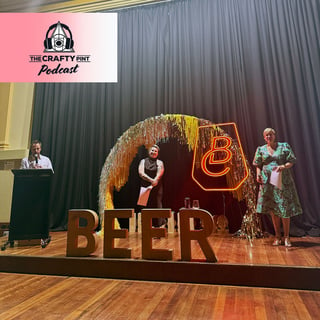
Speaker: Hello and welcome to the Crafty Pine podcast. I'm Will. I'm James and here we are back on, I'm not sure it's terra firma, but it's definitely not a stage at a beer awards and it's definitely not the underground podcast studio a beer, at a industry gathering. We're back in the safe surrounds of Humdinger Studio. Will, how's it feel? Great. You know, those days on the road, we're back in the safety of an air-conditioned Melbourne office, exactly how we like it.
Speaker: Exactly. Yes, we're, you know, it's nice to get out and see that see the barley waving in the wind, but, you know, we're very acclimatized to our tasty coffees. um Anyway, how how was Grainstock for you? I was sort of um confined to the the podcast studio for, I don't know, about 10 hours of the time. So ah missed out on most most of the panels, had a good chance chat to people, but for yourself, you were out roaming and taking stuff in for most of the time. Yeah, introducing a lot of guests, listening to their talks, great presentations again, like last year, really, yeah you know, I think there was something in it, something in those for everyone. Like, I was really blown away by who you got to talk. And sometimes you go to some conferences, and it does feel like you're getting advertised that it didn't certainly didn't feel that way here, like really thoughtful things people were saying that I think a lot of people got a lot out of. Yeah, I think as Stu summarized um in our chats, part of our extended grain stock episode that went out earlier in the week, I think the networking as much as anything, there there's there's lots of great ideas there, you know, it's fascinating to see that, you know, for all the challenges in the industry, there there are still so many new concepts, new ideas, but I think that networking thing. I know there's certainly...
Speaker: been discussion potentially at an IVA, ADA level about you know how can the spirits and the beer industry work more closely together? Can they pull resources at a time when you know resources are a bit um thin on the ground? And I think you know something that we said about yeah um the beer championships was that sort of lovely and grassroots feel there. and you know and there's a grassroots field to the way everyone's brought together at grain stock obviously it's a fancy facility but it's still fairly um laid back sort of vibes within which those talks are taking place and whether that is more how things like whatever a future brew con or distillers conference might look like maybe you know does it have to be in the fanciest of convention centers you know so um yeah it's certainly um interesting you know lovely to get out there again as ever
Speaker: Yes. And thanks to the team at Lallamond for sponsoring the podcast year as well. We did have the episode go out on Tuesday this week. So if you haven't listened to it yet, listen to it. You'll hear from a bunch of great people at Grainstock and there's also a future one coming soon. do it We won't spoil that. Hey, I don't know if we should or not. Let's. No, no, we yeah we did recall one more long form interview while were there and we have another guest coming up later in the show. Before we get to that, um yeah since we've returned to Melbourne, Will, I guess actually since you returned to Melbourne full stop after your honeymoon, you were straight on to the team at Black Match. So it's the best part of a year now, I think, since you started this series. but I guess it was a bit of a reboot of a series I did with Boat Rocker, is probably about...
Speaker: 13, 14 years ago about building a brewery. What does it look like? What does it take to build a brewery in 2026? And it turns out you got far more bang for your buck than I think you were you were expecting and they were hoping. Yeah, I certainly thought the series would be done by now. They always felt like they had an ambitious timeline. So I did suspect it would blow out a fair bit, potentially not by this much. um I caught up with... First beers were going be April, was it? yeah About that. Yeah, basically. You should have been able to buy beers in April and you can't buy any yet. um But you should be able to soon via their web store. They're still hoping to get that up and running. Tap room's delayed as well. Yeah, I caught up with cal Callum Fowler, the head brewer there, just before he went on parental leave. So um congratulations, Callum and your wife, if ah baby number two has arrived yet. I'm not sure. I told him I'm just going to leave him alone for a fair while because I don't... Nobody knows when that'll happen. And then also he's got a good six weeks off after that. Fair enough. But, um, yeah, a lot of the delays caused by electrical issues. They can't upgrade their, um, a power board effectively. They've got a big new one ready to be used, which means they can't brew on the production brewery and can, and, and do multiple things at once. Uh, even getting the production brewery on was a major stress and hassle. they've They've actually got it working quite well now, thanks to some, um, use of thermodynamics, uh, some old school engineering practices. Uh, yeah. So they should have beers done. They have been brewing a fair bit on the pilot kit. Yeah. It's it's interesting to see where we'll go. They're going to be making a lot of beer. So, I mean, next time we catch up, I think the conversation will be more be, is anyone buying it or who's buying it and, you know, what, what markets are you looking at? Because, um, the venue will be large, but that's, yeah, that's not on. And they also do want to sell package product as well, which is anyone knows is a very tough thing to do at the moment. Now are plenty of lessons to come from that series so far. um I guess hopefully there's one more piece, you know, hit part six will hopefully be, you know, even even Rocky didn't technically make it to part six without sort of rebranding the whole series. um And I guess in terms of other lessons from a brewery that is more well established, you've been chatting to the team at Stomping Ground as well. um You know, they've been, we've,
Speaker: We talked about them in last week's podcast, they've confirmed their plans to go home with Geelong, they've got their big Stompo um Street Fest coming up to celebrate ten years, um and so you had a chat with them for our very sort of busy ten lessons series. um What do they have to say?
Speaker: Yeah, so I caught up with Guy Greenstone and ja Justin Joyner or JJ as everyone knows him. ah lot of really big insights in there, I think, which isn't surprising to anyone. Stomping Around is a brewery that I think has really captured a sense of Melbourne. and You look at some of those partnerships they have. the birthday ...upcoming birthday party that's done with Triple R. They have Brutabier for Triple R's 50th birthday. It's main community radio station in Melbourne. think whether it's arts, comedy, sports......you know, they've they've done it with everybody across the Melbourne......sort of cultural and sporting scenery. Well, yeah... It's a very Melbourne touch points, but the things I sort of drew on were the fact that they sponsor North Melbourne football club, a professional AFL team, and also the Brunswick Zebras. ah They sponsor the Melbourne International Comedy Festival, which is the second largest in the entire world after Montreal, and the Melbourne Fringe Festival, which is far more small and far more grassroots. So, you know, that they do have um a desire to work with these things. ah a Guy summed it up really beautifully of it's like, if these are the things I think that if you left Melbourne,
Speaker: you would think of as being making Melbourne, Melbourne, that that's what they want to be involved in. ah yeah, there's there's a lot in that article. Um, go and read it. ah Another thing that really stood out to me and definitely captured me when I was walking through the brewery was, uh, how many people working there I know and have known for a long time,
Speaker: because they work at Stomping Ground and just seeing them at events. Like we went through, i probably said a hi to about six people when a guy was taking me to the office and he goes, oh, you're a real celebrity. And I'm like, mate, I've met them all at your events over the years. They they just don't leave. yeah And he said that um for a 10-year-old brewery, the average length of a production staff member is seven and a half years. So obviously some people have been there shorter because there's people who have been there since the... Taphouse. Yeah, exactly. Before the 10 years. Transition from the taphouse. which is yeah just this really uh incredible thing i think um i'm sure a lot of small businesses would love to have that kind of record
Speaker: Yeah, and tied in stomping ground again, there was the Laced Beer and Brewer Awards part of the ongoing Sydney Beer Week on Tuesday night. They were named Best Brewery Venue and there was a whole bunch of, I guess, familiar faces from recent articles on the Crafty Pint or podcast guests as well. Friends of the show as well, yeah. Friends of the show. Everyone's a friend of the show, Will, come on. Yeah, I mean, you had a bit of a look through the winners from Tuesday night and picked out a few familiar faces. Yeah, well, I mean, Christian Martin was named brewer of the year. I know, uh, Richard Jeffers, the founder of, Two Bays has long wanted that, um, accolade for Christian. So congratulations to Christian, the entire brew team and to Richard, of course, I'm sure will, uh, love to talk about it and probably send me a text after this episode goes out. Uh, hopefully he does anyway. Phil and Dale Meddings as well, Lifetime Achievement Awards, uh, brothers who now co-CEOs of Bintani, they've been on previous episodes, um, Huge supporters of a lot of things the industry does and of us.
Speaker: Lindsay Gregg, recent guest on the program. She was named at Life of the Party Awards, which I think you got from that episode for sure. Yeah, for forro from our ah be beer and snacks pairing episode. Yeah, big time. And, uh, my mate Julia ah Santos Muriel from Capital Brewing, uh, did a Brewin' A feature on her when I found out she'd moved from Spain, uh, to brew in in Australia. It's quite a beautiful story how she made it here. And she was named the rising star, which is awesome too.
Speaker: Yep, and one of my ah fellow IBA board members, Faith from Grifter, and won the People's Choice Award. And i guess they're pretty hot in sustainability at Grifter, but the sustainability award this year went to Beer Farm, who, you know, everyone loves Beer Farm, down in the southwest. So congratulations to them and all the winners. um And to Oak Cream for managing to get a yeah post out about ah the ah the awards and the event running out of Rattenhund, which seem to be they their major sort of taking from the night.
Speaker: um Anyway, back to this week. And I guess we're doing a little bit differently this week. That's our sort of summary of the weekly news. um we did We have sort of switched to sort of this being more of a weekly news thing without guests. However, while we were at Grain Stock, among the speakers was Matthew Evans, better known as the Gourmet Farmer. um And we just felt that um he just had sort of he great guest, but also had something to offer to both this platform and our sister and publication, The Full Measure, and in terms of what he spoke about in his talk world.
Speaker: Yeah, definitely. ah We were fortunate enough to actually be on the bus from Melbourne to Witten with Matthew or Matt. And so we got to get get to know him pretty well and have some good chats. And, um you know, he's, it's not like he's from a brewing background or anything like that, but he was there to really... learn and also talk about what he thinks the people in either industry could, uh, do maybe a bit differently or what he thinks they're doing well and and talking about these things. He's, um, yeah, the Gourmet, his show was on SBS for about 10 years, 2010 to 2019. Just really fascinating insights. Um, I missed the conversation you and Luke from the full measure recorded it. So I was just listening to it before we record this podcast.
Speaker: Great insights. Great talk. I hear Yeah, that's the thing. He's very charismatic and, you know, yeah just very, just a great way with words and so many, you know, zingers. For want of a better way of putting it, he's just very engaging. Very down to earth. I had to step away from his presentation at Grainstock and as I was walking back, I i kind of felt like I was going towards an opera or something like that. Just the way he was crescent crescendoing was amazing. He just...
Speaker: built it and built it and built it, got ah got sweary and sweary. yeah It was a really great conversation and hopefully, well, well we you believe we've captured a small slice of it for you here. So that's coming out after after the break. If you enjoy it, make sure you like, subscribe, leave us a review, a comment, tell your friends, ah swear about us like Matthew Evans probably would and um yeah, let people know.
Speaker: Cheers. Cheers. Next time you're staring at a wall of beer, here's your cheat code to choose the best one. Being a finalist and a champion at the beer championships is no easy feat.
Speaker: Our judges are here assessing flavour, aroma, technical quality and drinkability. There are lots of factors that might influence your decision on which beer to buy, like marketing and big brand budgets.
Speaker: But when it comes for an impartial view, always look for the champions. Look for the champions. Choose good beer.
Speaker: Do you work in a brewery? If so, we've got some exciting news for you. The 5th Ingredient has just launched its revolutionary Beer 30 Insights platform, and it's the first brewery software that doesn't just collect your data, it helps you use it.
Speaker: So whether you want to know something as broad as, why are my yields decreasing, or something as specific as, what is my most profitable packaging format in sports bars in Western Melbourne, we've got you covered.
Speaker: And best of all, it's free for Beer 30 users. Because running a brewery isn't easy, and Beer 30 Insights is here to save you time, money, and headaches so that you can get back to focusing on the beer and the people that make your business so special.
Speaker: Want to learn more? Visit Beer30Insights.com to see it in action and to sign up for early access today.
Speaker: Welcome back folks. We are incredibly lucky to be joined here by Matthew Evans, Gourmet Farmer. We've just listened to an incredible talk here at GrainStock that you've given. Thank you so much for your time today. My pleasure. Thanks for having me.
Speaker: And in that talk, I loved seeing you get wound up and sort of right into it. You know, so much of the Gourmet Farmer chats were coming back as I was hearing you talk. And I know Stu Whitecross, who, you know, founder of Voyager and, you know, I guess the brains and the beauty behind Grainstock here. He's a huge fan. His introduction was fantastic. But maybe talk to us about your appearance here and what you've got to bring to this here.
Speaker: Yeah, I think, well, I became a bit sweary. I surprised it was on stage. I was stuck here in the dungeon. Luke came down, he goes, he's just getting warmed up up there. I suddenly realised that, well, I think what was interesting, because I've been, were on the bus yesterday coming up, and and I'm hanging around with brewers and distillers and and grain growers and and a couple of bakers, and it's really different world for me. It's completely different world. And what was ah I was fascinated by, that the core ingredients,
Speaker: of of it all, you know essentially is grain. And it
Speaker: yeah it comes from a farm, it comes from a farmer, and I have a farming, yeah we were on a farm. So I was surprised that there was not much talk about um with the flavour of the grain or where the grain came from. And and for me, it's like, oh, that wouldn't make any sense with yeah with wine. and It doesn't make any sense with ah with food when we cook it. And so it's sort of fascinating this idea of, oh, so where does so where do yeah the the core ingredient is kind of anonymous. does it So much focus on the end product as to put yeah as opposed to where it came from. Yeah, yeah. And so and that's the thing with brewers and distillers do this amazing job with storytelling. Like ah most food people are pretty bad at storytelling in terms of where the provenance, we're getting better at you know saying, yeah what the breed of pig is or you know how the the the cabbages were grown or whatever. and um But you know you think of beer and and yeah the the stories that people can tell about which hops and you know how they've brewed it and you know the stories behind it and how they got involved or distilleries, you know yeah the woods that they're using as ex-bourbon cask, whatever it might be, where they got the peat from. But they're sort of end of...
Speaker: um end of production stories. you know they're They're great, but but what was fascinating was there was no sort of of of the early stages, um even the malting. It's not really talked about very much, a little bit, you know a light or dark malt, but that's about it. And and i was fascinated in that because I think there's, I just see potential. Yeah, definitely. One thing that you touched on is um you made some great points about changes and some of the research that you've looked at in terms of composition of soil, soil health, and how that can affect the flavor of the grain. If you could maybe talk to us about that, I found that absolutely fascinating. Yeah, so ah the most famous study, um or the one I like the most, ah that that really shows it really clearly is where they worked with wheat. And wheat, and you grind up wheat and you you end up with bread. And so the the simplest expression of wheat is going to be in bread. And what they were trying to work out, does does soil life, the biology, the things living in soil, so there's a there's a whole ecosystem in soil that helps to nourish plants, um does that have an impact on the flavor of wheat? And there can be you know several hundred um different fungi you know species of fungi living in soil. it can be thousands of different species of bacteria living in soil. Do they have an impact? So this researcher took just a single species of of fungus, a single species out of the hundreds, and just dribbled it over some wheat. She grew some ancient wheat that was known to produce a really good flavour. She took some modern wheat and she took some modern wheat and and did some added the fungi to it. So three different plots. Then you've got these professional tasters. They've done two years professional tasting. They know how to analyse bread you know in in every level. So they're super high. you know They're attuned to what they're smelling and tasting. and the texture and made made the bread out of these wheats and the one, the ancient wheat made a totally delicious loaf and the modern wheat made a meh sort of loaf fine and the modern wheat with a single fungal strain added made it a delicious loaf.
Speaker: and And these people could... And they also used an electronic nose to test this. So this isn't... It's not just some people making it up, you know, or whatever. It's it's it's all blind tastings anyway. And just by changing so one aspect of soil biology, you can alter the flavor of bread.
Speaker: and And, you know, obviously you could just transfer that same theory into, you know, the grains that go into um ah Yeah, beer and spirits. Definitely. And we've seen that in Australia. So there's amazing, there's some red winter wheat um coming out of WA. That's been turned into whiskey. There's some some some farmers and distillers working here in New South Wales and Victoria using you know different grains um of all sorts and trying to really, you know they'll put it on the bottle where the farm is, where the grains are. It's like the Ethiopian black barley. Yeah, it's another fantastic The most ancient grains that yeah got into some beer thing and some some um spirits products as well. And it's interesting talk about I think,
Speaker: ah stews and producing a wide range of products here you know for for the for the brewing and distilling and to extend the bait this sort of baking industry but his dream I think is to sort of bring back those ancient grains with those incredible flavors yet they may not have been the ones that got the greatest efficiency whatever but also to to teach people that soil health like you know take people out to Chris ah the first time it's Chris's farm is actually with my family outside of outside of work, i I was taking my family to work really. But you know, Chris goes around with his big farmer's hands and he just sticks his hand in his healthy soil and pulls it up and just you you see him come alive talking about how much is in that first sort of foot of soil. um But it's, you know, I guess it's hard maybe to get that story out more widely. And I guess that's kind of what you're wanting to do, isn't it? So you're here, you're talking about the end product. This stuff is happening. Stu is driving at the small maltings that he's trying to get, you know, help get off the ground in WA or whatever. and then these sort of regenerative organic farmers. But maybe, yeah, how do we get that story out, you know, through the brewers or distillers to the consumers? Yeah, and chris yeah Chris is really interesting. um His property, was great to go there yesterday. I'd heard him talk before, but to actually be on the country and see see it and talk about the varieties because yeah he's growing a ah
Speaker: ah a yo low yielding old variety called schooner and he loves schooner and it apparently lays pretty flat when you're trying to harvest it's a mongrel of a thing to to harvest like it no yeah yeah yeah yeah you're not you're not your balance sheet doesn't show that it's a great variety but these things put down deeper roots so in a dry spell they're accessing more water they're accessing more minerals he reckons it's a better far better tasting product probably because it's you know deeper roots accessing more but also when you you um after your harvest all those roots die off into the soil so you create carbon in soil you store organic matter in soil. Any home gardener, anybody knows that organic matter, yeah the the dark stuff, yeah compost essentially is is is organic matter. The more of that in soil, the better it is and the better it is for the plant. So he's organic and he's going, well, I've just fed my soil. So yes, I've got a lower yield, but I've got a better product. And I think the other thing to think of, particularly with
Speaker: um yeah The craft end of stuff is that, you know I was chatting to ah a big brewer and I think they were saying was like eight cents or something of of a schooner is of beer is, um ah yeah yeah you ah ah whatever you would call that, up a half pint whatever in various places or whatever of beer. um Eight cents goes on the grain.
Speaker: So you could you could lower your yield and have to pay what, 12 cents ah goes to the goes yeah on the grain to the farmer. It's not a big change in the cost of the actual finished product that can end up with a much more delicious product or and or, and this is the usually it's both, um something that's better for the farm. So if you want to keep growing the barley, you've look after the farm. and if you want to grow up really well, so you end up with a better tasting product that maybe is looking after the farm better, and the actual lack of yield or yeah some of those things is not a huge cost to the end consumer. Like it's not actually ah it doesn't double the, if you double the cost of the grain, it doesn't cost double the cost of the beer. And and do you and do you think, um you know if you make that decision to do that, how can you that then make that a selling point in a way that sort of means something to consumers? Because one of the things,
Speaker: I've sort of become a bit of an acolyte of Stu's what they're doing here. like i think it's phenomenal. The the impact he's having you know on the beer and the and the distilling industry and on local farming. you know And Chris did as well as almost like this the test case, bringing people out going, this can be done. is that we can like help save the planet you know if you can change enough people regenerative farm but you need enough people consumers to choose an end product with those grains in them so you know so it encourages more farmers to grow that because they know they're going to get a you know they're going to get a taste ultimately you need more people to be interested in that story and you know over the years what what have you found works to sort of get consumers get people you know to spend a bit more to go i'm going to have this product instead Yeah, it's ah it's a hard one. I think Stuart, he did a good job of nailing it yesterday. He he he was a conventional barley grower who went to Chris's joint and he's suddenly like, well, hang on, there's there's frogs and there's bird life. And I think the average person goes, so hang on, if I choose this grain yeah from this farm,
Speaker: that means as the ecology is in in in good health. So fro and frogs and birds, everyone loves frogs. Who doesn't love frogs and birds? There's a reason why yeah all that stuff is super cool. And you go, well, hang on. you so So simply the way you choose what you buy to eat or drink can have an impact on the and the environment where that that product has come from. and And dealing with simple things like that, you know that that people recognize, like frogs and birds. I can talk to you about the soil ecosystem, the nematodes, and the...
Speaker: yeah the spring tiles and the mites and the oribatids and you know poropods and no one cares like no one like seriously yeah people's eyes like you your eyes glazed over that's hay fever hay fever and whiskey at 10 o'clock in the morning yeah probably yeah yeah yeah um But i think that's it, isn't And that's why I think beer especially has ah such a great opportunity to tell this story, because you know beer is the every man, every woman's drink. you know it is like you know It's the social equaliser or whatever. And I think beer is just a really good platform, a really good you know storytelling um you know journey, whatever you want to call it, to get enough people into it. Like Stoneham would have got their Northern Rivers beer, which is made with almost entirely regenerative grain, I think, and Ryefield hops hops. done't done on a big scale. they They're using some of Stu's malt in every batch of Pacific Ale and, you know, a small amount, admittedly. And I just do think it it can be used as a tool, a weapon, whatever you want to call it, to actually get more... just oh All you have to do is not choose that beer and choose this beer. And what what you need to do is, I suppose, in this really tough market is then encourage enough brewers to go, like you say, let's pay an extra few cents on your malt and and put it out there and let people know what it's what it's about. And yeah it's maybe...
Speaker: Tough times to do it Yeah, and it's a hard one to do because, you know, you really, um yeah how do you tap into that? And, you know, i think chocolate did did quite a good a thing, you know, where they said you had the rainforest alliance or whatever it was. And as soon as you go rainforest, oh, yeah, like i want to support rainforest. So if I buy that block of chocolate, yeah so is there a way, i and I don't know, I don't have the answer to this, but is there a way for them to become a, you know, like organic, but organic doesn't, you know, It's very earnest. so much debate around what the right term is. Even regenerative yeah becomes debatable, but you know is there frog-friendly barley or is there something that you know that that says... that says very town know No frogs were harmed in the making of this beer. What does it says really quickly, you know drinking this is doing ah more good than harm. yeah and and I guess it's pitching it correctly as well because some people just hate that and they feel they're being talked down to whatever when you try try and put that that sort of message, yeah it's all about, you know maybe maybe you don't worry about it and go, as long as we capture the ones that do care, that's a start, you know but um yeah, it's certainly challenging. Yeah, and I think what's what's really interesting is is this if you focus on flavour, you know you can sort of do that by stealth. you know So you you you might have you might you might be saying, yeah, well this is, and these would be for you smaller brewers and distillers to to tell this story about if they could find something off a certain grower and and tell that story. and it's about saying you we've got this you know um black rye or whatever it might be we've got this old variety of red white because it tastes better and the and the you they don't necessarily need to know that that's you know better for an ecosystem um because essentially we're all self-interested you know you know We're all very good in our heads. you know i'm ah I'm an absolute saint. yeah yeah you know i yeah i'm ah i'm a great I'm a great parent, a brilliant driver. A wonderful arrator. Terrific lover. you know That's in my head. But in reality, you know I'm still the person buying the tortured chicken because it's cheaper at Woolworths or whatever. you know So so you know i really you've got to play to people's, um you know what do they really want? And are they going to stand there and go, I'll have a beer that tastes terrible that says, you know,
Speaker: um it's it's really good for the world, or gonna have a delicious beer. They're gonna choose the delicious one, but if you can do both, which is actually what happens to happen with this stuff, um yeah, then it's possible. so So sell it to them in the way that they're gonna be comfortable with. And I guess maybe it comes back to that thing you were talking about with the you know the bread test.
Speaker: if you can find some way of doing it, yeah just taste these two beers or these two whiskeys side by side. And even if you're not a pro, you do find, I've done you know consumer beer blind tasting in the past, and sometimes, you know, someone brings a mate along that doesn't really like beer, or they'll bring their girlfriends down or whatever, ever and we'll do a simple sort of score sheet at the end of the, you know, the, um to tally things at the end of the end of the event.
Speaker: And almost without fail, you'll find the people who don't drink beer or whatever will score the best beers the highest. yeah Because they just, they're just better. know what I mean? Yeah, there was this great research in the 90s, think it was, where they would give 100 people orange juice, sorry, give people 100 different orange juices. And they would find all these different orange juices. And most people would rank like the top will always be the same and the bottom would always be the same and these are completely untrained testers they just average people off the street and i think we sometimes forget how powerful this thing on the front of our face is and knows yeah the ability to smell and and tell stuff even if you like i've and probably like you guys are you know i've sort of honed some skills in tasting over the years but even untrained people would still choose the what's better what's best and what's worse and there's a little bit of gray area but not much um in in terms of that and so it's like we're hardwired and and it makes sense because evolutionarily you know we we've got this thing on the front of our face we can smell chemicals at like five yeah yeah yeah five parts per million yeah smell danger we can smell rain so this idea know there's this thing called uh jasmine it's released by a um a bacteria in soil and um you can we can smell it at at like something like five parts per per trillion it's incredibly um powerful and it's designed to attract nematodes, these microscopic worms that go and eat the bacteria and they spread the spores of that bacteria through the soil because they're much more mobile than the bacteria. So it's a survival mechanism. But that smell, as we think humans have become hardwired to that smell because it meant we could smell
Speaker: Yeah, that's the smell after rain. that' The smell of health. Yeah, petrichor. Healthy ground. Yeah, healthy ground, but also, oh, where's the it's just rained over there. okay So in dry, arid environments, humans would have gone, oh, hang on, it's rained. We know where to go for the rain sort of thing. So it it gives us pleasure, but it's probably... and So we've got this powerful thing on the front of our nose that that's really... Oh, and in front of our face, our nose, that's really designed for us to... yeah For survival and all sorts of things, but we can use it for pleasure and to tell the quality in things. And and you don't need to be you know ah ah ah a professional whiskey taster to to use it. You just have to pick pick something up and taste it and see if you like it or not.
Speaker: One of the other things I'd love to go to is, I guess, the Tasmanian experience because we had Jules on here from Whiskey and Almond and he mentioned that, you know, one of his early inspirations to get down to Tassie was religiously watching the Gourmet Farmer. it It strikes me that you've had a a massive impact, you know, ah to people across, you know so many different categories and so much of that experience happened in Tasmania right when, I guess, Tasmania was the impetus, sort of the catalytic force that propelled a lot of Australian distilling moving forward. It's been an incredible sort of decade or two down there. Yeah, yeah. The distilling movement had just really was still in its relative infancy then, and now it's gone yeah it's gone absolutely bunter. Yeah, look, it's sort of interesting. yeah um ah It's been really sort humbling to come to these big farms because so yeah know we we put out a show. i didn't want to call it the gourmet farmer. I'm a chef by trade. Anything called gourmet is usually gourmet deli. It's not a deli you would go to. Yeah. so And I'm not a farmer. So i they named it without my approval. yeah And I was a bit like, oh my God. And then, you know, I've been on farms and they go, oh, we used to call you the gourmet wanker. um
Speaker: But what's really interesting is like, cause they just, they'd say that, but then it's like, we were just people having a go, having a crack and yeah no clue what we were doing. And it has yeah yes it has read resonance on sort of small farmers, on on broadacre farmers. and It's really nice to see um that that idea of having a go and seeing if you can grow something or even just understand how something's produced. And and maybe you fail.
Speaker: You know, like I'm a complete Gumby at lots of things. and But even I have succeeded 95% of the time. And I'm hopeless. stuff You know, like it's sort of amazing. And and the people who don't,
Speaker: ah yeah ah yeah if you don't want to fail, well don't do anything. you know So it's really easy to to sit there and go, oh well I can't do this or I can't do that. But yeah yeah I guess if it inspires people to have a go or makes them feel better about the stuff they're already doing or to do a better job in what they're already doing, then it's been that's it's pretty flattering actually. and In terms of, you know up here at Grainstock for a couple of days, what's the sort of and the main message you'd love to take attendees, whether from brewers or distillers or other farmers take away, or even listeners and viewers to the show? like you What's your sort of key yeah the thing in in terms of the context of the brewing and distilling world that you'd love to people take away, the lesson that they could take from you?
Speaker: i think um I think the biggest one is ah just valuing what you've got and and and maybe um and and adding to it. So yes, there's some great storytelling around that tail end in terms of you know what what hops you use or what wood you're maturing, your your um ah you distillate in whatever it might be um but there's not a lot of recognition of where the stuff comes from it all comes from farms and telling telling those stories but also trying to encourage the farmers who are doing a better job because a whole bunch of people want to do the right thing who we love to have you know a relationship with a baker or a brewer or a distiller um maybe not direct but through you know through a maltshire or whatever um and valuing those relationships because that's that's kind of what sets things apart. you know That's what makes things, can make things better, is is valuing everything from the soil right through to the bottling. You wonder how many people who yeah know drank beer or drank you know whiskey or whatever have any idea the of the connection to land?
Speaker: you know and and you know ah all the way, it's just it's ah it comes out of a factory, goes in a bottle or a can, I drink it, I get a bit merry, that's it. I'm not actually thinking you know the real connection to- Yeah, I mean, it's all just from farms. you know It's a hobson yeah hops and barley yeah for for beer, and you know it can just be barley or rye or whatever, for um and and some some timber for for your whiskeys. Everything is just, it's like, it's such these are such natural products. And I think telling you,
Speaker: Making that clear, yes, it goes through a factory, you know inverted commas factory, but really what does that factory look like? It's just an old-fashioned fermentation or distilling process that we've done for centuries, um turning something that was good from the farm into something good in the bottle. Yeah, definitely. Fantastic. Well, that to me seems like an exquisite place to leave it. ah That has been such an amazing chat, mate. We really appreciate your time. I know everyone here who has got a lot out of you being here, so thank you so much. Pleasure. Thanks for having me.
Speaker: The Crafty Pint Podcast is produced and edited by me, Matt Hoffman. For all partnership inquiries, please reach out to Craig Williams at craig at craftypint.com. To keep up to date with everything in Australian craft beer, head to www.craftypint.com.