Transcript
Speaker: Popularity Popularity Popularity Contest
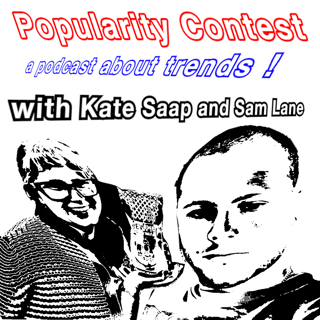
Speaker: Hi. Welcome to this episode of Popularity Contest. It's a podcast about trends. She's Kate Sarp. And he is Sam Lane. Yes, we are.
Speaker: Truth. Fact. Affirm. Logic. Logic. Facts and logic. yeah So we're here today on a lovely... ah What is allegedly...
Speaker: A spring's day. Apparently. Allegedly, it is 18 degrees out and cloudy. Yep. So much for global warming, is what I will say to that. Well, there was global warming on Monday. That's definitely for sure. Yeah, global warming one day of the week. Yeah, and thank God. Um,
Speaker: my And every day I bless. up my parents for having air conditioning in their house. Every single night I pray that my tits are sitting right. Yep.
Speaker: My corset is so tight. Moulin Rouge something something. I feel like Nicole Kidman. Oh. Oh, that's how it goes. Adela. Well, I've got pink hair like Adela. Exactly. um The baddest bitches are... She's also Slavic. Yes, the baddest bitches are in Sydney, allegedly.
Speaker: Well, we clearright for we're right here. Some would say, sources would say, Kate is wearing a Monster Truck shirt. I am. And where did you get that shirt? I got it. At 2026 Monster Jam. that I went to this past Saturday.
Speaker: um My parents got tickets for Harrison and I. um for my boyfriend's birthday. they um And it was. Lit. It was so good.
Speaker: um I had a really good time. Even though. My foot is broken again. Yeah, Kate has, in both ankles, has a piece of bone just sitting there. Yep. So what's going on? um Well, last year. around April time.
Speaker: I got a stress fracture. in my right. fifth metatarsal, like all the way at the edge, um because I was running in trail running shoes. This literally happened to me. Yeah, on a concrete footpath.
Speaker: um down Sydenham road. And then I came home, kept walking on it. sat on the ground and I... like broke my ankle because i sat on it basically ass too fat it broke my ankles literally but before that a couple years prior I just had this like random, really strange pain in my ankle and I couldn't walk. It was so bizarre. Anyway, they picked it up from...
Speaker: The x -rays. from from when I... fractured my ankle that like a bit. of my fibula had been shaved off by my tendon. When? My foot had hurt a couple of years prior. And I was like, great. So that's really awesome for a 23 -year -old person to be getting. Anyway, flash forward. I'm 24 now. Beautiful day.
Speaker: On Friday, decided to go with... our friend Justine to Kalu Pools, never been there before. Yep. And. we're walking in whatever i have my key coca stand -in of asics on because they're really comfy they're so beautiful as we all come to find out not good for the ankles no foreshadowing they were i used to play basketball in them when i couldn't be bothered to like bring my heavy pg4s with me like to to to play at uni um Anyway.
Speaker: So they used to have really good grip. But I literally was talking to Justine about how, yeah, I'm like working on my posture, trying to like stand up straight. And then. cry No, no, no, no, no, no, no.
Speaker: I said to her. I probably shouldn't have worn these shoes today But they're just so comfortable that I don't really care. I need to get a new pair of hiking shoes. Make a minute.
Speaker: roll down the hill, like, you know, invert my ankle. That's kind of funny. And so like I heard a snap, but obviously if you're like in the bush, is it a twig that snapped or is it? Your ankle just snapped.
Speaker: Anyway, so we had to walk back there. So I still haven't been to Kalu Pools. Good thing we're only like 15 minutes into the walk. So I did have to walk on it. um to get back to the car. Didn't have any... um Pain relief.
Speaker: So then, um, Justine and like, I couldn't elevate my leg because ah no no rice was had. no No, no rice was had. So we get to like Marrickville urgent care.
Speaker: And I'm like, I have done this before. I know what it feels like. like I think I've broken it. I've done it again. Something's happened. So I should have just gone to like RPAER or something, right?
Speaker: um But I didn't. Anyway, so I get triaged. It was a great experience there. And then so the nurse comes and she's like, you need a boot. And I said, I fucking knew it. And then she comes back again and she's like, actually. So far you've just brained it, but we've got to wait for the report. Everyone's telling me you've got to wait for the report. They're all saying it. They're all saying it. Everybody's saying it. So anyway, like I had a look at the x -ray.
Speaker: Um, And I was like. I'm not a doctor, but... Something doesn't look right here. So then I get a call. you Never good when there's like an island in your ankle. Yeah. yeah yeah ever Never a good sign. I'm like, what? So.
Speaker: the I get a phone call at 20 past 8 this morning. but was goingnna I was going to sleep in until 8 .30, but I picked up the phone. Oh, my God. They had the goal of them, 10 minutes. I know. I know. I was like, why the hell would I be awake at 8 o 'clock on a Wednesday? Hello, I'm on holiday.
Speaker: Yeah, so he's like. Actually, I don't know if you've like got the report yet or anything, but yeah, there is a little bit of your fibula that is like cracked off at the bottom. so And I was like, okay, so what do you want me to do about it?
Speaker: He's like, yeah, you know, usually we'd recommend wearing a boot, but like basically this guy wasn't like sort of giving me anything. You can do whatever you want. Yeah, so I was like... What do you feel like? Okay. You're the doctor. Yeah. So, look, like. Sorry, Brooke.
Speaker: Basically, I broke my foot again. On Friday. Didn't know that yet. Then went to the monster trucks on Saturday. Harrison and I were the only childless adults there. It was kind of amazing. We're just surrounded by toddlers wearing like giant earmuffs.
Speaker: Um. It was beautiful. And Gravedigger was there. That was Harry's favorite. yeah And he did win.
Speaker: So Harry's been watching for like 20 years or something. Oh, and this is a big moment. Big moment. And then you have, ah you know. and the bone in your foot that's floating there is like, whoop! There's... bru They were like, whoa. So now I've got, now it's like matching. I just think that my right ankle felt left out. Oh, so it had to break. It had to break itself. So after we record this, because this is really, this is much more important than going to the doctor. I am going and ah my mom's like, you should get a bone density scan. And I said, yes, I know.
Speaker: I know. I thought I had enough calcium or vitamin D. or You need to drink milk. Ugh.
Speaker: Which brings us, I think, quite beautifully to the theme of today's episode. Absolutely. Biohacking and health, which if Kate had been doing more of, she would have avoided her ankles getting broken. Yep. You weren't eating enough raw meat and raw milk. But see, the thing is... I don't want to hear it, actually. You are not eating... You're not following a carnivore diet. Can you just let a woman speak for a second? Can you let... Uh, self -describe well to sex with me.
Speaker: i just I think for me, I'm used to breaking people's ankles on the court. Yes, on the court. I never thought it what could happen to me. Yeah, never. Icarus flew too close to the basketball hoop. Yep.
Speaker: I tried to dunk, but, you know. I want to fly. Can you take me far away? Give me a star to reach for. Show me what it takes and I'll go so high. This kid's going to be the greatest kid I ever knew. That's like the my high bed at start. That's you. Yeah, yeah, yeah. Shout out to Macklemore. Hate his music, love his politics.
Speaker: um mac Love that Irish guy. I love that on my own. Oh, Macklemore. I knew him. He's from County. He's from County Cork. I think that him and Diplo are like from the same.
Speaker: family. Yeah. Yeah. But they're like, Diplo's like the warrior because Diplo's kind of evil. True, true. Didn't he like, you know. Assault a bunch of people. Anyway. Yeah. but Anyway, most biohacking. So. um In case you haven't noticed, in the big two six, ah health is in. I watched a fantastic video the other day about like the idea of health and how it's so...
Speaker: like I would say now more than ever, much more of a societal construct than a scientific construct. I mean, it's it's always changing in health advice, but... um With, for example, RFK Jr. in the White House with his whole like the whole Maha movement, make America healthy again.
Speaker: which is not about following doctor's advice. It is about... Eating raw meat. not getting vaccines, not having seed oils. Having beef tallow. ah kind of raw, healthy eating. It's an interesting mix of like...
Speaker: hippie wellness stuff with like bro protein science. Protein. Protein science, yes. I saw, um... Eddie Burback do a video where he ate like RFK for a month.
Speaker: And so it was a lot of, you know, the only kind of vegetables that he eats are fermented ones. So he's big on kimchi. yeah um which is interesting. So Eddie was eating. Like. Cheese omelettes and bacon and ground meat.
Speaker: um Not raw, though. Not raw. No, yeah. But it was just. We're not Jordan Peterson. No, no, no. Not Jordan Peterson. Um. But so I guess that's how you end up getting worms in your brain. Like RFK, right? If you want to.
Speaker: You know, if you want to do the thing. Have a beautiful rig. Work out in denim. Work out in jeans. Yeah. Hell yeah. But no, it was really fascinating. Like um Eddie doing this video. Obviously, like I want to believe so hard that ah RFK like eats.
Speaker: some sort of vegetables or other kind gets other things in his diet somehow. Right. Like I. would really hope. that. the chief health officer or whatever his fucking job title is.
Speaker: is that he will. Be okay, you know, he's like getting some sort of vitamins and doing whatever um And Eddie. didn't look any different yeah by the end of it. You know, he's still like doing his regular routine. He runs every day. He does weights once a week. like Yeah.
Speaker: So, what what is this? And there's a couple other characters we want to I want to bring up. I mean, there's... Andrew Huberman has just released a book, um the popular health and wellness podcaster, Stanford professor. Yeah. Bit of a shy star.
Speaker: He's qualified. He's qualified, but he also like shills products and he gets kind of interesting. And there's this fantastic journalist called Scott Carney who's currently doing an audit of basically all the claims he's making in his book. And it is interesting because it's like...
Speaker: You know... it's It's difficult because Huberman is still... is I don't know. hes He's more definitely more science based, but then, you know, ah RFK, but it's still probably if you are into ah RFK, you'll probably watch a human lab.
Speaker: as well like there's an optimization culture and then of course we have to mention the goat bri Brian Johnson who put out this banger tweet the other day which we will put here.
Speaker: I frequently lay on top of Kate. Who's his girlfriend, not you, with all my body weight. The deep pressure calms her nervous system. Quiet Racing Thoughts. and releases oxytocin, which lowers cortisol. We call it GLP -Brion. And the photo is of his of him essentially planking face...
Speaker: Like, face down on his girlfriend who's lying face up. ah in an incredibly awkward looking embrace. But hey, it works for them. And he, I think, is the poster child. for this movement, having been in involved with the enhanced games, which we've talked about on the podcast before. This is a millionaire who has basically made it his life's mission to live forever and biohack his way.
Speaker: to immortality. And in terms of biohacking, I think what it means is like, lowering your biological age. Yeah, that's often the goal. That's the goal in terms of, I would like to.
Speaker: The lying on top. I get Harrison to do that. Are you a top or a bottom? No, I get Harrison to do that for me because it's like... That's what gay sex is like, right? That's what docking is called. But it's like a human weighted blanket. Yes. As opposed to my actual weighted blanket, which is on my bed. No, but I do have a weighted blanket as well.
Speaker: um And did you double up? Yeah. off It's like extra deep pressure. You know, I've got my like 25 kilo weighted blanket plus my like boyfriend sized weighted blanket. Ari's like, uh. I'm getting like. So he's onto something there. Yeah, he's totally onto something. this And this is the interesting intersection. Because biohacking... is a spectrum.
Speaker: On one hand, you have people like Brian Johnson who are going about it very scientifically, like or scientifically, we'll get to it. but who are really trying to like. you know, extend their life.
Speaker: But on the kind of more everyday scale, how it's permeated into average people's lives is like... The rise of like wearables. I have a Garmin watch, for example. My dad love used to have an Oura ring. Wearables and things like that. Generally, I think a lot more people are like into supplements and things. There was the whole peptides craze that's still going on of people buying peptide stacks, which... very interestingly. originated in Silicon Valley. which sort of shows the confluence of like...
Speaker: the tech oligopoly and technocracy. ah and that kind of optimization culture coming to wellness. Mark Zuckerberg and all the tech CEOs now are are kind of enmeshed in this wellness thing. They like they they go on Joe Rogan, they talk about doing jujitsu and eating raw meat and doing cold plungers and stuff. It's a whole...
Speaker: culture, and it's really interesting and like i think it says it it impacts more groups of people then... We... might think like It's not just something that's for the bros as we'll kind of come to talk about.
Speaker: It's more of a... societal thing so Yeah, I would like to start off by saying another observation that I've had just about like... the American healthcare system, obviously like it's predatory on people because they don't even have like ah ah the concept of a welfare state.
Speaker: Um, But insofar as... being able to advertise like prescription only medication. which I think is ridiculous. Yeah. I mean, growing up there, like I didn't even know when I, when I grew up in the States that having ads for medicine was like strange, like that. It's genuinely insane over there. Yeah, the only thing that you're allowed to advertise here is, you know, over -the -counter stuff. Yeah. So it just, when I went there a couple of years ago, that was kind of the shock too.
Speaker: Um, But. It's just everywhere. Plurip - proliferation um And it's really predatory because it's you know preying on. people's insecurities, which I think is a big part of the conversation today.
Speaker: um And just that if you're not spending money on your health. then you don't care about yourself. yeah And it's sort of that... um like rhetoric and line of.
Speaker: marketing that is really dangerous. Yeah, and I think it makes sense that this thing started in America and it's been kind of a post -COVID thing. Because... America has always been a place.
Speaker: of individuality that's like so baked into their national identity. And... After COVID, I think... A place where... The countries that did the best...
Speaker: really kind of had the social contract on lock like australia did comparatively pretty well through COVID because we... abided by the lockdowns and do all this stuff. Same in New Zealand and places like that, but other places.
Speaker: which have... Like, the US, which has, like, less of that socialized healthcare. And that. and and more of a fractured sense of like the societal contract didn't do well. End. it's kind of complex because with such a mass disease, it's a community problem. Like you need it.
Speaker: You needed – it's – not about you like you were getting you get the vaccine for other people More than yourself, really. And I think that that... is something that...
Speaker: just is completely... foreign to the american view on health care yeah where or you know the american view of the self of anything yeah like you know literally at the, you know, ah RFK and Like everyone's always been saying, you know, like, oh, vaccines cause autism. And then there was the whole thing about like. Tylenol causing autism. Yeah, Tylenol. And then you had either Joe Rogan pushing ivermectin. Yeah, just all of this. Yeah.
Speaker: Just strange, strange stuff. And it's sort of marketed as like allied health. But... It... there's there's nothing to it other than them just sort of like pushing some sort of profit.
Speaker: money -making thing where they you know they might have it's a shame as well because like It was real kind of chickens coming home to roost for some of this stuff because like... For example, ah there was a lot of vaccine skepticism in like ah minority communities.
Speaker: And... in the US and there's like good reason for that because The healthcare system in the US has fucked these communities over constantly. we yeah Like, you know. you know the whole reason yeah and so it's really it was just this time where it was perfect storm And...
Speaker: Out of it came these kind of interesting alliances um that has given rise to a whole biohacking health movement. I read a really great book. called Doppelganger by Naomi Klein.
Speaker: which he published Basically about... Her experience is being mistaken for Naomi Wolf. who is a former like feminist now kind of right wing on Steve Bannon's podcast. And she talks about this idea of diagonalism.
Speaker: Okay. Which is the idea of like. traditional political alliances breaking down these new ones opening up which is Where? I see the... bro science protein people and the hippie style.
Speaker: kind of now coming together. on this right right-w -wing spectrum. Like if you think in Australia, like think about ah like former. a um My Kitchen Rules host Pete Evans, and how he has this like this kind of wellness turn that turns into a right -wing turn. um and it's all anti -vax and stuff and like Byron Bay and stuff like that all the kind of hippies being anti -vax and then kind of
Speaker: we're coming more right wing and like one nation. And I feel like Dave Hughes is in that conversation somewhere that fucking psycho. Yeah. It's like, yeah, it's like. Uh... alliance things popping up that are like alliances that weren't fully there and If I may, can I read a quote? Oh, i go for it.
Speaker: So this is a quote from that I think is like the central... crux of all this is from Naomi Klein. um in doppelganger about ah wellness culture. The idea that we should think and function as communities of of enmeshed bodies with different needs and vulnerabilities. flies in the face of a core message of neoliberal capitalism.
Speaker: that you are on your own and deserve your lot in life. for better or for worse. and relatedly It also flies in the face of a core message of neoliberal wellness culture. that your body is your primary site of control and advantage in this cruel and polluted world.
Speaker: So get to work optimizing it. What does that quote say to you?
Speaker: Four. Me, like socialized as a woman, like growing up as a teenage girl, having access to the internet, it rings true a lot of like ED content that, you know, was pushed and like pro Anna content on.
Speaker: um Things like Tumblr. right where you know, the whole reason for eating disorders and other sort of, you know, anxiety adjacent or any other mental health, like food control restriction, whatever. is to do with... control and your um because nothing else is.
Speaker: able to be yeah controlled nothing else is certain right so it is the only thing that is able to be like dictated by yourself. um And so ah like.
Speaker: the extrapolation of that. Now, two. like in adulthood for a lot of people. Um, is... Yeah, not surprising. Unfortunately,
Speaker: um And you see sort of like it's interesting as well. like body positivity The body positivity movement of the... 2010s. And...
Speaker: from that then leading into COVID. And, you know, people talking about like masking and what that means, like wearing a mask, not like, you know, neurodivergent masking.
Speaker: What? that means for society, how that social contract works, where you need to By wearing a mask, you know, you're protecting other people, which is, you know. pretty... understandable.
Speaker: um that I guess for me is an easy concept to to grasp. But then now there's sort of like body positivity. People are still kind of like.
Speaker: fatphobic. And that leads to now almost this like body neutrality. Yeah, like the rise of GLP ones. Yeah, it would be really remiss for us in this conversation to not talk about like...
Speaker: How everyone. Will people that you see. On the internet, famous people are getting thinner. Um, And it's almost as if. Like nothing is.
Speaker: Ever. Enough. Yeah. um And, but at the same time. especially like women celebrities who. Uh... normal looking people that don't you know that just like exercise regularly eat regularly whatever Those. women are seen as almost martyrs of like...
Speaker: representing, you know, the the general person, like how... how dare you like change yourself so much like that. how did Anyone specifically come to mind for that? Florence Pugh. Yeah. I've seen a bunch of stuff um about that and they're like, yeah, I love just seeing like ah a normal looking woman on the screen.
Speaker: It's like... but First of all... Backhanded compliment. Yeah, backhanded compliment. I think that... This whole conversation, like, why are we still talking about? people's bodies. ah For me, that is just like...
Speaker: So bizarre. Yeah. like that they've got their own journey like what the fuck does it have to do with you and then so with all of this biohacking conversation.
Speaker: It's... further pushing the agenda of like, you need to change yourself. Yeah. It's, it's, more than ever like it indexing on like Your body. as a side of capital mm -hmm um much more because it's now like again it's in the highest levels of of government Um.
Speaker: And it's like, in the at least in the US, like definitely being pushed is... as policy ah to a degree. I feel like. It's important to also say like the reason that.
Speaker: the government wants you or like, you know, capital wants you to like. Be healthy and be well. is, you know, it could be an inferior way of saying like, well, it's because they want you to make more money for them and they want you to be like a better worker.
Speaker: um Because if you're healthy and you can walk and you're mobile and whatever, getting enough sleep. that means that you can make more money. Yeah. um And it's it's interesting that, like again, the like the peptide stack and all this sort of stuff and and Huberman being in Stanford, like in Silicon Valley, like it's at the site of capital production that we see.
Speaker: the rise of biohacking. because... It's about. making the body a better worker it's about the body as machine almost like the rise of like, I remember like Q, like a meal replacement shakes, like Dyer of a CEO, like and stuff like that. And Athletic Greens, another supplement brand. They're all promoted on these productivity podcasts because it's the idea where you don't have to, you don't have to eat. You don't have to worry. You can just have your your shake.
Speaker: And you can then go back to your desk and get back to producing. Uh, It's the same reason why I think like um food delivery services and are so popular. Like factor meals and things like that. Well, yeah. Or like, um you know, Muscle Chef or even just like getting whatever, like ready meals and things. It's the same as factor. Oh, okay. yeah Yeah. Or just because it like, you know, God forbid you leave the desk.
Speaker: for 10 minutes to walk. to a local cafe, if you are, you know, at work or something, eat a sandwich, like God forbid you have, you know, some fucking bread or whatever. yeah I mean, I say that as someone who, you know, doesn't really eat gluten, but.
Speaker: You know, like. Oh. Also... Speaking of not eating bread, fucking Subway has rice bowls now. What the hell? The world's gone mad. The world's gone mad. Corpo slop meals. Woke nonsense. Just like how you can get your slop like pigs at a trough.
Speaker: um shove it in your mouth yeah and then get back to work. And then but it gets really interesting because I think like it's just now like harder than ever. to know what health is because like I went to the doctor recently and I got my bloods done and I, you know, I found out that I like have, you know, moderately high, high -ish cholesterol, like that runs my family. Like, oh, I'm a little vitamin D deficient. That's fine. Like, he was just like, oh, by a...
Speaker: Cheap vitamin D thing and you'll be sweet. And that's the kind of interesting thing. Talking to doctors about health is that they're actually a lot less militant. than most people on the internet, which is kind of funny. Because I think doctors...
Speaker: understand the the social aspect of health yeah as well where you know it depends on cultural factors like you know in australia What? Like. ah allegedly like binge drinking is like more than three drinks. a week or something, right? Where... Culturally.
Speaker: That's not binge drinking. And, you know, it's like that's not the case. um Yeah. Even like, you know, in Europe, everyone's like, oh, smoking's bad for you. But there is that sort of. like cultural aspect to it as well.
Speaker: Um, where I think that... good healthcare kind of has those things in mind where almost like, you know, when we were talking about. Um, You know, cigarettes. Yeah, the cigarettes. We did an episode on cigarettes. We did. We did. It was a really good episode. You should listen to it if you haven't. Listen to every episode. Yeah, you should, guys. You know, you've got like a whole work day, actually, of episodes. This is episode eight. So that's eight hours. You could be listening to us all day.
Speaker: And whilst you get your green smoothie. and Yeah, you don't have to turn it off. Take your supplements. Yep. Right. This is your alarm if you haven't done it already. um But yeah, like, you know, everything in moderation, I think is fine. um You know. go for a bike ride, go for a walk.
Speaker: And then have have a cigarette and an Aperol spritz with your friends. like yeah i've seen like It's very binary a lot of the time. In in any sort of aspect in terms of...
Speaker: Like. the way that you know, you take care of yourself or the way that you treat people and things like where I feel like a lot of. people. i guess you know if they're getting into like taking care of themselves for the first time see it as some sort of like all or nothing um where Either you are like actively restricting yourself and like immediately changing. everything that you do rather than like just doing one simple thing at a time. Like a sustainable, like more low stakes, which is, I completely agree. I think it's like, it's, there is an.
Speaker: I think this brings us to like a second kind of broad theme. It's interesting how this dovetails with like the purity culture that I i see in in Gen Z and our generation. Because I also think the reason this is has... uh, grown in popularity, especially with like looks maxing and all those people like androgenic clavicular, all these people.
Speaker: Is like Gen Z. We grew up. I mean, I call like old generations the fuck around generation. We are very much the find out generation. We grew up knowing. exactly how bad everything was for you everything our parents did smoking drinking going and whatever was like.
Speaker: It was... drilled into us how bad these things are for you. And there's constantly articles now about. How? This generation like has. you know drinks less, has less sex, ah smokes less, blah, bla blah, blah. And it's like an interesting thing because it's like...
Speaker: It's almost like it it completely makes sense to me because it's like we have this generation who have been told that everything is bad for you and it's just like you You retreat into this side of optimization. It's the only way you can have control. You're kind of terrified of like making any mistakes. To me, it feels like when they killed Charles I.
Speaker: the King of England, and then Oliver Cromwell. Here we go. Where are we going with this? I was not expecting a Cromwell for reference today. You know, that like, I mean, all I know about Cromwell is from horrible histories, but that's all you really need to know, right? Where...
Speaker: Like. You know, they they thought that. what Charles was doing was in excess. And so they're sort of like. pur puritan angle is like boiling it down to okay what's the baseline what are the the facts That's a good analogy. History doesn't repeat, but it rhymes as they say.
Speaker: I think it repeats. And that's all I'll say about that right now. um But. Yeah, like. it It's this big swing um and you see in the pendulum of like culture.
Speaker: um And I think it has a lot of factors to do with like economic regression as well or recession. Sorry, not regression. And like in response to COVID.
Speaker: and some other like major world event, right? i think yeah for For most people, it is so much more accessible to like... Buy it. Like. athletic greens than it is to...
Speaker: see a doctor. Or like, yeah, it's cheaper to order. um you know, collagen tablets on. Amazon than like going to the local butcher and getting some like. protein and like meat that way it's and it's i mean it's just so Like, it feels like... Yeah, just...
Speaker: I found it even just like the pressures of... productivity and like health and wellness it becomes really confusing to know if you're healthy or not, because there's so much. information and out out, you know, on their our line online. And and like as well as the fact that every body is different. Yeah. And there's no, there's no runway.
Speaker: run one right way to skin a cat exactly this and yeah so as long as you like it it really does feel as simple as Go to the doctor. Talk to them about it. Where. you know.
Speaker: some people like can't afford that in other countries or, you know, there is a history, especially in like women's health of not being understood or listened to. And that's where I begin to like.
Speaker: understand a lot of this stuff which is where i think it gets really interesting because to me and it's a real The rise of biohacking stuff is a real failure of the societal. contract The fact that people feel the need to take it into their own hands, to me, reflects more on the system.
Speaker: Um, But I think... In Australia, at least, I think it's more of a cultural osmosis from America. like I think our healthcare system is, by and large, pretty good um compared to the rest of the world.
Speaker: But it's it's still like that wellness culture, like, yeah, Pete Evans. all his wellness stuff. Um, And... even like living in sydney like the whole bondi scene and stuff i had um Uh...
Speaker: Someone I knew from high school. recently moved to sydney and he lives in bondi junction and he's like yeah i feel this weird pressure to like wake up at four o 'clock in the morning and yeah go for a run and join a run club and like look good like do you do you want to do that for yourself is that going to bring you happiness even in um The... I guess circling back to the purity conversation.
Speaker: um A lot of that, you know, looks maxing, biohacking. You mentioned androgenic. And. I think it's really interesting sort of seeing this. um growth. All Um.
Speaker: like not growth of personality, but just like. Um, Now... he it's so funny he makes these like vaguely rage baby videos he's like I really hate gay people.
Speaker: when i see them being mistreated yeah um and it's like he's actually kind of progressive and yeah yeah he's like he'll meet a trans person he's kind of like wow, you're kind of, he he's like, I respect that you're taking estrogen. And he's like, wow, you're biohacking too. Or it's just that like you're being true to yourself and like what you want to be doing. um And i I like that aspect, but it is sort of borderline like hyper individualistic. And like clavicular has just been done for, I believe, like sexual assault and things like that. Yeah, well. Like it's a real, like these people are by and large pretty messed up, but they hold such a.
Speaker: like rarefied air in our culture of like what is health and wellness and like it's weird because that stuff is almost going straight back to phrenology are you familiar with yeahology oh yeah get out the calibers let's let's do some eugenics how bad how big is your skull like there is like ah stuff There's a very popular YouTube channel.
Speaker: um ah I forget the name, but he kind of analyzes celebrity's faces and why they're beautiful. And it's like, and their eyes are this far. And he's from Sydney. Like I know, like he's a... I know people who know him and it is interesting. Like it's this rise. It is such an individualized.
Speaker: culture where it's like it's but you know and people are going out and they're it's through plastic surgery and through you know, supplements and stuff. But I think that to get back to purity culture.
Speaker: The point I wanted to bring up is that... What's interesting about... The end. era that we live in in terms of health is how It's a, I think a... Uh... A framework or a paradigm with how Gen Z views the world that operates no matter what side of the political spectrum you're on?
Speaker: Okay. Do you know what I mean? but ah Do you want me to elaborate? Can you please elaborate? So you have androgenic and clavicular and all the health people who are like. really kind of there was a real purity testing to that in the sense of like well there's a one -upmanship In the sense of like, well, if you wake up at 4am, I wake up at 3am.
Speaker: I take this supplement, you do that supplement. I'm better than you. I'm better than you. And you're not this, you can't be a, you know, high value man or be like healthy if you do, unless you do X, Y, Z. No one's going to want to fuck you. Right? So that's, when we're getting there. And then what's interesting is one of the biggest pieces of news this month have has been the COVID conscious lesbian bar in Massachusetts. Do you want to explain?
Speaker: Very briefly, the... so The sitch there. And I'll explain my point. Yes. The the thing is... If. people hadn't have like stumbled across this from the algorithm then no one would have given a shit yeah i would like to i've seen the covid conscious lesbian bar has been many places yes in my local community i'll say that so the covid conscious lesbian bar these Lesbians had made a gay bar in Massachusetts.
Speaker: And one of the owners, I think, was going to clown school. Yeah, there was like a thruple that opened it. It was kind of crazy. And so they were like they had been they had a mask policy, so everyone had to wear a mask. And then they the news broke out.
Speaker: There's whole huge news. that they were going to... do One Night No Masks. um Optional mask masks. Not even. optional Sorry. Saturday night. Saturday night masks. Optional.
Speaker: And that. Just like. caused... the internet for two seconds to be like, What the... Well, the community blew up and said they were, like, enabling a mass disabling event. And there's like there was, like, community meetings of the person who was in, like...
Speaker: heading the resistance like that was asking to get paid because they were doing unpaid emotional labor yeah it's like one of the people angry is the bar is a white woman who wears a hijab as like a cultural accessory she's not muslim like no that woman she doesn't own the bar she just she's like she was part of the hate train yeah she' part of the hate train but that's an interesting moment for me as well because That is also an an idea of purity culture because as much as I do understand that a lot of the people in marginalized communities are immunocompromised, like that's kind of...
Speaker: you know, what can lead to marginalization. Like it is a, there's an intersectionality there. These things often layer atop each other. But what was interesting about this place. was that It was a purity testing. You're asking for... masks optional in a bar where you have to take the masks off to drink anyway. So it's kind of confusing.
Speaker: But there is what's the other community that's come out of COVID, which I find very interesting, is like the long COVID mask wearers. People who are still fighting the good fight, like like a Japanese soldier lost in the jungles in Singapore. 30 years after the war has ended, refusing to surrender. Still thinking it's going on. But it's interesting because it's kind of a trade -off.
Speaker: this is where, again, I understand. It's like, these people do have somewhat been let down by the healthcare system. They're just being like, all right, pandemic's over. And then. you know, just letting disease kind of go, especially in the U S where there's much less socialized healthcare.
Speaker: But. That is also... Purity testing. To an extent, because it's like... Well, it's actually a societal contract, which is like, if we're doing it right. You know, most people in Massachusetts are vaccinated. you'll probably be...
Speaker: Okay. And you're probably like... you know knock you know there's a bit of risk i understand masking and stuff but like It's really a purity testing like not wearing masks all the time and I do this and I do that and I'm like, you know woker than you because i'm i'm doing all these other things a video and it just gets confusing because that's that's purity culture on the the other side of how they approach health because sorry i just want to find a quick point because it's like To me, that just presents an absolute rupture in society in the sense that like...
Speaker: well, if we never wanted to get sick, we would never leave our house and we would wrap ourselves in bubble wrap and I would never drive a car. And it's like, The appetite for risk is so... warped and you know not true to what's going on in reality. And it's interesting that that's happening.
Speaker: Both of you are health maxing. in the sense of like biohacking, but also if you are like ultra mega COVID conscious, it's the same. framework of you in the world. There was...
Speaker: A TikTok that I saw um of this woman like going to a pool, going for a swim, and she taped. N95 mask onto her face. To go for a swim. And I was like, I really hope that she's taking the piss right now. That's crazy. like You know, at what point is it borderline like...
Speaker: Not schizo, but like at what point do you just take it too far? Yeah, because I mean, this is again, like coming back to the... The... The Naomi Klein point, like... It's interesting that even in the most like kind of.
Speaker: quote -unquote woke health conscious people it is still a very individualized way of of viewing that community like It's like everyone everyone here needs to do their own individual actions for Nexus rather than viewing it as like if we as a community...
Speaker: like if we're all vaccinated, we'll probably be fine. Like that's that social bargaining is completely gone. And so it's kind of the wild west in terms of health. I think about it as well. Like. this The simplest answer...
Speaker: is if you don't feel well. Stay at home. And that's that's it. That's really it. It's really that simple. but you know, you also have to think about the people that can't afford to do that or they're you know if they are working their job doesn't allow for that or yeah even um you know, a lot of disabled people that are on the NDIS, like insurance.
Speaker: um You know. There's... A lot of. Um, issues with that, I think I've seen where... It's being get cut to pieces. Yeah, cut a lot of funding, but also...
Speaker: If you are. on that pension. And then you get a partner who is able -bodied. then it's sort of this expectation that like they're taking care of you. um And it's. No, that's not the case for every relationship. And, you know, I think about it as like.
Speaker: I was meant to go stay with my parents my grandparents in Kiama this week. But... I you know. broke my ankle. And also, you know, I just haven't been feeling a hundred percent. there's, you know, the flu going around or whatever. And it's like, well, they're older, they're immunocompromised now, like.
Speaker: I'm just doing them a disservice by going to see them even though I really want to, right? And so maybe it's sort of like a thing of a FOMO now where. If you're not a hundred percent, but like.
Speaker: I still want to be a part of the Snapchat memories. Yeah. i think Like. Girl, no one is going to miss you that bad unless, you know, it's like. Your... wedding day or something. It's also interesting. I think that like with the loss of community spaces, someone pointed out in the whole.
Speaker: COVID conscious bar discourse, which is like, this bar was a four part space. They took out like 50 grand to, you know. get the bar running like by the place wow and they were losing money hand over fist because no one's going there and buying drinks because they were like you know they didn't work they were like they let everyone in even if you couldn't pay cover and like that's all really noble but it's like Interesting because it's like.
Speaker: What I think people are actually looking for in there is a community space like that you can just exist in and not worry about having to pay. Because again, that's what all this speaks to me. It's like, biohacking is just a response to the... the lack of community health care, really. Like that's, that's to me why that's the real nuts and bolts of why it's popular. But it's interesting that it meshes so much with like the way our generation just. looks at the world.
Speaker: I find it so funny that it's almost this trickle down effect of the tragedy of the commons where it's not in like. A. um climate change or economic way. It's also to do with your health as well. Yeah. um And it is then really important. Okay. So if it is. because it is the job of the state to take care of. its people. then it is important to pay attention to who's in power and where your taxpaying dollars are going. Like it is.
Speaker: It really does feel as simple as that. um And it is unfortunate that not everyone has the capacity or the understanding to to be aware of that. Yeah. um People are really bad, I think.
Speaker: In the modern age of. Understanding. uh like risk reward in terms of yeah these trade -offs like I just see it as like... If you are biohacking.
Speaker: Like it just like you can over index to the point of. other health issues but you don't care because you think you're optimizing like the Steve at Bartlett Winegate. Yeah, that's what we spoke about. yeah Yeah, so he's the host of Diary of a CEO.
Speaker: you know, real like on the Vanguard of a lot of this biohacking stuff. Um, End. Hey. there was a podcast episode that came out where he was talking to someone and he was like, I had a couple glasses of wine a few years ago and it ruined me.
Speaker: yeah and i podcasted with and my sleep score was bad and he the boy was absolutely fine i i don't doubt it because there is a it's interesting biohacking leads to a week in a roundabout way, a fragility to your health because you need...
Speaker: all these All this stuff to it just feel normal. It leads to this health anxiety. And weirdly enough, you're you're probably becoming less resilient. the Because you'rely yeah you're relying on all of these extra things.
Speaker: um It's yeah, it is so, so fascinating to me. And then. I worry as well. like Am I? getting influenced like this. Yeah, yeah, yeah. You know, where...
Speaker: I have started. My necklace is all fucked up. That's distracting me. um Where I, you know, I don't drink caffeine really after lunchtime. And is it because... I know that it like. It is because I know that I won't be able to sleep properly.
Speaker: Not. because someone told me, but then I also saw. that apparently that's better for you as well you just start second guessing yourself about what is and isn't healthy when it's probably like Just roll with the punches, to be honest. like yeah It's more about... observing any macro trend in your body like if you notice that like
Speaker: every time you eat blah your tummy really hurts then get that checked out but like or if you break your ankles yeah yeah yeah like that that's what i mean like i think like most of the time I saw Frost Children do a Subway takes thing and they were like, you're probably fine. Like people are over -therapizing and over -analyzing themselves. But I think that's a a result of like...
Speaker: Our generation being the the find out generation. Like we know all the risks and we're terrified. Or we just have to like know thyself. So. Um,
Speaker: in like detail in such a detailed way. Yeah. So holy. that You're not allowed to, like, you should know. everything about yourself right now yeah you need to be we're all only you know like my first time living too yeah or like we're only really like mid -20s or something it's like there's so much life left I think that it is.
Speaker: um a lot of conditioning as well to do with the media that we've grown up with too, or just like seeing the news all the time that there's tragedy going around everywhere. And so everyone is really. aware of you can't control that you're aware of your mortality you're aware of your humanity constantly And so it's another means by having all of this.
Speaker: biohacking, these health things, whatever, is another means of control, like I said all the way at the beginning of the episode. It's more self -soothing than it is for health. Totally, totally. Against health anxiety. And also, again, it can fly in the face of actual...
Speaker: Facts. like With the whole protein trend. right like right like protein now everything is protein and at one it's Half the time it's marketing. Protein pasta versus as regular pasta is the exact same. They just mark up the price. It's already got protein in it. And they just put protein on it. to But it's also like... I was talking to someone who's a chef and they were like,
Speaker: everyone's getting enough protein like there's very few people who need to be having fuck tons of protein but I know yeah we're regular people that are like are you getting your protein? Like, so you're not an athlete. you're not You're not an athlete. Like I, like I've been vegetarian or pescatarian for like five years. So like, I'm semi -conscious of that. And I'm like,
Speaker: you know i should i put a scoop of protein and because i'm like well i don't eat heaps of meat so like But I just do my best. And then I went to the doctor and I got my bloods done and my iron's fine and I'm all good. Yes. Like, it's like, you don't like you don't really need to think about it too hard. And I think a lot of people are over -indexing on being...
Speaker: athletes and and stuff and it's like I thought for a while that I was vitamin b deficient because you know my mouth was dry or something All I had to do was drink some more water. yeah Like that's really as simple as it is. um
Speaker: yeah and the you know i think that taking supplements and things is important but i i also Think like at what point am I taking too many pills? Yeah, that's what I i mean. Now i I have my like mix of stuff. But like, i I think I'm glad it's just like, well, I got my blood test done and my doctor was like.
Speaker: You should take this. Because, like, for example, like, it can also be really simple because, like, for example, with... I take fiber stuff now because that helps with cholesterol, which means that I don't have to go on cholesterol pills until I'm a little older, which like saves that. Cause I think like, that's like just, and but that's just very simple. Like it's not sexy, but it works. yeah That's what a lot of like healthcare, care I think at our age should be where it's almost like preventative.
Speaker: where you're taking care of yourself. It's almost like a ah future proof sort of thing where, you know, these things happen to you. You can't control like how your life ends up going. But if you...
Speaker: eat well you move your body you drink enough water like these are sort of the basic things that And you'll be fine. Yeah, you'll be fine. um and that's what And the other interesting thing as well about the biohacking thing is that it's not necessarily led to better results. like The Enhanced Games was something that Brian Johnson really pushed. The Enhanced Games being a ah swimming and track event wherein...
Speaker: ah Certain athletes. were able to take... If one was enhancing drugs. And try and break world records. Yeah, peptides, steroids, whatever. And how many world records were broken, Kate? None.
Speaker: there was one actually oh but it wasn't by a guy who was doping and it was a guy like it was probably because he was wearing the band swimsuit that like they wore the beijing games that were like made you really really aerodynamic and like they banned it afterwards because it was like giving an unfair advantage And it's like, that's so interesting to me. I just think it's a skill issue. But it's interesting because all these athletes like James Magnuson. went into this like the australian swimmer uh fred curly who's like a former
Speaker: Uh, runner like a little bit washed up but it was very interesting that like there was so much time and energy poured into this and it flopped. Like no one broke the record. And it really was just an elaborate scam to sell peptides. And that's the other thing. And then like the peptide stuff, like.
Speaker: I remember watching an interview, I think the Good Work episode on peptides and interviewing people who had been doing peptides. And they're like, yeah, like I did one. And like for a week, my pee smelled like copper. But apart from that, and it's like. It's interesting that it's like
Speaker: it's led to the people just putting whatever the fuck in their bodies, like completely unlicensed stuff. The people that take the peptides are like, oh, you know what? Drinking is really bad for you and you shouldn't be eating like red 40 and blah, blah, blah. You are injecting unregulated chemicals into your body. Yeah. That a doctor has not prescribed to you. Are you fucking stupid? Yeah. And that's what, I don't know. And that's what's so crazy. Cause it's just. When you ask the question, Are you healthy?
Speaker: Like... What does that mean? Like, I just feels like I have... no idea what that means anymore i have no idea what that means as a man i think like You're told. Like you need to be like.
Speaker: ah As Darth Puck said, harder, a better, faster, stronger. Yeah. not to be confused with music, fashion, but film. Work it, makes us move it, blah, blah, blah. You need to be that. If that don't kill me, that's what makes me struggle. And it's like,
Speaker: And also with the rise of like platforms like Strava, where you can... Compare yourself to pro athletes. uh we if you're a runner or a cycler and stuff like that and it's like Am I healthy? Like you just begin to second guess yourself when the reality is you're probably fine. Mm hmm.
Speaker: You're probably fine. And you don't need to do an Ironman to prove that to people or to prove it to yourself. either. um If you can. Walk around. and Like if you want to, do it. Yeah, go and like no one no one's stopping you. But also, i'm you know, i i I think it's important to...
Speaker: to question the desire to do it in the first place if you are not an athlete. And and the other thing, I mean, like, about... as like a, An addendum to that stuff is interesting with the rise of...
Speaker: Like. running and wellness. There was a ah bit of a ah controversy with the app Runner, which is like an AI -powered training app that's like adjacent to Strava. Okay. And all the athletes who were sponsored got stress fractures in their foot. Because they were overtraining because they're not fucking athletes. They're influencers. And this happened to so many people. And like, like they're just probably genuinely under fueling and overtraining.
Speaker: but are doing it for the, and like, that's probably everyone. Cause you're not an athlete and you can't back up like that. And the thing is like an athlete is able to. Um, you know, break records and do all these things is because They have a whole team behind them. And they're better genetically than you. Of trained medical professionals who know how to get people to do this stuff.
Speaker: And as well. they have the genetics to do so. and and And then it's funny as well because on the other side of that, I saw a fantastic op -ed video piece from the New York Times about a woman who was ah kind of...
Speaker: ah front and center of the kind of bodyd body positivity fat uh fat phobia movement And she had a couple. Friends of hers that she met through the movement like it really empowered her But then she had a couple friends of hers who were quite severely overweight, but in the movement
Speaker: die from health, like, you know, weight related health complications. Because it made them... much more at risk. And then she began to preach being like, look, loving your body means, you know, maybe it does mean losing a bit of weight if it's bad for your health like maybe it isn't always like you don't have to be like stick thin and she got so much blowback from it and like was completely ostracized from that community which to me again speaks to this purity culture of health like If you're in a certain group that thinks a certain way about health,
Speaker: It's that of way or the highway, whether it's, you know, body positivity, COVID consciousness. Looks maxing. biohacking You buy in all the way or not at all. or Yeah. Um.
Speaker: And I try and think about it as. Yeah. What makes you feel good? If you want to be vegan, but you love cheese. Do that. Yeah, and then there's a lot of other stuff like that where it's like, I also think...
Speaker: a lot of it's been pushed as an individualized struggle. because that avoids the blame of putting it on, like, companies. and Yeah, no, totally. Because like at the end of the day, you know, they're trying to get your dollars and that's what marketing does. It's really.
Speaker: Um, Yeah, the... there's this whole idea about you know if you're Like. overweight or morbidly obese or something. and you take you're taking like GLP -1s to lose the weight.
Speaker: People. there is also this side of the conversation where it's like, Oh, but you like, you didn't earn it. You're a traitor. Yeah, you're not doing it naturally. And it's like, okay, well, like, what do you want? that person to do. What do you want me to do? Like, that's what gets so confusing. And again, what is healthy?
Speaker: will Well, it's it's kind of you Dan if you do, Dan if you don't. Yeah, the whole thing, you know, if you're a plus -size person, you go to the doctor, you get your bloods done. Actually. You're fine. Most of the time it's fine. Yeah, most of the time you're fine. It's just like... how your body naturally is yeah and like, through some sort of, you know, family history or other sort of genetic things like That's just how, what healthy looks like on you. Or you can just be really strong and be like, it doesn't, because like you're like.
Speaker: You play basketball? like Yeah, i'm ah I'm a big person. Like, I've never been... um, small, you know, I've always like, I just like muscly and larger. and Kate can fucking back down anyone in the post. Oh, totally. I've seen it. And then she breaks both her ankles. She breaks their ankles and breaks mine. Yeah, yeah. But even like... you know, strong. I work out, I do all this stuff. You know, I've come from a pretty fit and healthy family, but I have always been bigger. because of...
Speaker: Okay, well, my grandparents were... My grandma was born in a camp. And, you know, so there's like this whole famine sort of struggle thing. So you think about it in that respect where. Your body is meant to hold on.
Speaker: to these things because... It. You know, the the history of the genetics is where... you survived some sort of me and my cholesterol. Yeah. know Like you survived some sort of famine or like there are these sort of historical elements, which.
Speaker: you know, mean that that can be the case. Just beyond your control. Yeah. And that's fine. Like, I mean, Brian Johnson, again, has an autoimmune disease that is, it's like eating the lion's stomach. line Yeah. Yeah. And it's like, it's just so funny. You can do all of that and still. And at the end of the day, you still might get cancer.
Speaker: and that's And that's the luck of the... And I just think... Some things you can't control. Yeah, but it it does make you, I guess for some people it makes them sleep better at night. but Maybe you should just like go talk to a therapist and take some Lexapro or something and you'll feel much better. What things do you do to biohacks? Yeah, let's just like top three ah biohacks that we that we do. I mean, quote unquote biohacking. Biohacking. Okay. I'll say.
Speaker: Uh... I have a, I mean. I wear a Garmin watch. um I have a complicated relationship with this thing, so... I like the arm being on my wrist. I like...
Speaker: the weather i like it for running but it's interesting i'm like how much of the data do i really need like sleep tracking was important for me because i would always underestimate How much I slept? Mm -hmm. Um,
Speaker: And like this helped me with that. You know what? I'm going to start mine again. i'll do Three biohacking things that I do. um I would say. Getting my bloods done and finding out that...
Speaker: I'm deficient in certain vitamins. Mm -hmm. That's like very, but it's just like. Go and get a blood screen and they'll be like, yep, you have. a little bit low of this, and then you... they'll Go to a bulk build GP, go to Douglas Hanley -Meyer, and they'll fucking do it for you. That's fine. and That's genuinely... That'll improve. that's That's my biohacking. I think... ah I do think timing caffeine.
Speaker: is Is good? Yep. i think you can really do that like when i found out that matcha is like a slow release caffeine. The Vyvanse of coffees. Vivant. Natural vivant. Natural vivant. That I do a bye -bye because especially because I work.
Speaker: uh strange hours with like radio and stuff like that has been quite important for me and a third biohack is if you are a runner or a cyclist or any endurance sport person.
Speaker: You don't need to buy expensive gels. Sugar water. That's what all the pros drink. Like if you were going for a long enough ride, like. For me, it's like anything, you know about more than an hour, I always just keep a little bit to be safe. You can save yourself. bucket loads of money and that's a biohack because your body just needs carbs and fuels and that's sugar water yeah And the - and the - the The science on that is really good. Which is which is nice. Like, I've... i've there' yeah I've watched several videos with sports scientists and they're just like, yeah, this is basically what's in the gels.
Speaker: um And you can get like 95 % of that with just sugar or water. Yeah. Which is great. But just put castor sugar in it. lid Literally. And then you put a squeeze of lemon and then you've got lemonade. It's great. A spoonful of sugar helps the medicine go down. So that's really good because that that means when I do like long runs and and all like. rides and things it's like You know, just have my little sugar water. It's great. yeahp that's what That's a hack. Biohack.
Speaker: that's that's That's everything. um um Yeah, three what are the three ways that you biohack? And you can be, this actually doesn't have to be, this is more just things you make to do that feel good. Yeah, because I don't think that I actually. I don't think you buy a hack at all. No, I don't buy a hack at all.
Speaker: what what I think if you biohacked harder, you wouldn't have broken your ankles. Yeah, probably. um What do I do to biohack? I... I do. I have a very strict anti -aging regime, which is wearing sunscreen every time I leave the house. Oh yeah. Oh yeah. That's it. I'm genuinely, we are going to be the most smooth and beautiful 40 year olds. I wear sunscreen.
Speaker: Um, And I. Move my body. I exercise yeah to make sure that my joints still feel good. So clearly there's something wrong with them because I broke both of my ank my ankles. Are my joints working? And it was a resounding no. no um And another thing that I do to biohack is I meditate.
Speaker: Because... Calming down. Oh, no. Another thing I do to biohack is have my. weighted blanket boyfriend lay on top of him. Yes, GOP Harry. Yes, because that calms my nervous system. that's that's That's bioregulation. Bioregulation, biohacking. So yeah, and you know, it's so funny that all of these like...
Speaker: you know, biohacking is this whole um sham or whatever because really it's just like Over. complicating the basic language of healthcare.
Speaker: Yeah. and And that's what... That's my conclusion. Well, if you buy a hack, do it safely. yeah That's what I would say. and Well, stop biohacking entirely. Just go to your doctor. Find a doctor that you can trust. I know that can be hard, but please, for the love of God.
Speaker: Do not do peptides. Please don't. Please, please don't do that. Well... Okay, that's been our biohacking episode. Yeah. I'm off to go get some bone broth and raw meat. um And I am going to go see the doctor and maybe I might have to wear a moon boot.
Speaker: So that's good. Biohack. Wear a moon boot when you break your ankle. yeah Scientists hate this one weird trick. Wearing a moon boot. It's like all those things. Have you heard of the moon boot method? The moon boot method is this viral new method that when you break your ankle, you wear a moon boot. um What the hell is the moon boot method? so So the moon boot method...
Speaker: Come with me to try the viral moon boot when I broke my ankle. I'm going to do a vlog. I'll make a content thing. We can post it on the gram. It's going to be great. That's amazing. Well. See you next time. Goodbye.