Transcript
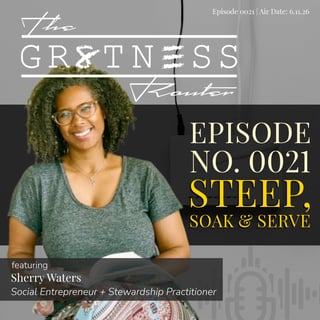
Speaker: This is the Greatness Router, where we connect purpose to process one conversation at a time.
Speaker: Great day, beautiful people. It's me, Zena C. And I am here with another episode of The Greatness Browder. Today, I have the honor of bringing to the table my line sister, a a financial guru, an amazing being. And I'm just so excited to introduce you all to Nadia C. Vanderhall. How are you doing today?
Speaker: am doing awesome. How are you? I'm well, thank you. Thank you for asking. um I do want to get into this bio that um you have so beautifully ah provided. And y'all, it's really going set the precedence of this conversation. ah Nadia has been instrumental in just developing how people think about money moving forward, starting where they are. And I really want to get into ah the information she provided, but you know how we do. We get into the nitty gritty, the journey, the why, and the processes behind that. So So without further ado, I'm a hop in.
Speaker: She didn't find financial planning through a textbook. She found it through a pink slip. When the 2008 recession hit, Nadia C. Vanderhall was laid off.
Speaker: And what followed wasn't just job loss. It was a reckoning. She'd been working inside financial services, you know, the place where the retirement jargon gets made and the bank products get built, and realized she'd been surrounded by the language of money without ever truly learning how to use it for herself.
Speaker: So she started over, this time from the inside out. That experience is the foundation of everything she teaches. Nadia is a financial planner, educator, and content strategist dedicated to demystifying money for women and communities of color. Her work is anchored in what she calls the dash theory.
Speaker: It's the belief that money should serve the dash between the dates on your tombstone, not the numbers in an account, but the actual life you're building. In practice, that would look like a first-generation professional shedding financial shame or a family finally aligning how they spend what they actually value.
Speaker: I'm sorry, how they spend with what they actually value. My apologies. In 2016, she founded the Brands and Bands Strategy Group, a financial planning and education company focused on making personal finance practical, culturally relevant, and accessible to the people who've historically been left out of the conversation.
Speaker: Through one-on-one planning, corporate consulting, workshops, keynotes, and digital content, Nadia meets people where they are and moves them forward. Her approach has earned her a seat at most tables financial educators never reach. She has collaborated with Facebook, Google, Columbia University, Public Invest, Commonwealth, and the National Urban League. Oh, and her work has been featured in Good Morning America, The Washington Post, The Wall Street Journal, Fast Company, USA Today, Essence, CBS News, and Business Insider. Y'all hear me?
Speaker: A LinkedIn top voice, Johnson C. Smith University alum alumna, JCSU 40 under 40 honoree, a proud member of Delta Sigma Theta Sorority Incorporated, and part of the Intuit Ideas cohort number three. Nadia brings rigor, range, and a real story to every room she enters. She's turned her own financial crisis into a framework. Now she helps others do the same. Without further ado, Ms. Vanderhall, would you please come to the stage? I am on stage. It's always weird that you write something and then you hear it back. I'm like, oh gosh, I did all that? yeah
Speaker: Yeah. Yes, yes ma'am. you You did all of that and you are that you are that woman. I can't even say you are that girl. You are that woman. like Yes. I'm approaching Auntie's stage, so no, have to do that.
Speaker: I'm so tickled. could not. It's the modesty for me. um But one thing about this podcast is I am going to keep sitting here being like, no, sis, you did that.
Speaker: um Because you deserve to know where those pinpoints and those landmarks are. Yeah. You know, what we recognize. All right. As well as what you recognize. That true. You're correct. I'm going to put that seatbelt on because it's coming.
Speaker: Okay. All right. Okay. Okay. So I like to start with a, an icebreaker to just put everything out on the table. Um, your icebreaker is if you could have a candid unfiltered conversation with any historical or prominent figure, who would it be and why?
Speaker: Who would you talk to? Absolutely. I mean, if I could pick two, I would do that. Let's do that. No, we're going to stick with one. Melanie Hopson. I don't want to add to it, but Melanie Hopson, she's currently over aerial investments and a powerhouse when it comes to personal financing, when it comes to investing in general. That woman over a very big endowment and invests in different startups as well as managed assets. One of the reasons why I say that is because she's very adamant like me on
Speaker: Not necessarily demystifying money, but making it seem, show people how they can money. She has a children's book that just came out. She was on Oprah. So she's like one of my favorites. Another one, I am going to add her to the fold is because, I mean, I'm talking to my line sister, um is Tashonda. I think her last name is. And knowing me, I'm going to keep pulling my phone this whole time when I reference stuff. No, it's perfectly fine. But she's over TIA, or TIA, it's not TIA. It used to be T.A. Cref.
Speaker: Okay. Let's um She also, obviously she's over that. But the thing that I love is that she talks about owning your journey, right?
Speaker: Just like you're renting the title, but you have to own your attorney and just how she's really taken TIA, Cref and reformed it into a powerhouse when it comes to um financial planning or financial services, understanding how to bridge the gap from taking people from just having an account, like a retirement account to actually building wealth within their own right. So seeing what she has done to Shonda Duckett.
Speaker: it came to me without Shonda excuse me to Shonda Duckett okay okay I'm here for it look you just schooled me on two people that I have not had the pleasure of encountering but I'm definitely going to go for me to be Yeah, Tashanda Brown Duckett.
Speaker: It's like she's one of those ones. And then interesting enough, recently I just met a another one that's on my Mount Rushmore, ah Phyllis Newman, which she has founded Shoulder Up. She created a company that has gone from zero to SPAC, which is a blank check company that goes to be what some companies are trying to do this week that we're talking having IPO. I met her recently. um And that has been one of my highlights of doing this. And then the fact that she's handled all this money, but she knows who this little brown girl is from South Carolina is.
Speaker: So to know that your hero actually knows who the heck you are. Yeah. i' I talked about that recently, but I don't think I really talked about that recently. because we've been going back and forth but those three are all black women all within money in different facets of money but the thing that it boils down to is that they explain the journey of money within what people will look like not necessarily the finance bros but women that know about dough and talk about it in their own um range so that's a long
Speaker: i Long story long, but those will be those that i if I could just have an hour with. I'm already changed by what they do as change agents, but I think that would be...
Speaker: Those would be like if I could have all three like on lunch, cacking, you know, kiki about money. That would be amazing. And I'm excited because the fact you know how I am. Look, if I can visualize it is possible. So, baby, it's done. It is. It is possible. At least I know for one of them is possible.
Speaker: Possibly, hopefully this year. But yeah. Yeah. That's going to be amazing. I think that i i i can see it. And i we're going to speak that into existence. We're going to make that happen. Because I i i love what you're doing. um And I love how you are are not gatekeeping the conversation. Like you are you are literally breaking it down so that the commoner, me, can understand. okay
Speaker: Nothing. you are a common. Okay. You're not common. But I'm just saying, like, I can understand the jargon that comes out of your mouth and it processes without me having to be like, okay, I need a thesaurus or this is too anteed up for me. This is too much. Like, I can process what you say, but I need it from your It's word for Elmo. That's what I've been saying lately is a big word for Elmo. Because if you think about you have littles, you understand it. That if you hear Elmo say it's a big word for Elmo, that means you need to break it down. And some people have this thing of like, it's playing to me like I'm five, it's playing to me like I'm three. Most of the time, it's like just making it connect. If I tell people what's going on in the grocery store, oh, they're going to understand what three for five looks like or what buy one, get one free looks like. And then how it actually, yeah.
Speaker: it's not necessarily three, but making sure it connects to how people money is the key. Okay. Yeah. Okay. Look, I'm here for it. I love it. So um I think that this this entire Mount Rushmore to to breaking it down where people can get it takes us into our next point. um I like to call this the router moment. Right. And this is where we we get behind the purpose of your work. And I know your bio scratched the surface on on a few topics, but I'm curious to know what you're actually going to to place on the table. So if you had to pinpoint the moment you knew what you were doing right now was your calling, what would it be?
Speaker: That Facebook post that I made eons ago explaining how to build a portfolio when it comes to you building wig.
Speaker: That was a long time ago. And I failed to see how people got what the what I was putting down, picked up what I was putting down. I was sitting uptown at Bank of America and I saw i keep seeing stuff on stroller, I'm supposed to be working. And I'm like, let me just say this because someone said something at work and it was like, I'm tired of people just making it jargon, jargon, jargon are abbreviation heavy or acronym heavy. Let me just say this. in
Speaker: i just have a way of using puns, words, yeah and just structuring things. And I think when I said that, or made that post and it was like, oh okay. Y'all yeahll like that, just like y'all like the memes. Okay. And then I just were will start just answering things along the way and it grew.
Speaker: And I think what really made it click was the pandemic, not to make it rhyme, but obviously it clicked during the pandemic. But I think that I teased around with it oh wow And i think that was the first post that I actually like, okay, you can do this.
Speaker: That was it. Yeah. I love that. And the fact that you're likening financial services to somebody's lace front, ma'am. it is. Because, yeah, i think about it. Like this morning, people are going um this Monday that we're recording and people are on threads right now. Confused at why their 401ks is in disarray is because someone loves to start things on the weekend. And we noticed that that could align to your 401k. So if you're not able to explain why people are looking at their 401ks, why are y'all looking at your 401ks on a Monday anyway?
Speaker: But if you don't understand why things are happening within your 401k, would be more practical just to say, put money in it. You're like, okay, this is why this has gone down. This is what I can do instead. This is how I can still build regardless of the volatility going on in the economy.
Speaker: Okay. be Okay. It's the it's the layer. but Yeah. You saw it. Yeah. buts It's the layers for me. was like, shoot, let me see what I can say. I can say it, but yeah.
Speaker: It's the layers. Let's get media training. Big facts. Big facts. Look, you you got to you have to learn how to communicate on all on all levels, which is why you are so good at breaking information down for people and putting it where they can get it. As as Joe Madison, as the late Joe Madison would say, you got to put it where the goats can get it.
Speaker: Mm-hmm. if you want If you want people to process the information, got to put it where the goats can get it. and I appreciate him for that. And I appreciate you for um for sharing that moment. So the the Facebook post about the wigs helped you realize like, oh, y'all like messy stuff to explain.
Speaker: Complex topics. Got it. clicks. It clicks. That's the same way i told someone what about budgeting was how the other day was, no, someone asked again about the stock market and I likened it to take going to TJ Maxx and Dilly Dally.
Speaker: Oh, just just off the cusp. Like, hmm, there's a TJ Maxx. Let me go in there go look. Yeah, so that's literally what it is. If you think about investing, it's like, oh, the stock market is doing this. Let me just go get it because someone says that they saw online that I should just go get that about that I saw at TJ Maxx. Who is that?
Speaker: ah Sand and Fog. So let me go get Sand and Fog. at TJ Maxx because i see somebody else talk about it. So let me go open up this 401k I'll Ralph IRA. And then let me go and just figure out what do I need to add in this basket. But then you have to understand what's my risk tolerance? do i How much stuff can I put in my house? How much can I invest?
Speaker: So that is literally just... I love. I love how your brain works. Yeah. I love how your brain works. That's weird. Okay. I said that's weird.
Speaker: ah All right. So let's talk about a pivot point for you. Was there ever a time when you almost chose a different path when maybe, maybe not financial services, like maybe financial services wasn't the the game plan or maybe you were already in finances, but you were thinking you were going to take it a different route. Has there ever been a time where you just decided to choose something else or were forced to? i think The time it was right before the pandemic and I was working at a marketing agency and they, here if i why do you keep our name in my mouth? Because um it's because I had my boss at the time was solid. I was doing what I was doing and he said, well, you and your little business, you you might have to pause it so you can focus on this. And then the company went under right then.
Speaker: Not your little business. baby. I've been little business a lot. I've been a little bowwalled lot. um but you that But it's so not.
Speaker: It's so not. And even at that time, it wasn't. But I had to think about at that time, if I could unpack a little bit more, I was noticing that the algorithm wasn't kind to me. I was noticing that I wasn't growing as other people. So I was like, maybe you might be right. Gee will, or you might be right. And then I was...
Speaker: So as the pandemic is stuff happened, and that's when I really started taking things a little bit seriously. Then I went to, you I don't think people understand my origin story with public. It's that I went to a public invest, that ah fresh off a layoff, still haven't gotten my severance. Years later, I still haven't gotten myel it's oh my But I went there, listened to their webinar they had with some other people. And i asked, like you know how to give a survey at the end? And I gave a survey and me being me very opinionated, told them what they were missing. and I told them what they were missing and then their person of over content creation
Speaker: reached out to me, our concert creators reached out to me, and then we just kept going back and forth. and And that is what allowed me to move from maybe they write to maybe I might need to take this a little bit seriously, but repackage it into how I was doing.
Speaker: And I believe that is what I have been slowly doing over the last two years. It's like moving from just talking about content to, not but but this is a company, this is offerings, this is But it's that little bow wow moment is what allowed me to say, screw it and just do the way that I want to do versus looking online and getting attached to that algorithm versus creating my own algorithm. right That is what I have been doing.
Speaker: heavenly over the last three years. so Correct. Now, one thing that I know, I'm privy to this about you, that the rest of the world is still learning, but you are extremely awful than authentic person. like you You are very like no BS, very straight to the point, very clean cut. like it it That's just who you are. you know like Miss me with the BS type of individual. So I can see how being Lil Bow Wow'd is appalling.
Speaker: is it It's appalling because you specifically pour everything. First of all, you're you're mustering up your willpower to even... want to to to change someone's concept or to provide resource in the sense of, you know, I mean, I know how to fix the problem, but you seem like you know all the, and you have all the answers. I'm going to stay over in here, but you can ask me for it and I'll give you everything you need.
Speaker: Right. But I'm not going to insert myself when you already believe you have everything squared away. Like that's just how I know. our dynamic to be. Right. So for you to have built this, which I think is a beautiful brand. I think, I think everything you're doing is well necessary is well needed and founded and essential. um So I would never like even put you into that, that category. So I'm appalled even knowing that people are saying like, yeah, you and your little, your little brand over there. I had to stop when I worked at Snoopy. Literally, I had to stop and not do as much as I wanted to at Snoopy at Bank of America due to the fact that you are talking money and you work good, so you technically can't. But I felt that I would have had more leeway working.
Speaker: But hey. It is what it is. Godspeed, but... Well, i'm I'm glad that the detour has led you here. um I'm definitely glad for that, which takes us to resilience and process, right?
Speaker: What keeps you in the game when things aren't going smoothly? What keeps you going? a lady at church yesterday tapped me on my cheek and said, I follow you on Facebook.
Speaker: not First of all, she touched your cheek. and Yeah, baby, she aren she she did that. i said, thank you But you are at church, so that's sweet. Okay, thank you.
Speaker: But I think it's little nods like that, but also the fact is i you social media can be very loud and an algorithm that we're not supposed to technically always ah rely to, but it's me fine tuning what my algorithm looks like. Me having somebody random send me something or randomly get read things from a press different publications like today about something is those little k nods that I see within the nose.
Speaker: So okay this is not happening in a way that I'm okay with or what I envision. Am I okay if the value gets moved? But I see the nods that I get when it feels like a sea of no's. And I believe that is what has made me a little resilient. And sometimes resilient needs more rest than it is the alien we need to do.
Speaker: um But I think just me fine tuning what my algorithm looks like as I go through certain stuff. So if a certain post is not create is not doing what I want to do on Facebook or whatever, that I had a webinar with a credit union out of the West Coast that had over 600 people register for it.
Speaker: That's a different type of algorithm. It's that trusting God's algorithm when it looks a little foggy is what's my... thing is. And also I got a sister that loves to bully me. So that kind of helps too.
Speaker: Oh my goodness. Stop it. Look, she just wants the very best for you. She she wants you to keep pushing through. Yeah. So i she can retire.
Speaker: Her word is not mine, but I know. we are to But yeah, that's simply that is that I have to look for no's even when what I have been fixated on and create my own KPIs versus what is done by everything else is the key.
Speaker: No, that's fair. That's definitely fair. And, and gym filled, to be honest, like that, that's, that's big, like in a, in a sea full of no's really finding that w raft that just, you know, helps float you through it or gives you the solace you need so that you can just keep pushing through it. I re I respect that.
Speaker: That that's big. That's big. Um, Earlier, before we hopped on this call, you brought up a book that you you suggest that everyone participate. every like that's the starting or Would you say that's the starting point for... okay what would. Okay. Would you mind introducing us to... it endorsing that but Endorsing it. Endorsing it. The Psychology of Money.
Speaker: Oh, I wish we would say that because I have one over there. Okay. But it is literally, it walks you through not necessarily your wallet, but what it money looks like, your origin story or your money root story. say for instance, how you were brought up into money. Some people love to say, it was one person I talked to a while ago QuickBooks.
Speaker: Um, and they were just asking about my business and they said something that was so pivotal that most of the time you hear about generational wealth, but what if my parents didn't teach me that? So I technically feel like i just had generational debt.
Speaker: Ooh. And that sat with me, but that also counterbalances with what the psychology of money literally is. It works through. your origin story, what you had known about your childhood, and then how it impacts how you earn, how you save, how you invest in all of those things. And then on,
Speaker: unpacks but also repacks or repackages how you understand and grasp money because a lot of people love to say well i wasn't taught about money but just because money was not taught in school does not mean that you can't learn on your phone on your laptop or whatever and that's what i have been like geared towards doing is taking that oh we didn't learn about money in school I didn't either. My daddy made me watch Bloomberg when I wanted to watch Save by the Bill Dax. And I have said time and time again is that that has happened and that my mama made me learn how to write a check or how to but do a budget on the back of an envelope.
Speaker: I have used those context clues from my childhood to help me repackage how I talk about money. But one the books that I will say that is the pinnacle for people is to You understand what goes on in the mind. that You're able to understand what happens when the wallet that will trick us over to how you handle your wealth. So, yeah. That's what I would endorse.
Speaker: I guarantee in my ah American, what's it called? American gangster voice um in my Denzel voice. I guarantee it. guarantee it.
Speaker: Yeah, that's the reason why um um and Libby is always sold out. So yeah, it's always renting out. Look, look, I was definitely about to, I was about to go to my library app, but you I'm about to be on a year wait. I might as well just go for the year wait It's okay. if If you can't find it, you let me know.
Speaker: 10 for boss. I appreciate that. All right. Okay. So we've discussed the router moment. Now let's talk about application. Okay. um And what the takeaways, what our listeners, our our our viewership can can take away from this. So, and here we're going to discuss lessons for others. So turning your L's into dubs for other people, right? What is one mindset shift or practice that has helped you to succeed?
Speaker: um One of the things that I remember at Snoopy was this lady, i don't know, I remember her name. And she said, um you have to use the chunk method when it comes to building out certain things or strategy. What she means by that is that if you have to do things in small pieces, um bit by bit until you achieve all of it, like Uncle Steve Harvey says, and that goes into saving, that goes into investing, that goes into starting a business. I didn't know how to do to build a business per se.
Speaker: Most of the time I'm looking like, oh, that looks hard. Okay, might can't do it at that scale, but let me see what I can do well. So it might be me starting to send out a newsletter, starting to do certain things. But a way that we can leverage that into money is that I have a challenge that talks about how you can save $5,050 in 100 days.
Speaker: um Because some people say they can't save money. What does that get you to do is for you to look in your wallet to see what's your cash flow to determine how can I start saving money? B, what can I look at my money day in and day out? Because that's what you have to do is to pull a number from that thing from the jar to say, i can save $50 a day. Do I have $50? Why don't I have $50? Why don't have this? It also put makes you put money into a HYSA, which is a high yield savings account, which is going to compound over time as you save it there. But it's making you not only say, I can't save, da, da, da, but-
Speaker: I can use this little bit of a bit. This is how I can make it move and how I can make it go towards those goals. So it's me being able to give things in that way because lot people hear money challenges, but how does it change you?
Speaker: So if you were looking at your bank app a lot every day, sometimes some people hate to look at it. used to be one of those. How am I understanding what cash flow do I have and how money has been flowing? And then how can I start moving that money over to grow it? So that is one of the things that I think the small habits that have compounded over time.
Speaker: So it's a bit by bit until you achieve all of it. But how do you make it aligned to what you're doing? Whether it's business or your bank account. Okay. Okay. That's manageable. And that that i like I can process that in the sense of- You hear $500, say $500 month.
Speaker: say five hundred dollars a month Would you be able to save $500 a month, even if you have it that mindset that you wouldn't because you're like, where is it coming from? But if you're able to save $5 a day, i can do this a day, it's breaking it down.
Speaker: So yeah. It does. It it puts it it makes it manageable yeah or fathomable. like It's kind of like, oh, you know- A dollar a day. If I put a dollar a day away, that's $30 at the end of the month. Like, oh, okay. um You could ask somebody for a dollar. You know, every you might get on somebody's nerves. Kids ask for a dollar and without a blinking. So why can't Look, look, only a dollar. you oh Money grows on trees to the little people. Okay. They They're not your broke best friends, but your rich ones that just manages your money for you.
Speaker: They are. Okay. Okay. Oh man. All right. So awesome. i I like the, I like the concept of the chunk method and I like the, the idea of chipping away at that chunk bit by bit for what is, what you deem to be manageable. Right.
Speaker: Because that's important. I think a lot of us tend to, um, tend to kind of grass is greener on the other side type of situation where how can so-and-so do X, Y, and Z? And I can't even figure it out on my own. Not recognizing that. I mean, i mean i started a brand. Mind the business that pays you is a thing. Like, mind your business. Mm-hmm. And you can you can grow. It's kind of like water your own grass and then your grass will be green instead of looking over your fence at somebody else's type of type of situation, right? Right.
Speaker: Because it's the more time that you're taking away from looking at someone else's you could be watering and tending to your own. Look and be fruitful with it. I digress. Why can you be fruitful and multiply if you're not even watching your own?
Speaker: Okay. Okay. Mm hmm. OK. Yeah. Look. All right. So your process. So we talked about lessons for others, your process. How has your thinking evolved as you've advanced?
Speaker: And you've given us some examples. So I'm but i'm I'm just curious because the Nadia today is not the Nadia from, you know, 2006.
Speaker: You know what i mean? The Nadia. But I'm saying the Nadia today, it's not even the same Nadia from 2019. So how has your thinking evolved, especially as a business owner? he's not.
Speaker: Oh my God. it It's like, and I think I, I talked about recently, it was on my stories that I ah took a picture of a meeting that I had. um And interestingly enough, my cap and gown picture with Dottie Yancey was in the background. And i was like, that Nadia there helped me to this Nadia today.
Speaker: The reason why is because that was a journalism major and I had to pitch myself and talk highly of what I was building, how was grasping and what I was going towards. And even though that young lady was all over the place, that she knew it's something else. I just thought about it. I talked about being, and I didn't realize until now.
Speaker: um v maring that is look Look, I don't think we take enough time to reflect on where we've been. So that's why this podcast is so beautiful because you're sitting here like, wait a minute.
Speaker: So yes. And I didn't need a concept. I didn't have a concept of a plan like some people. Then i just thought I was just doing, i was going to do a journalism thing or whatever. I didn't to have to use it into what I do today to pitch. to certain publications and to fit what their audience would need. But anyway, going back to that is that I didn't fully grasp that um until that point. But then I realized each season that I've had each Nadia, a version of Nadia helped build the value that the next Nadia is going to have to have. um And I think my process, my throughout process, even when I have some interesting days is that I leverage it based upon where I've been.
Speaker: Case in point, the 2008, 2010 recession, the fact that I had to live that season to help me leverage talking about it now huge.
Speaker: is yeah crazy. yeah I had to use that season to leverage. And my mindset then was like, I just don't understand why I don't. that that And that person talking, that self-talk helped me shape what I've been building when it comes to the product that deals with that when comes to certain things. So my mindset, long story long, has been one that has been transformational over and out. But also giving myself grace to know that where I'm going and I'm not going to be airtight every day.
Speaker: But me finding, again, nod moments of saying, OK, a couple of months ago, i was fussing about this, but here I am with this opportunity. So how can I take about something that I had insights about? and implement it. So it's always about the wax on, wax off as aspect, but being able to see the growth within where I'm going and just finding those moments like, dang, I did say that.
Speaker: So where what are we doing with this? Or I find old notebooks where I've just scribbled stuff and it literally be the plan be right there. And yeah I was not in the clear moment, but I was foreshadowing. I don't know what they call that. love up i would call it foresight, but I love foresight.
Speaker: I love that. i love the fact that you are so ahead of your time that you were able to, well, you had the discipline. Let's start there. You had the discipline to even document it, whether you knew it's what you we were doing or not, but your being had the discipline to document it. Even being able to go back 10, 15 years later and be like, oh, snap, already figured this out.
Speaker: And that's why journaling, and my sister's been really pushing me to do more journaling um because it allows me to unpack when everything is in there because if you can't think clear.
Speaker: in that moment, how am I gonna sit here and regurgitate or do a brain dump on things and then repackaging it. And being okay that you're not gonna have everything perfect, the subverbal side coming out, that you're not gonna have everything perfect, but what is the process and how are you honoring that process? That is one thing that I've had to work through with my mindset and how I do things is honoring the process versus thinking that you're going to be on the seat of perfection right then. It comes with time, but do you and honor the tussle and then the treasure that comes with it? Yeah. I love that. Okay. Honor the process. Come through with the come through. with The gems. She's dropping gems. All right. um Thank you for that. I'm i'm grateful. what's What's next for you? how can How can listeners support your journey? Like what's coming down the pipeline?
Speaker: What's coming down the pipeline? i have a budgeting workbook coming out um as well as building out the platform when it comes to the financial education on demand per se. ah So that and doing a lot more financial wellness workshops. So yeah, that's how you can support me. If you want me to come to your company and talk money, that's fine.
Speaker: I do virtual as well as in person, but just support not only the content, but support the building of the company. And that was something I talked about on my stories, but I recorded it by the post because that's what I usually do. I do a lot of brain dumps. But one of the things that I am doing is honoring the season of my company. I'm not just content, but I'm actually building a company.
Speaker: So that's how you can support the content, but also tell people about the company and what good it's doing. So as it continues to grow. Which I feel like takes us into the next little, I'm almost done with my questions, but I feel like I need to, I feel like I need to hit U-turn real quick because, um because we're, we're overlooking something that's very strong and you've, you've, you've discussed the company, the company, the company, but let's talk about the brands and band strategy group. Like talk to us about
Speaker: what it is because it it's it's a whole thing. it is an entire It is an entire working, functioning business. It's not just some little business. It's it's a full-fledged education model. So let's let's talk about it. like give me Give me the 411. What is it? What is it not? Let's go. It's a financial planning and education company. um I do not manage assets. Meaning if you hear financial planning, you think of an old white guy. I'm not that obviously, but most of the time they are holding and your money to and then investing it.
Speaker: I'm not doing that. I want my people to understand what's in their hand and how to grow it. And the way that they do it is through me working through their budget to see where can start saving, investing and things like that. um Either it's through a workshop or a workbook or working with me directly one-on-one or even having me do their budget for them because lot of people hate doing their budget. So I build that for them. Another thing that I do is I build financial plans saying you give me your goals. I tell you where to go and I build it out.
Speaker: And then either you can't do it yourself or you can work with me for a year. on That's the retainer aspect. But also another thing that I've been adding is that people just have questions. They don't want me to build their financial plan. They just want me to to answer what the heck should I do about this credit card or these student loans help. ah So that's why I do. I answer those one off questions. But a thing that I am really getting adamant about is the educational aspect of it is that I have the workshops. I have the workshops that I do on my platform, but also what I do in companies and the um digital products and things that are coming down and repackaging that. But I believe that the in the dash that you talked about within my bio is that most of the time I got this from my dad passed and they talked about that dash.
Speaker: Between the dash and all the CNAF, you Right, right. But most of the time, people, the different dash is that the wallet that you have now versus what you the wealth that you envision for later. What's the roadmap beyond saying you just saving content? That is what I am building out. It's the wallet that you have now, understanding it you can leverage it. So whenever the wealth that you want later comes down the line... And everybody keeps talking about this great wealth transfer. What's to happen if you do get a lot or large sum of money? Or if your uncle that you didn't talk to, but you know that they talked about that was down south, sends you some money or you get an inheritance, what you're going to
Speaker: Your wallet is not prepared for the wealth that you want. That's big. that's That's big work. That's a lot of heavy lifting work that you are willing to stand in the gap between. Yay, me.
Speaker: Okay, but all jokes aside, great people. She genuinely enjoys doing this. I do. It's just so hilarious. It does not. When I tell you someone, I saw someone else complaining about how they can't have a hard time finding content. I said, not me. I don't.
Speaker: I don't have a hard time finding content. I don't have a hard time finding concepts because i that's when I realized that, that's how I know that this is the pocket I was supposed to be It's not worth me. It's just a lot of stuff that goes with it, but it's not worth than me. It's worth meaning. I love what I do.
Speaker: So yeah. i I love that you enjoy creating a concept of it, but I feel as though when it comes to like, oh, we actually got to post this. Like it that we got to, we got to clean this up. That sounds like work.
Speaker: it It is, because I was just working before I got this call.
Speaker: it's It's like that, but your your content speaks volumes. I always tell my clients that when it comes to the content that you produce, and I understand how difficult it is to to produce and stay consistent and all. I get that. But when it comes to the degree of content that you are supposed to be producing, the way I suggest I i frame it for people is to really think about if you're driving down a highway, what billboard do you want someone to see?
Speaker: Yep. And then when they when they see the billboard, where do you want them to go? Like what what off ramp do you want them to take? All right. So they get off the off ramp. Cool. So when they get off the off ramp, have you ever been so irritated that you knew that you were getting off the off ramp and you were headed to the gas station, but you don't know if you need to be in the left or the right lane?
Speaker: It's a three. Yeah. you know yeah know you never You never know. And and yeah I feel like you're standing in the gap between between that area and you're helping people recognize like, all right, so a mile back, I told you that you're going need to be in the right lane.
Speaker: All right. A mile back. Let's go up a quarter mile. I told you. Now, when you got off at the top of the exit, I'm telling you this again. So it's those pit stops. And and I think you do really well at articulating which directions people need to need to travel. So please keep pushing. Keep it going. It's comical. It is relatable. it You are putting information where people can process it as long as they are up open to receiving it.
Speaker: Mm-hmm. So now we just need to articulate it to the the brands and band strategy group. Like, y'all need to book my sis. Y'all need to book my good sis because she is willing to help you yes learn how to fish.
Speaker: Because she's not, I mean, you have a done for you route, but your main goal is teaching people how to fish, right? That's the main goal. That's the main goal. You're right. Yeah. Look, look, don't make me, don't make me come for y'all. I'm sitting here giving y'all all the, all the, the proper people to follow. That's how what makes your platform amazing is that you're giving, you put people on their, on the router and the radar, but you're also articulating value amongst the vast. So yeah.
Speaker: Look, if I don't have the details, I guarantee I know somebody that could. So I'm not the money guy. and know they way I know a person. know a guy. and I know somebody. let me let me Let me go check my Rolodex real quick. And I got you. yeah Okay. So before I ask my last question, I'd like to open the floor to see if there's anything that you would like to put on the podcast that I didn't or or share with the people that I didn't necessarily ask about. Did I miss anything? no The only thing that I probably will say is that don't feel that in this economy, as messy as it is,
Speaker: that Going back, i think so I don't know if you talked about this before our chat or during, where a lot of people compare to what they're not doing at the area.
Speaker: And people are in that season of saying, well, why the heck? in this look I lost my job or I got laid off or whatever. And they've already found something more. I haven't. Or they've already started saving me in 529. I haven't.
Speaker: Own your wallet, own your attorney. If you know that you can't do what they're doing, what variation can you do? Everybody can't be Warren Buffett. There's only one Warren Buffett. OK, but how can you Warren Buffett how you money and owning that and understanding you're one percent better? If you're understanding you're one percent better, you're doing better than the other 99 percent of you that didn't want to do it.
Speaker: Y'all heard her. Y'all heard her. shes She said, pay attention to yourself. Please. so what has She said, watch your own two feet. Literally. Watch your wallet. she She said, open your wallet and study it. Stop studying other people's pockets. Literally.
Speaker: Literally. I see it all day. Oh, my goodness. But again, you're doing the work and we we appreciate you. If nobody said thank you today, I'm gonna say thank you. So we appreciate you.
Speaker: Thank you. right. You ready for my last question? Of course. All right. What is one public facing? I put that in parentheses. What one public facing thing that people don't know about you?
Speaker: public facing as in you don't care about the public now knowing this about you. They just didn't know because they just didn't know. Not because it's a private endeavor. I think that what is being seen in real time is that the journalism, the news,
Speaker: The greed and the writing aspect of stuff is what's really coming out. Because now I'm more so able to not necessarily, oh, I see how people are. Oh, this how you do it. And flipping. And I didn't realize until I started building out my newsletter that I actually like to write. And that another thing, that goal that I have is that, what's the the thing that we used to have back in the day is Dear Abby, when people go write in and ask questions. Gosh, yes.
Speaker: that I have a secret thing that I would love to do that. ah But it's like not necessarily, i am Abby, but I don't want it to be some fake name or anything like that. But just the way that I'm able to say, so for instance, someone asked about, for someone that's understanding of what's going on with the SpaceX IPO, how does that, whatever.
Speaker: I was able to sit there and flip what that meant. But it's just me being how i' able to do that. has reconnected me and how I was able to write so well in undergrad and stuff like that for all those millions of papers. But how I really enjoy copywriting and things like that. And that's one thing I haven't really been talking a lot about.
Speaker: But with one publication that keeps coming in back and has me featured in a couple stuff, I love it. But on the flip, yeah I was like, I actually would like to do like a vice column when it comes to my ah A financial advice column as the editor as editorial would be pretty awesome, especially for you because you would be fusing like pop culture and concepts into it. Like I can see people tuning into that.
Speaker: A lot. Like I really can see that. would get out right I'm trying to feel the if I want to do that myself with long form, meaning on YouTube or anything like that. technically do that on the fourth fourth week of the month. in the comments where I say auntie has been in y'all comments and this is what I would say instead. um And I think that's something that I want to fuse the advice column to something weekly, monthly or whatever. You're sure. Allow me to type type, but also to vocalize what that looks like.
Speaker: Cause I think a lot of people love when I talk about my fumbles, my five money fumbles, my own business. yeah Because people are nosy and they are noy people are nosy and they unfortunately people, ah ah they gyrate towards that's the completely the incorrect word, that but people gyrate towards the pain points. yeah And so when they can when they can humanize you and your pain, it's kind of just like, oh well, maybe this isn't as difficult as I as i thought it was because I thought you know she was just a superhero, which she is. But maybe she I just thought she was a superhero. But now she has human aspects that I can relate to. And now I can open my mind and process. I think that you're on to something, sis. Yeah.
Speaker: I think you're onto something um collectively and I can see you doing that. I can also see you negotiating a column. I can see it, um especially in your current space that you're of what you're occupying now. I can totally see it. But you you make me want to bring up another point. And I know I said we were about to wrap, but it' i feel like this is important because this is the second time you you brought it up. And I should have brought it up. But, you know, I'm going with the flow of things. So in under your undergrad degree is like is a communications degree.
Speaker: But you came out just around just before the financial crisis in 2008, right? So you had a brief stint of being able to actually function in what you went to school for before you had to do a a pivot or a circle back anyway, right?
Speaker: So that being that being the the framing of the picture, And now here you are, you know, years later, being able to turn around and see how that foundation has been um foundational.
Speaker: That foundation has been foundational to where you are now. If you didn't have that degree. And I hate to say if you didn't, where would you be? But can you draw more of a correlation between either how difficult it was to go from comms into finance or even more so how your comms backing is extremely beneficial now that you are operating in a finance space? I know it's a lot.
Speaker: Oh, I understand. I'm going to pick right out. The comms degree helped me move into marketing, which helped me build strategy and things like that. And then to help it, it all, it did the Rubik's cube.
Speaker: Ooh. So it's like, yes, the con degree that I had, Oh, journalism and writing. Oh, Well, that's going to be good for a marketing job.
Speaker: Oh, me learning about marketing and strategy. That's going to help me learn how to build my own company or how to build my own content. And then that's why it's just like the Rubik's Cube. um So I do think I'm just wasting my degree. And the other day I was like, I think I might need it.
Speaker: I think it might be paying itself off.
Speaker: It might be paying itself off now. It paid off. And i I think, too, is what helps me when I'm talking to publications or anything like that to be able to say, okay, these are the questions you have. Oh, those questions are cool, but let's flip this a little bit. It helps me fine-tune not only my platform, my company, what publications need for me, what platforms need for me, or what companies need for me, and be able to say, okay, no, that's not it. Let me flip this to a little bit away. And I think that comes from dis being and me, but also that degree.
Speaker: Yes. Yes. Yes. I think it's important. What was that? Dr. Wynn? Mrs. Wynn? Oh, Mrs. when Mrs. Wynn. Miss Wynn a staple. Yeah.
Speaker: Like, she, like, went when Miss Wynn looked at me and said, nobody makes an A in my, in in my, my, in my, my, my writing class. and i was just like, oh. Oh, okay.
Speaker: Oh, but I'm going to try my best. Still didn't get the A, but. Still. She was like, nobody, nobody exceeds that degree of expectation. Ouch.
Speaker: Ouch. Yeah. um Yeah, but she's the reason why I am adamant sort. If I say that this amount of people can't budget on whatever and it's a percentage, oh, I'm able to tell you the source of where I got it from. don't know um And that has been something I i laugh anytime I have to go find a source. I'm like, oh, that's it. Who said that?
Speaker: What publication says that? That's not a real publication. That's not... um What she used to call it? God dang it, I forgot. I don't know, but she- Yeah, she said she had titles for a certain publications and I'd be like, nope, I don't trust them. Nope, I don't trust them. And out now people come and say, well, i saw this on something or whatever and they'll send it to me and I'm like, no, instantly.
Speaker: Instantly know that if it's going for CBS or anything like that or any play of publication, no. And that's probably too the reason why I'm thinking about what publications I answer. So I'm sorry.
Speaker: I mean, it's it's like that. That's your that's your your upbringing. you're rooted in. There's nothing wrong with that. That was starting win. ah Professor Howard. ah Yeah. He's going to be on the podcast.
Speaker: He is. He to a hey is. I'm excited. it it Look, this this is going to be amazing. This conversation has been amazing because I just feel enlightened. I know what book I need to go purchase so that I can...
Speaker: not only help myself, but help communicate concepts to other people just to plant the seed. Cause that's all I do. I just sow seeds. Those seeds are growing. It depends on who the person is and how they water it is how the seed grows.
Speaker: Fair statement, which is why people need to pay attention to their own wallets so that their seeds can grow.
Speaker: I went there. i did i did it. Nadia didn't have to do it. I did it. probably do it in a few minutes and I post some content. But yeah. I am so tickled. All right. Well, is there anything else that you would like to say to the great people? No, this is amazing. And I'm ready to hear the whole ah season that comes along, not only with mine, but everyone else that you bring into the fold of your podcast. I appreciate you. i appreciate you too.
Speaker: Oh my gosh, y'all. So i I just love my line sisters so much and they they always are so incredibly supportive and I'm so grateful and they're all doing such amazing things. So I'm excited. The whole line is lining. right and Straight like that. 38KU exists for a reason. Shout out. We do.
Speaker: But great people. Thank you so much for joining us for this episode. I hope that you were able to hear the gems that you needed. i hope that you were able to hear the words and the jargon that's necessary to help carry you forward when it comes to your financial conversations with yourself. and with your family and friends. um I'm truly grateful for your your attention. for That is one of the greatest gifts you can give someone next to love. um And we truly, truly are grateful for your presence. ah Without further ado, Nadia, thank you so much for for participating today. You've been great people. Y'all have a beautiful, beautiful day. Peace.
Speaker: And that's a wrap on this episode of The Greatness Router. If you found some value in today's conversation, be sure to subscribe, rate, and definitely share. It helps more people connect to the journey of greatness.
Speaker: Until next time, keep moving with purpose.