Transcript
Speaker: Thanks for tuning in to the loser kid pinball podcast, episode number 53 tonight.
Speaker: We've got a very special guest on with us, but before we do that, my co-captain with me as always Scott Larson and Scott, can you tell us about our friends of the podcast?
Speaker: Sure.
Speaker: Just going through.
Speaker: First and foremost, flipping out pinball.
Speaker: Contact Zach and Nicole if you have any questions about pinball merchandise and they will be able to hook you up.
Speaker: I actually just got a heads up that my Led Zeppelin is ready to be shipped.
Speaker: So I'm excited to get that thing out.
Speaker: Also, Pinshades, if you want to play on location, but you have a hard time with the glare, go ahead and check Pinshades out.
Speaker: If you want to look at some of the information around Pinball, check out Pinball Supernova.
Speaker: They always have good things at their website.
Speaker: If you have that odd extra trans light that Steve Ritchie signed, but you just don't have the game anymore, go ahead and check out Lit Frames.
Speaker: It's a great way of hanging up your trans lights and decorating your arcade.
Speaker: If you also want to check out alternative art packages for classic Williams Valley games, check out Flyland Designs.
Speaker: I just saw that the art blades for Medieval Madness came out, and I'm looking at throwing those in my machine.
Speaker: So if you want to update that old Williams Valley game, go ahead and check those out.
Speaker: Also, if you want to check out my friend's blog, The Pinball Loft, he got a collector's edition of Guns N' Roses, and you can read about what was going on down there.
Speaker: Tim Purcell also this week in pinball the go-to site for the top five things going on in pinball check it out the Twippies are coming up and if I think I think voting may be closed but if not you can always go and check it out and see who the winners are going to be also another shout out to Silver Ball Chronicles go ahead and check them out too they if you want a historical representation of what's going on in the pinball industry they
Speaker: Ron and Dennis are great assets for that.
Speaker: And now, who we have here tonight?
Speaker: Well, what we did is we actually got a referral from Tim Lee.
Speaker: And Tim Lee knows someone who's very involved in the arcade side of pinball and everything else.
Speaker: And he mentioned to us we should get a hold of him.
Speaker: And so right now,
Speaker: We have Chris Myers, and Chris Myers has been in the gaming industry for at least 14 plus years, and he's part of Starport Arcade and Pub.
Speaker: And we got him on and were able to ask him a lot of things on the business side.
Speaker: We certainly wanted to get him on, given everything going on the past year and the limitations we've had.
Speaker: So, Chris, welcome to the show.
Speaker: Hi, guys.
Speaker: How you doing?
Speaker: Good.
Speaker: How you doing?
Speaker: Yeah, we're doing great.
Speaker: It's late.
Speaker: Like I was telling you before we started the show, I was, I've been grinding, man.
Speaker: It's been a 15 hour day.
Speaker: So I was really looking forward to this the whole day though.
Speaker: You kept me motivated, fellas.
Speaker: I had to get done.
Speaker: Heck yes.
Speaker: So I can get on, get on the podcast with the guys.
Speaker: I really appreciate the opportunity to be on.
Speaker: Well, we appreciate you coming on.
Speaker: I know when Tim reached out to us that, I mean, you're obviously kind of a man kind of behind the scenes and knows his stuff.
Speaker: I mean, obviously, you've got the day of fix approval.
Speaker: So you can give us all your thoughts and opinions on that stuff.
Speaker: But like, we're excited.
Speaker: Like, I think the thing is, a lot of us have come into the hobby in the last five years.
Speaker: I know I've been in it for seven.
Speaker: Scott, how long you been in it?
Speaker: Probably around that.
Speaker: Yeah.
Speaker: Seven, eight years.
Speaker: Okay.
Speaker: So...
Speaker: You know, we've seen a very different side of the hobby than, say, someone that went through the 90s and the 2000s.
Speaker: And it sounds like you got to be a part of that.
Speaker: And we would love to hear your opinions and stuff.
Speaker: And if you give us kind of a background of how long you've been in the hobby and whatnot.
Speaker: Well, so I don't want to call it the hobby.
Speaker: I want to call it the industry.
Speaker: I've been a coin-operated vendor since 2003.
Speaker: I've paid Pittsburgh City, City of Pittsburgh licenses for 18 years now.
Speaker: This is my 18th year, guys.
Speaker: So I've been doing this independently for 18 years.
Speaker: I was adopted by a vendor and I've been around this industry probably, I would say, 80% of my life.
Speaker: So maybe around 30 years total just involved in it.
Speaker: I'm 38 years old.
Speaker: I do remember going to Expo around the age of eight, nine years old.
Speaker: So I've been, I've seen the evolution of many things, whether it's arcade or pinball or, or, you know, just coin op in general, kind of the things we were fixing when I was a kid versus what we're fixing now.
Speaker: It's just, it's light years different.
Speaker: I mean, it's evolved into something that I never thought maybe as a kid that it would have changed into.
Speaker: So.
Speaker: So I've got to ask, though, has it become easier to fix over time or is it just kind of a whole different beast with the way technology has become?
Speaker: If you're talking about specifically pinball, I think like the logic repairs are more like find and replace, you know, but like, you know, we did a lot of board level stuff on everything that Williams and Bally made all the way up until like, you know, they closed a lot of their boards were through hole and made to have repairs done.
Speaker: And now, I mean, you know, slowly but surely, we're getting to the point where we can repair some of the issues on the modern stuff we have today.
Speaker: But I think that the biggest change was, like, you know, there's a lot less wiring.
Speaker: There's a lot less, you know, things that could go wrong on these games.
Speaker: You know, people talk about the reliability of Williams games.
Speaker: I mean, everyone had their problems back then, but there was just so much to trace out if you had an issue on pinball machines.
Speaker: And then on arcades, it's like night and day.
Speaker: Once we got rid of monitors, I mean, that was the biggest thing.
Speaker: You know, monitors had whatever it is, like a 6,000-hour shelf life, and then they needed to be rebuilt.
Speaker: So rebuilding a monitor, you know, there's different versions of different monitors.
Speaker: So it's not like if you can rebuild a K7000, that doesn't mean you can rebuild a 6100.
Speaker: You know what I mean?
Speaker: There's a lot to learn even on that side, where now it's like, okay, you know, you have a light tube.
Speaker: You have to replace an LED screen.
Speaker: It's not, and I mean, they go for 100,000 hours.
Speaker: They're rated at such a high amount.
Speaker: So I would say the repairs on the arcade side are much simpler.
Speaker: And I would say, or like it's pretty clear cut.
Speaker: Like there's not, you know, your IO board's bad, replace it.
Speaker: Okay, it's 150 bucks.
Speaker: Well, if you had to replace, or if you had to rebuild a monitor, it's going to cost you that.
Speaker: So, you know, it's kind of like, and then, you know, the games that we have out there now, just, they just tend to last
Speaker: their expected times.
Speaker: You know, we have service intervals on pinball machines, but ultimately, you know, if we stick to those, we don't really have many games that are down and, and, you know, the major players really support us.
Speaker: I mean, Jersey Jack, Stern Pinball, you know, the American Pinball, they all really support their products really well.
Speaker: We don't have like an issue with getting parts from them or,
Speaker: You know, they want their games to be represented well on location.
Speaker: So that's a feather in their cap.
Speaker: But it's reality.
Speaker: I mean, you know, they really do try to provide us with a solid backing of products.
Speaker: Now, we talked a little bit before when I grew up, actually, I knew an operator and I thought it was the coolest thing in the world because he had an asteroids actually in his garage.
Speaker: And I thought that was the coolest thing to actually have an arcade.
Speaker: I grew up, you know, 70s, 80s, 90s.
Speaker: That was the thing.
Speaker: You got up and you said, bye, mom and dad.
Speaker: And you disappeared and went to the mall or figured out how to get to an arcade.
Speaker: And really arcades have changed since at least when I grew up and, and a lot of the arcades have contracted or changed or disappeared.
Speaker: And a lot of them have turned into ticket redemption centers.
Speaker: And so you've seen this throughout the years, but what is your take on, I guess, the history of arcades and where they're going to be in the future?
Speaker: Like, are we still going to see arcades in 10, 20 years?
Speaker: Well, I think we will.
Speaker: I think that, you know,
Speaker: A big credit to Raw Thrills and kind of bringing a classic spin on some of our – yeah, a classic spin on modern games.
Speaker: Or some even things that Namco has brought out, like with the Pac-Battle Royale or with Eunice bringing out the remade Pong version.
Speaker: So there's like some like, you know, people our age still see the classic theme, the classic gameplay, but it's in like a new modern style finish.
Speaker: You know, the cabinets aren't wood grain sides that are just like, you know, that don't appeal to anything.
Speaker: It's really bright and flashy.
Speaker: So like, you know, my kids are seven and five.
Speaker: They love these games.
Speaker: Like, I mean, they look forward to us getting them.
Speaker: I take them to the IAPA trade show or the AMOA trade shows and let them play the games, get to see this stuff.
Speaker: But I mean, their reaction, I mean, Cruisin' Blast by Rothfills was another huge success on a classic 90s game.
Speaker: I mean, everybody remembers playing Cruisin' World or Cruisin' USA.
Speaker: And they were able to spin that into a newer style cabinet with a modern look.
Speaker: And the gameplay was great and people loved it.
Speaker: It was a success at the coin box.
Speaker: And it was a success at just bringing in that appeal from
Speaker: The parents of the kids that play now were like, I remember that 20 years ago.
Speaker: That was awesome.
Speaker: And then now fast forward to current, it's still a great earning game.
Speaker: So we have some like Eugene worked for Williams in the 80s.
Speaker: He programmed, I mean, I'm sure people know Robotron.
Speaker: That's what he's famous for.
Speaker: And now he owns a company that kind of is like transitioning into like a modern, what we have now.
Speaker: So I think you're in good hands when it comes to that.
Speaker: I do think too, guys, I mean, I do everything.
Speaker: So we do ticket redemption and, you know, there's, there's, there's parts of that that are, that's the lucrative part of the business.
Speaker: You know, it's not, you know, just, we love, I love pinball.
Speaker: I'm an enthusiast just like you.
Speaker: I mean, I've collected every pinball game I could get my hands on.
Speaker: So it's like, you know, I get it, but at the same time,
Speaker: there's other things that need to help spin the wheels to keep these arcades alive.
Speaker: And I think we're in good hands.
Speaker: Like, you know, Namco has a lot of good IP that's coming out, you know, Mario Kart and the pack Royale and just the licenses they're getting between DC and Marvel and different things.
Speaker: Like, you know, there's a lot of appeal to that license to the younger generation.
Speaker: And then me as a comic book reader, I kind of like seeing those characters in some of these games myself, because it's like, you know, it appeals to even like we said, like,
Speaker: you know, someone who's in their late thirties or forties or even fifties.
Speaker: I mean, so I'm hoping that that's kind of like what keeps the ice broken for us to just segue into, you know, when my kids have this business, because, you know, I have a seven year old daughter that's absolutely interested in this business.
Speaker: Like every aspect of it, she asks me all kinds of questions.
Speaker: I'm like, where did you hear this?
Speaker: You know, but, but really it's, it's interesting.
Speaker: And I, and I think, I think we, we are in good hands, you know,
Speaker: The retro arcade that you remember in the 80s, that may never be a full thing again, but you'll have sprinkled classics in there.
Speaker: People that operate games like me, we like to put, and I'm not the only one.
Speaker: I know a lot of guys that do it.
Speaker: It's part of the past, and it shows some reflection of where we started and where we've come to.
Speaker: So I think that's what kind of appeals to all ages then.
Speaker: you know, like Starport had, you know, everything from, like you said, a vector monitor, Tempest, all the way to the newest Raw Thrills offering or whatever Jersey Jack came out with or Chicago Gaming or, you know, we bought everything for that location and people played everything.
Speaker: The people that were older, like our age, they loved playing Ms.
Speaker: Pac-Man, Galaga, Tempest, you know, Robotron, those games.
Speaker: And then there's another generation of,
Speaker: of kids that are in college that went to, that loved the fighting game cabinets.
Speaker: You know, they wanted to play Street Fighter Third Strike and Marvel versus Capcom 2.
Speaker: And, you know, I have all those messages from those people that were like, oh, we love that.
Speaker: We love that about it.
Speaker: We wanted to play Mortal Kombat 2 on the real cabinet, you know, not emulation, the real thing.
Speaker: So, I mean, I really think that there's a broad range of people that come to these kind of sites.
Speaker: But I think, you know, this younger generation, and I'm talking about kids that are, you know, in grade school or early high school kids, they are appealing to licenses more than ever.
Speaker: You know, so it's, I think, and you can see, like, the pinball offerings are mostly licensed themes.
Speaker: So I think that they know their market, and we can get people into the location by having a Avengers pinball machine.
Speaker: And then they may branch out and play games that are classic, that are, you know, unlicensed or, you know, what have you.
Speaker: Right.
Speaker: But you actually got right into what I wanted to talk about.
Speaker: You hit a few things.
Speaker: And so I I'm going to spitfire a few questions, but we'll take them in any order you want.
Speaker: One, you talked about this.
Speaker: And one thing we talked about before is that when I was a kid,
Speaker: My parents had no idea where I was.
Speaker: And in the arcade, the demographic was basically eight years to 18.
Speaker: It was basically a 10 year demographic.
Speaker: But now you have a lot of different people in the arcades.
Speaker: And and that that is how I guess.
Speaker: You have to change the way arcades are done.
Speaker: This is the first question I'll let you take with it.
Speaker: You have to change how traditionally they were.
Speaker: It no longer works if you're just catering to a 10-year demographic.
Speaker: It seems like you have to have a place that families can go.
Speaker: And if they have an event, they can go and little kids can do this.
Speaker: Middle-aged kids can do this.
Speaker: Older kids and even my age kids can go and do what they want, but they're still in one location because they're getting exposed to all that.
Speaker: Yeah, I mean, it's really about running a good location.
Speaker: You know, we have sites that you guys know about that are just, they really, truly cater to all ages.
Speaker: They are, you know, one of the things that I want to, we can touch on is, you know, I remember going to these arcades as a kid, like you're talking about, and they were kind of like low light, not, you know, like dark places that the games lit up, created the ambiance and things like that.
Speaker: Now in the world we live in, it's like you need to have a well-lit location.
Speaker: You need to be able to see everything.
Speaker: You need an open floor plan.
Speaker: Not like – you were closed in by cabinets in the 80s.
Speaker: Like literally you were pushed in together by wood.
Speaker: Now it's like it's open.
Speaker: You go to Helicon Brewing, you see it's open.
Speaker: There's – from sitting at the bar, you can watch your kids play in pinball machines.
Speaker: It's perfect.
Speaker: But that's the biggest difference in the 80s.
Speaker: I mean, it wasn't a wide open floor plan.
Speaker: They crammed as many cabinets as they could into these locations.
Speaker: So really the appeal is, you know, mom and dad can go get a drink.
Speaker: If mom and dad want to play some pinball, the kids will play some pinball.
Speaker: But you got to have things like we have pong there.
Speaker: We have Czechs hockey there.
Speaker: We have darts for people that like to play darts.
Speaker: We try to cater to that bigger audience.
Speaker: And really there's something for everybody.
Speaker: So you can have a young kid.
Speaker: in grade school and you could have a high school age kid and you could have your college age or your professional that comes in.
Speaker: I mean, we see all walks of life walk into these locations now.
Speaker: And that makes me happy because like you're saying previously, even through the 90s, I mean, that really wasn't the case.
Speaker: When we started putting in redemption centers in these locations, when bowling centers started to migrate to ticket redemption, then it became more prevalent or more of a family activity.
Speaker: But for the longest time, guys, mom and dad were bowling at the bowling center and they just threw a kid of five and said, get out of my hair, go play the games.
Speaker: You know what I mean?
Speaker: Like, leave me alone.
Speaker: Now the entertainment is their phone.
Speaker: We're not actually competing as much with even home consoles as we are their phones.
Speaker: You know, I mean, just again, that's my take on it.
Speaker: How do you get kids away from their phones and onto the arcade machines then?
Speaker: Yeah, it's about experience.
Speaker: I mean, it's about having them experience the games.
Speaker: One of the things we kind of touched on too was pinball machines aren't historically the best earning games, but they do create something that some of the other games do not create.
Speaker: And that's an experience.
Speaker: It's physical.
Speaker: It's not a, you know, you're not moving something on the screen like you are on your phone or your computer or your home console.
Speaker: you're actually watching a ball roll around.
Speaker: And I think it's just, you have to get them to experience it.
Speaker: So like we do things to do that.
Speaker: Like we do free play nights at bars.
Speaker: Part of my sales pitch as an operator is, hey, we're gonna come in here once a week or once a month or for six straight weeks on Wednesday, and we're gonna put the games on free play.
Speaker: Give me an opportunity.
Speaker: Now this is all pre-COVID, but give me an opportunity
Speaker: to meet up with some of the customers you have and show them what the games have to offer.
Speaker: Because, you know, really, if you get a 50-year-old person, they grew up, their heyday was the mechanical error.
Speaker: It was just objective scoring.
Speaker: It wasn't like there's modes and there's objectives in each mode.
Speaker: And, you know, so once you start explaining that to them, it's like it's interesting to see someone's face light up and see like how what the interaction is.
Speaker: can do to a person who hadn't had that interaction before.
Speaker: I'll give you a great example of that.
Speaker: When I first opened Starport five years ago, I had, we had a kid come in there and we had the games on free play.
Speaker: We weren't even like open yet.
Speaker: And, and, and the kid comes up and goes, wow, these machines look really cool.
Speaker: And, you know, I think Scott, you said you had an X-Men and like, he was like looking at the Wolverine.
Speaker: We had the X-Men LE there and he was like, oh man, that's cool.
Speaker: It's like a sculpted thing.
Speaker: And I was like, yeah, you hit it.
Speaker: And so, so, so I'm like, here, have a game, you know?
Speaker: So I put a game on the machine and I hit the start button for the kid.
Speaker: Now, he was an Asian kid, transfer student, really nice guy, still texts me to this day.
Speaker: This is how good of a relationship we end up having.
Speaker: But he looks at the machine and he doesn't know what to do.
Speaker: Like the ball's in the shooter lane and the kid's just looking at it.
Speaker: And then he thought of it as pachinko.
Speaker: So he smacked the shooter rod and the ball went up, bounced around for a little bit, came down, drained.
Speaker: puts the ball back in the shooter lane, it auto-plunges and drains again.
Speaker: He didn't even realize the flippers flipped.
Speaker: Like, it's not, I'm not kidding.
Speaker: He's a 19-year-old transfer student from Korea.
Speaker: So then I said, hey man, you didn't flip the game.
Speaker: He's like, what do you mean flip it?
Speaker: So he like shook it.
Speaker: Like he meant, he liked to show me.
Speaker: He's like, you mean like, I'm like, no, no.
Speaker: So I played a game of pinball for him.
Speaker: And this dude is now,
Speaker: I mean, he's like, he's going, he's going to be 24 years old in March and he literally has five games at his house.
Speaker: Very successful.
Speaker: He got into his career right after college.
Speaker: Very, it was very successful quickly.
Speaker: And the dude has five games.
Speaker: Like, I mean, this is, this went from somebody that didn't even know that a pinball machine had flipper buttons too.
Speaker: So there is, there is something and Stern does a lot to try to get people to understand that.
Speaker: Like if you look at Stern's,
Speaker: attract screens on their newest games, it shows like push this button to start the game and kind of like shows people flipping the game and stuff like that.
Speaker: And us as enthusiasts are like, why the heck would they do that?
Speaker: But like, there's the example, you know, there is a, there is some people that have to understand what they're getting into.
Speaker: So that's the goal with, with the retro arcades and the modern, like, you know, us as retro arcade game players, we know how to play the games already.
Speaker: So,
Speaker: Just keep in mind that some of the younger generation that grew up in this iPad era don't know that.
Speaker: And there you go.
Speaker: But that guy now loves pinball.
Speaker: He'll call me to talk about what's coming out for pinball.
Speaker: I'm like, this is amazing because you didn't even know how to actually flip a pinball machine five years ago.
Speaker: So, you know.
Speaker: I've seen that even people coming over to my house.
Speaker: I mean, I have 11 machines in my basement where I have to go up and say, OK, see that big flashing thing that says start, push that.
Speaker: And then you either have to hit the launch button or the shooter rod.
Speaker: And it's yeah, it's it's so great because it's it seems so intuitive.
Speaker: But yeah, it's it's it's completely foreign if you've never seen someone play it.
Speaker: It's true.
Speaker: I mean, no doubt.
Speaker: It's a reality.
Speaker: I mean, I know people that are on the enthusiast websites and people that are in the know in the community don't see that.
Speaker: But from an operator's perspective, I mean, we see it all the time.
Speaker: I see people put money in pinball machines and don't realize how to start the game on an older game, like a mechanical game that doesn't start and it doesn't have a flashing start button like the newer modern games do.
Speaker: They think that they go to get a refund.
Speaker: Chris Brunetti could actually tell you that, that like in Helicon Brewing, we've had to actually give refunds to games that worked properly and took their money.
Speaker: They just didn't know how to start the game.
Speaker: So, I mean, it's a reality as far as coin-op is concerned.
Speaker: So do you have a suggestion on how we can introduce this younger generation to arcade machines and maybe specifically pinball?
Speaker: Because there seems to be arcade itself seems to be kind of straightforward, whereas pinball, I know it's two buttons and a start button and now a lockdown button.
Speaker: But obviously you've seen some hurdles with this.
Speaker: Do you have some suggestions?
Speaker: Yeah, I mean, you know, the first thing, first and foremost, I mean, I try to do my part and anybody that's listening to this, it's an operator.
Speaker: I mean, you know, I don't know everything, but, um,
Speaker: what I will say is just get involved with your locations, you know, and then have your locations have a vested interest in what you're doing.
Speaker: You know, a lot of the people that we work with are, are great.
Speaker: What's the word I'm looking for?
Speaker: You know, they really bring the customer to the games or, you know, we do free play events at a lot of our locations.
Speaker: Like I said, just trying to get people to recognize, you know, what the hurdles are like, you know, what the goals are for the game.
Speaker: and, and what your, you know, your objectives overall and how that builds up through a three ball game.
Speaker: And, you know, I mean, once, once people get to like understand how to play the games, you know, then they either branch out to play other games or sometimes we see the same, the same people will play the same Jurassic Park game a hundred times.
Speaker: They don't, they're, they're not that, that adventurous, but like, you know, it's really just trying to get someone, you know, it's almost like feeding the game, like in saying, Hey, give it a try.
Speaker: See if you like it.
Speaker: And that's where, like, I think some of the games that Keith Elwin's design specifically have helped us, like, you know, have some physical features of the game that people really like or recognize, you know, like a dinosaur eating a ball or, you know, how the ramps lit up and the dinosaur flashes.
Speaker: And you can kind of know, like, okay, that's where I got to shoot it.
Speaker: And then, like, how it stops the ball in the in lane specifically to show, you know, people like, okay, now here's your objective before we get started.
Speaker: Here's what you got to do.
Speaker: It kind of, like, primes you.
Speaker: you know, that those games are really, you know, the intuitiveness of the new games that have come out in the last three to three to five years have been, you know, lights out.
Speaker: I mean, everything, everything that's been offered from Jersey Jack and, and Stern have just been really like, you know, engaging the customer more immersion in the game itself.
Speaker: You know, I mean, really.
Speaker: And then, I mean, we just, when we put medieval madness Royal on, on site, I mean, I've,
Speaker: I can't even tell you guys, I've had like 10 medieval madnesses, more than that.
Speaker: And, and I, when we unboxed that game and set it up and how the, the, the lights changed and the displays, this beautiful, huge screen.
Speaker: I was like, they managed to make medieval madness better.
Speaker: I don't, I never would have thought that they would have been able, but I mean, so, so we're getting there.
Speaker: I think we're, the arrows pointed up on, on, on a coin op, you know, but you have to do it right.
Speaker: I mean, it's all,
Speaker: You know, we kind of I'm sure you're going to touch on this, but I mean, you've got to keep the games running right.
Speaker: You've got to keep the games clean and you've got to keep the appearance of the location has to be well presented.
Speaker: You know what I mean?
Speaker: It's a combination of all those things.
Speaker: You can't just, you know, dump games on locations and expect them to make you money.
Speaker: Yeah.
Speaker: So that actually, that is exactly what I want to get into.
Speaker: What exactly makes a great arcade?
Speaker: Like what gets people to one, recognize you and come through the door and two, stay for a few hours, spend some money.
Speaker: And then three say, Hey, that was fun.
Speaker: I want to do it again.
Speaker: Yeah.
Speaker: I mean, that you're, that's exactly it.
Speaker: So maintenance, having, having keeping up on your maintenance, I mean, any operators listening, you know,
Speaker: Don't walk by that machine when you know it's broken.
Speaker: I know the older generation of operators, that's like their thing.
Speaker: You know, like, oh, it's pinball.
Speaker: It doesn't make, you know, every piece of equipment has an earning opportunity.
Speaker: You, you can, you can, you, you might only make a few bucks off that person, but you could lose them forever with bad representation in location, you know, and then choose your locations that are, that are, that keep their places like you would keep a place.
Speaker: You know, I mean, like, you know, we've turned down customers based on,
Speaker: how they treat their own location.
Speaker: You know, it's, you have to be selective.
Speaker: If you really, truly want to promote an atmosphere like you're talking about, there has to be some cohesion between you and the location owner and your technicians.
Speaker: You know, like I don't, we make sure we put a technician at a site at least weekly to stop in.
Speaker: But we have, it's about communication with the location.
Speaker: You know, our best earning locations for pinball,
Speaker: are people that aren't afraid to call me and say, hey, you know, heads up, here's what's going on here, here, and here.
Speaker: When you send out this guy or that guy or this gal, you know, where do you, you know, can you prep them for some of the issues that are upcoming?
Speaker: You know, and then keeping that maintenance schedule is key.
Speaker: I mean, you know, because when you come into these locations, you know, the last thing you want to do is have a disappointed customer right off the bat.
Speaker: Now, sometimes it's out of your control.
Speaker: But if you do the best you can, the rising tide is going to raise all ships.
Speaker: So the location is going to make more money.
Speaker: They're going to see more foot traffic, and they're going to get a reputation for having a well-maintained space.
Speaker: I mean, I'm talking about everything from their bathrooms are clean to their service is good.
Speaker: And then I'll keep my end of the bargain, and I'll keep the games playing right, and I'll keep the interest up.
Speaker: We'll make sure we come out and promote it.
Speaker: We'll make sure we talk to people in the community about what we're doing here.
Speaker: And then now one of our locations, and everybody knows Helicon Brewing, they know that the news games are going to be there.
Speaker: We have people talking on the internet about them before they even get there.
Speaker: People were excited about this stuff.
Speaker: So once you have that buzz, I mean, I think you just start to roll downhill then.
Speaker: It's not like COVID has had an effect on our business, but I mean, pre-COVID numbers, they were strong locations.
Speaker: And they were seeing the foot traffic and a lot of people coming in to spend money on their product, the games, and then staying there.
Speaker: And like I always say to our business owners that we deal with, it's like if the machines can keep somebody there for one more beer or one more meal or whatever, and you multiply that weekly by 52 weeks, and then you say there's 20 customers a week to do that,
Speaker: I mean, you sold a thousand more beers this year because you had machines sitting there.
Speaker: I think it's, and that's where your margin is.
Speaker: So they should focus on their business and I'll focus on our side of it.
Speaker: And if we have that, like I said, good cohesion between the operator, the location, and then our technicians, usually that provides a positive outcome.
Speaker: So you brought up COVID and different numbers and whatnot.
Speaker: Are you kind of just hoping things will kind of come back around here in a year?
Speaker: Is there a different business plan you guys are going with?
Speaker: I know that a lot of people are going to like renting to homes.
Speaker: Is that something you guys are dabbling in?
Speaker: What is it that the operators are trying to do to stay alive during these times?
Speaker: Yeah, the last meeting we had with Stern, we have an operator support meeting that we talk to operators and
Speaker: you know, try to discuss strategies on how to, you know, maintain status quo, try to weather the storm, basically, you know, because it's a big change, you know, like, I mean, I would have never thought, we leased out about 90 games.
Speaker: And I wouldn't say that that's my specific business model.
Speaker: But if you were just an operator, it's a great way to bring in some needed revenue.
Speaker: You know, we're waiting, like when you're waiting for PPP loans, or
Speaker: or different things to try to gain some ground on what you're doing financially.
Speaker: Luckily, I diversified in this business many times over.
Speaker: We bought a bar, we ran a bar, we own an ATM route, we own a vending route, we own a coin-op route, we consult for FECs.
Speaker: I own an FEC.
Speaker: But really,
Speaker: All that entertainment went down the tubes.
Speaker: I mean, I was just like hanging on by ATMs and rentals.
Speaker: I invested additional money I had over the years in property to try to just diversify myself.
Speaker: I feel really bad for the single arcade operator who had one location.
Speaker: You've seen a lot of these arcade bars popping up and it was booming in 2019.
Speaker: I mean, it was at an all-time high.
Speaker: I was visiting...
Speaker: probably three to four different arcade bars a month just in my travels through my route.
Speaker: I mean, we operate in the state of Virginia.
Speaker: We operate in the state of West Virginia, Pennsylvania, Ohio, Kentucky, Maryland.
Speaker: And you would see or hear about a new place popping up just constantly.
Speaker: I was checking places out, trying to support what people were doing in this industry.
Speaker: And then when that came to a crash, if that was their only way to make money, they probably had a big halt there.
Speaker: So that was a great way to kind of weather the storm, lease out some of your games.
Speaker: I've seen a lot of people that didn't want to sell their games, but I mean, I was trying to tell anyone that would listen, like, hey man, you can always buy the games again.
Speaker: Don't get so attached to your inventory that you're not going to sell it.
Speaker: you know, because, I mean, let's face it, we're entertainment, you know, the concert industry is not going to come back for another year now.
Speaker: I mean, some of the biggest concert promoters have just said like, hey, you know, these tours that were scheduled for July, they're going to be put on the sideline for 2021 again.
Speaker: So for us to foolishly think that we're not going to have to weather the storm for another 365 days, I mean, you know, there's pockets of hope, but really, I mean, as an operator, you have to think
Speaker: I have to batten down the hatches probably until like March of next year.
Speaker: That's at least my goal.
Speaker: I'm not projecting anymore.
Speaker: My accountant always says to me, he's saying through all COVID, project.
Speaker: We got to September.
Speaker: I said, I made so many bad projections.
Speaker: Why do you want me to project quarter four now?
Speaker: It's like, I can't.
Speaker: There's no way.
Speaker: We were down big, but it's like, this is why we save for the rainy day and we're in business for the long haul.
Speaker: So
Speaker: You know, but my advice is to do what you can to keep yourself afloat.
Speaker: And when everyone's vaccinated or we have a handle on something that, you know, I'm an operator, it's out of my control.
Speaker: I don't know.
Speaker: I don't know the logistical matters of COVID.
Speaker: I just know that until people feel safe again and we can provide an environment where people feel safe, you're going to be down.
Speaker: So you mentioned like, yes, COVID, it's going to be crazy.
Speaker: What do you envision it going to be, let's say in a year and a half?
Speaker: Let's all pray that everybody's vaccinated, that the pandemic is on its tail end and people are safe.
Speaker: What do you see the post-COVID world for coin-op industry going to be like?
Speaker: I mean, guys, it's all projection, but I hope, and in my mind, it has to come back, right?
Speaker: I mean, people have had some great times at our locations.
Speaker: So, I mean, I just feel like the thing that scares me the most is, will they forget that?
Speaker: I mean, you know, but I don't think they will.
Speaker: I think, you know, really keep up on your marketing.
Speaker: That's like another huge part of it.
Speaker: I mean, like, you know, if your location's closed right now or whatever, don't let your customers forget about you.
Speaker: Keep a bug in their ear.
Speaker: Keep doing what you can to keep them interested in what you're doing.
Speaker: I do believe that if you ask me my honest opinion, I really believe that we will come back to where we were in 2018, where not everywhere had an arcade bar, but there was a lot of smaller single games
Speaker: operator, owner operator places out there like that.
Speaker: I think you're going to see that again.
Speaker: I think people want to come back out.
Speaker: I mean, you know, you guys have machines in your house, but I'm sure you supported location play.
Speaker: I mean, I'm sure you're looking forward to get back out there.
Speaker: Most arcade hobbyists or collectors, they can't afford to buy every game.
Speaker: I know there's some outliers where guys can buy everything and I get that.
Speaker: But I mean, most people come to play games on location because they don't have an opportunity to play anywhere else.
Speaker: So I think that just that in and of itself will generate some buzz behind it.
Speaker: People right now are iffy on if they want to come out and things like that.
Speaker: But long term, I think if you actually say you're an av 18 months from now, I think we've got to be back to getting into our stride there.
Speaker: So I think you'll start to see the location play significantly increase probably sometime early 2022.
Speaker: Awesome.
Speaker: Well, and I don't know about the East Coast, but I know here in Utah, some of the locations have opened back up.
Speaker: And I went to one two weeks ago, and I know that the front half of the arcade, where we called the kiddie gambling games, were doing fantastic.
Speaker: Uh-huh.
Speaker: But the pinball machines in the back, well, I liked it.
Speaker: I had them all to myself.
Speaker: I could pick which one I wanted.
Speaker: But it was kind of cool because the front half was the younger kids, 10 and under.
Speaker: But back in the back, it was high school-age kids.
Speaker: They'd taken their dates there and were playing pinball.
Speaker: And I'm like, I would have never thought of that as a teenager.
Speaker: Be like, hey, baby, how you doing?
Speaker: You want to go play some pinball?
Speaker: Yeah, we did an event once at Starport.
Speaker: It was called Split Flipper Speed Dating.
Speaker: what a great thing.
Speaker: So basically you paired up and, and you got one pinball game with, with a guy or a gal, you know, and, and you talked and, you know, and, and, uh, seeing if you hit it off with that person.
Speaker: So it was interesting to me that, uh, that you said that because we actually created an event that was all about that.
Speaker: Like, I'll never forget it.
Speaker: Like, I mean, and I've never done this, but I've seen it in like some movie or something where they did like speed dating and you jump around and,
Speaker: And, you know, you talk, you ask all kinds of questions.
Speaker: You got like five minutes, I flip over an hourglass.
Speaker: Or with pinball was like, you're playing the left flipper, he or she's playing the right flipper and you flip and you talk.
Speaker: And if you hit it off with that person, you kind of remembered it.
Speaker: And then at the end of the night, we were like, well, who did you like?
Speaker: And it was funny because some people were like, well, that guy wasn't very good.
Speaker: So they were pointing out, I liked his answers, but I didn't like his gameplay.
Speaker: And I'm a gamer, so he's out.
Speaker: It was an interesting concept.
Speaker: But yeah, I mean, it's true.
Speaker: I mean, it's really an icebreaker for some people.
Speaker: Play better so we can date longer.
Speaker: Come on, come on.
Speaker: You got to keep that thing in play.
Speaker: So, yeah.
Speaker: Awesome.
Speaker: So you brought this up with having free play nights, which I think is great.
Speaker: When you and I grew up, it was basically a pay to play.
Speaker: You showed up and it was, you know, 25 cents and the newer games are 50 cents.
Speaker: What's...
Speaker: What really stopped me going from a lot of these arcades is that it seemed like some of them just completely abandoned the quick small coins and they went for the premium.
Speaker: So every single one was like a $3 or $4 or $5.
Speaker: So how do you find that mix of...
Speaker: of being able to find, you know, games that are relatively cheap to get into versus the premium ones.
Speaker: Because as you said, people will go to a location to say, hey, I want to play that, that raw thrills, you know, that big buck hunter game, the new one with all the, all the stuff where people's like, I want to play Galaga.
Speaker: Like, how do you find that balance?
Speaker: Well, I mean, you know, it's, it's not, it's not possible.
Speaker: It's not an exact science.
Speaker: We use a square footage calculation guys on, on earnings, you know,
Speaker: But like, you know, really, I want to say too, like, I don't know where you are, but like, you know, we don't, I don't have any games.
Speaker: I don't really think there's a market in my areas for a $5 game.
Speaker: So like, you know, that's a, that's one of the big decisions that's coming up for us at AMOA.
Speaker: You know, Eugene has done a game based off of the Kong licensing and it looks amazing.
Speaker: We had sat in it at a booth at AMOA.
Speaker: I believe it was AMOA in New Orleans.
Speaker: And it was cool.
Speaker: But there's a big hurdle to climb if you're going to charge $5 for a five-minute activity.
Speaker: So as far as the balance goes, I mean, just have everything from one token to four tokens.
Speaker: And I try to represent my business off of that.
Speaker: Anything that we have to have more or it's in a touristy area or higher volume, we have to go to a card system.
Speaker: And, you know, and then that is just like, that's a whole different animal.
Speaker: You're in like a vacation area or something like that.
Speaker: But like your traditional, you know, arcade bar or similar setup now, I mean, you know, you got to have a little bit of everything because, you know, not everybody wants to play a dollar a play the whole time, like you said.
Speaker: I mean, so you have to kind of say, hey, here's where it is.
Speaker: Like our newest games are going to be a buck a play.
Speaker: And then after they're two months old, they're 75 cents or three for two bucks.
Speaker: And then with some of the driving games and things like that, I mean, if you think pinballs are expensive, Mario Kart's like $12,000 per unit.
Speaker: And then you need four units.
Speaker: I mean, you're looking at almost $50,000 in cost to have a four-player Mario Kart.
Speaker: So those games tend to stay at $1 or 75 cents.
Speaker: But they tend to draw in the more casual person.
Speaker: There's no intimidating factor about like racing games.
Speaker: Everybody knows like the objective is to get to the finish line.
Speaker: Where like with pinball, like we said, there's a lot more of objectives and side objectives and even side-side objectives.
Speaker: Like, you know, there's combo bonuses.
Speaker: There's, you know, what your mode score was, what your multiball score was, what your play field was.
Speaker: There's all kinds of different things that like, you know, to get in depth on a pinball machine is a lot different than to pick up a, a buck on her gun and shoot zombies.
Speaker: You know, it's not, it's not hard to understand the objective, you know what I mean?
Speaker: So that's why the barrier of entry to understanding the game is much less on like a traditional arcade game.
Speaker: You know what I mean?
Speaker: And now they're slowly like Kong, the new Kong from raw thrills is that next level.
Speaker: Like, okay, we're going to take it and make it VR.
Speaker: Right.
Speaker: And I'm telling you, in the last five years, the VR has gotten better and better.
Speaker: I would have never considered ever putting a VR room in my arcade at Starport.
Speaker: And this last year, I started to become a believer between AMOA in 2019 and then IAPA 2019, then 2020 AMOA in February.
Speaker: I was like, okay, it's there.
Speaker: The technology's there.
Speaker: the smoothness of the rendering of the graphics and things like that are there.
Speaker: It's ready.
Speaker: Like now, you know, that's going to be the next thing.
Speaker: Like my kids are going to want to like come to the arcade and play that.
Speaker: So now it's about how do you institute that safely?
Speaker: And I mean, the cost analysis, I mean, cause like, I don't know if you've ever seen like the LAI game, the virtual rabbits where you put the thing on and you're in like a little cart.
Speaker: And I mean, that's $65,000 without a game plugged into it.
Speaker: Then you got to buy the license for the game.
Speaker: So, I mean, you're out like really, really, really huge money, and that's what you're talking about.
Speaker: Those attractions cost several dollars per play.
Speaker: So, I mean, so to answer that question, I don't know 100% how to modify our layouts and things like that, but I mean, that's why I go and seek education all the time on it.
Speaker: Like, I mean, we go to meetings, we go to seminars, we go to online Zoom meetings with manufacturers and things like that.
Speaker: Like that's the world we live in now.
Speaker: We have to be educated on the product to see if it's right for us.
Speaker: And then when that time comes, when I actually do that, you know, have me back on, I'll tell you how it's doing because, you know, I want that stuff to be out there.
Speaker: I want people to buy these things so that we can, you know, again, keep pushing coin up down the road here.
Speaker: So one of the big things that I've talked about is, well, you, you talked about it with pinball.
Speaker: Is there so many people that don't understand pinball or,
Speaker: They don't even know how to run the pinball or I get this all the time.
Speaker: Hey, I got this lead on a $300 whatever game.
Speaker: I don't know, like a Black Knight or just Earthshaker or whatever.
Speaker: And I was like, OK, but do you know what the problems are with it?
Speaker: And they're like, I don't know.
Speaker: So a lot of times with pinball and you talked about it with technicians and making sure that something's well serviced.
Speaker: So how do you actually learn how to work on something like a pinball machine?
Speaker: Because
Speaker: It can be the biggest challenge is diagnosing the problem and then actually knowing the treatment for the problem.
Speaker: It makes it completely different versus, oh, well, the modder's bad.
Speaker: Unplug it and get a new one.
Speaker: So how do you get that skill set?
Speaker: Because it seems like such a foreign thing to me.
Speaker: Yeah, I mean, and it is for sure.
Speaker: Like, I mean, you know, a lot of people that have experience working with electronics,
Speaker: don't necessarily understand the logic of a pinball machine.
Speaker: So, or, or, you know, for that matter, just anything that we deal with in coin op, but, you know, like I personally haven't trained technicians in a while, but we have techs on our staff that have been involved in, in coin op basically longer than I've been alive.
Speaker: Some of our senior guys are just incredible.
Speaker: I mean, you know, God bless them, but, you know, and they, they try to train, train,
Speaker: our beginner technicians, like people that are coming on board that have a work ethic, they kind of have some background and like, you know, they can solder, they can do this, they can do that.
Speaker: We look for people that have some skillset.
Speaker: And then of course, like we don't underpay anybody.
Speaker: That's like my biggest thing.
Speaker: Guys, I refuse to not pay a living wage to people that work for me.
Speaker: It's like, and that's why we have such good success.
Speaker: I mean, we have a real good group of guys and gals that come and troubleshoot this stuff
Speaker: And then we actually train the staff at the locations.
Speaker: I mean, some of our locations have trained people that work there to recognize a problem, to maybe self-diagnose.
Speaker: And then we try to leave keys at the sites of plate locations that we trust.
Speaker: And they can sometimes alleviate most of our problems.
Speaker: I mean, 80% of our service calls in CoinUp are CoinJam.
Speaker: It's just, hey, man, the coin's jammed.
Speaker: Hey, I can't put money in it.
Speaker: That's a problem.
Speaker: But I mean, as far as functionality of the game and training people, you know, having a couple of senior level guys that have just have seen all eras of pinball, all eras of arcade, all eras of coin-op.
Speaker: I mean, I have a guy that can fix a 1919 Wurlitzer Nickelodeon, and he can also fix a brand new Stern pinball, you know.
Speaker: So, but he's seen all that.
Speaker: He's fixed mechanical slot machines from mills from the 30s.
Speaker: He's fixed Genco electromechanical pinballs without flippers from the 40s and 50s.
Speaker: He fixes all mechanical games, all dash 35 and dash 18 ballet games, dash 200 stern games.
Speaker: He's seen every era.
Speaker: He's worked for other operators.
Speaker: Those guys are worth their weight in gold.
Speaker: But the nice thing about that is we have a real family type of group of people and we train, everyone trains and cross trains.
Speaker: I mean, you know, our best technicians are the ones that are willing to learn.
Speaker: And, you know, and part of that is, you know, you gotta, you gotta make sure you pay up.
Speaker: And, you know, I think that's the other thing in this industry is the traditional street operator doesn't see the value of having somebody who is better trained or who is well compensated.
Speaker: you know, I think people tend to work better in our industry if they're not worrying about how they're going to feed their family.
Speaker: So we try to give them a good paycheck and try to treat them how we want to be treated.
Speaker: And in turn, I mean, it's really, you know, the product to the public has been reflected really well with our company.
Speaker: I think, you know, we have, like I said, I mean, we just try to hire people that are motivated, willing to learn, and then we train them properly.
Speaker: You know, that's the thing.
Speaker: You're right.
Speaker: At a baseline,
Speaker: There's no one that's in school right now for an electrical engineering degree that's like, I can't wait to go out and fix pinball machines.
Speaker: I mean, like, because that's not usually where the money is.
Speaker: But, you know, a lot of those times those guys will take a part time role for us.
Speaker: And, you know, I mean, matter of fact, this is a funny story.
Speaker: There's a guy that comes to Helicon Brewing who's an actual surgeon, like he's a MD surgeon.
Speaker: And he wants to he works on games with us and fixes games for us.
Speaker: Because he wants to do it.
Speaker: Like, you know, he says, oh, you know, if I fix a game for you, let me keep it at my house for a couple months.
Speaker: I'm like, yeah, that's fine.
Speaker: I'd rather pay you, but I'm never going to be able to pay a surgeon money.
Speaker: So, you know, it kind of like just, but that's just it.
Speaker: So like the people that, the curious minds that are interested in what we do and then, you know, people that can make a career out of it.
Speaker: You know, we have people that are on our staff for 12 years that are career people.
Speaker: They make career level money.
Speaker: So that's the other part of it.
Speaker: Yeah, actually.
Speaker: Well, I don't know if I even told you this.
Speaker: I'm an anesthesiologist.
Speaker: And so I actually work on my games, too.
Speaker: And I actually have another buddy who he actually has kind of the best of Bally Williams.
Speaker: And he actually likes working on them more.
Speaker: He's one of my anesthesia partners, but he actually likes working on them more than he actually likes playing them.
Speaker: Oh, wow.
Speaker: So it's been a lot of fun to see that.
Speaker: I'm still – I'm really at the 101 stage.
Speaker: Like I can do some things.
Speaker: But you – I did want to circle around to what you said about the Royal Edition on Medieval Madness.
Speaker: I actually had the Medieval Madness and it plays really well.
Speaker: And so I decided to get all the upgrades for it to do the –
Speaker: And I, you know, I got under there, I pulled all of the lights, I did solder things, I installed everything.
Speaker: And you're right, it is a, it is a, it's a tonal change on the game.
Speaker: The game is basically the same, but the tone and the experience, it is much different.
Speaker: And you're right, it does take it to the next level.
Speaker: Yeah, the immersion in it, I never thought, I mean, guys, I remember unboxing Medieval Madness New in 98 when it was new.
Speaker: And it was like,
Speaker: it was great.
Speaker: Brian made this game and it was freaking amazing.
Speaker: And, and, and, and people just gravitated to it.
Speaker: It was like, you know, it had like some kind of like humor in it that was a draw to people and things like that.
Speaker: And that was the immersion back then.
Speaker: But fast forward to today on a reboot of a game that was wildly popular in that era turned into a better game for me to say that, like I'm telling you,
Speaker: like the initial medieval madness, I was like, great.
Speaker: Now I can stop getting that phone call on at least twice a week.
Speaker: Like, hey, you have this medieval madness at this laundromat and I'd really like to buy it off you.
Speaker: Or, hey, you know, I'm like, now I can just buy it.
Speaker: Like, you know, like I can't be left alone.
Speaker: But then really the royal edition, I think really it started with like,
Speaker: attack attack from mars yeah yeah i think it was attack from mars yeah yeah the limited topper kind of like was like wow look at that and how it looked and and it included like kind of what was similar like what we called the bill on kit back in the day with like the lighted saucers and things like that so that so then there was a little bit there there was a taste then monster bash came out with like you know then that had the le had the keller changing gi and
Speaker: when drack comes out, everything goes red, blah, you know, and it's like, when you're in a dark room and you're playing that game, the immersion became simply to the next level.
Speaker: You know, there was never that immersion with incandescent bulbs and those bulbs were not color controlled and all that.
Speaker: And then you take it to the next level with what they did there.
Speaker: And I mean, all the manufacturers are doing that now.
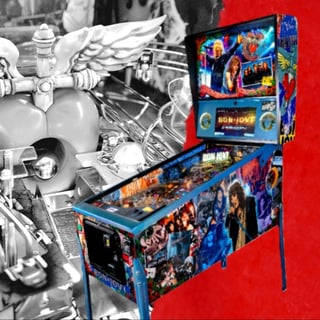
Speaker: I mean, for crying out loud, the light show on Guns N' Roses is, I just,
Speaker: don't even know what to say.
Speaker: It's incredible.
Speaker: It's like, you know, and I don't get wowed about too many things.
Speaker: Like I collect things that I do get wowed about that aren't coin op related.
Speaker: This, this stuff is like, they're, they're really, really, really pushing the envelope.
Speaker: And I think that's a great way to the future because kids want to see things that look high tech, that feel high tech, that feel high end, that look high end.
Speaker: I mean, you know, but, but we can see it just from that game that was engineered in the nineties.
Speaker: they turned it into a whole other level of game whenever they made all those changes to the software side of it and the lighting and the different effects that it has.
Speaker: So I'm going to throw you a quick curveball now that you've brought up Guns N' Roses and whatnot.
Speaker: I don't know if you watched the Pinball Industry Awards, but Guns N' Roses won Game of the Year.
Speaker: After seeing the game and putting your hands on it versus the other games that have come out this year, do you feel like it deserves the title of Game of the Year?
Speaker: Wow.
Speaker: Man, I'm going to go on the spot.
Speaker: Well, see, here's the thing.
Speaker: There's so many versions of the games, right?
Speaker: So I've pretty much played them all.
Speaker: And, oh man, you're hurting my heart here.
Speaker: But I would say that it is a spectacular game.
Speaker: And as far as a location route game, I think it's going to be a great, phenomenal earner on our primary markets and our secondary markets.
Speaker: As a player, it's not my favorite game of 2020.
Speaker: What is your favorite game?
Speaker: I just like Avengers, man.
Speaker: I like the feeds.
Speaker: I like, I like, I think, I think the game feeds better.
Speaker: I think the balls feed better.
Speaker: I mean, I love Guns N' Roses and I think it's going to out earn all those games.
Speaker: So like, thank you, JJP and Eric for making something spectacular.
Speaker: I mean, beyond anything I expected, it's just, it was incredible, but no, I mean, I like, I like Avengers.
Speaker: I mean, you know, I'm a comic book nerd, so the theme kind of,
Speaker: I didn't mind getting another Avengers.
Speaker: You see a lot of complaints online about, oh, it's another Avengers, blah, blah, blah.
Speaker: I mean, like, no, it's, again, that's another license that'll stand the test of time that that game will, will, will, will make it to secondary locations and be people that have like, you know, what I would call B location for us will be absolutely thrilled to have that game too.
Speaker: And I mean, you know, I just, just my personal, I think that, that everything Keith's done with Stern has been a really fresh,
Speaker: and really admirable effort.
Speaker: It's not like nothing got mailed in, man.
Speaker: He literally, he made something creative.
Speaker: I mean, there's four ramps in Jurassic Park.
Speaker: I still can't get over that.
Speaker: I mean, like I was like, and they all feed well and they all like don't seem out of place.
Speaker: It's not like sometimes you see games from the nineties and you're like, like demo man.
Speaker: They're like, they just put a ramp there to put a ramp there.
Speaker: You can't hit it.
Speaker: Not just that.
Speaker: It might be difficult to hit, and I don't mind the challenge, but it's like this was just the objective of this game was to have as many Rams as possible or whatever.
Speaker: But I mean, I think really you could flip a coin because the games are great.
Speaker: I do like the standard version of Guns N' Roses a little bit better, but the look of the LE is just incredible.
Speaker: As far as gameplay and how it feeds the flippers and all that, what an amazing... This new blood in the pinball industry has brought forward a lot of different concepts and layouts and things like that.
Speaker: Everything that these new guys have done, it's a great breath of fresh air.
Speaker: The veterans are the veterans and they're awesome and they've done some amazing things even recently.
Speaker: I really like Led Zeppelin.
Speaker: I love it.
Speaker: It's nice to get
Speaker: a breakup of just like constant flow or, you know, there's some nice curve balls in the industry now with some of these people.
Speaker: And, and, and I think, you know, hopefully some of Dennis's creativity at American will, will bring forward some of the, some of his ideas to, to the forefront of their company.
Speaker: Well, when I got to play Elvira a couple of weeks ago and I loved it, I mean, house of horrors is amazing.
Speaker: At first I didn't think I'd like it, but it almost brings back the nostalgia of those nineties.
Speaker: I mean, it's, it's the perfect sequel to scared stiff and it just, the shots are far back enough.
Speaker: I don't know.
Speaker: I felt like it was a perfect meld between medieval madness and Stern's pirates of the Caribbean, uh, on the layout.
Speaker: And it just, I don't know.
Speaker: Everything shot well.
Speaker: It felt good.
Speaker: Uh, I got a kick out of it.
Speaker: And the code and the code came a long way.
Speaker: Like,
Speaker: You know, initially when we got that game, I think that the code was not where we thought it was going to be.
Speaker: But, I mean, I always liked the shots.
Speaker: The shots felt good.
Speaker: I mean, it's a long stroke off the flipper on the orbit, and then how the house feeds and keeps the gameplay going.
Speaker: It doesn't always stall you.
Speaker: You know, I think that, you know, Dennis did a great job on that.
Speaker: There's no doubt.
Speaker: I mean, you know, and I'm glad that it came to, you know,
Speaker: the realization, like everyone came to the realization of how good of a game it really is.
Speaker: Yeah.
Speaker: Do you have any games at your house right now?
Speaker: Oh my God.
Speaker: I have, uh, pinballs or games.
Speaker: Cool.
Speaker: Yeah.
Speaker: So like games, I mean, I think I have, I mean, I have pretty much a four arcade here.
Speaker: So we have, we have the new halo from raw thrills.
Speaker: I have two cruisings for Mario carts.
Speaker: I got a pack Royale.
Speaker: I don't know.
Speaker: There's a ton of, I mean, every new stern pinball releases here.
Speaker: pretty much from 2015 on, it looks like, uh, I'm trying to see, I mean, my house, I mean, I've been in Cordova a long time, guys.
Speaker: I built a room on my house just for an arcade.
Speaker: So, you know, it's not like, I don't want to, I don't want to sound like I have everything, but I've got a lot of stuff, you know?
Speaker: But I mean, yeah, so we have a good arcade.
Speaker: I mean, the kids, you know, when someone comes over my daughter's school or something, they're like, what is this?
Speaker: You know, it's like, yeah.
Speaker: So yeah.
Speaker: What do you play?
Speaker: What do you play the most?
Speaker: Right now, I play my own game that I made the most because I'm in the process of just tweaking it.
Speaker: So I have a game that will end up coming to Helicon Brewing that is my own license, my own theme.
Speaker: Really?
Speaker: And I've been working on it for about six years.
Speaker: Yeah.
Speaker: Yep.
Speaker: We just brought on board a full-time engineer to go through this over the next three months to make sure that it can be produced.
Speaker: Yep.
Speaker: What type of game is it?
Speaker: Oh, that's for another day.
Speaker: Okay.
Speaker: It's a pinball machine.
Speaker: I mean, you know, we'll give you that.
Speaker: Yeah.
Speaker: But no, no, no.
Speaker: We'll have to believe me.
Speaker: You know, one of the things I made, I made an offer to you guys to, to meet me in Vegas.
Speaker: I may fly the machine out there and we'll maybe we'll see.
Speaker: We'll see.
Speaker: All right.
Speaker: All right.
Speaker: It's a deal.
Speaker: Yeah, for sure.
Speaker: For sure.
Speaker: I mean, I love coin op, man.
Speaker: And, you know, and some of my idols growing up were people that were designing these games.
Speaker: So it's like, you know, now I have the opportunity to do that.
Speaker: And with COVID, that was one of the things I said.
Speaker: I was like, well, wow, I should, I should go through with this.
Speaker: I mean, I, I've had it and I've, we, we wired it up to, you know, just to flip off of a power supply.
Speaker: And then I eventually made it flip off of a logic board out of a Viking, right?
Speaker: Of all games.
Speaker: So like I, you know, and now it's to the point where, so that's what I've been playing the most.
Speaker: I mean, the kids, they pretty much, I'm trying to think, they still play Arabian Nights the most, actually.
Speaker: So that's probably the most played game between my wife and my kids.
Speaker: They like it.
Speaker: My youngest daughter's five.
Speaker: She just likes how it reads you a story at the beginning.
Speaker: She loves that.
Speaker: Nice.
Speaker: And she cries when it doesn't say her shot was amazing.
Speaker: You know, that's what I deal with in this house now.
Speaker: That's our favorite one.
Speaker: But, I mean, as far as the new games that we have out there, I'm trying to think, man.
Speaker: I've been pretty laser-focused on this.
Speaker: But, I mean, I still like Monster Bash LE.
Speaker: I mean, I still play it.
Speaker: I still try to get rock before Bash.
Speaker: I mean, you know, like,
Speaker: Those are, those are, those are games I like, you know, and then believe it or not, I guess my, my seven year old, she likes stranger things.
Speaker: And we, we have a little board here that we're looking at on stranger things and where our scores are.
Speaker: So she's, she's trying to compete with me on that.
Speaker: So we're, we're, we're playing that a little bit too, but for the most part, I mean, you know, I, I have an opportunity to play games every day.
Speaker: I probably only play games twice a week because it's just like, you know, it's a reward for the kids or, you know, um,
Speaker: or I'm working on the custom game.
Speaker: So nice.
Speaker: Well, actually that that's a pretty good cliffhanger right there.
Speaker: Plug some of your locations.
Speaker: If people want to come out and check out your, your arcades, where are some of the highlights that you have?
Speaker: Hey man, if you ever come to Pittsburgh, we pretty much, I have to believe we're the capital pinball capital of the world.
Speaker: But I mean, there's always arguments being made for other places.
Speaker: We have Helicon Brewing,
Speaker: There's 80 games on site.
Speaker: Chris Brunetti is the owner there and they have great beer, great food trucks on the weekends.
Speaker: We're opening a second location with Helicon now that's about 15 miles from its first location.
Speaker: You know, check them out.
Speaker: Apis Wine and Meadery in Carnegie, PA, which is right outside of Pittsburgh.
Speaker: They have a great LE lineup of pinball machines.
Speaker: Also great,
Speaker: great products there.
Speaker: I mean, wine and mead, if you like mead or if you've ever had mead, Dave's is the largest mead producer in the state, I believe homemade and he makes it right there on site.
Speaker: We have, you know, All Saints Brewing Company in Greensburg, PA, another place that has about 30 pinball machines at it.
Speaker: They have a small arcade too, aside from pinball with the new Buck Hunter, Halo Fireteam Raven.
Speaker: So check those places out because I mean, you know, these are the small guys that are
Speaker: they're trying to weather the storm here with COVID and they appreciate any support you can.
Speaker: I mean, check them out online, give them a like on Facebook, anything with their, their marketing or social media, all that stuff helps.
Speaker: So we appreciate.
Speaker: And then of course, I want to thank you guys for having me on and, and shout out to Tim Lee who, you know, got us together and hopefully we can, we can do this again.
Speaker: Sometimes guys, you got my number, call me anytime.
Speaker: No, absolutely.
Speaker: Yeah.
Speaker: Thank you so much for coming on.
Speaker: It's been great to get the business side of things because as an enthusiast, we don't, it's hard to understand that we are super passionate about it, but there is a business side.
Speaker: And ultimately, as long as the business isn't viable, then it's difficult to maintain a future in this.
Speaker: Hey man, that's it.
Speaker: You know, the home market's pretty strong right now, but, but I mean, you know, it peaks in valleys.
Speaker: I've seen it peak in Valley many times.
Speaker: So.
Speaker: Hopefully we can come back to some sense of normalcy and get back to playing games.
Speaker: I mean, I would love to beat the loser kid in Scott any time, any day.
Speaker: Me and Tim Lee, two versus two, we'll challenge you guys any time.
Speaker: Oh, you're putting Scott on my team?
Speaker: Yeah, exactly.
Speaker: Exactly.
Speaker: Well, I mean, you know...
Speaker: I hear you're good, so I got to give you a handicap, right?
Speaker: I mean, I got to give you someone that's going to hamper you a little bit, you know?
Speaker: Exactly, exactly.
Speaker: I chimp flip.
Speaker: Both hands just slap simultaneously.
Speaker: That's exactly how I play.
Speaker: Oh, man, we got to change that.
Speaker: You got Tim Lee that's like,
Speaker: Yeah, I'm not so good at pinball, but I just dropped like $3 billion on Deadpool the other day.
Speaker: Yeah, no biggie.
Speaker: Yeah, man.
Speaker: Guys, call me anytime.
Speaker: I really enjoyed it.
Speaker: Honestly, if you want to touch on any other topics, you know how to get a hold of me.
Speaker: I'm an open book, man.
Speaker: I really want to raise all ships in the coin-op business.
Speaker: Anybody that listens to this, I hope they can learn a thing or two about how they run their operations.
Speaker: Well, it sounds good.
Speaker: Stick around.
Speaker: We'll get some information so we can send you some swag.
Speaker: We have a reputation of having the best hats in the industry.
Speaker: And so we will definitely get you some of that out.
Speaker: And Josh, go ahead and take us out.
Speaker: So before I wrap this all up in our tight little neat bow that we usually do, I want to say a personal thank you.
Speaker: I know that we've already said it on our Facebook and Instagram and Twitter and stuff like that.
Speaker: But thank you guys to everyone out there that has supported us.
Speaker: Guys and gals, you know, from the reviews that you leave for us.
Speaker: to everything else and especially to those that come on like chris that come and do interviews uh eric meniere on our last interview it was awesome to see so much support and love and to receive the award from the pinball industry awards this last thursday thank you guys for the recognition uh i know that we're not in it for the trophies well i'm not i i am i am
Speaker: I know Scott is.
Speaker: He's waiting for his crystal to show up so he can take his defying picture for his Facebook page.
Speaker: But thank you.
Speaker: Just thank you to everyone.
Speaker: Yeah, in all sincerity, Josh and I have had such a great time the last two years, and we've been able to talk to amazing people and been able to get in contact with such amazing people.
Speaker: I sincerely can say that Josh and I are truly humbled that we were recognized for excellence in podcasting in pinball and...
Speaker: We feel that this is a big community and there's lots of seats at the table and we have lots of friends who are excellent podcasters doing their own thing.
Speaker: And so we really do appreciate what everybody brings to it and really making this such a positive experience, especially during the dark times of COVID.
Speaker: And so a big shout out to everybody and thanks so much for everything.
Speaker: Well, it did put a smile on my face after we had won the award last Thursday.
Speaker: And one of the very first people to reach out to us was Eric Meniere.
Speaker: And he said, game of the year, got interviewed by the podcast of the year.
Speaker: And that was his words, not mine, but I thought it was pretty awesome to get that recognition from Eric.
Speaker: And, uh,
Speaker: It's cool that this hobby is small and we all kind of know each other and we just kind of shoot the breeze.
Speaker: And it's nice to have support, whether it be in front of the scenes or behind them.
Speaker: If you want to contact us, you can contact us via Gmail at LoserkidPinballPodcast at gmail.com.
Speaker: Or the one that we prefer is Facebook, LoserkidPinball.com.
Speaker: Also, Twitter and Instagram at LoserKidPinball.
Speaker: Messenger's great to get a hold of us.
Speaker: You can be like Tim Lee, who just randomly messages us and chats and shows us his awesome scores and then tells us he's not that good at pinball.
Speaker: And I'm giving him crap because he's here in with recording with us, but he's like refusing to talk.
Speaker: He's a ghost.
Speaker: He's totally ghosting us.
Speaker: And so I'm going to give him crap if he's going to keep his microphone off.
Speaker: But...
Speaker: So, but if you want to get ahold of us, that's the ways to get ahold of us.
Speaker: You got anything else for us, Scott?
Speaker: No, it's great.
Speaker: Just be excellent and reach out, reach out to your friends in pinball that you haven't been able to play physically with.
Speaker: Certainly try to support your local, your local coin ops and look forward to a better year than what we had last year.
Speaker: So take care of yourselves.
Speaker: And I agree with Scott.
Speaker: I want to put one more thing out there.
Speaker: There are people going through really rough times right now in this hobby, whether you know it or not, not necessarily to deal with the hobby, but we all know each other because of the hobby.
Speaker: So if you haven't talked to someone in a while, just a friend, an acquaintance, reach out to them, see how they're doing, see how, how they're living life and whatnot.
Speaker: Uh, we're, we're trying to get all through this all together.
Speaker: Right.
Speaker: And so that's the best way to do it.
Speaker: All right.
Speaker: We'll see you in two weeks and, uh, take care.