Transcript
Speaker: Okay, today I'm going to go over autophagy, why your favorite health influencers basically misled you about it, maybe through no fault of their own. They perhaps were also misled about it from their, you know, gurus and influencers.
Speaker: And I think this is very important for us to discuss because um if you are fasting for autophagy, right if you're not i could if you were trying to lose weight with fasting, it is a tool, a suboptimal tool.
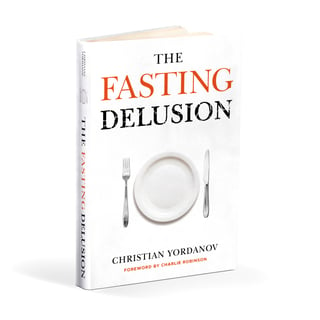
Speaker: mind you, but it is a tool to lower your calories and lose weight. So I can perhaps make a concession when someone is doing that, right, if they don't want to do calorie tracking. But if you're fasting for longevity, there is no there is no evidence you will live longer. In fact, there is no evidence upregulating autophagy will help you live longer or is actually healing and beneficial. And I'll explain why as we go over some quotes from my new book, The Fasting Delusion. I had some slides, but because most of my the people that listen to me listen to me on the podcast, um
Speaker: I figured it's just too much too much hassle. So what I'll do is I'll go over some quotes from my book, The Fasting Delusion, here. And I'll read them to you. And I'll also share them on the screen in case you're on YouTube.
Speaker: So you can follow along. And... I would encourage you to get the book The Fasting Delusion because there's a lot more nuance in there about not just why fasting is a terrible longevity strategy, but also why it's a terrible strategy for the long term to lose weight, to use as ah as a weight loss tool, and why it's a terrible strategy to address most chronic health problems from gastrointestinal conditions, autoimmune conditions, cancer, which is really almost anything, almost anything. If anything, it could make things worse. And of course, I i addressed the elephant in the room, why some people benefit from fasting, right? And it's not rocket science.
Speaker: It's not the fasting that's doing it. It's the other things they're doing it. We have a whole chapter on that in the book. I don't want to get into it every single time I make some content about fasting because it will just make everything super long. And as you may know, if you know me, brevity is not my strong point. So, autophagy, this is a section in, I think it was chapter 5, and basically I have ah about, ah I suppose, ah half of that chapter goes into autophagy, and it explains why it's not what you think it is. Most people, what they think autophagy is, is
Speaker: cellular cleanup that rejuvenates you from the inside out and that is PS, right? The autophagy that fasting upregulates is not that kind. Okay, so let's get into it. Just a little bit of a primer for anyone that has been spared over the last 10 years and hasn't actually learned about autophagy, you know, good for you, you lucky a devil. Autophagy basically comes from the the Greek words auto, which means self, phagos, which means to devour or to eat. So it's self-eating. You could also call it self-cannibalization.
Speaker: okay ah Fun fact, it was first observed in the 1960s at the Rockefeller Institute.
Speaker: Nothing nefarious going on there, I'm sure. Not even sure why. It's a fun fact, but some of you may know. ah Then, ah more recently, around 2016, a gentleman called Yoshinori Osumi from Japan won the Nobel Prize in Physiology or Medicine. That was 2016 for discovering some ah mechanisms related to autophagy. And as I detail in the book, or as as I mention in the book,
Speaker: It seems that since around that time, the social media algorithms started shoving the autophagy in our face. And what happened? Like, I mean, if you ask anybody or if you go online or or on YouTube or a search engine, type in autophagy.
Speaker: Guess what you're going to find? I mean, it's the same parroted narrative of this is something you upregulate when you fast and Basically, it's when your cells clear out the the damaged or diseased bits, right? That's the exact same thing almost every health influencer or guru or wannabe health coach basically is parenting.
Speaker: And what it seems is that not one of these people have actually looked into it at all, like at all. that that's that They learned that somewhere from whoever's at the top of their food chain of health influencers, be it you know Dave Asprey or whoever else.
Speaker: um And they just started parroting that without actually looking at all into it. And I i will admit, I was one of those guys back in 2018, me and my wife, still my girlfriend at the time, we got into it and yeah, we're going to fast ah but to upregulate the autophagy and you know we're going to live longer.
Speaker: Amazing things will happen. So what is the most important thing to understand? First of all, autophagy is always running in your cells, right?
Speaker: you don't actually need to upregulate it. And I'll explain and why in a couple of minutes, why that's actually very important to not try to upregulate it, if anything. right So autophagy is basically like this um quality control in the cells that chaperones out various misfolded proteins. it can be actual bacterial um chemicals that got into the cell. It could be all sorts of like damaged organelles. It could be mitochondria, mitochondria all sorts of things inside the cell cytoplasm, right? So here's the thing. The the most important thing
Speaker: couple of distinctions to understand is that not not all autophagy is the same. So the one that is the quality control in your cell is actually called
Speaker: selective autophagy. So there's non-selective autophagy and then there is selective autophagy. Now there is other stuff like micro autophagy, macro autophagy. There's always more nuance to these things. Like these things are vast even though it's a fledgling sort of field of understanding autophagy for the researchers.
Speaker: It's still vast in terms of like like to be able to get a full understanding of it. Very few people actually have a decent understanding of autophagy. I don't purport to to understand it super well, like at the molecular level by any means. I am just sharing in my book, a lot of the research ah ah quotes I share is...
Speaker: researchers, experts in whatever field of endeavor, of study that I'm quoting from, they're the experts in their field, right? So they're PhDs, doctors, whatever else. So I'm telling, I'm just showing and sharing in the book and here on, of course, on this episode, what experts in the field are saying, okay? So we start with non-selective or what is also, it's also known as bulk autophagy. So this is a quote from a paper.
Speaker: And by the way, I should say, A lot of the papers I found ah initially on autophagy back when when I was writing my previous book, How to Actually Live Longer, Volume 1, I was writing that in 2023, and I published that in 2024 in January. ah like Some of these papers, like this first one, I found that on DuckDuckGo. So I did a little bit like like research, non-selective autophagy, you know just like very basic keywords. And this stuff came up in the first several results.
Speaker: So you have to understand, like the people out there telling you autophagy, cellular cleanup, that will help you rejuvenate and live longer, they haven't done even cursory research. I doubt many of them have even read like an abstract of a paper and they're telling you to fast to upregulate your autophagy and clearly they haven't even looked into one bit because as you'll see, this is like one of the first things you read about it. So you got...
Speaker: quote Autophagy is a process that targets various intracellular elements for degradation. Autophagy can be non-selective, associated with the indiscriminate engulfment engulfment of cell components.
Speaker: I'm just, there's stuff in, if you're on the YouTube video, stuff in square brackets inside the quotes in the book, as I've mentioned at the introduction of the book, that's just me simplifying certain terms. So it could be like cytosol, I'm just kind of, you know, saying cell, just to make make the quotes a little bit more palatable for the reader. So if you look these up, they might look, some of them might look slightly different because I've removed certain like numbers of ah citations just to make it a little bit less gross looking because research, you know, it will make your eyes bleed if you read research.
Speaker: So if you have insomnia, read some of that before bed, you'll be totally fine. So associated with the indiscriminate engulfment of cell components, and here is the underlined in bold part, occurring in response to nutrient starvation.
Speaker: and is commonly referred to as bulk autophagy. Okay, that's bulk or non-selective autophagy. Now, here is what they how they define selective autophagy. By contrast, selective autophagy degrades specific targets such as damaged organelles,
Speaker: Mitophagy, lysophagy, ER, phagy, endoplasmic reticular phagy, ribophagy, ah aggregated proteins, agraphagy, or invading bacteria, xenophagy. I'm telling you, like, each one of these, like, you could spend your entire life building a career in research around each tiny aspect of this, right?
Speaker: thereby being importantly involved in cellular quality control. Hence, not surprisingly, aberrant selective autophagy has been associated with various human pathology pathologies, prominently including neurodegeneration and infection.
Speaker: okay So, can you guess which type of autophagy fasting upregulates? I'll go back a second to the first quote. Autophagy is a process that targets various intracellular elements for degradation.
Speaker: Autophagy can be non-selective, associated with an indiscriminate engulfment of cell components occurring in response to nutrient starvation and is commonly referred to as bulk autophagy. So you don't have to be you know a genius to understand that fasting upregulates bulk or non-selective autophagy.
Speaker: okay And again, what is that associated with? Indiscriminate degradation of cellular components. So when you hear the word indiscriminate, what do you think?
Speaker: It's like if you're indiscriminately breaking stuff down in your house... and throwing it out or using it for other purposes, it means the good stuff and the bad stuff will be broken down. Indiscriminate. Now, here's the thing. Here is the thing.
Speaker: Does this mean that only good stuff will get broken down? No, of course not. Like, if you have a cell and let's say some components are dysfunctional and then, of course, a lot of perfectly functioning ah proteins and other organelles and and and components...
Speaker: Yeah, if you upregulate autophagy by starving the cell of nutrients or energy, it it will break probably break down some of the the degraded stuff, of course.
Speaker: But it's also going to break down a bunch of its perfectly healthy components in order to survive this stress of nutrient-slash-energy deprivation.
Speaker: That's not... being told to us by the health gurus, health influencers, parroting that autophagy is just going to clear out the disease bits because that's exactly what they're saying. Go on YouTube again or or a search engine. You will see that's the predominant narrative. I'm not saying it's the only narrative because recently i did i did go on YouTube just to see what's what's the results looking like. And there is some people now talking about some of these things. Thank goodness, of course.
Speaker: um But the predominant narrative is oh, yeah, yeah, you just you just starve yourself and magically the body will heal because apparently you don't heal if you've eaten. Like how stupid that is. that I heard someone, I won't say their name, I might do a video about this person, but I heard her on the diarrhea of a CEO podcast saying that exact that exact same thing. I heard her yesterday. i was like, what?
Speaker: Like, you're supposed to be one of the leaders in the health space. And she said, if you if you have eaten, you um you will grow, but you don't heal. Right?
Speaker: So with she she also said with the growth comes damage. Like that is so so, like can you imagine the body, designed by this sort of infinite intelligence, it's only going to heal itself when it's starved of nutrients? like is it it like Does that make any sense? the only It only makes sense is because influential people spout this nonsense and we believe them because they they have to be the experts, we have to believe them.
Speaker: How is that possible? So you're telling me all those people that eat, you know, let's say from eight o'clock to eight o'clock p.m., 12 hours a day, um they're never healing, you know, are they're only healing like the last couple of hours in the morning when their cortisol is always starting to elevate.
Speaker: and puts it that puts them in a sympathetic fight or flight, relatively speaking, mode, and they're only healing then. And fasting, you are quite literally in sympathetic nervous system dominance mode. Like you are running on your stress-related hormone system, cortisol, adrenaline, right? When you fast, that's the system that you're running on.
Speaker: And these people, the PhDs and MDs telling us that that's when you heal, even though you're in the degenerative stress system. Like did this, i don't I didn't check the views on this podcast, but it must have been millions. Like the diarrhea of a CEO, like he gets millions and millions of of of views on each podcast, I believe.
Speaker: And that's the kind of stuff people will believe because she's the expert, you know, they they big her up and all these other people. So, like can you think like, can you think about, like, how, why does it make sense that the body is getting, let's say you're doing a three-day fast or five-day fast or even two-day fast.
Speaker: Can you... seriously believe, does it make logical sense, would nature be that stupid that it would only heal, the body would only heal if it's been getting signals that no food is coming in? like what How does that make any sense? Healing takes place in the presence of nutrients and energy because those are the things needed to heal and in the absence of stress because if you you could be well nourished,
Speaker: But if you have to fight for your life and run away from a saber-toothed tiger or something, well, that stress response that allows you to muster up sort of that energy and the the drive to get out of that calamitous situation, that shuts down a lot of the repair and regenerative processes. And that's the same system that you run on when you're fasting.
Speaker: So it's preposterous, preposterous. And it's it grinds my gears seriously hard because these are the experts. And then I had somebody, someone I met at a conference a few months ago, and i was saying one thing and then another thing about the this and the that. and And he he comes and tells me, oh but, you know, XYZ, the same person I'm talking about here, said this. And I'm like thinking to myself, well, like these are the people influencing a vast part of the health conscious people that are on YouTube and on the podcast because these are these are the people doing the podcast circuits and the all the YouTube channels. So it's kind of, it's it's it almost sickens me.
Speaker: to see that level of ignorance and and stupid things being spouted by what are supposed to be the top experts disseminating information, not just to the lay public, but also other practitioners, other coaches, health coaches, fitness coaches, and and and even like, I know many doctors follow these people and many other practitioners, and it's kind of disgusting to have that level of ignorance and so much confidence behind it.
Speaker: um Anyway, sorry, that was a little bit of a... tangent but as you can tell it it grinds my gears man all right here's another quote uh autophagy is a mechanism conserved in eukaryotes from east to humans and is involved in maintaining cellular homeostasis by degrading organelles proteins lipids and nucleic acids and recycling their constituent building blocks when cells face nutritional deficits.
Speaker: Okay?
Speaker: So... What does that tell us? Anyway, i won't i won't I won't slow down on every quote because there's quite a few quotes here. Here's another quote from another paper. or it's Sorry, it's the same paper. This is the same paper I'm still quoting. And all the all the all all of these are in at the back of the book in the references section if you're interested in kind of delving deeper.
Speaker: ah There are, quote, there are two main types of autophagy defined by their specificity. On the one hand, there is bulk or non-selective autophagy, which indiscriminately sequesters and degrades parts of the cytoplasm, aka the cell, including organelles and macromolecular complexes.
Speaker: On the other hand, there is selective autophagy, which targets specific, often potentially harmful, cargols for degradation. And then, regarding non-selective or or bulk autophagy, non-selective autophagy allows cells to survive through nutrient starvation until the next nutrient source is available. So, thinking thinking about like an an an analogy, imagine...
Speaker: You live in a wood cabin and it's you know a long winter and you know you're snowed in, you can't do nothing, can't go chop wood, can't get can't even get to your firewood that you've chopped in you know down the pathway.
Speaker: um what can you do to to keep your fire going so you don't die so you you know you don't perish well what you can do is you can take your chairs that are made of wood your table various other sort of shelves bookshelves whatever else and you can over this starvation of your you know fuel to heat your to you know to maintain your fire to heat your home so you don't die, well, you you can just, in this over time, I mean, like at first you'll be like, okay, I think the chair will start there. like I like the bookshelf, it's more expensive. But over time, you are going to just, you're going to have to like really just take whatever you have that you can burn in the fire to stay warm, otherwise you perish. So that allows you to survive that nutrient starvation, quote-unquote, which is, in this case, obviously a crude analogy.
Speaker: So that's what the cells are doing when you fast. They're they're just like, oh, crapadoodle. We have to figure out how to survive And we're just going indiscriminately break down things and help help to turn those some of those things for energy. And then some other components, let's say vitamins, minerals, whatever other enzymes, whatever else, um will be used to support important processes. Right. But it's indiscriminate. We got bamboozled again. Yet another scam.
Speaker: um And I just want to say, ah in in case I forget later, I'm not saying these people that are telling you this are ill-intentioned. i'm i'm Most people are well-intentioned.
Speaker: I'm just saying that if you learn a lie or if if you... are misled yourself and then you parrot that to your audience, well, it might be well-intentioned, but it's still misleading. It's still leading them down ah the wrong way. you know That's kind of what what's what's bad about is the ignorance. Ignorance doesn't excuse the The fact that millions and tens of millions of people, tens and tens and tens of probably hundreds of millions even, think that fasting upregulates autophagy, which is just only removing these disease bits and then you you're you're better for it. That's nonsense.
Speaker: And you'll see, I mean, I will make your ears bleed here reading all these quotes probably, but let's crack on. another paper Autophagy is active in all cells and can be upregulated in response to stress or nutrient deprivation.
Speaker: Induction of autophagy not only facilitates the degradation of damaged cellular components, but also provides the cell with molecular building blocks and energy. okay In the same paper, they have a figure figure one, they have a diagram of the process, and in there, the text reads, the the autophagic process degrades cellular macromolecules and organelles releasing metabolites to provide the cell with energy and anabolic building blocks to aid in survival and repair during nutrient deprivation or cellular damage.
Speaker: So not exactly the... rainbows, unicorns, and autophagy that we were told happens. the The authors also wrote, at the cellular level, the pro-survival functions of autophagy are the most well-defined wherein autophagy aids the cell in dealing with stress by clearing damaged proteins, organelles, pathogens, or aggregates, or by providing the cell with energy and anabolic building blocks during starvation. So here's a wild idea.
Speaker: ah In the previous ah quote, they say, ah releasing metabolites to provide the cell with energy and anabolic building blocks to aid in survival and repair during nutrient deprivation or cellular damage. But here's the thing, wild idea. What if we nourish our body with you know fuel for energy, ah vitamins, minerals, all that good stuff, you know healthy fats, and the cell...
Speaker: can just If there's any damage, it can repair itself, right? The cells can repair themselves. And they don't have to indiscriminately break parts of themselves down in order just to survive until we eat again or the next nutrient source is available. And then allow that basal autophagy, which is, again, always running. It's always running.
Speaker: That's the quality control piece. That's always running. Why don't we provide the energy and the nutrients for the cell to be healthy and repair itself and allow it to do what it freaking knows how to do, right? Why are we tinkering with a process we know so little about? And you'll see the researchers themselves admit they don't know...
Speaker: much about autophagy yet. it's It's, you know, it's very nascent sort of of um aspect of the field. So, I have a quote here. It's a bit, um ah there's quite a lot of sarcasm and and alleged wit in the book.
Speaker: ah ah So, are we supposed to, quote, starve ourselves to upregulate the process that helps us to survive the process of starving ourselves, unquote?
Speaker: you know, that that should be the motto of autophagy. Hey, hey there, health seeker. You want to live longer? All you have to do is starve yourself to upregulate the process that helps you to survive the process of starving yourself.
Speaker: You're welcome. Get out of here now. Go live your life. ah It's stupid. I know it's stupid, but that that that's that's what we believe. and we're like Here's the thing.
Speaker: i was recently at the LiberPulco conference, and there's a guy there that presented, Jason Kristof. He's like a mind control researcher. love his presentation, but i've I've seen his first documentary he published a few months ago, and I started following him a little bit more recently on Telegram and stuff. and like the dude The dude is really good at kind of explaining how we we We get mind controlled from basically when when we're yay big when we toddlers, you know the mind control is so good so like people you know don't many people don't understand how
Speaker: mind-controlled we are they are by all of these things. Because if you tell some someone that has been fasting some of these things, they they won't believe you even in the face of all these quotes from experts and all this evidence, right?
Speaker: um It's funny, funny quick ah fun fact, Jason Christophe, he was actually at my ah presentation at LiberPurco and he was like, at but some points he was laughing because like, I think he was probably thinking,
Speaker: as a mind control researcher, he's like, yep, I think he's right. Because, like, we we are main sort of... um biological imperative is you know survive at all costs right that's like survival is inbuilt into the human and uh procreation like these are the main things like we we're driven by and yet in the modern world now we believe that we can starve ourselves to better health and this is like the thing our ancestors dreaded the most uh were taken out by the the the probably in huge swaths and this is what our grandparents even though their whole summer
Speaker: was freaking prepare for the winter canning, you know, preservation of food and ah various sauerkraut. This is my, even my my grandparents used to do that, you know, and ah two of them, they were already living in the city, but they still had that. They were like gathering fruits in the summer. They had some plot of land and and they had trees and whatever else and raspberry bushes and either they'd go pick the stuff and can what can be eaten in time will go bad. and And they were like, in the winter, they wouldn't live off of it, but like that's how people used survive. They would have to live off much of the stuff they were able to sort of get get ah stored up in in in the summertime, and you know before the cold, harsh winter came in. So... ah But now ah we are so comfortable and so sort of bored, I suppose, that we have to emulate the hardships and the one of the worst parts of being alive back, you know, even a few hundred years ago and never mind, you know, thousands of years ago.
Speaker: So, cracking on that same paper they concluded that I just caught a couple quotes from, while it is generally accepted that autophagy functions as a mechanism to survive cellular stresses like nutrient deprivation, the molecular mechanisms underlying the regulation and specificity of autophagic degradation are just beginning to be understood.
Speaker: And, another quote, moreover, although theyre there are a multitude of published connections between the processes of autophagy and cell death, both apoptosis and necrosis, there are gaping holes in our understanding of even the most basic questions regarding the interactions between autophagy, self-death, and disease.
Speaker: okay And in the book, another one of my... um'm um'm Listen, I'm sure I'm going regret a lot of these jokes in a few years' time, but... ah I don't care.
Speaker: It's just a part of you know becoming a better writer. But ah ah I'm going to be cringing in a few years' time reading reading this book. So anyway, in the book after this quote I write, this reminds me of ah of a bit the comedian Bill Burr performed.
Speaker: They had just adopted a dog with his girlfriend and were arguing whether to neuter him. Bill was against it, but his girlfriend said that he was wrong because he knew nothing about dogs.
Speaker: He retorted, I'm slightly paraphrasing, okay, great, none of us know shit about dogs, so let's not start cutting in anything off the animal, right? It's got to make sense. like we If we don't know jack about squat, about autophagy...
Speaker: pretty much, why are tens of millions of people fasting to upregulate their autophagy? You have no idea if that's going to be a good thing for you in the future because most of the the research is done in like petri dishes and and animal studies. like weve Zero long-term evidence. Zero. not even and When I say long-term, we don't even have year a year A year of evidence about upreulating upregulating autophagy how it affects human health. Not even six months.
Speaker: Not even six months, guys out there. Like lemmings marching toward the hill to you know fall into the water and drown or plummet to their death.
Speaker: That's the way humans are. And a lot of it has to do with the mind control. We are so mind controlling. The Googles and the Hitler sort of quotes is, if you repeat a lie often enough, people will believe it.
Speaker: you know You just have to make it simple, repetitive. Don't make it too complicated, right? And then if you repeat it long enough, people will believe it and you might even start to believe it yourself, right?
Speaker: What else? Okay, here is another quote from the above-sided paper. For example, one of the primary functions of autophagy is to recycle damaged proteins, organelles, and aggregates, thereby cleaning up the cell and providing it with new building blocks to replace damaged or depleted cellular components. So here again goes back to my wild idea. i know it's a little bit out there. It's a little bit out there. But why don't, instead of doing that, you know, why why don't we just nourish our body, give the cells what they need, fuel, energy, nutrients, right, ah vitamins, minerals, give the cells that, like focus on getting that
Speaker: So that if if the cell is damaged or depleted, it can replete and repair the damage. Isn't that crazy, huh? That's absolutely insane. um um i hope i hope um I hope people don't don't start thinking they should probably do that because it's it's very irresponsible to say that. like And just for context...
Speaker: In the previous chapter in the book, so this is, like I said, chapter five. um In the previous chapter, i kind of laid the foundations around, you know, what causes disease, accelerated aging, and so on and so forth. In there, I talk about the ah RDAs and ah how laughable, you know, the recommended daily allowances, the the food guidelines, specifically in the USA, but they're pretty laughable and everywhere else. They're the same nonsense. But they're so terrible. They're so low.
Speaker: um They're so bad, right, the the dietary guidelines, um that even that's not enough to make a ah human optimally healthy. But here's the thing. In the book, we go over some research showing you that most Americans are barely, barely even hitting their RDAs for many vitamins, minerals, for protein, and they're eating way too many PUFAs, polyunsaturated fats. And so most people's diet is so bad that even though they might be overweight or they might be normal weight, they're still very much not ah nutri in a nutritionally optimal, they don't have nutritional optimal nutritional status, I should i should say.
Speaker: So what we're doing then, taking people like that and and then making them fast, what we're doing is we're exacerbating that. And we're talking we're not talking about like, a couple of percent of people, like for some of the nutrients, the the people that are below the laughable RDA, I should say, not just below the RDA or EA or it's sorry, AI, adequate intake or EAR, you know, ah ah that there they're not only below that laughable, but there's like sometimes up to 80% of people are not even hitting that laughable AI or RDA.
Speaker: And then we're supposed to tell these like hundreds of millions of Americans or or whatever wherever other people, which it's the same story everywhere, right? We're supposed to tell them to then starve themselves and then get healthier. like how How in the hell is that going to happen?
Speaker: How? You cannot conjure up something out of nothing. And I've heard nonsense like, oh yeah, but like you're just going to break the disease bits. And that will heal you. Well, we just went over. if That's not what happens.
Speaker: You're not just breaking down the disease bits. You're degenerating your body. That's what you're doing. You are degenerating yourself voluntarily because you got mind controlled that you can starve yourself to better health, you know.
Speaker: Not you, but you know, like in case there's new people listening that still still think that fasting is good. I'm i'm hoping, i don't expect one episode on my podcast to convince anyone, but I'm hoping if you if you kind of stick around and, you know, just stay open-minded, watch, ah listen to more podcasts ah or videos,
Speaker: And of reading the book would be very, and I'm going to have the audio book out in about maybe October sometime. But that, if that doesn't convince you, you know, nothing will. And then, you know, at that point, like, I've done my job. I've i've done my best. I can't do any more. But it requires ah that every every lie that we've been exposed to has been so sort of ingrained in us in many cases since we were kids.
Speaker: or young adults, that you can't just read a paper, read an article, or something like that, or an Instagram post with five words and a picture of a tree or something. You can't just do that and undo all that sort of mind control and and programming and brainwashing and stuff like that. So it takes time.
Speaker: But you have to stay stay open-minded because, again, like you see yourself... or you heard yourself like the the experts they freaking don't know on what's going on and and all the lemmings that and i used to be one of those lemmings i'm not judging i'm just trying to make a light of a serious situation a little bit that's my style all the lemmings are like oh um um i'm i'm gonna live more longer if i starve myself you know like dude what are you doing there's no evidence none no evidence Okay, so actually too much autophagy can be detrimental to ourselves. Here's another quote.
Speaker: There is also a substantial body of literature suggesting that under certain circumstances, autophagy can promote death and recent evidence and indicates that autophagy itself may be a mechanism of cell death.
Speaker: Autophagy may be able to kill a cell either by actively degrading necessary cellular components, e.g. catalase mitochondria, or by selectively degrading cellular components to the point that the cell can no longer survive.
Speaker: So just I'll pause the quote here. It's like in your cabin, the the analogy cabin in the midwinter. if If you want to keep that fire burning, but you run out of wood and then you start you know breaking down the actual structure of the house, you know the outside structure of the cabin,
Speaker: ah You know, at at that point, the fire probably won't outheat the the freezing air coming in and, you know, you you may not be able to survive because there was too much the damage accumulated to the point where, you know, the cell has to has to basically ideally um commit, quote-unquote, cellular apoptosis, which is like programmed cell death, you know. ah that's the ideal way for it to go.
Speaker: it causes the least damage, but there's other ways that can happen. So, continuing the quote, however, once again, it does not follow that these mechanisms mean that the process of autophagy is directly acting on the cell death machinery. Autophagy might degrade cellular components so that the cell eventually activates the apoptosis, which is, you know, the programmed cell death machinery, but this does not mean that the process of autophagy is directly responsible for activating apoptosis, the effect might be indirect. Okay? so
Speaker: Another quote from a different paper, despite, so I guess just ah to to summarize here, so too much autophagy, too much degradation of cellular components can actually cause the cell to to commit cellular suicide or programmed cell death, apoptosis or apoptosis, depending on how you want to pronounce that.
Speaker: So, too much autophagy, too much of a quote-unquote good thing isn't even that good, right? so um But it kind of makes sense, right? If you're indiscriminately breaking things down just to survive, if you're a cell, you you may if that nutrient deprivation continues long enough, you you know that that cell just cannot continue to function. It it can recognize that by certain things. you know Mitochondria can be, like, breaking down can be one signal for it to do this apoptosis or... um programmed cell death. So, that you know, when someone fasts and they lose a lot of mass, it's not just fat. Like, they they have a lot of cells in their body that died.
Speaker: a lot of them were just sacrificed for the greater good of the body. So it can, you know, use those nutrients for the heart, that whatever, the brain, various other vital for survival functions. And a lot of that cells... ah you know, various components like proteins, amino acids, I mean, can be turned into glucose and ketones and so on. So, like when a person loses a lot of weight from fasting, they degenerate themselves. Yeah, they lost they may have lost weight, which was their goal. but they also degenerated a lot of their perfectly valuable and and perfectly working, valuable, healthy structure. And that's the the degeneration is basically, you're degenerating, you're slowly dying. You're slowly developing disease. And that's the unfortunate reality, you know, that a lot of people are not ready to hear. Fasting, you are just accelerating...
Speaker: your own demise. it's I hate to put it brutally and bluntly like that, but that's what people are doing. And that just goes to show you how mind-controlled people are.
Speaker: That they believe starving themselves will make them healthier. It's just it just unbelievable. Anyway, and anyway let let let me crack on here. ah ah different paper here.
Speaker: Did I read this stuff? Yes, a different paper. Despite the numerous beneficial effects of autophagy, long-term or overly activated autophagy could be harmful for our cells and may result in cell death, firsts referred to as programmed cell death apoptosis, type 2 or autophagy-associated apoptosis.
Speaker: Okay. Now, another fun little sort of thing, not not fun, like not haha fun, but ah and another thing that I kind of discuss in the book, which should be shocking to some people, because, you know, the whole BS narrative of fasting for cancer is just so...
Speaker: it's just so Toxic, you know, and I actually should do a whole because I do have a whole section in one of the chapters about fasting and cancer But I'm in this autophagy section of the book. Here's what I talk about. So can the title of the section is um Excuse me. Cancer cells can use autophagy to prolong their survival So here's another quote from a paper ah In addition to the importance of understanding the biology of autophagy, there is great interest in trying to manipulate autophagy in a clinical setting.
Speaker: For example, there are currently almost three dozen clinical trials in the U.S. attempting to block the cellular survival functions of autophagy in cancer treatment by combining chemotherapy with the autophagy inhibitor hydroxychloroquine.
Speaker: The basis for these clinical trials is the simple premise that since autophagy protects damaged cells from dying, autophagy inhibition will make it more likely that the damaged cancer cells die and the tumor will be eradicated.
Speaker: However, if autophagy's function in cancer cells is not to protect them from damage, but instead to promote cell death, then these clinical trials could be pointless or even harmful unless we can find a way to predict in which patients pro-death or pro-survival functions of autophagy apply.
Speaker: So autophagy can help certain cancer cells survive and inhibiting it may be therapeutic in certain cancers.
Speaker: And this kind of, as a side tangent, it makes me wonder, like, you know, how some people, and I've just tiptoed around some words here because this is also going on YouTube, but, you know, some people with the big C that, you know, might use, like, uh,
Speaker: either something or other, phen-ben, if you know what I mean, and are hydroxychloroquine that have had good results. I wonder with the hydroxychloroquine, could that be because of the autophagy inhibition sort of action that it has, you know? So it's kind of interesting.
Speaker: um But the the thing is that, you yeah as you saw in the in the quote, or you as you heard in the quote, the researchers don't know. like like They don't know if this will backfire horrifically for these people if you try to inhibit autophagy and then it you know it it actually makes things worse.
Speaker: Or you know the the the other we could make the other cases if someone has a type of you know cancer that is using autophagy to survive, would ought would them fasting and uprailing autophagy across the board, would that be beneficial or would it be accelerating the you know the the issue?
Speaker: it's ah it's it's Again, like we know so like the human body is so insanely complex that we have to get get a little bit humble and be like, Okay, we don't we know we think we know more than we don't know, but I think i honestly think that we know infinitesimally less than there is to know about the human body. You know, it's probably like ah an onion that you could go keep going and figure out like hundreds of thousands of other like compounds in there that are doing things and processes and mechanisms.
Speaker: could well be that way, you know. ah So we have to stay humble. And that's why like ah i'm not like I'm not pretending to be an expert on this area. I'm just showing you what the research says and comparing that to what our gurus and our health influencers on the podcast and the YouTube are saying and seeing the huge disconnect right there.
Speaker: And then it also kind of, it also makes one more humble learning some of these things because like we have to, honestly, like in my case, Right now, I'm ready to re-examine a lot of my views on a lot of things because I've been wrong before, I've been misled by my quote-unquote gurus before, and I've blindly trusted, and then it's it's come back to bite me. So I'm ready to re-evaluate a lot of my assumptions at any point in time because...
Speaker: um if someone presents, let's say a bunch of evidence on something that I'm doing, I'm going to examine that that evidence. So just, I'll give you an example. Back in 2023, was, I saw, i heard some stuff around the Omega-3s from some guys I was following.
Speaker: And the first, the very first thing i did is like, what? that that's That's stupid. I've been, dude, I've been doing the Omega-3s like a madman. the cod liver, the ah you know the um the row the the fish roe, hay crow, obviously the fish oil, the cod liver oil. But I had cod liver in cans. like We were eating the actual liver of the cod, which has a lot more nutrients than just omega-3s. So, I mean, we were getting some nutrition, but...
Speaker: the one of the first things I did was I stopped my consumption of the omega-3s. I just stopped just to be safe, you know, and it took me a good few months to actually delve into some of the studies and kind of some of the, you know, the deeper details and the nuances for me to be like, oh, snap-a-doodle, I got...
Speaker: I got bamboozled again. And I went hard on the omega-3s, you know. i was like, not like normal people. You take two capsules of fish oil and you're done.
Speaker: I was like, I'm i'm an Aries. Like, you know, we we we we go hard or we go home, you know. So anyway, ah ah if But that was a lot of evidence. That was a lot of evidence. So if someone has like 20 studies that says, oh, you know, XYZ supplement you're taking, it's not good because here's 20 studies.
Speaker: And I'll be like, okay, I'm going to review these. And then if that's the case, um um I will reevaluate my assumption i will and I will change whatever I'm doing. Let's say that it was is a supplement, I'll stop taking it, if you know what mean. So I'm ready to do that. The problem is a lot of people are not because we feel our ego feels hurt when it's like someone says that we are wrong.
Speaker: And that's it hurts our fragile little egos. So it's it's an e a lot of it is an ego problem for many people. And we all have the ego, you know, it can... It can help us survive in the world, but it can also screw us royally.
Speaker: It can make our life a nightmare if we hang on too much to our assumptions and and our identity. And a lot of people, unfortunately... It's a bit philosophical here.
Speaker: A lot of people, unfortunately, they... they For some reason... ah i used to be like this. I'm not judging. I'm just observing. a lot of people... we make our diet or our are something about about our lifestyle part of our identity. it's not just something we do.
Speaker: Like, you know, our grandparents, oh, I eat this, I eat that. It's because it's what I can get. They didn't create a whole sort of personality around it or an identity. I'm vegan. I'm carnivore. i'm I fast.
Speaker: I'm better than you. I'm keto. I'm ancestrally consistent. I'm metabolically flexible and you're not. you You are just subhuman trash. I'm sorry to tell you. You know what mean? Like we build our freaking identity now around stupid stuff. Like I do CrossFit or whatever, you know.
Speaker: And we all fall into the trap. I'm not saying I'm holier than thou. You know, we all have the ego. But I'm just saying it's bitten me in the ass and it could bite many people in the ass because it it prevents them from re-evaluating their assumptions about something that could be detrimental in the long term.
Speaker: And I'm hoping someone that needs to hear this hears it and maybe something clicks for them. We've all been there and I'm sure we'll be there again. Eagle is really good at...
Speaker: taking back the reins, even if we were like able to like see through its gains, it's a very slippery sort of snake we're wrestling with, you know.
Speaker: um Okay, anyway, ah continuing this the cancer discussion, there's another quote from a study here. Autophagy is a cellular degradation pathway for the clearance of damaged or superfluous proteins and organelles.
Speaker: The recycling of these intracellular constituents also serves as an alternative energy source during periods of metabolic stress to maintain homeostasis and viability.
Speaker: In tumor cells with defects in apoptosis, autophagy allows prolonged survival. Paradoxically, excuse me, Paradoxically, autophagy defects are associated with increased tumorigenesis.
Speaker: So increased tumorigenesis, that's more tumor sort of um growth. But the mechanism behind this has not been determined. Recent evidence suggests that autophagy provides a protective function to limit tumor necrosis and inflammation and to mitigate genome damage in tumor cells in response to metabolic stress.
Speaker: ah Let me crowbar another quote in here. Autophagy is a cellular catabolic degradation response to starvation or stress. whereby cellular proteins, organelles, and cytoplasm are engulfed, digested, and recycled to sustain cellular metabolism. So, as you can see,
Speaker: That's what the experts in the field are saying. Like, it's I'm not coming up with this stuff, right? So autophagy is a cellular catabolic degradation response to starvation or stress.
Speaker: Does that sound super duper healing and longevity promoting to you? It doesn't to me. ah Here's another good one. Constitutive basal autophagy also has an important homeostatic function maintaining protein and organelle quality control, acting in parallel with the ubiquitin proteasome degradation pathway to prevent the accumulation of polyubiquinated and aggregated proteins. So basal autophagy, the one that's always running in your cells,
Speaker: has an important homeostatic function maintaining protein and organelle quality control. All you have to do, all you have to do is provide your cells with energy and nutrients because here's the thing, autophagy, all those processes, it's a pretty complex process, right?
Speaker: All those processes, they still require energy and nutrients. So, if you provide the cell with energy and nutrients, it can then use some of those for the running the autophagy machinery for the basal quality control autophagy.
Speaker: And then it will be less damaged because, first of all, you know, ah deficiency damages cells because some cells have to go without something due to priorities in the body. And then also similarly, energy deficiency or fuel deficiency that causes cortisol to increase, that damages cells because, you know, they get sacrificed for the greater good.
Speaker: and broken down. So if you're providing energy nutrients to your cells, autophagy can run, and then the cell accumulates less damage because it's not the body's in this catabolic stress a sympathetic state.
Speaker: And if there's damage, which damage always happens, the cells have the energy and the nutrients to repair themselves. I know it's like, wow, that's like kind of pretty sort of basic and an obvious, but no, it's not obvious, I guess, i guess because Because people think, again, people are mind-controlled to think that you will starve and then you will get healthier because your body is like, I'm starving, let me get healthier. yeah I might die next week, but let me expend all this energy and sort of all this effort into rejuvenating myself. like what like In what universe does that make any sense?
Speaker: Here is a quote from a different paper published in the journal Cell in 2008. Autophagy occurs at low basal levels in virtually all cells to perform homeostatic functions such as...
Speaker: protein and organelle turnover. It is rapidly upregulated when cells need to generate intracellular nutrients and energy, for example, during starvation, growth factor withdrawal, or high bioenergetic demands.
Speaker: Autophagy is also upregulated when cells are preparing to undergo structural remodeling such as during developmental transitions or to rid themselves of damaging cytoplasmic components, for example, during oxidative stress, infection or prop protein aggregate accumulation.
Speaker: So, okay, I'm just going to reread a couple of these these um um phrases. Autophagy occurs at low basal levels in virtually all cells, and it is rapidly upregulated when cells need to generate intracellular nutrients and energy, for example, during starvation and whatever else, right? So, does that sound...
Speaker: Does that make upregulating autophagy sound like a good idea to you? Given that we have nothing in terms of human evidence, like for even ah even six months, you know even six months, that it will actually make you live longer. Of course, there's no evidence it will make you live longer. But there's no at the same time, there's no evidence that you'll be healthier, that you would avoid disease, that you reverse disease. There's nothing here.
Speaker: especially in humans. And again, the lemmings running to be the you know the the guinea pigs for this mass scale experiment of, hey, do you think if hundreds of millions of us starve starve ourselves intermittently or periodically, we're going to do better?
Speaker: Let's see. Well, we've seen what famine and and sort of ah war and war-related famines and whatever else do to people's health and and psyche. We've seen that.
Speaker: Not good things happen there. Not good things if you look into it. I'll probably talk about that on the other podcast. I saw some very interesting things yesterday and today about the psychology and the psychosis caused by starvation. I actually have a piece in the book about the psychosis part of starvation, but that's that's a whole topic for another day. It's a bit of a rabbit hole can of worms, it will ruffle some feathers. I'll probably do that on the other podcast where it's a little bit... We do other topics other than health. um Okay.
Speaker: What else? I think... Okay, a couple more quotes here.
Speaker: So, regarding the impairment of autophagy as an organism ages. So, a growing body of evidence suggests that autophagic activity declines with age in diverse organisms.
Speaker: Studies in the nematode, Kenorhabditis elegans, which is a tiny worm-like creature, rodents, and human cells, not humans, cells, human cells, have demonstrated an age-dependent reduction in lysosomal proteolytic function that thereby impairs autophagic flux, exacerbating cellular impairment and contributing to the development of age-related diseases. Okay? And then another quote, moreover, the development and progression of several human pathologies
Speaker: is highly associated with age-dependent autophagy deficits. But here's the thing. As I discuss in the book, like if you go if you kind of start digging into some of the the mechanisms of autophagy, what what nutrients are required? Well, I have ah like ah a partial list that i I kind of dug into a little bit. So for energy production, because again, like almost everything in the void happens with energy.
Speaker: right You need energy. Right? um So to make energy, to produce energy, you need like a ton of stuff, a ton of stuff. Magnesium, iron, copper, vitamins B1, B2, B3, B5, coenzyme Q10, NAD+, which depends on vitamin B3. You need zinc.
Speaker: ah Beyond energy production, you also need zinc. You need choline. You need vitamins B6, B9, folate, B12, amino acids, glycine, serine, Things like phosphatidylcholine, phosphatidylethanolamine, and phosphatidylinositol, right? So some of these require to be synthesized, right? So you need the enzymatic machinery to do that. So like think about it like this. You don't even have to go super deep. But if you, like in the previous chapter of the book, as I discussed, the ah RDAs and the nutritional intake, the enhanced data, like I mean...
Speaker: I forgot what it was, but I think it's like 50% of Americans have suboptimal magnesium intake. I mean, that alone, how much would that impair your energy production? And then don't even get me started on B vitamin deficiencies. And and i mean, just those factors alone could hamper cellular function, right? So if you if you have a human like that,
Speaker: ah The first, again, my crazy wild idea here, the first thing we need to do with a human like that is think about maybe analyze the diet, see where are the glaring holes, maybe we can do like a urine test like we do with our clients where we can see things like toxic metals, nutrient minerals, various B vitamin deficiencies.
Speaker: oxidative stress, neuroinflammation. We have proxy markers for um neurotransmitters, right? Can can be ah very useful in some cases to guide our, um so some but part of the protocol we do.
Speaker: Mitochondrial function, even gut markers. So let's see what a person sort of in intake is by tracking the diet, see where the gaping holes, and then of course help do a little bit of actual, get some data from a simple at-home urine collection test that, you know, you just pee in a thing, freeze it they pick it up, boom, you know, a couple weeks later we have the data. And then we can start repleting some of these minerals, vitamins, ah amino acids, you know, whatever, like maybe the person needs more protein, more calories, more clean carbs, whatever the case is, right?
Speaker: And then good things happen, right? Because if you have more energy, good things happen. If you have more nutrients, you can do more things in the body. And, you know, then we can think about, you know, gut health, liver health, improving sleep, lowering stress, boosting testosterone, lowering cortisol.
Speaker: We can do all those things. We can look for food sensitivities. We can do a stool test if needed, if someone has like actual like serious gut dysfunction. Right. There's so many things we can do to improve a person's health.
Speaker: Right? The stupidest thing is to take a person like that, that clearly, like most, again, most people now have deficiencies. It's the rule, not the exception. It's the rule. The rule.
Speaker: The roux is roux. I need to learn to pronounce enunciate pronunciate my words better. I need to pronunciate my words more better. Yeah, so like people like that, the stupidest thing to do is further deprive them of nutrients and energy,
Speaker: and stress the bejinkers out of them, raise their cortisol, raise their adrenaline, right? That's the exact dumbest thing to do other than, you know, punching them in the stomach and throwing them out of a freaking moving car.
Speaker: Like that's the stupidest thing is to tell the person, to starve themselves, or going to feel better. The crazy part is some some of those people will feel better. And that's the worst part of it, is when you actually get some benefits, because if you're reading, let's say, a bunch of inflammatory foods, or you have gut dysfunction,
Speaker: and inflammation is rampant in your body, yeah, stopping stopping the triggers from the diet, because you didn't know some of these things are triggers, will make you feel better, but at what cost? For how long?
Speaker: And then, of course, suppress the the fact that fasting suppresses the immune system will also lower inflammation in many people, not always, um because there's other ways to get inflamed when fasting.
Speaker: um But... Yeah, that lowering, dampening of the the the immune system and that lowering inflammation may provide them some relief. But what, for like one week, two weeks, few days?
Speaker: Then what? The person is even more depleted. The cortisol ah the cortisol is degenerating their body at ah at an even faster rate. So like what sort of a solution is fasting in any person Like that. And we're talking about the vast majority of people like that that are nutrient deficient. Many people have fatigue, some other kind of dysfunction. Like instead of starving them, raising their cortisol, their adrenaline, ah other stress hormones and further depriving them but the of the nutrients.
Speaker: and energy they badly need to run their body and heal and repair and regenerate, we need to be thinking, like, we need to have ah a much more nuanced approach, you know. So anyway, that's kind of what we do with the Live Longer Formula program. If you are interested in, you know, having a chat with me, I offer free metabolic function assessments. You can go to livelongerformula.com.
Speaker: You can subscribe or sign up for my latest free masterclass. completely free, couple of hours long. You learn a lot for sure, you get a lot of insights and then you can follow the steps along um to a book of a free metabolic function assessment with me.
Speaker: We can sit down, go over whatever health goals and health challenges you're dealing with and I can kind of show you a little bit more about how my assistance and my program can help you out. So if you need help with your health, make sure you kind of look into that.
Speaker: um We can accelerate your progress for sure. Otherwise, thank you for listening or watching. I hope you got some value out of this. And actually, let me just make sure. No, that's that's all yeah that's all. I think I'll stop it there anyway. i As you know, brevity is not my strong point. This this could have been 20-minute video. But I just i feel like ah feel like we need to explain some of these things because it's so easy to be dismissive of some sort of something that challenges what is a very widely known belief.
Speaker: ah So we need we need the nuance. We need people to kind of see the nuances. So anyway, thank you for watching. And I will see you on the next episode.