Transcript
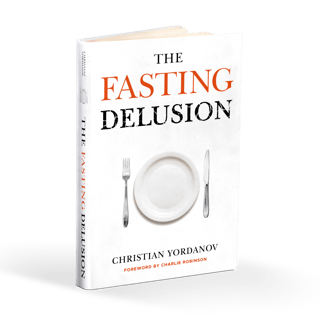
Christian Yordanov: hey there k christian jordanov here well i did it i just published my third book on saturday two days ago and i am pretty i'm happy that it's done just published the hardcover paperback kindle everything over the weekend and and it's It's hard to enjoy because I'm so spent, I'm so destroyed over the last six months, but I'm not complaining because um i feel like I have made a good contribution to the health space. So the book is called The Fasting Delusion, why fasting won't help you live longer and it could wreck your health.
Christian Yordanov: i don't I can't show it to you if you're watching the video because I'm still waiting on the first fresh print copies but I'll have the link in the description if you want to order your copy.
Christian Yordanov: ah i think you will I think you will enjoy it. So what I thought I would do today is just give you a little bit of a taster for the book. I know i I shared it already with some clients. They were like, I'm buying it immediately. And also a lot of folks that follow me will buy it. But in case you're just wondering, what's this about? Is it worth the investment of my time to read this book? I thought I'd give you a little bit of a teaser on some of the themes and topics discussed in the book. right So basically there's three major themes I explore in the book and I developed the thesis that for most people
Christian Yordanov: fasting is one a terrible quote-unquote healthy longevity strategy, two fasting is a terrible weight loss strategy and three fasting is a terrible strategy to address chronic health problems.
Christian Yordanov: So those are the three major themes that I developed in the book and I cover of course intermittent fasting and prolonged water fasting so I cover it from both perspectives and also I have a little section on dry fasting because that is kind of becoming it's getting more traction so I thought I'd cover that as well because it's pretty insane how dumb that doing dry fasting is it's just an incredibly insane and and misguided so I thought thought I had to cover it
Christian Yordanov: So of course, I did address the elephant in the room. That's very important. So the elephant is in the room is why do people feel better when they fast? There's so many, there's you could find thousands of reports online of people that magically started fasting and and all these health problems went away.
Christian Yordanov: Of course, like I discussed that. It's really, it's silly how simple it is, right? It's silly. People never, almost never do one thing in isolation. So most of the people that start fasting, they're going to be doing other health healthy behaviors, right? And that is the thing that is moving the needle for them. It's not the fasting.
Christian Yordanov: right A lot of people also lose weight that can have a lot of inflammation lowering, blood pressure lowering, various other ah um you know glucose tolerance, insulin ah resistance type stuff can improve. So there's a lot of metabolic benefits that people get when they lose the weight, let's say with an intermittent fasting regimen over a few months. Now, you couple that with cleaning up the diet, which is what a lot of people, because think about it, like you you learn about intermittent fasting.
Christian Yordanov: Are you just going to intermittent fast and eat McDonald's and and drink alcohol and just continue doing all the unhealthy things you were doing? It's very likely if you're going to be intermittent fasting, you're going to be looking for ways to improve your health. So you're not just going to do the fasting. right So that's kind of one aspect. But there's there's several other um categories of people who will benefit from fasting.
Christian Yordanov: So I covered that, that chapter 3 covers that, why do people feel benefits with fasting, that's chapter 3. Before that, of course, I thought the the most important thing to lay out for the readers is the first two chapters, we just go over into all of the negative effects and the risks of fasting, because if you go if you go online,
Christian Yordanov: Most of what you see online will be fasting painted as rainbows, unicorns and autophagy. Like just you start burning fat, you start making ketones and then autophagy rejuvenates you from the inside out. inside out And that's kind of BS. It's BS.
Christian Yordanov: ah So I lay out what actually what actually happens when you fast. right The real stuff, the the actual stuff that happens. And you will very quickly learn, which I'm sure if you're listening to me, you already know this stuff because i I've been banging this drum now for a couple of years at least, if not more.
Christian Yordanov: But fasting... is a degenerative process through and through from the beginning till the end your body is degenerating so i kind of explain that and later on in the book i tie those threads together how that will affect you in terms of longevity if you engage in degenerative behaviors You might be fine now, especially if you're younger and healthier, but over time, the degenerative behaviors will catch up to you, will catch up to most people. That's why so many women figure out in their 60s plus that they have osteoporosis. they were degenerating for decades before it caught up to them. And in the unfortunate fact is that a lot of those women, by the time they figure out they have osteoporosis, they might have some kind of fracture or so or something that, some kind of injury that causes them to go to the hospital, they get a scan, and then they only they only then realize, oh, I have osteoporosis. And the even scarier part is,
Christian Yordanov: is that i even I've worked with clients where they knew they have either osteopenia or osteoporosis and they still engaged in in fasting of some sort.
Christian Yordanov: That's the scary part. So the way social media, the internet has portrayed fasting is ah is like this inherently health promoting and rejuvenating activity and it couldn't be further from the truth. It's a degenerative activity because that is the only way, and I'm talking now about more prolonged fasting, of course, but like if you're fasting,
Christian Yordanov: That's the only way you can survive, by degenerating your body and turning it into fuel and using some of those components and and and nutrients to support vital functions. So your less vital, more nice to have quote unquote functions get sacrificed for the greater good of your body so that you can survive. And Very little is said about this. If you go to kind of more mainstream, alternative mainstream, more popular sort of influencers, it's all like, oh, no, you'll be fine. You just burn fat. No, you don't just burn fat.
Christian Yordanov: you burn glucose throughout the entirety of the fast. But because there's no glucose coming into your body from food and there's no protein coming from food, which can also be turned to glucose, a lot of that glucose that you continue to produce throughout the fast comes from your protein in your bones, lots of protein there, in your skin there's lots of protein, of course your muscles everybody knows, your organs, so you're degenerating yourself. So that's one aspect, we talk about the hormonal aspects, how fasting
Christian Yordanov: will invariably lower protective sex sex hormones so that most of the research I discuss is men, young men and we see horrific, horrific things happening to relatively young healthy men in terms of their protective hormones.
Christian Yordanov: testicles shrinking there's one study where after eight days the men's testicles shrank by almost 18 percent in the aggregate so really bad stuff uh there's a couple of other i'm i'm not going to so i'm gonna kind of not reveal everything just because um i want you to get the book and read the book and ah there's a lot of good stuff then you will learn and uncover about what are the other risks of fasting there's there's other risks when you start releasing a lot of fat from from your tissues for most people
Christian Yordanov: it's it's not a good it's not a good thing to release that fat. Now it sounds good on paper, you're just gonna release the fat from the tissues, you're gonna burn that fat, you're gonna lose weight and you will be a happy camper, you'll be healthier.
Christian Yordanov: But there's huge, huge risks there because, little teaser, because if you look at the states, two-thirds of the adult population is overweight and obese.
Christian Yordanov: and the way they got that way was eating a lot of polyunsaturated fats from oils you know seed oils and stuff like that so a lot of the fuel that's stored in these people which is again two-thirds of people are overweight so we know we know they have tons of that stuff stored and even even leaner people they will still have plenty of these things in their bodies because just look at Look at what the the standard American diet is. you know You don't have to be overweight to have a lot of these polyunsaturated fats in your tissues because they're not just in the fat, they make up your entire body, your skin, brain cells, heart cells, ah blood vessels. it's all like Not all of it is made from them, but there there's ah they're a huge component there. So you are more brittle if we can really simplify you're more vulnerable to damage and if you release these fats into circulation and a bunch of other stuff that's stored in them which is like things like lipophilic persistent organic pollutants, you are then burdening your body.
Christian Yordanov: so There's risks and a lot of people in today's world fall into the risk category of people who for whom the the fasting can cause a lot of collateral damage that was unintended that they were not aware of.
Christian Yordanov: So this is why I believe it's the height, the height of irresponsibility for practitioners, coaches, content creators, health gurus to be blanketly recommending fasting to people. I think it's the height of irresponsibility, borderline stupidity.
Christian Yordanov: It's dangerous. A lot of people are going to hurt themselves and I've worked with lots of clients who did hurt themselves with fasting and a lot of these other nonsense fads that permeate you know our societal consciousness.
Christian Yordanov: So those are some of the things ah you may be surprised
Christian Yordanov: to learn that actually fasting increases inflammation in some people. it doesn't It's not like this inflammation-lowering magical thing that happens.
Christian Yordanov: um It increases oxidative stress in young healthy men. it can ah It lowers glutathione, which is the sort of the master antioxidant in our cells, which is plays a big role in kind of protecting us from oxidative stress, from um toxic metals, toxic chemicals. it's ah It's used in detoxification, things like that. So it lowers it.
Christian Yordanov: Which kind of makes sense because glutathione is made from amino acids. Amino acids come from the protein that we eat. And if you don't eat a lot of protein or if you eat no protein because you're fasting, then you have a very limited body pool of um amino acids and those must be used for critical things.
Christian Yordanov: Your brain, your heart, you know your kidneys and although all the vital functions, your lungs, breathing, heart rate, cardiovascular system. So you are in a severe state of triage there and of course it makes sense that nice to have like things that are not immediately required for survival, things like that, functions like that will be down-regulated and the antioxidant system actually suffers.
Christian Yordanov: Now, In the third chapter where I discuss why ah people benefit from fasting, the the various categories of people, there is people who will get relief from fasting in the short term, kind of midterm, but a lot of the time the the reasons are again, like I said before, they're silly in terms of like they're so simple, you're like, oh my god, that's how how could I not think of that? so In all of the cases, those categories, so it could you could be like someone with a gut autoimmune issue.
Christian Yordanov: You might get relief from fasting in the short term, but long term you are opening a can of worms in many cases. So for those people, we know how to address gut and autoimmune issues without fasting, right?
Christian Yordanov: Many people have resolved it without fasting. So it can be done. It's not necessary. It's only... useful when you don't know what you're doing and if all you have ah is a sledgehammer it will do the job but you don't want to use a sledgehammer to put up a painting on the wall and there's more precise tools for this kind of job for the gut autoimmune issues then there is the category of people that eat pretty well, organic and all that stuff, grass-fed, but they still have a lot of food sensitivities, right? So I discussed that, that's actually quite common, I see it all the time in my work, people are eating staple foods that are inflaming them, they have no idea, they're getting vague and bigger symptoms from brain fog to
Christian Yordanov: um It could be joint pain, it could be fatigue, it could be it could be overt gut issues, but you know, that not necessarily. There's so many ways where like low energy, like the just kind of feeling inflamed, joint pain, whatever. There's so many different ways inflammation in the gut can ah can affect us.
Christian Yordanov: right So those people, there could be like several foods that they're eating weekly, on a daily basis, even... that if they suddenly remove all foods from their diet, they will the inflammation will abate.
Christian Yordanov: However, again, it's a sledgehammer approach when we have much more precise tools to ah identify what the foods are that are most triggering to the immune system, remove them, and then allow the person to continue to nourish themselves and get the the energy and nutrients they need in order to thrive and heal, whilst again removing the inflammatory trigger. So it's again, it's a sledgehammer approach because people just are not aware.
Christian Yordanov: um Of course, there's a huge swath of people that eat just unbelievably bad. we like We have to really just kind of call a spade a spade here. There's just probably a hundred million in America at least that are eating just horrifically, horrifically.
Christian Yordanov: unbelievably bad. Like ah as in, even if you saw them eat what they eat in a day, you still wouldn't believe it. It's that bad. So for those people with all the emulsifiers and chemicals and glyphosate and pesticides and and all the artificial sort of ah sort of food additives and all the stuff that's kind of there to make, to preserve the shelf life of the food, various, ah so seed oils, their their breakdown products from peroxidation. There's just hundreds of different things that people are putting into their body on a weekly basis that are not good for them for their gut for their just in general for their their health so those people if they go from eating glorified toxic slop as i call it borderline poison if they go from that to fasting yeah they might feel like you know their deity descended upon them from the heavens and showered them with
Christian Yordanov: autophagy. They will feel amazing. But was it was it the fasting that did it or was it removing all the borderline poison? you know So that's one aspect. And then people that intermittent that are like that in the intermittent fast, well, then they're compressing the window of time where their body is subjected to the glorified toxic slop slash borderline poison. So that can also make people feel better. But then a lot of those people will engage in other healthy behaviors and they will also start to kind of clean up the diet. It's like, they were like, oh, geez, i can't be such a slob. need to like really figure this out and I got to get my act together. and People just tend to start, yeah once you have a little bit of momentum, you tend to really start ah gathering that momentum and doubling down and then you feel better. and then when you lose a little bit of weight, yeah or you feel better and then you breathe better, you snore less.
Christian Yordanov: A lot of good things happen. You feel less inflamed, it's easier to move around. And then that further fuels this amazing sort of virtual cycle. Great when it happens, don't get me wrong. But was it the fasting that did it or was it the the other healthy behaviors and the weight loss? right That's the thing we have to understand. a lot of people think that fasting was the the clincher, the the magic bullet, when it was all the other things.
Christian Yordanov: And because fasting is inherently a degenerative... practice, they got all those benefits that they did in spite of the fasting, not because of it. right So there's a lot to be said for a lot of those people that had they just done all the other healthy behaviors, toxic exposure, clean up, sleeping better, maybe they did a gut cleanse, a parasite cleanse, maybe they started buying organic food, cooking their own meals, bringing their food to work,
Christian Yordanov: stopping the takeout, stopping like the alcohol and whatever ah other stuff. Had they just done that, they may have even gotten better results than with the fasting intermingled. there there's There's a lot to be said there. There's no real research on this because unfortunately the research is terrible on fasting. And this is something I discussed throughout the book. There's a lot of I read a lot of studies this year on fasting and I have to be honest with you, like every single day for months on end I felt like i was losing brain cells because it's just so bad. It's so, and it's also such a boring topic to read about glorified starvation, right?
Christian Yordanov: um But it had to be done. had to really see. I was really looking forward. I wanted to I was like hoping, man, I just haven't seen the good research. I'm going to find it.
Christian Yordanov: I'm going to debunk myself and spare myself the misery of writing this book and researching this super boring topic. Luckily, ah there was a lot of other topics I interweaved into the book. So there was a lot of like interesting things I did learn and kind of researched throughout the book. So it's not just about fasting. going to learn a lot of a lot of cool stuff. But also, I'm like, the more I delve deeper into it, the more I was like, wow, just the the research, the fasting research is an absolute...
Christian Yordanov: joke the the human research is terrible it's terribly done the results are just so lackluster they're but pathetic pathetic and then the the animal research is again there it's just worthless worthless there's zero
Christian Yordanov: zero applicability to humans, and I mean zero, not a shred. okay and so i that That's the like the final sort of chapter of the book covers why is the research so terrible, why is it so flawed, why is the animal research just just so useless when it comes to how we think about extending human lifespan, human healthspan. And then I kind of go over like the the gla the most glaring flaws of the human research.
Christian Yordanov: Just so you're aware. it's not That chapter is not terribly exciting. um But I really wanted to kind of end there for people because in case someone has the mental fortitude to get there, that that chapter is not necessary for you to read to get benefit from the book, but if if if a person has sort of the interest and the mental fortitude to go over that chapter, they will be like, oh, okay.
Christian Yordanov: So the whole thing is just a house of cards that is just really the the heavy lifting here is being done by the social media algorithms and just all the ignorant quote-unquote health gurus and experts and influencers. They're just so ignorant.
Christian Yordanov: I doubt most of those people have any idea about what's going going on in the research, what it's found, what it's what are the limitations. I doubt 99% of those people have read much of anything when it comes to fasting research.
Christian Yordanov: um And the problem is really it's the it's the algorithms, because if you go on social media, it's in your face every single day, YouTube, Instagram, ah and then if you go to the search engines, if you type in longevity practice, what comes up? Well, intermittent fasting, it's when you look at it, they say, sort of the the party slogan is,
Christian Yordanov: Fasting and caloric restriction are the most reliable methods to increase lifespan. Now caveat is they're talking about ah organisms in general, they're not talking about humans because there's no research on humans, there's no long-term studies.
Christian Yordanov: at all whatsoever that show you fasting will make you live longer, be healthier, prevent disease. There's nothing. No, no, no, no, no zero there's nothing no research no human research the people out there putting their health on the line with fasting of any sort are doing it on the mere belief and the influence, the social media influence.
Christian Yordanov: And the algorithms, in my opinion, of course, the algorithms are for sure, again in my opinion, for legal reasons, ah the the algorithms are for sure programmed to shove this stuff in our face. They want to glorify starvation. Because although I have friends that have said um You know, big pharma suppressing fasting and the research, theyre they're they're intentionally messing with the research to show bad results. It's like, no, no, dude, no, no.
Christian Yordanov: Big pharma, they're doing really well. Their business is doing really well. Okay, first of all. They don't care if like 1, 2, 3, 4, 5% of the population destroy their health over a longer period of time.
Christian Yordanov: You will, if you degenerate your body with fasting, sooner or later, you will end up in their lap and they will have their arms wide open ready to poke and prod you and do stuff to you okay because again if you think about the degenerative nature of fasting where you're losing muscle mass or or at best um i'm talking about older people of course 40 plus not these young whippersnappers that can do all sorts of dumb stuff and lift the tail to tail and not not feel the negative effects. We've all been there.
Christian Yordanov: we all thought we were indestructible. But if you're over 40, you know, cracks start to appear and you become a ah little bit creakier. So your problems later on in life, they're not going to be, um, am i you know, am I, um,
Christian Yordanov: upregulating enough autophagy and things like that, your problems are gonna be... When you're quite a bit older, I'm talking, yeah not to insult anyone listening, of course, and I don't mean like when you're 50, but like when you're like 70 plus, your problems will start to be when you're 70, 80, 90, your problems will be sarcopenia, so loss of muscle mass, strength and function, osteopenia and osteoporosis, loss of bone mass, degenerative things. um low protective hormones, sex hormones, you know things like testosterone in men, progesterone in women, things like that. So your problems will be having a fall, having an injury, becoming debilitated, not being able to like carry your groceries, get out of bed, ah walk up a flight of stairs. so
Christian Yordanov: Most of these young whippersnappers that are doing fasting content, they have no idea what they're doing. They haven't thought about the long-term implications of their recommendations and their mindless spew about autophagy and blah-de-blah.
Christian Yordanov: Fasting will make you live longer. okay It's just a complete and utter fairy tale based on the mere belief that it will do that. So when when you're like 70, 80, 90, your biggest problems are going to be undernutrition, malnutrition, frailty. So 65% of I think it was over are frail.
Christian Yordanov: were you you gonna fast You gonna tell that person to fast? Of course not, because that is exceedingly stupid and people know that. However, the disconnect is, okay but those people are 90 and of course it's a different case. But okay, if you're 40 now and you're you're fasting for the next 40 years, are the chances of you becoming sarcopenic or osteoporotic or frail, losing muscle mass, strength and function, are you increasing your chances of those things happening?
Christian Yordanov: Or are you preventing it? Of course, you're increasing the chances because you're not eating, you're degenerating. Either for 18 hours a day, 16 hours a day, or for multiple days at a time. And two at that age, like or even earlier, when you're 50, 60, 70, it's so difficult.
Christian Yordanov: It's difficult just to maintain your muscle and bone, okay to begin with. but If you want to build bone or muscle, it's so difficult, right? It's so difficult that if you do want to ah one week fast every year, you could...
Christian Yordanov: lose months worth of hard work in terms of accruing lean mass, bone mass. right So we know that older people are a little bit more you know sensitive to these things, a bit more fragile we could say, a lot of them.
Christian Yordanov: So we we shouldn't do that to them. But
Christian Yordanov: Somehow, the disconnect is there where these people that are like 30, 20, 30, 40, that are still very healthy and and vital, they think that fasting will help them get to that age.
Christian Yordanov: So, that there's a huge disconnect. Fasting will help you live longer, but when you extend your life with fasting and you're 80, 90 plus, you can't fast because it will kill you or it will destroy your health. So, like, how...
Christian Yordanov: Is it a longevity strategy if you can't do it when you're old? That's not a longevity strategy. like I think people are very confused. And again, it's a lot of it is because there's just so much. like We're so easily influenced when there's the stuff getting pumped through any sort of device, any social media, any website you're on. If you if it if you're constantly getting sort of influenced this way with new fads and new stuff, but you're going to start believing it.
Christian Yordanov: Because as Goebbels said, chief propagandist of the Nazis, he said, if you repeat a lie often enough, people will believe it and eventually you will believe it yourself. So I think a lot of these people, they actually believe this stuff.
Christian Yordanov: They believe this stuff. Because, again, the the algorithms... It's been in our face since I'm kind of neck deep in the health space since 2018. It's been at the forefront the fasting stuff and it's only gotten bigger since then. It was already huge back then, was already all the rage. So we're talking now about nine years.
Christian Yordanov: um so It's understandable why people have been hoodwinked and bamboozled. I completely understand it because I was one of them back in 2018.
Christian Yordanov: Luckily by 2019 I had stopped fasting and my wife as well. um Just luckily i found better better sources of information. you know but again it's People are not thinking about long term implications of their decisions a lot of the time.
Christian Yordanov: And this is probably the worst thing because again, if you if you use fasting in the interim, like let's say in the short term, midterm, and you get some relief, you will it it sort of creates this halo effect around fasting. Like, oh, this thing and must be really good because I felt really good.
Christian Yordanov: But... But again, that could be that the other healthy behaviors you're doing could be some of the weight loss, could be the cleaning up the diet. It could be just being more health conscious.
Christian Yordanov: There's so many things that come part and parcel with being more health conscious from again, buying organic food, reducing toxins, buying better cosmetics, buying cleaner cleaning products, reducing the plastics that you use. I mean, taking supplements,
Christian Yordanov: There's so many things a person will do, getting blue blockers, just a ton of stuff that will have in the aggregate a lot of benefits to their health.
Christian Yordanov: So they kind of, that's the boring stuff though. So they don't really It's not noteworthy, so they don't really think about it. The fundamentals there are what are driving the the progress that they've achieved in terms of their health. So they ascribe wrongly the fasting, or it could be someone switching from standard standard American diet to vegan or keto or carnivore.
Christian Yordanov: Anything is better than the Western diet, especially the the North American diet. So... If you switch from that to anything, be it fruitarian, be it you know the the snake diet, the rice diet, there's a million diets, right anything is better than that. So if you wrongly ascribe that the new diet caused all your improvements, you're kind of screwed because you you might do that diet for too long and hurt yourself. That's why so many vegans have done that, hurt themselves. That's why so many keto people drive their health into the ground.
Christian Yordanov: And similarly, so many carnivores, especially folks that are a little bit less resilient as they get older, they become more vulnerable and sensitive to these things. So it's just the same with with fasting.
Christian Yordanov: We ascribe going from pretty rough lifestyle. This is not everybody, of course, this is one of the categories of people that benefit from fasting. So they ascribe going from like just being an absolute piece of ish to, you know, okay, i started fasting, then what else did you do? The diet, the supplements, but of the sleep routine, yeah exercise. So they did all these other things, yet, no, it must be the fasting.
Christian Yordanov: because that's the most sort of noteworthy thing there because a lot of people they don't realize how powerful food is just the food you eat like we've had people with inflammatory bowel disease like Crohn's disease completely resolve it just with the diet like they hadn't even had time for the for the supplements to arrive and they're already like oh okay well I guess I don't have to poop 12 times a day I think once once, twice, three times and they start thinking it they're constipated they're like oh dude i'm I'm constipated Christian like no you're not that's like normal people poop like one to three times a day you're not constipated you're just used to like going so many times a day but that just with food
Christian Yordanov: right And we didn't need to do any fasting with those people. Anyway, what else? what Okay, so yeah, I kind of sort of alluded to one of the reasons why fasting is a terrible longevity strategy all around. Again, what are your problems going to be when you're like 70 plus, even 60 plus?
Christian Yordanov: Undernutrition, not eating enough, osteopenia, bone loss, osteoporosis, sarcopenia, muscle loss, ah loss of strength, Reduced appetite, reduced digestive capacity, less desire to eat, reduced appetite.
Christian Yordanov: And it's just a recipe for degeneration that fasting only accelerates, does nothing. um Before the the that chapter, actually have a sort of like a I've crowbarred another chapter which is all about like what causes accelerated aging and disease if you've read how to actually live longer volume one a lot of that stuff is there but there was other nuances I added in the in the fasting delusion book it just kind of gives you an idea like the foundations for the for the final three themes that we develop in the book after all the other contexts we've laid out so again why fasting is a terrible longevity strategy
Christian Yordanov: why fasting is a terrible weight loss strategy and why fasting is a terrible strategy to address chronic health problems um and
Christian Yordanov: It's when you when you read that, you'll be like, oh okay, I see where this guy's coming from. I think the people that actually, that are incredulous. Now, I know, again, maybe you, not you, but lot of my listeners already kind of know this stuff. They've stopped fasting.
Christian Yordanov: But people that are kind of new... that might still be incredulous, that might be on the fence, like, ah maybe man I'm sure something is good, it's good for maybe the autophagy, you know, i think around chapter four, it should already start to kind of make a lot of sense, right?
Christian Yordanov: um Then, like I said, chapter five, why fasting is a terrible longevity strategy. So I covered the stuff around bone loss, muscle loss, whatever. I also talk about autophagy. Now this is this this is going to probably shock a lot of people, the the autophagy discussion here, because it's not what people have been told.
Christian Yordanov: autophagy that fasting upregulates is not the good autophagy. Fasting upregulates the autophagy where any and everything is sacrificed in order to help the cell survive the stress,
Christian Yordanov: And of course I have a lot of research in the book, a lot of quotes from studies, of course to support my assertions because i don't want people to think I'm just kind of throwing my bias around. there there's In fact, I think one quarter of the book, so it's it's about 160 sorry, 360 pages,
Christian Yordanov: but sorry three hundred and sixty pages One quarter roughly of the book is um just quotes from studies, about 30,000 words. So the the book in total is almost 120,000 words. Initially, I intended it to be like 50,000, same as the longevity book, how to actually live longer, because that series will be all 50,000 word books.
Christian Yordanov: But then I got to 40,000 and I'm like, okay, it's not going to happen. So i I have a manuscript target in my writing software. I think I extended it to like 70,000.
Christian Yordanov: I got to like 60,000. I'm like, okay, so this is I'm nowhere near done here. And then i extended it to 80,000, then 90,000, then And then when I got to like 90,000 words, I'm like, oh, dude, I'm not i'm not done. like I have to write more.
Christian Yordanov: So I just kind of said, screw it, whatever. what It will grow to as much as it grows. There's no final target. Because after a certain point, you're like, just just finish the job. Don't worry about word counts. with People...
Christian Yordanov: people that want to read it will read it people that don't have the attention span or they they lose interest they won't read it it's it's just part of the game when you write books any type of content really if you go long you will lose a lot of people and i know i record long sort of stuff and probably i am losing people but hey that's just the way i do it and brett you know brevity is not my strong point so anyway
Christian Yordanov: it what I should just say, at one point, um i guess two months ago, I said to myself, okay, well, we're over 110,000 words or whatever. I said, this could go on for another six months. I could do um uncover more and more research, kind of pick more holes in fasting. And there were more. There were a few things I have to admit.
Christian Yordanov: ah just, in the end, I kind of, I kind of wanted to wrap the book up and put it out because I i thought it's good enough to to dismantle the entire fasting for anything sort of fairy tale.
Christian Yordanov: um Adding more stuff, it would bloat the book and again it would actually overwhelm most people at that point. so i figured I could probably do content about the other stuff later on.
Christian Yordanov: um it's not it It would be like diminishing returns territory at that point. if if Even if it improves the book by 5%, we're talking about double the time to get it out and edit it and and all that stuff. So I thought it's good enough to convey the message, in just really hammer home the message. There's a few other things that, but the I suppose the the idea here is that the more I researched fasting from any aspect, for weight loss, for diabetes, for cancer, for um for longevity, the animal research, any sort of angle that I looked at it from, the more I looked into it, the more convinced I was that it's a horrific idea.
Christian Yordanov: just ah at at this point I'm ready to debate anybody, i don't care who they are, I'm ready to debate anybody because i i am've I've looked into it again for months, like six, seven months, I've mostly only been working on this and of course with my clients that's kind of been pretty much everything I've i've done, I've not really had the and energy and time to do content for that reason,
Christian Yordanov: um I haven't read anything other than Charlie Robinson's book that I edited. I read that like three times while i was helping him edit it. I haven't read anything other than than than research.
Christian Yordanov: And I tell you, knowing what I know now, Like, it's the entire thing is a farce. The the whole fasting for health thing is a farce.
Christian Yordanov: There's not a single disease has been shown to be cured. And all we have is like disparate case studies in the wild, as it were, where people had miraculous results. But again, those people, did they just use fasting? Who with end stage cancer or Lyme's disease or just some horrific autoimmune condition, Who can say that they tried nothing before they tried fasting? A lot of those people, they yeah, they did the fasting, but they did a bunch of other stuff.
Christian Yordanov: Enemas and colonics and parasite cleanses and the food and They did supplements, probably dozens of supplements. So they've done so many things. So was it the fasting that did it? Because if you take a person like that, that miraculously healed themselves, ah and then you take a person with the exact same sort of disease, condition, whatever, that's a cancer or Lyme disease,
Christian Yordanov: is it reliably reproducible? Would that second person heal themselves if they just fast for two weeks? Well, they could die. They could actually worsen their condition. They could put their life in danger.
Christian Yordanov: Because again, it wasn't just the fasting that that person that the other person that healed themselves did. They did a bunch of other stuff, a bunch of other healthy behaviors. Working on past traumas, getting out of toxic relationships. The list is almost endless. There's so many things, like reducing toxic exposures,
Christian Yordanov: I mean, there's just so many things people do to heal themselves. you can You can't really say, even if you go to a fasting center and ah they're like, yeah, but ah this so-and-so went to a fasting center and they fasted and and they healed at their condition. Well, okay, but when you go to a fasting center, what else happens? You are removed from from driving to work, so you don't work, you're resting, stressors are reduced, they usually give you organic food that's very clean, even though it might be plant-based slop, it's still cleaner than the standard Western diet. You might be in nature.
Christian Yordanov: They might give you better water than you were drinking. You might have been you know drinking poison water. lot of people are drinking tap water still, if you can believe that, but it's true. um You might have been... ah like some Sometimes you know you could have...
Christian Yordanov: an acute toxic exposure or something in your vicinity that you're exposed to. like i've Just recently I've had multiple clients where certain toxic metals were off the charts, for example, gadolinium, arsenic, barium, i've seen platinum as well. Last year someone had platin platinum way off the charts. So you could be getting exposures in your environment, driving whatever health state you're in. So when you go to a fasting center, it's not just the fasting that you do.
Christian Yordanov: You remove stress, you remove commitment, you extricate yourself from potentially toxic relationships. You don't have to drive in traffic. You know, you you your food choices are...
Christian Yordanov: ah done for you and it's usually fewer things, fewer exposures, organic food, so there's a lot of other, there's a lot of benefits just being again resting all day in like in nature in a fasting center, That alone is therapeutic. Being being with other people, having a support group, having like ah a medical team, there's so many other things. so it's Even those people that go to a fasting center and miraculous seemingly miraculous things happen, it's not just fasting that occurs there.
Christian Yordanov: right um hu Yeah, I mean, that's the problem with the research is there's so many confounding variables. There's so many things that are not being controlled for in the research. So even when good results are reported,
Christian Yordanov: Was it all the other healthy behaviors those people did because they don't track their diet many times? They don't control their diet. Was it the weight loss? In many cases, when people lose weight, inflammation improves, blood pressure improves, a bunch of, you know, quote unquote, cardiometabolic markers improve. So we know that weight loss through any means causes those benefits.
Christian Yordanov: So if you do intermittent fasting and you lose weight, was it the fasting that did it? Or was it the weight loss that did it and potentially the improved diet? Because again, we have studies where weight loss from any any sort of way, be that bariatric surgery, caloric restriction, um exercise, weight loss causes the exact same metabolic improvements as intermittent fasting with weight loss does.
Christian Yordanov: So is it the intermittent fasting or is it the weight it loss driving the health benefits? In a lot of people, especially in America, in a lot of people, the weight loss is doing the heavy lifting.
Christian Yordanov: So those are the two major confounding variables. The fact that this is a phenomenon called the Hawthorne effect that I discuss in the book, but the Hawthorne effect is basically if someone is knows they're in a study and they they know they're being observed,
Christian Yordanov: they change their behavior. So if you're in a study and they know that in, let's say, 16 weeks from now or or eight weeks from now, they're going to be measuring you know your weight, your your your markers, and you're enrolled in this trial with, let's say, intermittent fasting, well, you're going to do the intermittent fasting protocol, but it's It's well documented that people change their behavior because they know they're being observed. So you might, you know instead of you know ordering Uber Eats on Friday evening, you might say, you know what, let's just you know let's get some groceries, honey, and and maybe make some some chicken breast with with vegetables and rice, that's a bit cleaner.
Christian Yordanov: So people change their behavior. So, unless we control for these variables in the research, we have no idea was the cardiometabolic or other marker improvements because of the weight loss, because of the dietary changes, or the intermittent fasting. What we really need right now is for people, for researchers to do research with fast intermittent fasting where there is no change in the calories that people consume. So you need you need a control group, let's say, just pretend they that group needs 2500 calories to to maintain their weight. okay So they eat that, that's the control group, they don't fast.
Christian Yordanov: The experimental group they need to be also at the sort of isocaloric level. So maybe they they need, you know let's say again, 2500 calories to maintain their weight. So they should be doing the, let's say 16 hours of fasting, but during the other eight hours, they need to be consuming an isocaloric diet so they don't lose weight. Because if they lose weight in that trial,
Christian Yordanov: Well, that's already confounding the fasting. Was it the fasting that that caused any improvements, if any? Or was it the weight loss? Because that's what happens with people that do intermittent fasting. It's extremely difficult to crowbar in three full meals and two snacks in an eight-hour period. So what happens is people that do, let's say, sixteen eight intermittent fasting, they spontaneously lower their caloric intake. So that...
Christian Yordanov: when it causes weight loss especially when it's gradual and healthier and they improve their diet that's driving the benefits that are observed in the studies however those benefits aside there's a lot of research there's a lot of studies that i had to sort of peruse and kind of cobble together to find where you know they might have been looking at, let's say, cardiometabolic marker improvements, but somewhere, let's say they looked at testosterone, or they looked at inflammatory markers, or they looked at, um let's say, metabolic rate, various kind of disparate sort of things, where a couple of data points here indicate something bad happened. So what I did is over the first couple of chapters, I just kind of did a, a, a large sort of sweep of the research to find the concerning data points and aggregate them together because terms
Christian Yordanov: In the fasting research, the problem is they look at very few markers. a lot of them are stupid and useless, like cardio you know all your glucose and your insulin. I'm not saying they're useless, useless, but they're useless to say that a person truly got healthier. yeah, okay, their glucose control improved a little bit, but that could have been because of the weight loss. So, but when you look at hormones, when you look at oxidative stress, inflammation, a bunch of other stuff, if you look at things like leptin, ghrelin, satiety and hunger hormones, if you...
Christian Yordanov: look at it from sort of multiple data points, there's a lot of concerning things that happen with fasting. The problem is that we don't have incentive for these researchers to look at solely the negative effects. Nobody out there, unfortunately, is doing research that are only looking to document the negative effects on health of fasting.
Christian Yordanov: and And that's a big problem. That's a huge problem because it's it's popular, it's trendy, and that makes that makes it attractive to researchers. Because if you do, let's say, pretend you're a researcher and you're you're interested in weight loss, We know, even fasting researchers um admit themselves in some of their papers that just plain old boring vanilla caloric restriction works better than intermittent fasting in the long term, is more sustainable, with more sustainable results than intermittent fasting.
Christian Yordanov: At least so far that's kind of ah pretty evident. But if you're one of those researchers that you're just kind of doing caloric restriction studies and you're interested weight loss and helping people kind of ah achieve that and improve their health. Well, if over the last 10 years, people that call the shots in terms of funding, if they're more interested in intermittent fasting, well you're gonna pivot very likely to intermittent fasting for your weight loss research because it's it's the hot it's the hot trendy thing.
Christian Yordanov: So higher likelihood A that you'll get funding And B, that journals, we want to publish your research. And it's an it's an unfortunate game that these researchers have to play. So they kind of their hands are tied.
Christian Yordanov: And it's ah it's kind of a little bit like a popularity contest. you know if If you can like get a lot of papers out and build a body of work ah that your name is on, Well, it opens doors for you.
Christian Yordanov: So the incentive is to study the hot trendy thing, even though already there's so many red flags that it's, it's i mean, it's a degenerative practice. here're You're literally running on stress hormones that degenerate your body in order to help you survive and function during this, whether it's a three-day fast, a seven-day fast or an 18-hour fast. you are running on stress hormones, that's what's propping you up.
Christian Yordanov: And unfortunately, when at the end of the day, you know these researchers they they have ah families to feed and and careers to progress. So they're just doing what's... It's the same with the content creators. you know They're just kind of like, okay, what this is telling you, this is how it works.
Christian Yordanov: You look When you're building a content strategy, you're looking at, okay, what are people searching for? What's popular on YouTube? What's popular? or What hashtags are popular? that used to be a thing. And you're like, okay, well, people are interested in fasting, intermittent fasting. Okay, and let me go find some studies and I'll talk about them.
Christian Yordanov: And that's how it... That's how this thing sort of self-perpetuates. It becomes the sort of monster that just feeds on itself and gets bigger and bigger and bigger.
Christian Yordanov: And that has been the case with a lot of things over the years. So anyway, so I discuss ah why autophagy, the the type of autophagy that fasting upregulates is not the one you want to upregulate and how it's actually just but basically, it's basically it's basically destroying parts of your cells that are perfectly functional, that type of autophagy. okay So that's that's important to to kind of grasp.
Christian Yordanov: um Then why fasting is a terrible weight loss strategy. Really here I just kind discuss a lot of the the contributors to overweight and its complications other than the standard, oh you don't move enough, you don't exercise enough and you eat too much. There's other things going on. So when someone is overweight, they didn't get there just by virtue of eating too much and moving too little. there's there's There's novel modern issues going on and then when a person gets there, it's not like they just have a bunch of fat that once they lose it, they'll be they'll be fine. they
Christian Yordanov: The overweight state inherently uh comes part and parcel with with with other things going on so inflammation could be endotoxin could be there could be stress there could be hypothyroidism there could be obesogenic chemical exposure hypo for intake so it's not just a matter of losing the weight And you'll be fine. If you're overweight, you have a lot of potentially other health imbalances. So the problem with just using fasting to to lose the weight is you're opening a can of worms. You're actually kind of digging yourself into the the proverbial metabolic corner in many cases.
Christian Yordanov: And you could create, yeah, you could get some weight loss. but you could be creating worse outcomes for yourself in the mid to long term especially the long term and then we also discuss um how fasting can actually compromise a person's weight loss efforts. We look at some of the research on fasting and you see how poor long-term results are in terms of fasting for weight loss.
Christian Yordanov: but You see that it's it's kind of horrifically bad. um Then chapter 7 and 8, it's basically a two-part chapter series. So chapter 7, why fasting is a terrible way to address chronic disease, part 1, and then part 2 is chapter 8. So here is...
Christian Yordanov: In chapter 7, discuss why fasting is a terrible way to address gastrointestinal issues, like things like irritable bowel syndrome, inflammatory bowel disease. And i discuss how stress actually wrecks your gut, how it can increase intestinal permeability.
Christian Yordanov: And fasting is a stress. The cortisol damages the gut and when you fast you are increasing your cortisol. So people that benefit, their gut seems to benefit from fasting and they get relief, they're getting it in spite of the fasting, not because of it.
Christian Yordanov: They're probably again removing inflammatory foods that are terrible or good foods that are inflaming them. Or it could be lowering endotoxin.
Christian Yordanov: And there's a few other reasons why people actually get relief. The problem is that short-term relief is can be a slippery slope. Because if you just do it to get relief, but you don't figure out the things that caused your gastrointestinal problem in the first place, you're basically you're just using a symptom symptom masking tactic that's basically, you might as well go to the doctor and they'll give you some freaking...
Christian Yordanov: ibuprofen and drugs and make the symptoms go away because that's what fasting is doing to a lot of for a lot of those people because if you if fasting was a cure for gastrointestinal problems, it means you fast, let's say, for two weeks or one week, your problem goes away.
Christian Yordanov: And then it doesn't come back. That's a cure. So if people just get relief with the fast and then they go back to their existing diet and the the issues start creeping up over the next few weeks, it's it did nothing other than give them symptomatic relief.
Christian Yordanov: Nothing wrong with getting symptomatic relief. The problem is, if we don't address the roots of the issue, we're not really again we're not we're not being effective practitioners. And get it, if a person doesn't know any better, they they don't have any clinical experience, they don't know what to do, I understand if that's all they know. And I actually have clients where they they feel better when they don't eat at the start, because they they just they're eating things that they think they're healthy.
Christian Yordanov: The problem is it's they're not healthy, even though on paper and in the mainstream, they they seem to be healthy, like vegetables and a bunch of other kind of plant foods. So they don't know what they're doing.
Christian Yordanov: So to them, fasting is like, okay, well, I feel better because when I eat, there's this horrible onslaught on my gut and I'm gassy and bloaty, have pain or maybe I poop blood. So the problem though is it's okay if a person doesn't know what to do.
Christian Yordanov: But the problem is when health influencers and even doctors are saying you need to do fasting because you're going improve your gut. or I'll show you research in the book where Even i was like, holy cow, I cannot believe this.
Christian Yordanov: But there was a ton of indicators that the men who did these fasts, like they were like long fast, like seven, 10 day fast. There was a ton of gut markers that were worsened from the fast, including inflammation, including intestinal permeability markers.
Christian Yordanov: immune activation markers so the only reason why those men didn't report like symptoms and things like that is because there was no food triggers right so they they were showing signs of their gut worsening but because there is no sort of food coming in that the the gut has to process it just reduces a lot of the inflammatory kind of response from the immune system as well as the The fasting suppresses the immune system because a lot of your immune system cells die because a lot of cells in your body die when you fast because you're degenerating, because the body is downsizing, because it's getting signs of famine and starvation and it thinks it could die. So when your body thinks it could die, it just sacrifices cells, perfectly functional cells, I should add, left, right and center.
Christian Yordanov: Then we also talk about why fasting ah is not the right strategy for autoimmune conditions. I go into rheumatoid arthritis as an example.
Christian Yordanov: Then I also discuss why fasting is a terrible way to address depression, anxiety and insomnia. Now, it should go without saying by now that it's something that raises cortisol like fasting is a terrible idea if someone has anxiety, but also insomnia.
Christian Yordanov: The problem is with depression because we know now there's an inflammation and oxidative stress component and fasting is wrongly touted as inflammation lowering.
Christian Yordanov: A lot of people will be duped into thinking that the fasting can help their depression. And if anything, it will worsen it because there is various different animal models they use to induce depression in lab rats and stuff. And one of them is starving the the animal.
Christian Yordanov: That's a very reliable way to make an animal depressed. Pretty, pretty sort of um similar mechanism in humans. So problem is, again, mainstream,
Christian Yordanov: healthy influencers just parroting the same spiel and people become, well imagine you go to like five different podcasts and YouTube channels and they're all singing the same song from the same damn script.
Christian Yordanov: Fasting, autophagy, ketones gonna heal ya. Nonsense. I mean, you you will also start to believe it and you will probably try it.
Christian Yordanov: um Then chapter 8, we discussed diabetes and metabolic syndrome, cardiovascular disease, neurodegenerative disease and cancer. And the cancer discussion, wow, I learned some very interesting stuff when I i i delve deeper about the whole fasting and starved cancer nonsense. That is absolute...
Christian Yordanov: bollocks excuse my irish um but uh what's interesting uh just kind of some tidbits for you here is that some tumors they can actually use ketones to fuel themselves isn't that interesting that i did not did not know that until i started delving deeper into this this year and then the other problem is a huge, I think about 20% conservatively of cancer patients, they um they die of cachexia, so muscle wasting, not the cancer itself.
Christian Yordanov: So what does that tell you? Well...
Christian Yordanov: Well, well, well. If you fast a cancer patient, you're kind of accelerating their demise because they become, their body becomes the fuel for the tumor because you will never stop producing glucose. That's the myth.
Christian Yordanov: A lot of, it seems like a lot of influencers believe that when you switch over to ketones, you stop producing glucose. No, you produce glucose until the minute you die. And if you stop producing glucose, you will be dead in minutes.
Christian Yordanov: So, um Yeah, so if how are you going to starve the cancer of glucose if you can never stop producing glucose because you would degenerate the protein in your body to make the glucose?
Christian Yordanov: it's it Do you understand? like it's It's completely nonsensical. So that's that chapter. Then again, like I said, the the final chapter is all about... um
Christian Yordanov: why the fasting research is so weak. And that's kind of it in a nutshell. I'll leave the link down below in case you want to grab the book. Please grab the book and, you know, obviously leave ah leave a ah review on on Amazon. I would be eternally grateful to you.
Christian Yordanov: I think you will enjoy the book and as soon as I'm going to Liberpulco conference I'm doing a presentation there and I'm holding a workshop as well on longevity there so I'm going there in two days I'll be there for about six days so next week when I come back I'm going to start prepping to record the audiobook I'm hoping to get the audiobook recorded edited and published hopefully before the end of September, hopefully earlier, but end of September I'll be happy to get it done because it's it's my first audiobook so I'm very self-conscious. I don't mind like blabbering here on the podcast, as you know, but when it's an audiobook, you have to really... it has to like
Christian Yordanov: Just the standards for audiobooks right now are so so high because there's so many amazing narrators and you know you kind of have to put a bit of effort so I have a little bit of anxiety about that because would probably like record and like oh that sucked let me record and it's going to turn into this humongous recording with like multiple takes for certain sentences so then the editing will be a nightmare and I kind of
Christian Yordanov: I'm kind of like dreading it a little bit, but on the other hand, I'm also excited because ah first yeah I love doing new stuff and learning new stuff and any excuse to buy new gear and and plugins and software and learn new things.
Christian Yordanov: So I'm kind of excited, but also a little bit anxious. ah But I think it will be fun and I think people will probably enjoy it because um there's a lot of... the i don't I don't want you to think this book is super dry. I've done my best to to add some humor and and sarcasm to kind of keep keep it light, kind of take away a little bit from the... give you a pause from the the more technical pieces So I think you will enjoy it. And I think if I record the audio book myself, nobody nobody kind of knows this, the way I want things to sound. um And all the like little sarcastic little comments, like it will be difficult. It will be difficult for someone to to emulate my my level of sort of sort sarcasm and and whatever. So I think...
Christian Yordanov: I know a lot of my clients will enjoy it. So, you know, i think it'd be nice to to do that. I'm looking forward to that. hook Please say a prayer for me that that it doesn't drive me to to jump out of the window because...
Christian Yordanov: ah After my wife my wife um my wife convinced me to do it, I'm like, oh man, like after like more than half a year of this ordeal, and I got to go through and um ah another month of another ordeal, and it's a new ordeal that I've never done before.
Christian Yordanov: But on the other hand, after a six month ordeal, what's another month? It's what is that, like 15, 17, 18%, who cares? good. seventy and eighteen percent who cares it's all good So um I'm looking forward to that, it should be fun. And then it will probably give give me momentum then to record the How To Actually Live Longer book, audiobook as well.
Christian Yordanov: And I'm also hoping to have Volume 2 of How To Actually Live Longer out next January. actually had started it last winter.
Christian Yordanov: i had started Volume 2 of How To Actually Live Longer. So I've done a lot of the research there. i know exactly the themes I want to cover. The problem is when I went Anarcopulco in February, there was so much, but don't want to say backlash, but there was so much skepticism when I started telling people fasting is not good for them.
Christian Yordanov: And these are people that are very open-minded to these things. So I'm like, holy cow. If these guys and gals are so incredulous and skeptical, I really need to i need to give this a proper sort of i need to develop this into something that's a little bit more cohesive. I did have a chapter on it in How to Actually Live Longer Volume 1, but here that that chapter was 10,000 words.
Christian Yordanov: This book is 12 times longer than than that chapter. So here is where i believe I've made the watertight case. Now, of course, not everybody will be convinced because for many people, the belief is is, you know how it is. Like if someone believes something, you can give them any amount of facts and information and proof.
Christian Yordanov: um But it's a choice at that point. So I i fully understand it this will be an uphill battle and i't I'm not trying to convert the world. i just know that this will attract the right people, it will speak to the right people and it will change those lives and it will help those people prevent an insidious decline in their health. And that, I don't care if that's a hundred people, a thousand people,
Christian Yordanov: obviously the more the merrier. i would love it if if it's more than less, obviously. But um I know like I've given up ah trying to change the world.
Christian Yordanov: world is too damn big. um So it's just about like at least making some impact. So the people to you know the people that ah don't believe me or they read the book or they don't even want to read the book and just want to carry on, like those people...
Christian Yordanov: All I can say is good luck because you're going to need it. But even if someone reads the book and then they they decide that that they're they're not convinced and they want to fast, they have my blessing as well because I genuinely believe that we we should be able to make our own decisions and we should be free to exercise our free will in any way we want as long as we don't hurt anybody.
Christian Yordanov: However, at least I want to give people the counter thesis because most of what is out there, it's it's just the pro side and a lot of it is based on delusion, magical child thinking,
Christian Yordanov: um <unk> straight up ignorance on the part of health influencers and gurus and fairy tales. and And a lot of just kind of misinterpreted research from both the animal and the human studies. So at least when you have the counter thesis, you can then make a more informed decision. Not you, but you know anyone kind of that's incredulous, that they those people can make um a more informed decision And then, of course, at that point, they can do whatever they want. Because again, far be it from me to tell you what to do.
Christian Yordanov: I've made so many mistakes in my life that I probably still would have made them if, you know, my mom was telling me, don't do this, don't do that. And, you know, your your parents, your family, my wife told me a bunch of things. And I still have made a lot of mistakes in spite of people telling me, don't do that, that's stupid, you're being dumb, Christian. I'm like, ah, yeah, whatever, dude I'll be fine and then oh shit you're right so it's it's okay it's okay to make mistakes um but final thought is i think the the final in the conclusion of the book let me bring it up here i have a quote from a lady called
Christian Yordanov: Joyce Meyer, one mistake does not have to rule a person's entire life. So the whole sunk cost fallacy, oh I've been doing this for years, therefore, and I'm still alive, therefore it it it must be okay, and you know, it's it's a habit. like we don't Just because you made a mistake,
Christian Yordanov: about fasting, it doesn't mean that you can't stop. That's the beautiful thing about fasting. is You just stop freaking doing the degeneration. Just don't do the degenerative thing.
Christian Yordanov: It's such an easy... And it's like, this is like the easiest advice to eat. Okay, okay, maybe not because it's easier not to eat than to to like be intentional with your diet and kind of figure out what to eat and buy food and cook food and eat the food and poop the food out. I get that.
Christian Yordanov: It's easier to fast. But that's like if you're mega lazy because you most of us have to eat sometimes, right? So it's just a matter of like, don't do the degenerative thing.
Christian Yordanov: It's really simple. I'm not asking people to move mountains, to do take a bunch of things and do things in either different way. With this book, at least with my clients, we we do a lot of those things. but here i'm just telling you don't don't be a sucker like think twice think about 40 years from now 50 years from now get the counter thesis because all you've been getting all you've been getting so far is the rainbows unicorns and autophagy piece the side the fairy tales
Christian Yordanov: and that is a delusion that you can starve yourself to better health that is the fasting delusion and i humbly believe that it it was dismantled in this book and i'm looking forward to if you're a client or you have my email or a past client or a friend and you get the book and you read the book i'm really looking forward to your to your feedback and you know if there's any If there's anything that was not sort of covered that you feel like I've missed or some other thing that some question that arises, let me know. Because you know i i initially intended to have an appendix with a bunch of FAQs and stuff.
Christian Yordanov: In the end, I said, no, it will make the book too big. So I i decided to interweave the most common things, common questions into the book. And then it still grew to be kind of long. So I have no problem adding like ah an appendix with frequently asked questions at some point to the book because it would just, if if if you give me constructive feedback on things that could be added that are unclear, etc., etc., or some other research I've missed.
Christian Yordanov: And I know there's, like I said, there's certain things I have not added just because in the end I was like, oh man, I'm going to go bananas if I have to work on this another four or five months. There was other stuff I didn't discuss in the book that are still risks.
Christian Yordanov: Further things fasting um or rather further reasons fasting is a terrible idea for anybody. um But yeah, happy to happy to, you know,
Christian Yordanov: expand it with an appendix if needs be. That shouldn't be too much of a hassle. The problem is when you add a chapter to a book, it increases the... it's not linear, the complexity, kind of increases it in in other ways because you have to check repeat repetition. and it's It's a whole sort of ball of yarn.
Christian Yordanov: Whereas an appendix, that's that's fairly easy. So even like clients and stuff listening, if there's so something that is a question you think other people might think about that I haven't addressed, for sure let me know and you know start making a list and maybe maybe next year we can expand it into ah an appendix. But until then...
Christian Yordanov: Enjoy the book, let me know what you think, I'd love to hear your feedback, get the book and review the book on the Amazon please, you have no idea how valuable that is, how much I appreciate that.
Christian Yordanov: and If you do review the book, let me know, i have a ah special little gift for you that I will send you if you do. With that said, Christian Jordenov here.
Christian Yordanov: If you need help with your health, ah go to LiveLongerFormula.com, free masterclass, you will then register for that, you will then be able to book a free metabolic function assessment with myself. we can go over your um health goals, health challenges.
Christian Yordanov: can tell you a little bit more about how I can help you. Lab tests we can do, all the aspects of the program. And of course, most importantly, discuss your situation, see where you're at and how we how we can get you to the next level and all the good stuff. So if you need help, you know what to do.
Christian Yordanov: Link is down below. Until then, get the book, please review the book. Again, will be eternally grateful. And over the next few months, I'll have a little bit more time and energy to do more content. So stay tuned. Yes, some of it will be fasting related.
Christian Yordanov: So even if you don't get the book, I will be covering a lot of these topics. I have like just hours and hours of content, obviously, from all this research. um But I will be doing content on other stuff because, like i said, I have a lot of the How to Actually Live Longer Volume 2 research done. There's a lot of amazing tidbits there that will some of them will blow your mind. So over time, I'm going to start peppering that more into the podcast. so If you haven't subscribed, subscribe, all that good stuff. If you're on YouTube, the podcast is there. If you're on the podcast, I will have different stuff on the YouTube channel over time with more visuals. So subscribe there, click all the things. You know how it is with modern day wrap-ups of these things.
Christian Yordanov: Thank you for listening and I will talk to you soon.