Transcript
Speaker: Welcome back to At The Beach, the podcast for Long Beach State Foundation, where we sit down with people helping share ideas and opportunities to connect students, faculty, and community that we serve.
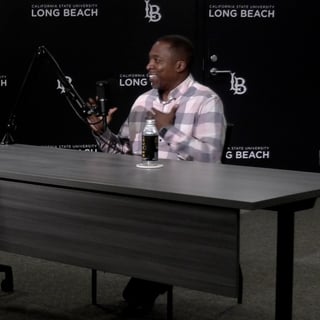
Speaker: I'm your host, Dan Montoya, Vice President for University Relations and Development and the CEO of the Long Beach State Foundation. Today, we're talking about the topic more of our donors are asking about every year, donor advice funds.
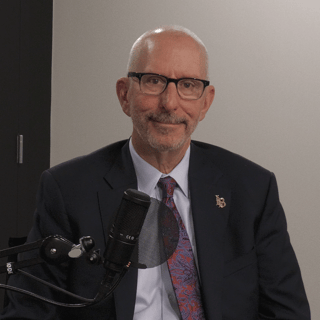
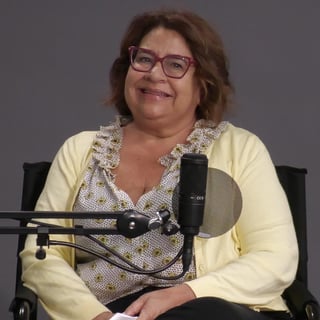
Speaker: What are they? why we've grown why they've grown so fast and how they connect directly to what we're building here at the beach. Joining me today is Donny Lepicolo. He's the vice president for Canterbury Consulting, an investment advisory firm managing endowments, foundations, and family offices. He's a Long Beach State finance grad, a Canterbury shareholder,
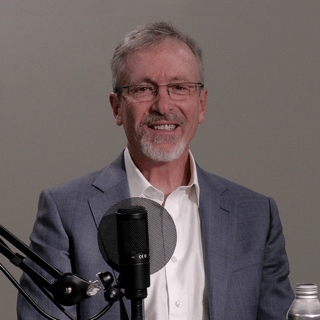
Speaker: and he chairs our Long Beach State Foundation's Board of Finance and Investment Committee. He also serves as the chair of the Long Beach State Foundation Board. He also has firsthand knowledge of how gifts, including DAFs, get made, how they get invested and grow over time.
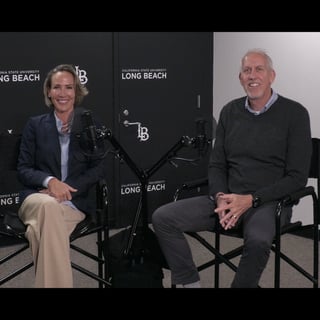
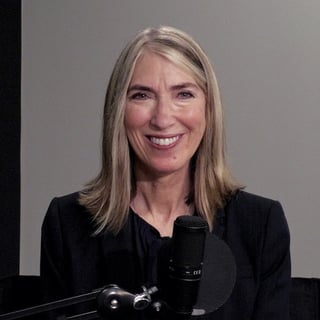
Speaker: Donnie, welcome to the show. Also joining us is Kathleen Hansen, a CFP registered. She's an EA and also has her MBA from Cal State Long Beach.
Speaker: Kathleen is a financial advisor with the Financial Planning Department, Inc., where she focuses on tax, investment, retirement, and estate planning. She's a certified financial planner, an IRS-enrolled agent, meaning she's passed the IRS exams and is authorized to represent clients directly in tax matters, where she holds an MBA in finance and accounting. Kathleen is also Long Beach State alum, class of 75, a former chair of our Finance and Investment Committee,
Speaker: and is past president of the CSULB Alumni Association. Kathleen, thanks for joining us today. yeah That was a mouthful, but we got it through. Is there anything that you want to start off by before we get kicked off? Because I know ah you guys are are are very strong in the financial services building for financial services um profession, but is there any disclaimers you need to make?
Speaker: If we were to make any investment recommendations, you have to remember that past performance is no guarantee of future performance. Well said. Very well said. And, Dan, I mean, thank you so much for having us. It's it's great to be here. um I would just add that you know the discussion today is much more high level and going to be in a form of a discussion and have to advise anybody in particular to contact their CPA or or your your professional financial advisor. um on specific advice that pertains to you.
Speaker: Great, thank you. I really appreciate you both because you have not only knowledge about this particular topic, but you also are so ingrained in our university. And and the reason why i wanted to bring this topic to the table was when we met with Jim Langley at our our board retreat, he talked about donor advised funds as being one of the main vehicles that people are actually giving through.
Speaker: And I don't think people know what they are. i don't think people know what they mean for their philanthropy or how to use them in their own ah personal financial planning. So today I just want to talk through that and just kind of demystify a lot of these ideas and concepts that people may have about donor advised funds. So the first question is, how did each of you first run into donor advised funds in your work?
Speaker: Well, i I have clients that are charitably inclined, and that's first foremost first and foremost what it is. They like to give to charity. But there's also tax benefits to giving to charity. Right. And we try to help them maximize those tax benefits. And donor advised funds are a really great way to maximize tax benefits given our current taxs the our current tax laws.
Speaker: right and And Dan, for me, as as an investment consultant who works with both nonprofit institutions and families, I've had the privilege of seeing how donors, but donor advised funds um can work somewhat from both sides of the ledger. On the nonprofit side, seeing good gifts come in um from the form of donor advised funds that ultimately make themselves make their ways out, ah you know, through the the nonprofit's philanthropic mission and goals and things. It has been wonderful to see.
Speaker: um But then on the family side, how families are actually incorporating this into their estate plan, their investment plans, and their and their philanthropic goals and and and initiatives on their own side.
Speaker: So how would you explain a donor advised fund to someone at a dinner party who's never heard of the term? Yep. I would ask them, usually usually, especially at dinner parties and people find out that I know about tax, I get questions all the time. a lot of times they will say, well, what's the best way to make charitable donations? And I said, it depends.
Speaker: But ah given the current tax laws, if you don't have a lot of itemized deductions, donor advised funds allow you to give appreciated stock or appreciated assets into the funds and do it maybe Maybe do more in a particular year than you were planning to, but then you can dole out the funds gradually to the charities. And so it just makes a very practical way of being able to um keep track of what you've given and who you give the money to.
Speaker: Great. And the one liner I would use is it's a charitable savings account. Think about it as an account where you put money away or stock or appreciated assets into an account today, receive a tax ah deduction ah for the year that you do it. Talk to your accountant first um and ultimately have those dollars set aside for ultimately to be to be gifted to a philanthropy or charity of your choice. That's that's how I would describe it.
Speaker: Okay, so you kind of already um answered the the question I was going to ask you, but maybe you can just he does just take it, dumb it down a little bit and talk it through.
Speaker: Walk me through it. Money goes in and then what? Yep. So happy to take that. um So there's a number of what we refer to as sponsors out there that will allow you to create or open a donor advised fund. Think of it in the same way as any other brokerage firm. So Fidelity, Schwab and many others offer these programs that allow you to go and create an account with them. Once that account is created, you can then transfer, I'll say assets, because they could be it could be cash, it could be stock, it could be private investments, it could be a bunch of different things into said account. The assets that you transfer in is what gets utilized um to ultimately calculate your IRS tax deduction for that year.
Speaker: Once the funds are in there, um they can be invested just like any other brokerage account, etc. so The funds stay there. You, while have control over it, um you ultimately then allow or or can dictate to the sponsor, actually recommend, I should say, to the sponsor where those dollars should be gifted to. And that's how the monies go from the account to the foundations or the charities, etc.
Speaker: ok It allows the money that you donate to those funds to continue to grow, which is great. So if you're trying to you know build up to a certain amount, if you've made a pledge to a charity and you're trying to get to a certain amount, it allows it to grow. um And there's many different investment options within the funds that you can choose. yeah So what's the difference between that and just writing a check to ah an institution or organization?
Speaker: yeah To me, it comes down to timing. With a donor advised fund, you can make contributions into that donor advised fund in 2026, for example, without necessarily having to make the decision on where you want to send those funds in the form of the charity that you would like to give them to. So you can put money in these accounts today without trying to make the decision on who as to whom you're going ultimately give that to. It allows you to get more time to you know maybe ah discover or find you know what the right charity is for for you. um When you write a check, it's it's done. You write the check and and and you're you're essentially done for that year. um So donor advised funds, I think, give the donor just a little bit more flexibility.
Speaker: and And why do you think people are are choosing to do this more often than before? Because I think there's a lot of people that have um you know saved money over time and invested, and they've got very large gains in some of their financial positions. And if they were to sell them...
Speaker: In order to raise cash to give to the charity, they would have to pay tax on the gain. right And then they would get a charitable donation, but it's not the most tax-efficient way of giving. the other thing The other way that I see these funds used a lot is if someone has an unusual tax situation in a year. Maybe they sold a business, or maybe they retired and they got a bonus, or they have something that created a large jump in income for a particular year.
Speaker: And it allows them then to make a larger charitable donation at the same time and offset that additional income. But as Donnie said, maybe timing-wise, they haven't yet determined to whom they'd like to give these funds. And so it gives them more time to strategically figure out who's going to get the ultimately benefit from those from that donation. Right. Yeah. What's interesting, Dan, is donor advisements have been around for quite some time. I think the earliest notions go back to all the back to the 1930s. It wasn't until the early two thousand s that they actually were called out in the IRS tax code. And so I think you're starting to see, um ah you know, a proliferation of more and more types of these funds being used now that it's somewhat been ratified in the within the IRS tax code. um The other thing I would add is that I think technological advances just within the financial industry have certainly um paved the way for this. um To open up and establish a donor advised fund is is pretty straightforward nowadays and very easy to actually get contributions in. So I think a number of families, at least what we're seeing, are opting to use that route as opposed to maybe going through the the the word to set up a private foundation.
Speaker: And private from a tax standpoint, because I do deal with doing tax returns for private foundations, it's complicated. And there's a lot of rules to follow. You have to create your own documents and do your own annual reporting. And that's not simple. When you use a donor-advised fund, you still have the flexibility of giving out money when you want it to be given out. In fact, you have fewer restrictions, actually, with the donor-advised fund. But giving money from that donor advice fund is just a click of a mouse, practically. It makes it really convenient. And Kathleen, can you maybe um talk to us a little bit about the tax side of it and how does...
Speaker: how does how does The process where they they give the gift, where where does the tax benefit really kick in? Is it is it when they set up the DAF or is it actually when they make the gift? When you actually limit make gifts to the donor advised fund, that's when you get the tax benefit. And these funds are used with people of all income levels. So with people of lower income levels, and I say lower meaning, I mean, it's still a substantial amount of income, $100,000 of income. The way the IRS is or the way the tax system is set up now, we have what's called a standard deduction, which is around $32,000 for a married couple. Sure. a little bit more if people are older. um But a lot of older people, too, have paid off their house, so they don't have the deductions anymore. So when they make a charitable contribution of cash, it goes as a deduction on their tax return, but it may not give them any tax benefit at all. Right. So when you give to a donor, ah or so if you try to, um or what we do is we have people bunch together tax donations. So we can say, well, let's set aside, let's put $50,000 into a donor advised fund now, and you're going to use that money over the next five or 10 years to make your contributions. But you'll get a tax benefit in the current year for putting a larger amount of money in the donor advised fund. So it can really make sense for, look like when you say lower-income people, but also it really makes sense for higher-income people too. And if you you know if you're in the highest tax brackets now, it's 37% federal tax. There's Medicare tax in California. We have state income tax. That's 54%. So they would save, of the of their donation, they save 54% in tax for money that they donate to a donor advised fund. So it's significant.
Speaker: And I think one of the things that we see that that we often try to make sure our clients are aware of, once the gift is once the asset or the gift or the cash or whatever it is is put into the donor advised fund, it is an irrevocable gift. So you can't put the money in and change your mind and take it back out. So you really you want to make sure you're you're having the conversations with your tax planner um to ensure that the strategy, even the timing of the strategy, makes the most sense and for you um because it does have implications. Yeah. But if you think about it, you're going to give that money to Uncle Sam either way.
Speaker: least a portion of And you're not going to see it, right? Quite a large portion of it, yes. At least you're making an impact some way or another. And even with people with a $100,000 tax level, their taxes are still 30% in California. So it's still a substantial tax savings. Yeah.
Speaker: That's amazing. Donnie, how much have you seen this grown in the last couple of years since you've been on the board? Yeah, I mean, we're just looking at that the numbers and it actually resonates pretty well with what we're actually seeing nationally from some of the studies. So I think going back over the last four or five fiscal years, we've seen donor advised funds, gifts from donor advised funds go from roughly 2% of our yeah annual goal. to now close to 20% of our annual goal. And that's just over a five-year period. yeah um you know If you look at the data nationally, um and this is coming from the National Philanthropic ah philanthropic Trust, and their annual DAF data, They quote roughly three and a half million donor advised funds exist today.
Speaker: Assets have actually moved upwards to $320 billion dollars in total assets within donor advised funds. In 2024, they quote roughly $94 billion dollars of new contributions. Wow. And roughly $64 billion dollars of donations. So donor advised funds are certainly, um and I'd say continuing um to to grow in in how much they're used. And, you know, at least with the work that we do um are an integral part of the of the estate planning tool. um that that our clients try to take advantage of.
Speaker: How much are all charitable giving in the country is flowing through DAFs now? um I have a number, an estimated 12 to 13% of all U.S. charitable giving.
Speaker: Close to one in six individuals giving dollars are given through DAFs. And that that i mean that's consistent with with the data that I've seen um and is actually consistent with what we're seeing at at at Long Beach State. Anywhere from, call it, 15% to 20% over the last, call it, 12 to 24 months of our contributions from donors have come from DAFs. And I would suspect that that would continue to increase um as we continue on.
Speaker: Right. Is this a good thing? and Is this a good trend that we're seeing? I think it's a good thing because it encourages gifting. And I think all of so so many of us have such great lives. And it makes, at least for me, it makes me feel good when I can give. And giving to a donor advised fund helps you.
Speaker: Strategically plan out maybe even future contributions instead of doing something just at one time. It allows for families. If families want to have family meetings on gifting, it's, you know, that the fund is there. It makes it really easy. They can still do that. I know there's a lot of foundations, private foundations that have family meetings, but you can still have the family meeting and use a donor advised fund. So I think it's a a really good trend. The one thing I do want to um stress is that once you give money to the donor advised fund, you want to then make the distributions to the charities. The idea is not to have donor advised funds just keep growing and growing and growing. without You have to actually make that decision and send the send the funds out of the donor advised funds to the charities. Yeah.
Speaker: Yeah, I'm sure Fidelity likes that because it keeps growing this is true in their portfolio. yeah But I think you're right. um And do you see that often where people just not necessarily forget about it, but they think that it has to reach a certain amount and then make this huge gift? Well, some people do want to make a substantial gift. right And so for that purpose, they can then over time build up that donor advice fund and then have enough to make a very substantial gift. And so for that purpose, it really makes sense. But to give money to the donor advice fund and just have it sit there doesn't only benefits the sponsor of those donor advice funds. yeah and I would say every family is every family is different and has different um objectives of doing so. Obviously, there's the initial ah you know benefit from it from a tax perspective.
Speaker: But once you have the money in the donor advised fund, um to to to Kathleen's point, there's a lot of interesting stewardship opportunities with bringing in the next generation and things like that that I think a lot of families are taking advantage of. um and And the other thing I'd add, you know, in my perspective, anything that continues to to get more dollars into, I'd say, at least the realm of moving into philanthropic causes, the better. um Kathleen made a point. These aren't just vehicles for the ultra, ultra wealthy. yeah um That same study I quoted said that roughly the average value average, which averages can be somewhat, um yeah you know, somewhat interesting depending on how you look at it. um Average value of the donor advised funds about $91,000. And of course, averages can be deceiving. But what that does tell me is that perhaps there are a number of perhaps younger um or and not as affluent donors that are setting aside money today in a donor advised fund. that I think ultimately will will flow into you know a philanthropic cause in one way, shape, or form. um But it just might take time because they don't have to technically in and year one.
Speaker: I really like this because when we when we think about philanthropy and legacy, it's an opportunity to do that for families because a lot of times, yeah often when you talk to people, they i'll always say, I want to leave something that...
Speaker: will outlive me, right? this is This is a great opportunity, right? Something that even my children can continue to contribute to and and give on behalf of our um family, right? it It'd be a ah great opportunity to do that as well.
Speaker: So here at Cal State Long Beach, obviously we encourage people to give in many different forms, right? So if if they were interested in doing this, what are the first steps that they could do to get this ball rolling?
Speaker: I would say probably talk to their financial advisor to see that it that the timing is right for a particular year and that financial tax tax or financial advisor could then maybe even encourage them to do a little bit more in a particular year. um But it's it's a pretty simple process. Yeah.
Speaker: And setting up accounts, you don't you don't have to use a financial advisor. You can set one up by yourself um on so in fid at Fidelity or Schwab, or I don't want to push anyone in particular, but those are the large ones. And there's no fee to so to setting them up.
Speaker: And then once once it's set up, then you can go on the account and actually choose the, choose the is it the institution? has to be an institution. So you would have to reach out to your sponsor, the group that you established the account with. And essentially ask them to donate or to provide or pay out or wire transfer whatever proceeds you would like to the said charity. Charity does have to be a 501c3. So and for the most part, you know, it's a pretty seamless, seamless process.
Speaker: For me, I would encourage anybody to reach out to the you know wonderful folks at our planned giving department. um They're always there to answer any questions um that anybody anybody might have um and happy to happy to walk you through that process. Right. We're also on our website, we're we're putting a DAF little icon there you can click on and and begin the process. So we're trying to make it easy for people to do that as well. Yeah. um what are What are the things should we consider in donor advised funds? Maybe something that people don't think about. Is it important to keep documentation or is this something that Fidelity keeps as ah as a like ah item that they'll say contributions and you can always go back and look at them? is there a Are they important to keep those records for taxes or or is it something that... the The only tax records you really need to keep are that are ah records for the year in which you actually make your own contributions to the donor advised fund. okay
Speaker: um Once it's in the donor advised fund, it's under control of the sponsor of the sponsor of that fund. um And they will check to see that that you're giving to a 501c3 organization. There's not a lot of record keeping after that. Okay.
Speaker: Okay. I mean, other other than you looking at your accounts and seeing what is contributing yeah um it's That's good. um And then obviously it's growing, right? we're We're seeing the numbers continue to increase and evolve. Do you think it's going to you think the trend is going to keep going in that direction? Do you think people are really continuing to, as they get more educated, do you think that's going to grow?
Speaker: I personally do. It's it's what I've seen um amongst our our client base as well. um You know, obviously, you know, one of the first things when it comes to estate planning ah is is how we think about philanthropic donations and gifts. And it's one that, you know, you can do can fairly easily at any point in time during the year. um so So from that perspective, I believe so. And again, I also think something there's something to, um you know, the the I'll say the that that the younger professional who, again, may or may not have the means to write, you know, a six-figure gift to their local institution today, yeah but is thinking about that down the road. um And so as opposed to just saving those dollars in their personal name and their savings account, paying taxes on it on that income every year— Putting money away in a donor advised fund, maybe over the course of one, three, five years, so that you can ultimately make that donation that you're planning on doing um is is something that I could see happening um more consistently. Two of the most tax-efficient ways of making donations, um one is donor advised fund and the other is making gifts from your IRA account. But gifts from your IRA account you can't make with with the tax benefit that you want until you're 70 and a half. Oh, With donor advised funds, you can start whenever and start building that fund. either that fund And there could be times when there's a lot of people that are in um employee stock purchase plans and are get granted stock. And it stock the stock has great appreciated value. And so that's a great thing to give to a donor advised fund.
Speaker: Right. So, so I don't know if you'll break this down. I mean, it just throw the number out there. Let's say somebody was making $300,000, right? And they say, okay, how do I, how do i work this so I can give to a donor advised fund? How, what percentage should I consider to help me ah with tax benefit, but also to fulfill the charitable contribution that I want to make?
Speaker: Well, I would say that, um again, you look at what their tax bracket is and what their other tax deductions are, and 10% with tithing is is ah is a usual, I i mean, it's it's a type of, an amount of donation that I see. But 10% of $300,000 is $30,000, but the standard deduction is $32,000. So are you getting a huge tax benefit from it? Maybe not.
Speaker: Giving money to the donor advised fund where you're going to give appreciated stock where you don't pay tax on the sale of that stock to give it to the fund, that makes a lot of sense. and Yeah. yeah I was going to say, it's a it's a trickier question to answer because there's so many other objectives going on with with set individuals. So for me, it really comes down to looking at your personal situation, trying to extrapolate what your long-term goals are, and then backing into that set budget um to be able to accommodate as much as you possibly can.
Speaker: So, so I think it'd be important to make sure you have a good tax person, right? I think that's important, yes. to To make sure that they can look at your whole picture and then make a recommendation. Right. And it's not only income taxes to consider, which a lot of us, that's from on a year-to-year basis, we think about that. But from an estate um estate tax savings um a perspective as well, it makes sense to set up donor-advised funds. And then future generations can continue that fund and continue the giving. Mm-hmm.
Speaker: Good. What else should we consider about DAFs before we finish our conversation? I would just say in general, it's great if you can take advantage of a donor advised fund, but the giving itself is very rewarding. yeah And I would just encourage people to be thankful for what they have and maybe share what they have. Yeah.
Speaker: And from my perspective, and I'll and i'll put on my my board chair hat for for just a minute, um you know, I think donor advised funds, they they definitely give the donor, as we've talked, a lot of flexibility and time to determine who they want to give their money to.
Speaker: um And from our perspective, you know, one way to think about it is, well, we just hope we get what comes in and we get. But the other way we'd like to think about it from the foundation's perspective is how do we earn that trust to be able to be in a position um to accept those dollars? so you know if it As it comes back to Long Beach State, um if there's anything that any donor is interested in learning about from the foundation's perspective and how we're what we're doing to steward those dollars and put it back into our university and our students, please reach out. We're always happy to connect with you um and and and have conversations. Great. Well, this has been so helpful and I think it it gives us good food for thought. And for anybody listening out there, um i would if you're interested in donor advised funds, we'd be happy to talk to you. If you if you were interested in talking to Donnie or Kathleen, maybe they can answer some additional questions. But um I think this is a great tool and great opportunity for those who are interested in leaving the legacy
Speaker: um in a very practical way. yeah ah Very easy now with technology, as as they mentioned as well. So we appreciate your time. So thank you so much. This is Dan Montoya for At The Beach. We want to thank our guests for being here. We look forward to another conversation in the future. And we always like to close our podcast with a Go Beach on 3.
Speaker: One, two, three. Go Beach! Beach!