Transcript
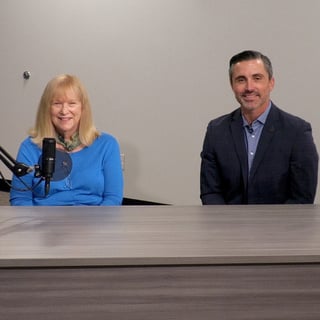
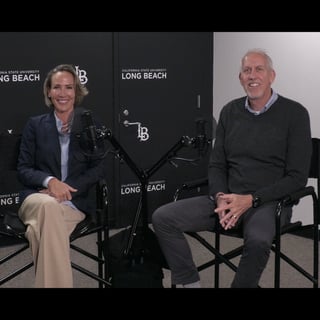
Speaker: Welcome to At The Beach, the podcast where we highlight the leaders, partners, and changemakers shaping lives here at Cal State Long Beach and beyond. I'm Dan Montoya, Vice President of University Relations and Development, and today's guest is someone whose career sits right into in in the intersection and service and education and national impact.
Speaker: I'm honored to welcome Debra Lutke, a national healthcare care administrator with the U.S. Department of Veteran Affairs, and an educator, a leadership VA a graduate, and a champion for improving the experience of our nation's veterans.
Speaker: She spent more than 25 years serving in roles that touch research, clinical education, professional development, and veteran-centered engagement, and she's one of our own.
Speaker: a double alumni of Cal State Long Beach, a longtime executive faculty member of the Department of Health Care Management. Welcome, Debra. Thank you so much, Stan.
Speaker: We're so excited to have you. and And I was talking to you earlier. I wanted to really highlight somebody in in the and industry, connected to veterans, somebody who has the connection to the Long Beach community and and here at at the beach as well.
Speaker: And so I'm so excited to have you with us today. So we're just going to have a simple chat and go through some questions and and have some fun with it. So I'm glad you're here. Love it. Me too.
Speaker: So let's go into the first question. What originally drew you into healthcare care administration and what ultimately led you to build your career serving veterans?
Speaker: Growing up, my best friend was born with ah ah genetic a rare genetic liver disease, which led to her having three organ transplants over her life, with the first one starting when we were teenagers. So first first liver transplant as teenagers. And because of this, she spent a lot of time in the hospital. And her as her best friend, i spent a lot of time in the hospital, And the hospital and the health care setting became a place that started feeling comfortable for me. And it became a place that was interesting to me and and really a place where I thought I could make a difference. So it's really no big surprise to me at this point in my career to look back and and know that it all made sense that I chose this pathway
Speaker: to really feel that I can make a difference. And combining that with veterans ah is is really special to me as well. So I'm a daughter, granddaughter, and sister of ah veterans. So my father served in the Army, my grandfather in the Army and the Marine Corps, and my brother was a career had spent his career in the Air Force. Wow.
Speaker: ah So the really combining veterans and health care makes complete sense to me and has been a phenomenal career. That's awesome. Where where did you grow up, if you don't mind? So i I grew up in Southern California, different parts of Southern California.
Speaker: Yeah, as ah as ah i probably a military child, you you you moved a lot. Yes. So my my father was in the army prior to my parents getting married and before me coming along. And but my mom, my mom actually spent a lot of time. She'll she'd call herself a military brat who moved around a lot with her father, my grandfather. Wow, that's amazing.
Speaker: So you earned both your psychology degree and your master's degree in healthcare care administration here at the beach. How did that shape your pathway to kind of where you've traveled in your career? And not just professionally, but in terms of your philosophy about service and leadership.
Speaker: ah So I chose CSULB as my university when I was 17 years old. Wow. and And I have to say, hands down, it was one of the best decisions I've ever made in my life. So not only has CSULB afforded me an opportunity to earn a world-class education, but also to meet some of my best lifelong friends and to be able to start shaping and to continue to reshape my career during the two times that I've been a student here for both my undergraduate degree and graduate degree. And now is an opportunity to to teach here and be able to to really come full circle with the university. And as far as service, i really, i can't thank this university enough for the opportunities that have been presented to me to continue to lean in and give back to others. So following my graduate degree, I had an opportunity to serve as the president of the CSULB Healthcare Administration Alumni Network. right
Speaker: And really be able to give back and provide opportunities for networking and career growth to to fellow alumni and to future alumni. That led to an opportunity to then teach, which led to an opportunity to work closely with the Alumni Engagement Office, and the Career Development Center to facilitate and lead sessions, be a panelist on topics that are healthcare related and to and professional development related, to really be able to ah continue to give back. And i have loved every minute. So CSLB has definitely helped form who I am as a leader and as someone who is um believes firmly in providing service to others. Yeah, that's amazing. And, you know, we we aspire and strive to lead people to get that involved. So that's amazing. And thank you for all that you've done.
Speaker: um Were there early mentors or experiences or defined moments that set you that set the tone for you to show up ah in this kind of work today?
Speaker: Yes. So i've I've been really fortunate to have a lot of great mentors in my life. And some of those were supervisors I had who became mentors and became friends in some circumstances and mentors that came along in leadership development programs I've been a part of with the VA. Yeah.
Speaker: And so I think one thing that really rings rings so important to me is how much those individuals provided in in terms of support and really believing in me and leaning in to get to know me and what I was good at and where I wanted to go and encouraged me to to take those steps to to get there and do things that mattered.
Speaker: And I love that. And I i think back on a mentor I had a who was ah he's a former chief of staff for the VA to whom I reported. and he told me as a when I was an early careerist that i I reminded him of a high school principal. And went on to share that he believed that I had the ability to move others to action that made that helped others and that others could that I could connect with others in a way that they could see the heart for those for whom we care. yeah And I've always kept that as my vision ever since. And I loved that he saw that in me. And I love that that's become a guiding light for me. Right. And and and now you are giving it back because I'm sure you mentor and and give back to others as well.
Speaker: I do. And I love it. Mentoring is just, it's it's everything to me. I love mentoring those I work with, those students I have the opportunity to work with here at CSULB. And we've all've we're all in a situation throughout our careers where we need that mentorship.
Speaker: And I really love the opportunity to get to know others really find out what is it that they dream of doing, help remove those barriers, and help provide opportunities to connect them with others and with opportunities to really go out and do those cool things that they've been dreaming and preparing of doing.
Speaker: Yeah. So let's ah switch it up a little bit to talk about the national impact of the VA. So how did you start your your career and your journey with the VA? Yeah. So I actually started as a paid intern. Okay. So I was living on campus, e-building right here in the CSULB dorms. Okay. And so I landed a paid internship in the Department of Surgery at the VA Medical Center right next door. Okay. that turned into i paid permanent job once I graduated. And that, before I knew it, turned into a lifelong career serving veterans. That's awesome. Okay. Yeah. um So what are a few things our listeners should know about the VA a and veterans? I mean, and and this is probably ah ah something that you can talk about all day long. But yeah, if you could give us ah maybe a sneak peek. Yeah, there's a lot. So the VA a is one of the largest departments in the federal government. And the VA a is is made up of three distinct air but but conjoined areas serving veterans. So we have the Veterans Health Administration, which provides health care to our nation's veterans to get them well and keep them well at hospitals and clinics throughout the nation.
Speaker: There's the veterans benefits part of the VA, which provides financial compensation for disabilities and for veterans to go back to school to get their education and for their children to get education. Also provides opportunity for vocational rehabilitation for veterans as they leave the service and start prepare for their preparing for their next step after after military service.
Speaker: and And also to be able to buy homes through the VA a Home Loan Program. And then finally, there's the Veterans Cemetery Administration, which provides honor and a final resting place for our veterans in national cemeteries across the nation, which are absolutely beautiful. Yeah. No, i I've been to some of them and and I can attest to that.
Speaker: yeah For listeners who may not be familiar, can you walk us through your role as the National Operations Officer for Advanced Fellowships and Professional Development? in In my role with VA, I have administrative oversight nationally for what we call VA Advanced Fellowship Programs.
Speaker: And these are are programs which in which we have young physicians and psychologists, physical therapists, and others who who come into these primarily two-year programs, which are focused on areas of importance to our nation's veterans. So these are so some of these areas of focus include polytrauma and traumatic brain injury, war-related illness and injury, women's health, and ah mental mental health, such as addiction treatment, and so many more
Speaker: And the fellows who come into our programs are trained at VA sites across the nation. We have approximately 50 sites, 5-0 sites, who do this um who run these fellowship programs. And these are these individuals who participate are learning. to they're They are here to focus on research, policy development, and on education, and um to really be able to, and becoming leaders. And the intention is really for us to prepare them as leaders and to retain this great talent, um some of the best and brightest coming into these programs it as as talent in our VA Caring for Veterans.
Speaker: That's awesome because um a lot of veterans don't really naturally go and ask for help. Right. So it's, you know, having a place to come to and somebody that they can relate relate to is so important.
Speaker: And I know you you and your team and the VA in general does a great job of ah allowing them to come in and and build community as well. Yeah. So that's all. Okay. um You've had a large breadth of experience. Research, research, research,
Speaker: Research, ah protection, clinical education, blood and organ donation, and systems management. What is the common denominator in these leadership experiences that continues to guide you?
Speaker: So for me, that that's, it's really easy. So i'm I'm really, one of the great things about working for such a large organization is there are so many opportunities to kind of switch it up during one's career. And I'm grateful for those opportunities. But I can absolutely say that the guiding light for me as a leader has really been veteran-centeredness and having the veteran in the center of everything that we're doing. We have the best mission ever in the VA a in in contributing to the care and lives of our veterans. And to keep that in the center of our decisions and our project development and our direction of where we're going is is the best. And i love it so much. And it just it makes every day worthwhile.
Speaker: As a veteran experienced champion, what does that mean to you in practice? ah So it means many things. I believe we can all be champions for veteran experience.
Speaker: ah I took it to the next level about 13 years ago, working for our national headquarters. I really wanted to stay focused personally and provide an opportunity for others to do the same with veterans. Veterans are the reason why I came to the VA. Yeah. and really wanted to carve out that opportunity. So with a physician colleague and friend of mine, we created what's now known as the VA Long Beach Veterans Appreciation Committee. This is an official medical center committee, and it's about 30 members strong, consisting of employees, volunteers, community members, and very importantly, veterans of each of those groups. And we exist to find and implement thoughtful ways to welcome, honor, and appreciate our VA a Long Beach veterans. Our committee has has really created phenomenal projects which touch the hearts of our veterans and those who care for them. And has we've had the opportunity for many of our projects to be recognized not only locally but nationally. And I have loved every minute.
Speaker: Could you give an example of one of your favorite projects that that is just something that you look forward to every year? So a couple. so one So one leads into the next. So i' I'll start with what we call the Meet a Veteran Project. So our committee designed and implemented a project called Meet a Veteran many years ago, and with really with the intention of knowing that in in VA medical centers, we know how to take care of the health care needs of our veterans,
Speaker: But we have this amazing privilege to be surrounded every day by veterans in our midst. And we knew that there was an opportunity to get to know these veterans on a more personal basis and to be able to get to know their stories and to be able to share their stories as we honor and appreciate them. So Meet a Veteran, we, in that project, we, our committee members go out and interview veterans of all ages, all branches of the military service who receive their care at VA a Long Beach. We have a core set of questions we ask them about where they who they are, where do they serve, when did they serve, what's an inspirational quote which guides their life, what are their hobbies and interests, and what is a part of their military story that they'd like to share with others.
Speaker: when we When we collect that interview information, we also collect a photo of those veterans now and in their time of military service and turn them into beautiful framed biographies which now line the hallways of what we've created to be the Meet a Veteran Gallery at the VA Medical Center in Long Beach.
Speaker: And i had I loved when you came over to the medical center recently and had the opportunity to give you a private tour of the gallery. and Along with each installation of 18 veteran biographies, we have a special event We invite those veterans and one by one with those veterans by our side, we tell those stories out loud in front of their friends and family and unveil those biographies at the end of the event. yeah it's this This project I am so proud of and we are so proud of. it's The gallery is one of my favorite places in the medical center and in that each person who passes through that gallery has an opportunity to get to know our veterans online. learn about veterans, learn about history, and for all of us to be able to pay tribute.
Speaker: You know, um for me as a veteran, um it really didn't hit me what it meant to serve our country until I went to D.C. And I got to see some of the war memorials and, you know, I got to see the ah ah Tomb of the Unknown Soldier and the ceremony and all that.
Speaker: And that was just so impressive so meaningful. But then, you know, when I came to the meet the veteran, that was like even more personal. And it just made me so proud to hear the stories of the veterans who have served far, ah you know ah you know, for so many years and far, you know, before me.
Speaker: And some of those stories that they tell are just so humbling because they come from humble beginnings, you know, and all they wanted to do is make a difference. Some of them had just wanted a job and they went into the military and and and realized it was a game changer for them because it it changed their lives in so many ways.
Speaker: yeah And so, you know, that is an amazing program and project that you do. And then if you haven't come to see that VA wall and the project and and the stories of the veterans and the pictures and and just walking through there is just a wonderful experience. So we invite you if you haven't come to see that, you should, because it's pretty amazing. Absolutely. Private tour I'm i'm offering right now. That's awesome. so leadership of VA and the future of service, you are a graduate of leadership VA.
Speaker: So what is leadership VA and what was the biggest takeaway when you answered that So Leadership v is one of the foremost leadership programs which is offered enterprise-wide across the VA. So high-potential leaders compete to be selected for this for this program, which really involves really displaying your leadership through through your career as well as your community service. So I love that it connects the two. And those who participate in the program are from all three parts of the VA. a So we have participants from VHA, Veterans Health, from Veterans Benefits, and National Cemetery Administration. And one of one of the my biggest takeaways, and someone had actually—so this is a program that I've always known throughout my career is to really be the best of the best—
Speaker: And something I really was striving for throughout my career and was thrilled to be able to be chosen and participate and was was advised prior to me starting that one of the best things I can get out of it is the networking.
Speaker: and the opportunity to meet other leaders of of um of our organization in different parts of the organization. And that absolutely has been a game changer for me. So whether it's leaders who are our top executives in in VA, or um and additionally, those who are in my cohort. So I've reached out so many times throughout the program and since to really be able to to gain information to help veterans. And I would not have had those contacts before. so i'm
Speaker: to me, that that was the biggest takeaway. Wow. That's awesome. and You're a long-time executive faculty member of CSULB's Department of Health Management. What led you to this role on campus?
Speaker: So when I was serving, when I was finishing my tenure as president of the CSULB Healthcare Administration Alumni Network, I had lunch with a former professor and a mentor of mine. And so she asked me, well, now that you're finishing this up, what are you going to do next?
Speaker: So I smiled and said, I think I'd like to teach sometime. Yeah. She smiled back and said, really? and I said, yes. And really what led to me saying that was that when I was serving in that role as president of the alumni network, I was doing a lot of speaking to student groups and clubs on campus and student classes to let them know that we were there, what we do, what they can expect when they graduate, and to also talk about careers to help inspire them.
Speaker: And so I really had students on my mind. So it's ah soon so Dr. Gotts is the individual I'm referring to with whom I had lunch. And before I knew it, she had recommended me to our department chair, who then offered me a position in teaching. And before I knew it,
Speaker: probably within two short months i was teaching and have been teaching ever since for 13 and one of the best decisions another one of the best decisions i ever made in my life i love it i love every day teaching i love every day with my students and every single class is is so much fun and so rewarding that's great what what classes do you teach I teach two internship classes in healthcare administration. So these are these are required classes where students are required to take two complete internship hours in healthcare organizations in the local community.
Speaker: And then they come to class to learn really practical things like how to write a resume, how to interview, how to dress professionally, how to start networking and introduce themselves and have confidence. and how to start envisioning and creating their plan for what their career and life is going to look like upon graduation. And with the intention that they make a smooth transition from college to their after-college professional life.
Speaker: And it's ah ah i am with with these classes, I've really seen that students... either have a job by the time they graduate or are on a really good path to to landing a job and feeling confident. Wow, that's wonderful. Because you're helping in in workforce development as well. Yes. So it's really wonderful that you do that as well. And many of them intern at the VA. a Yeah. So...
Speaker: so um how does how do the How can campuses better prepare students to serve veterans in public service and systems?
Speaker: There are so many ways, and it's it's actually really exciting to to think about this. So one one project that I'd also like to highlight, which will be a great example for this question, is the the development of what we call the Veteran Portrait Project. Okay. So our VA Long Beach Veterans Appreciation Committee developed in conjunction with the College of Arts here at CSULB what we now call the Veteran Portrait Project.
Speaker: This is a project which came out, was born out of our Meta Veteran Project. And early on at one of our Meet a Veteran events honoring 18 veterans, one of the Army veterans invited his friend and neighbor, and that that individual's name is Professor Marion Stewart.
Speaker: And she she teaches life drawing in the School of Art here at CSULB. She loved the Meet a Veteran event so much that she went home, talked to her her friend, are are one of our honorees,
Speaker: and let him know that she was interested in finding a way to allow her students to be able to honor veterans through their artwork. They called me up. we We talked about it, about what a potential project would look like, and landed on what now we call the Veteran Portrait Project. And each semester, we randomly select a veteran who's been honored and meet a veteran and present them with an opportunity to sit for a portrait drawing in Professor Stewart's class. or
Speaker: Each of those students draw that veteran. as one of their core requirements for the class every single semester. At the end of the semester, the veteran and the professor pick the best drawn drawn portrait, and that portrait is framed and installed in our main lobby at the VA a Medical Center right next door to Cal State Long Beach.
Speaker: And some of the really beautiful things that have come out of that project are really the opportunity and with the intention of this being the outcome, but so much, so much more. It's so personal that the the veteran has this once in a lifetime opportunity to have their portrait drawn. And these students are phenomenal. They're, they are freshman art students and they are, they're out of this world talented So they're sitting with these students, they're having their portrait drawn, they are interacting with the students, they're telling their story, they're sharing about being a veteran and what their experience in the military was like.
Speaker: For the students, they are getting to know the veteran, many of whom don't have a veteran in their life, maybe never met a veteran at all, ever. And they're getting to know that veteran. They are they are learning. They are honing their artistic skills, and they are ah they are being having the great opportunity to honor and pay tribute to our veterans through their special artwork.
Speaker: And each time we we have a new installation go up in the in our medical center lobby, we have a special event, and we invite the the student artist, the veteran, who by now are becoming fast friends and I believe lifelong friends. yeah And ah we we allow them to share their experiences and bring in family members and friends and leaders of both organizations. It's been a game changer and just something that just moves all of us so much.
Speaker: Yeah. So from from working with veterans, it's it's so unique. So... Maybe you can give us some advice or or just people out there, advice about just interacting with veterans.
Speaker: There's a lot ah lot of time, you know, people say, oh, yeah, you know, you're a veteran. Thank you for service and all that. But what what what advice can you give them and in terms of interacting with veterans and and just showing them appreciation?
Speaker: So I think it's just that. I think it's showing them appreciation. I think it's it's being so, what do what do we know what do I know about veterans? The veterans, these are individuals who have dedicated themselves to the service of others and our nation. These are individuals who have so bravely served so that we can live the lives that we live. And veterans are everywhere.
Speaker: And I think it's important for us to keep our eyes out for veterans. So sometimes veterans might make it easy for us by sporting caps that say veteran or their branch of military. And I've learned from my from my mom that That every time she sees someone with a veteran with a hat, she is up out. If we're at a restaurant, she is up out of her seat and she is she is going up. She is she is thanking them, that individual authentically and and asking them questions about where did they serve? What did they do? So i i think it's really. It's maybe sometimes we don't know what to say. So we we we say thank you for our service and we mean it. We mean it when when people say that. But I think it's there's an opportunity, a big opportunity for us to take it further and be be real, be human and and really be authentic and get to know that veteran and really make that veteran's day.
Speaker: Yeah, no, i I do that as well. When I see, ah ah you know, sometimes they're most of the time they're older gentlemen, you know, i'm sitting at a restaurant something, especially if they have a a veteran. I mean, I'd be a non-veteran hat or World War II or or just, you know, combat veteran in or something like that. I'll make it a point to go up them to them and say, you know, hey, thank you for your service and, you know.
Speaker: Share a little, you know, get to know a little bit about them. And it's really And they do appreciate that. So, yeah, I think that's valuable as well. Definitely. What piece of inspiration would you share to listeners about, um you know, just, you know, appreciating the VA itself? um Because there's so much to it. And most of the time the VA serves and veterans, right? But how can other people be kind of engaged or affiliated with what what happens in the VA? Yeah.
Speaker: Sure. It's a great question. there's so the the VA a Medical Center, if you haven't been there, be for those who haven't been there before, there's a lot going on there. So it's it's a medical these are medical centers where where veterans come to get their health care.
Speaker: But there's so much more. so there's so many services that are available to our veterans to um to engage them in Different activities, artistic activities or sporting activities, opportunities for support groups. And there's a patient garden right next door at the VA Long Beach.
Speaker: There's opportunities for us as community members to serve as volunteers to come into VA medical centers. ah we and We also have a ah whole host of different activities and events throughout the year to bring in the community to to really help them get to know what it is that we're doing and to be able to say thank you to veterans. So some of these events happen around Veterans Day, so sometimes you know at other at many other junctions throughout the year.
Speaker: Our Veteran Appreciation Committee leads a number of different events, including a community card collection and distribution event, which happens three times during the year at Valentine's Day, Fourth of July, and Veterans Day, where we go out and collect thousands and thousands of cards from the community, from friends from kids in schools to community groups, churches, fraternities, sororities, you You name it. And these individuals are writing thoughtful letters and drawing drawing pictures on some of these cards. And these cards get get distributed to personally to every veteran who's an inpatient receiving care at the medical center.
Speaker: our outpatients, some of our homeless veterans, those are who are being um who are being followed by suicide prevention, to to really lift the spirits of our veterans. And I think especially as we've come out of this time and maybe continue to prolong pandemic time,
Speaker: And we've really learned the importance of finding new ways to and continuing to um implement processes we've used to really be able to thank those veterans in every way that we can. Yeah.
Speaker: If there was a dream project that you could create or come up with or or maybe something that's that you would like to do in the in the next couple of years, what what what would that be?
Speaker: i i I really feel that that taking taking the Veteran Portrait Project as the lead and as an example gives me so much desire to really take take the relationship between the VA and CSULB And other universities can do the same with with their local VA medical centers to really take that to the next level, to really deeply examine the opportunities to connect students with veterans, whether those be personal experiences at the VA medical center or veterans going out to CSULB classes. This could be in history classes, psychology classes, healthcare administration.
Speaker: Really, the sky's...we know what's happening in the art classes. Really, the sky is the limit. And to also be able to bring students over to over to the VA... So whether it be the medical centers or our national cemeteries, to learn about veterans, to to serve as volunteers or to intern at the VA or to partake in community service opportunities to to really be able to band together to make a difference in the lives of those veterans. So that's really my dream project. And I'm i'm excited for what the next step is. Yeah, well, you know, I agree. i think that would be amazing. And I hope you continue to to develop that because it's a great project. And and ever I just want to tell you, thank you for all that you do for for veterans, for our community, for Cal State Long Beach, and as an alum. and
Speaker: And just a a member of ah the Long Beach community, thank you because you you do make an impact and we're so proud of everything that you do and continue to do in your community and for students and veterans as well. So thank you so much. thank We appreciate you being here today. And so that concludes our episode of At the Beach. I want to thank Mike Sully, who's behind the camera and and the production of this. So thank you, Mike. um We also want to wish... um Happy holidays to all our soldiers who are out there around the world on guard and away from their families. We hope that ah you are blessed and that you can share a meal or time with those around you, your fellow ah comrades and And service people. And then for all those families who will not be with those service people, we recognize those as well. And for all you veterans out there, thank you for your service and for all that you've done for us. And we really appreciate you.
Speaker: I know here at the beach, we continue to build our veteran community and we we want to work with Deborah and and her team and the VA to continue to explore that and develop. other opportunities to serve our community in the best way possible.
Speaker: ah This is the last episode for the year, so we wish everybody a happy holidays, and we wish everybody a prosperous 2026. We're excited about the new podcast and stories that we will share with you in the coming year. And we'd like to end all our podcasts with a Go Beach on 3.
Speaker: One, two, three, Beach! Go Beach!