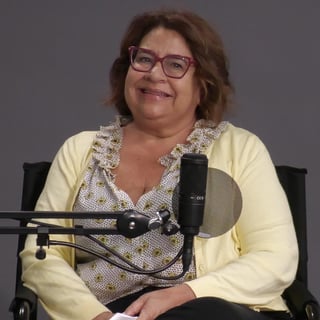
Transcript
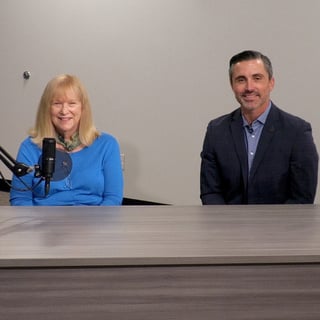
Speaker: Welcome to At The Beach, the podcast where we explore the people, partnerships, and ideas shaping the future of Long Beach State. Today, we are talking about something that matters deeply to our students, our university, and our region.
Speaker: How we prepare the next generation of engineers to enter the workforce ready to contribute, lead, and grow. At Cal State Long Beach, we're We believe education is not simply about earning a credential. It's about preparing students to solve real problems, serve communities, and contribute to industries that shape the world around them.
Speaker: My guest today is Simon Richman, PEPMP Regional Executive at Ewing Coal, where he leads the firm's western region including San Diego and Irvine offices.
Speaker: Simon's work spans operations, practice, leadership, business development, project delivery, and talent development. He brings both the technical depth of a structural engineer and the strategic perspective of regional leader.
Speaker: Simon, welcome to At The Beach. Dan, I really appreciate being here. Thanks for having me. Simon, before we get into hiring and workforce preparation, I want to start with your story.
Speaker: So tell us, how did you find your way into engineering? And how did your career evolve from structural work into leading a regional practice? ah Well, it's a great question. um And it was very unorthodox how I got into engineering.
Speaker: um I love motorsports. And I've loved racing and cars since I was probably four or five years old. Wow. And um I didn't realize that that was prepping me for STEM or technology or mathematics. I realized later in life that it became a foundational um period in my life as a kid to to really enjoy the science behind motorsports. Yeah. As I became a teenager, i realized I loved math. i I realized I like figuring things out. I realized that um I wanted to know more about how cars worked.
Speaker: And most people ask me, well, since you love motorsports, why didn't you get into mechanical engineering? um And I think when I think back about that,
Speaker: my dad was in construction and had his own construction business in New York. Okay. And I believed me going with him to work, going him on the construction site, I really started to pick up the construction and engineering aspect more so because I wasn't exposed to motorsports at a later life.
Speaker: It became more of a reading of magazine, reading road and track, car and driver. I don't know if I can say those things, but yeah reading those magazines was the limit. Yeah. But practically, I could go to a construction site and see buildings being built and my dad doing renovation there.
Speaker: So when I went to school, i went I went to Penn State and I got into the engineering program. And... Slowly but surely, um i went into the construction field and realized that I loved statics and dynamics and physics and got into structural engineering and became a licensed structural licensedructural engineer.
Speaker: But it all rooted in motorsports. Really? Yes. Wow. Well, I think a lot of the structural components kind of fit into that, obviously, with the design, the car, the track, like all those things.
Speaker: Absolutely. So you're you're starting to develop your brain and asking why. Yeah. And we're going to get into that a little bit as we talk about what I feel students need to do when they graduate is, you know, their first five years is asking why. If you if you don't understand it completely in college, you need to understand it within the first five years of graduating. Yeah.
Speaker: um And motorsports, I always was good in numbers. I remember 10 or 12 years old, and you name a car that was in that was being sold in the in the market, I could tell you all the stats on it. Wow.
Speaker: Every last one. Wow. We didn't have a lot of SUVs when I was growing up, but you know before we got to SUVs, I could tell you any sports car, any sedan, luxury. I could tell you 060 time. I could tell you the tires. I could tell you the engines and the leaders. And it it just it just stuck with me wow because I wanted to know why. Right? Yeah.
Speaker: And i think that route of really um trying to understand the physics and the science ba behind motorsports really propelled me into continuing to ask the question why. That's great.
Speaker: So looking back at your own education in early career, what prepared you well? Like, I know you talked about Penn State probably have a great program. And what did you have to learn along the way?
Speaker: Once you actually you were actually on a project, in your first project or first assignment in your first engineering gig.
Speaker: So when i graduated, um my first assignment was a space frame canopy at a hospital um in North Carolina.
Speaker: Hospital is called Wake Med Hospital. It's off the New Bern Avenue. I remember it like it was yesterday, even though it was 30 years ago. Right. And... um I had the assignment of designing the space frame canopy. Now, it's a canopy that has a slight hook to it because it's going over a a pediatric ward, and it was their feature. It was their entrance feature.
Speaker: ah So ah realized that I couldn't mess this up. It's my first project out of school, and I realized really quickly I wasn't prepared to design the space frame canopy.
Speaker: Nothing in the curriculum at school um pro pro provided the information for me to design a canopy. right It was buildings. It was bridges.
Speaker: ah It was major structures, not an ancillary or secondary structure on a on a building and space frame. It was all three-dimensional elements. You usually learn that in in graduate course. Right. So luckily, i had a great mentor.
Speaker: And the mentor said, yes, I know he was also from the same school alumni as well. And he says, I know that they didn't teach you these things in school. They teach you live load. They teach you dead load.
Speaker: um They teach you all these static loads to design a building, but they don't teach you about wind and hurricanes and seismic. They don't really teach you about the lateral loads that you have to consider. yeah So that's where realized didn't know everything.
Speaker: So I went back to my my roots and started asking why. And he was he was capable of telling me why I needed to understand all these things. And then I realized the fundamental of statics engineering applied to this canopy. And then I was able to dumb it down or simplify it into a a structure that resembled a building. That's amazing.
Speaker: Now I want to talk a little bit more about, you know, employers. And, you know, you were successful in retaining a job after you graduated, obviously, from a great program.
Speaker: when When your firm is recruiting for engineers, what are they looking for? And how do students, you know, directly approach your business correctly with resumes with, it could be meet the firms or it could be introduction meetings at networking events. What do you guys look for in your firm or or based on your experience in being an engineer?
Speaker: what What did you learn from being prepared to go work for a company? Very great question. And I would say that you could ask five executives at my firm and it will give you five different answers. So I'm going to give you my answer what I look for in students. And it really depends on whether they're an architect engineer, or something else. It just depends on what they're graduating with. So hey engineers, when me start off there, typically are black and white thinkers.
Speaker: right So I could have 10 engineer resumes in front of me, and I can ask each of them the same question, and most likely 9 out of 10 times they're going to give me the same answer. Right.
Speaker: So I don't really look at the and the the resumes because to me, they're all pretty much the same. Even if you have a 3.0 versus a 4.0, he could have had a bad semester and you know that it's not really you know indicative of who you are. Sure.
Speaker: But I've also met people with 3.0 resumes and I would hire them over a 4.0 resume any day. Hence, getting back to your question, I look for individuals that understand two things.
Speaker: You're going to be working with a team. So are you a team player and, and enthusiasm. Do you really love or are you passionate about what you've learned at school, at university?
Speaker: Right. Um, If they're passionate, I know they're teachable and I know they want to learn and they're probably going to ask me questions before I can tell them what they need to know. right And in in the consulting business, you are working with a team day one.
Speaker: Mm-hmm. And you need to understand that, that you're not going to sit in your in your cubicle, do you know your mathematics and your and your all your calculations and not interact with not only your peers, your coworkers, yeah your supervisor. right And sometimes, which is the most important interaction, is the clients. Yeah.
Speaker: So, yes, for me, I want to know that you're enthusiastic of what you learned and you want to learn more and you do not have an issue, you know, working with others. Yeah.
Speaker: One of the things we recently did is we met with a lot of firms in the space speech industry and and they talked about, very similar to what you said, it's the soft skills that really help these young professionals accelerate, right?
Speaker: Can you talk a little bit about that? Because... I don't think young engineers, like you said, they they think they're going to come in and work on a project, work on a piece, a component, and that's it. But how does how do you assure that it they understand how it all fits together, right? Because that's a big challenge. you know ah Half the battle is understanding what the um enterprise does. It is So I've actually worked at firms where it wasn't a major focus on emphasizing the team structure.
Speaker: And you provide a better product to your client when every team member, every department, whether it's architectural, mechanical, electrical, plumbing process, are all talking and focusing on the end product together because you find efficiencies.
Speaker: And if you understand what the architect is trying to portray and you understand what the electrical engineer is trying to do and you understand what the structural engineer is trying to do, you go, oh Here's where I can help.
Speaker: Here's where we can be more efficient. Here's where we can save the client money. So the soft skills that I believe most engineers need, and and we could talk about architects as well, but the soft skills that I feel engineers need is to understand that you're there's an ultimate goal.
Speaker: You know, Elon has an ultimate goal with his SpaceX, and and and he had an ultimate goal with Tesla as well, right? And I use him as an example because he's the prominent, you know, individual at this point.
Speaker: But... There is always an ultimate goal and there's always several different parties that affect that ultimate goal. And you need to understand and talk and communicate with those individuals so your design is optimal.
Speaker: And that's the soft skill that I think is most important is understanding. Yes, you can sit in in a cubicle, do your calculations and come up with a beautiful design. Does it match that round hole that your architect is actually designing and you have a square?
Speaker: Can you give me an example? Let's say you're creating a specific project. Walk me through kind of like the project implementation. In other words, like the project requires ah sales, marketing, finance, all that.
Speaker: Walk me through that so we can kind of give a tangible example to somebody, ah you know, a student who may be watching this or graduate. So they kind of understand what we're talking about, the soft skills.
Speaker: Now, when you say example, i just want to make sure I'm clear. You want to start from the beginning as how you get the project, how you win the project. and know into the More about how when you are in the project and how you have to initiate all these other components and what those other elements mean to, like you said, the quality of your project.
Speaker: So let's take a ah manufacturing building. Okay. Right. And you should have every discipline within that manufacturing building. you're going to have an architect that's going to come up with the conceptual design and the the geometry of the building based on the footprint of the landscape.
Speaker: Yeah. Right. And, um, Civil engineering is important because the footprint of that property. You have to have egress, you have to have parking, and you have to have utilities that will go to that right building. So civil can only do so much until he knows exactly the geometry of that that building.
Speaker: So he'll get to a certain point, stop, have to wait till the architect has laid out his plans on where things are, but the architect has to stop and to understand where the utility yard is going to be for the electrical transformers or the generators or where the power is going to come into the building. So he can only get so far. yeah Mechanical, he has to wait for mechanical a mechanical may need, based on the real estate, have to put all the air handlers and HVACs on the roof, or he may have to put it in the utility yard too. So all of those things...
Speaker: If you're not communicating as a team, you will stop and go on a project, and that's not efficient. You want to smoothly transition into the next discipline. yeah So if you're working as a team, as the architect is laying out his geometry based on the real estate,
Speaker: The civil engineer can see that, ask questions. So what do you think you're going to have your your major utility? I think I'm going to have it over here. If anything, if i if it's not here, it's going to be in this vicinity. So the civil engineer starts to route his piping and utility piping to that facility. facility Vicinity, excuse me, um until the architect is done or the electrical is done or architect or the HVAC. Civil is always first. They always go first. And then they end first. Right.
Speaker: Architect usually goes second. and But then has to be influenced by the other disciplines, architectural, electrical, plumbing. And for a client, you want to see that system be very, very cohesive.
Speaker: You don't want stop and go in the schedule. The contractor needs to see nie sometimes it's starting right when the civil is ending. So the contractor sometimes are starting construction before the design is even finished. Yeah.
Speaker: So engineers need to understand that, is that that only happens during perfect communication and alignment yeah between the teams. And there is one person that's very that's um responsible for that. That's the project manager.
Speaker: Yeah. he's that He's kind of like the orchestrator of the music, right? Yes, he is. Yeah. So based on what you've seen, h what are universities doing well to help prepare these incoming engineers, architects, or whatever may be?
Speaker: And what do you see that we could do better? um It's a great question. And i believe universities are doing well on preparing the basics.
Speaker: And You know, an owner of an AE firm or consulting firm wants a student to come out ready to to start to engineer and draw. And that's it's not reality. and yeah Yeah. You can prepare a person or an engineer or an architect. With all the foundational aspects of what they're going to do, but in reality, i don't have any practical experience.
Speaker: And it's like anything else. An architect can build the Taj Mahal and then realize later the client only has $3 million dollars and you've built something that's $4 billion. Mm-hmm.
Speaker: The practicality is not there. So, you know, most companies understand that people coming out of school, they have the technical ability to do the calculations and we know that they can learn and figure out things. right Right. And that's their that's their strength.
Speaker: You know, they can walk in and we give them a task that we feel is is up to there their talent level and we know they're going to do well. It may take them a little longer than anticipated, but we know they're going to well. But we also know There's going to be no practical information in that in calculation.
Speaker: yeah right And that's where the mentor or the supervisor comes in and says, this is great. However, we really need this over here. right And then you explain to him why. Now he's learned or she has learned something on why their their engineer was great but yet inefficient.
Speaker: If you could add value to that or change um something in addition to what they come out of school with, like obviously the strong technical skills, what what skills are you seeing out there that engineers would could benefit from?
Speaker: I think you've already mentioned it. It's the soft skills. Yeah. That is not something that is... sought after in universities. I don't i don't really, and maybe Ivy League. Yeah. um But the university that I have traveled and been to and recruited from, soft skills is something that they are hoping the students learn once they're out of school.
Speaker: And, yeah, there are classes that universities, from an elective standpoint, um provide students, but most of the students don't realize that they need it.
Speaker: Yeah. Where does AI fit in this picture? oh is it Is it an issue for you for you guys in terms of how people are either using it or not using it?
Speaker: I believe AI is important. I relate it back to encyclopedias of our day. Okay. Right? Yeah. ah The internet, when the internet we first came out in the late 1990s early 2000s, it was just a faster way to do things right that were, and don't want to say mundane, but mundane.
Speaker: Right. When I was doing a report, I had a psychopedia and I had to go to my psychopedia and do my research and sometimes fact check the research. But but for the most part, their psychopedias were pretty.
Speaker: Pretty strong. I didn't have to go to the library. It cut out that. hour of traveling on the bus or the train. i grew up in New York, so it was always the bus or the train. And going to the library, sitting down, taking out the book, being quiet, not in a comfortable space, now leaving the library and going back home and trekking for another 45 minutes or an hour. So that process could have taken four hours where now your psychopedia is taking you an hour. Now, I see AI is the same process.
Speaker: You do have to fact check AI. Of course. um But it's supposed to speed up the process and handle a little bit of the mundane items. So I'm a i'm a component for it.
Speaker: But like anything else, people are going to abuse it. Yeah. I mean, do you who you know what about and do you encourage them to use it but then ask certain questions in the way they do it? like um Do you feel they can ask strong technical questions? Because i don't I don't know how AI would work on the technical engineering side. Is it is it that savvy enough to know?
Speaker: fundamentals and in engineering that kind of stuff? or Or is it more kind of like on project management and that kind of stuff? So, great question. I believe AI is probably the most black and white engineer when it comes to engineering than anything else because it's just going to give you facts. It's supposed to just give you facts. Right.
Speaker: But it's not going to be creative. It's not a creative tool. Yeah. Right? So you us humans have to realize that we are the creative creative ones. Yeah. And we have to tell it how creative we need it to be. Yeah. And that's where the strength and the advantages coming of using AI. You still have a ah human behind it telling it what it needs and what it's asking and what it's pulling. It's pulling mostly facts, pulling data.
Speaker: Right. And now you have to take that data and make it make it yours and make it your own. and and And I use it for mundane things. I also use it to help.
Speaker: I'm an engineer. Right. I'm still an engineer and I still think black and white. So sometimes I'm very direct. So even when I'm typing a paragraph to someone, to a client, I have to soften it a little bit.
Speaker: And I use AI to help me do that. Yeah, that's good. Right. Just to soften it. Still my words. yeah But add a word here that that lets the person know that I'm not. hit Coming at him. Coming at him. All right. Yeah. So I use it to be creative in that sense.
Speaker: um And I think that's where the strengths are in in AI is very it's very black and white. it's It's if you see this limitations, you can see how you can play a part. Yeah.
Speaker: Talk to me about your company and what, what are you guys hiring for? How do you guys go about the process? Um, how do you guys interact with universities? So we do a lot of career fairs. Okay. um Actually coming to one of your career fairs here shortly, which I'm excited about. But we go to career fairs mostly, and the university interacts with us, and they usually know most of the key players in the area.
Speaker: And I think it's a great um method and great practice to get to meet and see a lot of the students, and they come to you. It also helps us.
Speaker: I'm going to be very frank where if a student is not walking up to our table, I'm wondering why. Right. Is it the way we've presented ourselves? Is it, you know, do they not know who we are in the industry? Right.
Speaker: So it gives us a good gauge ah if we're out there and being um responsible um consultants as well, right, as far as sales and and BD and making sure that we're interacting with the universities. after um I think that's very important. We should be, especially at our level, interacting with studios and engineering and known engineering department because, you know, you should be fighting for the best students.
Speaker: Absolutely. And so we use career fairs mostly. um Sometimes we get referrals, but the career fairs to me really helps both parties. Yeah. What about your involvement with your company in the community? Do you guys, um I mean, obviously you do a lot of work for people, but do you guys have partnerships on projects or stuff within the city of Long Beach? Or obviously you you guys cover a lot of ground.
Speaker: so you do you can you give examples of how you guys partner? We we we partner. We do charities. Right now we're doing the Chalk Walk with Disney, which is great.
Speaker: We partner with other firms. We do a lot of industry talks and... and and um Panels, things that nature. One of the reasons why I'm here, because i I like giving back. I like interacting and talking to students and, you know, hopefully influencing them in a positive light and saying something that is important. So when you invited me here, I was very, very excited about it.
Speaker: And I think that's one of my missions is really to start getting into certain pockets of Southern California, which like Long Beach and other areas to where we can get more involved. yeah um It's it, you know, it does take away a little bit of us doing the the consulting part, but that's a part of it. You know, that's a part of you giving back to your community and part of you being involved and understanding what your community needs. Yep.
Speaker: I agree. Right. As an architectural firm, it is it is on us to make sure we're designing and providing designs that fit the community yeah and help the community as well.
Speaker: Yeah, I agree. um So how how else would you like to be engaged with the university? Is there other opportunities that we could connect or easier to collaborate? Absolutely. um i don't know if you guys have design studios here. I'd love to be a part of that. Yeah.
Speaker: I attended a design studio last year, um and it was I was the only structural engineer. Actually, I was only the engineer. Really? A part of the design studio.
Speaker: And they loved it because it was full of architects. Yeah. And again, architects are very creative. Yeah. They have a very creative mind.
Speaker: But when it comes to, is that design practical? Can we build it? Yeah. Will that work in the environment of Southern California? Just using that an example.
Speaker: Will it work in in Palm Springs, with the way you've designed it? Is it sustainable? is it you know is it Does it have the application to withstand 50 years of time? Sometimes that gets missing in those design studios, and I'm raising my hand asking questions. So I love um to be a part of that. I don't know if um yeah if Cal State has that, but that would be awesome to be a part of those things. part of And also coming and doing speeches and and letting letting kids know what they need to graduate and what we're looking for.
Speaker: We didn't get on this topic, but there's... there' is um An easy way to stand out your first five years at an architectural firm, and that's asking questions.
Speaker: For some reason, students come out of college and fear the need to ask questions. They feel that if they ask too many questions, they think that the the they the consultant firm has hired the wrong person. No.
Speaker: The person that asks questions usually climbs the ladder faster. Yeah. And that's a good point because you're right. um a lot of A lot of students graduating, they're afraid to fail.
Speaker: But you want them to fail. They need Because you're not trying if you don't fail, right? Right. they You need to push the boundaries of your creativity and your mind and everything else and ask questions and and mess up a little bit to to realize what you've learned, why you've messed up. or But no one's going to make you fall. You will trip. Right.
Speaker: But your mentor, your supervisor is not going allow you to fall. Yeah. if If you could go back and give advice to your 23-year-old, 24-year-old self in terms of knowing that that person is going to engineer, what advice would you give them? Yeah, 24 years. i was 24. That was, what, 10 years ago? Five? Anyway, um the advice I would give myself would be understand the industry you're getting ready to go into right while you're in college.
Speaker: And what I mean by that, and I'll give a quick example. When I graduated and I knew I wanted to be a structural engineer, I went and worked for the first AE firm that provided me with the most money.
Speaker: Not a career path, not understanding what their what their goals were for the next five to 10 years, but it was all about how do I pay my student loans? And if I was to go back, I would understand the industry. I would understand as a structural engineer, i can design bridges.
Speaker: I can do commercial buildings. I can do high-rise buildings. I could do gymnasiums and stadiums. I can do hospitals and healthcare. care I could do life science.
Speaker: I can do all these different aspects of structural engineering. And if you find your passion,
Speaker: The finances will come. Yeah. Yeah, I think that sounded advice. A lot of people have said that when you find your passion, everything else just follows. Yeah. Is there a project you're most proud of working on in your career? Yes.
Speaker: Yes. And it was the product that failed. Most proud of. um Because it was the camaraderie, it was the interaction, it was the communication that the entire team had.
Speaker: We knew we were in the red and we knew the project wasn't doing well, but we didn't want to fail from a constructability standpoint. So we had the engineers, we had the architects, we had the contractor, we had the client, we had all our vendors, and we worked so cohesively.
Speaker: And when I mean cohesively, but at the end of that project, it was projecting to be $3 million dollars over budget. And by the end of that project, it was only $500,000.
Speaker: Wow. Goes to show that teamwork, when everyone is helping everyone, everyone is supporting everyone, no one's throwing each other under the bus, everyone's saying, hey, I got your back.
Speaker: Let's figure this out together. we were able to save money on the project and get it done. it It was the most rewarding project I've ever been on.
Speaker: That's great. You know, um let's go back, pull the circle. Mm-hmm. How are you involved with race car now? ah Do you still have the passion?
Speaker: Tell us a little bit about that. So, yes, ah again, probably wouldn't be here if it wasn't for my love for motorsports. And it was the catalyst of me getting into engineering.
Speaker: So as I've gotten older and my girls have graduated college, um I wanted to figure out a way to to give back. And I could not figure out a way that I could give back that would allow my passion to keep me giving back. I didn't want to do something once.
Speaker: I didn't want to do something twice. I wanted to do something that will I would continue to do until whenever. And i would go to schools and I would tutor kids and I would you know go to colleges and junior high schools and high schools. And it was, again, giving back once. And sometimes I would never see those students again.
Speaker: Then I realized, I said, wait a minute. How did I get into engineering? How did I get into STEM? It was doing motorsports. So now I've created a um a nonprofit where i trick, and I use that word, I trick kids into STEM by using motorsports. Really? Yeah.
Speaker: Right? I create get him in into go-karting, get him coach, get him into the, you know, to the aspects of really being competitive in a car. And then eventually they started asking questions.
Speaker: How do go faster? Right? And I said, well, you know, you got change the tire here. You got to you know, your your chassis is worn out. What do you mean by chassis is worn out? Well, it's flexing. but What do you mean i got to change the tires? What do you mean I got to change the engine? What do you I mean i gotta do all this stuff? Before you know it, their passion for motorsports is now they're asking questions about telemetry and dad and data and the science behind it, and now I've got them. And that, to me, is not a one-time thing. sure right And if if you're able to really touch them, that could be a generational impact. Yeah.
Speaker: you know impact yeah So that's what I do now. I have a nonprofit that I, you know, i use, I work with a a company out of Riverside called Adams Motorsports Park.
Speaker: And, um you know, we we help kids get into STEM programs. That's great. and And again, you're creating future leaders, future engineers. I mean, everything we think about, even in this room and everything is touched by an engineer in some way or another, right? Architect. Right. So that field is so relevant in so many ways. And I think if you can incorporate something that people love and can get behind, I think that's amazing. so Yeah. And and the the goal is just is to spark interest. Sure. They may not be motorsports or professional drivers, but it's just to spark the interest and spark the career the curiosity of engineering.
Speaker: Yeah, and i think also that's relevant here with our engineering school. Like even some of our students who are going into engineering, and they may not they may not understand it, but if they found something that was like you in motorsports, or it could be sports, or it could be sports, you know, some other kind of pathway that they could get passionate about. I think even their experience in engineering will even be better, right? Because they can apply it like right away or understand how it works in the real world. I think a lot of problems is when people get a degree not understanding what they're getting into, and then they get in the into the real world and they say, wow, this is not really what I'm passionate about.
Speaker: And then that's kind of more of a tragedy because they have all this knowledge, but then their passions lie somewhere else. So I think to your point, understanding that passion from the beginning is a critical component. Why did you why did you choose engineering? Yeah, that's a good question. if you If you understand that question, well, even if you don't understand it, maybe it's something innate innate in in you that i says, I love mathematics, I love science, I love technology.
Speaker: All right. Well, I love that. That comes natural to me. What industry can I go into that also will come natural to me? And I won't have a job.
Speaker: I really won't have an alarm clock because I'm going to want to get up yeah every morning to go do that thing. Yeah. And it doesn't seem like you are in just a job. It's something that you are actually love to do. Correct. so and then And that is like a true career, I think. Absolutely. Because when you love what you do, i mean, it's it's not ah it's not a job. It's just part of who you are. It's not a job.
Speaker: As we wrap up, is there anything else that you would like to share with us or, or um you know, impart to students here at Cal State Long Beach?
Speaker: I will say this. I heard this from a comedian. I can't remember his name. like so i as i feel bad not giving the source of this comedian. um But he said something that has stuck with me for the last, I want to say, six months.
Speaker: He stated that he doesn't ask kids or students anymore what they want to do when they grow up. Mm-hmm. right he He asked him, who do you want to serve? And it's not a religious thing. He says, who do you want to serve? No matter what job you're in, yeah you're serving someone.
Speaker: right And if you can if you're an engineer... If you find out who you want to serve as far as that engineer, find out what the where your passion is. And getting back to your last statement, you will not have a job. You will have a career. yeah And i realize now that a lot of the life science and pharmaceutical reps that we we represent and consult with, we're always trying to find a better product for someone who needs it.
Speaker: Yeah. Every time we build a facility, we know it's for healthcare. care yeah We know it's for sake of keeping people alive. And that, to me, especially when you kick off a major project um and you start with that speech, everyone knows who they're serving. Right.
Speaker: That's awesome. Well, I thank you for being here. i appreciate being appreciate your insights. I appreciate your journey. You know, it's it's amazing how somebody... who who just found a love for motorsports, has continued that all their life. And engineering is an extension of that. And it's a beautiful thing. And I think here at Cal State Long Beach, we really try to prepare our engineers to to find that passion and go on and do amazing things. I think we can find connection together possibly a guest lecture or or maybe find partnerships with what your company is doing. And we have a new um you know engineering ah launch pad that's that's going to be built here in the next couple of years with drones and nice structural and all these other things. So maybe we can partner with that too. We'd love to help. We appreciate you and thank you for being with us here at the beach.
Speaker: It's a podcast that we use to share exciting things about the university that people may not even know. So, but we appreciate you being with us. And until next time, we'd like to finish our podcast with a Go Beach on 3.
Speaker: One, two, three. Go no Beach.