Transcript
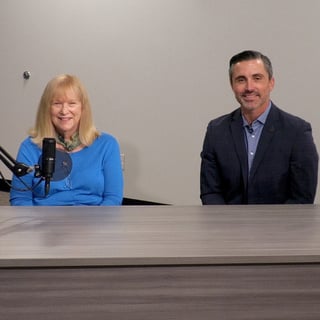
Speaker: Welcome to At The Beach. I'm Dan Montoya, Vice President of University Relations and Development here at Cal State Long Beach. Today's conversation focuses on supply chain systems, how they function, why they matter, and how they connect education, global trade, and emerging industries here in Long Beach.
Speaker: I'm so excited to be joined by Dr. Jessica Robinson from the College of Business, who teaches and researches supply chain management, and Frank Thompson, a Long Beach State alumnus and retired aerospace supply chain executive. Thank you both for being here today. Thank you.
Speaker: I want to ask the first question. How did each of you get into this field?
Speaker: I'll start. um I actually got in it a little accidentally. um I um graduated from Cal State Long Beach with an undergrad in finance, was interviewing for finance jobs. I got called back for a new interview. I assumed it was a finance job. um About a third of the way into the interview, I realized it was actually a procurement job. Oh, wow. um So um I guess I did well enough to get in, and I'm glad I did because it's a career that I think um really benefited me in a lot of different ways outside of just being part of it. So it was, again, accidental, but I'm glad I got involved in it. That's great.
Speaker: Mine was a little unique and unheard of. Basically, I fell in love with logistics in my first class at 21, my first logistics class, and I knew that was my calling and that's what I was going to do for the rest of my life. That's great. a little bit different in that I knew right from the moment I heard logistics.
Speaker: What do people think supply chain really is versus what it actually is? I'll take this one. ah So I think especially being in Long Beach, a lot of people will see the container ships, they'll see the port, they will see all those semis out on the 405, and they think that's supply chain management because it is very visible. That is actually logistics, right? The actual transportation, the flow of products and services through a supply chain, that is the logistics department.
Speaker: Right. Right. So what supply chain management actually is, is ah the integration of logistics department, the manufacturing department, accounting, IT, all of these different departments. No one discipline really owns supply chain management. It requires all of the collaboration and you know processes across different departments within companies and across at least three or more.
Speaker: You want to chime in on that? I would say if it really comes down to a very good explanation of what people's perception is relative to logistics. They see the trucks, they see the UPS, and even COVID brought that out. I mean, it's like a lot of ah knowledge of that, but everybody related that to the UPS truck or the FedEx truck that was showing up. On the manufacturing side, from order entry to order delivery, is a very complicated series of processes that Jessica was talking about from the acquisition of bill of materials um to the planning and scheduling it across the factory floor to getting it effectively through quality assurance and then getting it shipped out. and Then you got the piece on the logistics side of getting that in the consumer's hands. so It's much broader than most people perceive.
Speaker: Can you maybe give a kind of ah breakdown of the essential components of the the process because a lot of people, again, people don't understand what it is or how it's relevant. So a lot of people, they'll hear the technical side of it, but can you give us an example how it relates to real world? Maybe like an example of I put an order on Amazon and what happens to that?
Speaker: And how does it get to me, right? A lot of people just think, oh, I'm putting an Amazon order and it says it'll be here by five to 10 p.m. today or two days from now. But it also actually goes in through a cycle, right?
Speaker: So the whole order fulfillment process, right? So what is really important, I wanna actually back up for a moment, and an important aspect of the order fulfillment process is the entire lead time, right? The time between which a customer places the order until they actually receive it. And that really is a proxy variable or a way that companies measure customer satisfaction. right And so when customers from you know Amazon customers say, I want to purchase something online, when do they want it? Yesterday. They didn't even know they wanted the product until yesterday, but now they want it. And so the order fulfillment process basically begins with just that order is placed. And from there, a whole series of pulling from the shelves to industrial packaging to creating the bill of lading and identifying is it going to go direct or is it going to go through a different hub and spoke network of LTLs. So the process, I mean, how much time do you have to really talk about it? Yeah. um It is much more complex than most people really understand. yeah
Speaker: I think that the Amazon model that was just described is an example of a build to forecast. okay So somebody assumed a certain demand and then that demand is fulfilled into warehouse space to be able to make that delivery. So that's one way of doing it. And most companies do that. Everybody also talks about Toyota and that Toyota is very lean in their operations, but they still build to a forecast. um Alternatively, there's a build to a custom order. That is where lead time is particularly important because you're not going to get that off the shelf tomorrow. Right.
Speaker: So you're going to have to wait on that lead time offset, which could be months. Mm-hmm. So that's the way I think people need to understand. If you want something custom made, you're going to have to wait a lead time to get it. If you want a consumer off the shelf product, you're your expectation is same day delivery in today's environment.
Speaker: What first revealed how interconnected operations really are? Well, for me, it really gets into understanding that demand is not static.
Speaker: It's very dynamic and that dynamic force actually creates a lot of chaos through the entire supply chain. Everybody assumes it's just, um you have infinite capacity, so whatever you need is gonna be on the shelf. um So I think understanding the relationship between how do you try to best manage supply to to demand is you know a very difficult task, but very exciting. In you going back to the operations, what are common misconceptions about operational roles?
Speaker: I think a lot of people see operational roles as the people that put things together. And so there is that part of the operation, the assembly of products. A lot of that can be outsourced. But if you the the principal ones from a manufacturing environment, you're going to have somebody that's going to be a master scheduler that's going to take that forecast and put it into your production system. You're going to have a material planner that then has to decide...
Speaker: Okay, here's my bill of material that needs to be exploded out. That gets passed on to a purchasing team. A purchasing team will go out and buy those components based upon lead time offsets because they're all not readily available. They all have to be made as well. um Then you also have a supplier quality side of that stuff, working together with suppliers to make sure that you get the quality product you want.
Speaker: Now you've got a receiving process. So you've got people in that. Now you bring that in, most are going to stock it. So you've got a stockroom function inside a manufacturing company.
Speaker: You're going to now pick that from the stockroom to issue it out to assembly to put it together. So when we talk about lead time, that assembly of that product will probably take you a couple of days to maybe a couple of weeks at the extreme. But that whole thing from order entry to delivery could take a year based upon a custom product. So most of that lead time is managed by the supply chain function in each of those roles, material planning, purchasing, receiving, supplier quality, and then shipping.
Speaker: So that's what I don't think people really understand. There are very fulfilling jobs in achieving a delivery of a product. Wow. So why do people typically only notice systems when they fail?
Speaker: I would say for consumers, the way that they notice something is failing in the supply chain is the supply chain is pretty much imploding in on itself. um Working in industry for several years before I went back to school, ah we put out fires all the time. It was a daily thing where fires had to be put out. We were saying up expedites. I've had to put planes up in the air to ship parts, to ship pallets, to Fairfax plants and and things like that. And so that was very commonplace, um but the consumer never sees that.
Speaker: Again, it's only when the supply chain is really imploding in on itself where the consumer notices the impacts. Right. Yeah. Right. And it's only when the it's only when the media picks it up, right? And it's some kind of issue or problem. Right. and And we were talking about the example of the pandemic, right? And, oh, we you know, I remember placing an order at Macy's and like, oh, you're not going this is like in August. and' like, you're not going to get it until like April. And I'm like, well, can I just take a boat out there and just get at myself? But yeah, it's it's very critical. Absolutely. absolutely So, okay. So let's talk a little about the port of Long Beach right expanding from concept to real or application Long Beach hosts one of the largest ports in the world a working supply chain in motion so I really really wanted to bring this up because I think there's so much opportunity to build with the port and so many of the things we're doing in here we already have internships we have great partnerships but how do we continue to grow that so what does a port illustrate about flow coordination and integration Well, first of all, port operations, ocean port operations, are responsible for about 80% of flows of products and trade. right So it's astronomical, very important driver of the entire economy. right right And so really a port is the interface between water and land when it comes to the flow of products.
Speaker: And the coordination for port operations, it requires the coordination between several 3PLs, third-party logistics providers, whether it is custom house brokers freight forwarders or even drayage moves or the rail transportation carriers. So there has to be a lot of coordination between a lot of parties in the supply chain. And also, you know, the fact that it integrates to both the public and private sector. Right. So there's a lot of government and public, private things going on, a lot of hands in there. So there's a lot of complexities associated with the poor.
Speaker: That's great. Do you want to add to that? I would just say it creates a huge hub for a network of logistics jobs. And that's what I think with the the combination of the two ports that you have here in the area and stuff as well. It creates huge opportunities for those logistics side of the stuff. And on the plus side, it creates a close hub for the manufacturing companies to be shipping products back out on on the opposite side as well.
Speaker: So why is reliability often more important than speed? So I actually, that's an excellent question. I actually posed that in my logistics class. And really what it comes down to is being able plan operations, right? So I know from experience that a container ship that leaves Europe coming stateside, it's gonna take about 30, 35 days or right?
Speaker: I can plan for that. I can plan for it. It's not ideal. I'll probably have a lot of inventory in the supply chain on the water there, weekly you know inventory over a month on the water. But i again, I can plan for it.
Speaker: But if I don't know it's going to show up in 25 days or 35 days, how am i going to run my operations? Right. How am I going to schedule my workers? Essentially what's going to have to happen is I'm going to have to hold on to even more inventory safety stock right and my costs go up. so I always pose that question, you know which of the two evils would you rather have, long lead time or variability in lead time? and Students typically think about it and they come to the right answer answer of, yeah, the better of the two evils is long lead time. yeah and That totally makes sense because ah
Speaker: In a way, you're kind of having faith that it's going to show up, right? Otherwise, it may not. Frank, this this question is for you What operational occurs when timing slips? Well, you're going to have two things. So when you mean timing slips, a requirement or a demand for something moves? Okay. Okay. um On the one side, if it moves out, right? So if demand moves out and there's a signal, that means a lot of people run the risk of losing their jobs temporarily, right? Because there's no work to do. Right. if there's no Nobody wants to create new additional products.
Speaker: On the opposite side, if a schedule moves in, It creates that variability that we just talked about of reliability. um It creates incredible chaos through the supply chain to to everybody back through the chain needs to expedite to be able to achieve that stuff. And it's that variability that creates... not only waste that dr robinson was talking about in carrying extra inventory to buffer that but it creates incredible inefficiencies in your business that creates waste as well so you want reliability and and predictability in your operation so when when things don't go right how do these disruptions cascade across the organization
Speaker: Well, I think so. I'll speak from it from um a buyer's perspective. So the first thing a buyer is going to see from that is you're going to get a rescheduled message from the planner that basically says, move this in or move this out. Okay? Okay. in some cases, you're going to say, and this is where you're also trying to manage inventory. You might say, hey, I got products that is due in two weeks, but I don't need it for two months now. You call up the supplier and say, hey, don't ship that. Go, wait a minute. It's already in the shipping department. It's going. yeah um So it's going to create. Now somebody has to own that inventory in in the balance. So you're going to know that by a schedule change with some action item that's going to come out that you're going to have to go move this. And it could be multiple tiers down the supply chain that you're going to have to try to reschedule those things.
Speaker: So I think that's the principal one that you're going to see in the operation is a reschedule message that's going to require a lot of action by a lot of people to to achieve it. Right. So this question for both of you, what creates resilience in a large system?
Speaker: I think it into some degree of reliability and predictability in that. And I think that that it gets back into when you're picking a supplier. for Because a lot of times you're going to have options on which supplier you could pick on something. And you're going to not. Everybody thinks it's going to be price. Right. But price as well as a reliable history is going to be more important. So you're going to want to factor that. So I think that's going to be the key that you're always trying to look at is how do you manage that unpredictability in the supply chain? Yeah, a lot of planning, right? So and in really the success of being able to get back, you know, running normal operations, how that is measured is really the time between disruption and when you're back up to normal. So you're really trying to shorten that time period. And that is really ah a way to measure how resilient you are in a supply chain.
Speaker: And it really requires a lot of planning. You know, I've heard stories of automotive manufacturers will ask their suppliers, if a plane landed on your plant, how are you going to keep us up and running?
Speaker: And having that kind of question asked, and then you've got a plan for it, right? So there's a lot of contingency plans already set up. it's ah It's a living, breathing being, really. It is. Essentially, it is. I think to pick up on that as well, you also want to have geographic diversity, too. I think if you think about this, there's a risk of having suppliers in California because of earthquakes. There's a risk of having suppliers in the southeast because of hurricanes. so You've got to understand that when we had... the Fukushima tsunami, there was a supplier of a particular resin for paint that was the only supplier in the world that was knocked off. So you've got to really understand risk management, not only in the supplier's capabilities, but the geographical proximity to potential national disasters as well. And what makes it really interesting, too, is while supply chains and logistics, we try to be very efficient, we want to reduce our costs. We know that if you run lean and you only rely on one supplier, that's great because it's going to reduce our costs. You're going to get better prices. However, if something does go wrong now,
Speaker: You're in trouble, right? So you're kind of balan balancing this you know decision of do we want to run lean or do we want to be able to respond quick to anything that goes wrong. So so which decisions are made upstream versus in real time?
Speaker: Capacity. Capacity? Yeah. It really gets into, for example, if you think about what AI is doing in the industry today, it's about AI chips. Okay. After AI chips, it's data centers.
Speaker: Data centers need energy. So they're trying to figure out how do you get, they're looking at nuclear plants for this stuff. Uranium is now ah a scarce resource to achieve that. And the latest one now that's affecting the computer and phone industry as well is you also need memory chips. Mm-hmm. So Micron is spending $50 billion dollars right now to develop new, they're doubling their capacity, but it won't be online for two years. So for two years, there is going to be a shortage of memory chips to consumer electronics as well as that. And it's all driven by a one principle thing, and that's the evolution of AI.
Speaker: It's the thing that people don't understand how interconnected all the way back to the earth of getting a natural resource out of the earth to to support supply chains. Wow, that's that's pretty amazing. um it's It's so fascinating because yeah you know as I'm sitting here, I'm thinking supply chain was probably created in the caveman days, right? you know It's like, hey, we got to go get food. like When are you going to get it and When is it going to get here? So it's it's it's been such a part of our lives. We haven't even realized it. Absolutely. So I'm just so glad that we're having this discussion. Now i want to switch gears to the space economy, right? Advanced manufacturing, right? aerospace, it's all around us. We've heard the mayor dub Long Beach as Space Beach, right? There's a lot of aerospace companies here that keep coming here.
Speaker: And so as we do that, how do we evolve as a workforce in supply chain and manufacturing to be able to prepare the students to enter this field in this particular space? um I think obviously it goes without saying that AI technology driven knowledge is going to be really important and continues be very important. But I think that also soft skills continues to be important as well. um What we are doing here at Cal State Long Beach is preparing our students. We have new courses in supply chain analytics, right, doing data analysis, learning how to actually perform more complex algorithms using different kind of software. We have our global supply chain management course and we're developing different softwares, using software to better prepare our students using that kind of software. But we also have the soft skills teachings throughout our curriculum to help our students as well. And we're also preparing our students with certifications in both total quality management with Six Sigma certifications as well as project management certification. That's wonderful. So if I'm a employer and I'm saying, Dr. Robinson, what kind of candidate am I going to get coming out of Cal State Long Beach in supply chain?
Speaker: They're going to have grit. They're going have heart. They are going to be prepared. They are going to be, you know, driven and curious. I really respect the student body because a lot of them have gone through things and are juggling a lot of responsibilities beyond just schoolwork. And they're hungry.
Speaker: You know? um And I see a lot of that in my classes. And the employers would be lucky to have any of our students. I would say a lot of employers say, to picking up on her point, is they they're less entitled me to a lot of other private universities and stuff as well. if They do have that grit. They're willing to get in there. They're used to to not taking things for granted that everything is going to happen for them.
Speaker: So blockchain isn't for everybody, right? you No. What kind of mindset is required to jump into... supply chain and and and really have those skills, those those those analytical skills, those skills to view it from the perspective that it requires.
Speaker: Well, it's getting a lot of attention now. The CEOs and the CFOs really understand the importance of it. So if you really want to affect the operational performance and efficiency and thus the profitability of the company, operations is the place to be. However, you've got to be resilient because um It can be very thankful because as is you run out of stuff off your shelves at the home, you're going to be short material all the all the time in in the in the workplace. You've got to be a good problem solver because now the schedule is going to change. So you've got to have that ability to think on your feet. So that's why things like Dr. Robinson was talking about that will differentiate the school is program management skills, problem solving skills, Lean Six Sigma tools of taking a scientific approach to solving those things. That's your day. Your day is going to be doing your job and solving problems that are going to come up every day. i love that.
Speaker: So how does aerospace differ from other traditional production systems? I would say we're on a cusp of changing and maybe differentiating. Take commercial aviation and take traditional aerospace, a Joaquin Martin, a Boeing. Those aircraft are very long cycle businesses. You've got billions of dollars that are spent on developing those new aircraft. They're gonna be fielded for 25 years on the commercial side. So you once you've got a product set,
Speaker: you're kind of locked into that for 25 years. You can lock down your supply chain. You can take care of a lot of that stuff. I think the the evolution of Space Beach and the places that are coming, and we can look at Ukraine today as the lab environment, of they're constantly tweaking, constantly. The product life cycles on drones and some of the others, um military arsenal is going to change dramatically and evolve. They're going to have much shorter product life cycles just like consumer electronics.
Speaker: So there's that two parts. If you're on the cusp of new evolving military solutions versus long cycle aircraft, both commercial and military, kind of different long product life cycle versus the short product life cycle.
Speaker: Can I debunk some kind of myth real quick in saying that when a lot of times when people think of aerospace, they think defense and that's it's all commercial aviation. Right. I mean, every every time you get in that plane to go someplace, whether it's a Boeing aircraft or an Airbus aircraft, Airbus has actually brought of their supply chain from the US s because on a global competitiveness point of view, this is a lower cost place to be than a lot of Europe. So that supply chain for commercial aviation is very global and it is very different than the military side of the stuff. So there is the commercial aviation and military aviation. Okay.
Speaker: So while I'm sitting here, my my son is actually studying engineering here at Cal State Long Beach and and I'm thinking, you know what what do students need to know next? And I'm like, Supply chain would be a good mix with an engineering degree, right? Because, you know, and if you're working in engineering, you have to know that. You have to know the business side of it.
Speaker: So what what other things should students be learning now? Obviously, they're learning supply chain, but what other skills should they be taking advantage of as they go through these courses? And what how can they practice it on a regular basis?
Speaker: Well, I would ah humbly plug our minor in supply chain management first. So if your son does want to minor in supply chain management, we'll tell him that is a great option. Also, we have a lot of students in liberal arts, students who do fashion merchandising will minor in supply chain management as well. So We are welcome welcoming to everybody. so ah Quick plug there. He but he did he did say he likes the the fashion side, the music side. so There you go. You solved an issue for me. Problem solver. up We can help it. I would say for students, i highly recommend, you know you you get so much knowledge from your classes. right You got to show up, you got to put in the work. And we have recently redesigned the entire curriculum, right? So we are offering procurement, we are offering supply chain analytics, sustainable logistics management, um global supply chain, did I say that already? Global supply chain management, operations planning and control, right? So we have a large array of different courses. What students really should be doing as well is getting internships. And actually what students will find is the fall, this upcoming fall, they will see that students can actually get an elective credit for earning internship. So we will be having CBA 493, if I'm not mistaken, that is an internship course, and it will fulfill one of their electives. And I think that the balance between having real-world experience as well as having the education background um will help them a lot in becoming more you know competitive in the marketplace.
Speaker: yeah How should universities respond to the regional industry shifts? And I'm bringing this as as you're an alumnus, you have been in the industry, almost almost like saying if if you were to start all over again, like what advice would you give to our students?
Speaker: Well, I would say the one advantage that I guess um regionally and and why I kind of got involved in the advisory board and stuff as well here, it's a tough place to recruit kids to. There's a huge manufacturing new opportunity here. So it's a great place for companies to do the recruiting. um I would say the the kids today... um and And maybe I'll pivot a little bit onto the point that Jessica was making around curriculum. I would say two things in the business curriculum that you also want to make sure that you get something out of is that is on um the accounting side.
Speaker: really understand balance sheet income statements. No function probably affects those things more than supply chain does. Right. And program management, as we talked about as well. So those are already in the the business school curriculum. But I would say manufacturing engineers could be great buyers.
Speaker: Mm-hmm. they to know the product that you're buying and understand the manufacturing products ah processes excuse me that turn those raw materials into a product can have a huge effect on their ability to be successful in buying it at a low cost, understanding what are the cost drivers in those components today as opposed to just accepting a bid. So there's a lot of great opportunities for the the students, but I think locally, regionally, um there's a lot of huge opportunities with the new expansion of what's happening with Space Beach for the students.
Speaker: So why does it matter that Cal State Long Beach continue to teach, you know, supply chain and logistics? What does it mean for students regionally and who are in Southern California or or maybe you want to branch out, you know, in different parts of the united States or globally? Why does it matter that we are doing it?
Speaker: um I think we are best positioned being in Cal State, you know, being in Long Beach itself. We are outside of the largest port operations in the Northern Hemisphere, you know. So we are well positioned to we're looking at the port. I think there's places on campus that you can actually see it. So I think it is very important for Cal State Long Beach to really step up and to, you know, build up the supply chain program. And I think it is a very important visible project major in the College of Business to do that. And another part of it is the students will make more money. it is a very high paying position and there's a lot of opportunities. It's one of the few positions in a supply chain position um
Speaker: actually is growing. i think there's a 4-5% increase in jobs in both logistics and supply chain management. And with the influx of using AI, you're not seeing that in other disciplines, right? So I think it's really important for us to push that supply chain management kind of focus here.
Speaker: It's great. I think there's a huge opportunity for the school to become the supply chain university in Southern California. um Working together with the port, the opportunities that are here and stuff as well, I think there's, again, a huge opportunity to make that match and this to become the destination for companies to be looking for recruiting supply chain students. I 100% agree. I think it's a strength of ours. I think we're going to continue to grow it. And I think a lot of students, when they're looking at Cal State Long Beach, is like, why should I go there? And we look at the the key programs that distinguish us between the other CSUs and even other universities as a whole. I think this program really is on a trajectory to distinguish itself from and really prepare the workforce for our region nationally and globally as well. so I love that. That's great. um
Speaker: What other thoughts or comments do you have on just where we are now in our industry? There's so much technology-driven. You talked about AI. What's what's ahead in this industry? what What should students be looking for? What should we be looking for as consumers in terms of this space?
Speaker: I was reading an article today on soft AI software, and companies are pulling back now because they're finding matching AI to their processes was not as simple as they thought it was going to be. right They're going to figure it out. So I would say for students coming out today, resilience is going to be important. Because I think every one of our processes will probably be simplified. However, i think the overall process of supply chain is going to be hard to replicate entirely through AI. So there's a huge runway for that career, but you got to be ready for changes and stuff because it will evolve and change more so than it's happened in the last 30 years for sure. Right.
Speaker: What is the most unpredictable variable in supply chain? Demand. think so? Demand. It's demand that creates the chaos. And it could be you could have a problem on the supply chain side things. But demand, everybody assumes is constant.
Speaker: um And I think we're setting ourselves up because industry went from just in time to just in case where we were holding inventories during COVID. That doesn't help the balance sheet right of carrying that inventory, so we're moving back to adjust in in time environment. But I think of understanding that variability in demand um is going to be, and and again, i there was certainly chaos on the supply chain side of stuff, um but demand is not as static as we think it is. yeah
Speaker: but I think that that's also ah known unknown. it's It's the, it's you know what I mean? like I absolutely agree with you, but it's like a known unknown. I think the um kind of huge disruptions are the biggest variability in anything. So it would be the more event-driven kind of things that just you know come out of left field that we're we're not planning for. Right. Yeah, and I think AI is...
Speaker: also preparing us for the unknown as well, right? It's so flexible. I think that the biggest thing about AI is either you know it or you know like get that behind. That's really the reality of it. We have to adopt to it in the different business models and in all areas of business, not just a supply chain. What are your thoughts on, again, like the future of supply chain? Where do you see things evolving more than they already have since the time you were in industry, right? it's It's always constantly changing, but what has evolved and continues to evolve and you're like, scratch your head and you're like, wow, where's that going?
Speaker: Can we take this one? Sure. Okay. um So first I want to point out that supply chain management is actually a very young discipline. Okay. Right? So ah if I'm not mistaken, supply chain management, the term itself wasn't coined until the 80s. Right? June 4th, 1982. Yeah. When an executive was being interviewed and uttered the word supply chain management for the first time. Hmm. So I am older than the discipline I've dedicated my life to, right and And that's a very unique position to be in. And so when we say, you know, what is there to learn? oh there's a lot, you know, because when it was first said it was 1982, it doesn't mean that the industry or the knowledge, body of knowledge evolved that too. So it really gained popularity in the ninety s and 2000s. was the two thousand s when Supply chain management even became a major. A lot of programs actually had logistics and logistics became supply chain management major. So this is a very, very young discipline. yeah So what do we still have to learn? a lot.
Speaker: um So it's a very difficult thing to put that one finger on. I think definitely Frank knows this himself is that relationship with suppliers. And I think COVID really highlighted that too. You know, a lot of companies historically have focused on that relationship, obviously with our customer. That makes sense. We want to grow sales and we want to build stronger relationships with our customers. But equally important is building relationships with our suppliers. right and that role of procurement and the ability to even bring products to our customers really relies on that relationship with our suppliers and that flow of material yeah you got to treat them that way because that that whole discussion about vendors suppliers partners um you got to understand that you can't operate and you can't be successful without good relationships there and in my experience on this um I've had suppliers that
Speaker: We treated fairly. And when push comes to shove and you need a priority, you get the priority over some of those other customers that don't treat them as well. And that doesn't mean you don't hold them accountable. It's just that if you treat your partners fairly, they're going to be there to support you when you have those.
Speaker: movements in your things and you're going to need expediting and get that stuff early. I think those are soft skills you're talking about right? Absolutely. most happily Well as we wrap up is there anything else you want to share or really highlight in in the work that you do or in in relation to the university or maybe what just keeps you motivated to keep learning about this field and teaching and getting involved with the board and thank you for that as an alum we appreciate that and thank you and for those of you out there who are interested in uh volunteering i'm sure they'll take more people to to come along that board always looking for qualified candidates to join the advisors that's right so yeah
Speaker: What keeps me motivated? The students, absolutely. My passion for the discipline. you know As I said in the very beginning, I took my first logistics course and i fell in love with it. I knew that's what I wanted to do for the rest of my life. And really, I'm just living the dream. yeah Good. That's awesome.
Speaker: Well, awesome. We thank you so much for joining us. i thank you both because, i mean, it's so great to get to know you. But also, the thank you for the work that you do. We really appreciate you that you're preparing the future global leaders, really. And thank you for volunteering and also giving your knowledge to our students as well. I'm confident that our students will be able to walk out of here with the skills, knowledge, and abilities to make an impact in our world. So we thank you so much for that as well. Thank you. So we'd like to finish our podcast with a Go Beach on 3, so we'll do that. One, two, three. Go Beach. Go Beach.